The Books of Samuel · Bethlehem and the Harp
Seven big sons.And not one of them was the one.
A prophet arrives at a farm with a horn of oil, and a father lines up his sons like market produce — tallest and handsomest first. Heaven turns down every one of them. The boy who gets the crown of light is the one nobody thought to call in from the sheep. Every scene below is a real frame from our animated film.
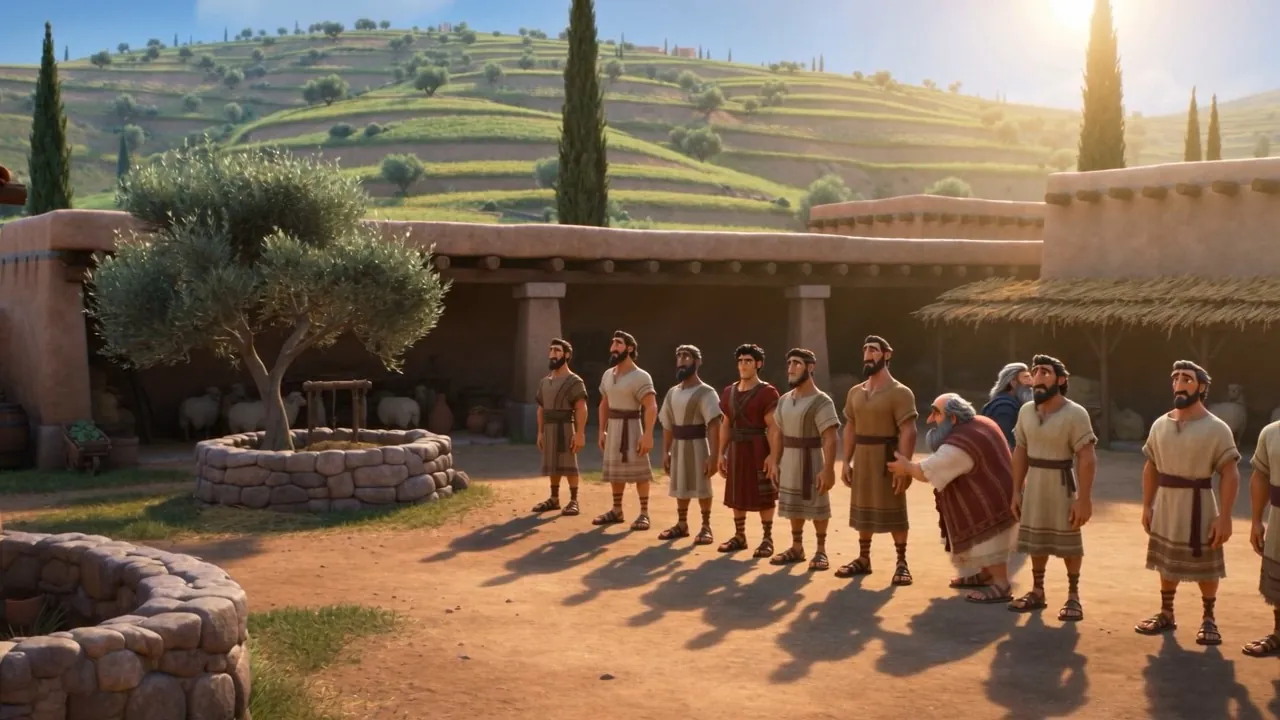
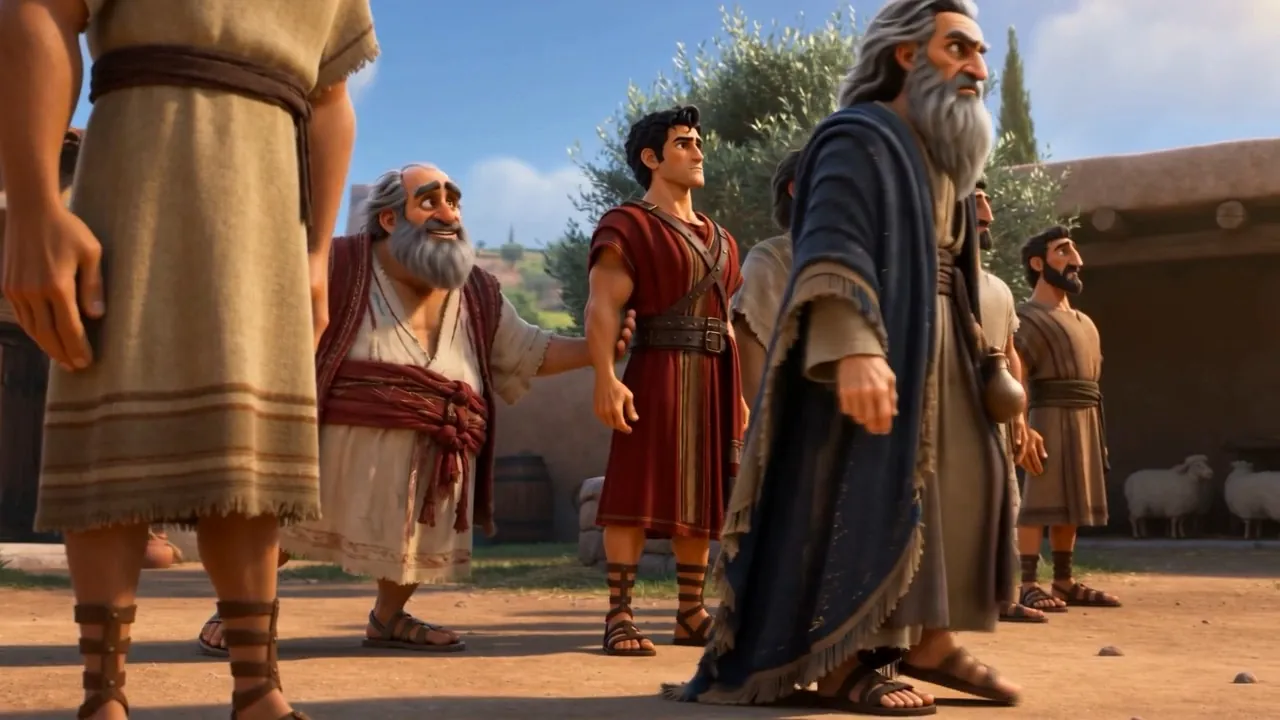
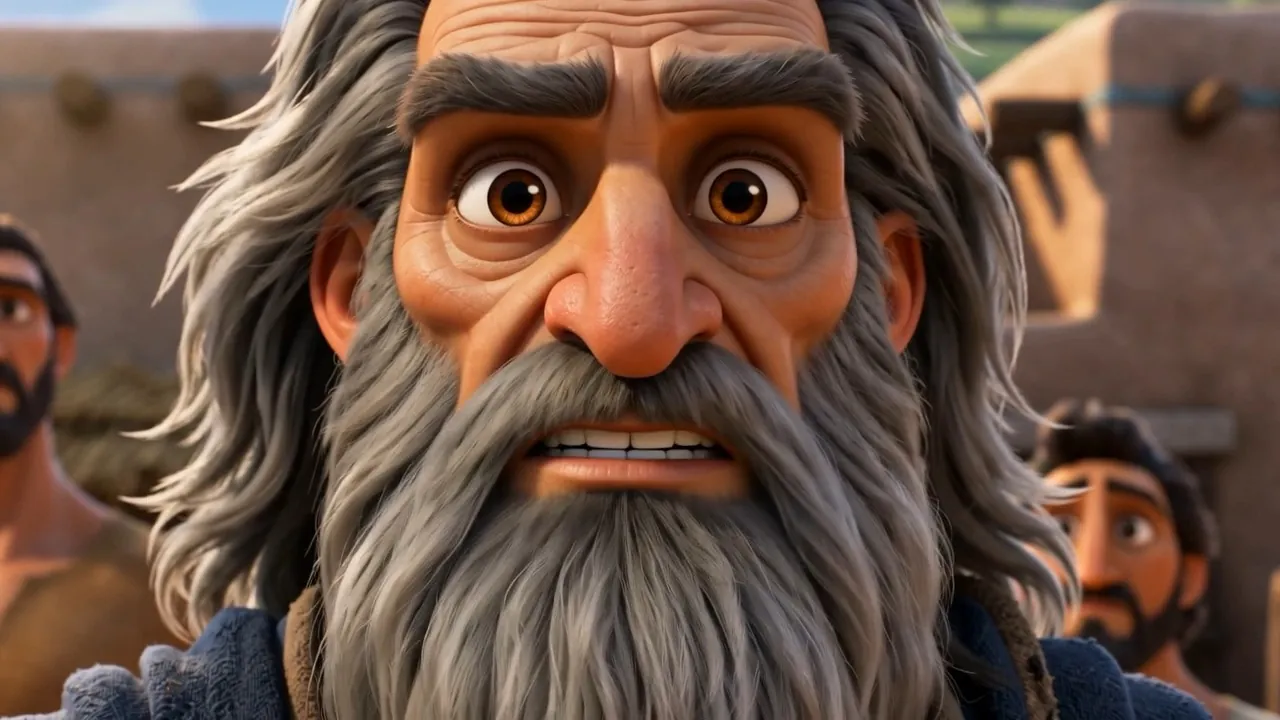
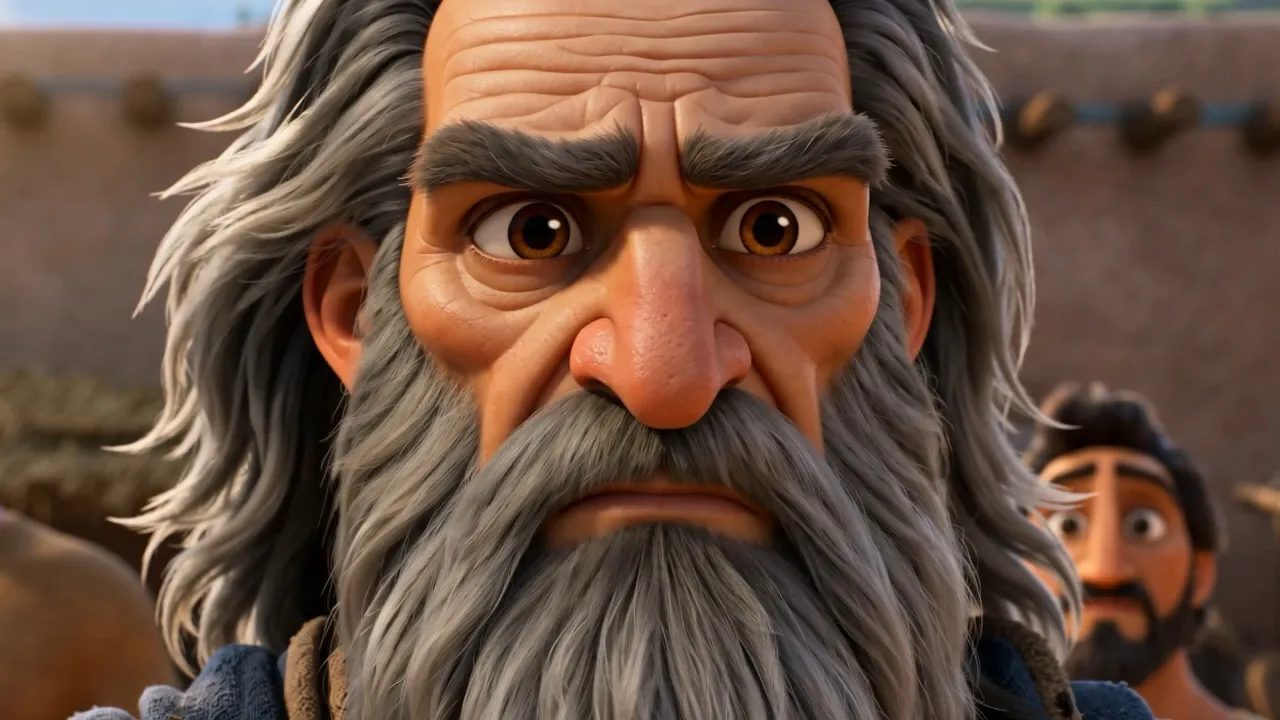
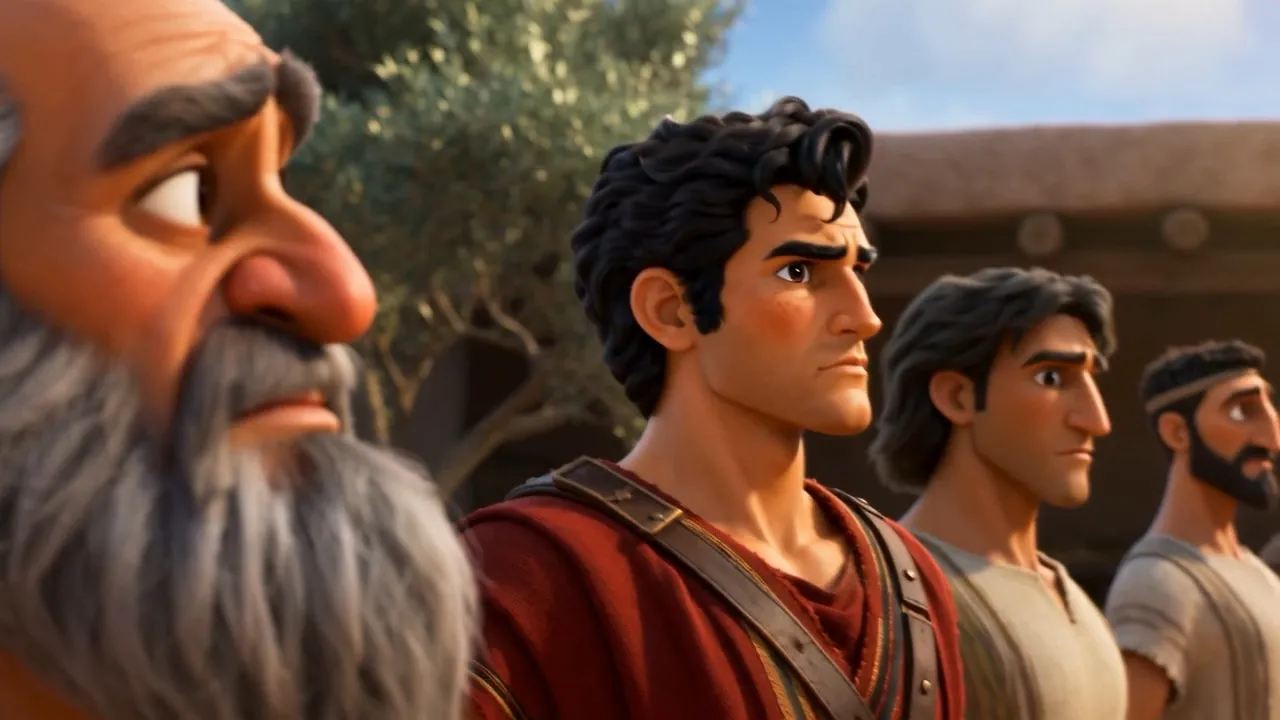
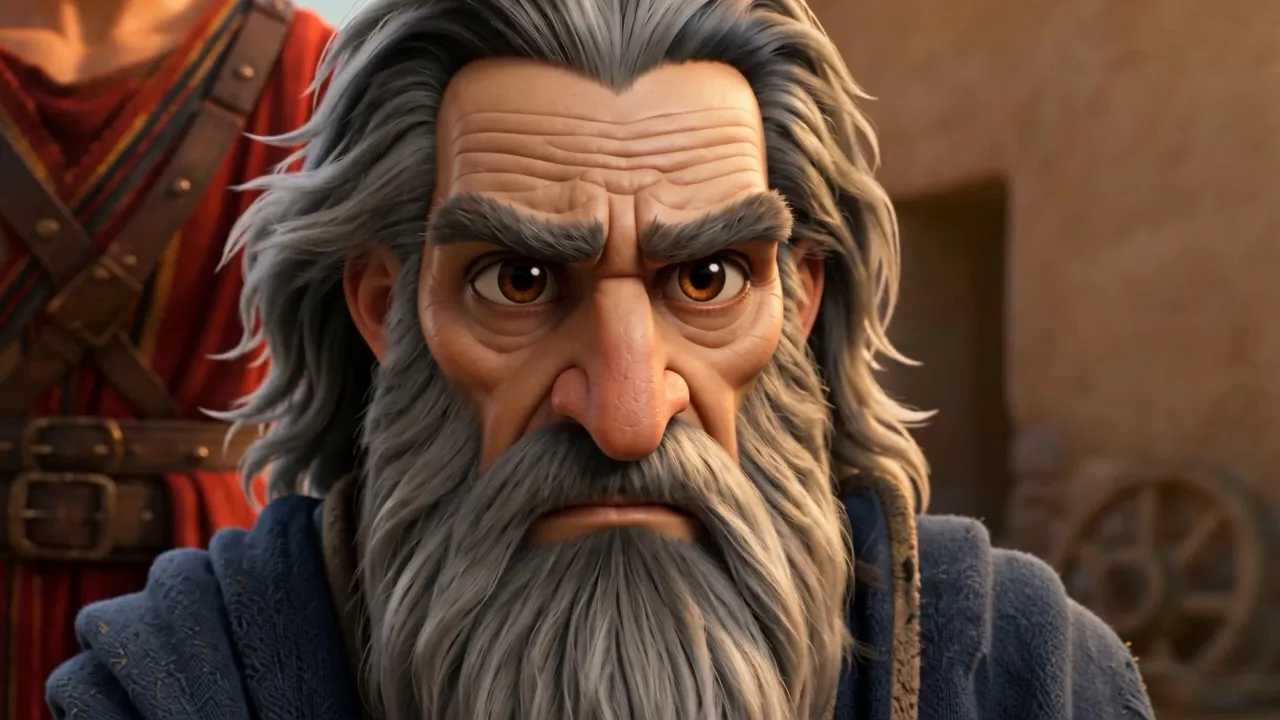
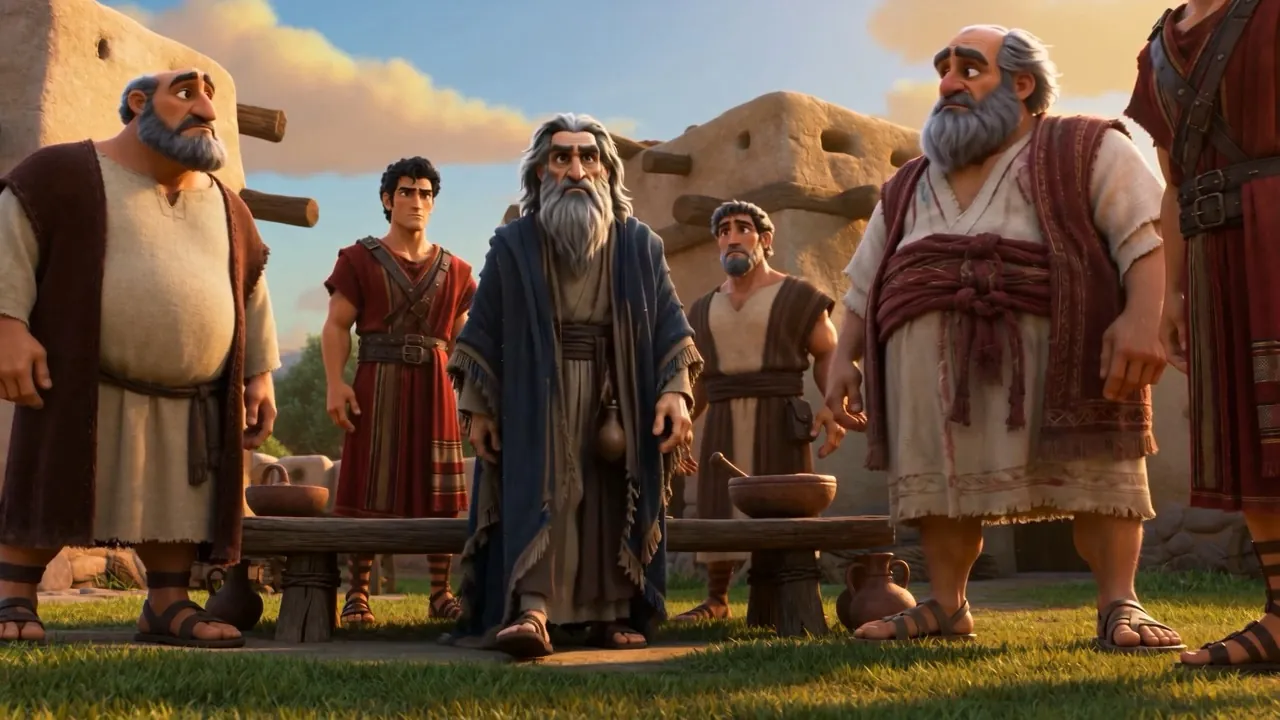
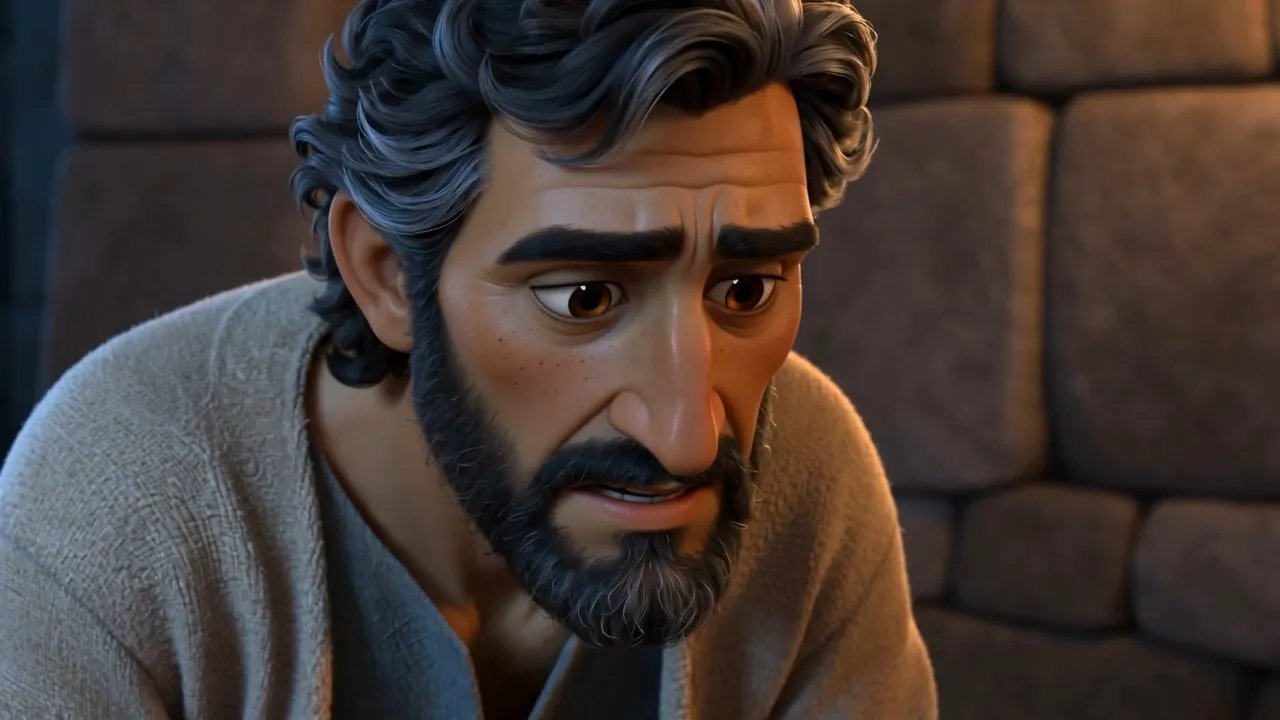
Samuel comes to Bethlehem with a horn of oil and no idea who he is looking for. Jesse has scrubbed the farm and lined his sons up like market produce, tallest first. Eliab is magnificent and knows it — and the old prophet takes one look and thinks, privately, that's him. Then he stands very still and listens, and the certainty drains out of his face, feature by feature. 1 Samuel 16 : 6–7
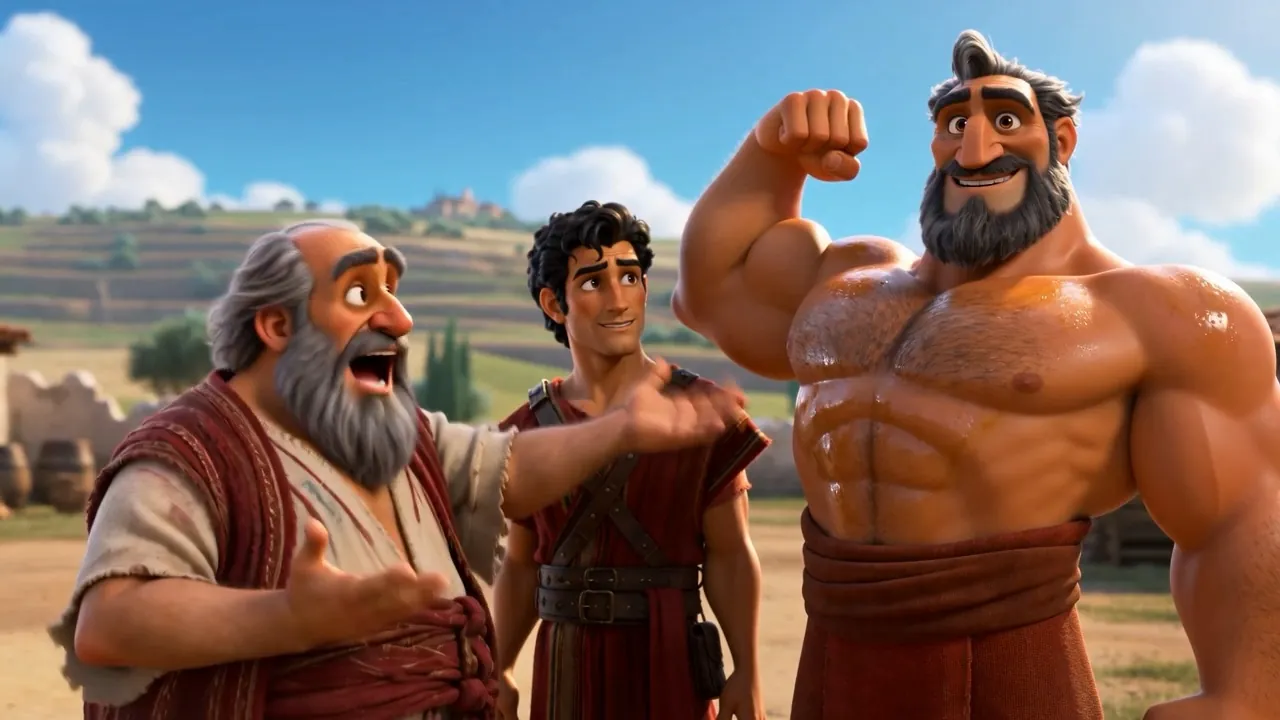
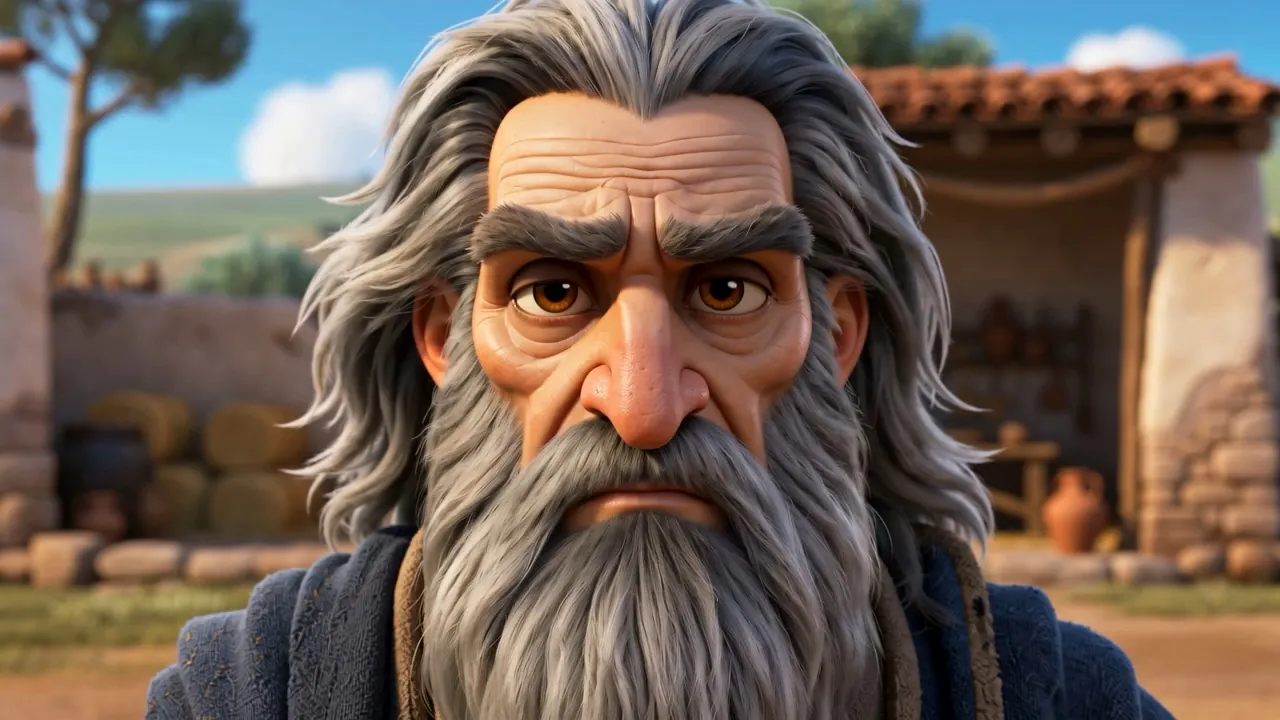
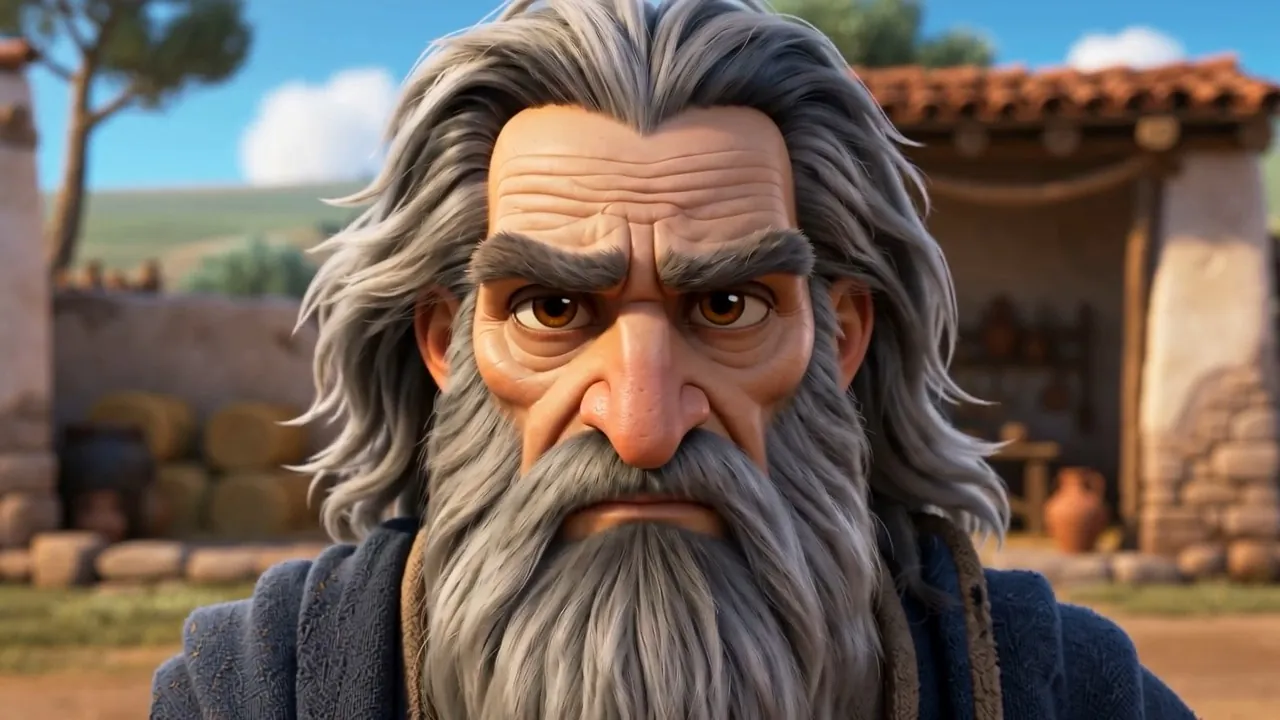
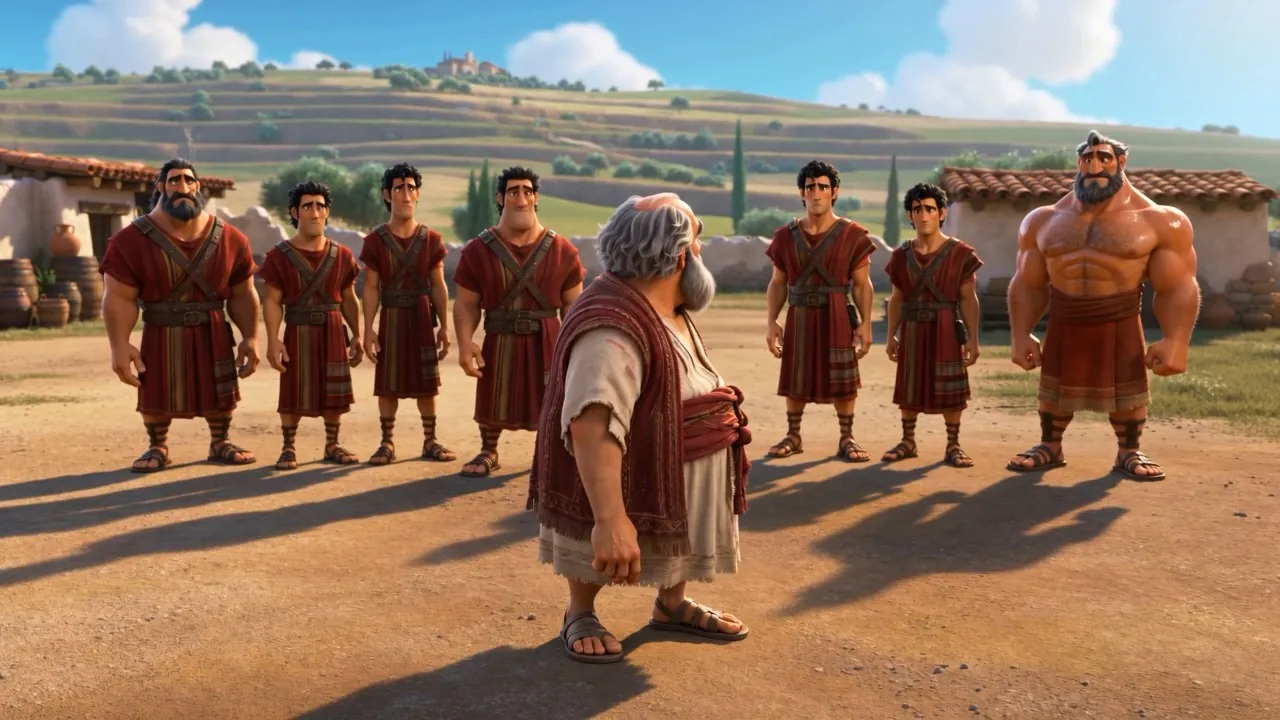
Jesse presents son after son, each announcement bigger than the last. Samuel answers every one the same way: a small, private shake of the head. No. And no. And no. Seven big sons end up standing in a row like rejected goods, and their father looks behind himself as if more might be hiding back there. The lesson Israel never learns is being taught in a farmyard. 1 Samuel 16 : 8–10
Man looks at the outward appearance, but Yahweh looks at the heart.
Interlude · Your turn
Seven sons. Seven no's. What does Samuel do now?
The horn of oil is still full, and Jesse is out of sons.
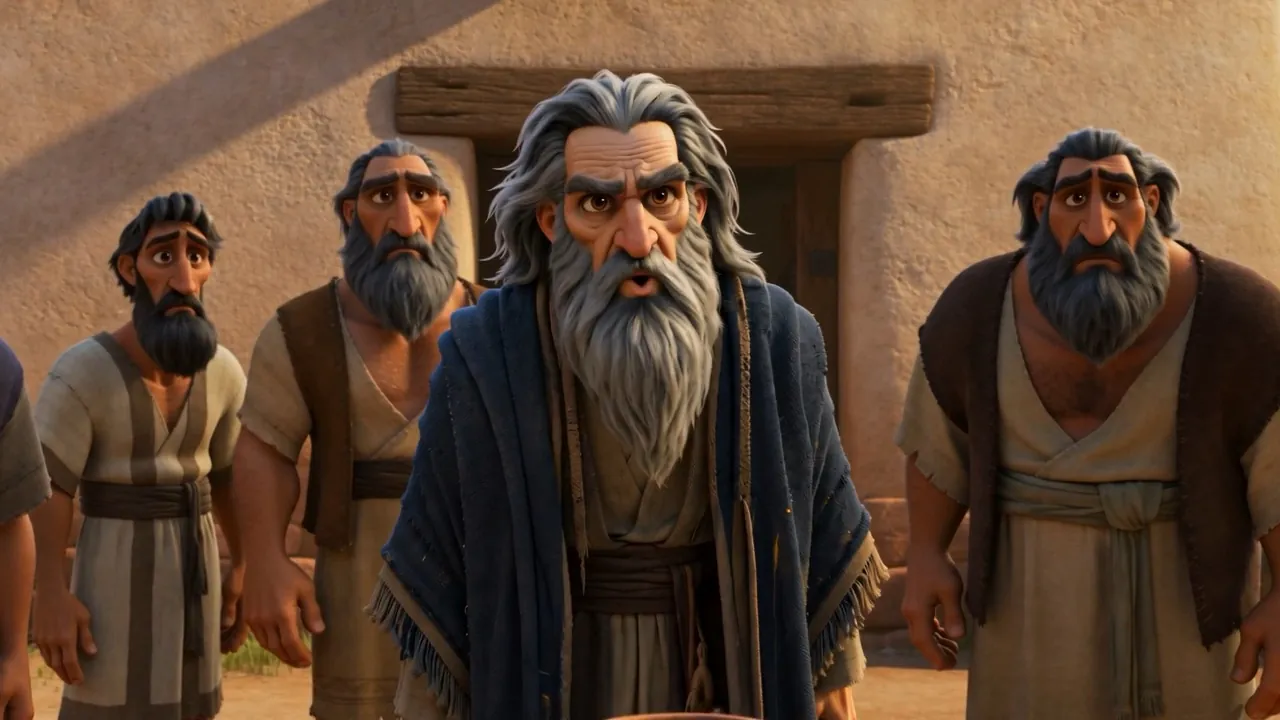
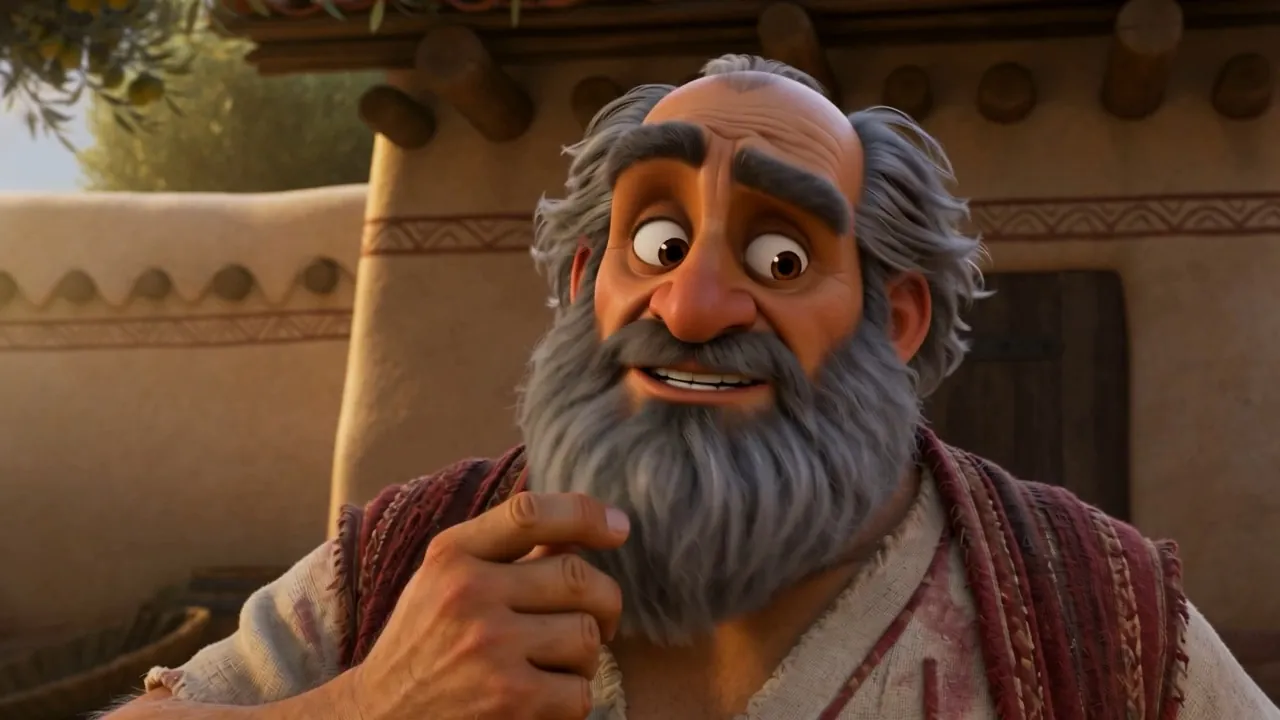
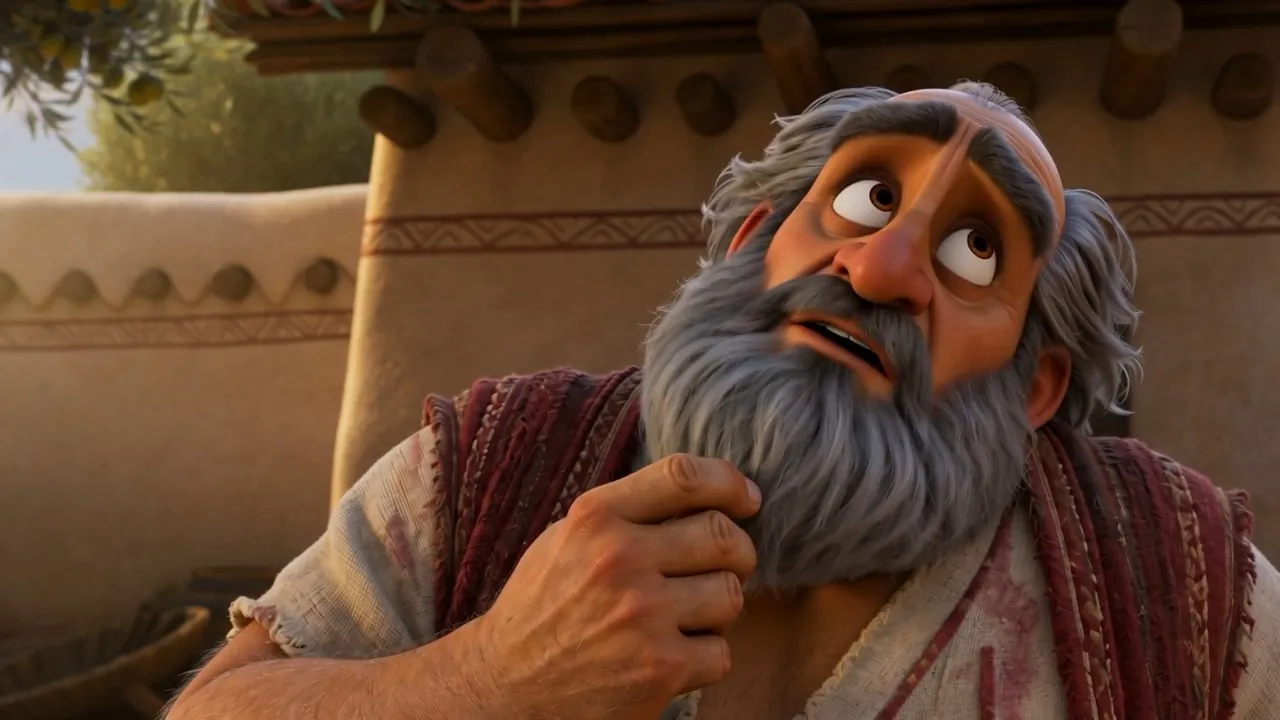
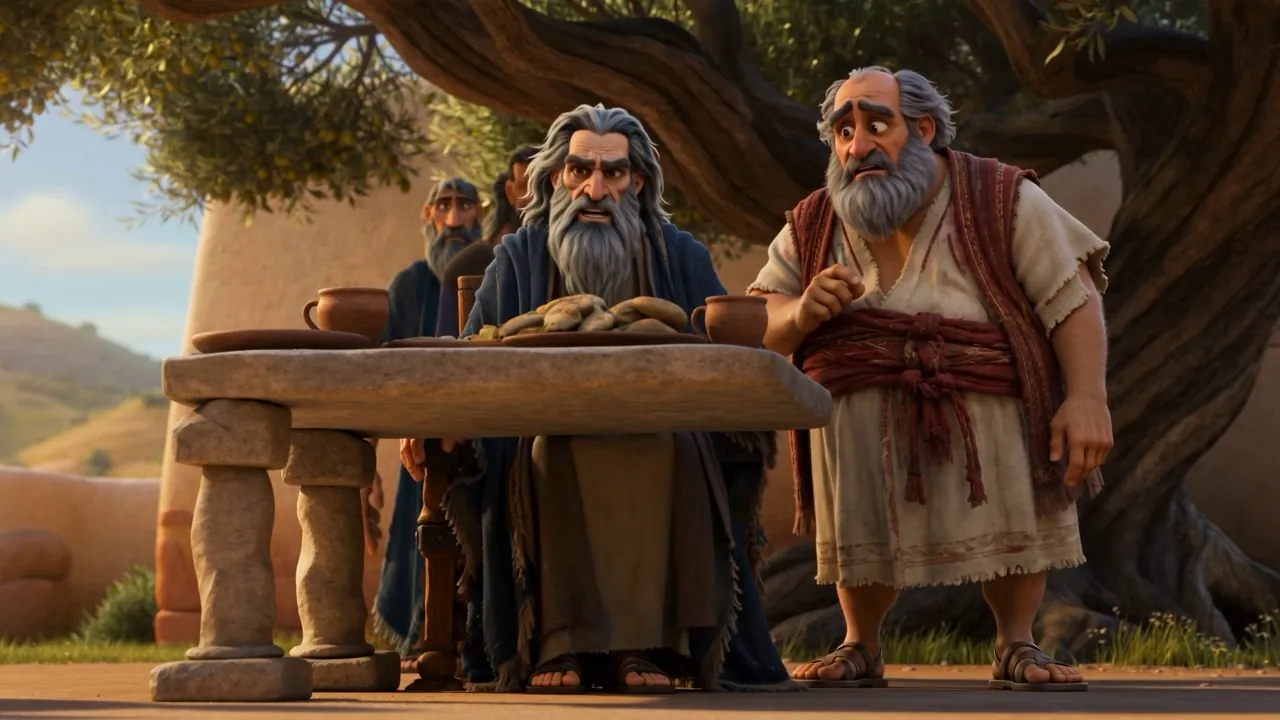
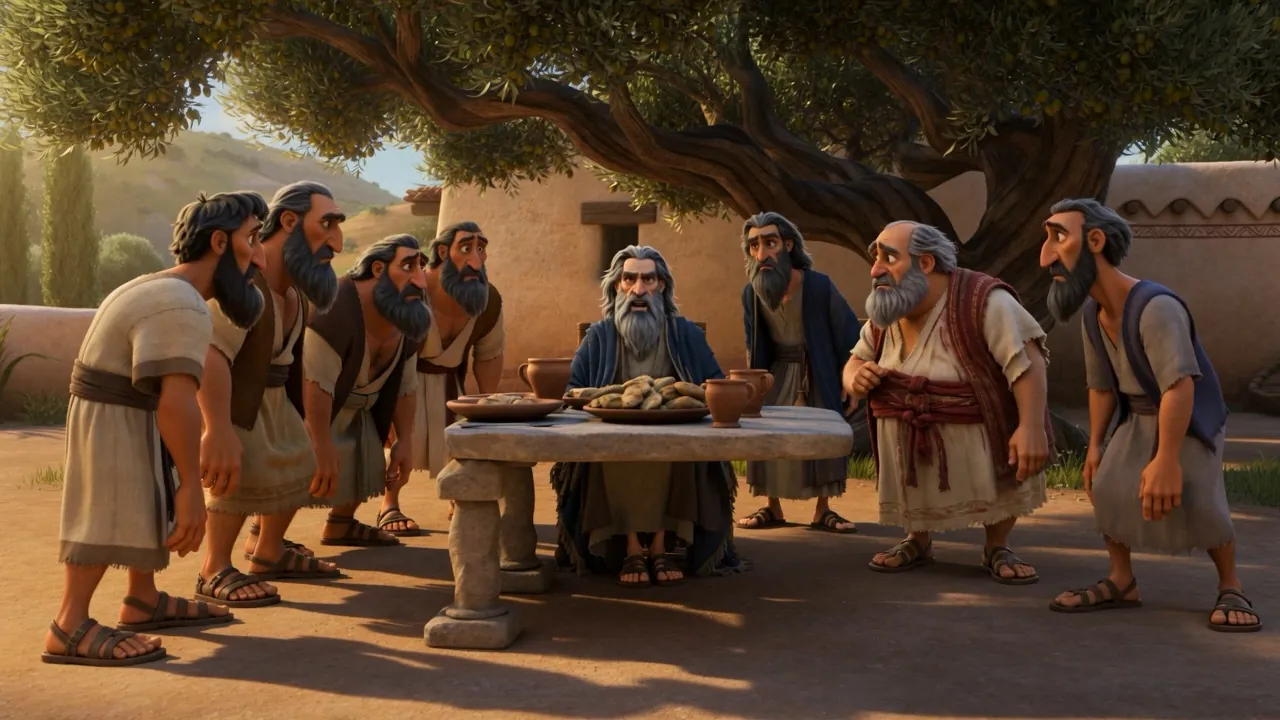
Are these all the sons you have? Jesse scratches his beard and remembers, the way you remember an inventory error, that there is one more — out with the sheep, barely worth mentioning. He isn't even named until the sentence is nearly over. And Samuel sits down at the festival table and says he will not eat until the boy is here. The prophet is seated, so nobody else may sit. 1 Samuel 16 : 11

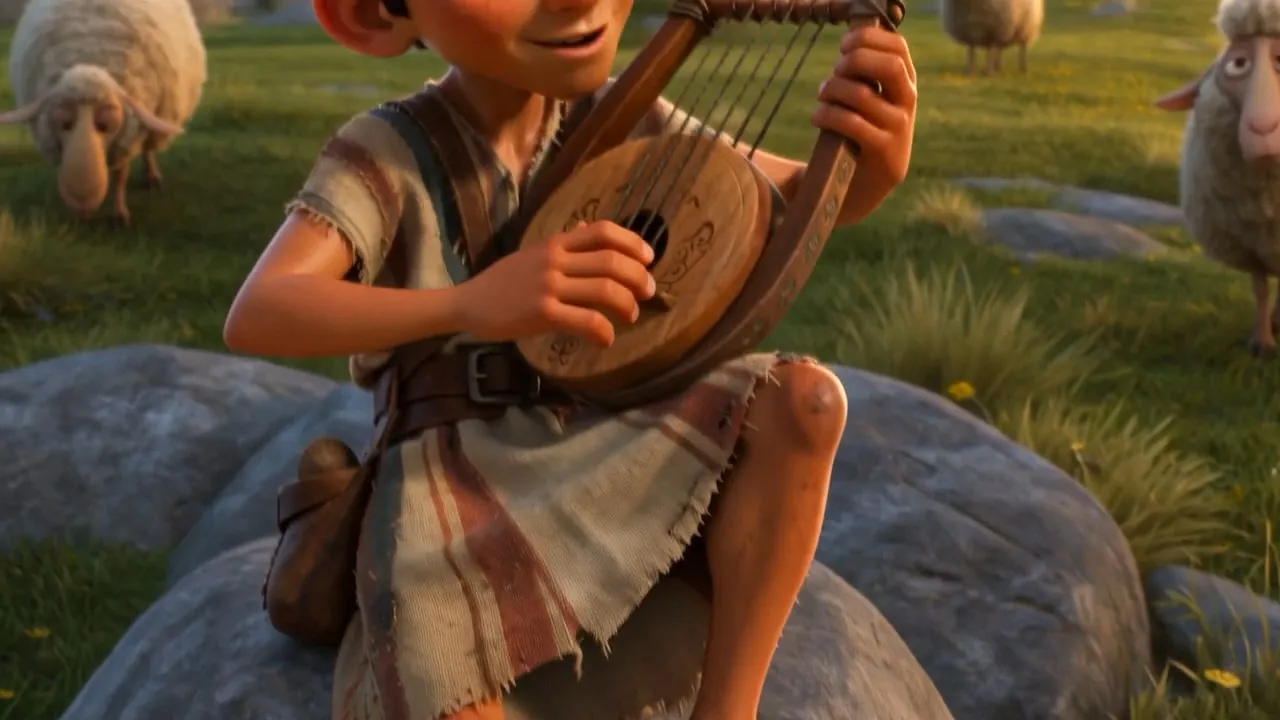
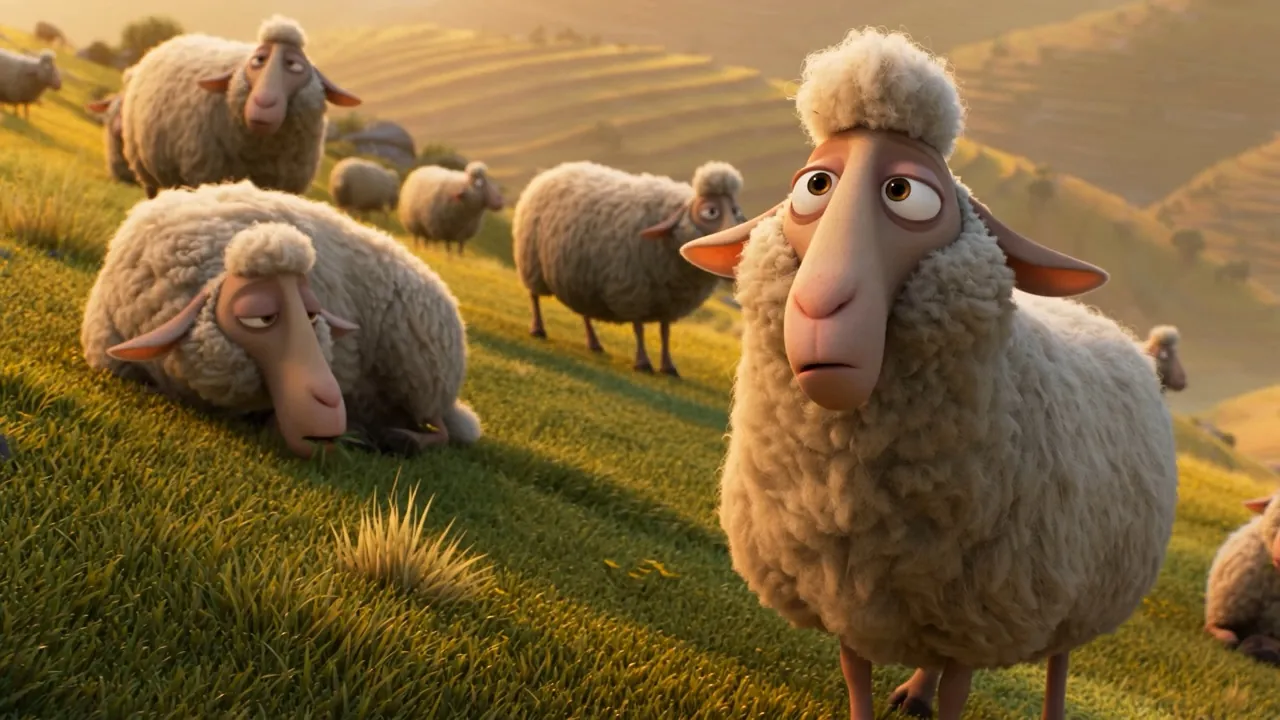
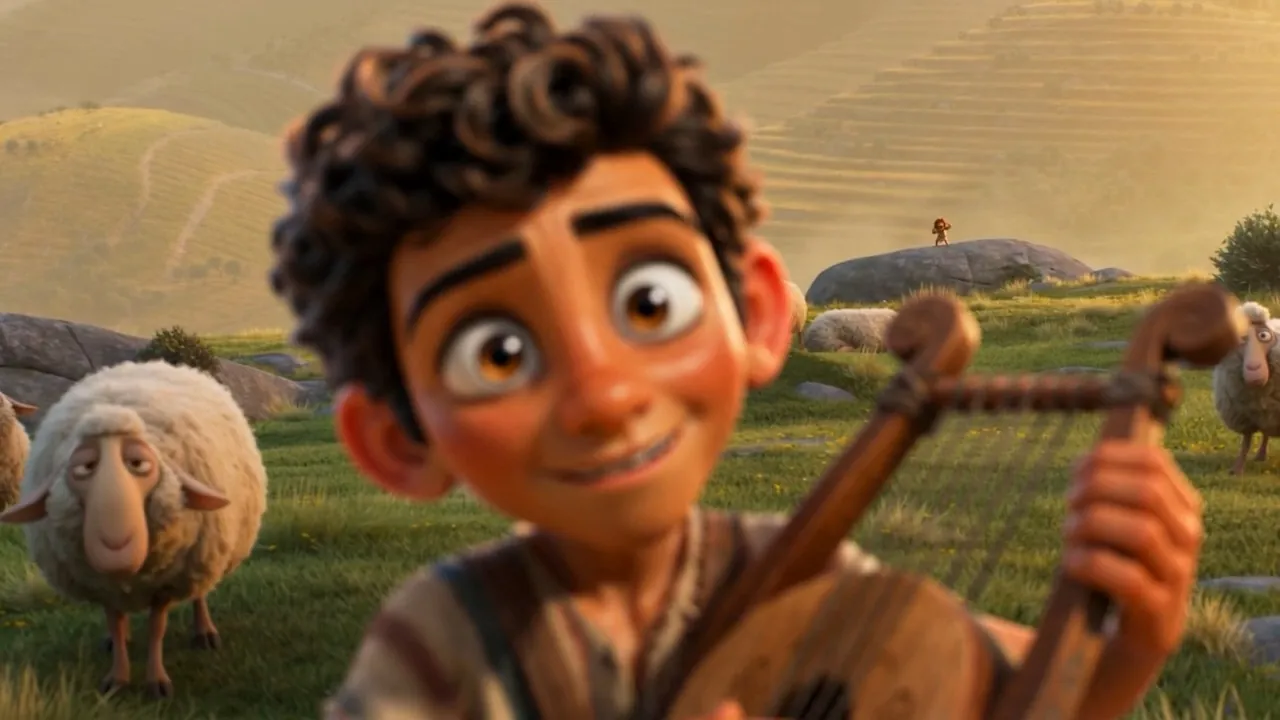
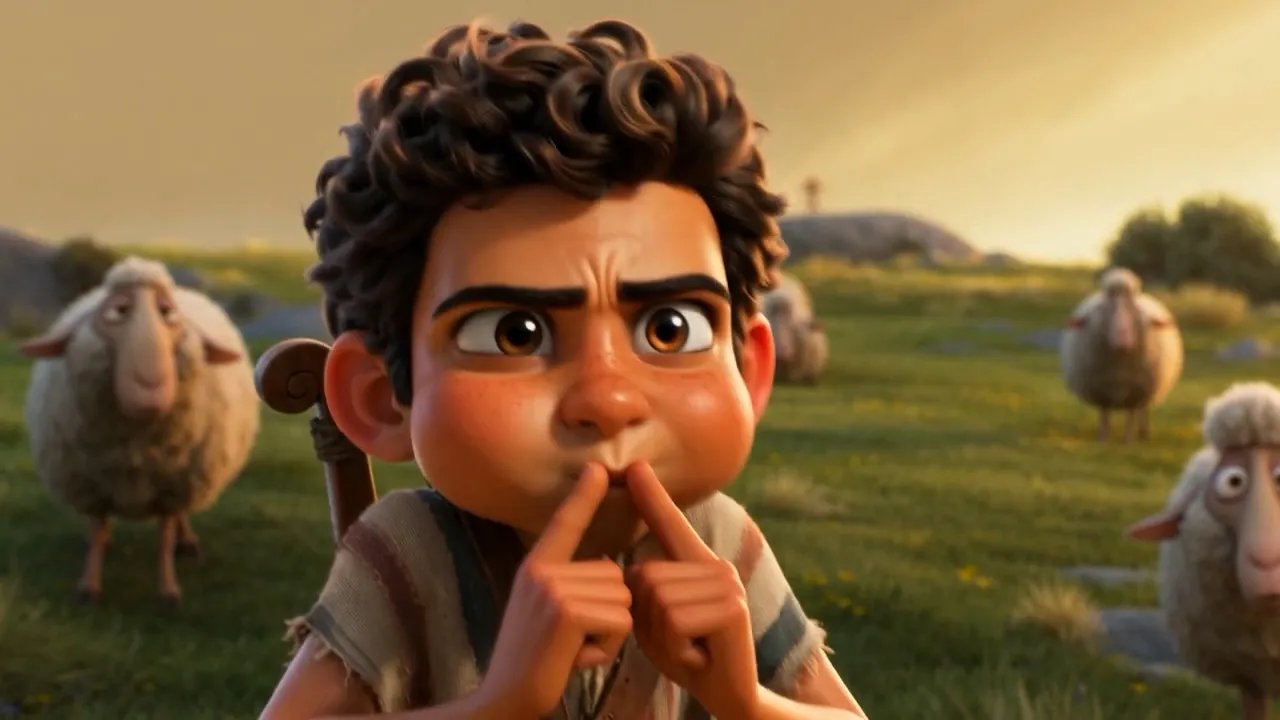

And here he is, given the warmest introduction anyone gets in this book. Bare feet keeping time on a boulder. A small hand-carved lyre. A wordless tune sung at full volume to an audience of sheep, who could not care less — and he grins mid-note anyway. When the shout comes up from the valley he is moving before the echo dies, straight down the gold slope at a dead run. 1 Samuel 16 : 11–12
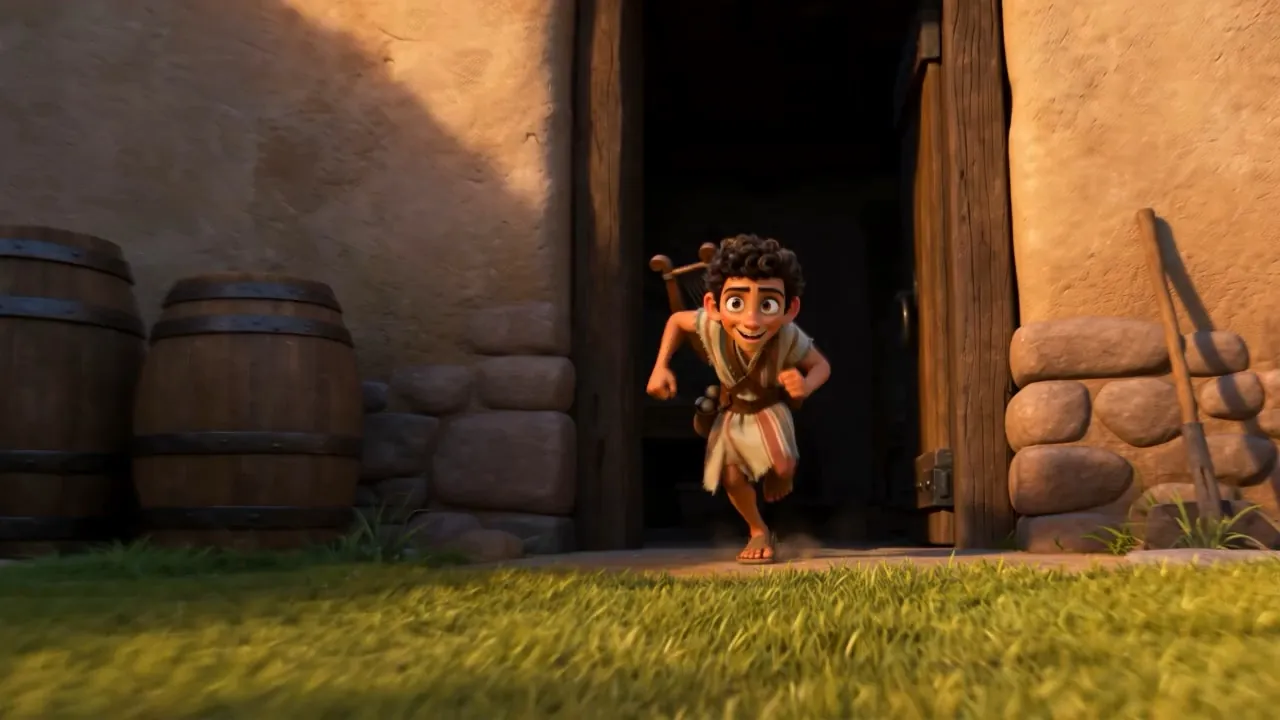
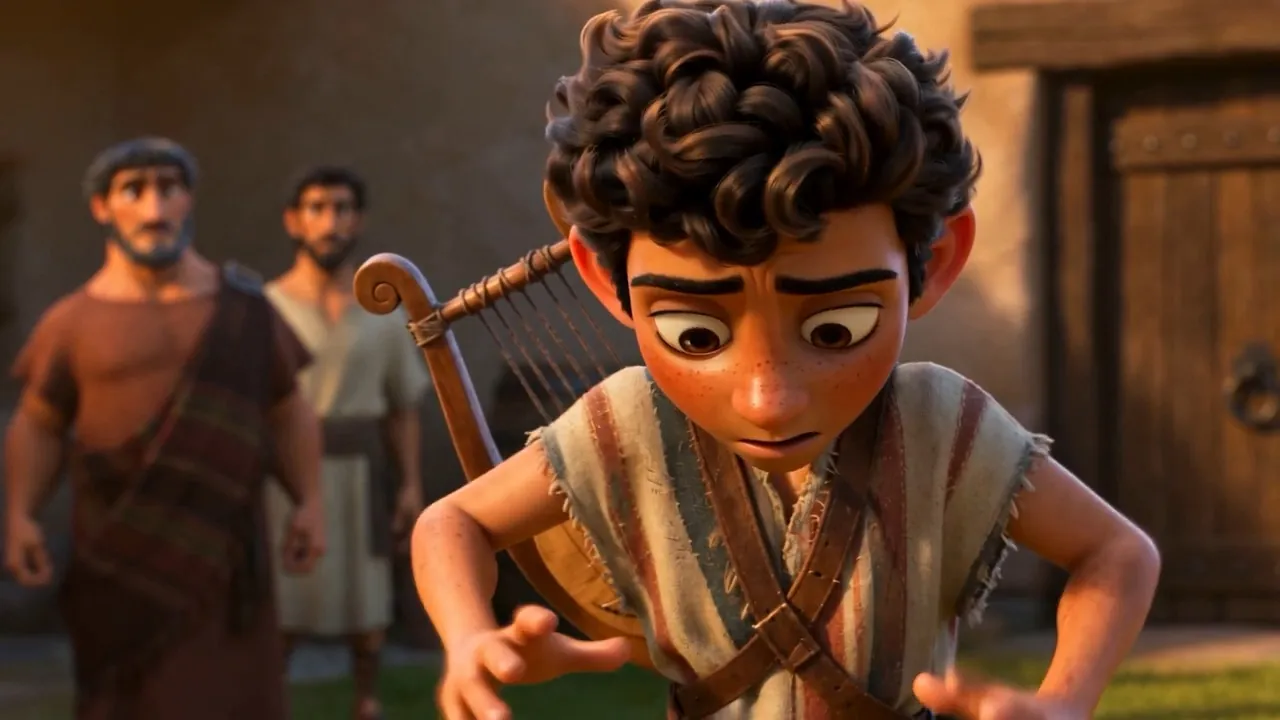

He arrives at speed, grass-stained and breathless and still grinning — and stops dead, because the most famous prophet in Israel is staring at him and so is everybody else. You can watch the grin fade. He checks his feet, his hands, his tunic, and shoots his father the look every youngest child has given a parent: did I do something? Then the old man stands up and walks past all seven. 1 Samuel 16 : 12
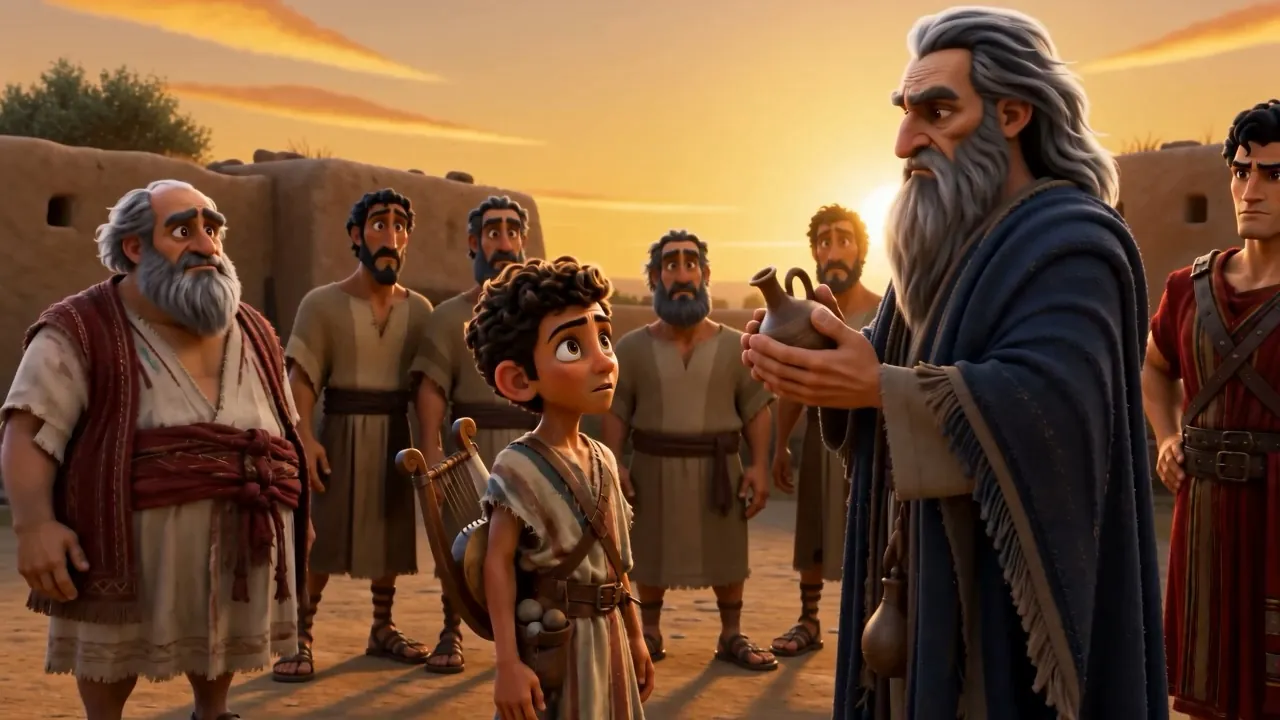

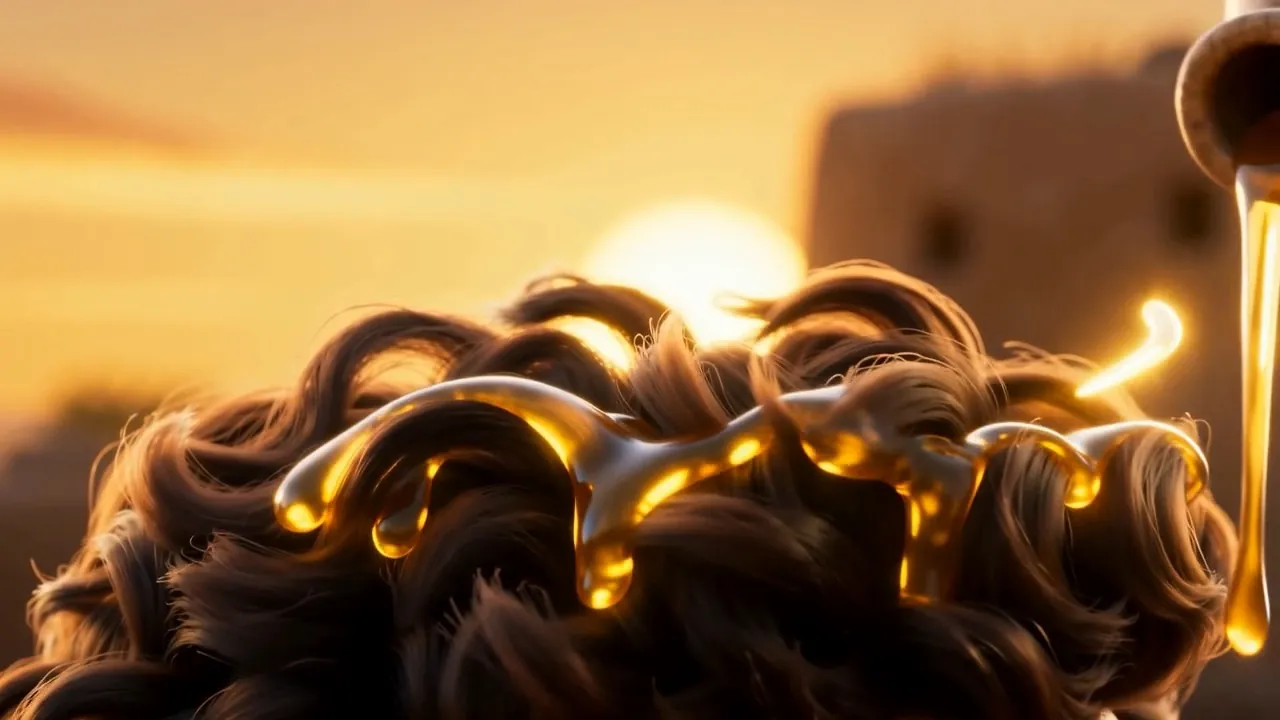
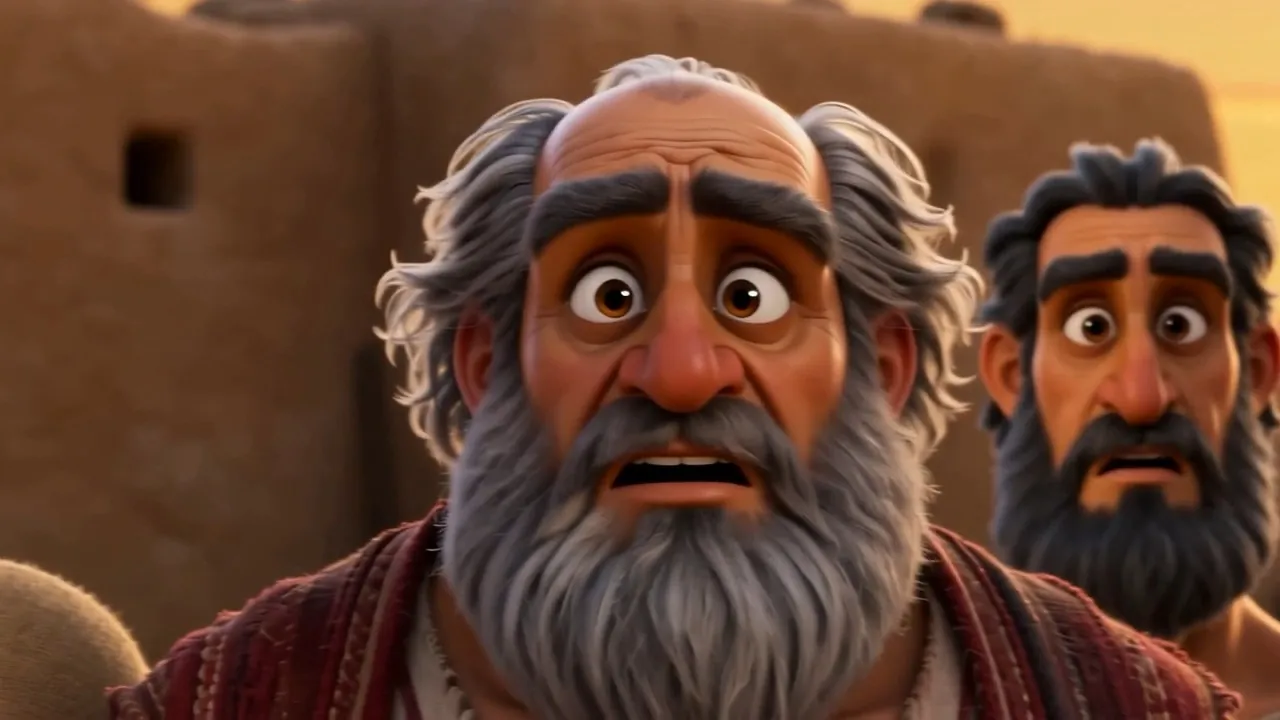
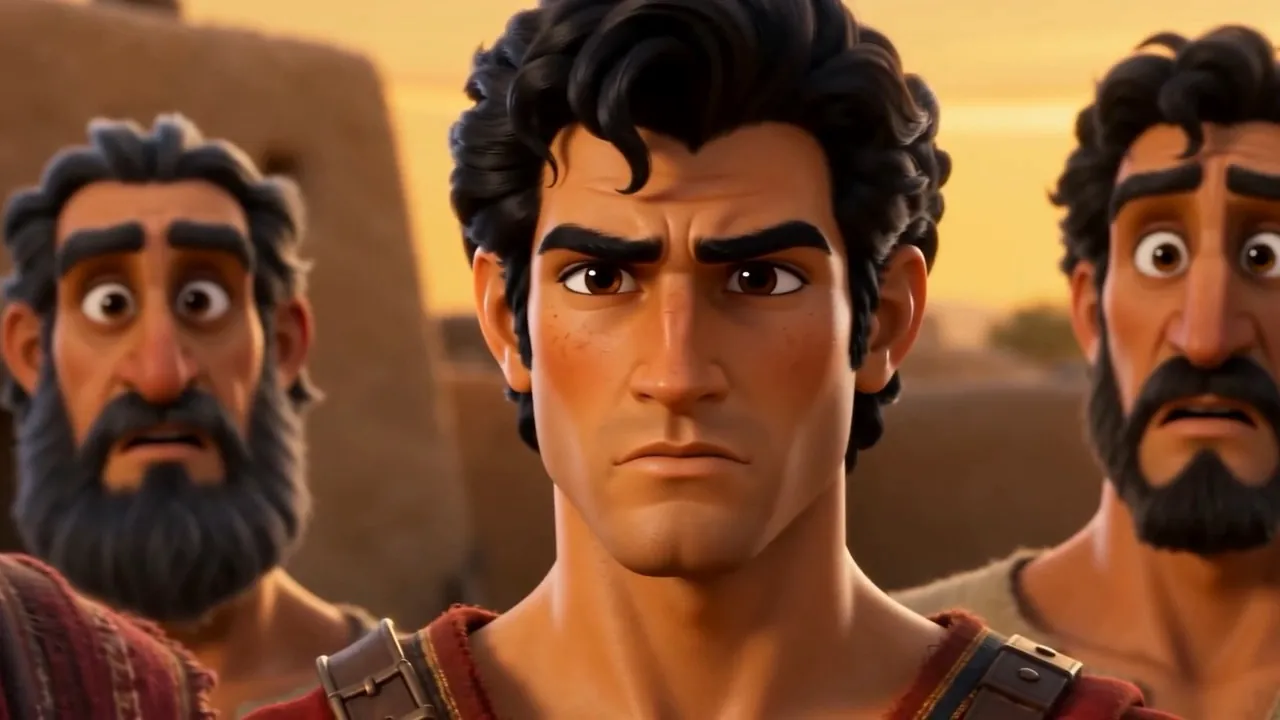

It is the first time in the whole sequence that David is completely still. Samuel raises the horn and pours, and the oil runs down through the dark curls and catches the low sun, so that for one instant the shepherd boy is wearing a crown made entirely of light. Nobody says the word king. But down the line of astonished brothers, something darker moves under Eliab's jaw, and is hidden again. 1 Samuel 16 : 12–13
Arise, anoint him, for this is he.

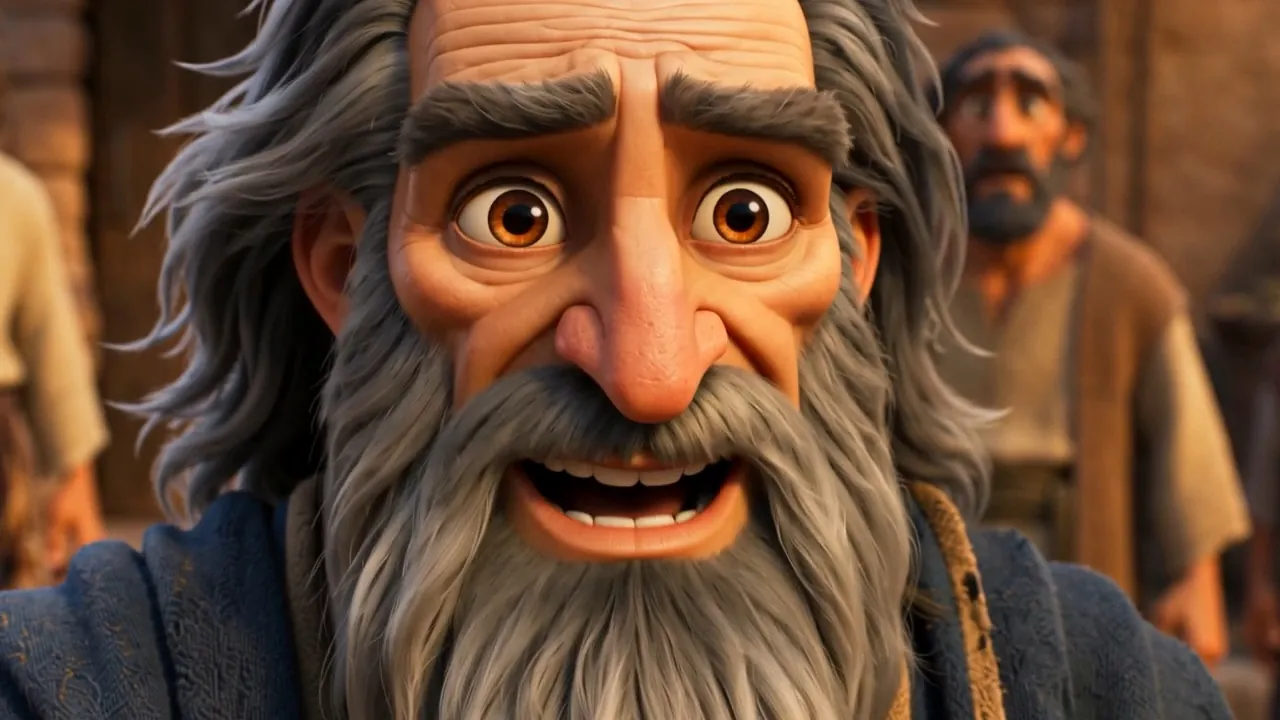
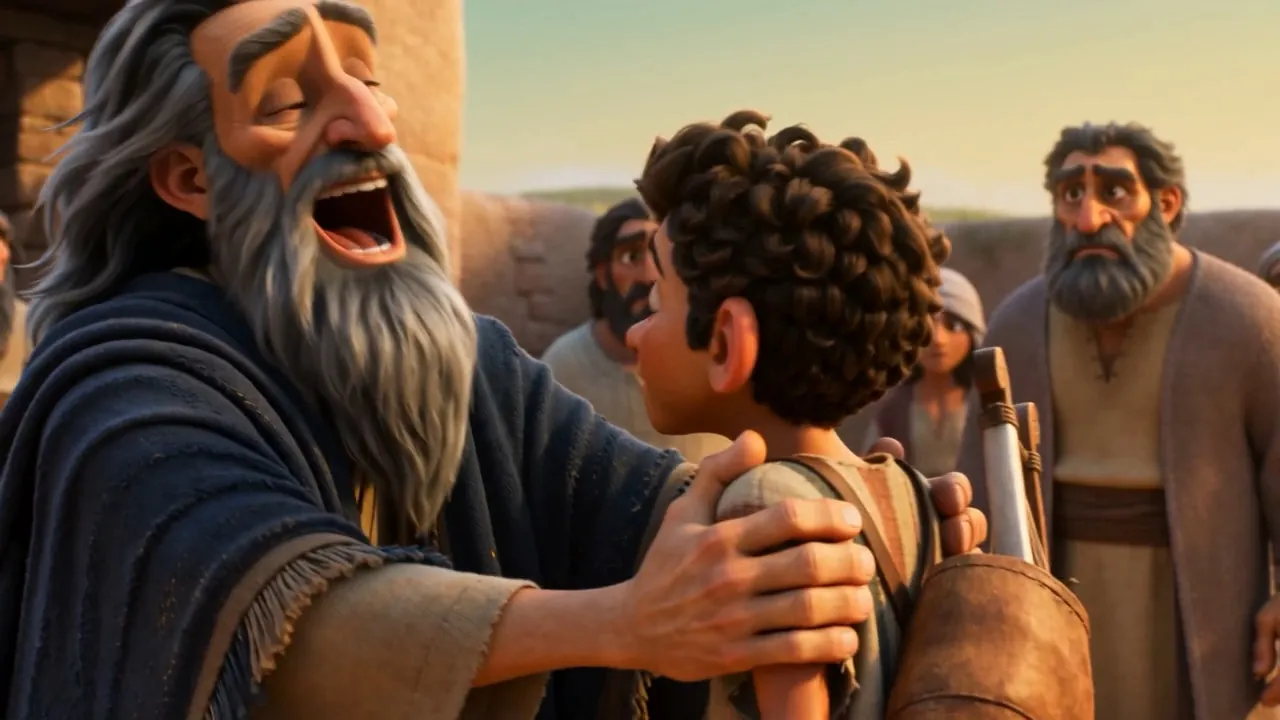
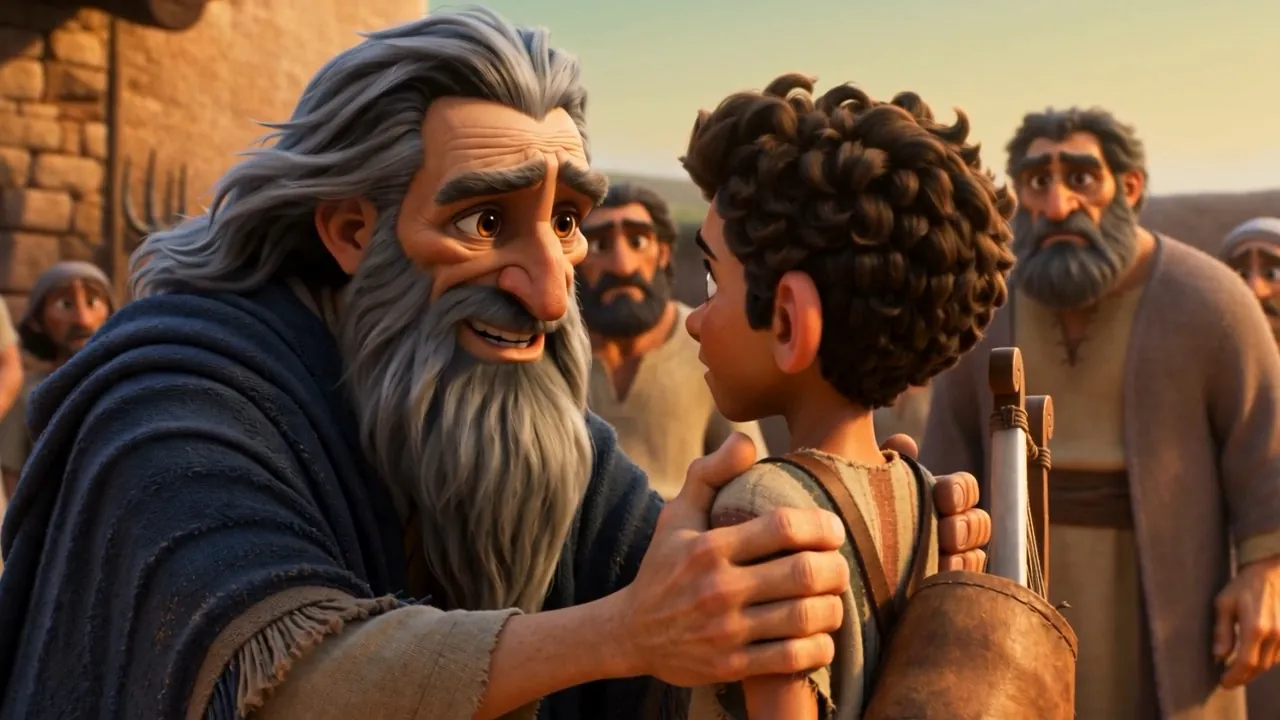
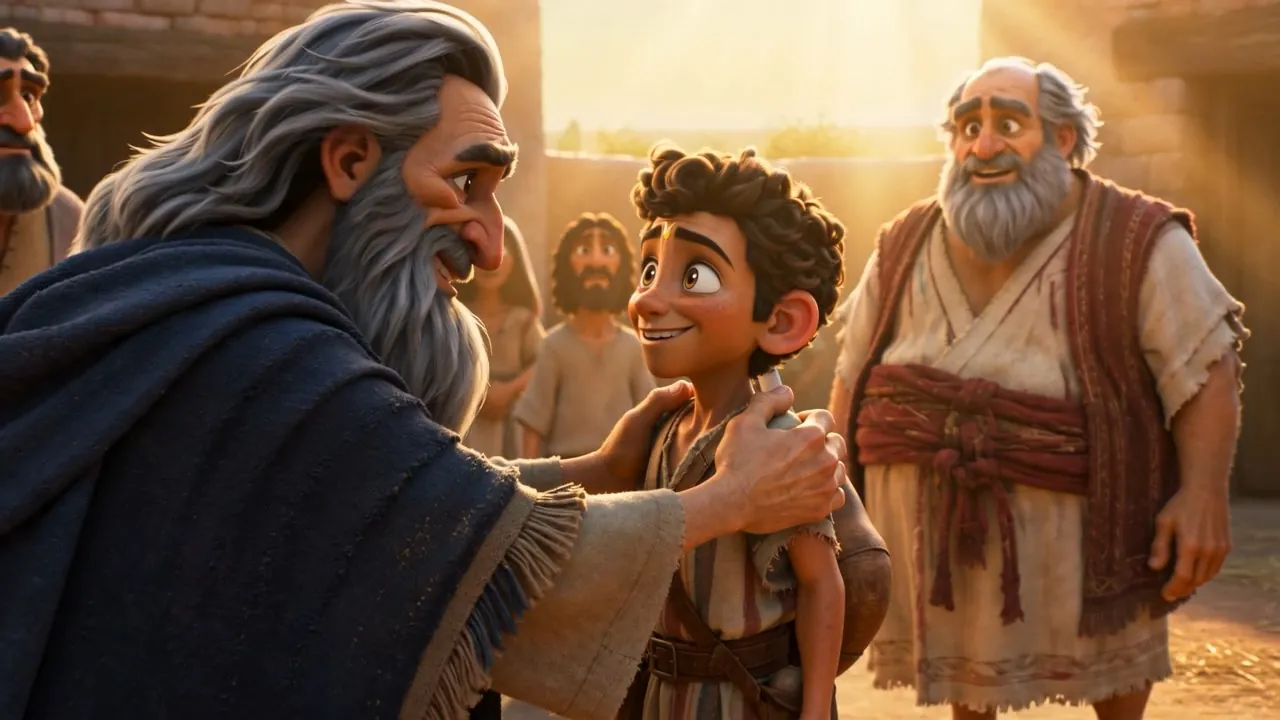
Then the long holy silence, because nobody knows what you say after that. And it is David — oil dripping off his nose, eyes enormous — who finally risks it: …should I have washed first? And Samuel laughs, a rusty, unpracticed bark of joy from forty years down. He takes the boy by both shoulders and reads his face like good news twice over, and finds whatever he was looking for. 1 Samuel 16 : 13
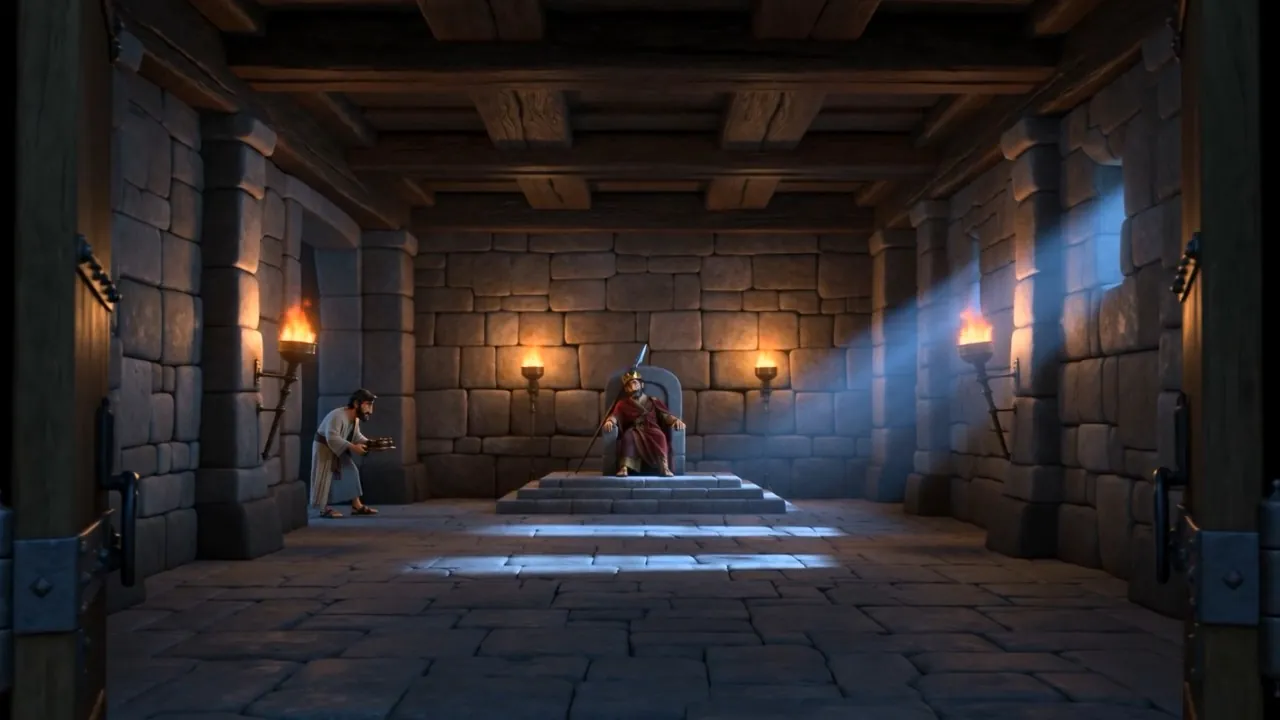
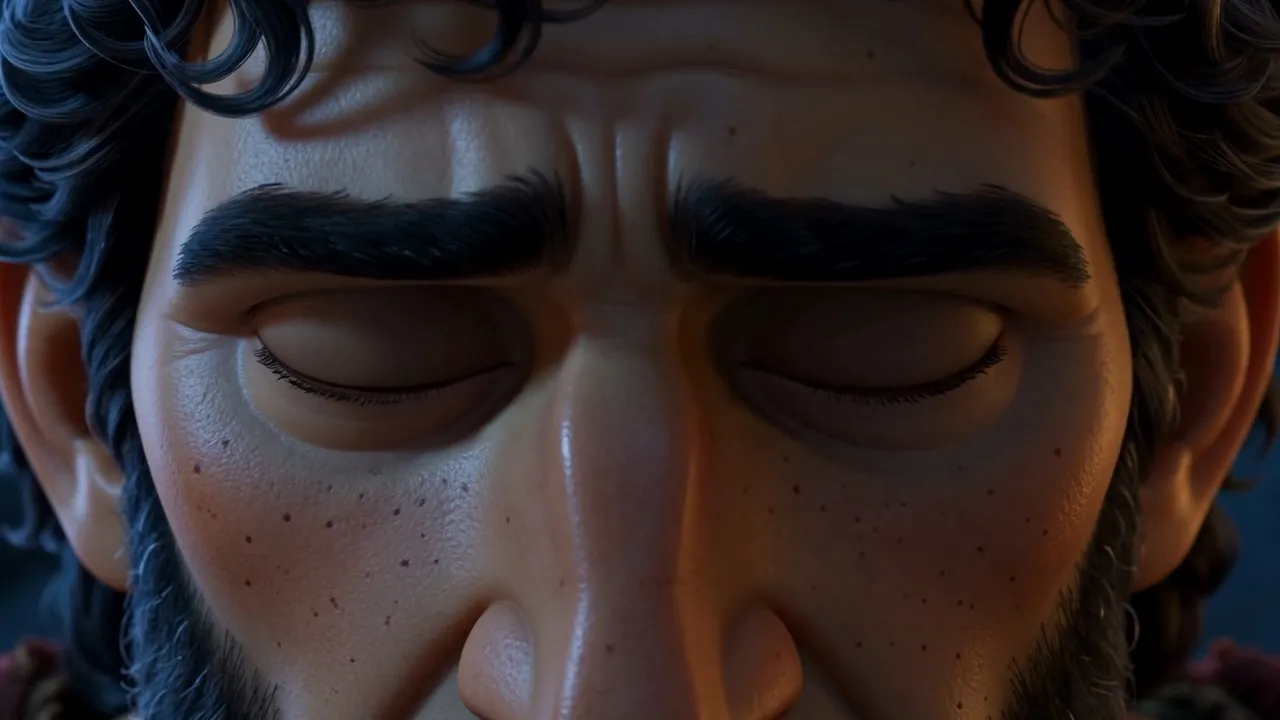
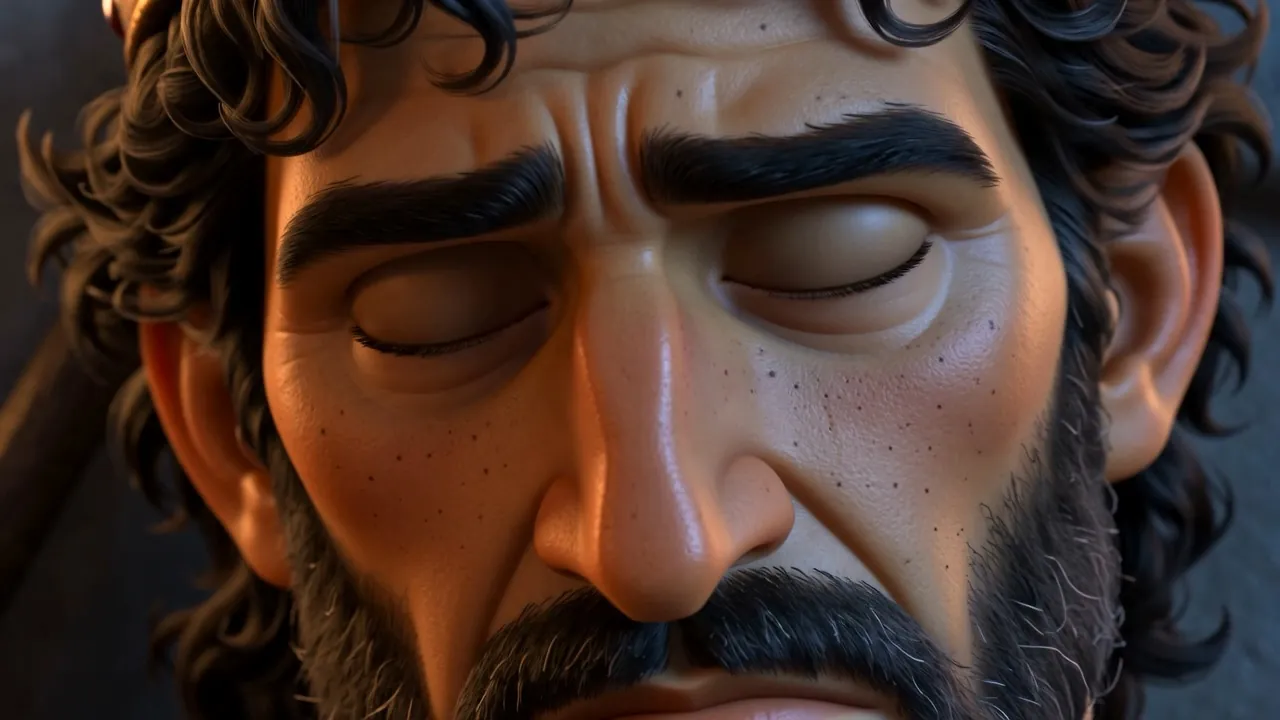
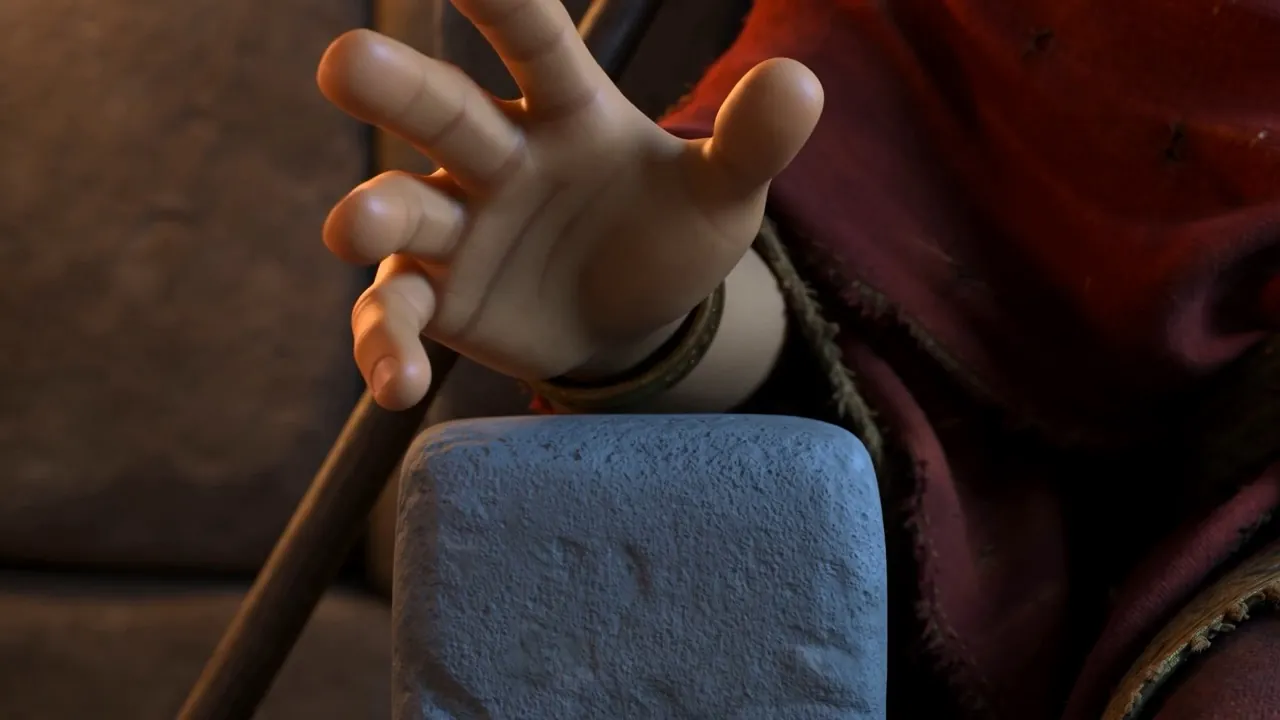
Then the temperature drops thirty degrees. Saul's hall at Gibeah is at eggshell quiet, servants carrying trays they dare not let clink, and the king rigid on the throne with his eyes shut, wrapped in his robe against a cold that is somewhere inside him. A valet crosses the floor the way men cross thin ice and suggests, carefully, that music is said to help. There is a boy in Bethlehem. 1 Samuel 16 : 14–18
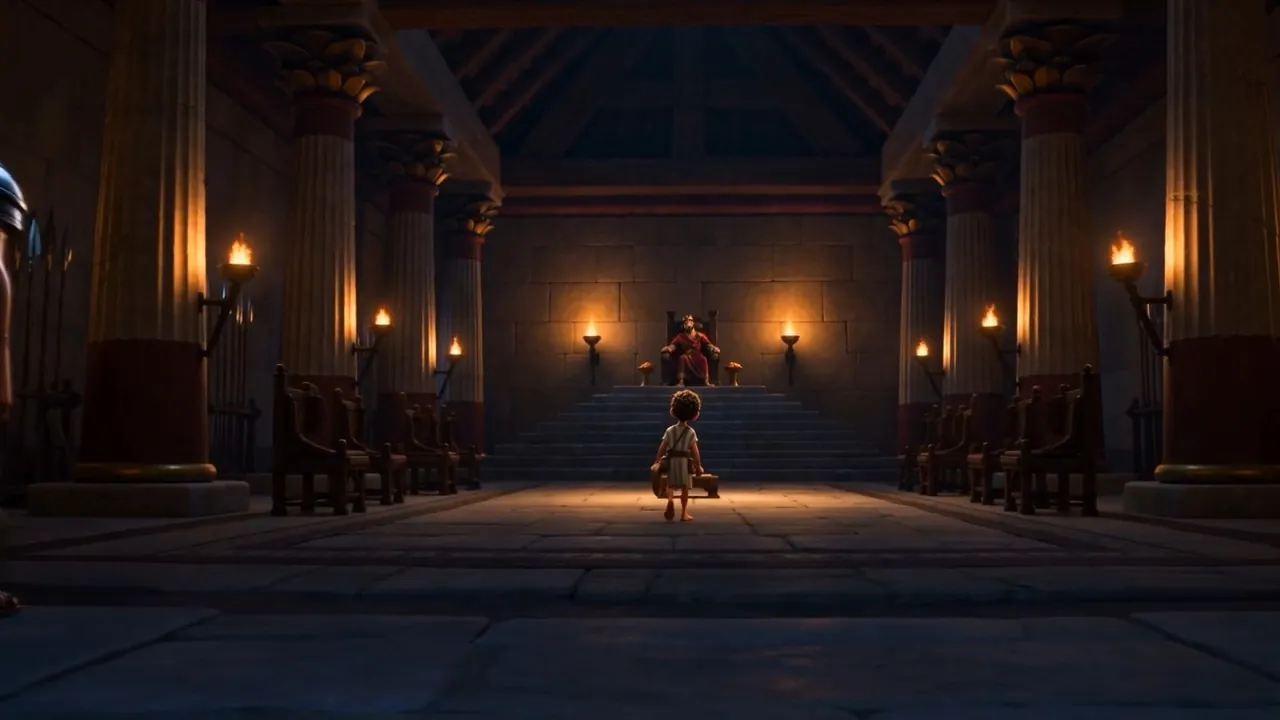
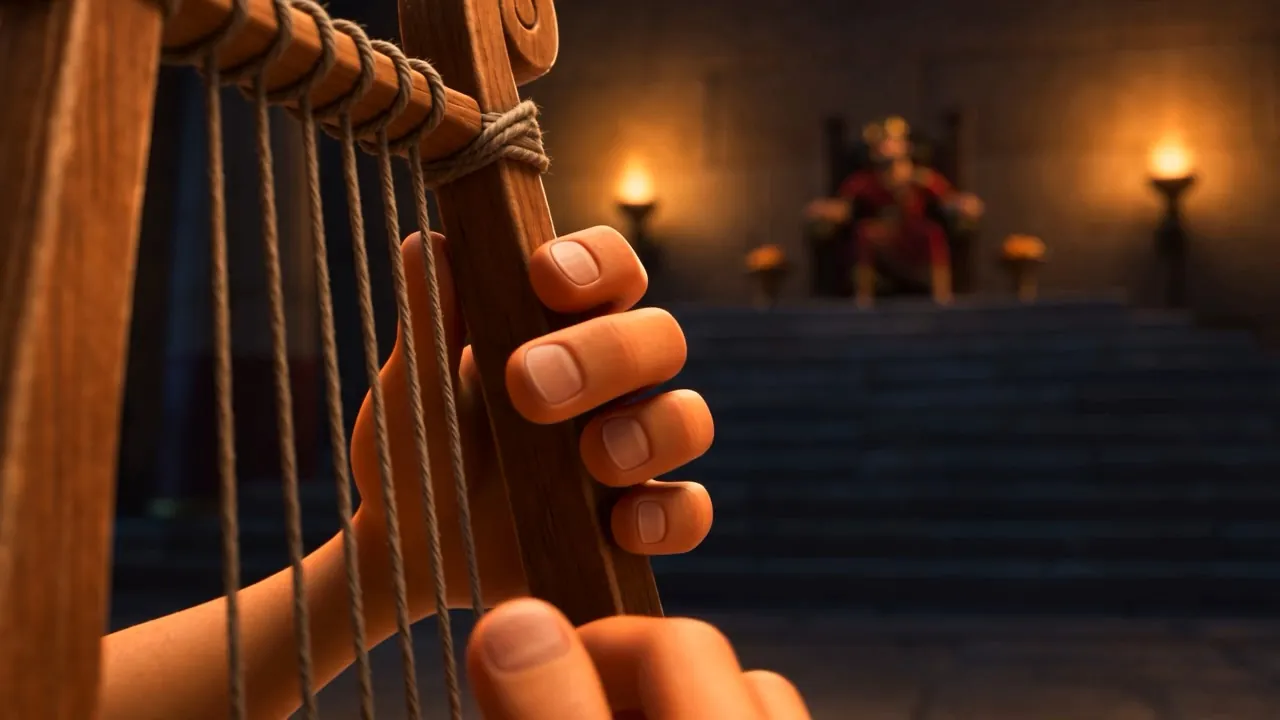
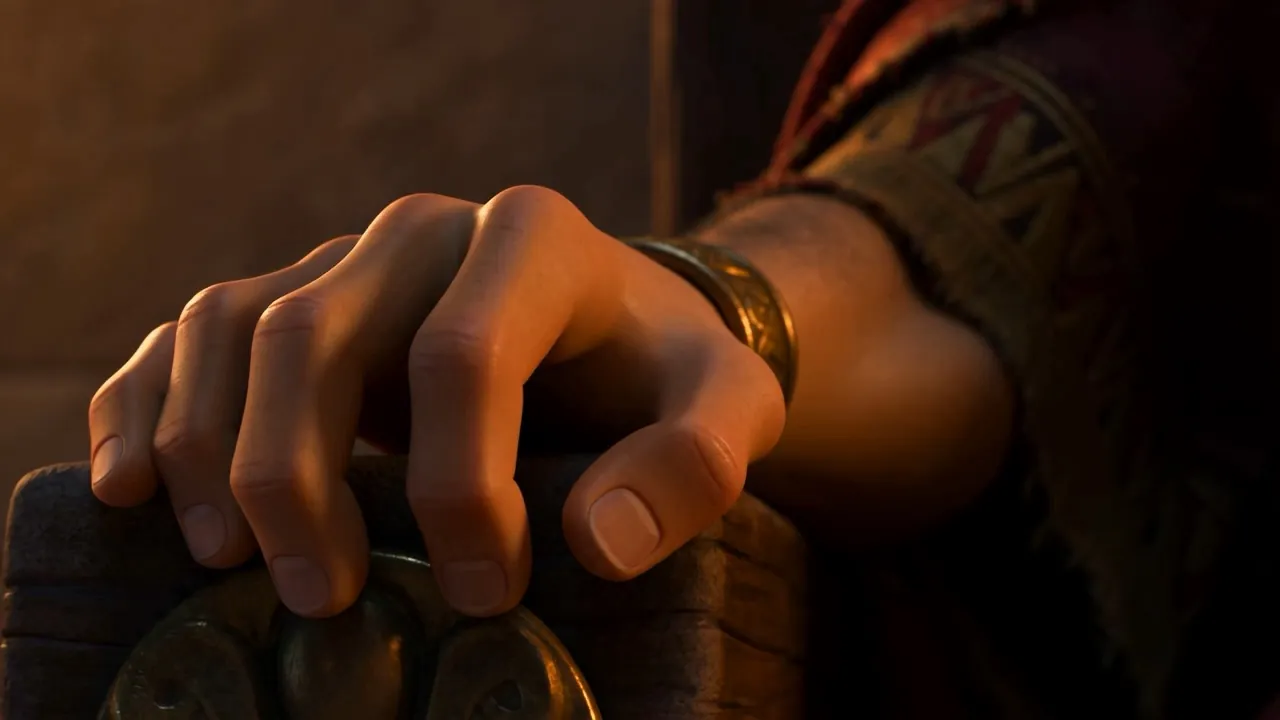
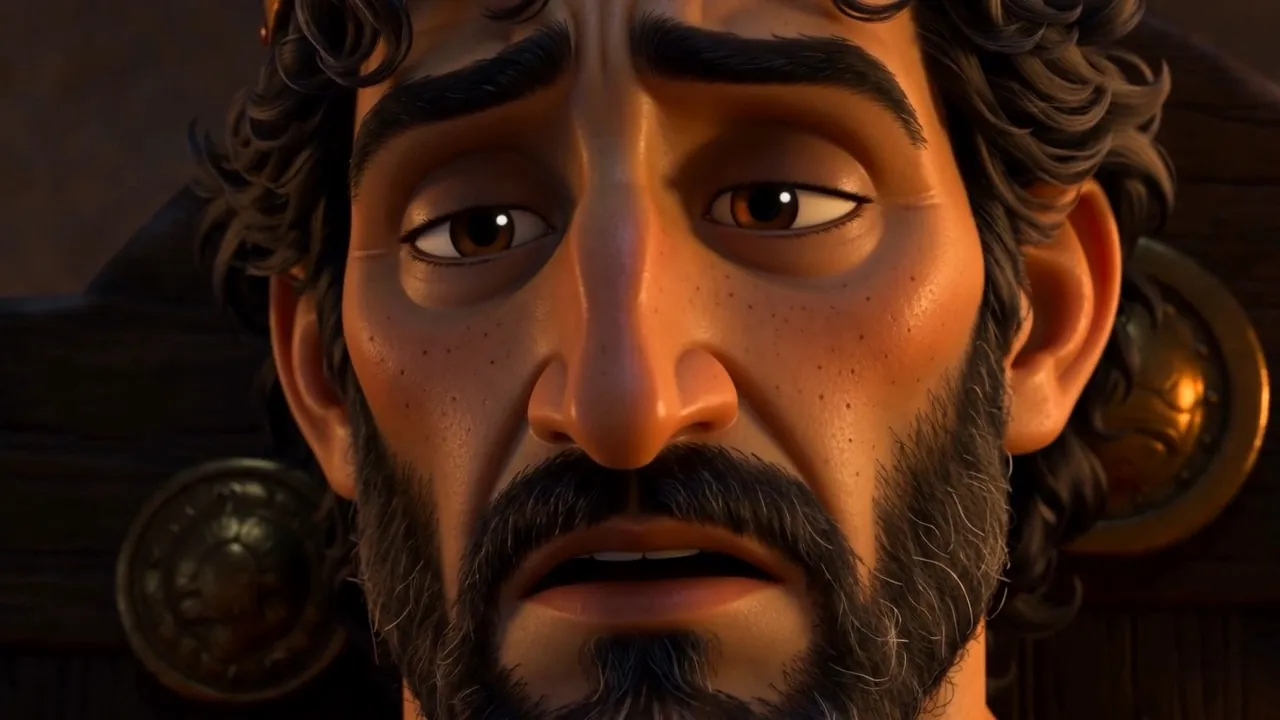
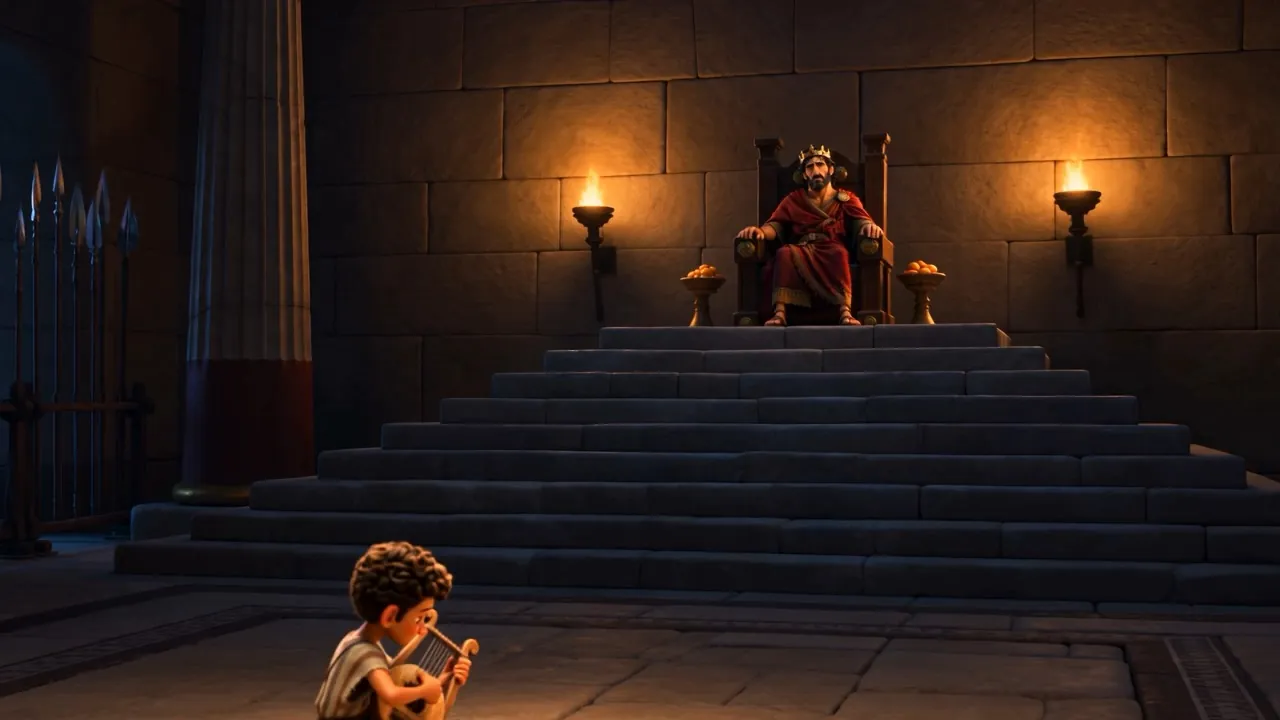
So the shepherd boy is led into the grimmest room he has ever stood in, bows, sits on a low stool, and settles the little lyre against his chest. The melody is simple. Green. It sounds like hill country at morning, because that is where he learned it. And a clenched hand on an armrest loosens, finger by finger, and a long shaking breath goes out — the first full one in months. 1 Samuel 16 : 23


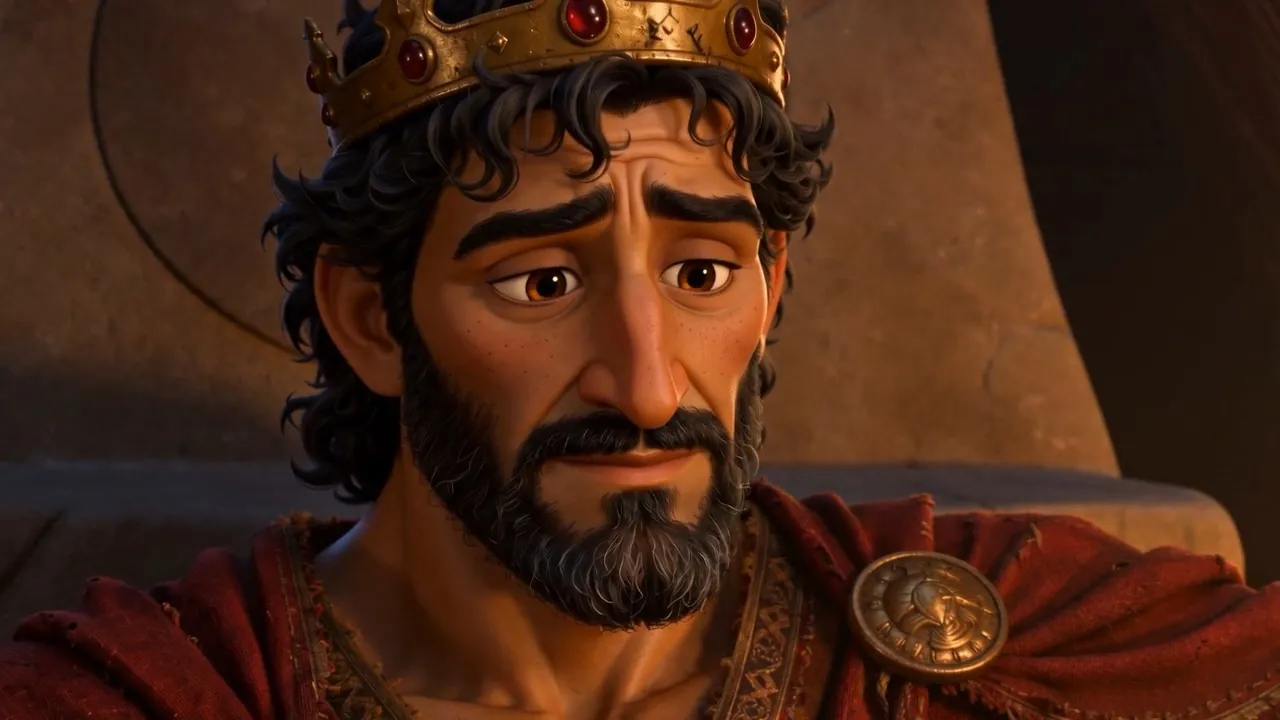
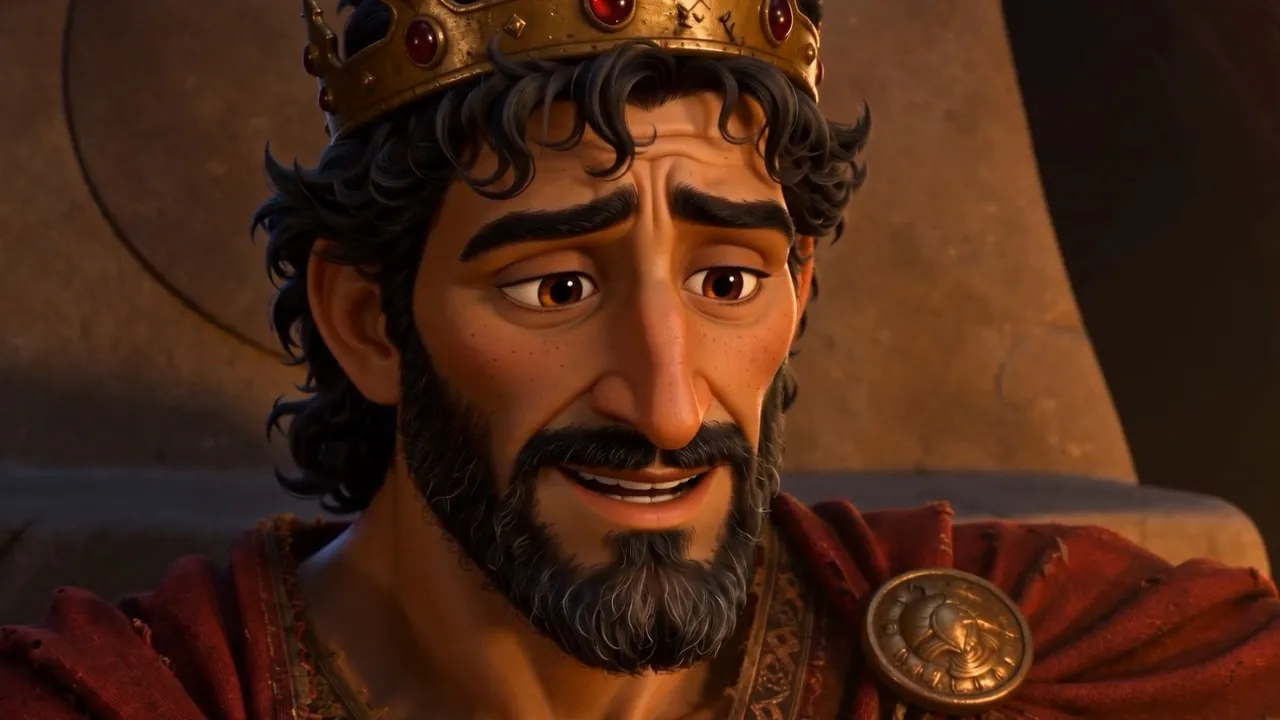
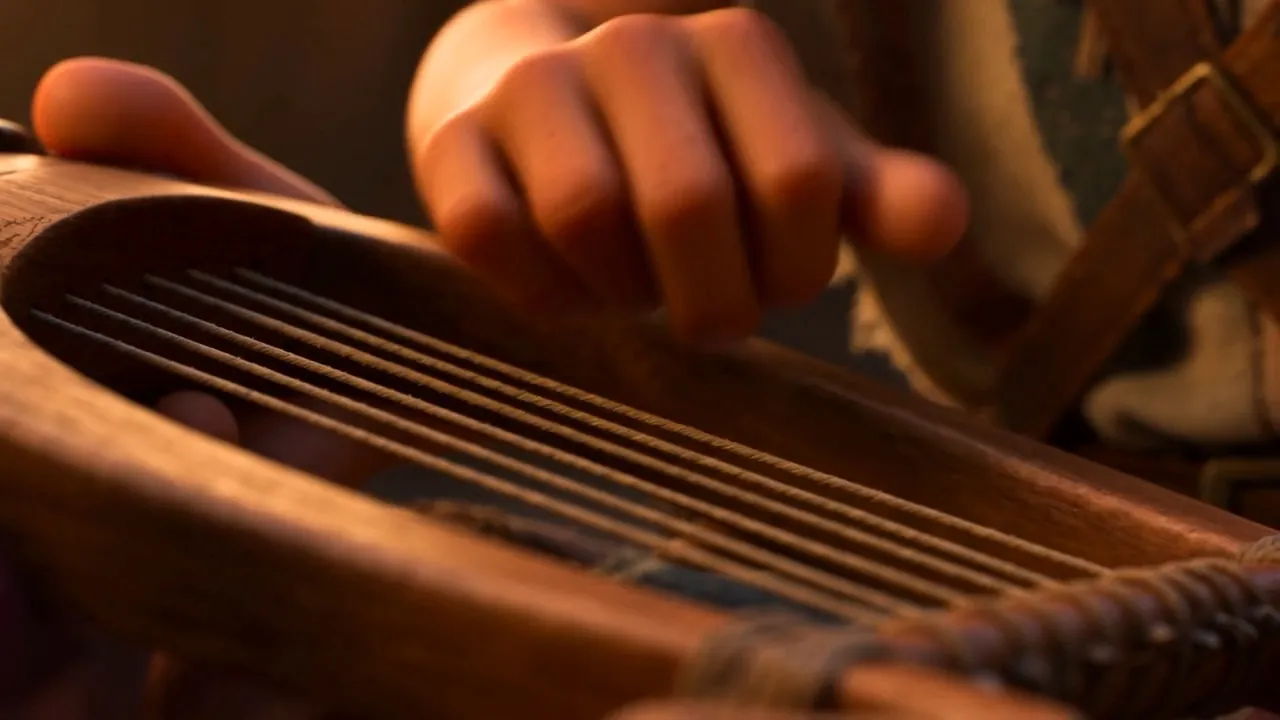
The last note fades into the cedar beams, and the quiet that follows is a softer animal than the one before. What is your name, boy? The grin arrives, lopsided and respectful: David, my king. Son of Jesse. And Saul opens his eyes and really looks at him, and something almost forgotten crosses the ruined face. Play it again… David, son of Jesse. 1 Samuel 16 : 19–23
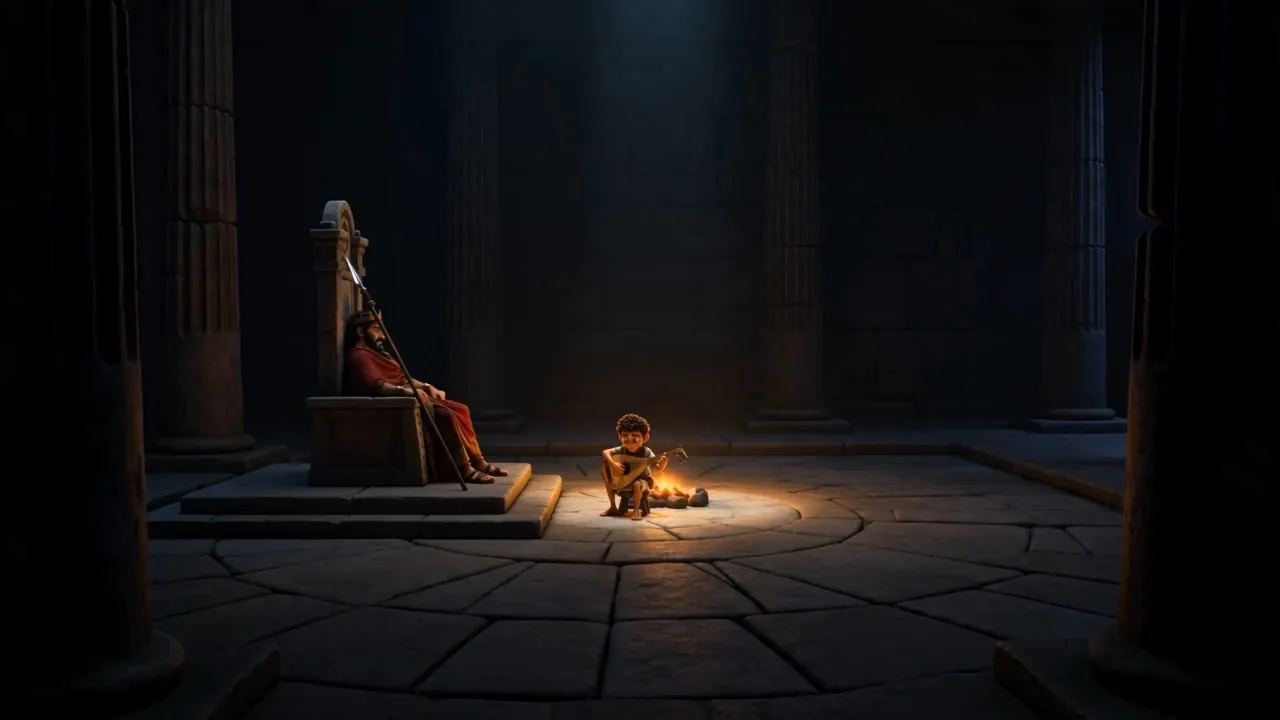
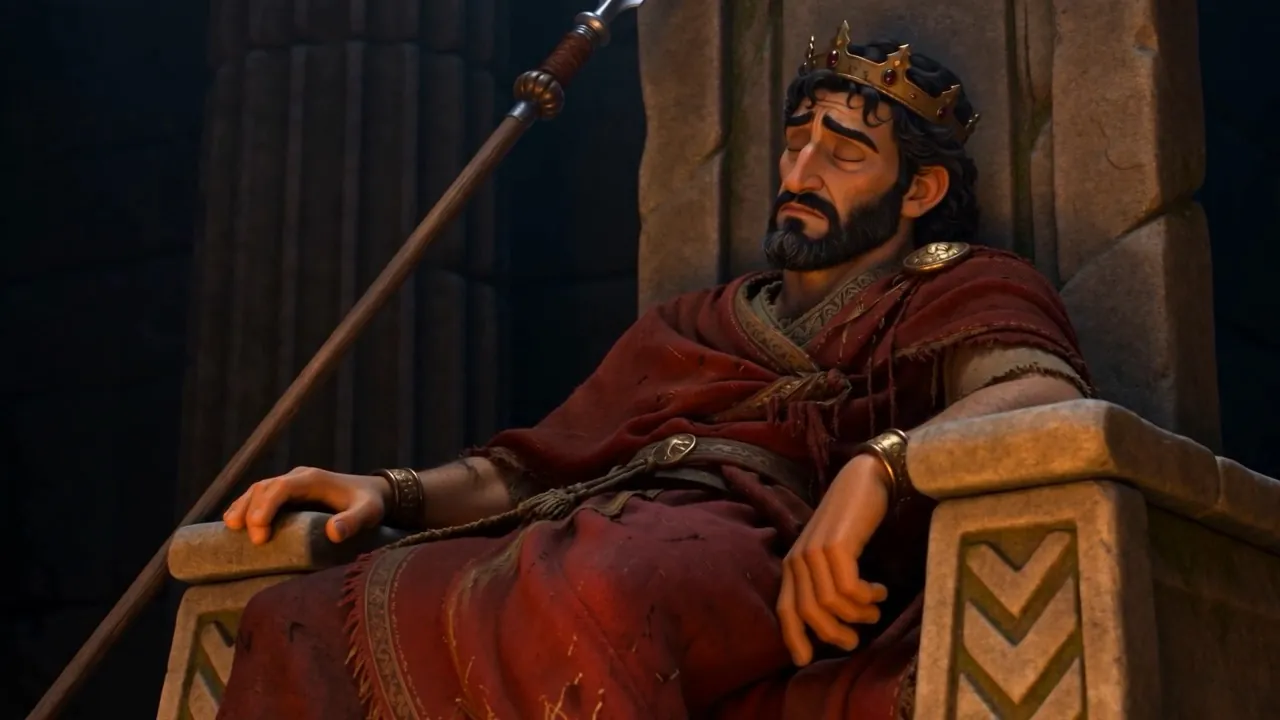

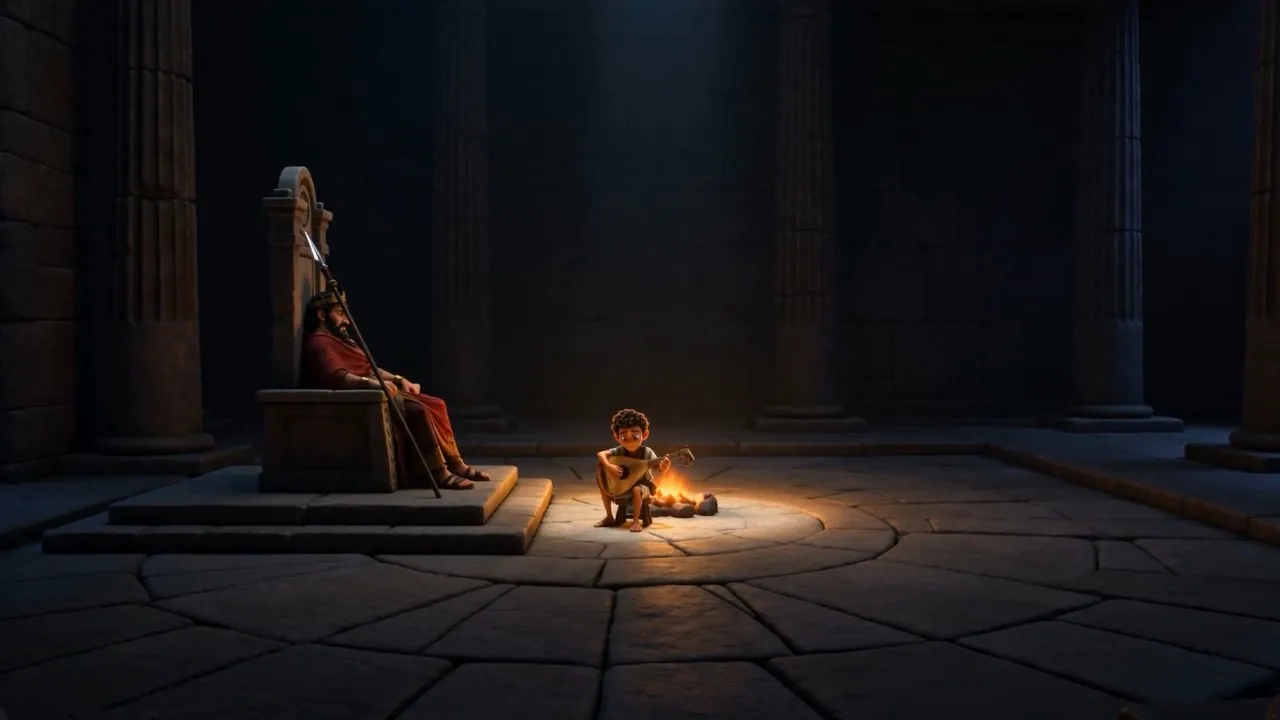
The hall goes almost entirely dark, and what is left is one warm ring of light with two people in it: an old failing king at rest, and a boy on a stool playing. The king's hand hangs open and easy, inches from a spear he has, this once, forgotten — and years from now that hand will pick it up and throw it at this boy. Neither of them knows. 1 Samuel 16 : 23
The past of Israel, and the future of Israel, alone together in one small ring of light.
After the story
Everyone was looking at the line-up. God was looking at a hillside.
The whole scene is built on a joke that turns serious. Everybody in that courtyard — the prophet included — is watching the impressive end of the line. Nobody is watching the hill. Jesse does not even count his youngest when he is asked how many sons he has; the boy is an afterthought, a rounding error, out doing the job you give the child who is not needed for anything else. And that is precisely where the story has been waiting the whole time. Israel's greatest king is found because a prophet refused to trust his own eyes and sat down at a table until somebody went and fetched the one nobody had bothered to mention.
Voices of Bethlehem · hover or tap to turn
Samuel
"Are all your children here?… We will not sit down until he comes here."
— 1 Samuel 16:11
Jesse
"There remains yet the youngest. Behold, he is keeping the sheep."
— 1 Samuel 16:11
David
"Skillful in playing, a mighty man of valor… and Yahweh is with him."
— 1 Samuel 16:18The Books of Samuel
How closely were you watching?
1. Why does God turn down Eliab, the eldest?
1 Samuel 16:7. Samuel himself is dazzled and has to be corrected — the mistake the chapter warns about is one the prophet makes first.
2. Where is David while his brothers are being presented?
1 Samuel 16:11 — Jesse does not even include him when asked whether these are all his sons.
3. What does Samuel do while they wait for David to arrive?
1 Samuel 16:11. Because the prophet is seated and nobody else may sit, the entire household is left standing — heaven holding the dinner hostage.
4. Why is David sent for a second time — to Saul's court?
1 Samuel 16:14–23. Saul's own servant recommends him — and adds, dangerously, "and Yahweh is with him."
What this story teaches
God reads a different CV.
Eliab has everything the job appears to require — height, jaw, presence. He is turned down in the first thirty seconds. The line the whole chapter exists to deliver is that people judge by what is visible, and God does not.
"For man looks at the outward appearance, but Yahweh looks at the heart." 1 Samuel 16:7Being overlooked is not being forgotten.
David is left off his own father's list. He finds out he has been chosen while still out of breath and covered in grass stains. Nobody in the courtyard had thought of him; the search had been for him the entire time.
"Arise! Anoint him, for this is he." 1 Samuel 16:12Faithful in the field first.
He is anointed and then goes straight back to the sheep. The gift that eventually gets him into the palace is the one he built up playing to animals on a hillside, for no audience and no reward.
"Send me David your son, who is with the sheep." 1 Samuel 16:19Read the scripture itself. 1 Samuel 16 · World English Bible
1 Samuel 16
1Yahweh said to Samuel, “How long will you mourn for Saul, since I have rejected him from being king over Israel? Fill your horn with oil, and go. I will send you to Jesse the Bethlehemite; for I have provided a king for myself among his sons.”
2Samuel said, “How can I go? If Saul hears it, he will kill me.” Yahweh said, “Take a heifer with you, and say, I have come to sacrifice to Yahweh.
3Call Jesse to the sacrifice, and I will show you what you shall do. You shall anoint to me him whom I name to you.”
4Samuel did that which Yahweh spoke, and came to Bethlehem. The elders of the city came to meet him trembling, and said, “Do you come peaceably?”
5He said, “Peaceably; I have come to sacrifice to Yahweh. Sanctify yourselves, and come with me to the sacrifice.” He sanctified Jesse and his sons, and called them to the sacrifice.
6When they had come, he looked at Eliab, and said, “Surely Yahweh’s anointed is before him.”
7But Yahweh said to Samuel, “Don’t look on his face, or on the height of his stature, because I have rejected him; for I don’t see as man sees. For man looks at the outward appearance, but Yahweh looks at the heart.”
8Then Jesse called Abinadab, and made him pass before Samuel. He said, “Yahweh has not chosen this one, either.”
9Then Jesse made Shammah to pass by. He said, “Yahweh has not chosen this one, either.”
10Jesse made seven of his sons to pass before Samuel. Samuel said to Jesse, “Yahweh has not chosen these.”
11Samuel said to Jesse, “Are all your children here?” He said, “There remains yet the youngest. Behold, he is keeping the sheep.” Samuel said to Jesse, “Send and get him, for we will not sit down until he comes here.”
12He sent, and brought him in. Now he was ruddy, with a handsome face and good appearance. Yahweh said, “Arise! Anoint him, for this is he.”
13Then Samuel took the horn of oil, and anointed him in the middle of his brothers. Then Yahweh’s Spirit came mightily on David from that day forward. So Samuel rose up and went to Ramah.
14Now Yahweh’s Spirit departed from Saul, and an evil spirit from Yahweh troubled him.
15Saul’s servants said to him, “See now, an evil spirit from God troubles you.
16Let our lord now command your servants who are in front of you to seek out a man who is a skillful player on the harp. Then when the evil spirit from God is on you, he will play with his hand, and you will be well.”
17Saul said to his servants, “Provide me now a man who can play well, and bring him to me.”
18Then one of the young men answered, and said, “Behold, I have seen a son of Jesse the Bethlehemite who is skillful in playing, a mighty man of valor, a man of war, prudent in speech, and a handsome person; and Yahweh is with him.”
19Therefore Saul sent messengers to Jesse, and said, “Send me David your son, who is with the sheep.”
20Jesse took a donkey loaded with bread, and a bottle of wine, and a young goat, and sent them by David his son to Saul.
21David came to Saul, and stood before him. He loved him greatly; and he became his armor bearer.
22Saul sent to Jesse, saying, “Please let David stand before me; for he has found favor in my sight.”
23When the spirit from God was on Saul, David took the harp, and played with his hand; so Saul was refreshed, and was well, and the evil spirit departed from him.
World English Bible (WEB) — a public-domain modern English translation. Read it freely, share it freely.
The Books of Samuel — animated film 70% in production
These scenes are real frames from the film.
Help us finish it — and every story like it — free for the world.