The Books of Samuel · Hebron, Jerusalem and the Ark
He finally got the crown.And the first thing he did was mourn.
The throne he was promised at fifteen arrives at last, carried by a stranger expecting a reward — and David's first act as king is to write a lament for the man who hunted him. Then a city taken up a water shaft, an ark carried home on shoulders, and the most joyful thing anyone does in the whole book. Every scene below is a real frame from our animated film.
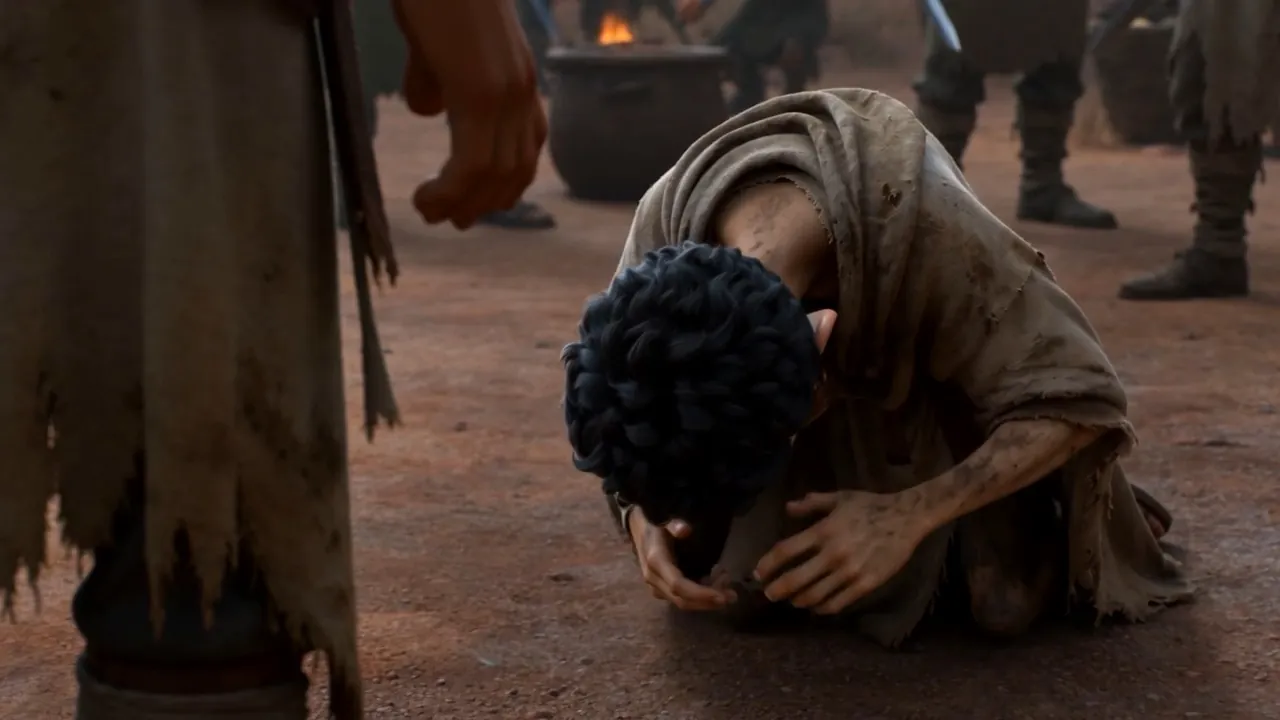

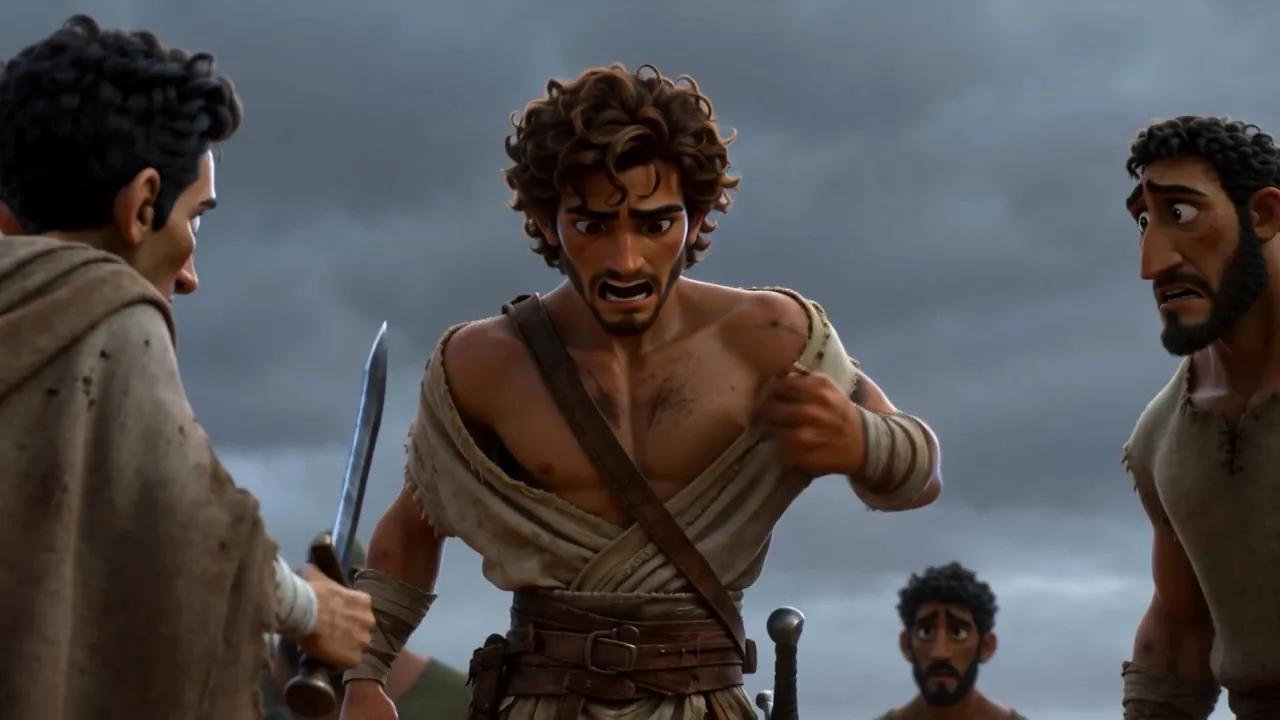
A man comes down out of the north with the news David has waited more than a decade to hear, and he brings the crown with him, expecting to be paid for it. Saul is gone. Jonathan is gone. The hunt is over, the throne is empty, and the thing promised to a fifteen-year-old in a farmyard has finally come loose and is lying in a stranger's hands in front of him. 2 Samuel 1 : 1–10
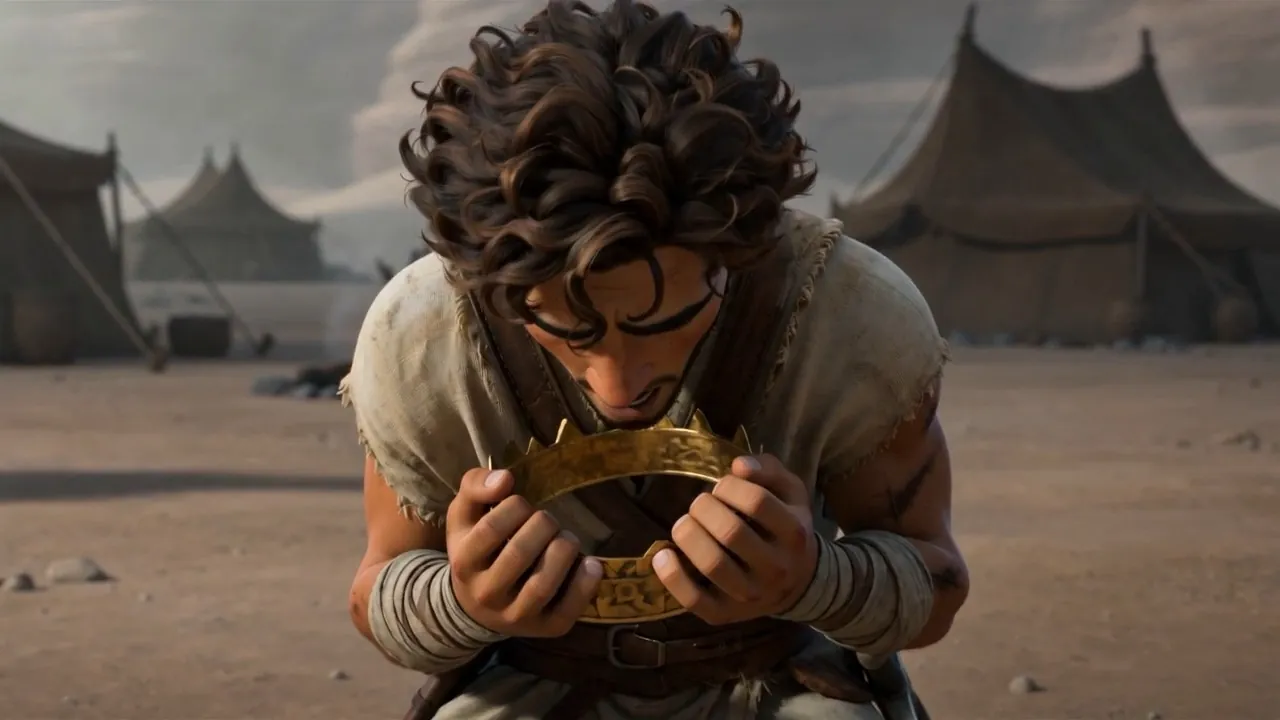
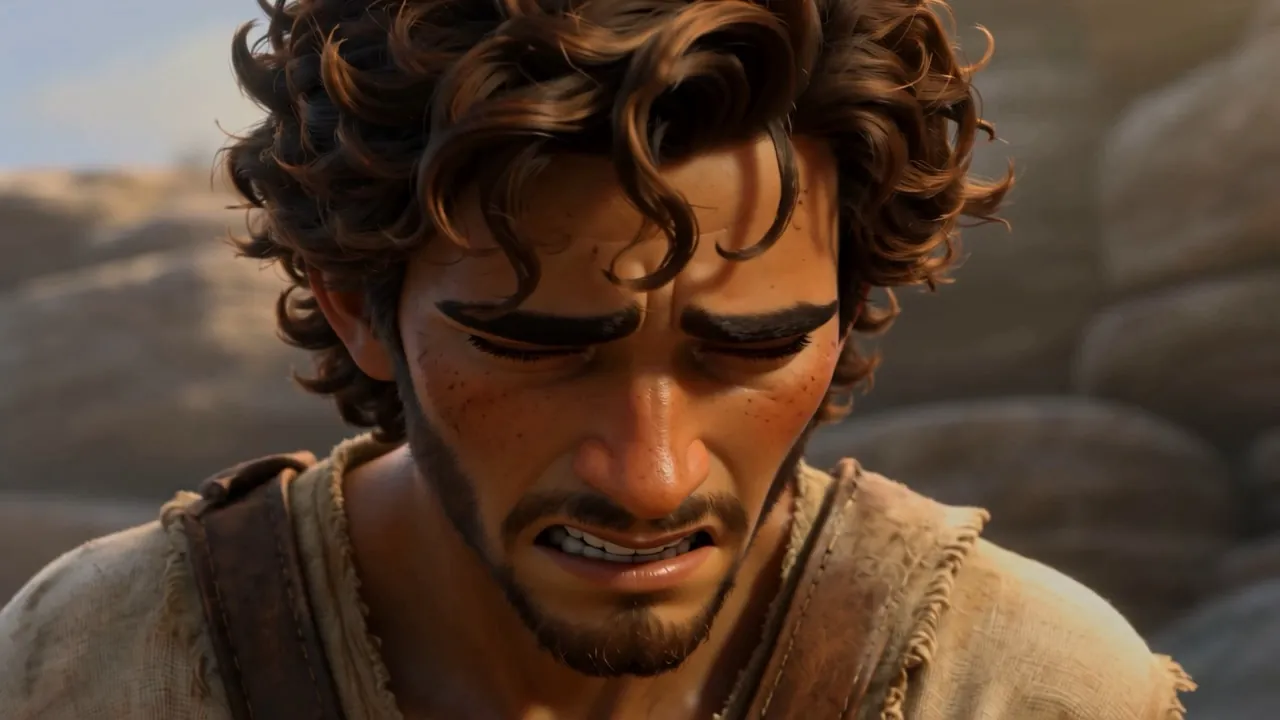

And he does not celebrate. Not for a second. He tears his clothes and mourns and weeps and fasts until evening — for Saul, who spent fifteen years hunting him, and for Jonathan, who was the best thing in his life. Then he writes a song about it and orders that the whole nation be taught to sing it. Not a victory song. A lament for the man who hunted him. 2 Samuel 1 : 11–27
How are the mighty fallen, and the weapons of war perished!

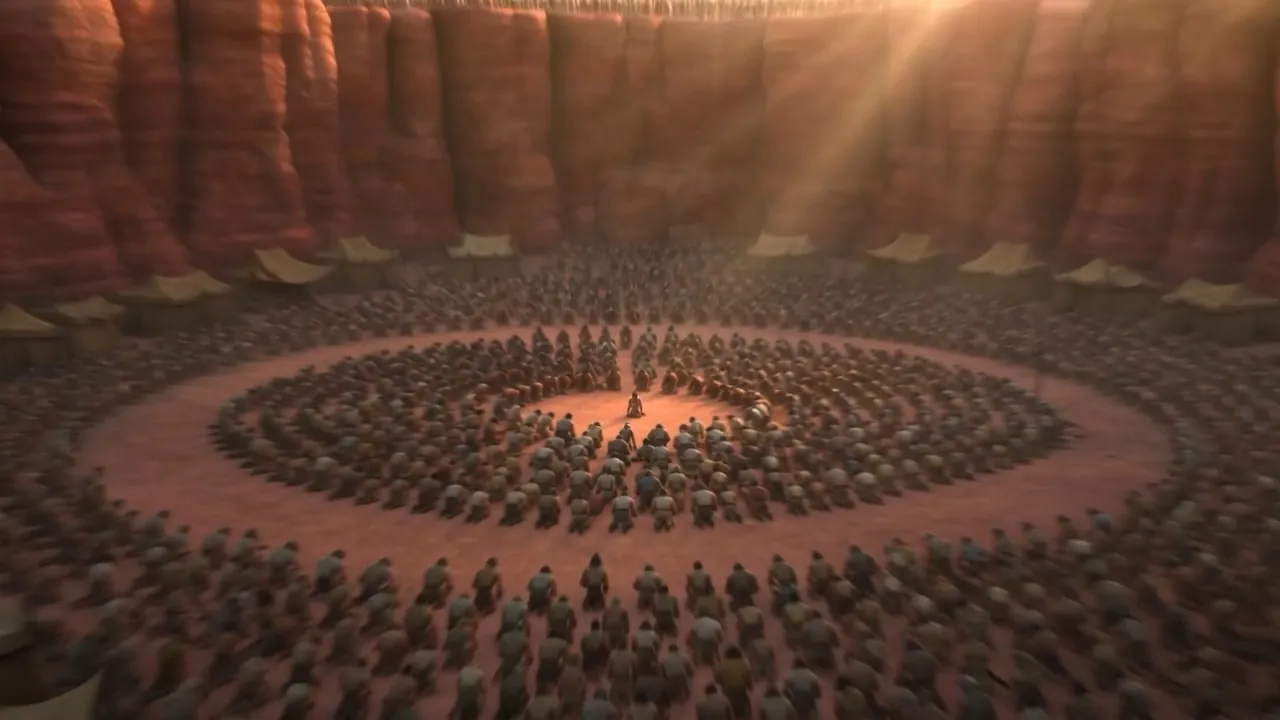
The four hundred desperate men who found him in a cave are still with him. They have been through every hungry month of it, and they have watched him refuse this throne twice when it was inches from his hand. And when the news finally comes, the whole camp goes down on one knee around him in the dust. Nobody made them. 2 Samuel 2 : 1–4
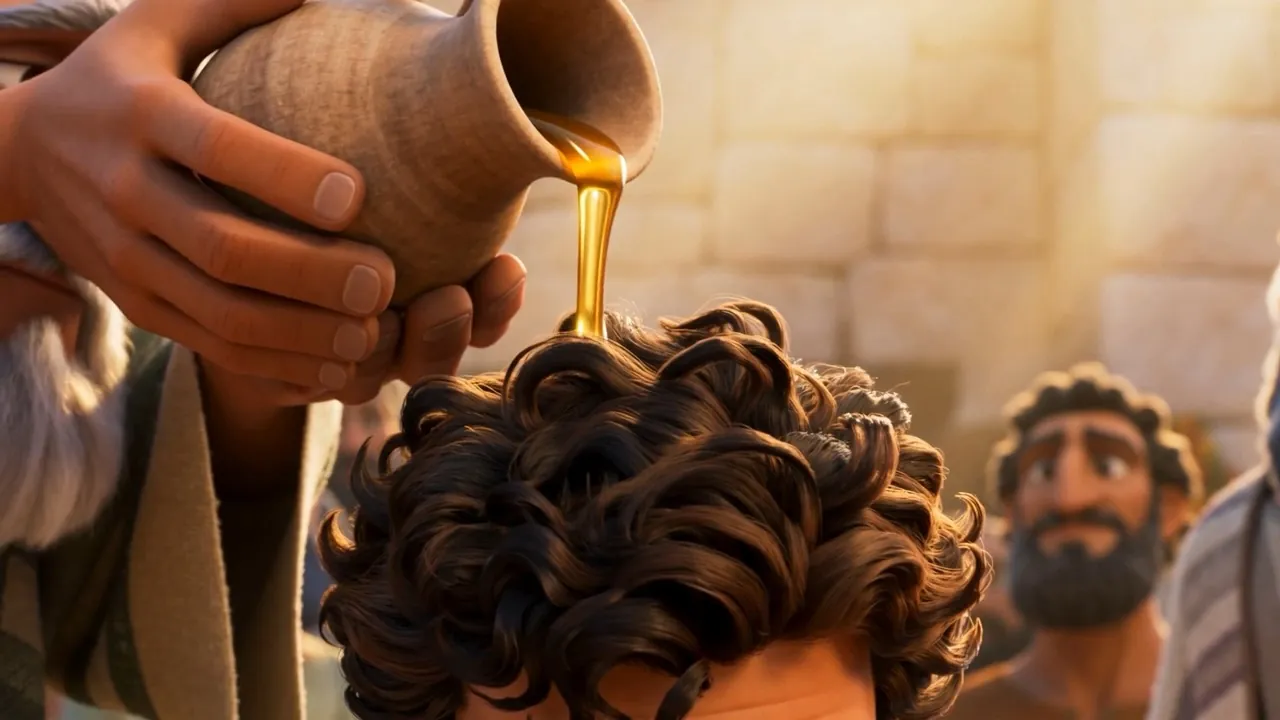
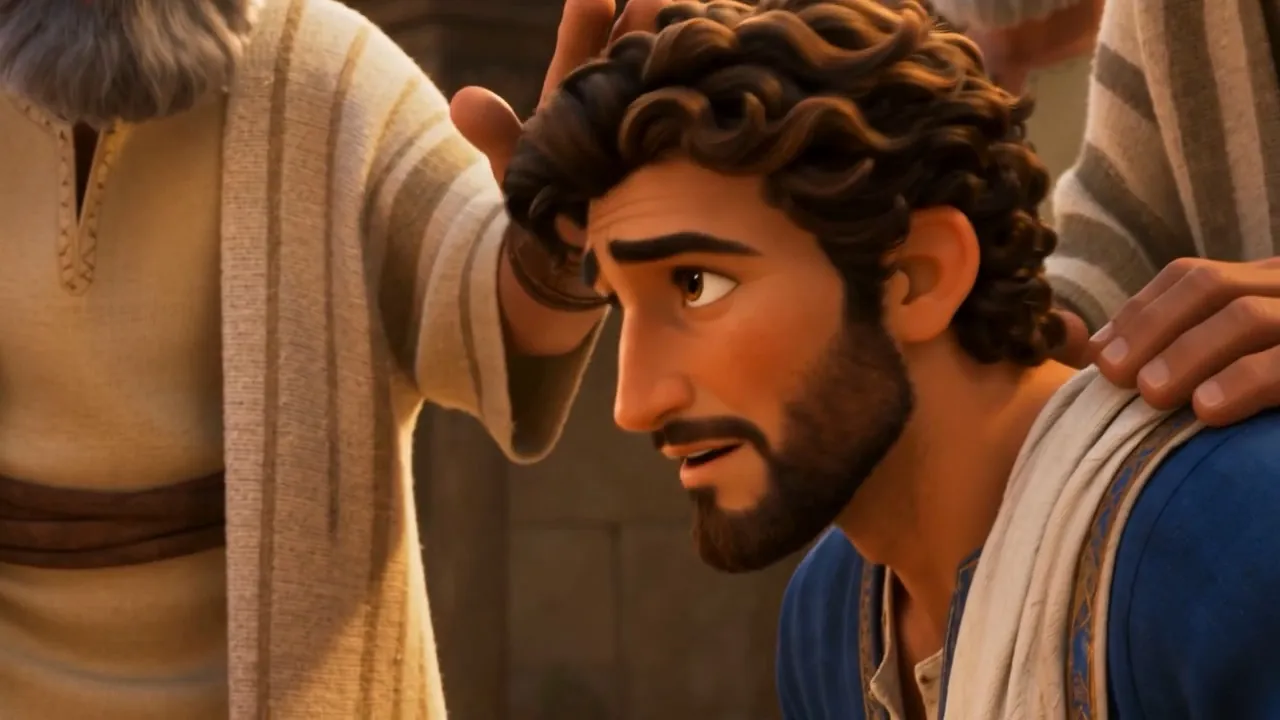
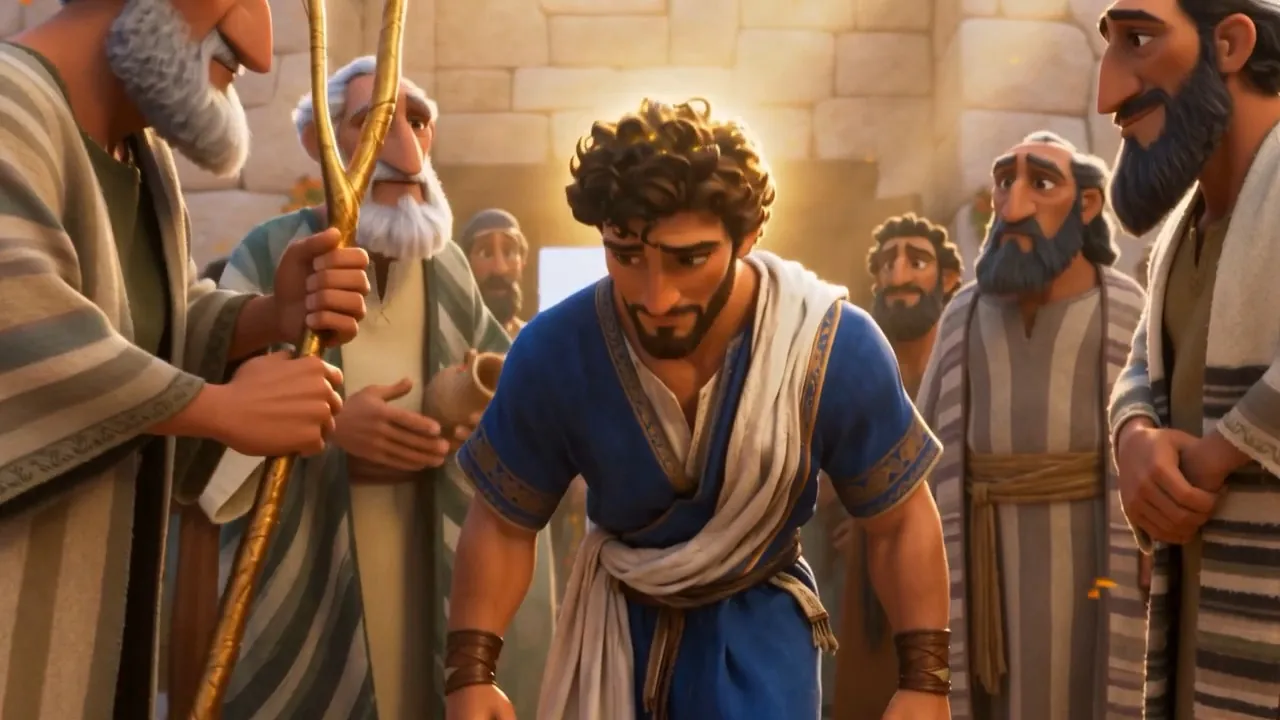
So the elders of all the tribes come to Hebron, and the oil comes out again — the same tilt of the head, the same low gold light, the same oil catching the sun. Except that last time seven brothers and one confused father were watching, and this time it is a nation. He is thirty years old. Between the two anointings lie a giant, a spear, a window and fifteen years of being hunted. 2 Samuel 5 : 1–5

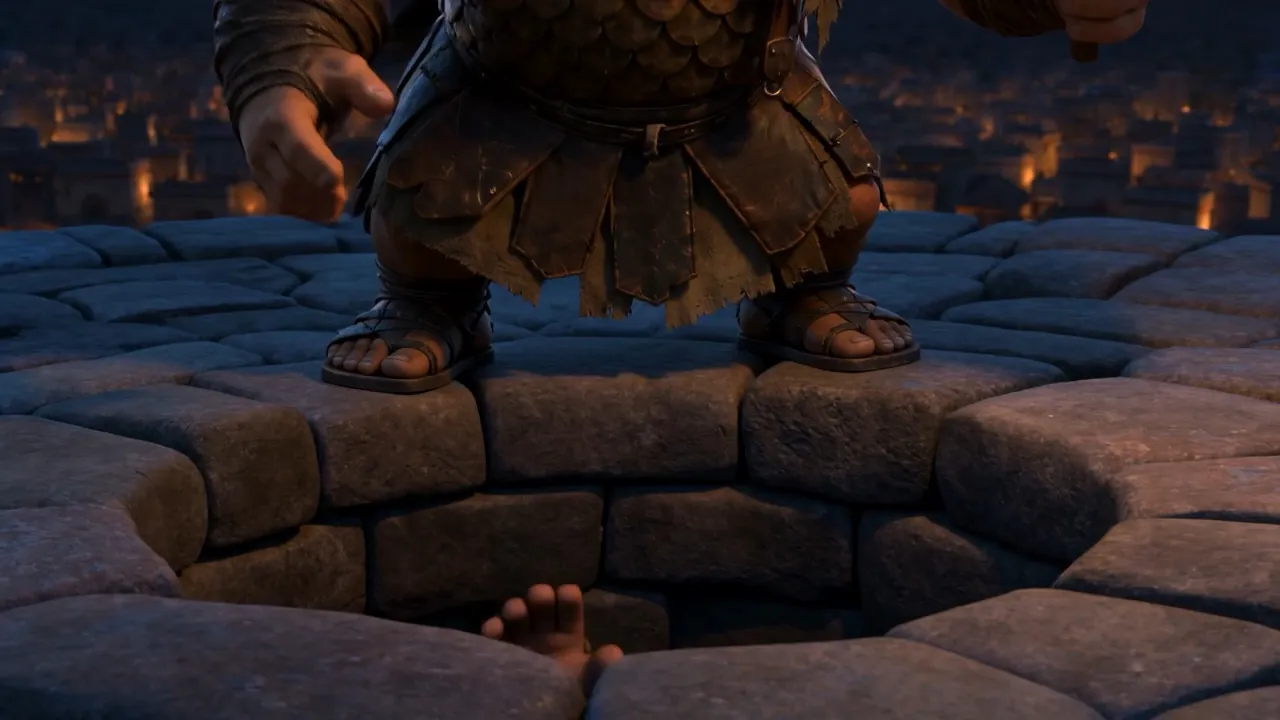
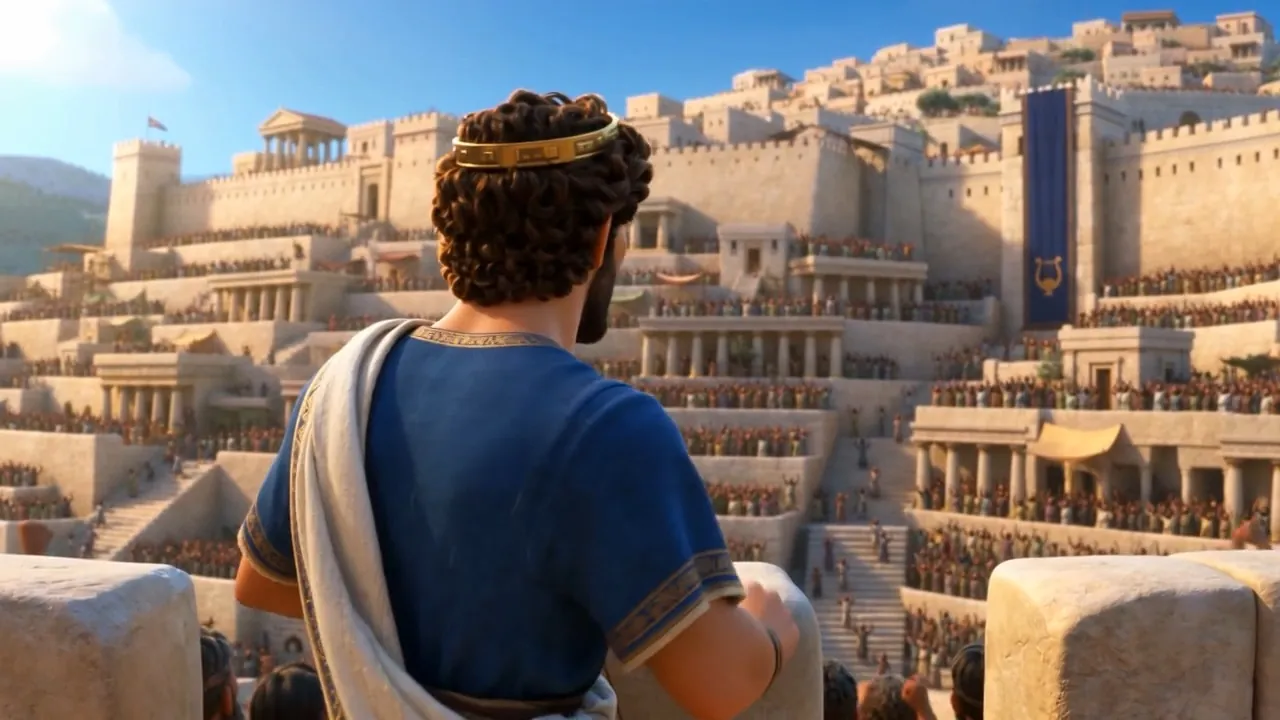
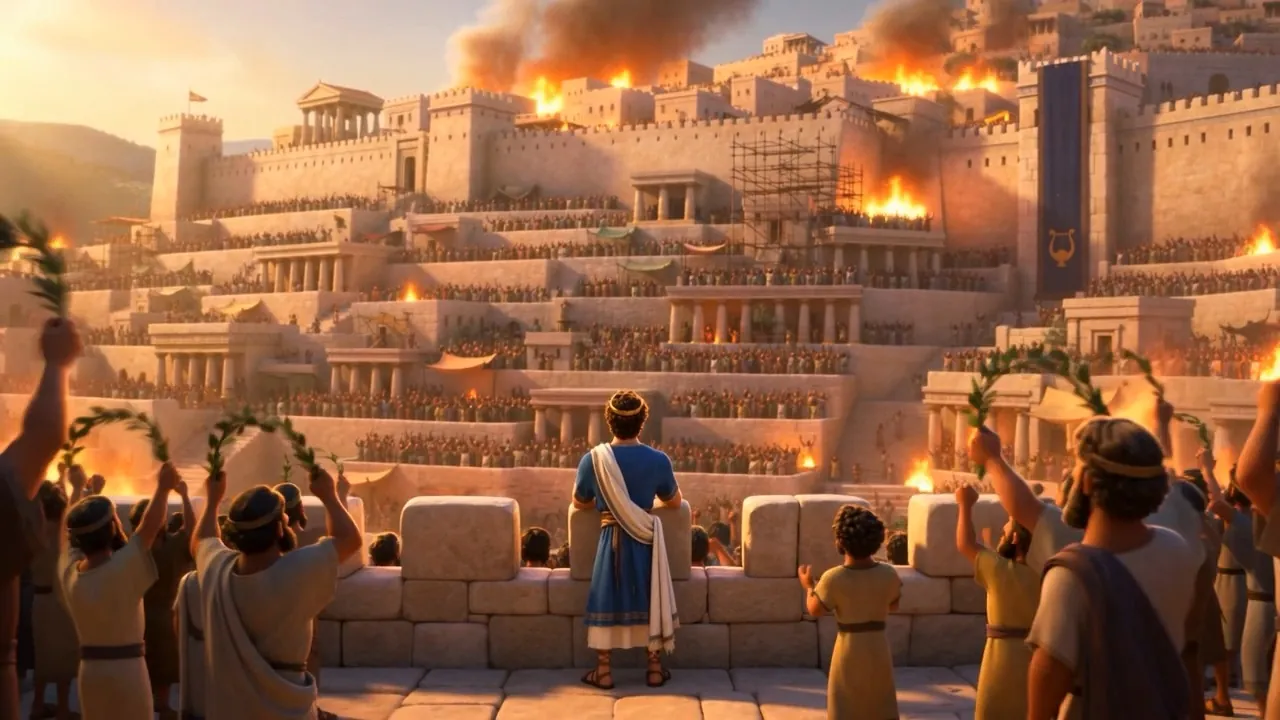
Then something politically brilliant. He does not put his capital in his own tribe's land, or in Saul's. He takes Jebus — a fortress on a rock so confident it had never been captured that its defenders taunted him from the walls — and he takes it by sending men up the water shaft instead of at the gate. It belonged to no tribe, so it could belong to all of them. That rock is Jerusalem. 2 Samuel 5 : 6–10
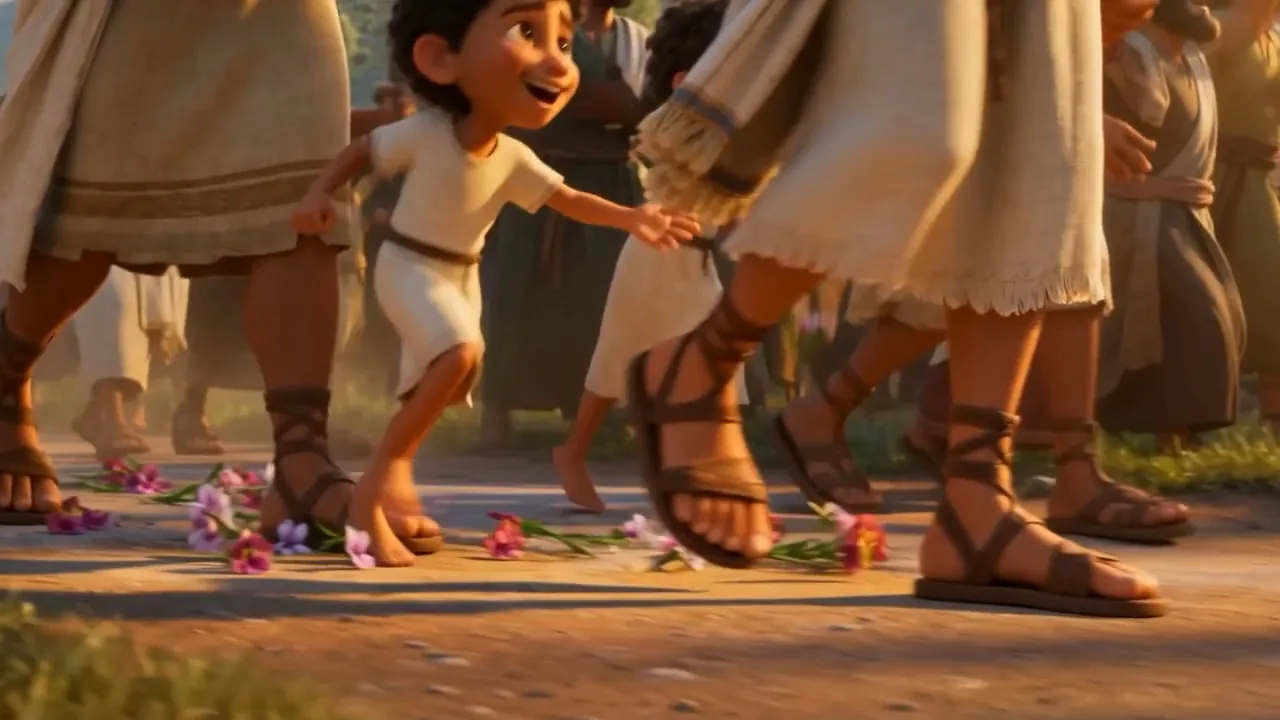
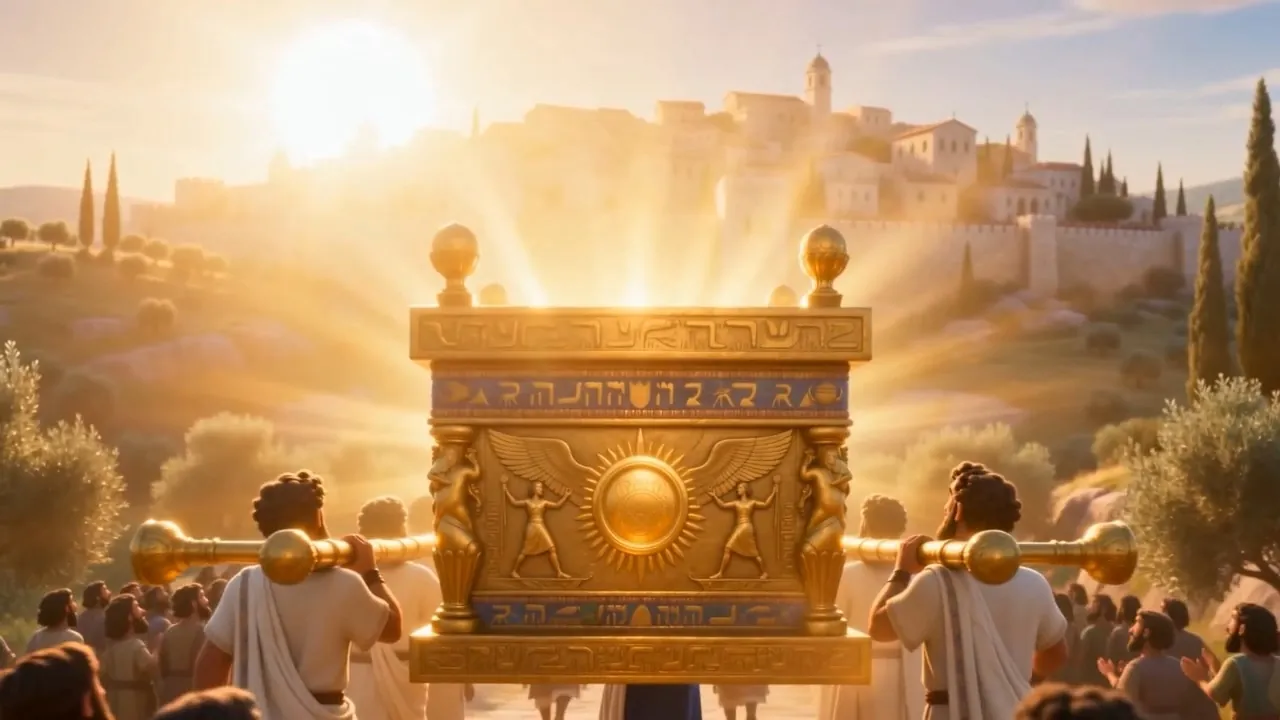
The ark has sat in a private house for a lifetime. David goes to bring it home — and this time it is not on a cart. It is carried on poles, on the shoulders of the men whose job that was, exactly the way it was written down centuries earlier. Reverence here is not a feeling. It is doing it the way you were told, after finding out the hard way what happens otherwise. 2 Samuel 6 : 12–13
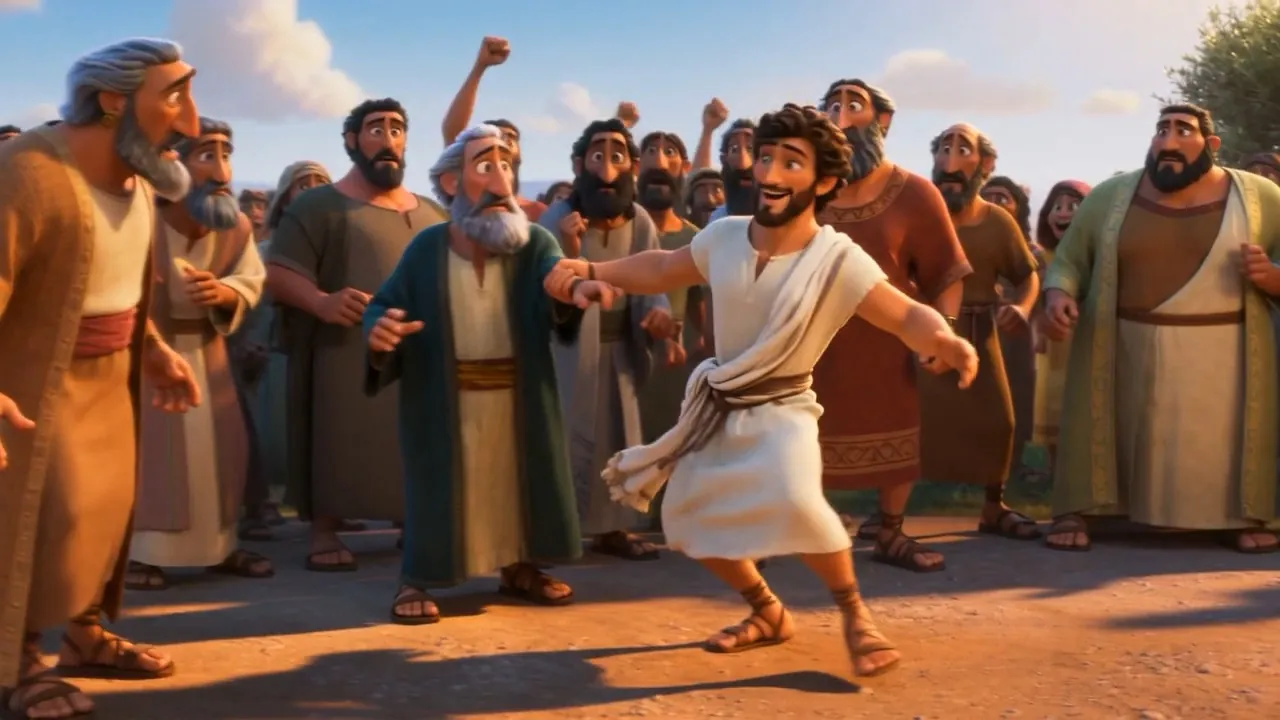
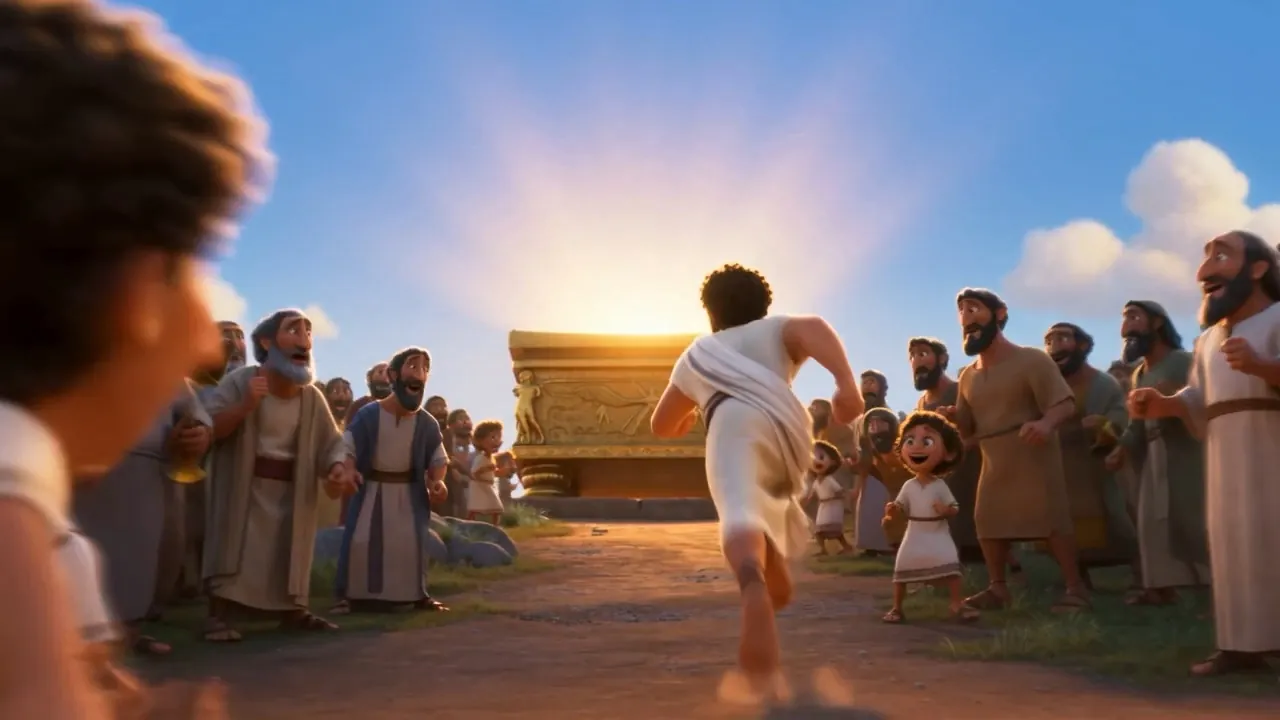
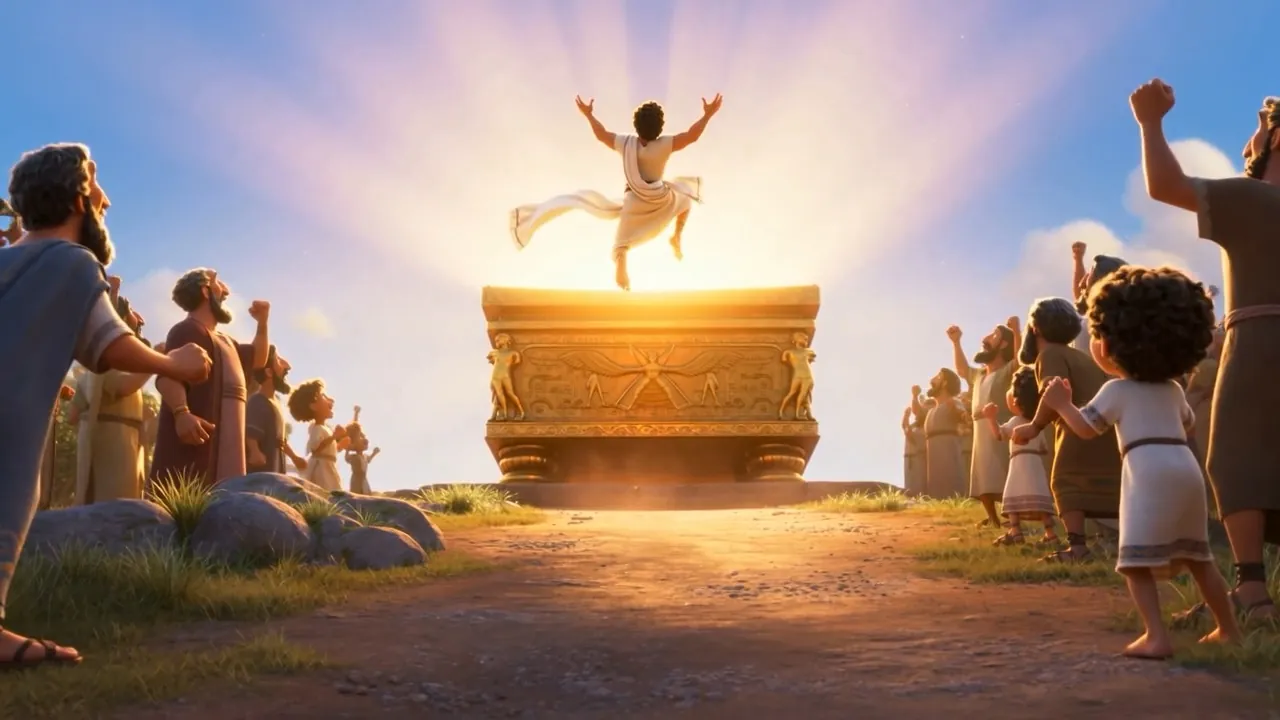

And then the newly crowned king of Israel takes off every single thing that marks him as a king, puts on a plain linen ephod like any priest's assistant, and dances up the road in front of the ark with everything he has — leaping, spinning, shouting, at the head of a national street party, in front of his whole capital. He is not performing worship. He has forgotten anyone is watching. 2 Samuel 6 : 14–15
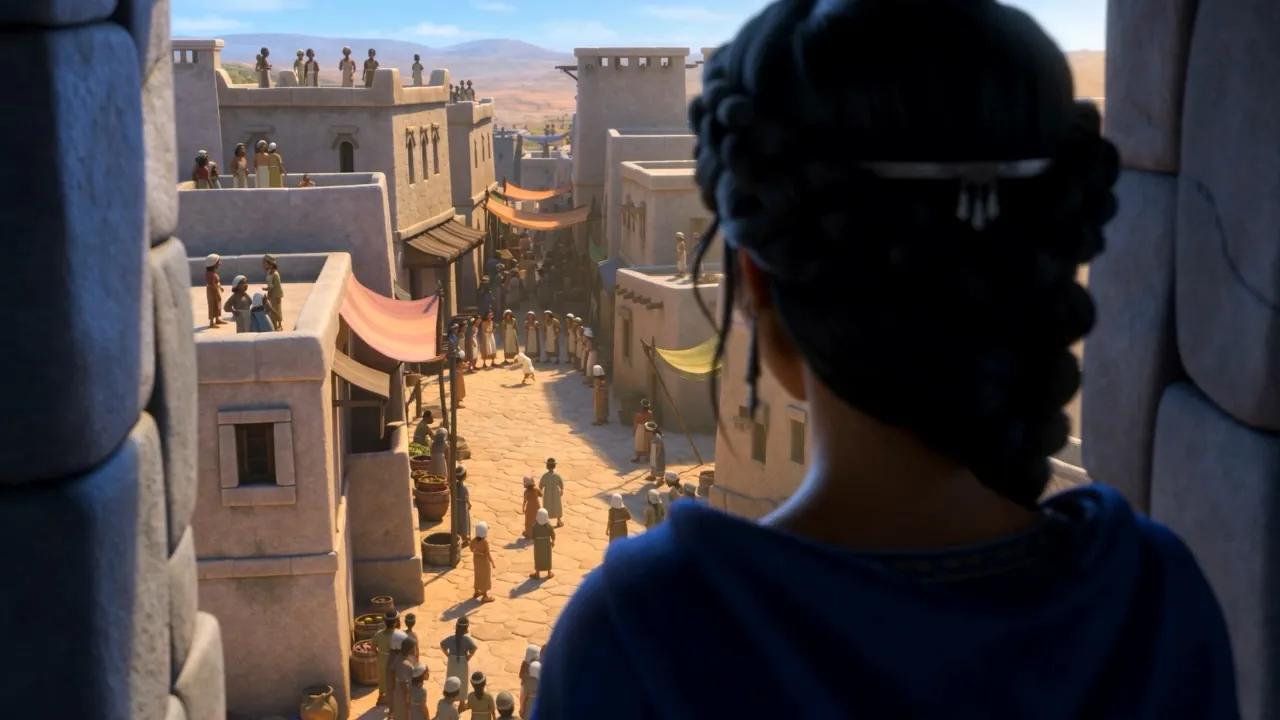


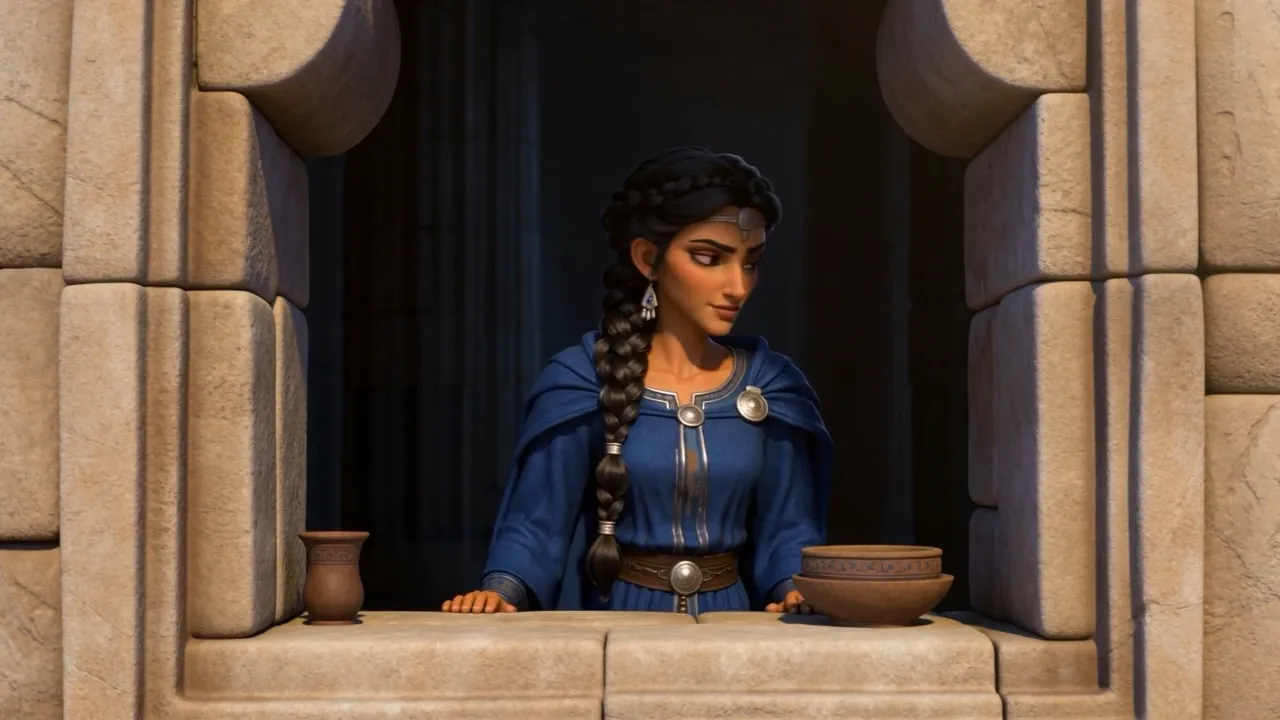
And then, exactly on the peak of it, a window high in the palace wall — and Michal. The woman who bolted a door and put him out on a rope has spent the years since being given to another man and then taken back, and what she is watching now is her husband capering in the street half-dressed, wearing none of the dignity her father wore. She saw him dancing, and she despised him in her heart. 2 Samuel 6 : 16
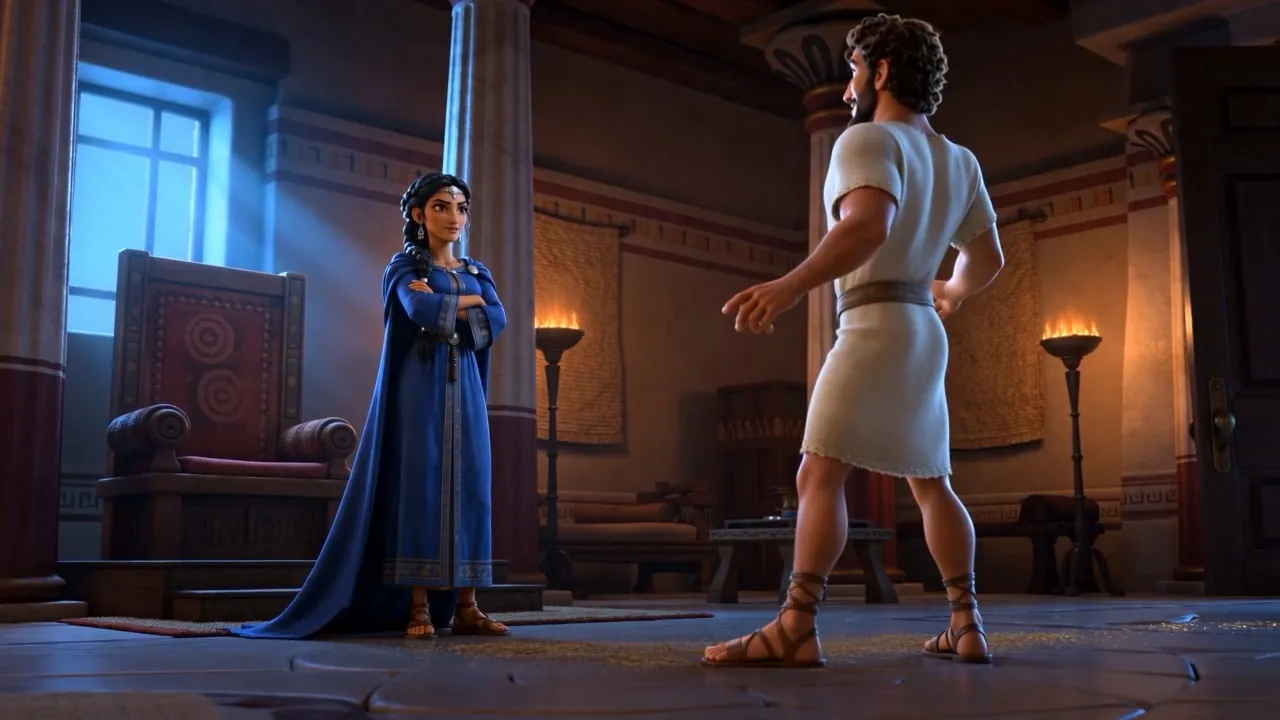



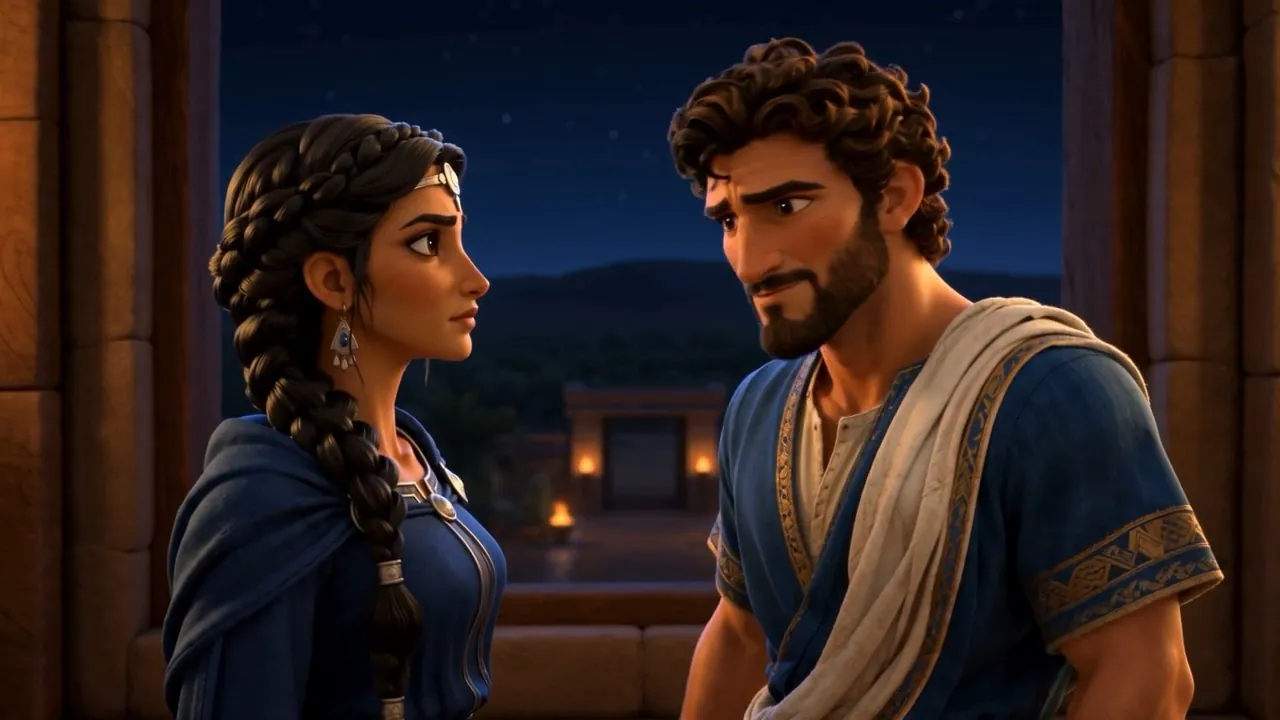
She is waiting when he gets home, and what she says is pure ice: how glorious the king of Israel was today, uncovering himself before his servants' handmaids. His answer is not gentle either: it was before Yahweh, who chose me rather than your father. Both are partly right, which is what makes it hurt. She is defending dignity. He is defending joy. Neither wins. 2 Samuel 6 : 20–23

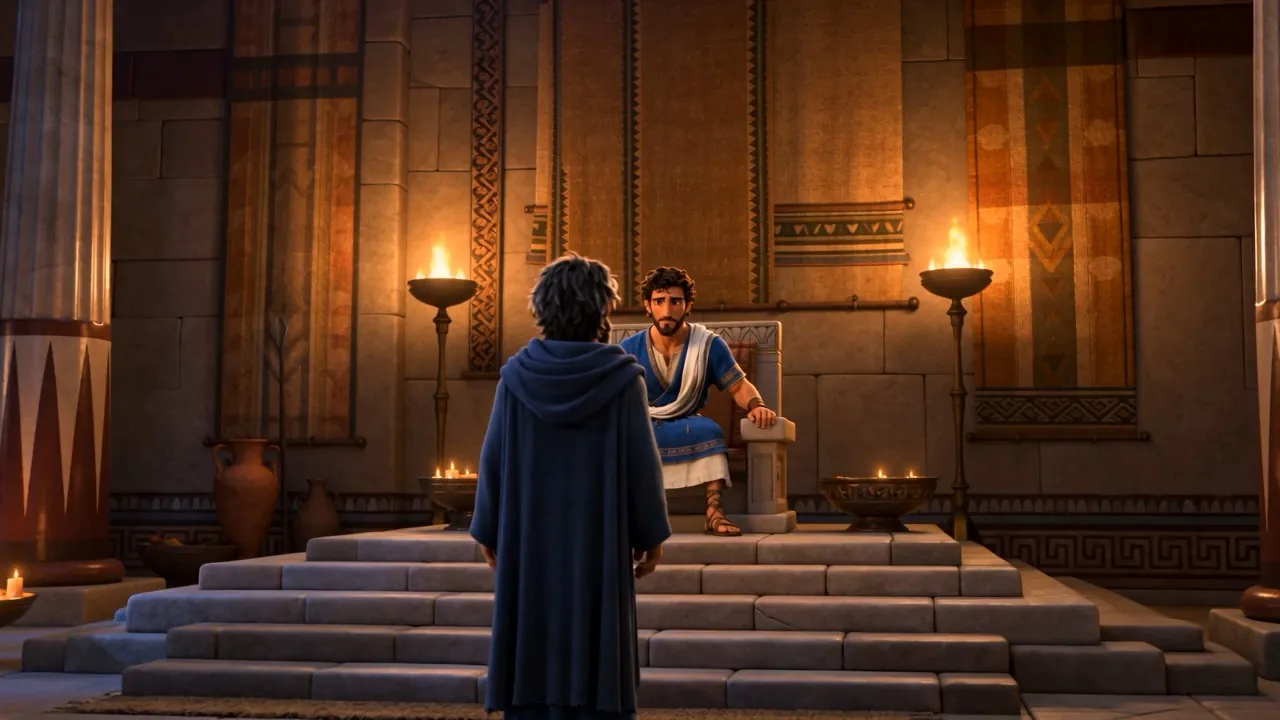
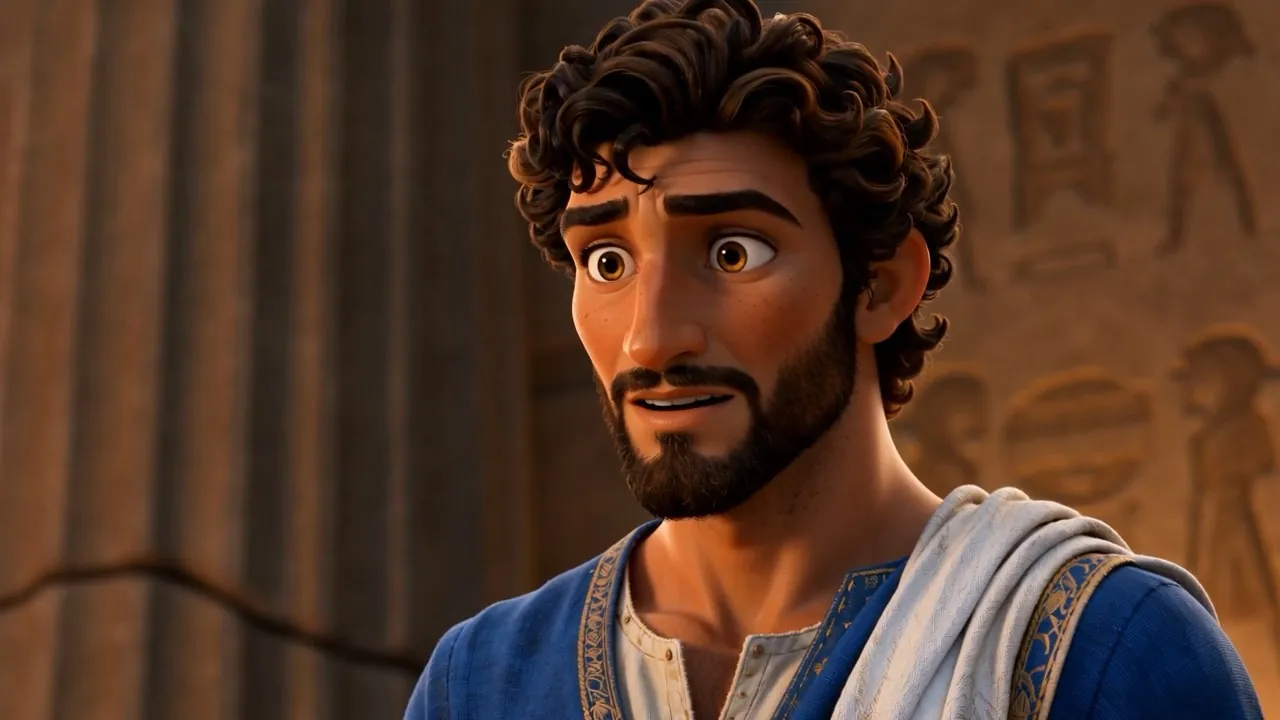

Settled at last, he looks around his cedar palace and is embarrassed: I live in a house of cedar, and the ark of God stays in a tent. He wants to build God a temple. Nathan says go ahead — and is sent back that same night with the opposite answer. You will not build me a house. I will build you a house. Not a building. A family, a line, a throne that does not end. 2 Samuel 7 : 1–16
Your house and your kingdom will be made sure forever before you. Your throne will be established forever.
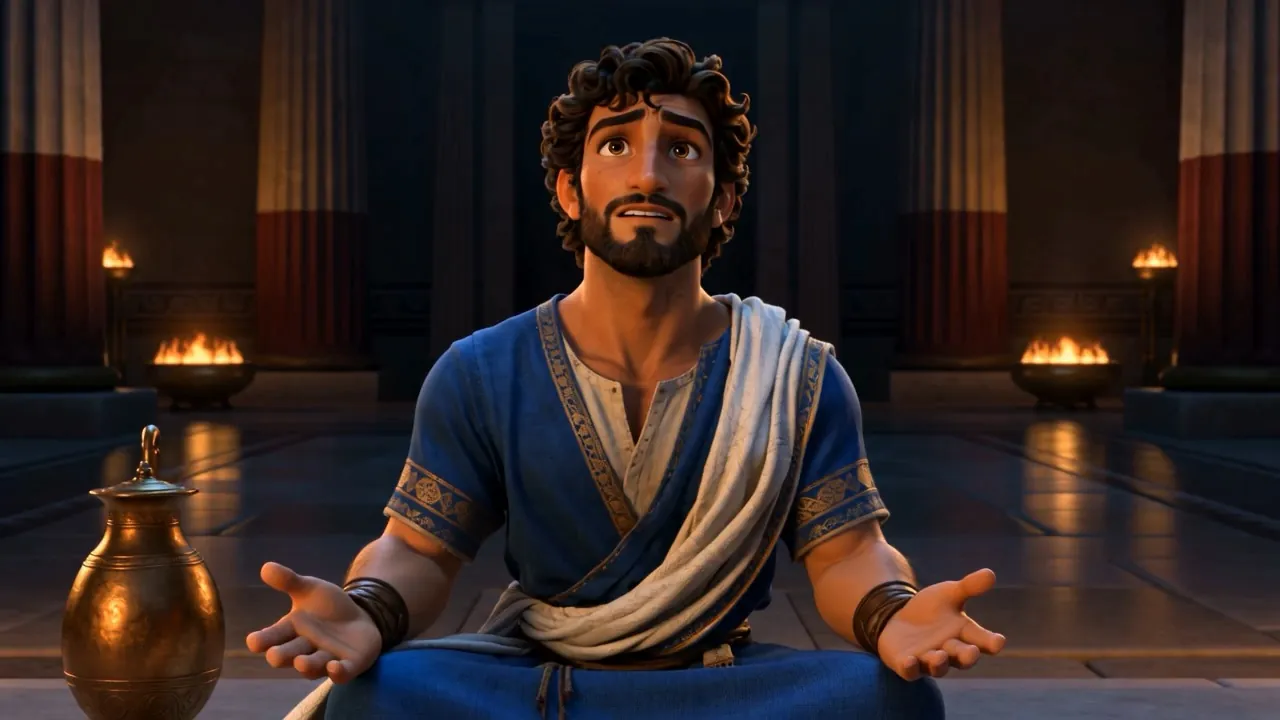


And here is the measure of him at his best. He has just been told no about his life's ambition — and he does not argue, and he does not sulk. He goes in and sits down on the floor in front of God, which is not how kings sit, and says who am I, Lord Yahweh, that you have brought me this far? The boy left off his father's list is still in there somewhere. 2 Samuel 7 : 18–29
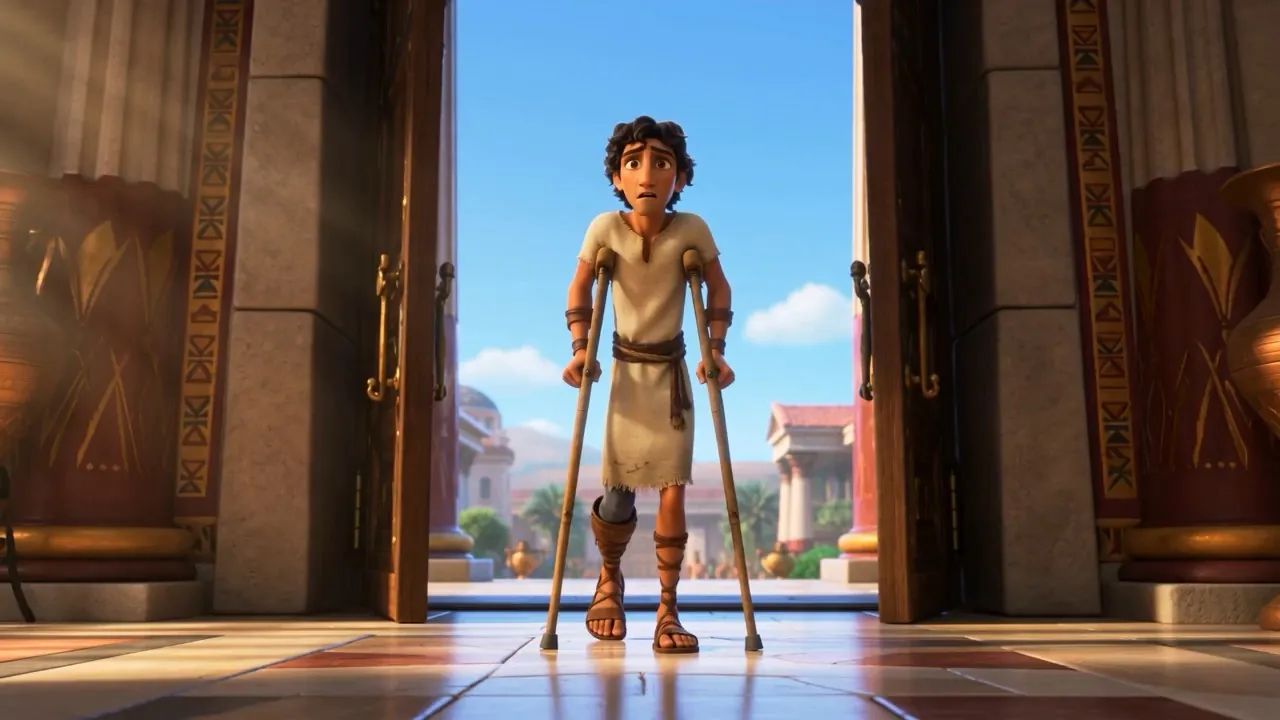

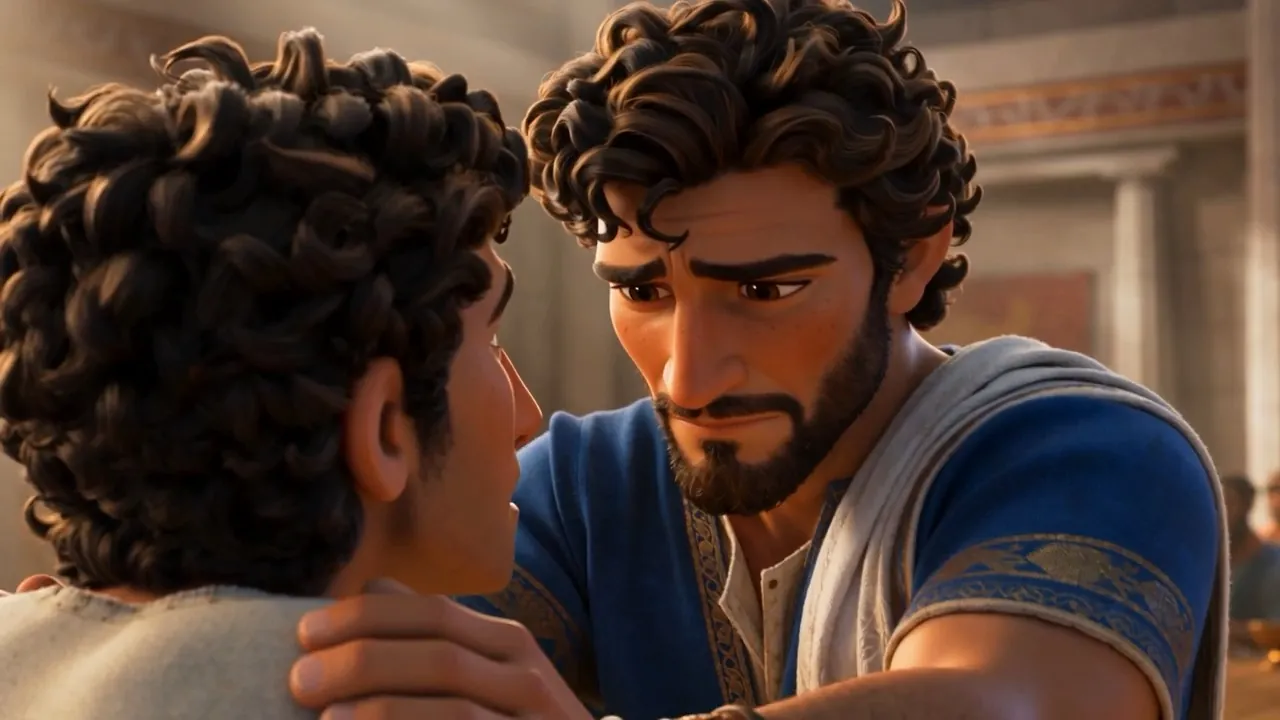
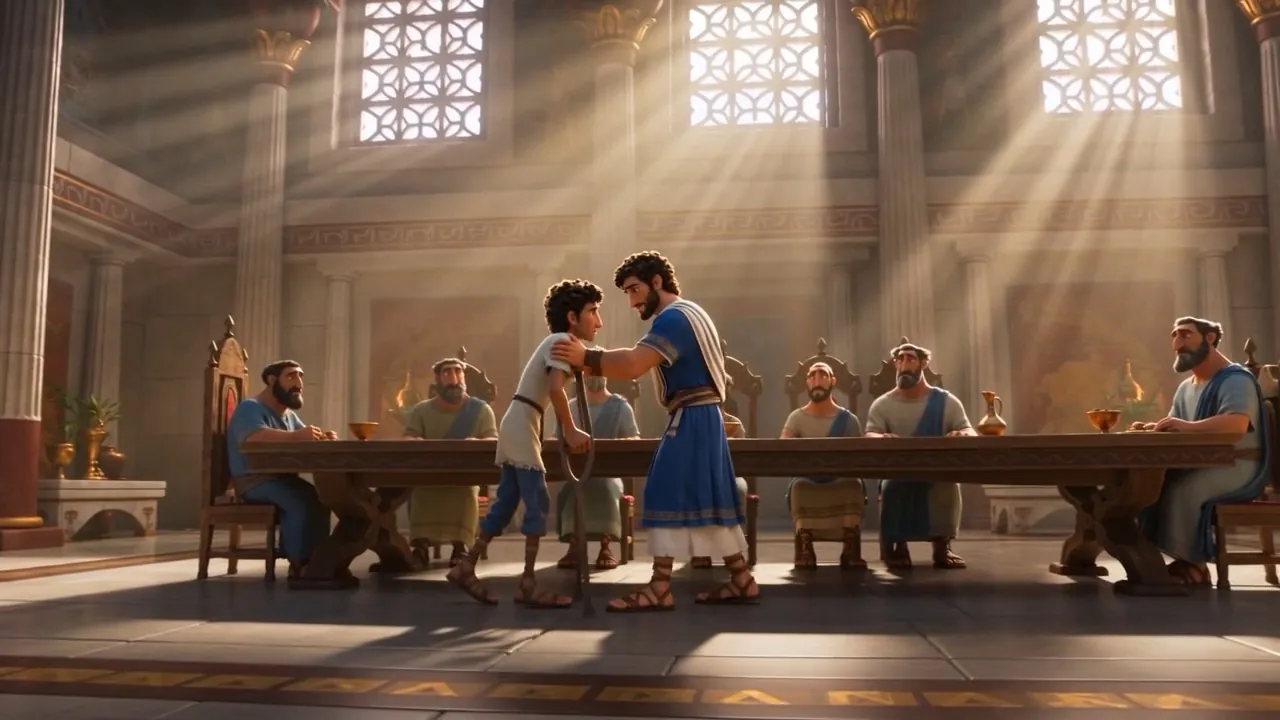
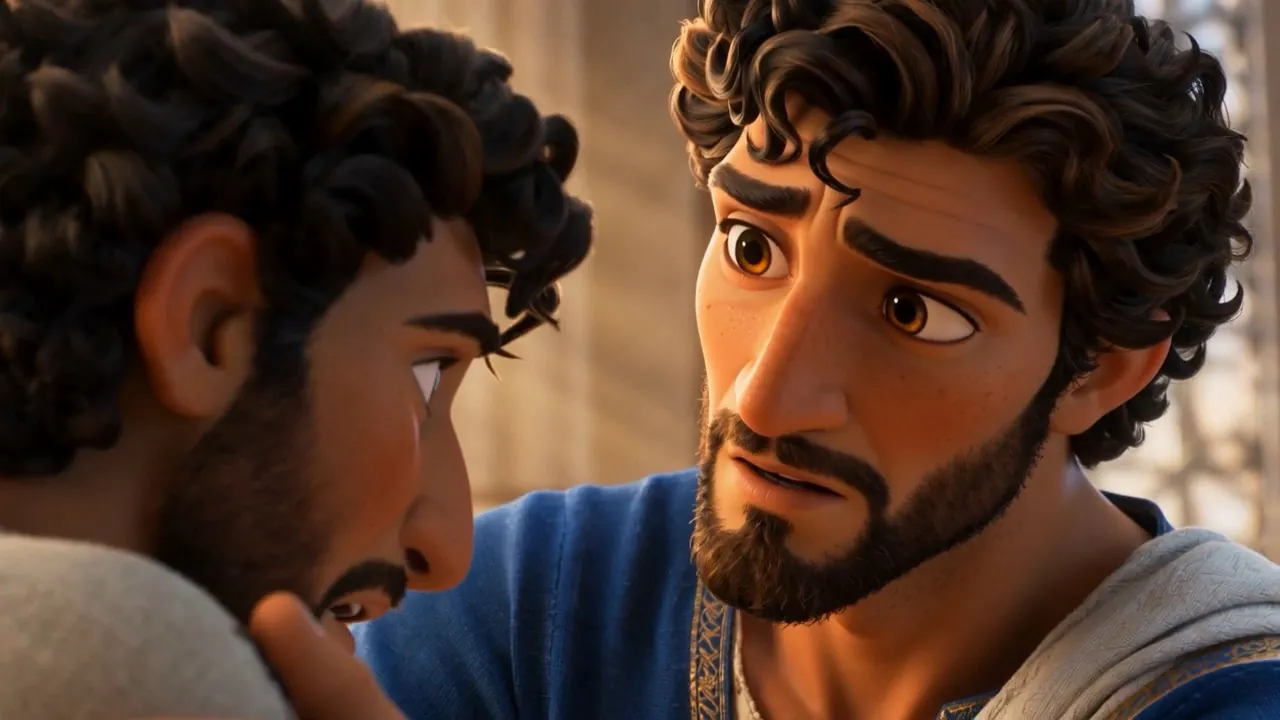
And then, secure at last, he asks a question nobody has asked in years: is there anyone left of the house of Saul, that I may show him kindness for Jonathan's sake? There is one — Jonathan's son, crippled since he was five, who knows exactly what new dynasties do to the last of the old ones. And David gives him back all of Saul's land, and a permanent seat at the royal table, for life. 2 Samuel 9 : 1–13
After the story
He wanted to build God a house. God said: I will build you one.
This is the episode where everything David was promised finally arrives, and the striking thing is how little of it he grabs at. He mourns the man whose death cleared his path. He makes his capital on ground that belonged to no tribe rather than his own. He carries the ark the way the book said to, not the way that was quicker. He dances where his dignity is worth nothing and his joy is worth everything. And when he is told no about the one thing he wanted to give God, he sits down on the floor and asks who he is to have been brought this far. The promise he receives in return outlasts him by three thousand years — and the last thing he does with all that power is go hunting through the wreckage of his enemy's family for someone to be kind to.
Voices of the city · hover or tap to turn
David
"Who am I, Lord Yahweh, and what is my house, that you have brought me this far?"
— 2 Samuel 7:18
Michal
"How glorious the king of Israel was today…!"
— 2 Samuel 6:20
The Ark
"So David and all the house of Israel brought up Yahweh's ark with shouting, and with the sound of the trumpet."
— 2 Samuel 6:15The Books of Samuel
How closely were you watching?
1. What does David do when he hears Saul is dead?
2 Samuel 1:11–27. He has the whole nation taught the song — a lament for the king who hunted him and for Jonathan.
2. How is Jerusalem captured?
2 Samuel 5:8. The fortress had never been taken; its defenders taunted David from the walls. It belonged to no tribe, which is exactly why it could be everyone's capital.
3. How is the ark brought into the city this time?
2 Samuel 6:13. The cart was the first attempt — the one that went wrong. This time it is done the way it was written down.
4. What answer does David get when he offers to build God a temple?
2 Samuel 7:11–16. Not a building but a dynasty — the promise the rest of the Bible keeps reaching back to.
What this story teaches
Grieve your enemy.
David's first act with absolute power was to write a national lament for the man who spent fifteen years hunting him. He had every excuse to feel relief and refused to take it. That is a harder discipline than forgiveness, and rarer.
"How are the mighty fallen!" 2 Samuel 1:19Joy is allowed to cost you dignity.
He danced where a king is not supposed to dance, and when it was thrown back at him he said he would be more undignified still. Some things are worth looking foolish for, and worship is one of them.
"It was before Yahweh… Therefore I will celebrate before Yahweh." 2 Samuel 6:21Keep promises nobody remembers.
Twenty years on, secure on the throne, David went looking for anyone left of Saul's family — and gave Jonathan's disabled son a permanent seat at his own table. The people who cannot repay you are the real test of what you swore.
"You will eat bread at my table continually." 2 Samuel 9:7Read the scripture itself. 2 Samuel 5–7 · 9 · World English Bible
2 Samuel 5
1Then all the tribes of Israel came to David at Hebron, and spoke, saying, “Behold, we are your bone and your flesh.
2In times past, when Saul was king over us, it was you who led Israel out and in. Yahweh said to you, ‘You will be shepherd of my people Israel, and you will be prince over Israel.’”
3So all the elders of Israel came to the king to Hebron, and king David made a covenant with them in Hebron before Yahweh; and they anointed David king over Israel.
4David was thirty years old when he began to reign, and he reigned forty years.
5In Hebron he reigned over Judah seven years and six months; and in Jerusalem he reigned thirty-three years over all Israel and Judah.
6The king and his men went to Jerusalem against the Jebusites, the inhabitants of the land, who spoke to David, saying, “The blind and the lame will keep you out of here”; thinking, “David can’t come in here.”
7Nevertheless David took the stronghold of Zion. This is David’s city.
8David said on that day, “Whoever strikes the Jebusites, let him go up to the watercourse and strike those lame and blind, who are hated by David’s soul.” Therefore they say, “The blind and the lame can’t come into the house.”
9David lived in the stronghold, and called it David’s city. David built around from Millo and inward.
10David grew greater and greater; for Yahweh, the God of Armies, was with him.
11Hiram king of Tyre sent messengers to David, with cedar trees, carpenters, and masons; and they built David a house.
12David perceived that Yahweh had established him king over Israel, and that he had exalted his kingdom for his people Israel’s sake.
13David took more concubines and wives for himself out of Jerusalem, after he had come from Hebron; and more sons and daughters were born to David.
14These are the names of those who were born to him in Jerusalem: Shammua, Shobab, Nathan, Solomon,
15Ibhar, Elishua, Nepheg, Japhia,
16Elishama, Eliada, and Eliphelet.
17When the Philistines heard that they had anointed David king over Israel, all the Philistines went up to seek David, but David heard about it and went down to the stronghold.
18Now the Philistines had come and spread themselves in the valley of Rephaim.
19David inquired of Yahweh, saying, “Shall I go up against the Philistines? Will you deliver them into my hand?” Yahweh said to David, “Go up; for I will certainly deliver the Philistines into your hand.”
20David came to Baal Perazim, and David struck them there. Then he said, “Yahweh has broken my enemies before me, like the breach of waters.” Therefore he called the name of that place Baal Perazim.
21They left their images there; and David and his men took them away.
22The Philistines came up yet again, and spread themselves in the valley of Rephaim.
23When David inquired of Yahweh, he said, “You shall not go up. Circle around behind them, and attack them in front of the mulberry trees.
24When you hear the sound of marching in the tops of the mulberry trees, then stir yourself up; for then Yahweh has gone out before you to strike the army of the Philistines.”
25David did so, as Yahweh commanded him, and struck the Philistines all the way from Geba to Gezer.
2 Samuel 6
1David again gathered together all the chosen men of Israel, thirty thousand.
2David arose, and went with all the people who were with him, from Baale Judah, to bring up from there God’s ark, which is called by the Name, even the name of Yahweh of Armies who sits above the cherubim.
3They set God’s ark on a new cart, and brought it out of Abinadab’s house that was on the hill; and Uzzah and Ahio, the sons of Abinadab, drove the new cart.
4They brought it out of Abinadab’s house, which was in the hill, with God’s ark; and Ahio went before the ark.
5David and all the house of Israel played before Yahweh with all kinds of instruments made of cypress wood, with harps, with stringed instruments, with tambourines, with castanets, and with cymbals.
6When they came to the threshing floor of Nacon, Uzzah reached for God’s ark, and took hold of it; for the cattle stumbled.
7Yahweh’s anger burned against Uzzah; and God struck him there for his error; and he died there by God’s ark.
8David was displeased, because Yahweh had broken out against Uzzah; and he called that place Perez Uzzah, to this day.
9David was afraid of Yahweh that day; and he said, “How could Yahweh’s ark come to me?”
10So David would not move Yahweh’s ark to be with him in David’s city; but David carried it aside into Obed-Edom the Gittite’s house.
11Yahweh’s ark remained in Obed-Edom the Gittite’s house three months; and Yahweh blessed Obed-Edom and all his house.
12King David was told, “Yahweh has blessed the house of Obed-Edom, and all that belongs to him, because of God’s ark.” So David went and brought up God’s ark from the house of Obed-Edom into David’s city with joy.
13When those who bore Yahweh’s ark had gone six paces, he sacrificed an ox and a fattened calf.
14David danced before Yahweh with all his might; and David was clothed in a linen ephod.
15So David and all the house of Israel brought up Yahweh’s ark with shouting, and with the sound of the trumpet.
16As Yahweh’s ark came into David’s city, Michal the daughter of Saul looked out through the window, and saw king David leaping and dancing before Yahweh; and she despised him in her heart.
17They brought in Yahweh’s ark, and set it in its place, in the middle of the tent that David had pitched for it; and David offered burnt offerings and peace offerings before Yahweh.
18When David had finished offering the burnt offering and the peace offerings, he blessed the people in the name of Yahweh of Armies.
19He gave to all the people, even among the whole multitude of Israel, both to men and women, to everyone a portion of bread, dates, and raisins. So all the people departed, each to his own house.
20Then David returned to bless his household. Michal the daughter of Saul came out to meet David, and said, “How glorious the king of Israel was today, who uncovered himself today in the eyes of the servants of his servants, as one of the vain fellows shamelessly uncovers himself!”
21David said to Michal, “It was before Yahweh, who chose me above your father, and above all his house, to appoint me prince over the people of Yahweh, over Israel. Therefore I will celebrate before Yahweh.
22I will be yet more vile than this, and will be worthless in my own sight. But of the servants of whom you have spoken, they will honor me.”
23Michal the daughter of Saul had no child to the day of her death.
2 Samuel 7
1When the king lived in his house, and Yahweh had given him rest from all his enemies all around,
2the king said to Nathan the prophet, “See now, I dwell in a house of cedar, but God’s ark dwells within curtains.”
3Nathan said to the king, “Go, do all that is in your heart; for Yahweh is with you.”
4That same night, Yahweh’s word came to Nathan, saying,
5“Go and tell my servant David, ‘Yahweh says, “Should you build me a house for me to dwell in?
6For I have not lived in a house since the day that I brought the children of Israel up out of Egypt, even to this day, but have moved around in a tent and in a tabernacle.
7In all places in which I have walked with all the children of Israel, did I say a word to any of the tribes of Israel, whom I commanded to be shepherd of my people Israel, saying, ‘Why have you not built me a house of cedar?’”’
8Now therefore tell my servant David this, ‘Yahweh of Armies says, “I took you from the sheep pen, from following the sheep, to be prince over my people, over Israel.
9I have been with you wherever you went, and have cut off all your enemies from before you. I will make you a great name, like the name of the great ones who are in the earth.
10I will appoint a place for my people Israel, and will plant them, that they may dwell in their own place, and be moved no more. The children of wickedness will not afflict them any more, as at the first,
11and as from the day that I commanded judges to be over my people Israel. I will cause you to rest from all your enemies. Moreover Yahweh tells you that Yahweh will make you a house.
12When your days are fulfilled, and you sleep with your fathers, I will set up your offspring after you, who will proceed out of your body, and I will establish his kingdom.
13He will build a house for my name, and I will establish the throne of his kingdom forever.
14I will be his father, and he will be my son. If he commits iniquity, I will chasten him with the rod of men, and with the stripes of the children of men;
15but my loving kindness will not depart from him, as I took it from Saul, whom I put away before you.
16Your house and your kingdom will be made sure forever before you. Your throne will be established forever.”’”
17Nathan spoke to David all these words, and according to all this vision.
18Then David the king went in, and sat before Yahweh; and he said, “Who am I, Lord Yahweh, and what is my house, that you have brought me this far?
19This was yet a small thing in your eyes, Lord Yahweh; but you have spoken also of your servant’s house for a great while to come; and this among men, Lord Yahweh!
20What more can David say to you? For you know your servant, Lord Yahweh.
21For your word’s sake, and according to your own heart, you have worked all this greatness, to make your servant know it.
22Therefore you are great, Yahweh God. For there is no one like you, neither is there any God besides you, according to all that we have heard with our ears.
23What one nation in the earth is like your people, even like Israel, whom God went to redeem to himself for a people, and to make himself a name, and to do great things for you, and awesome things for your land, before your people, whom you redeemed to yourself out of Egypt, from the nations and their gods?
24You established for yourself your people Israel to be your people forever; and you, Yahweh, became their God.
25Now, Yahweh God, the word that you have spoken concerning your servant, and concerning his house, confirm it forever, and do as you have spoken.
26Let your name be magnified forever, saying, ‘Yahweh of Armies is God over Israel; and the house of your servant David will be established before you.’
27For you, Yahweh of Armies, the God of Israel, have revealed to your servant, saying, ‘I will build you a house.’ Therefore your servant has found in his heart to pray this prayer to you.
28“Now, O Lord Yahweh, you are God, and your words are truth, and you have promised this good thing to your servant.
29Now therefore let it please you to bless the house of your servant, that it may continue forever before you; for you, Lord Yahweh, have spoken it. Let the house of your servant be blessed forever with your blessing.”
2 Samuel 9
1David said, “Is there yet any who is left of Saul’s house, that I may show him kindness for Jonathan’s sake?”
2There was of Saul’s house a servant whose name was Ziba, and they called him to David; and the king said to him, “Are you Ziba?” He said, “I am your servant.”
3The king said, “Is there not yet any of Saul’s house, that I may show the kindness of God to him?” Ziba said to the king, “Jonathan still has a son, who is lame in his feet.”
4The king said to him, “Where is he?” Ziba said to the king, “Behold, he is in the house of Machir the son of Ammiel, in Lo Debar.”
5Then king David sent, and brought him out of the house of Machir the son of Ammiel, from Lo Debar.
6Mephibosheth, the son of Jonathan, the son of Saul, came to David, and fell on his face, and showed respect. David said, “Mephibosheth.” He answered, “Behold, your servant!”
7David said to him, “Don’t be afraid; for I will surely show you kindness for Jonathan your father’s sake, and will restore to you all the land of Saul your father. You will eat bread at my table continually.”
8He bowed down, and said, “What is your servant, that you should look at such a dead dog as I am?”
9Then the king called to Ziba, Saul’s servant, and said to him, “All that belonged to Saul and to all his house I have given to your master’s son.
10Till the land for him, you, your sons, and your servants. Bring in the harvest, that your master’s son may have bread to eat; but Mephibosheth your master’s son will always eat bread at my table.” Now Ziba had fifteen sons and twenty servants.
11Then Ziba said to the king, “According to all that my lord the king commands his servant, so your servant will do.” So Mephibosheth ate at the king’s table, like one of the king’s sons.
12Mephibosheth had a young son, whose name was Mica. All that lived in Ziba’s house were servants to Mephibosheth.
13So Mephibosheth lived in Jerusalem; for he ate continually at the king’s table. He was lame in both his feet.
World English Bible (WEB) — a public-domain modern English translation. Read it freely, share it freely.
The Books of Samuel — animated film 70% in production
These scenes are real frames from the film.
Help us finish it — and every story like it — free for the world.