The Book of Revelation · The Island
I died with my Master.It did not stick.
The oldest prisoner on Patmos is the happiest man on it, and nobody can work out why — not the guards, not the Captain, not the thief at the edge of the firelight who finally asks. One island day: a quarry, a goat, a smuggled letter, and a sunrise that stops the sea. Every scene below is a real frame from our animated film.
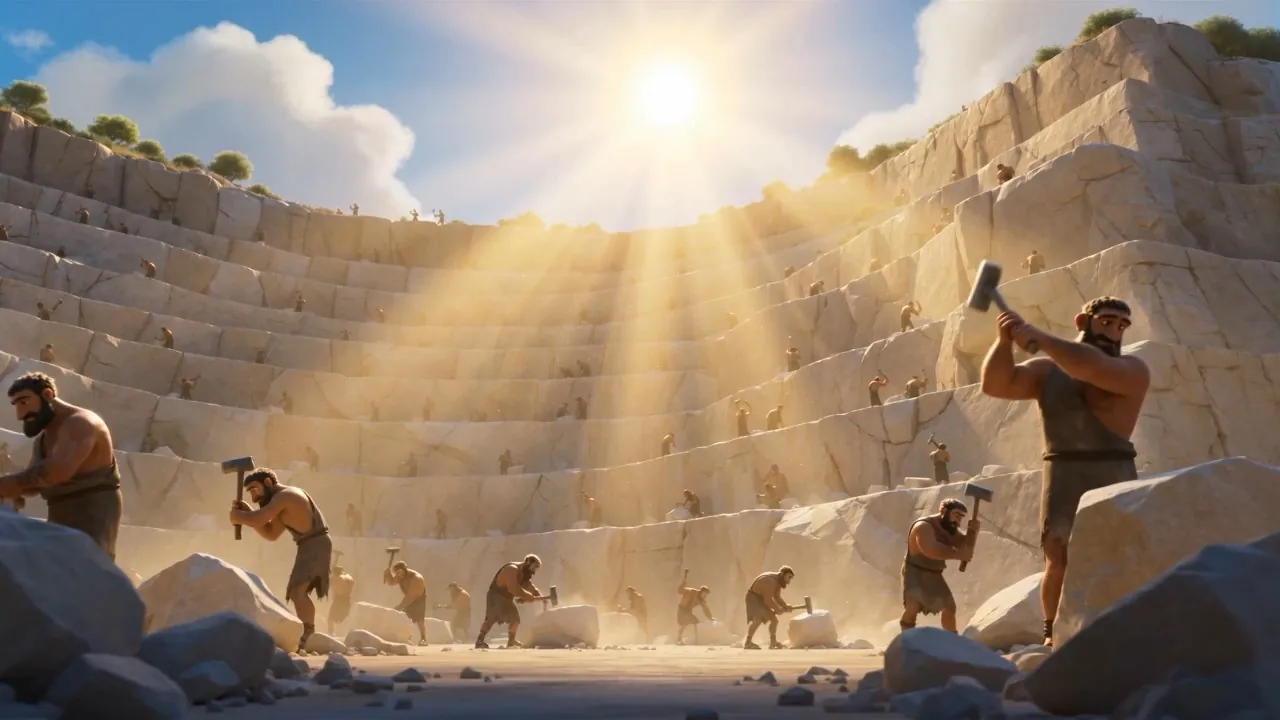
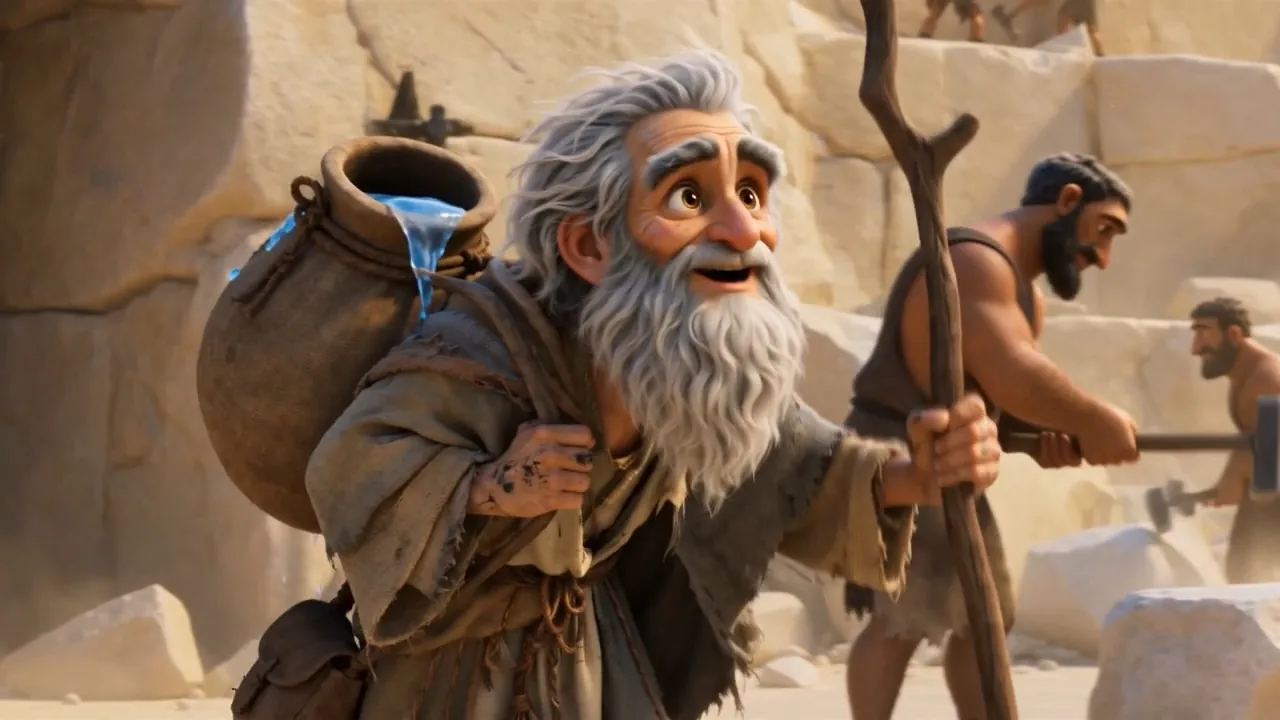
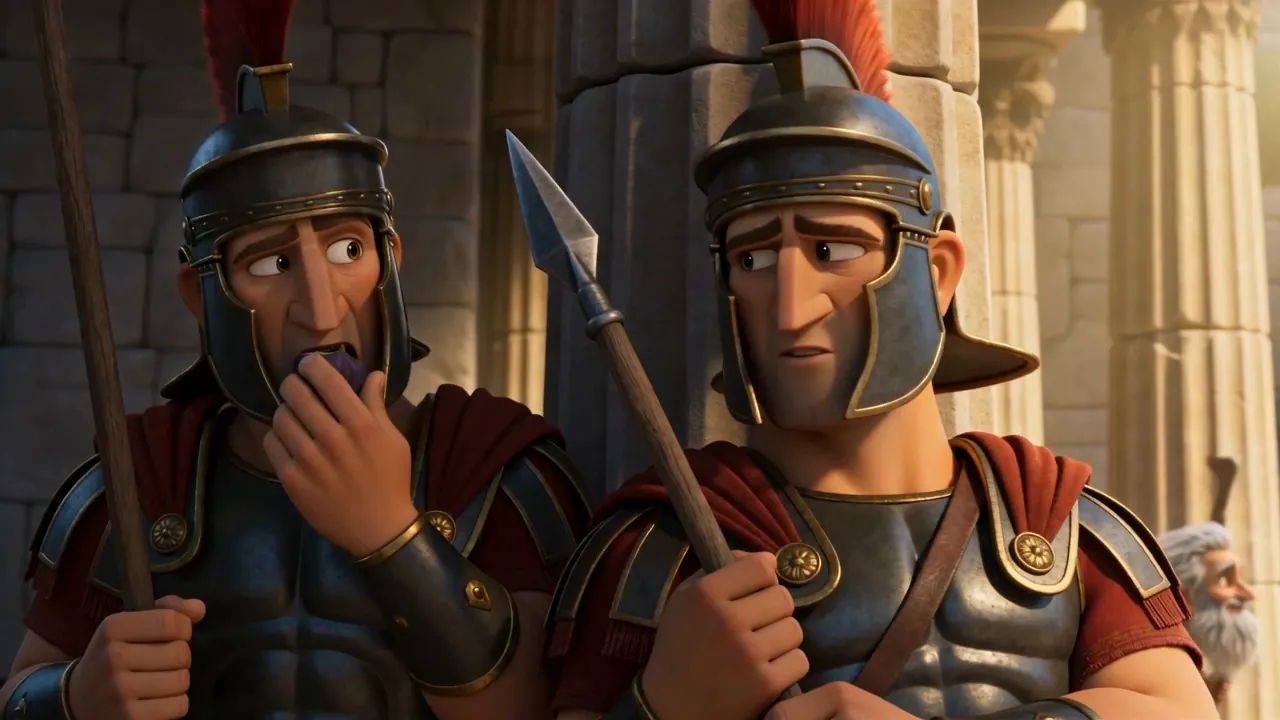
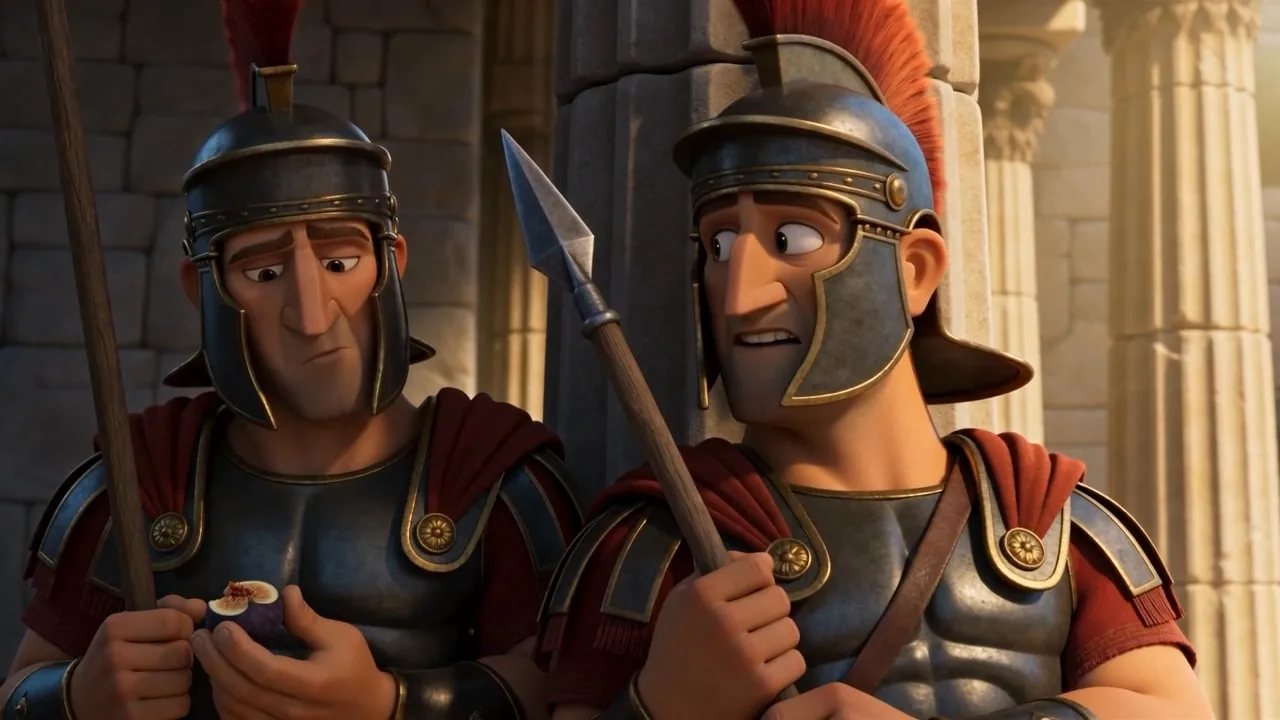
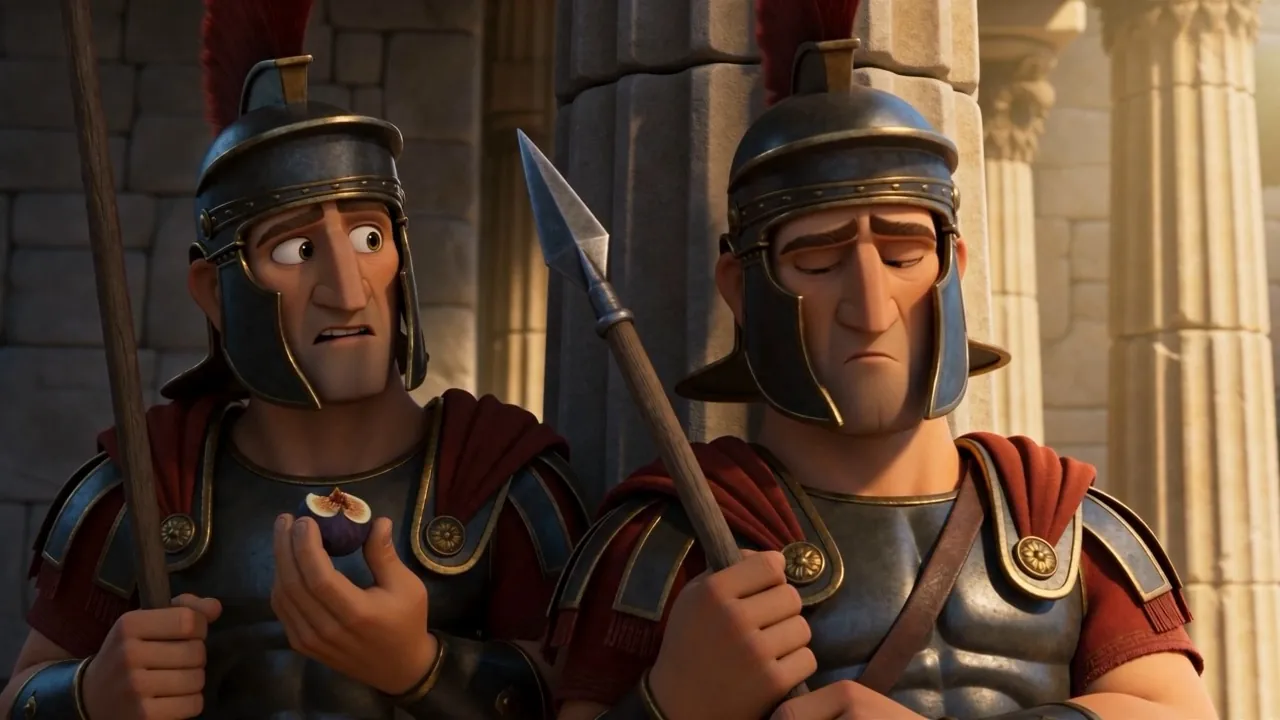
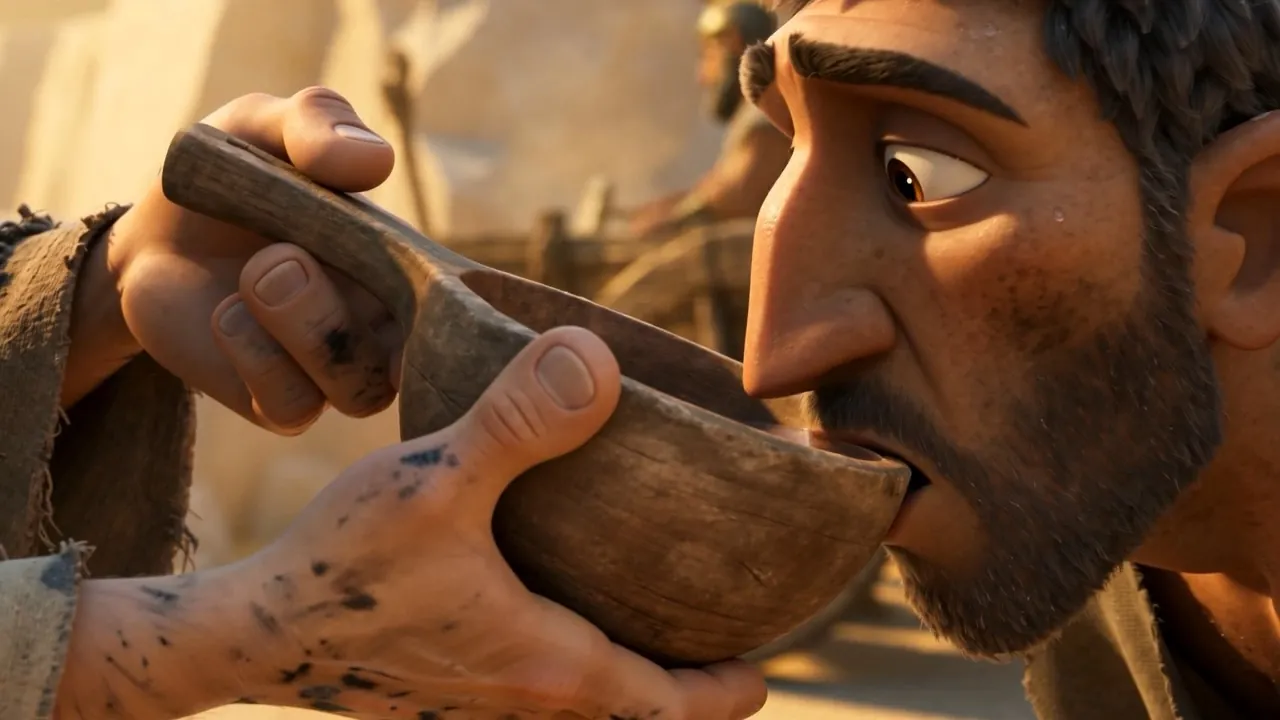
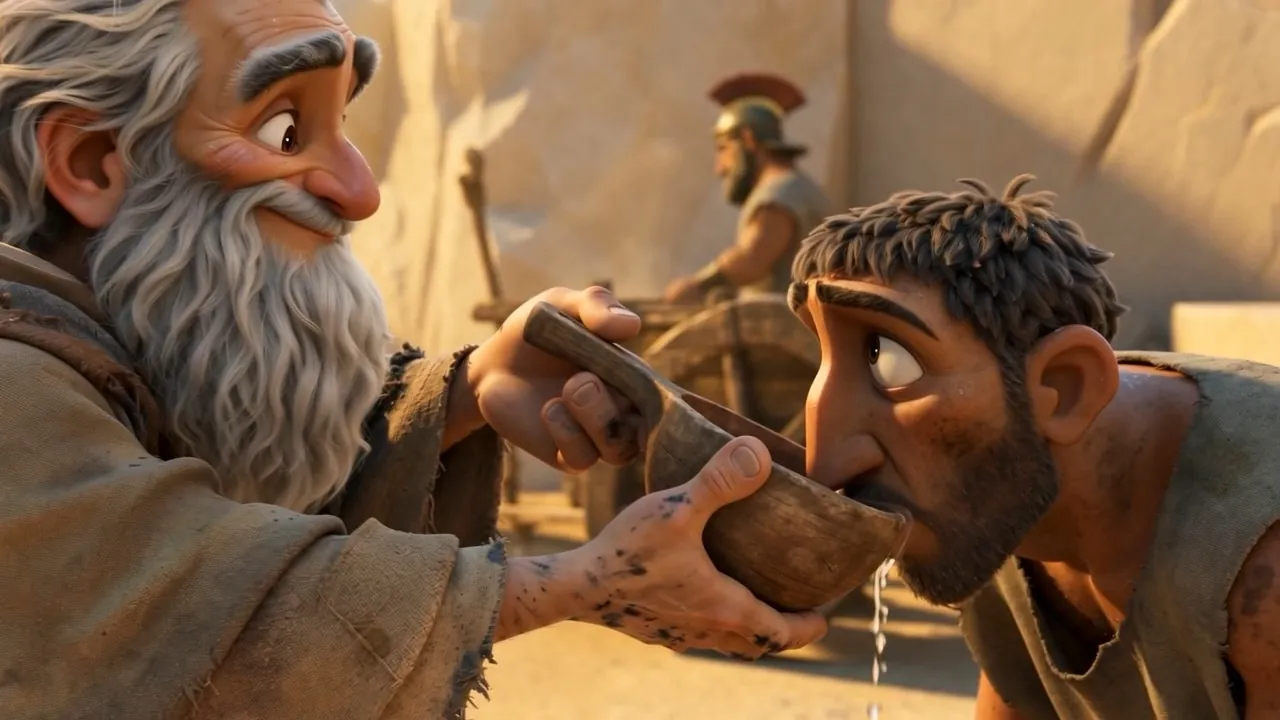
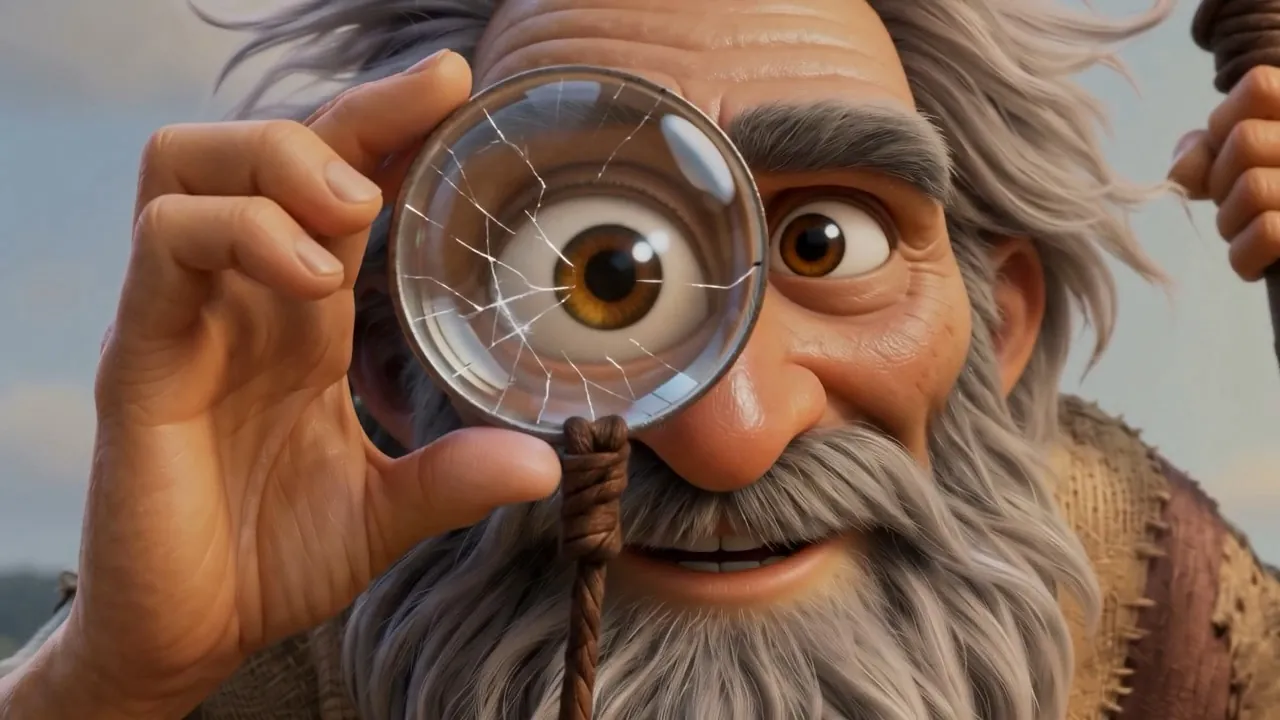
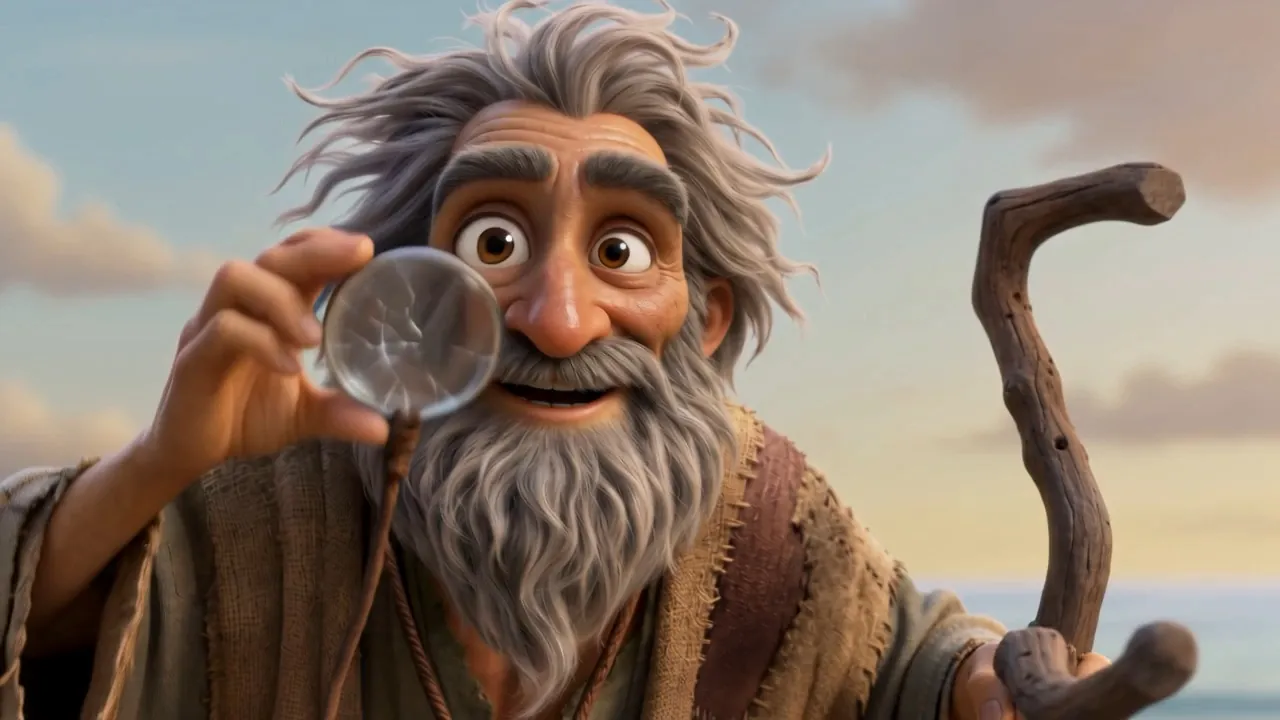
Rome sent its prisoners to Patmos to cut stone until they stopped being a problem. The island opens on the oldest man in the quarry — ninety, by most reckonings — doing the one job nobody assigned him: carrying water down the line, humming. The guards cannot work out what he has to be cheerful about. One of them finally says it out loud: twenty years in this cohort, and I have never once been that happy. His friend, chewing a fig: maybe carry some water. Revelation 1 : 9
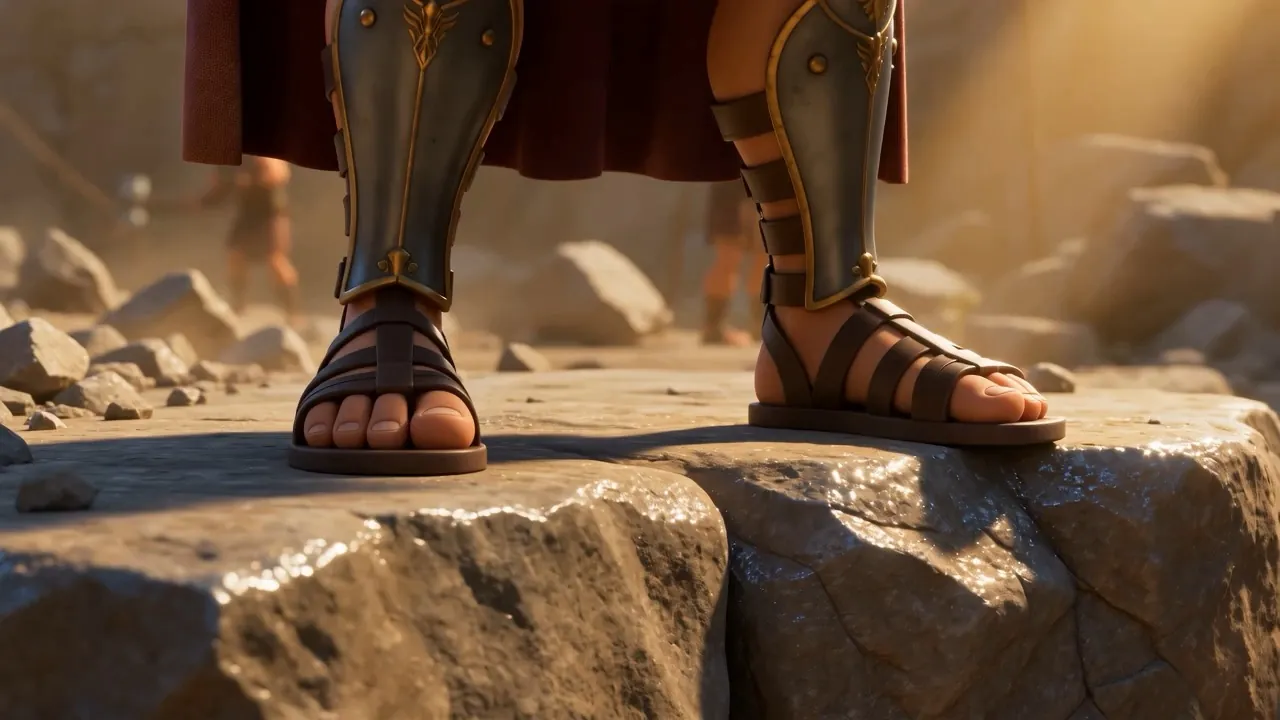
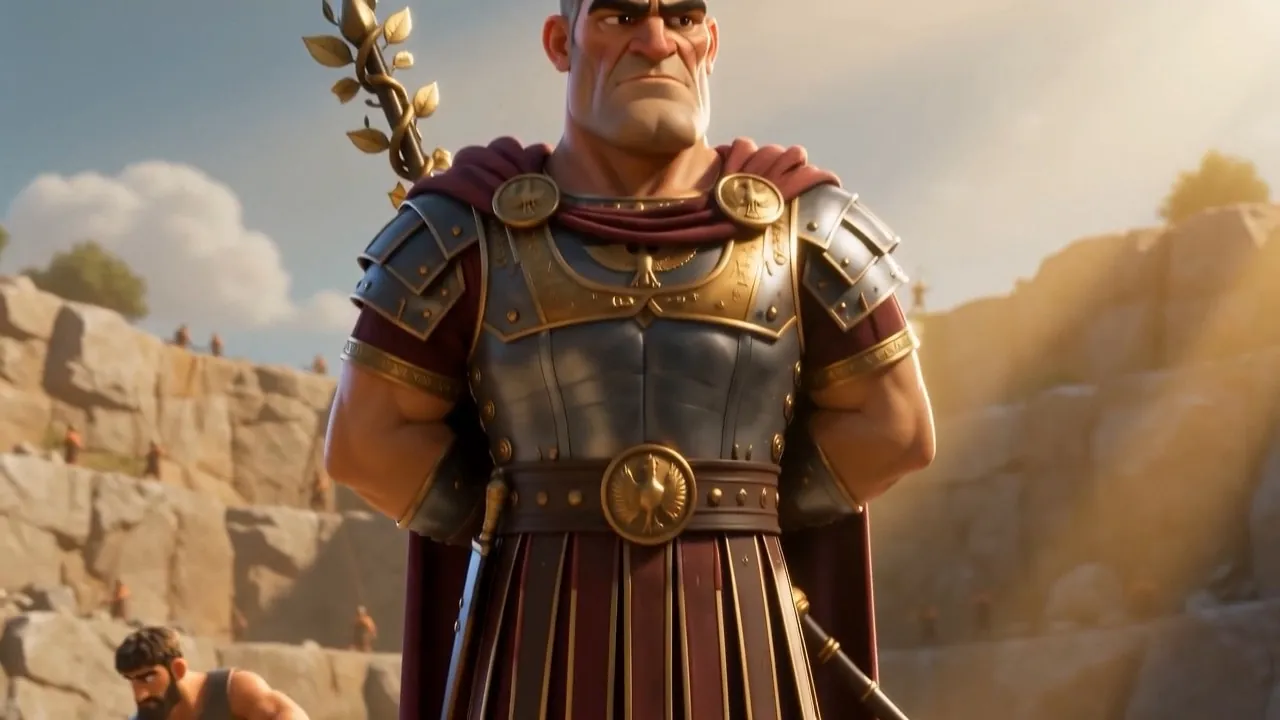
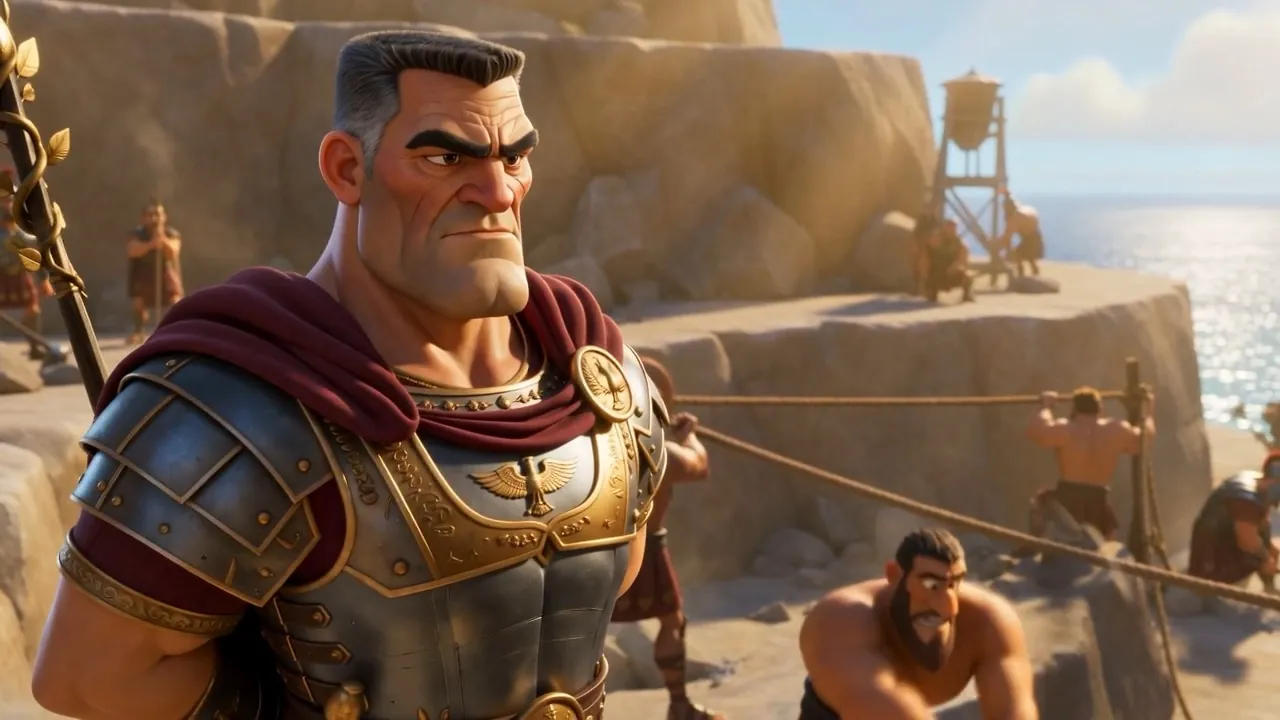
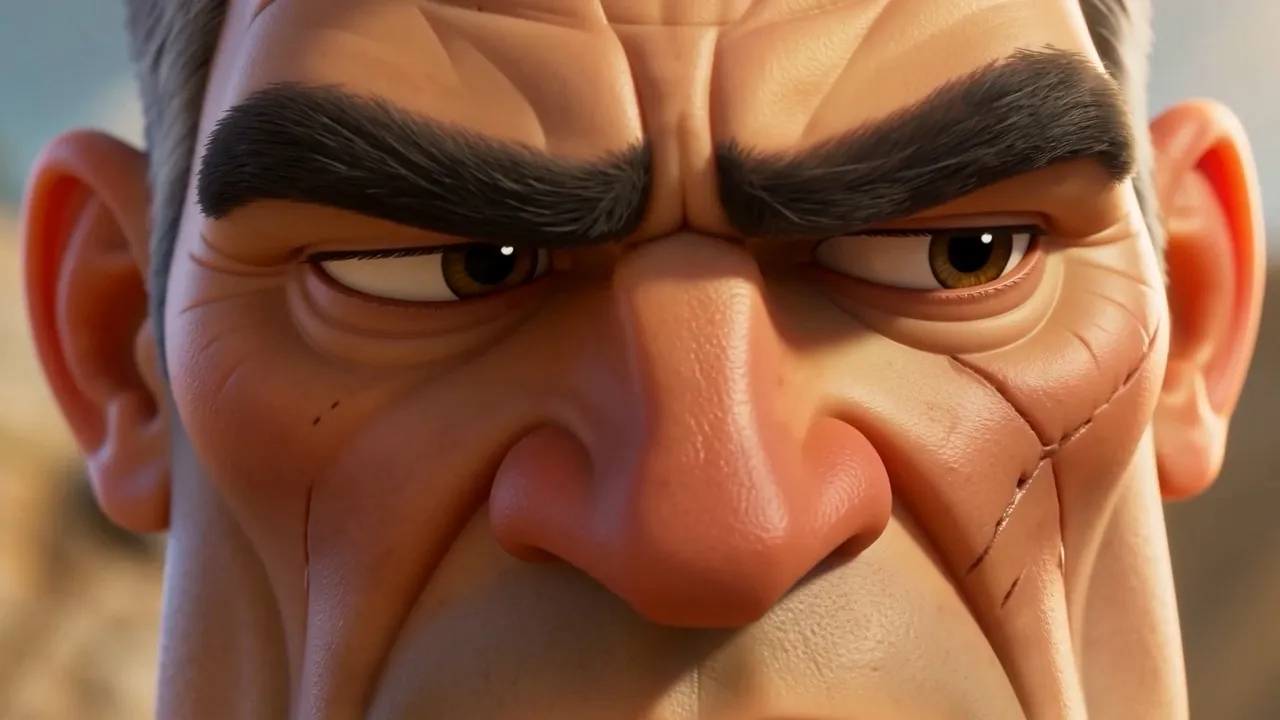
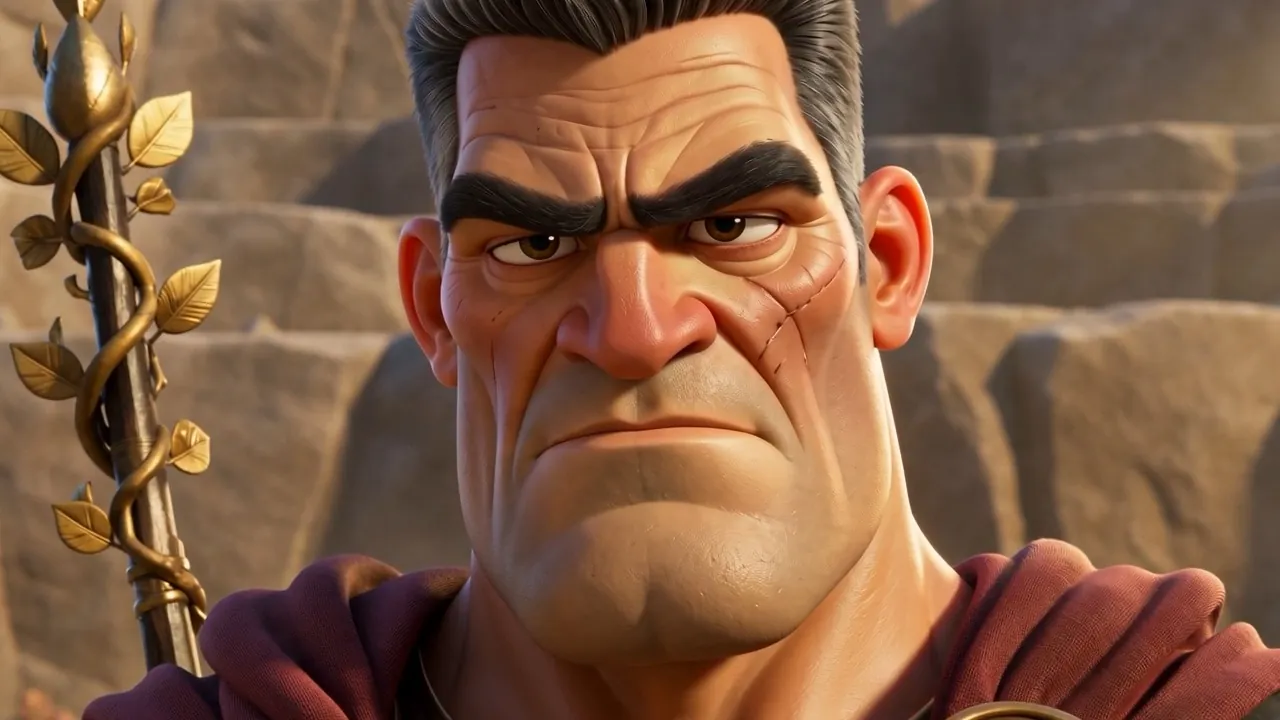
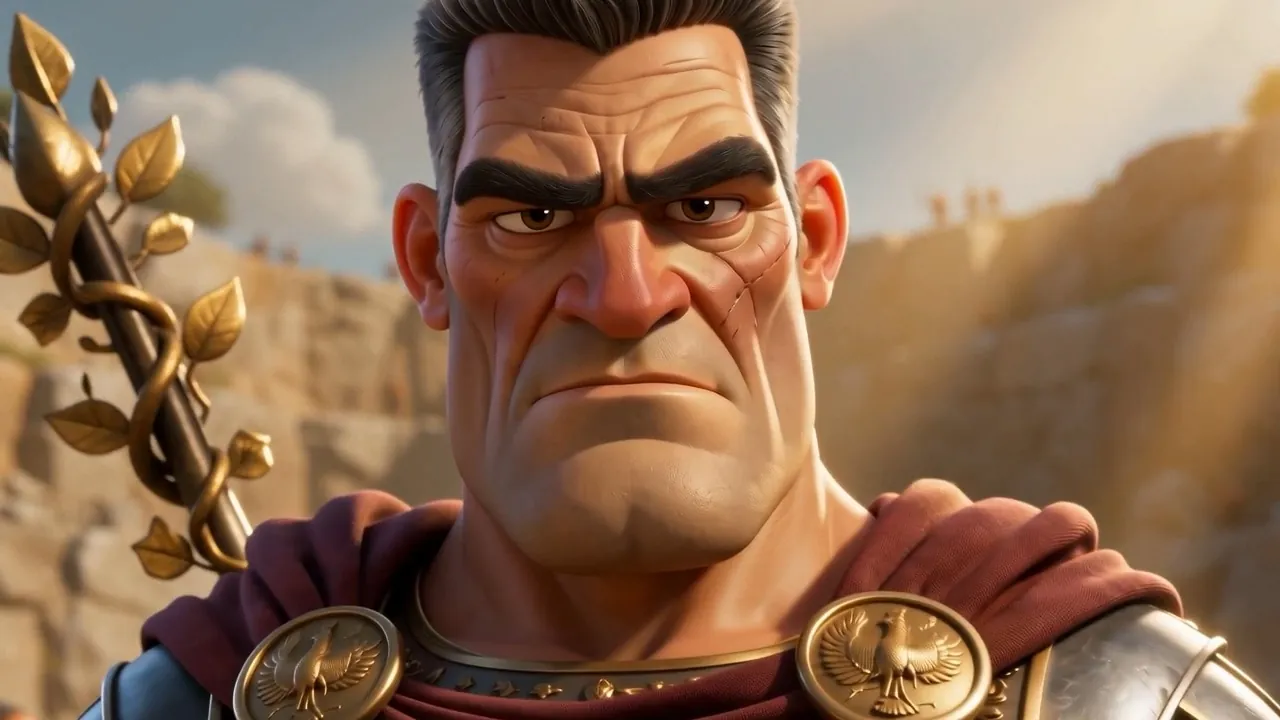
The island has a commander: a granite-squared officer in parade-clean armor who counts everything twice and admires nothing, with an old-wound limp he hides whenever anyone is looking. There is no cruelty in him at all — only order, worn like armor. He runs a rock by the rulebook, and the rulebook has no page for a prisoner who is happy. Revelation 1 : 9
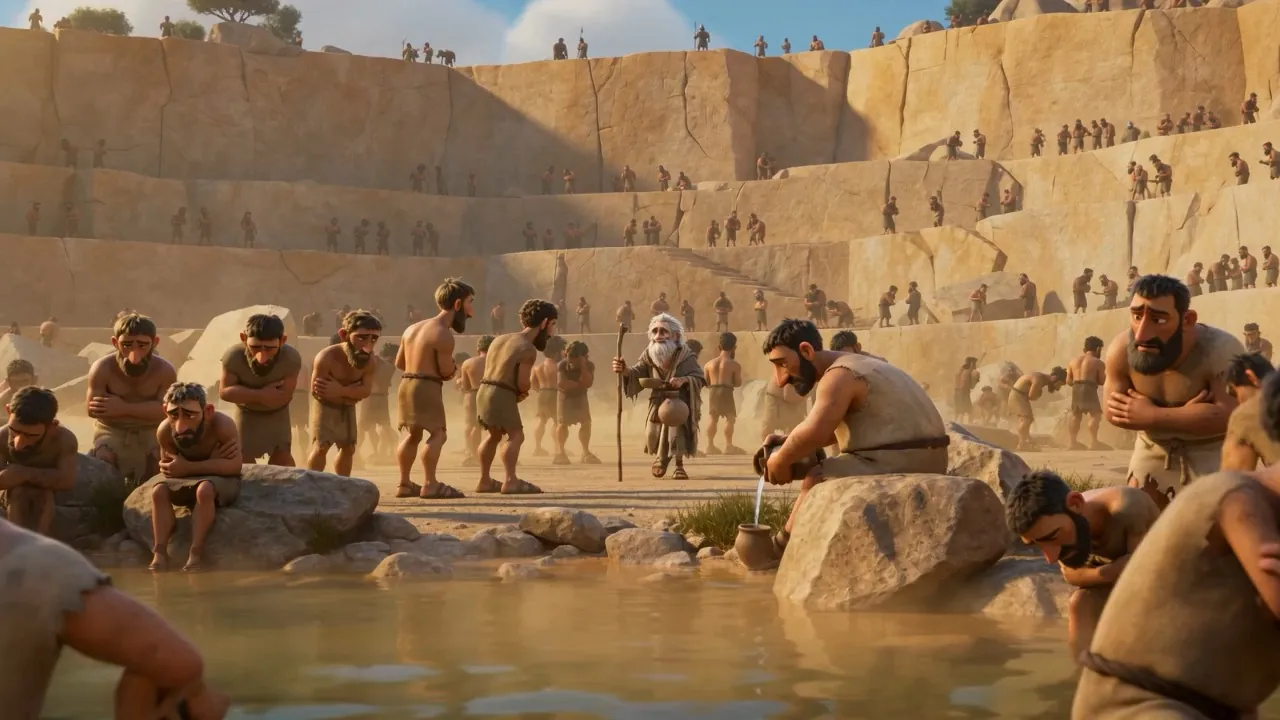
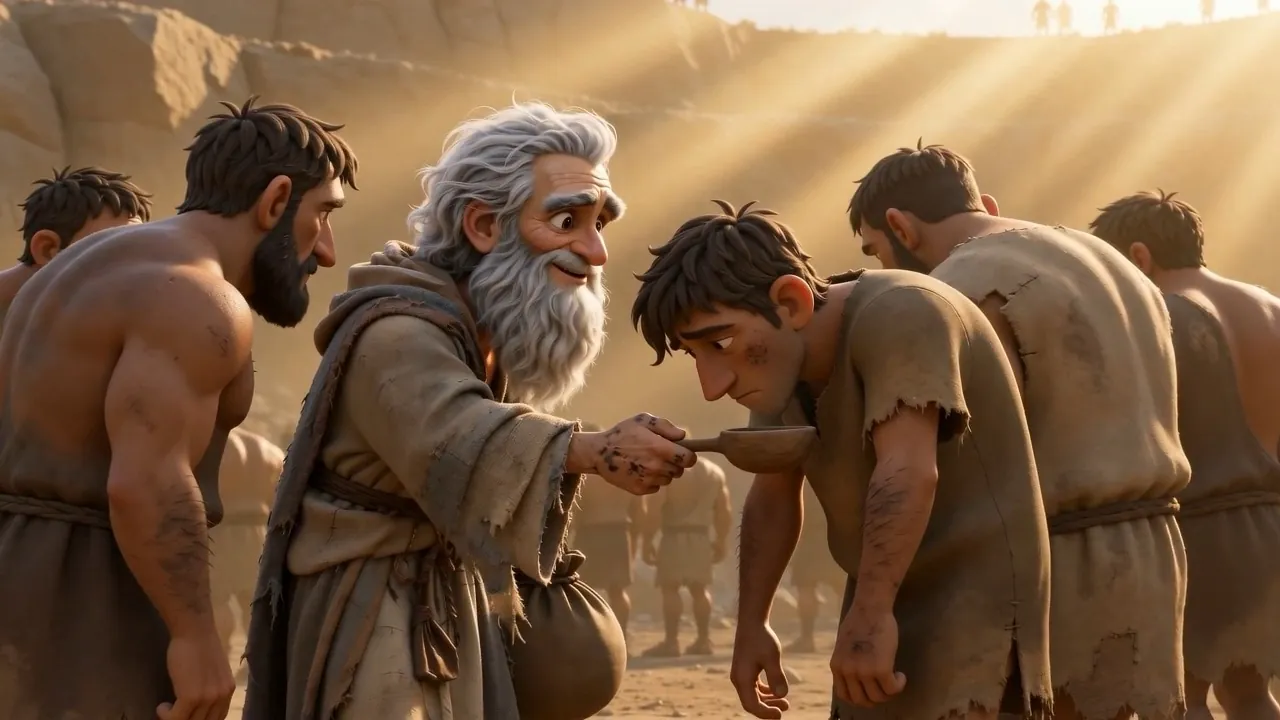
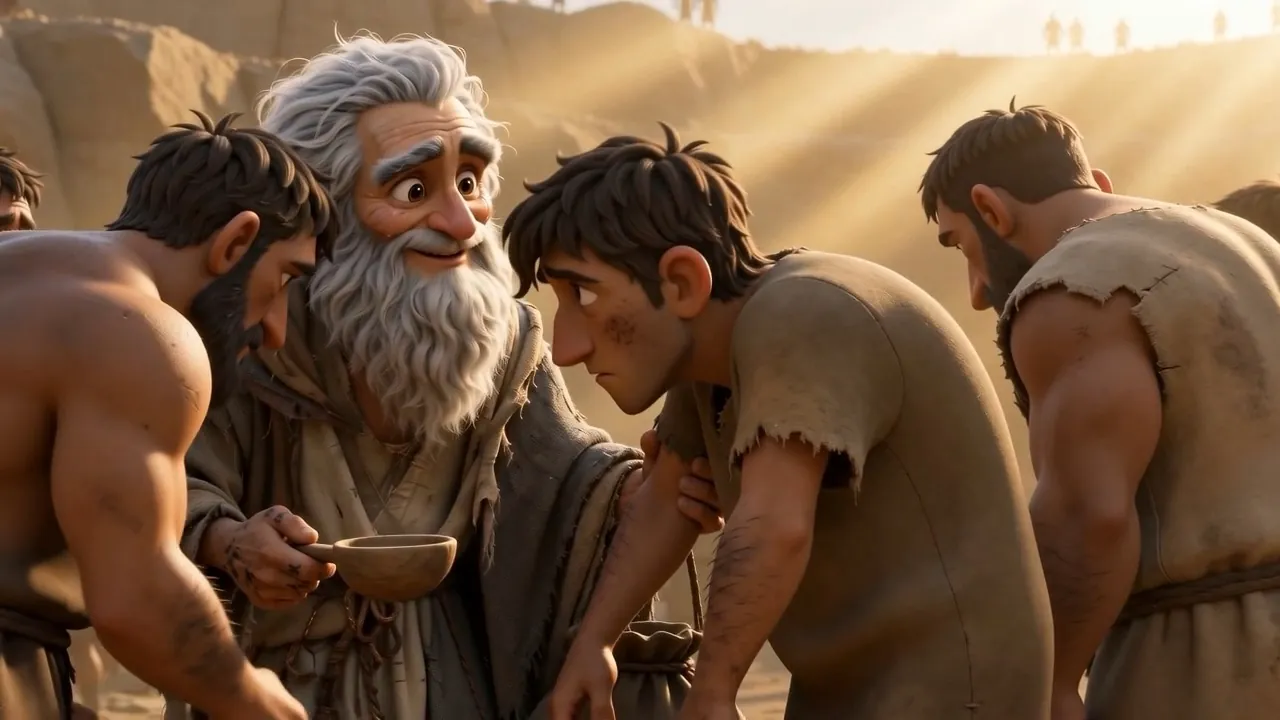
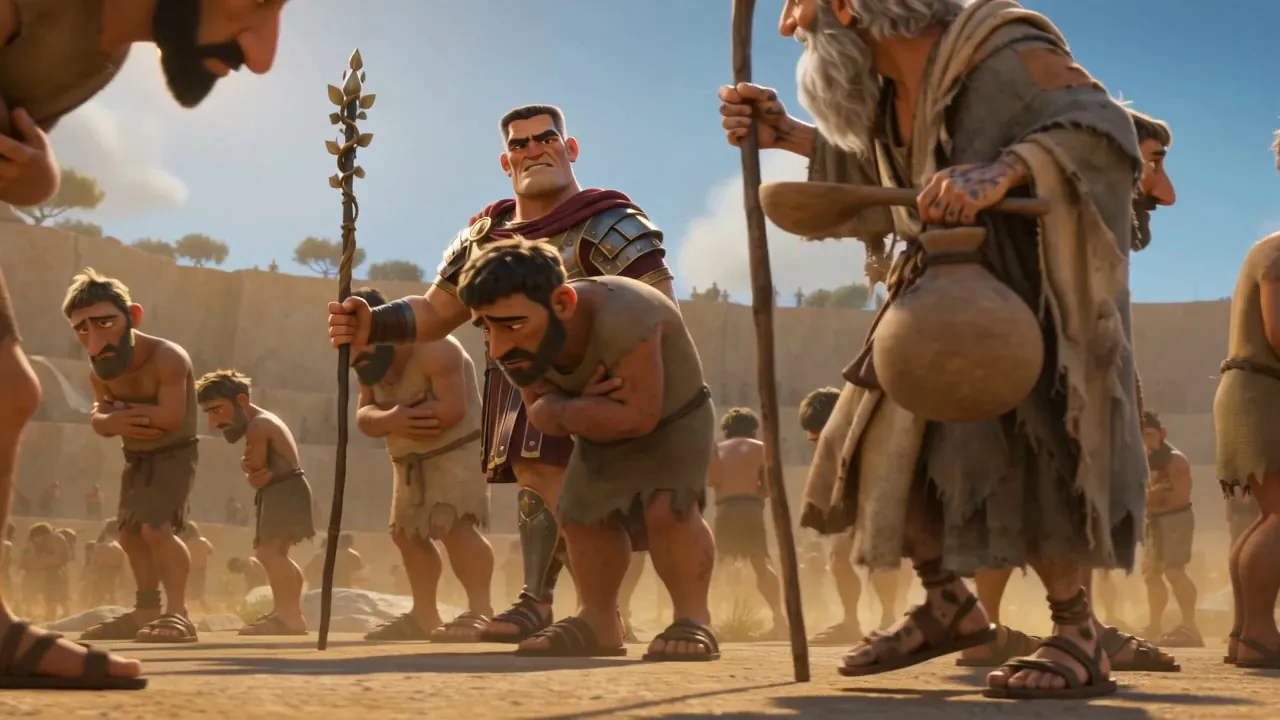
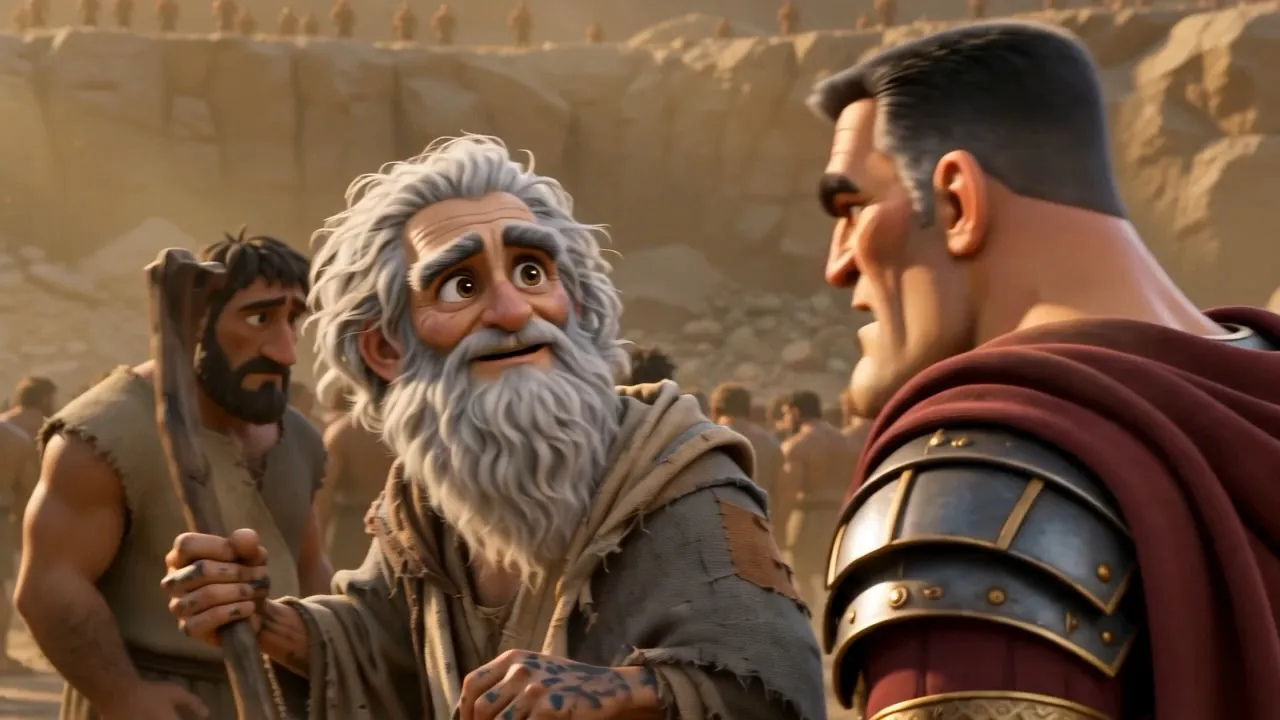
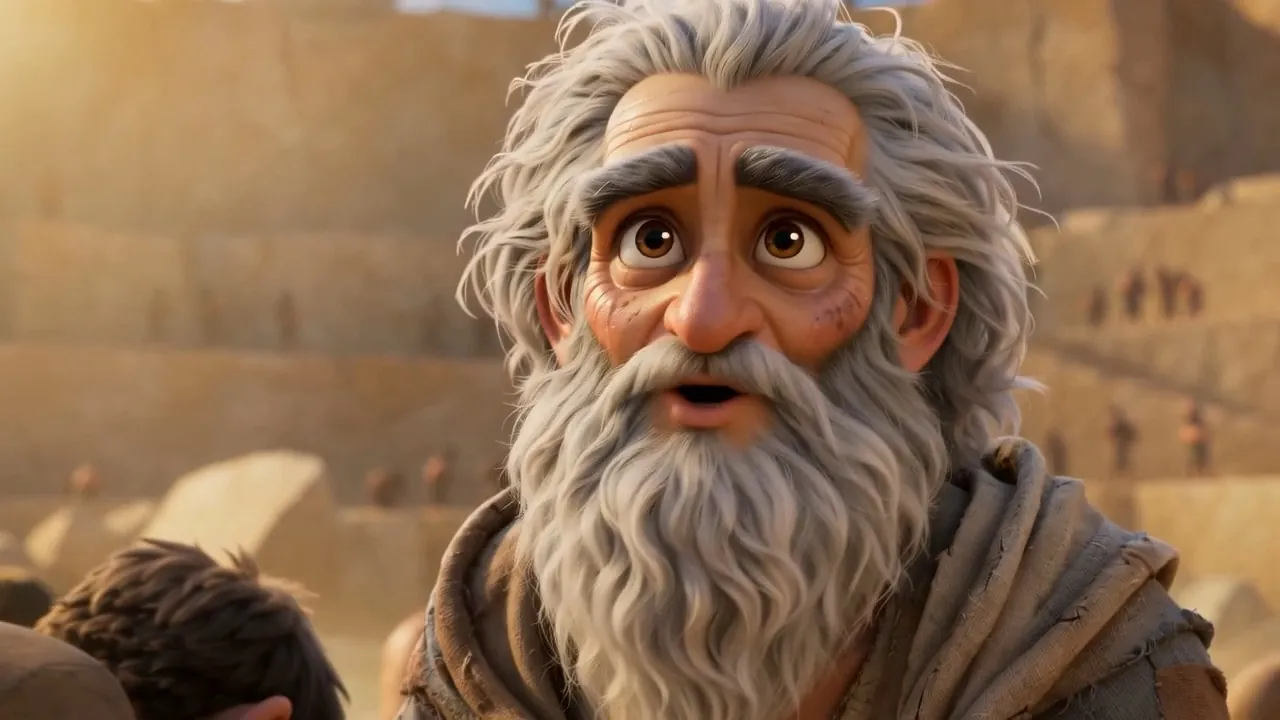
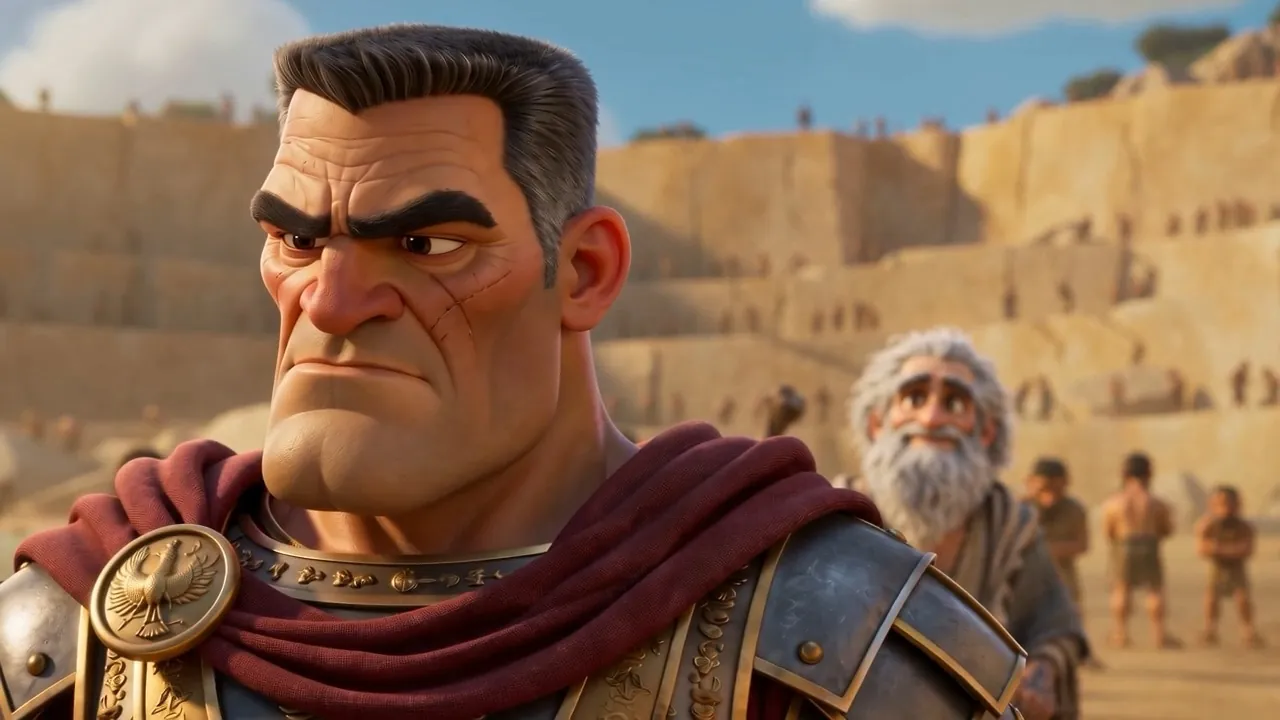
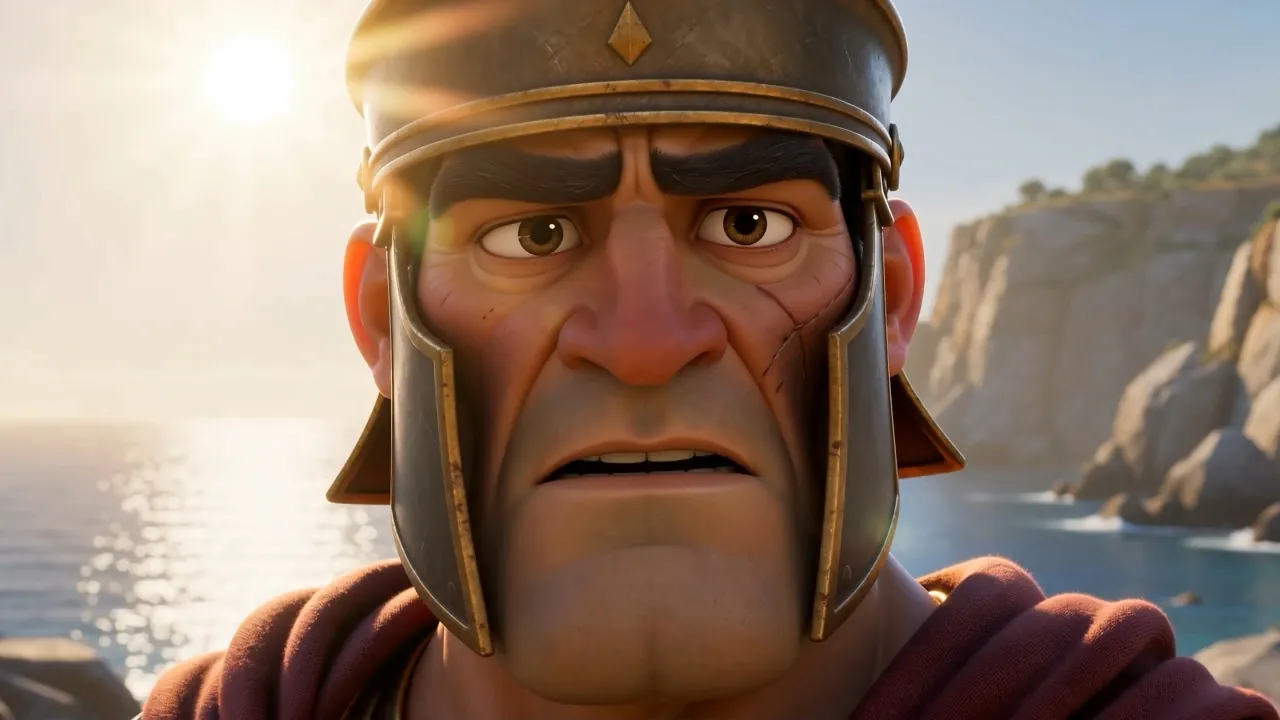
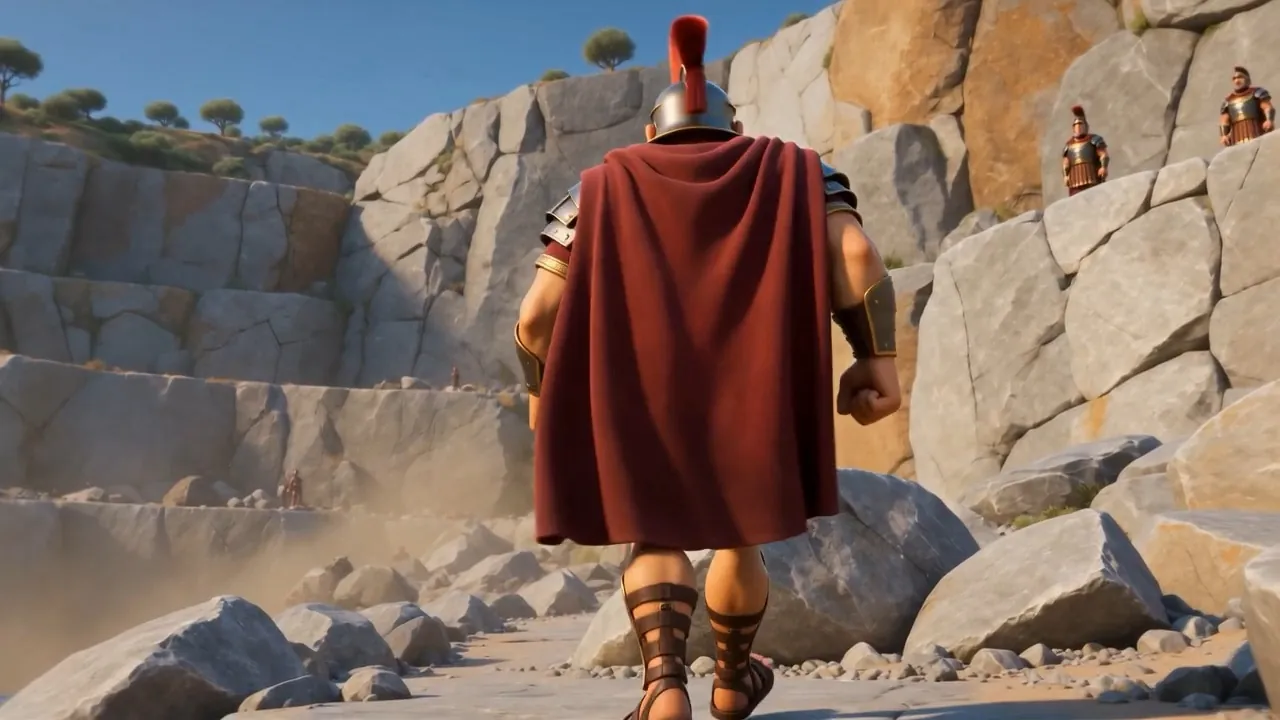
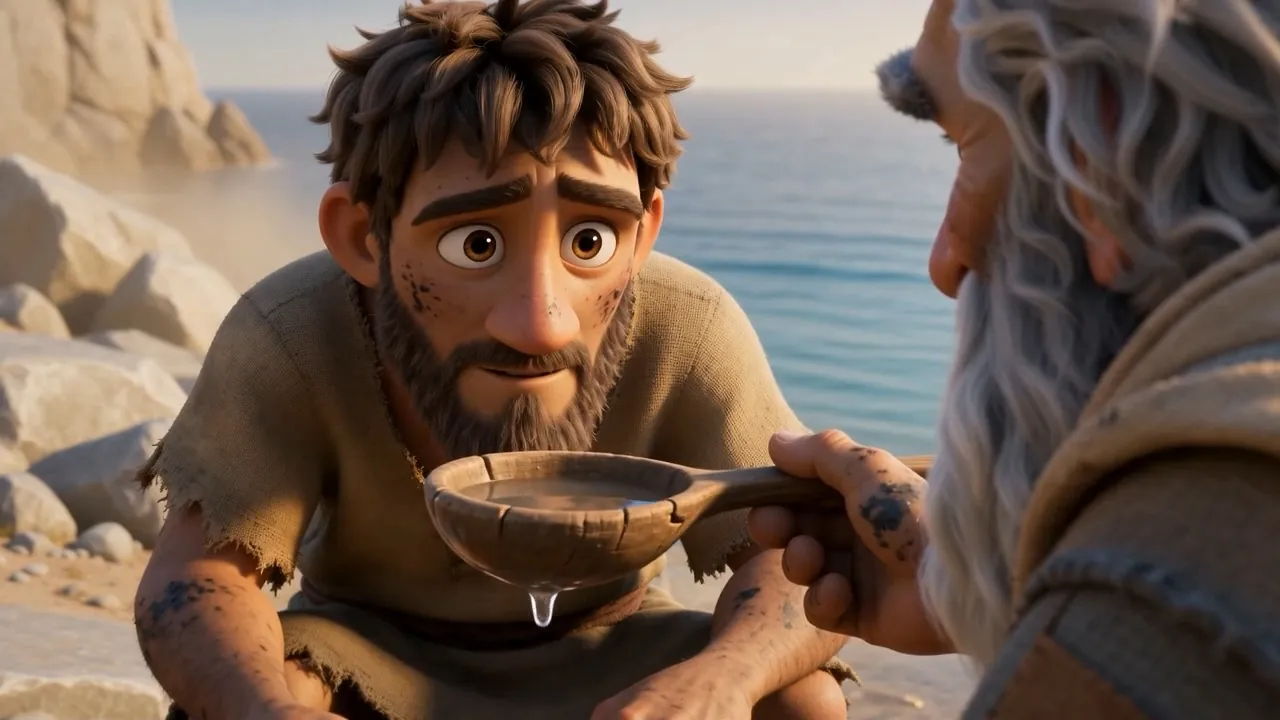
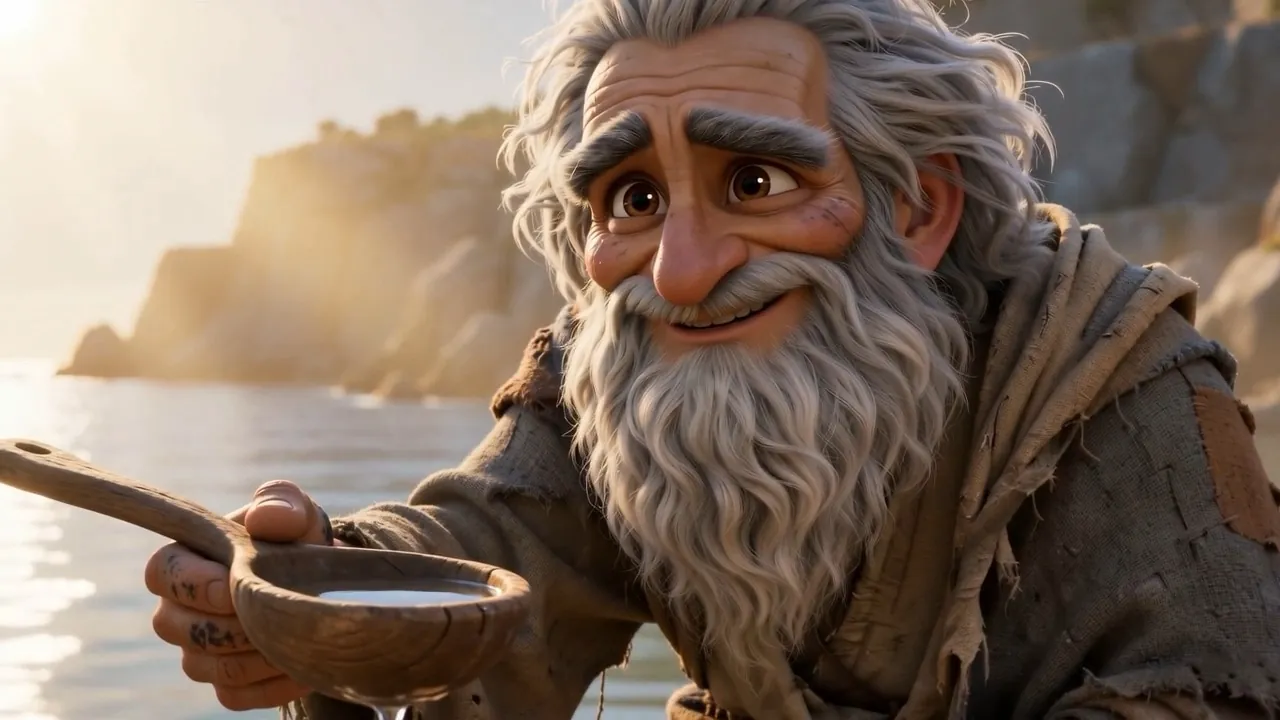
The Captain tells the old man to sit down before he dies on his island — the reports are endless. John hands the ladle to the next prisoner and answers without looking up: I died with my Master a long time ago, Captain. It did not stick. The sentence sits on the officer’s face and fails to file itself anywhere. Then he walks off, hiding the limp, and a prisoner grins into his water, and the oldest man on the island goes on pouring like a feast. John 21 : 14
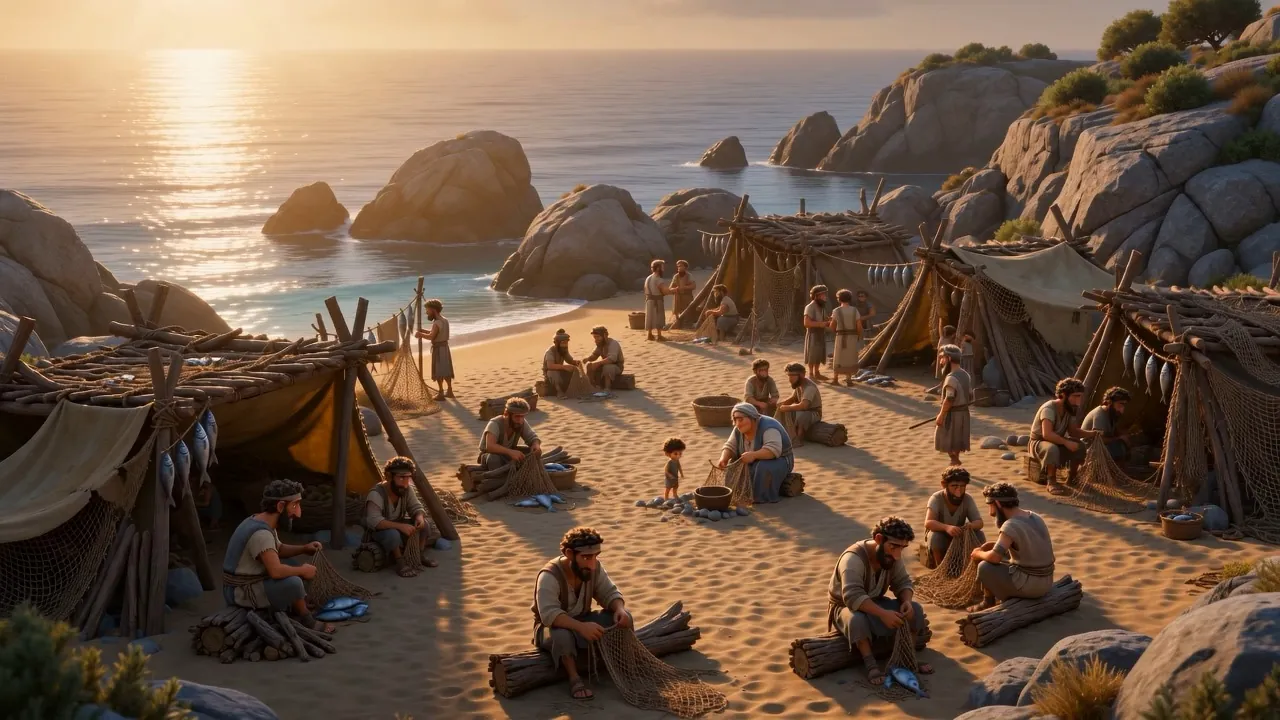
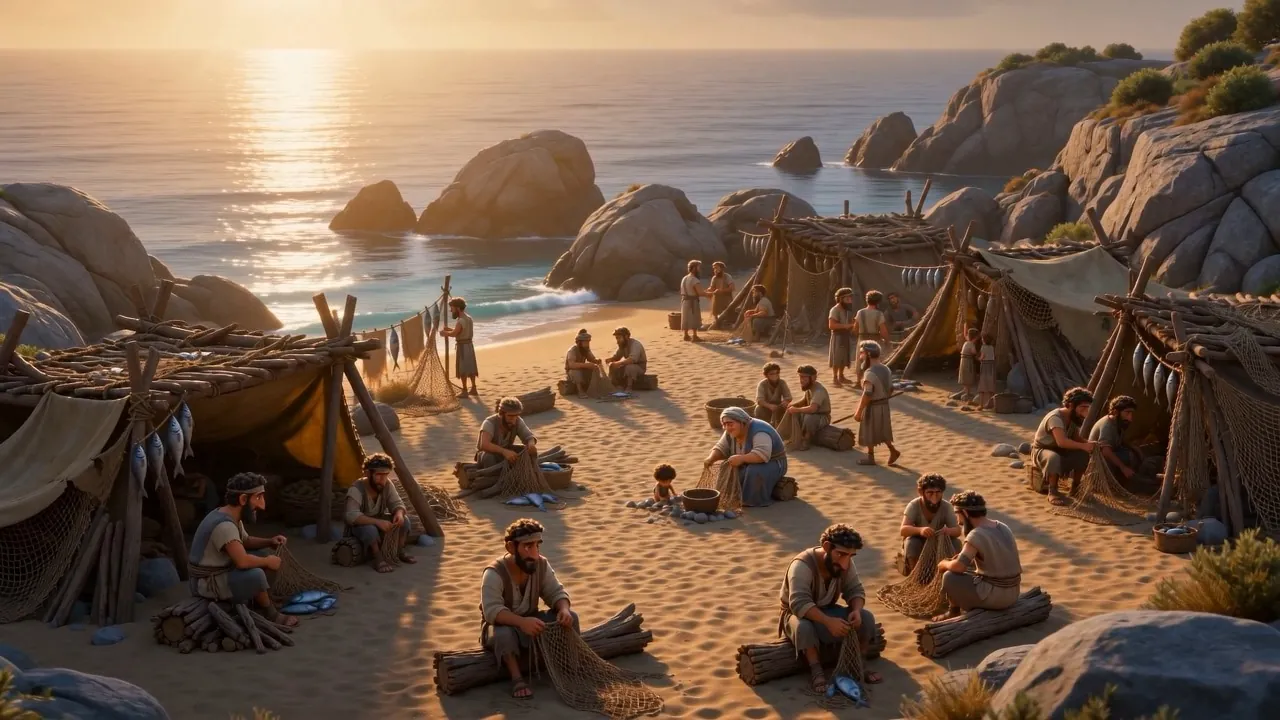
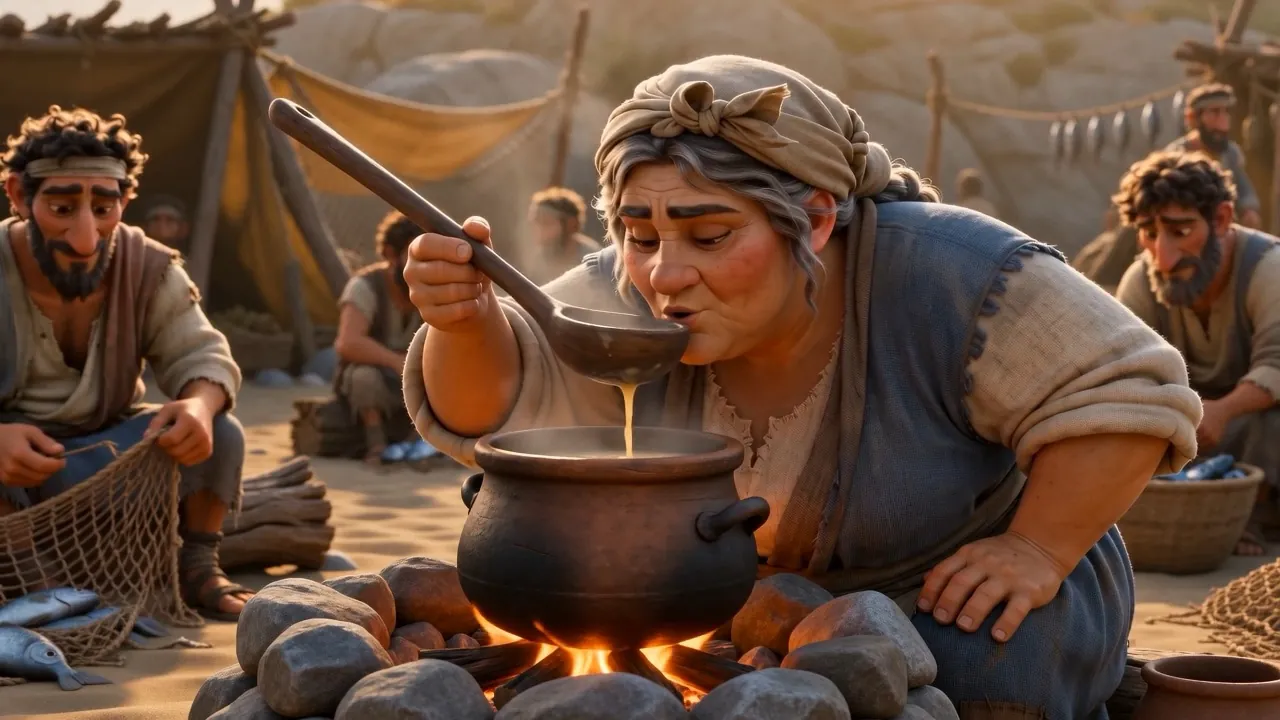
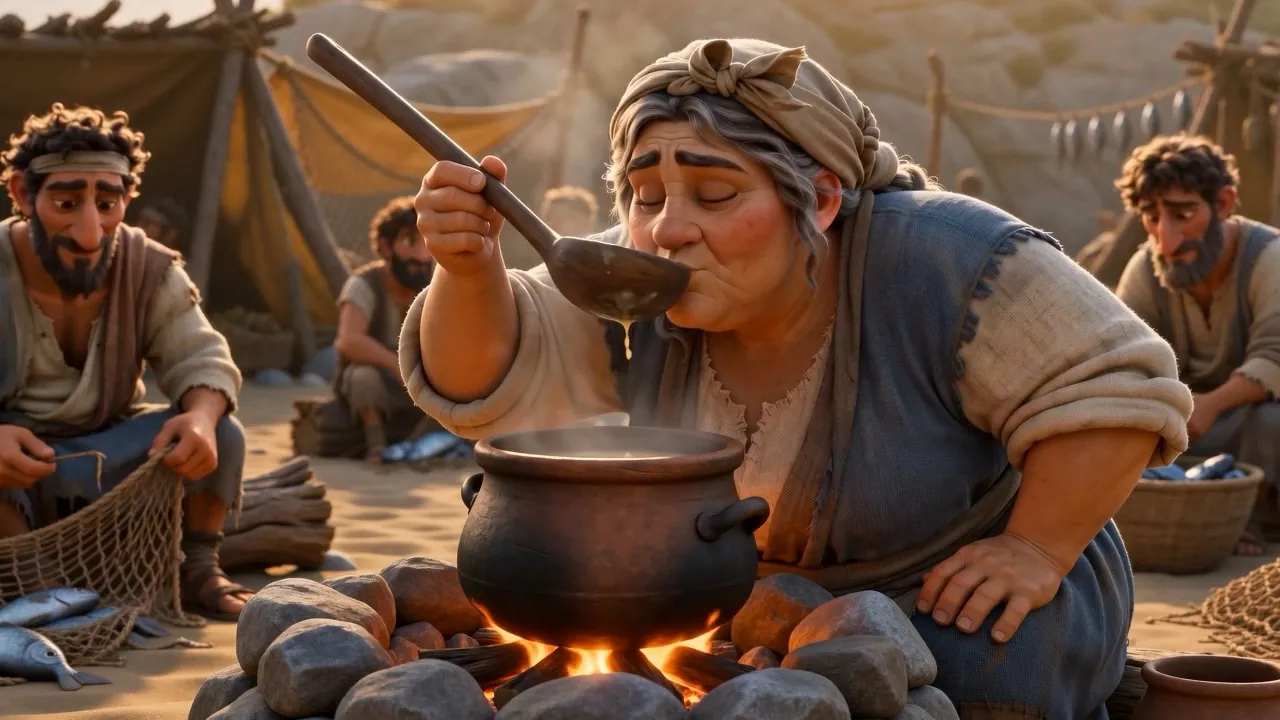
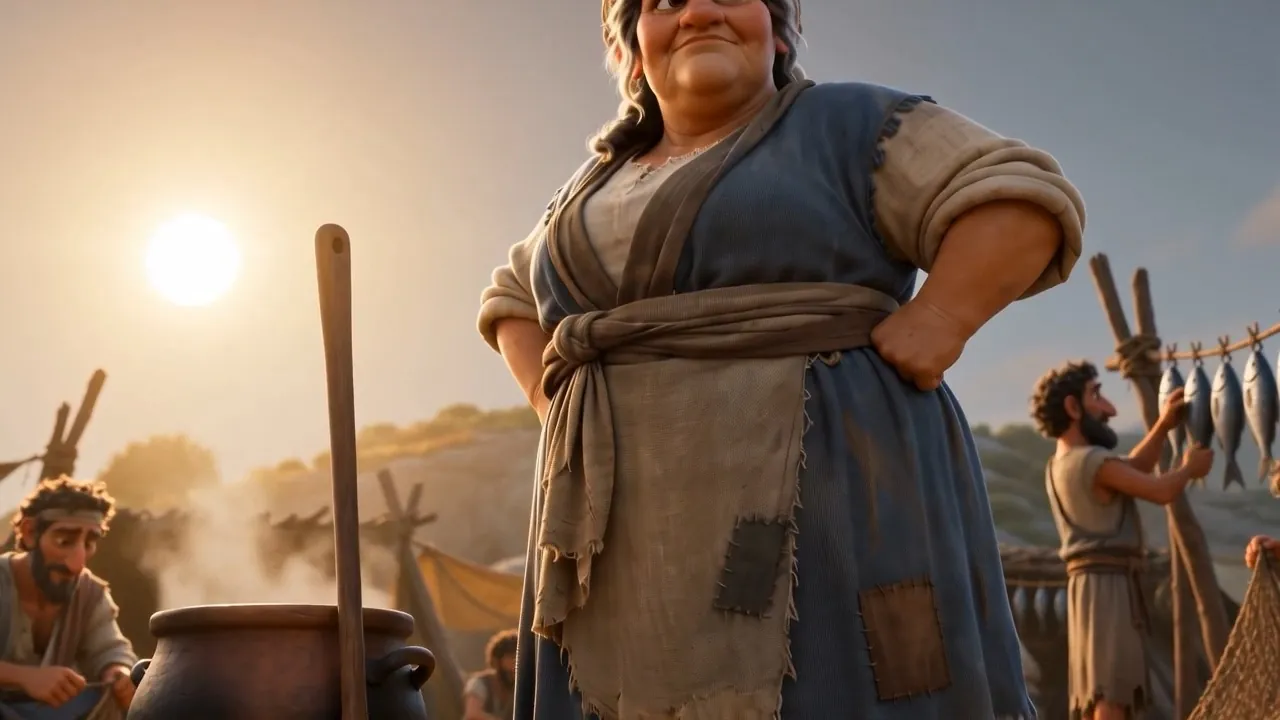
Below the quarry, between gray rocks and the tide, is the exile camp — and its actual government. The Fisher-Matron runs the beach from a stone-ringed cook-fire with a wooden ladle the size of an oar: one taste of the pot and a single nod, the verdict of a magistrate. The whole camp is drawn poor and never once grim — a harbor at ease, a prison beach that forgot to be miserable. Revelation 2 : 9
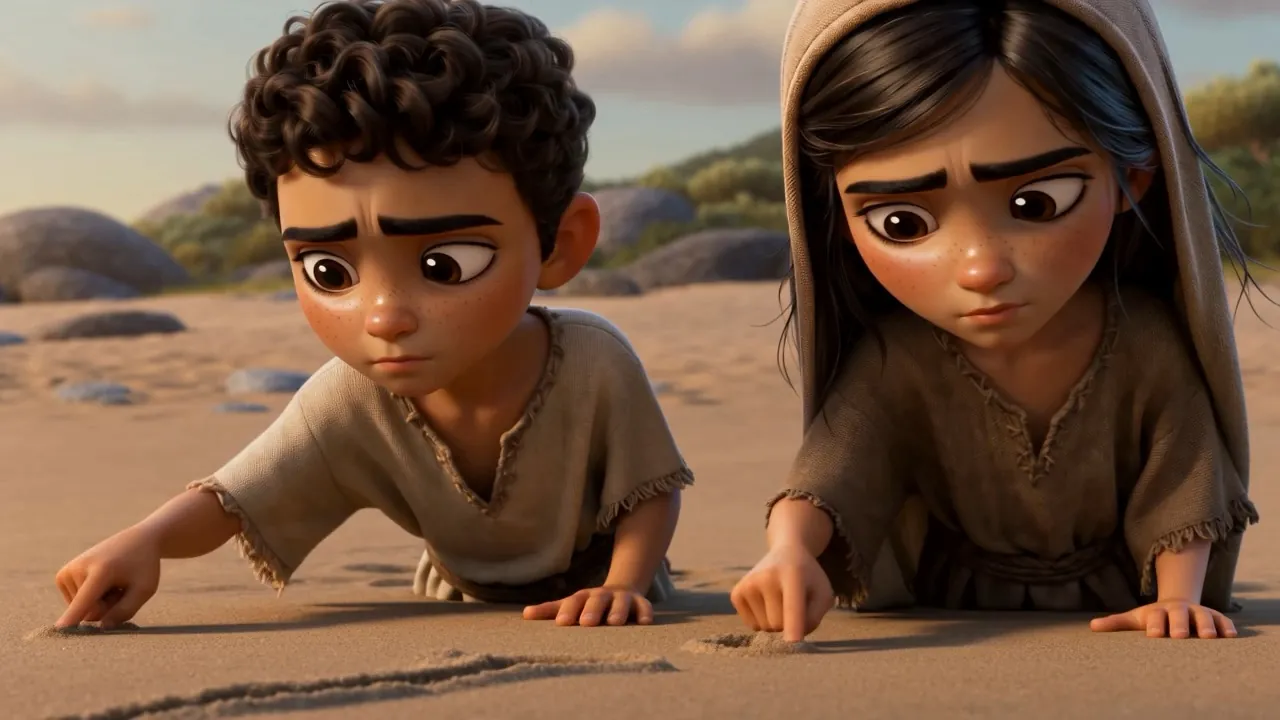
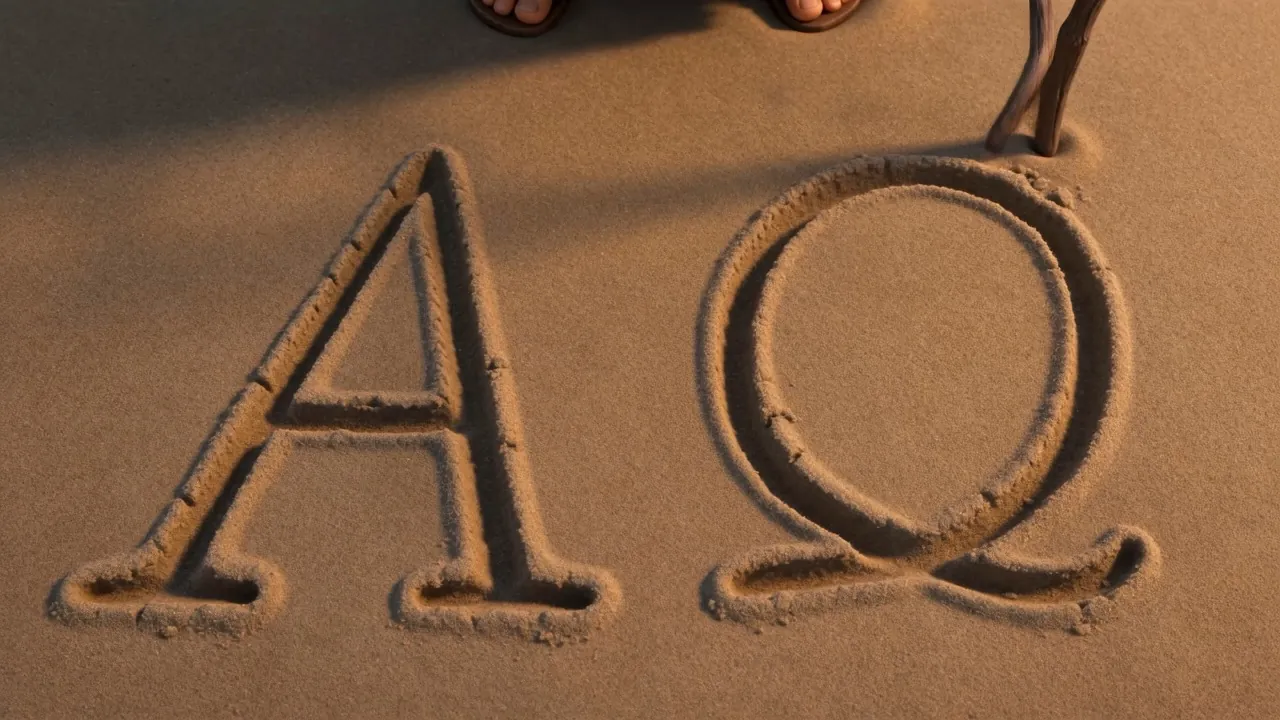
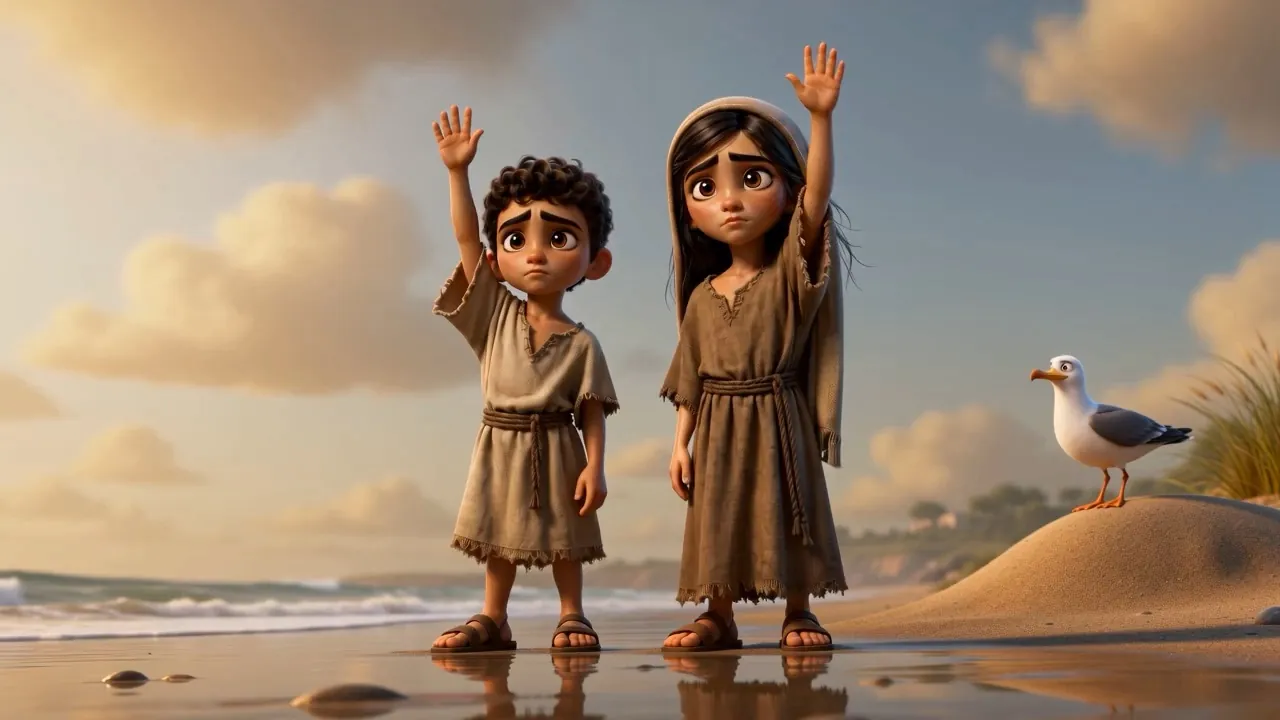
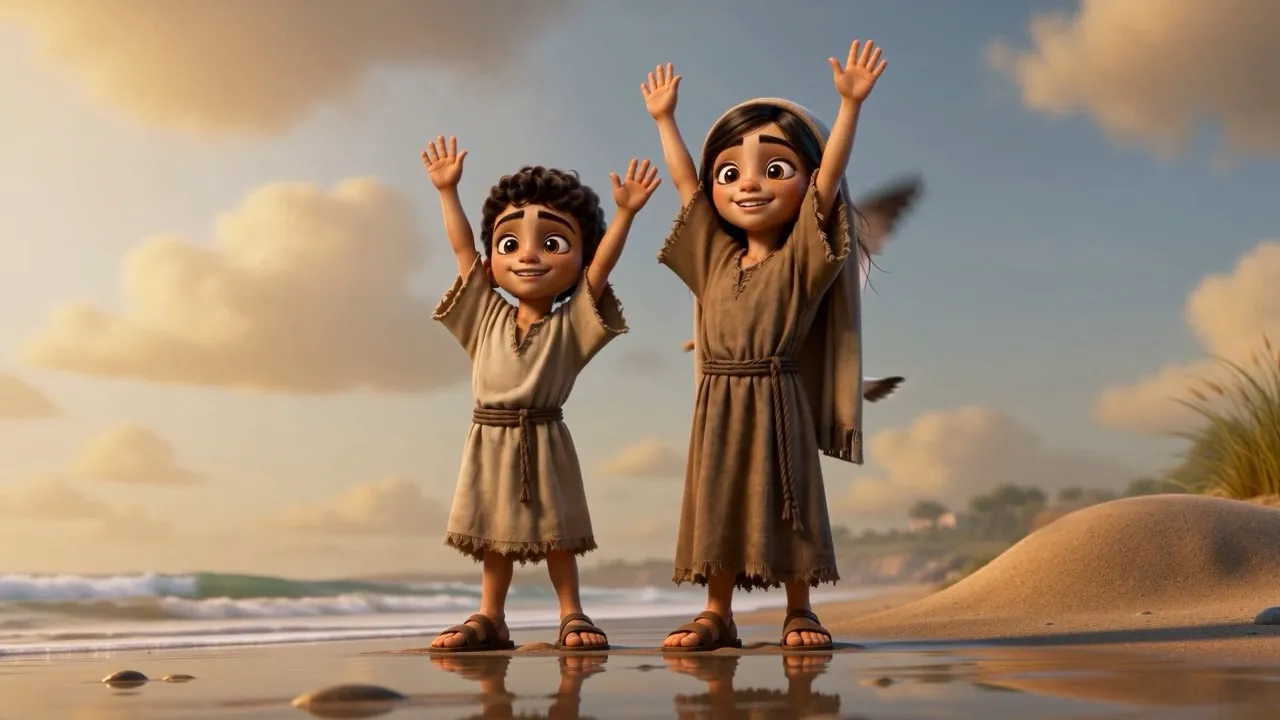
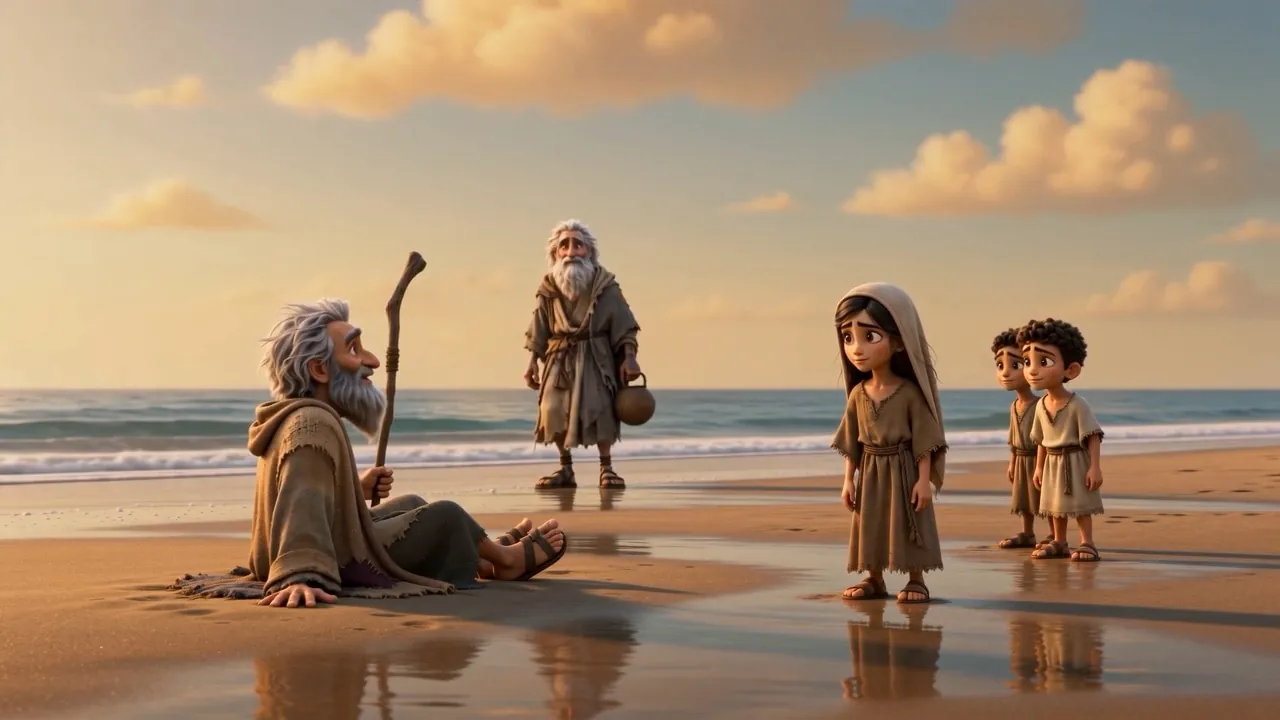
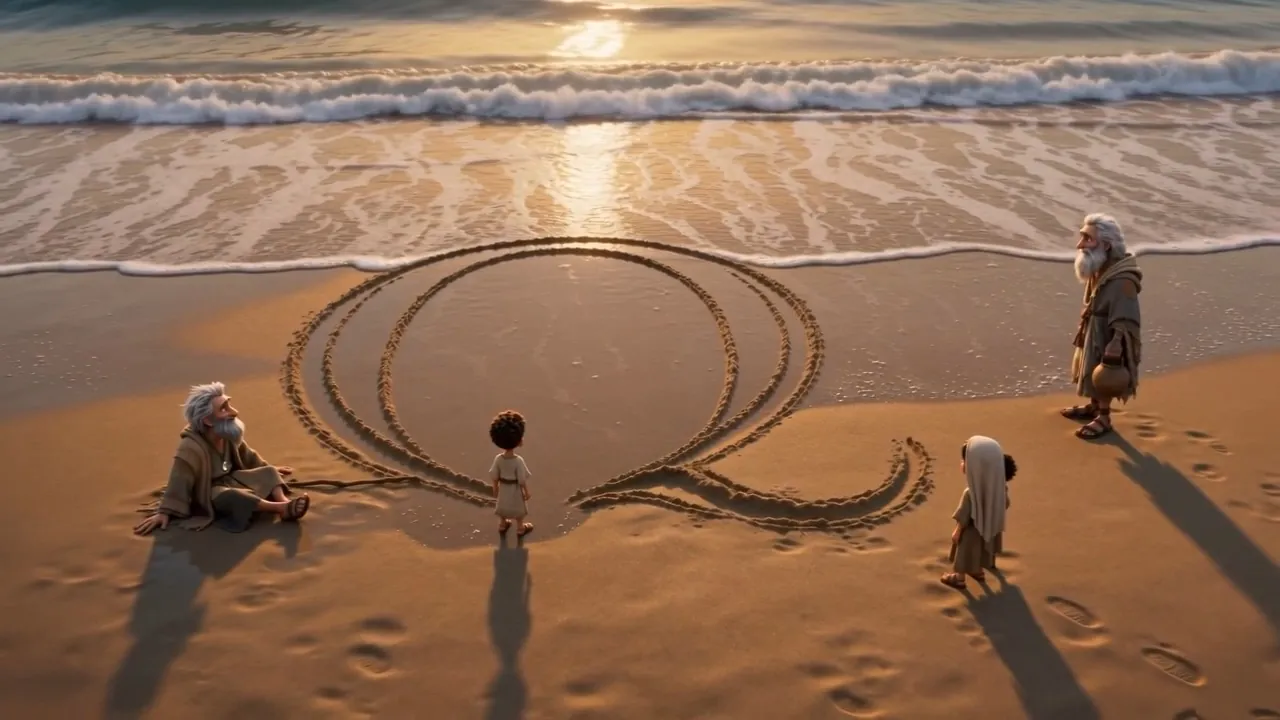
School happens on the wet sand, where the tide erases the blackboard twice a day. The Old Teacher draws two great letters — Α and Ω — and asks who calls Himself by them. Two hands shoot up. The shout scatters a gull. Whatever Rome writes in between, little ones — He writes the first word. And He writes the last. Behind them, an old man with a waterskin mouths the answer along with the children. It is the ending of the whole book, planted in sand. Revelation 1 : 8
"I am the Alpha and the Omega," says the Lord God.

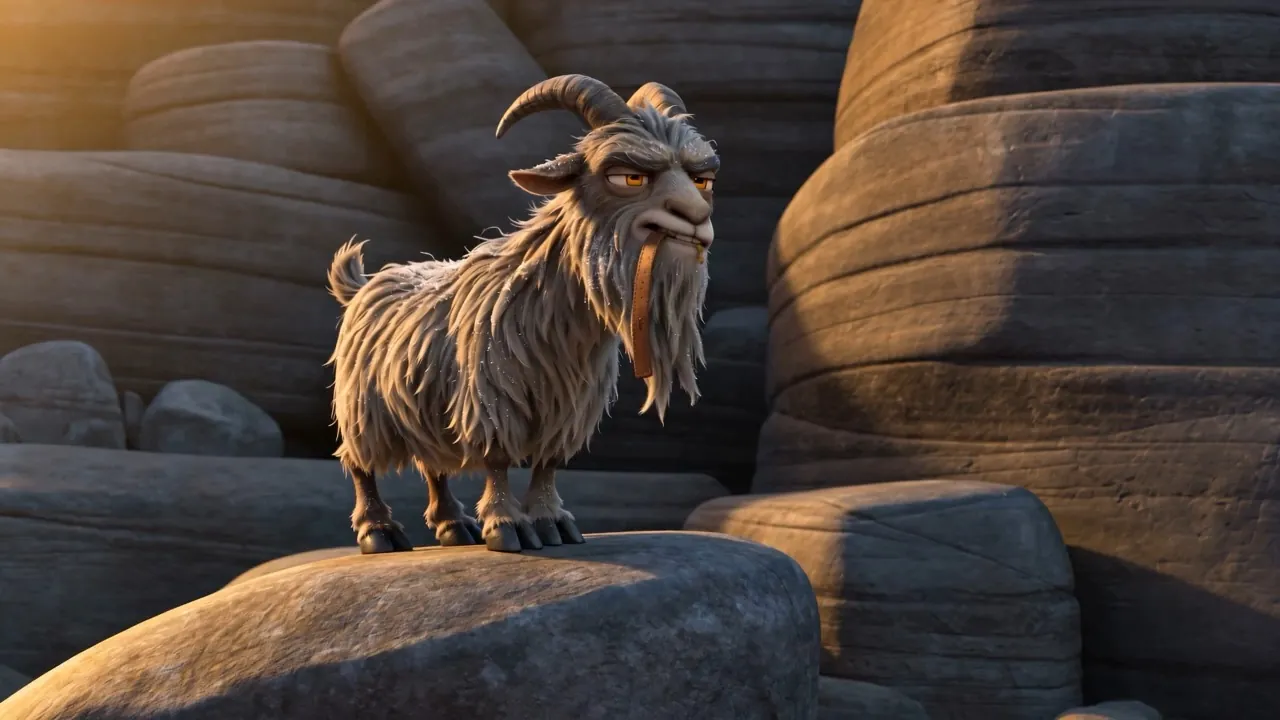
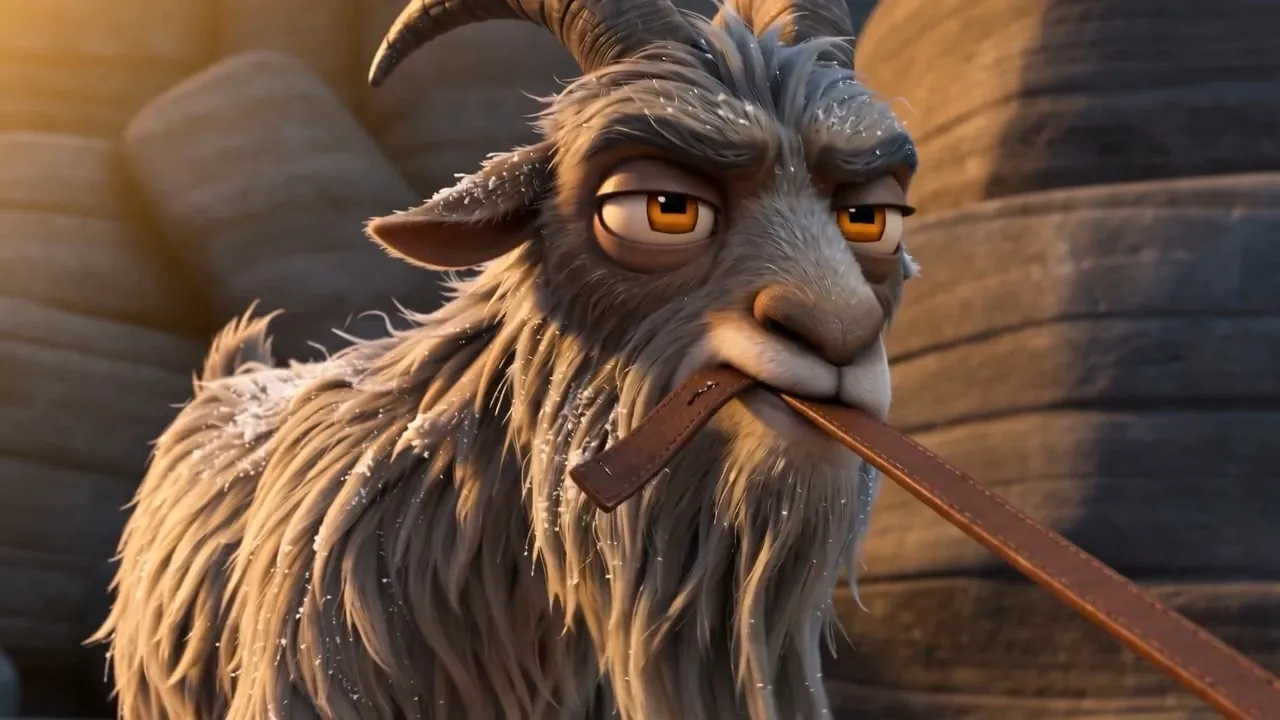
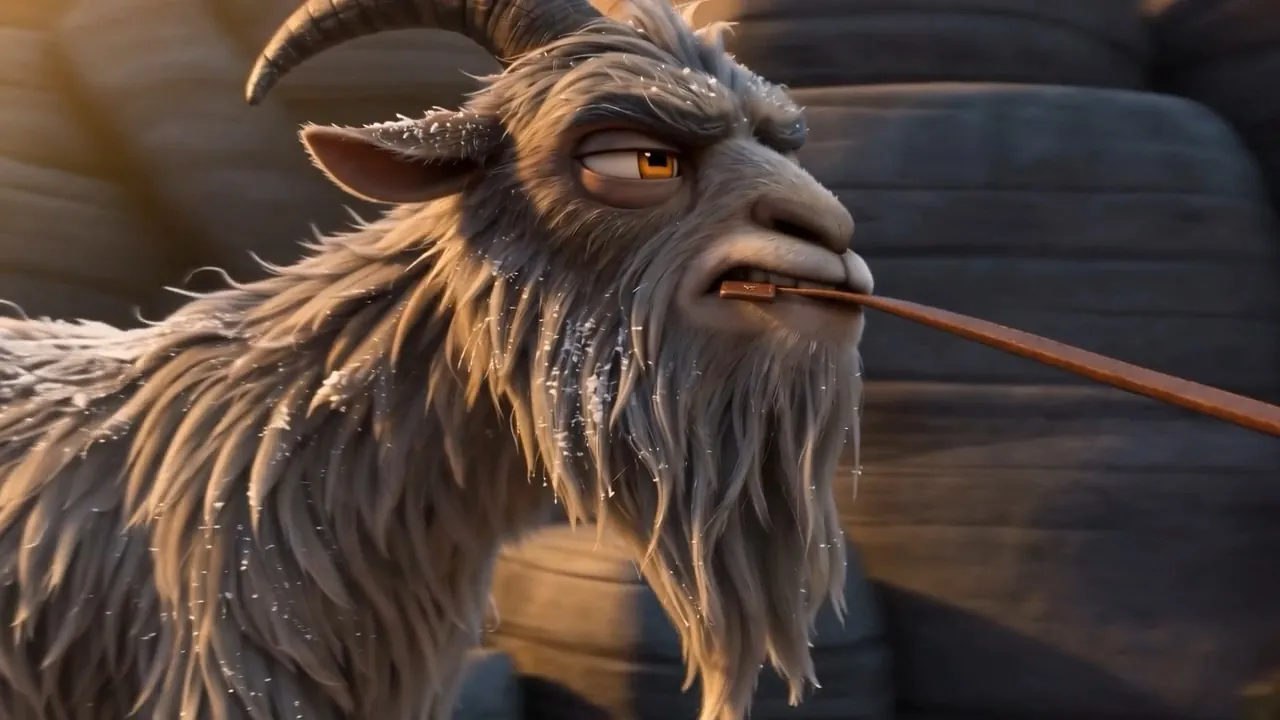

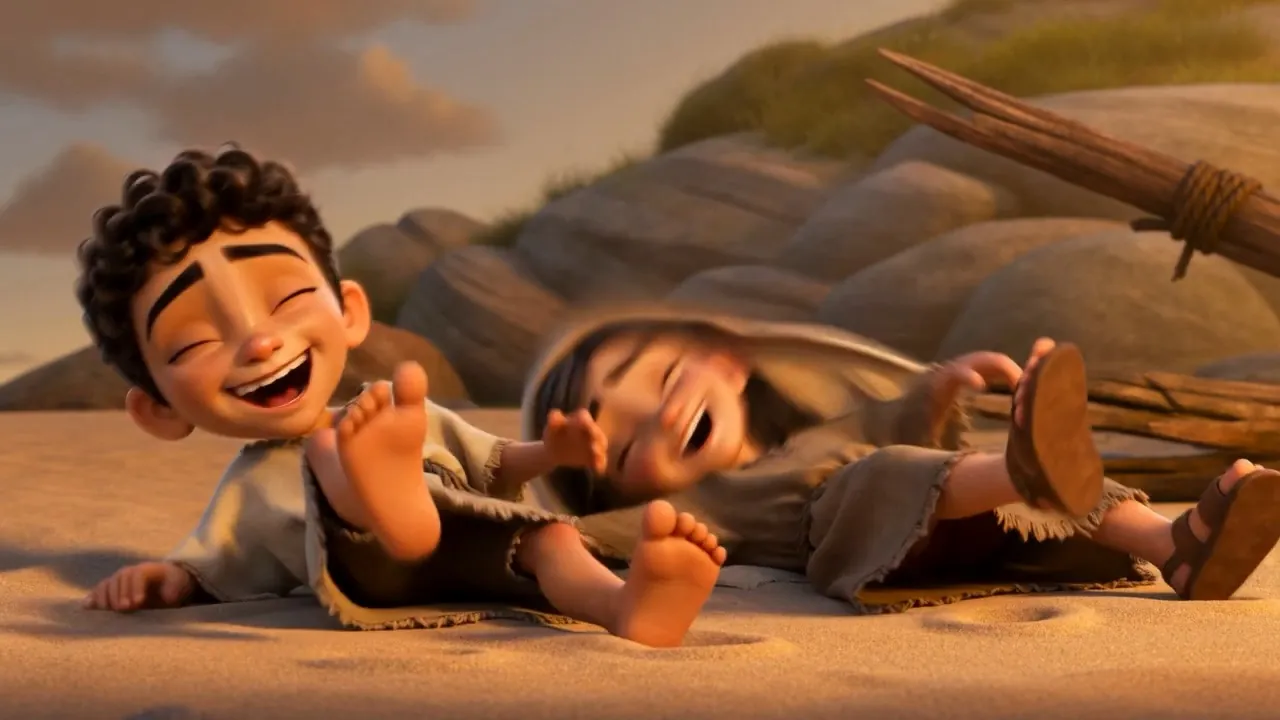
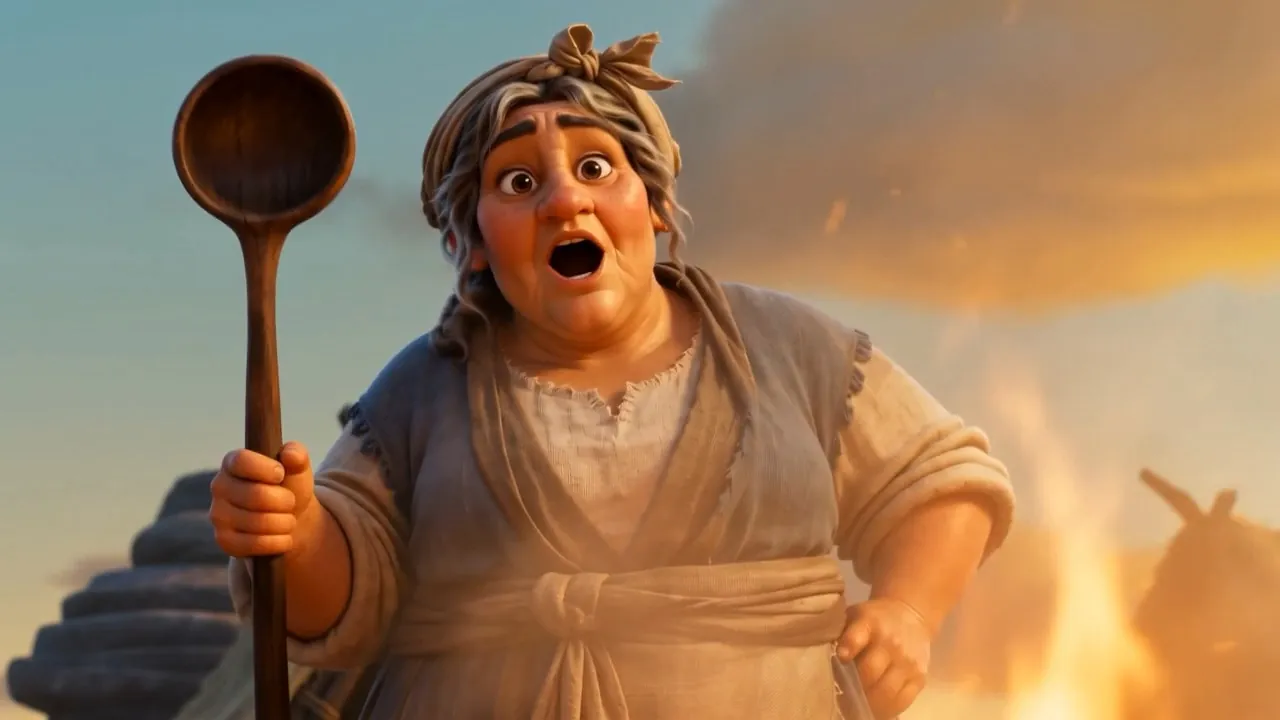
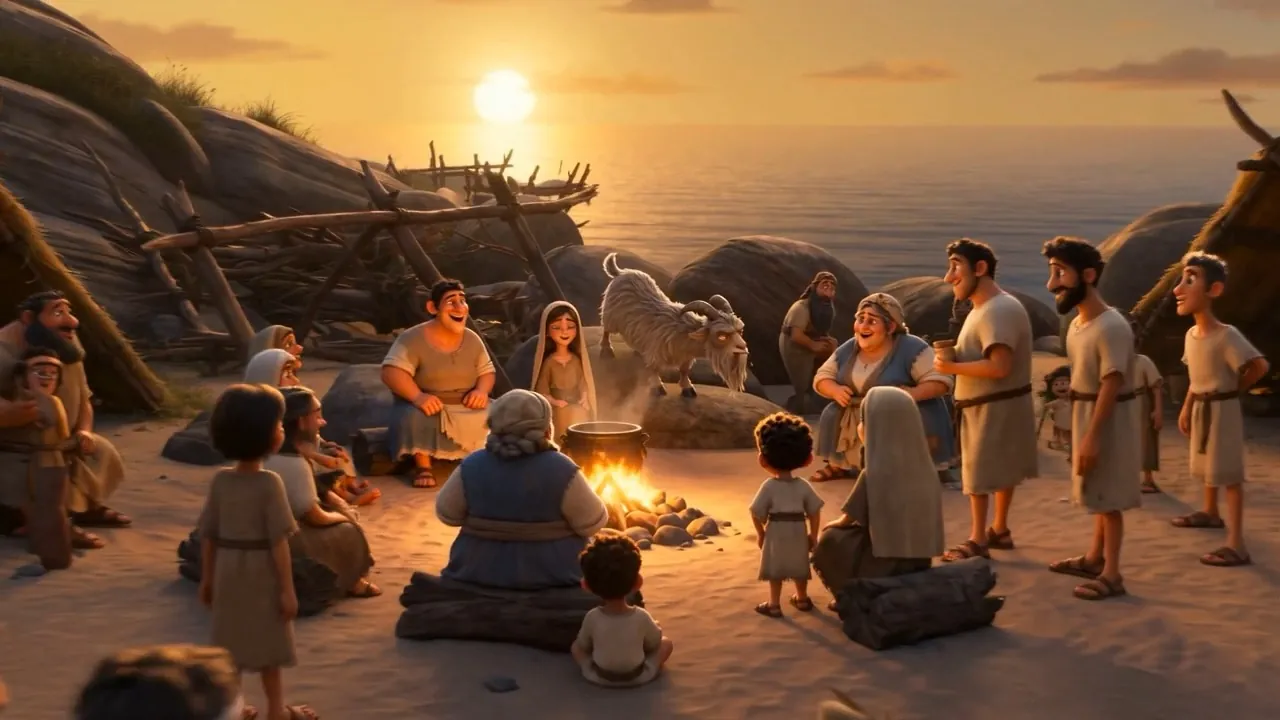
The camp scribe is Prochorus — seventeen, all elbows and cowlicks, keeper of three reed pens and two inkpots he handles like crown jewels. The camp's other great power is the goat. When she eats the strap off his satchel he hauls on it with both hands — that is Roman leather, you are eating ROME — and she plants her hooves and wins anyway, because she always wins. From the cook-fire the Matron raises her ladle like a scepter and calls the whole beach, goat included, to supper. Revelation 1 : 9
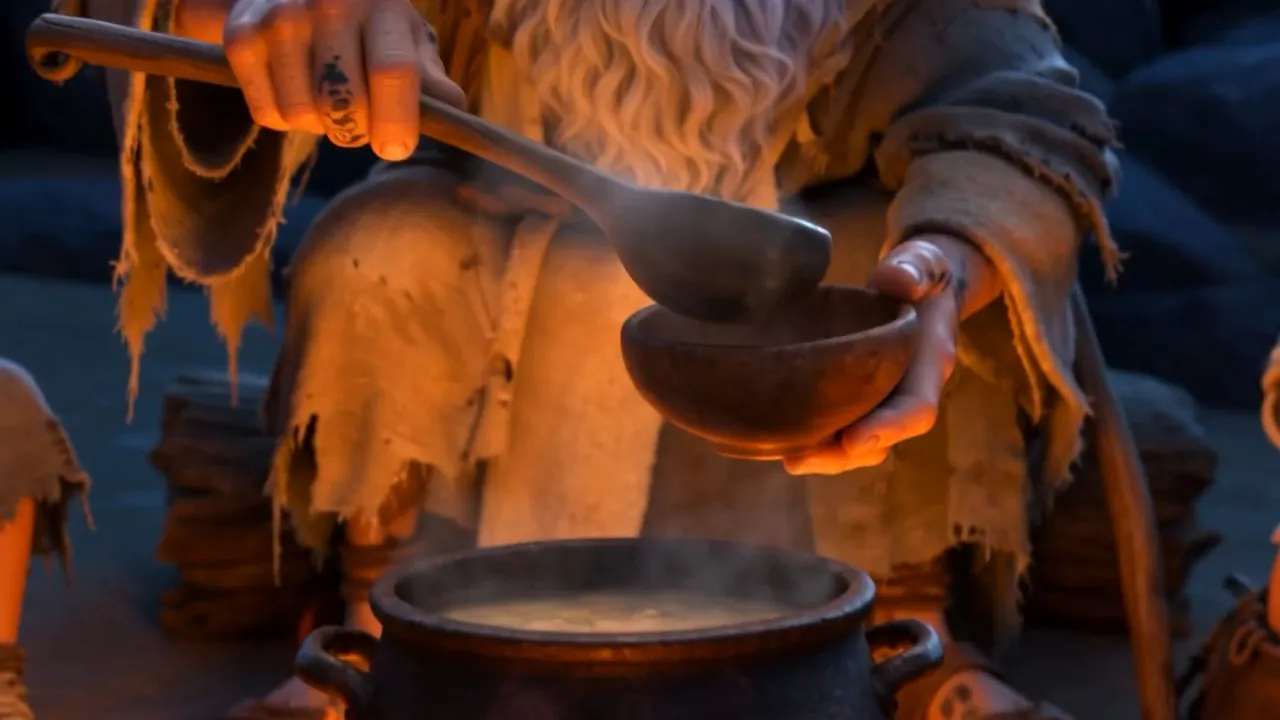
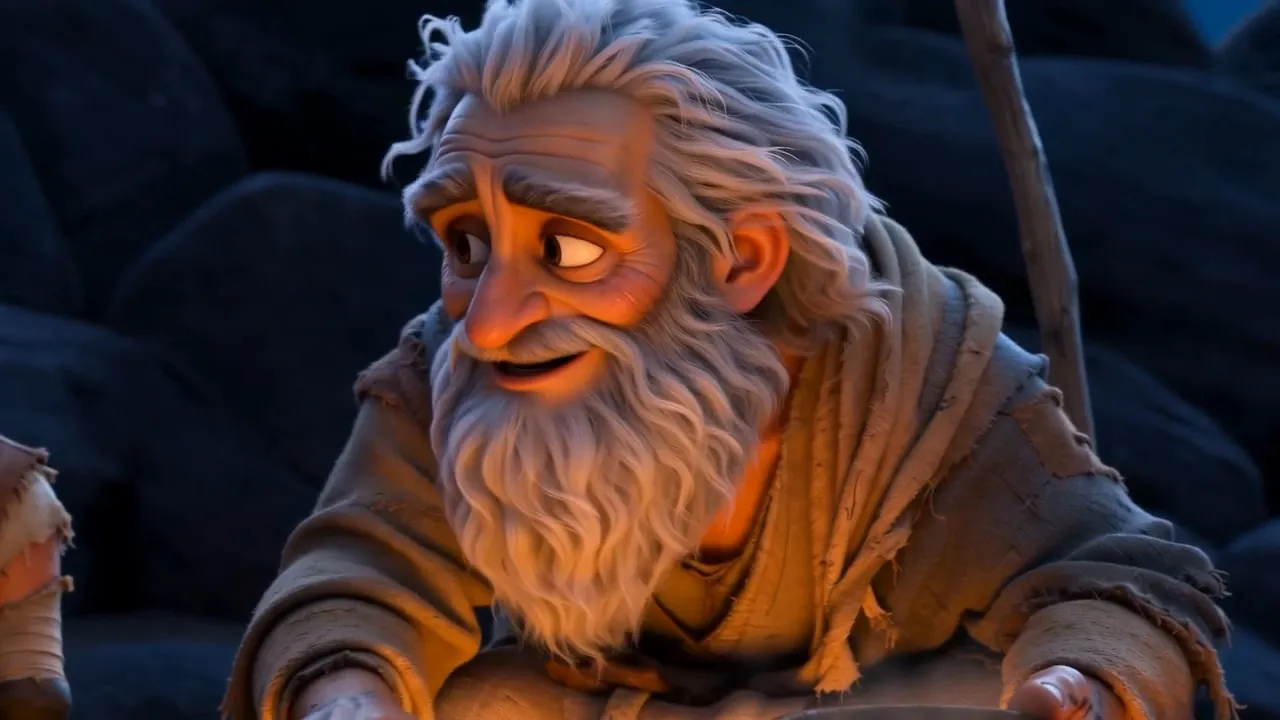


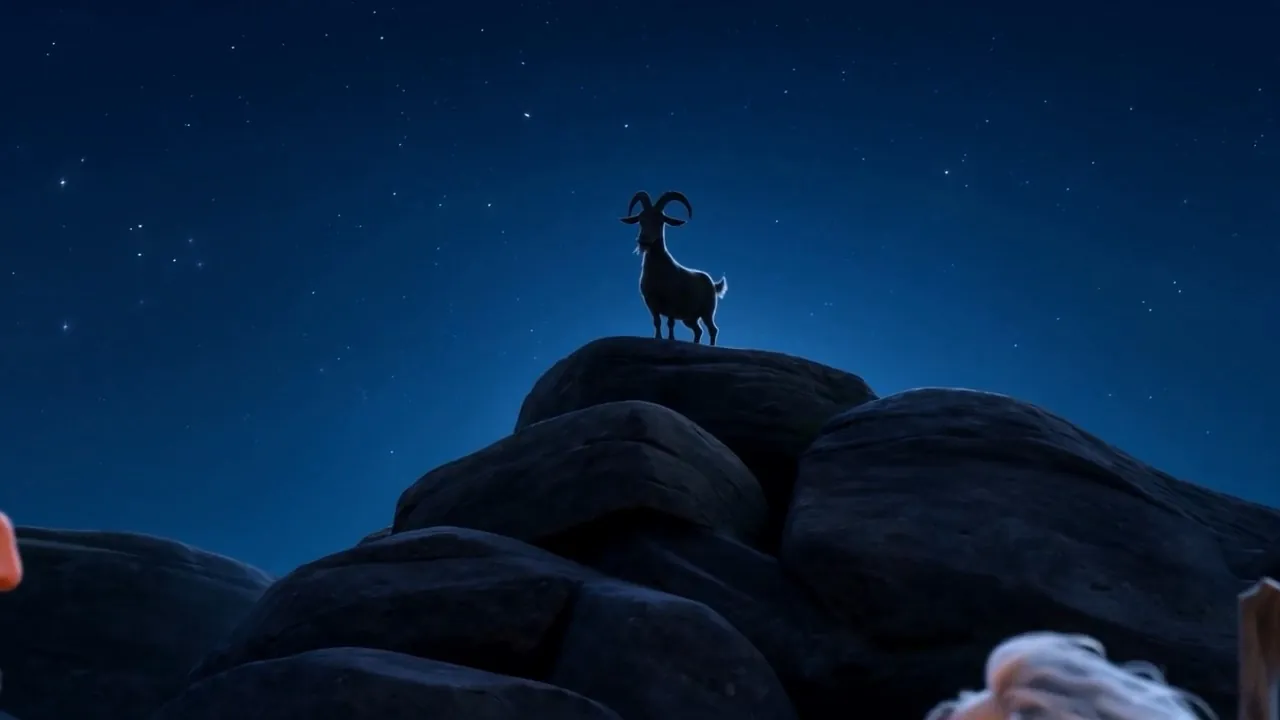
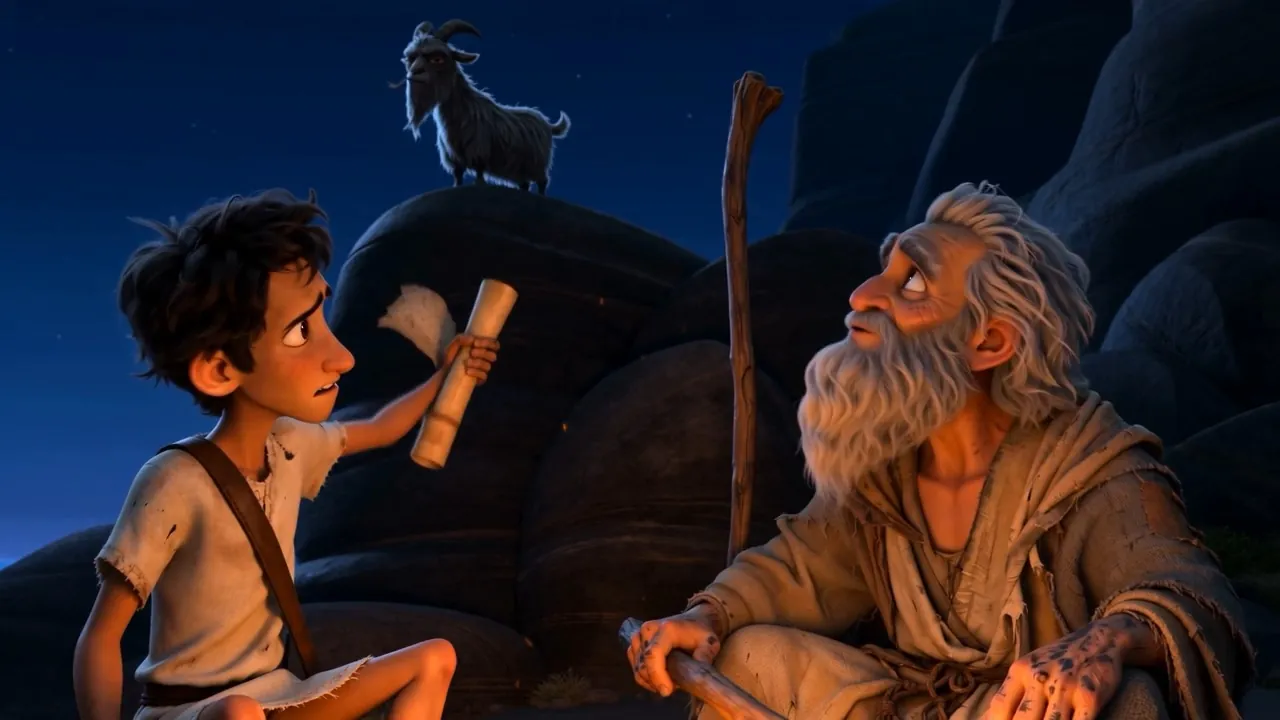
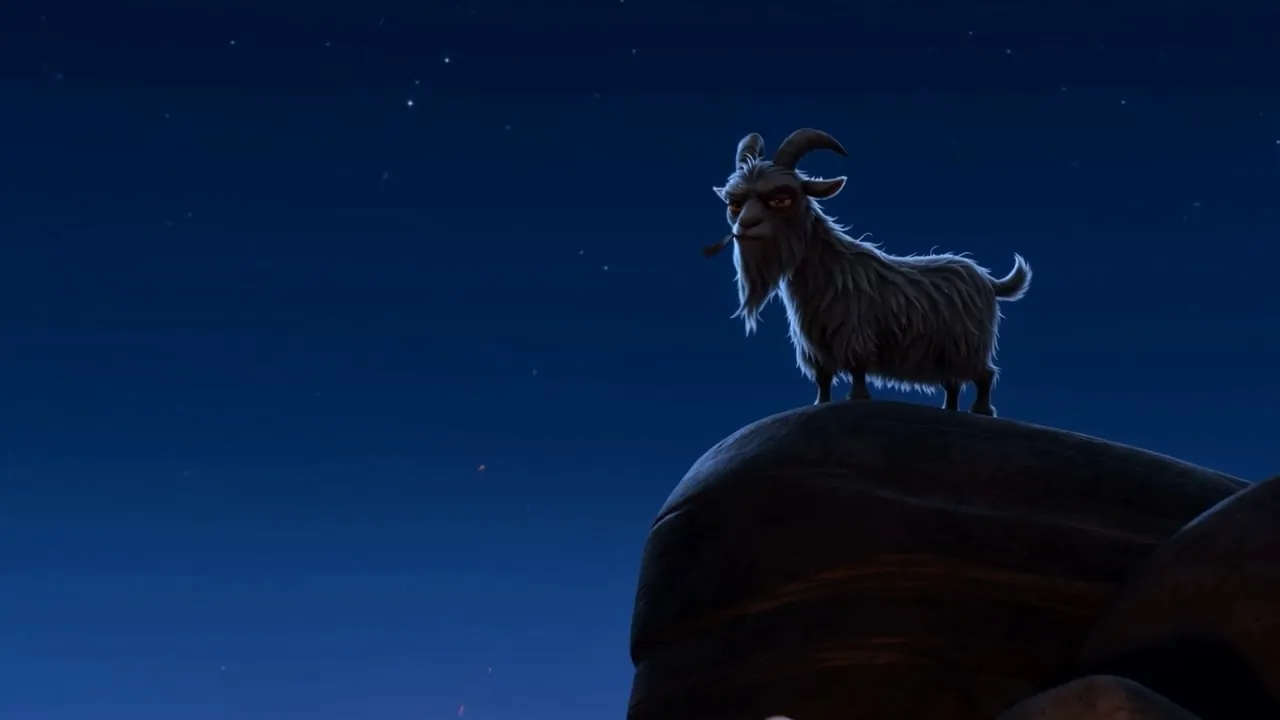
At the fire John serves the soup by name — every name known, every bowl handed over like treasure — while Prochorus reports the camp's entire inventory: three pens, almost no ink, one blanket each, and a goat. She is on her rock, in silhouette, eating something that was probably important. John considers the complaint against her and rules on it: a goat is wealth, Prochorus. A beat. A goat is also a trial. It is the first ripple of laughter of the night, and not the last. Revelation 2 : 9
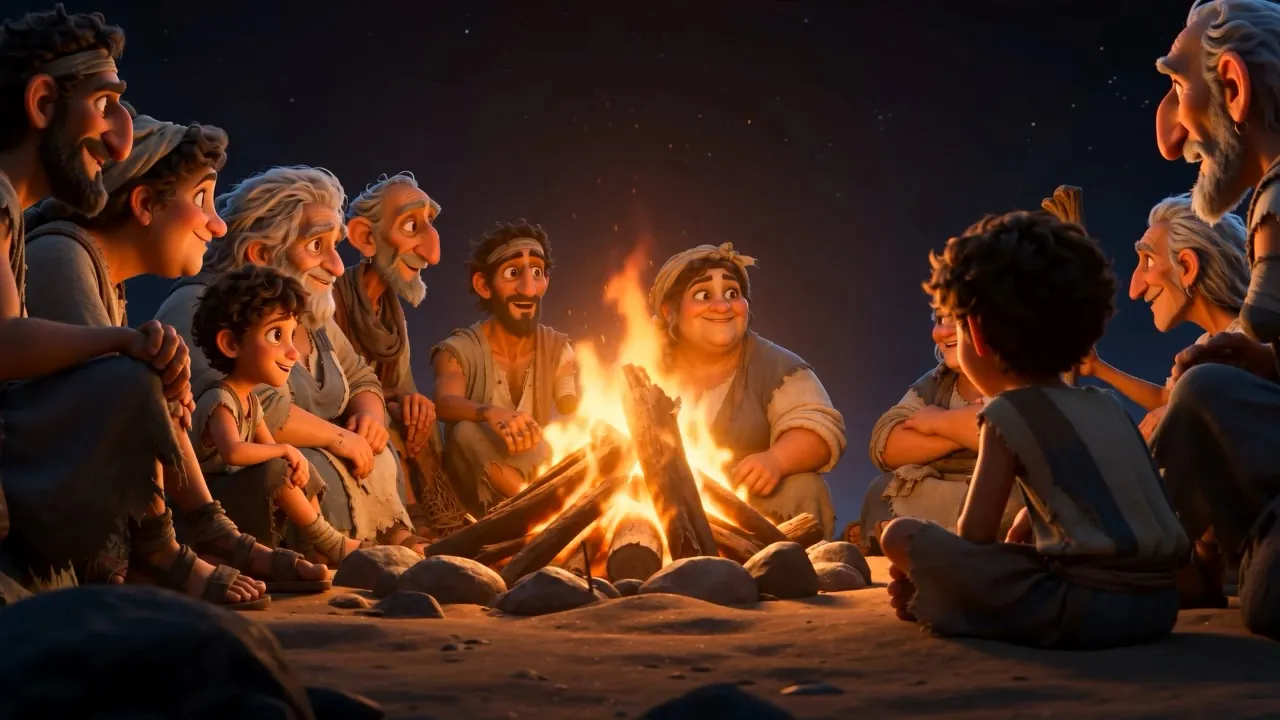
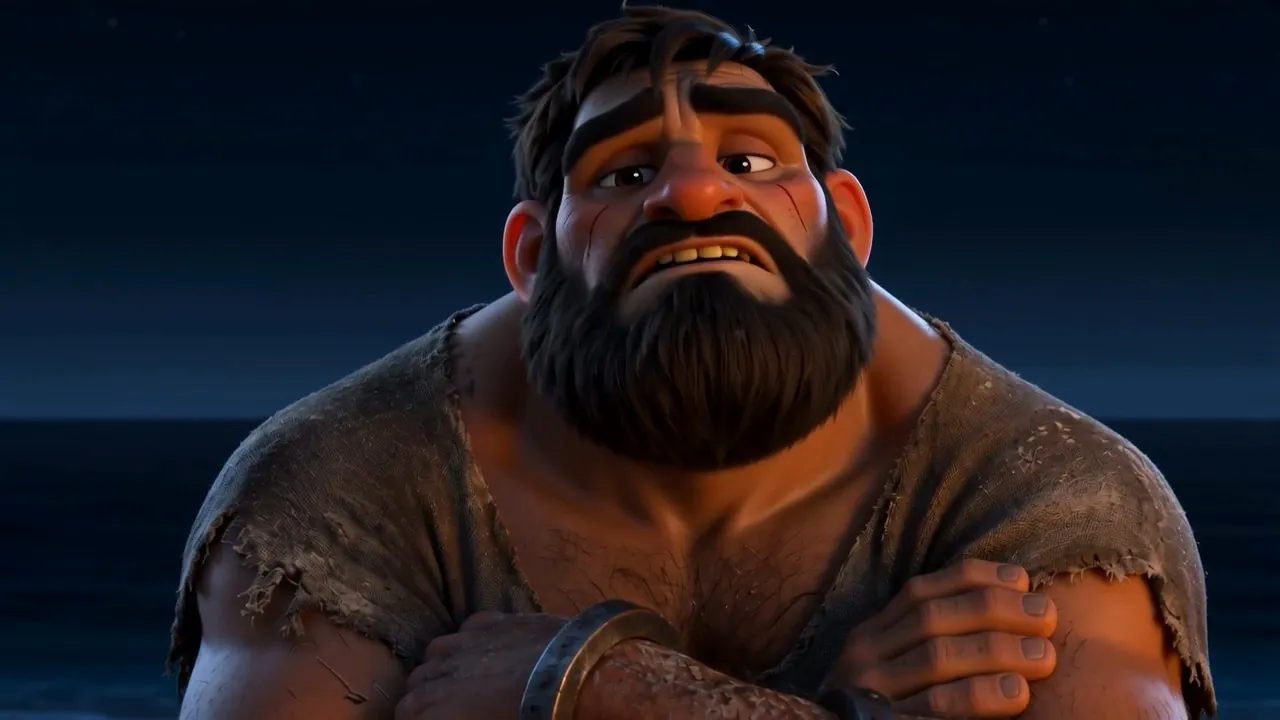
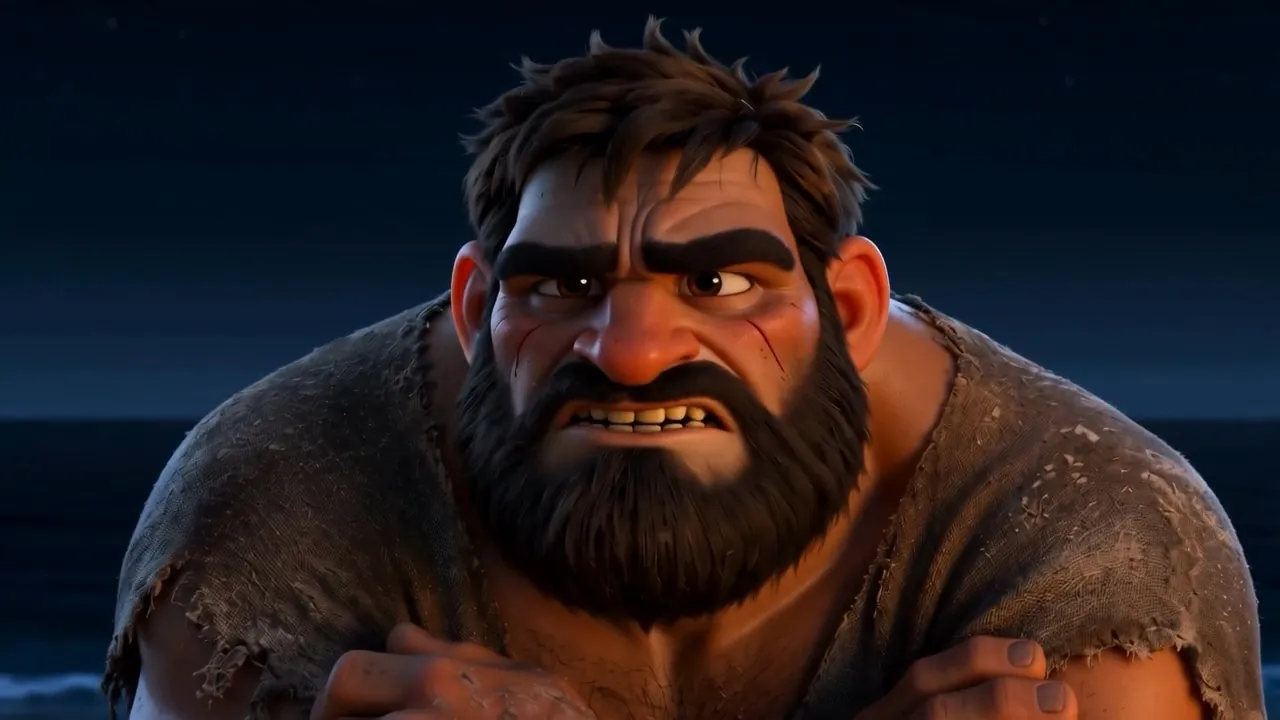
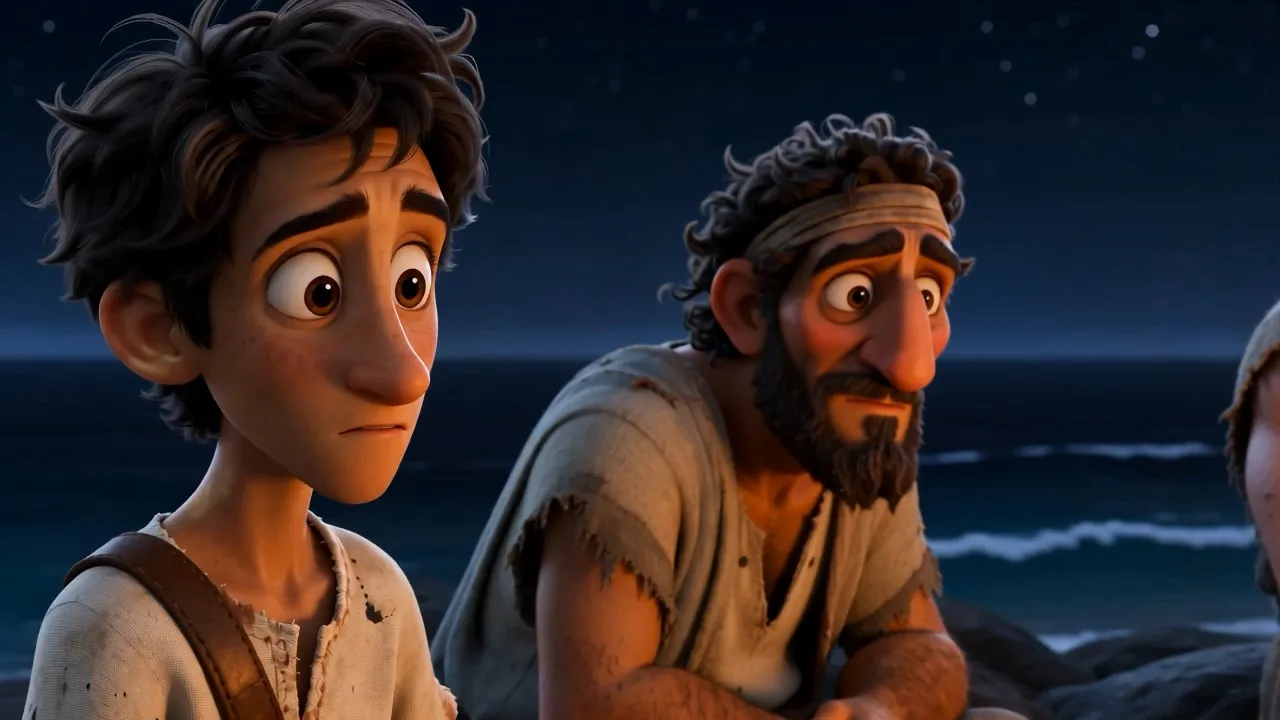
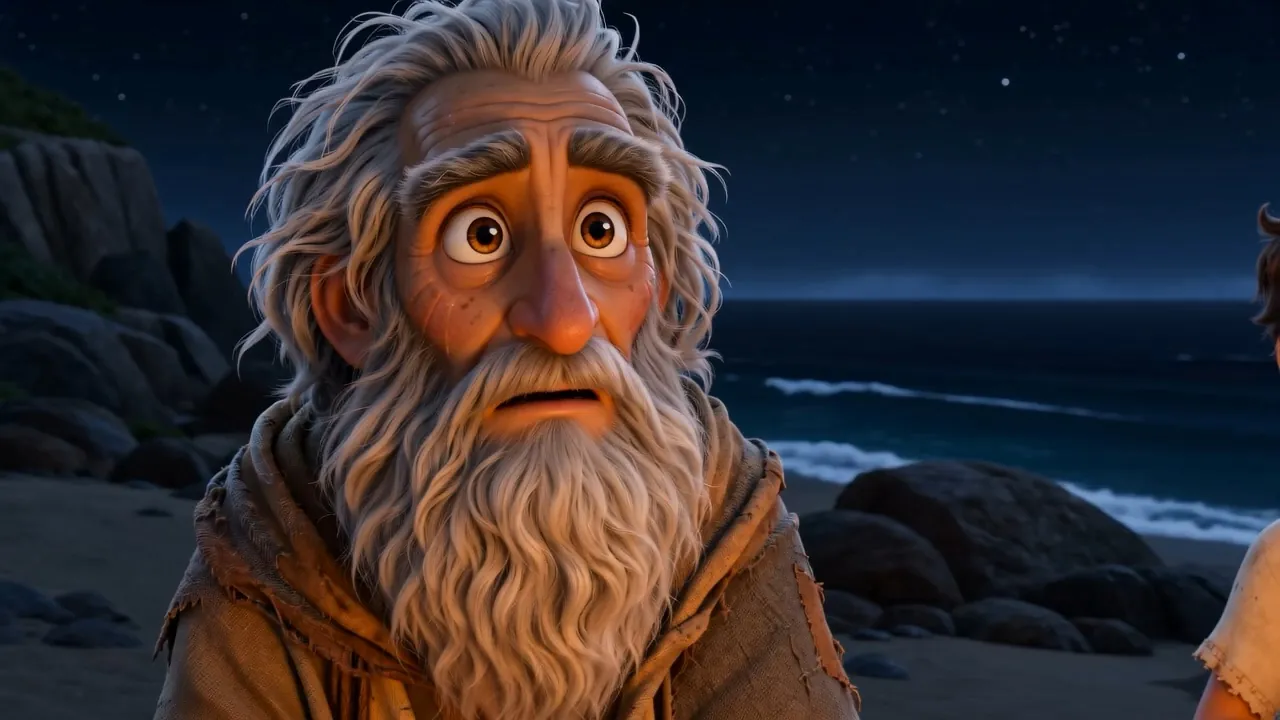
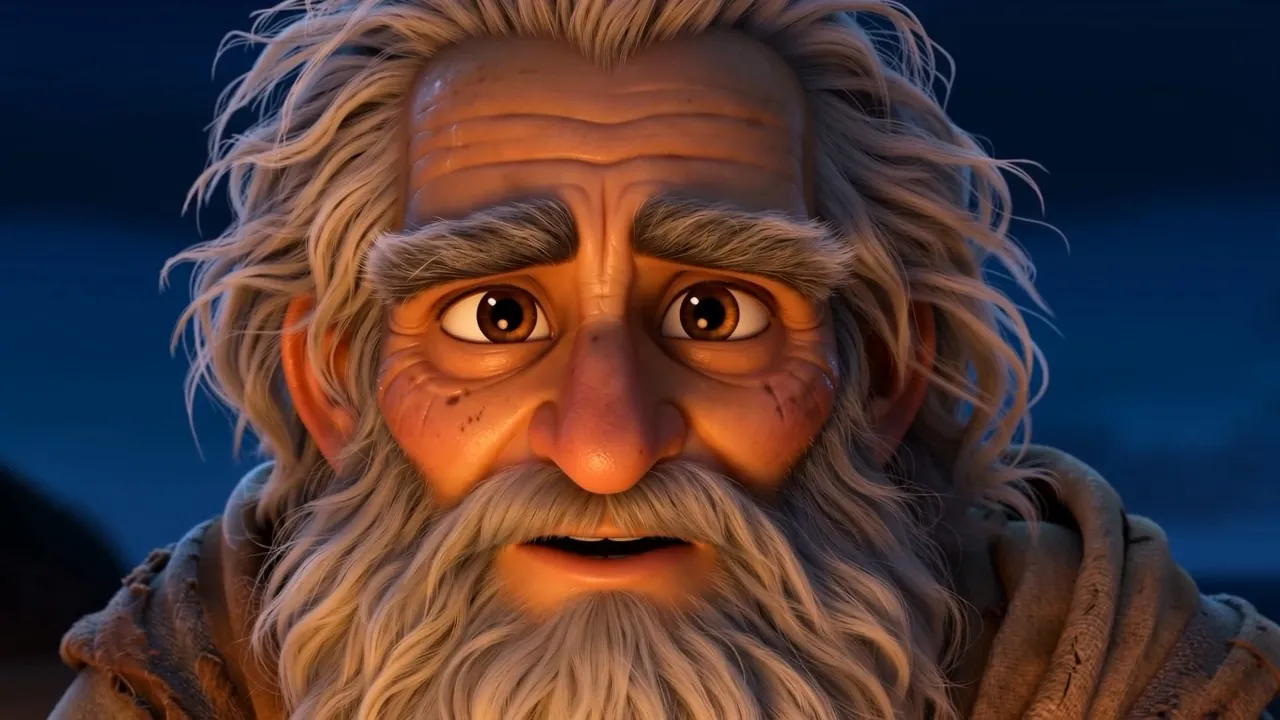
One man at the fire is not laughing. The Quarry Thief drags the words out like stones: why are you happy, old man? Rome took your home. Your friends are dead. You will die on this rock. The fire pops. The Matron's ladle goes still in the pot. Nobody looks at anybody. It is the question the whole island has wanted to ask since the day the old man came ashore smiling — and the sea itself seems to hold its breath for the answer. Revelation 2 : 10
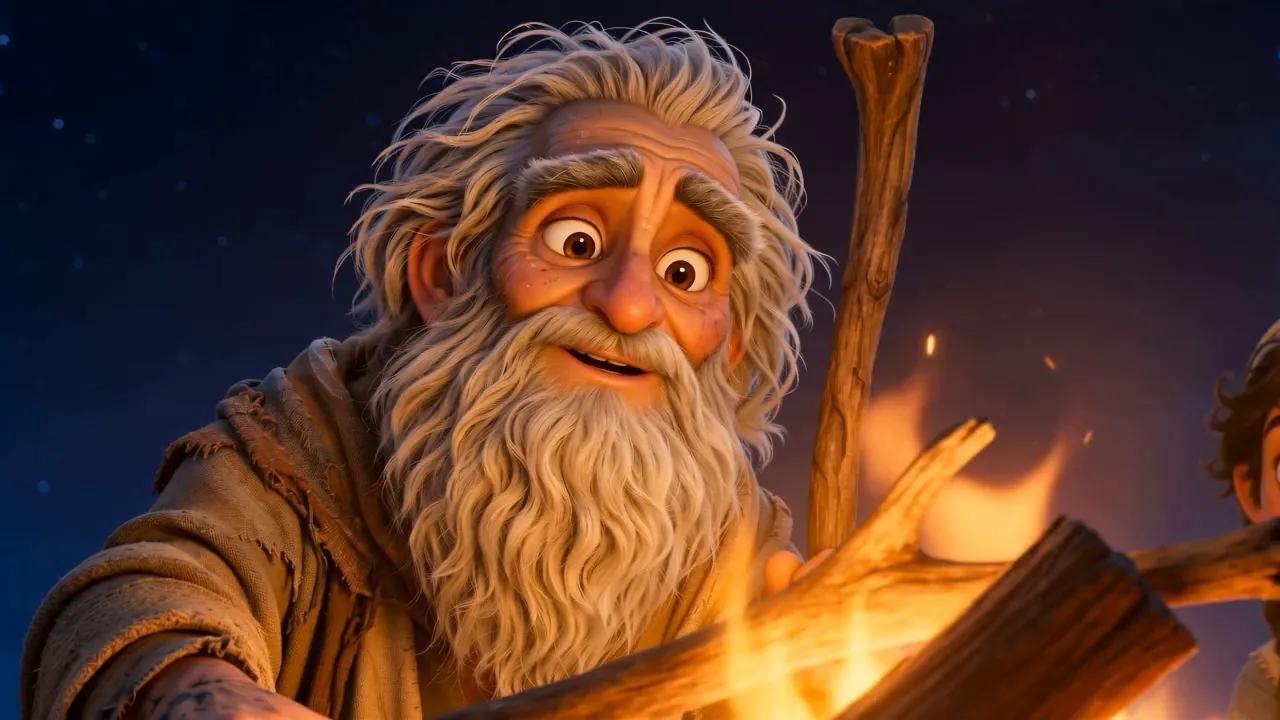
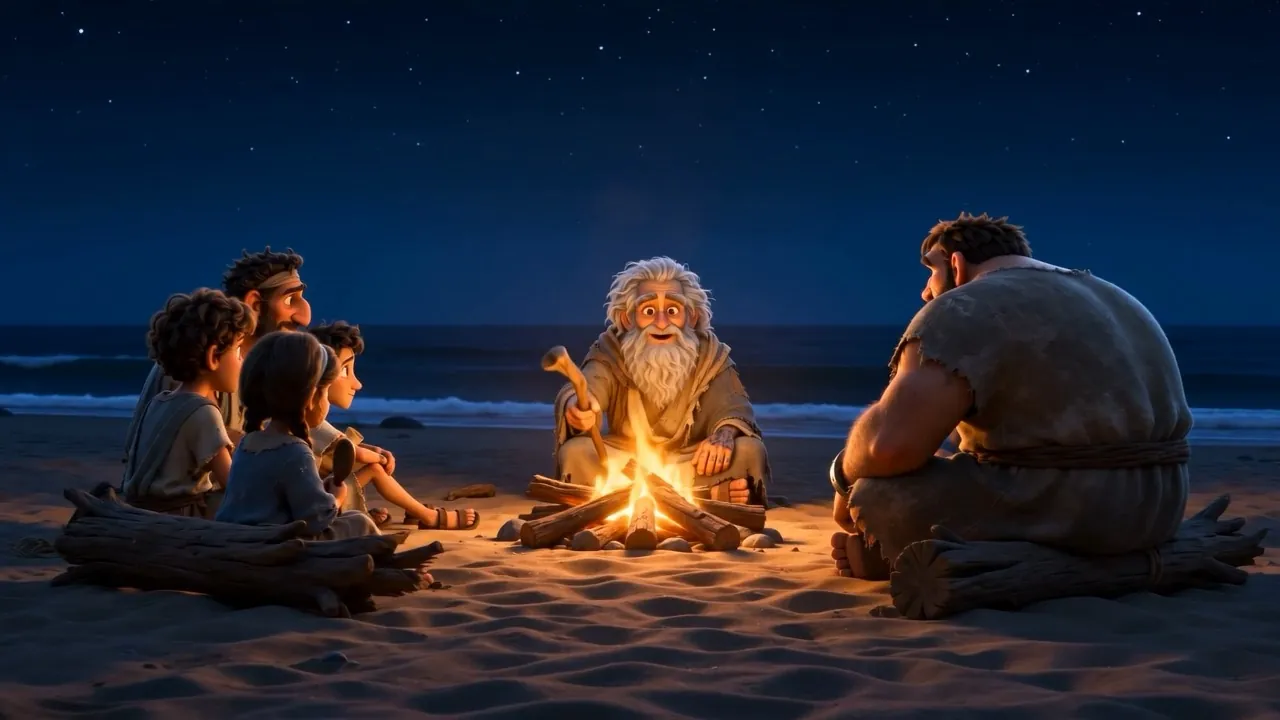
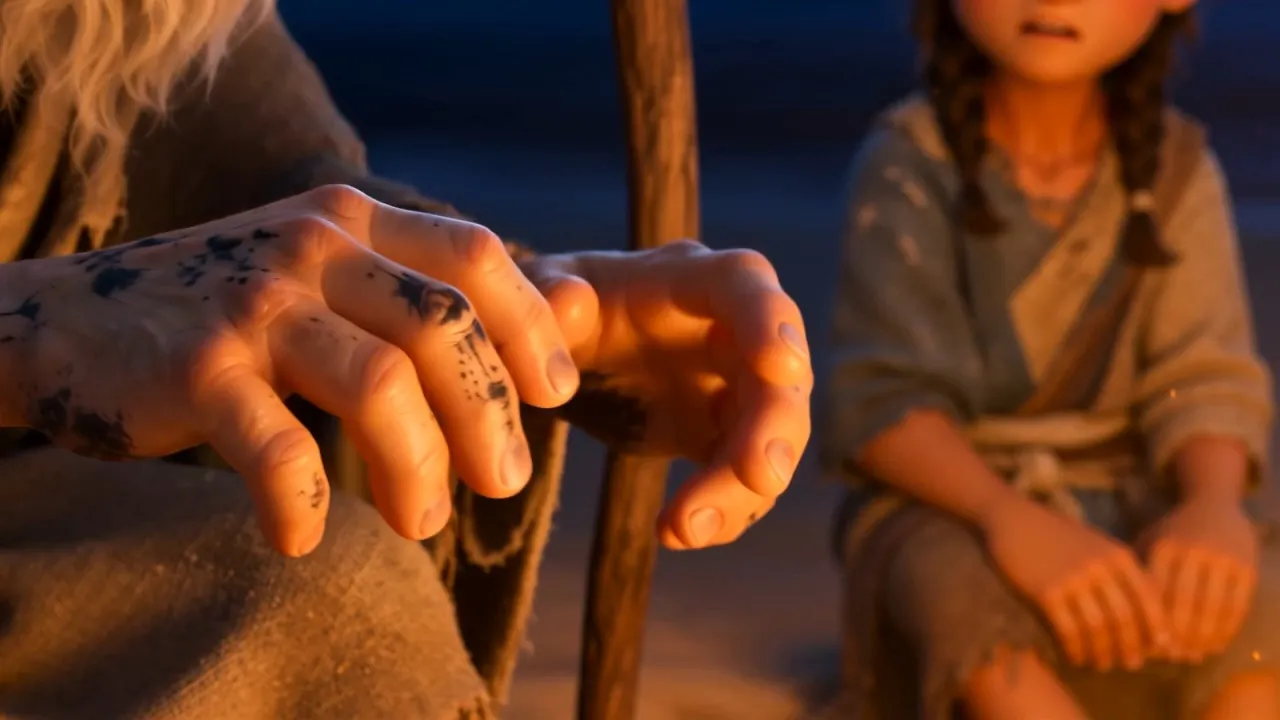

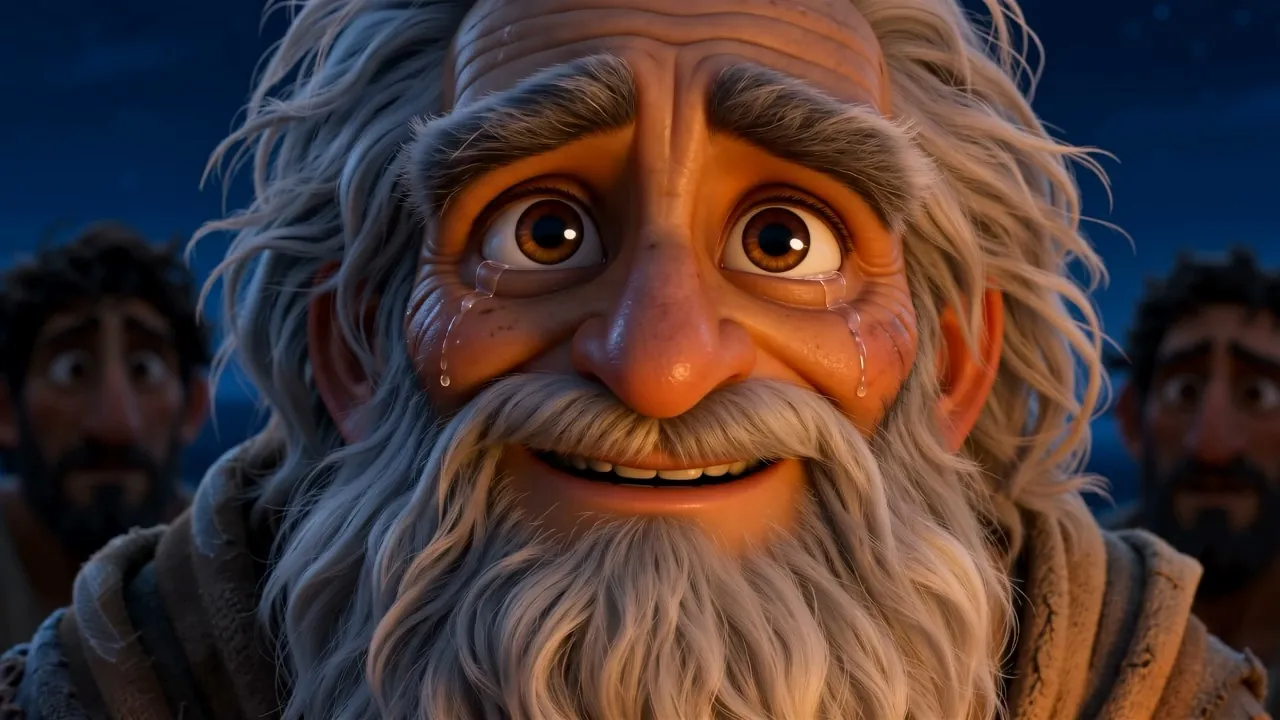
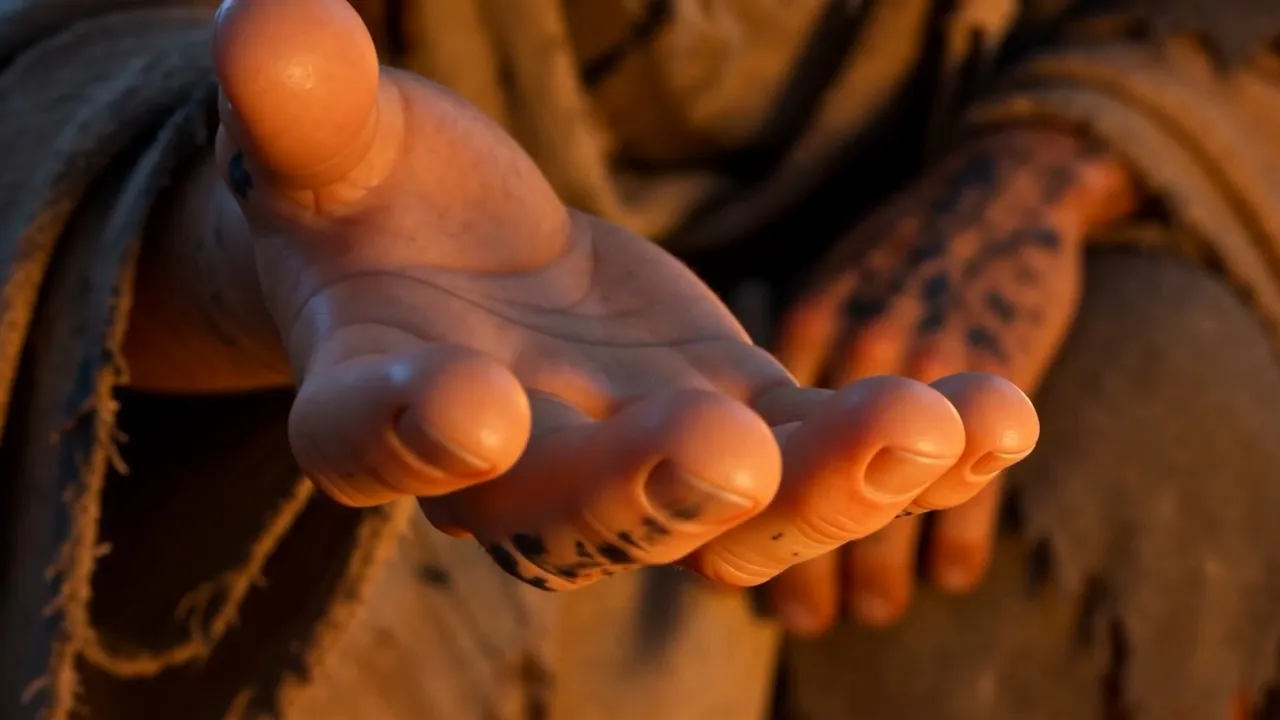
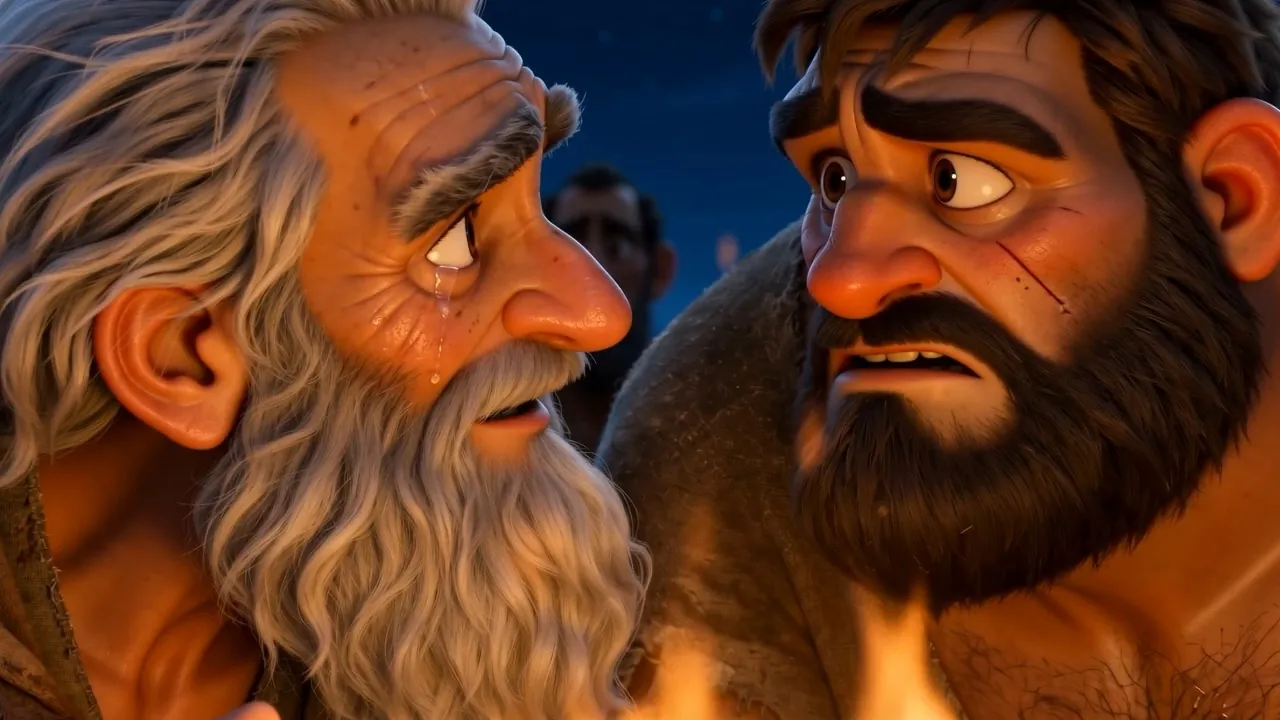
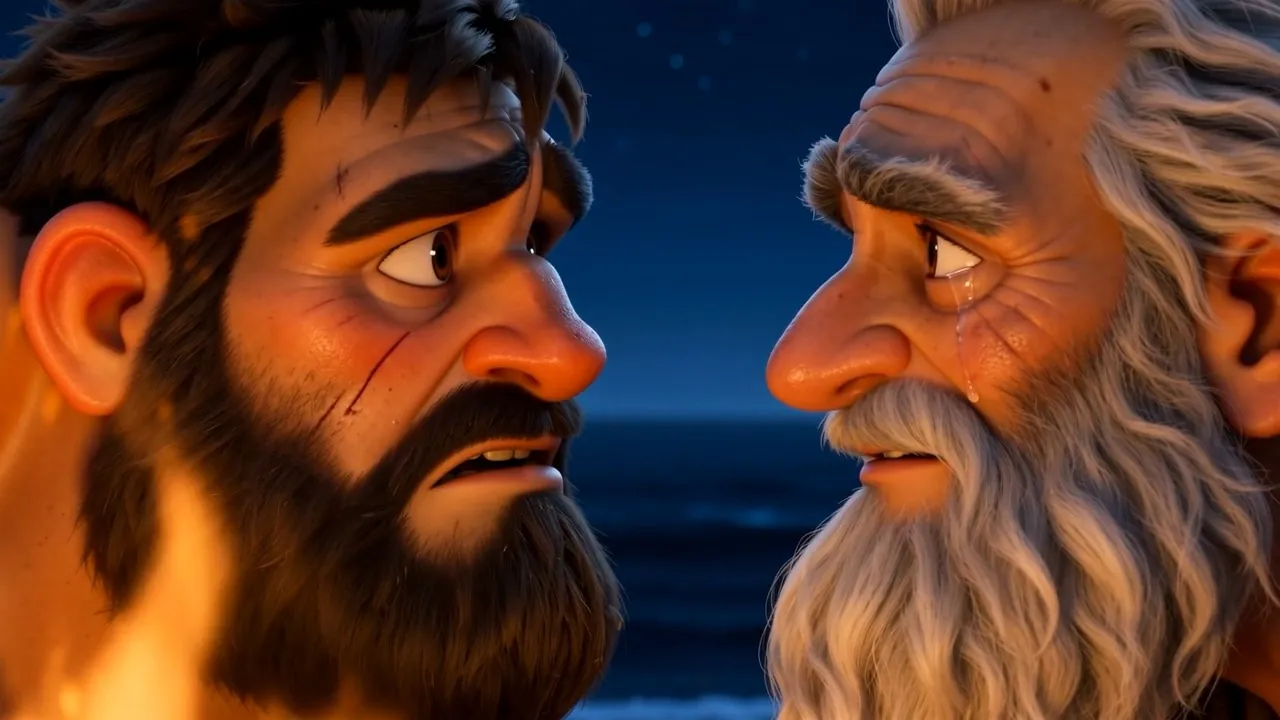
John answers with the only argument he has ever needed: what he saw. Five thousand fed from one boy's lunch. A man walking the sea like a road. And then, quieter, each word laid down like a stone: I watched him die. And three days later, he ate fish from my hand. His open hand hangs in the firelight. Rome can take my home, friend. It cannot take one single thing that matters. The thief's arms have come uncrossed without his permission. John 21 : 12–14
"I was dead," and behold, I am alive forever more.
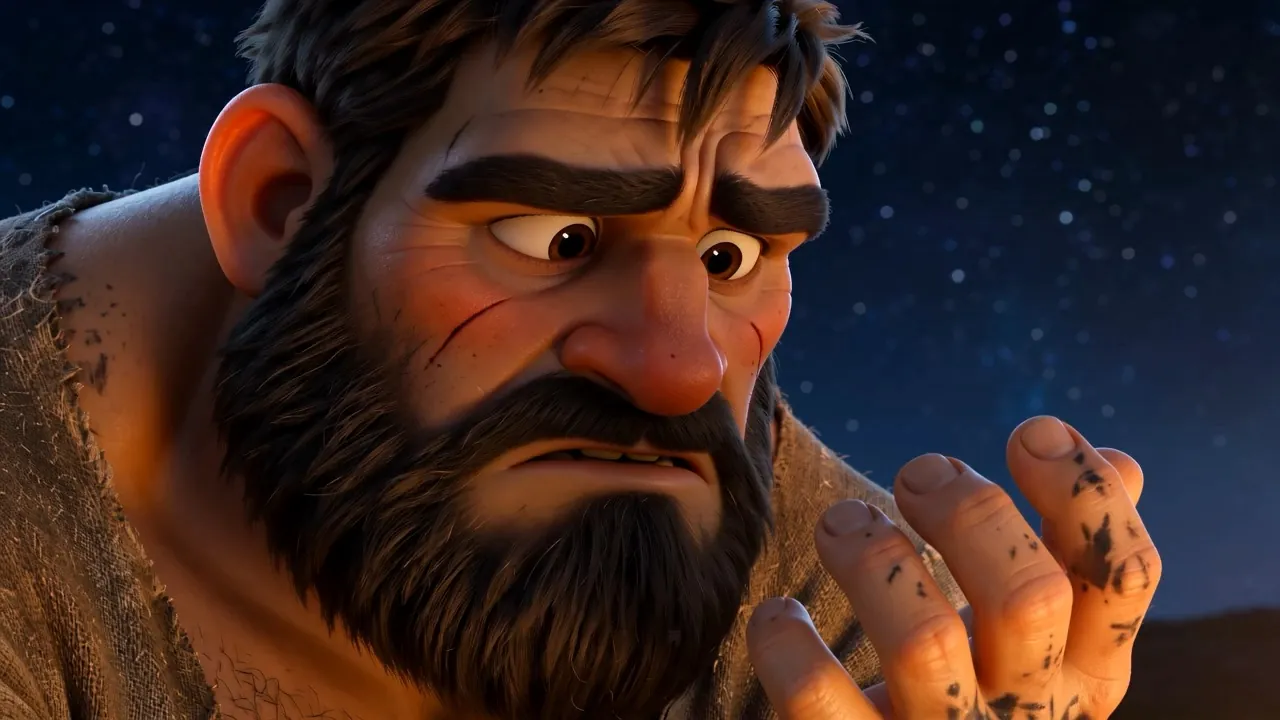
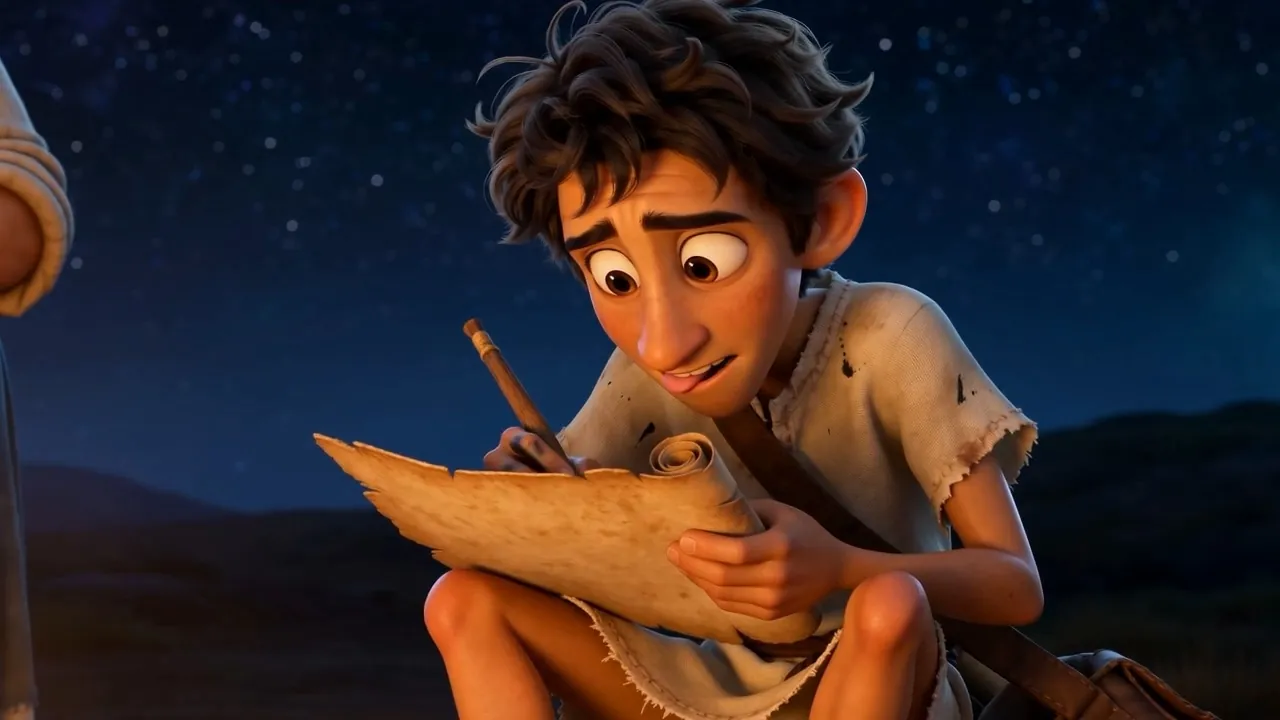

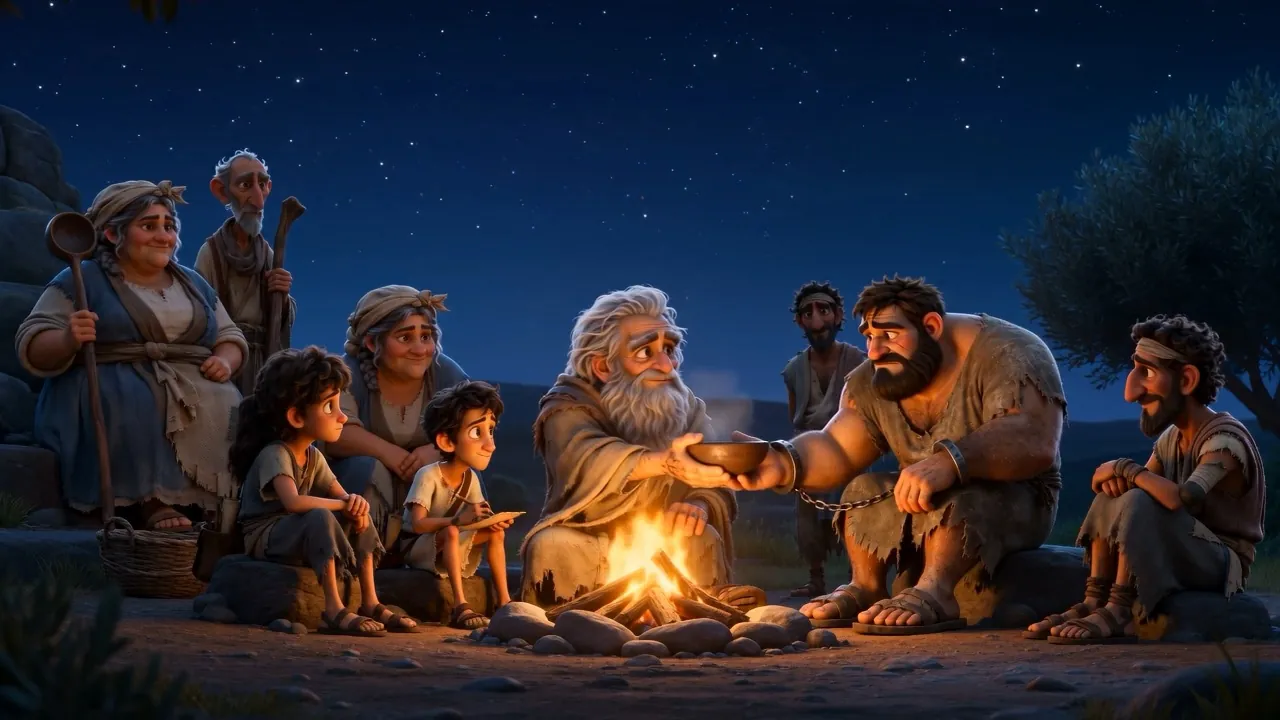
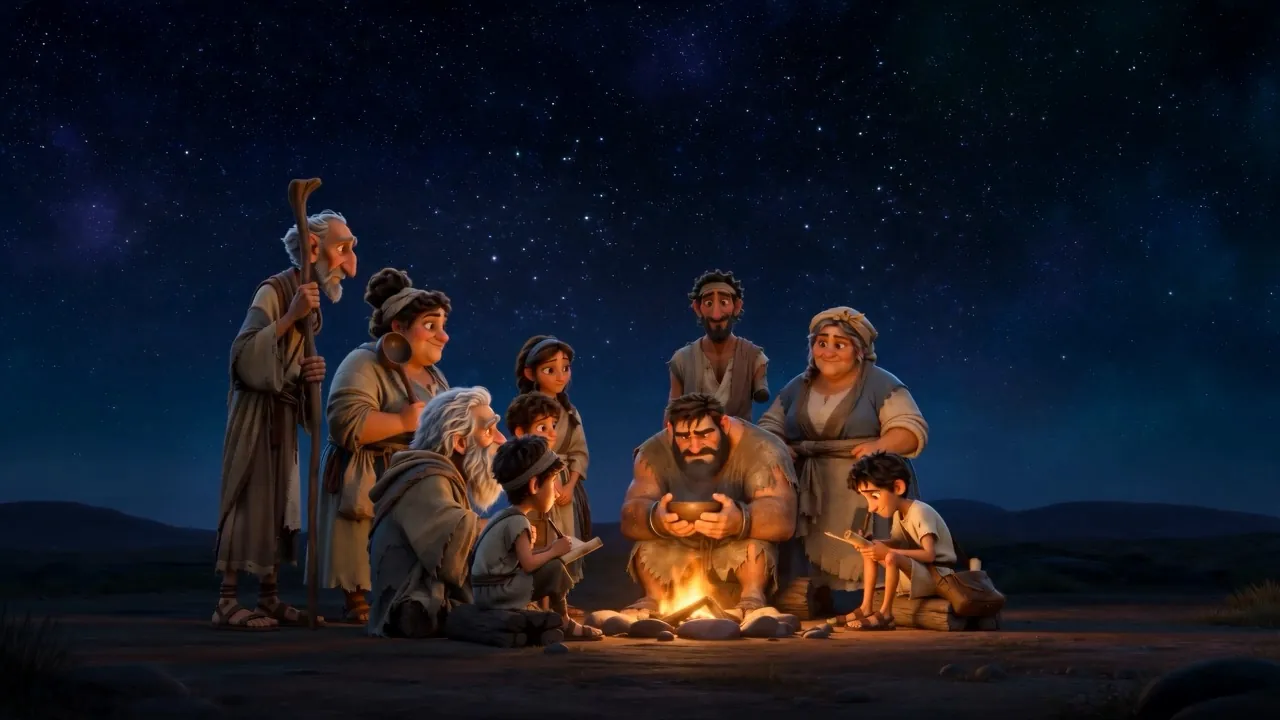
Nobody wins the argument, because it was never an argument. The thief studies his own knuckles like a man rewriting something old. Prochorus, who cannot help himself, is already inking John's words onto the back of the letter the goat half-ate — scripture, drafted on goat-chewed scrap, glistening fresh in the firelight. And John hands the thief a refilled bowl without a word, and the thief takes it without a word, and for three full seconds the camp is at peace. Revelation 1 : 3
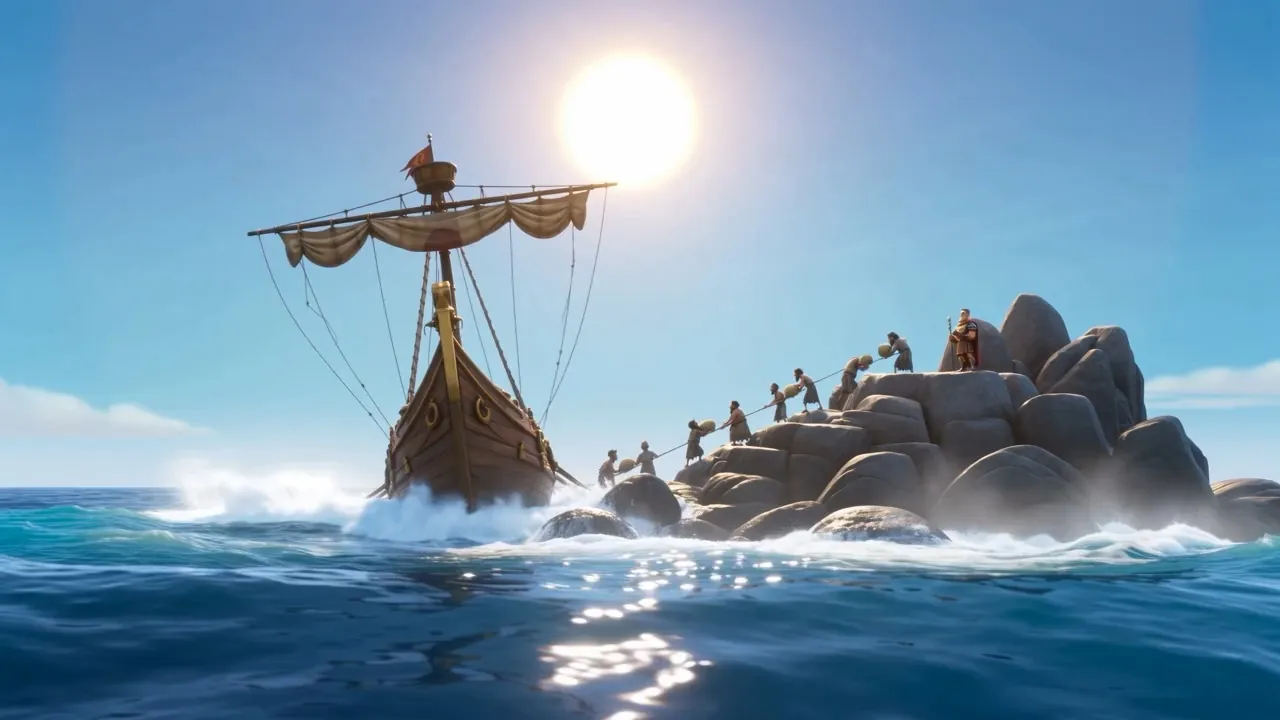
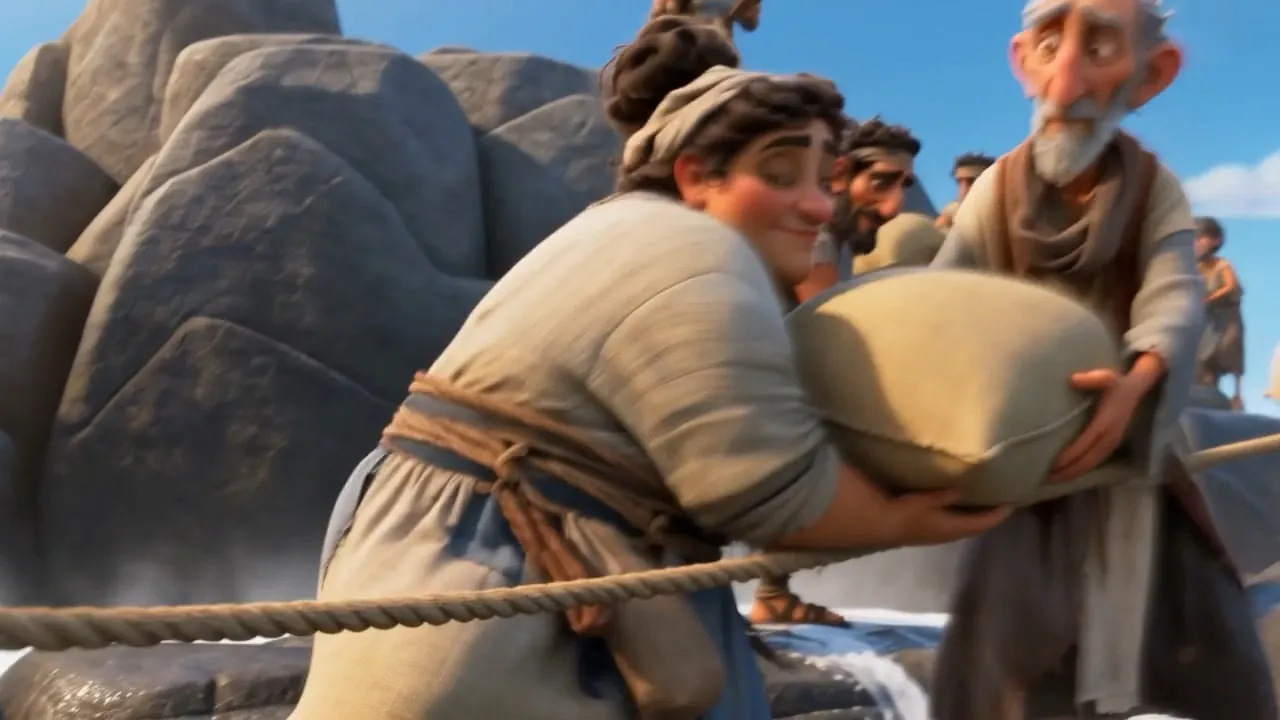
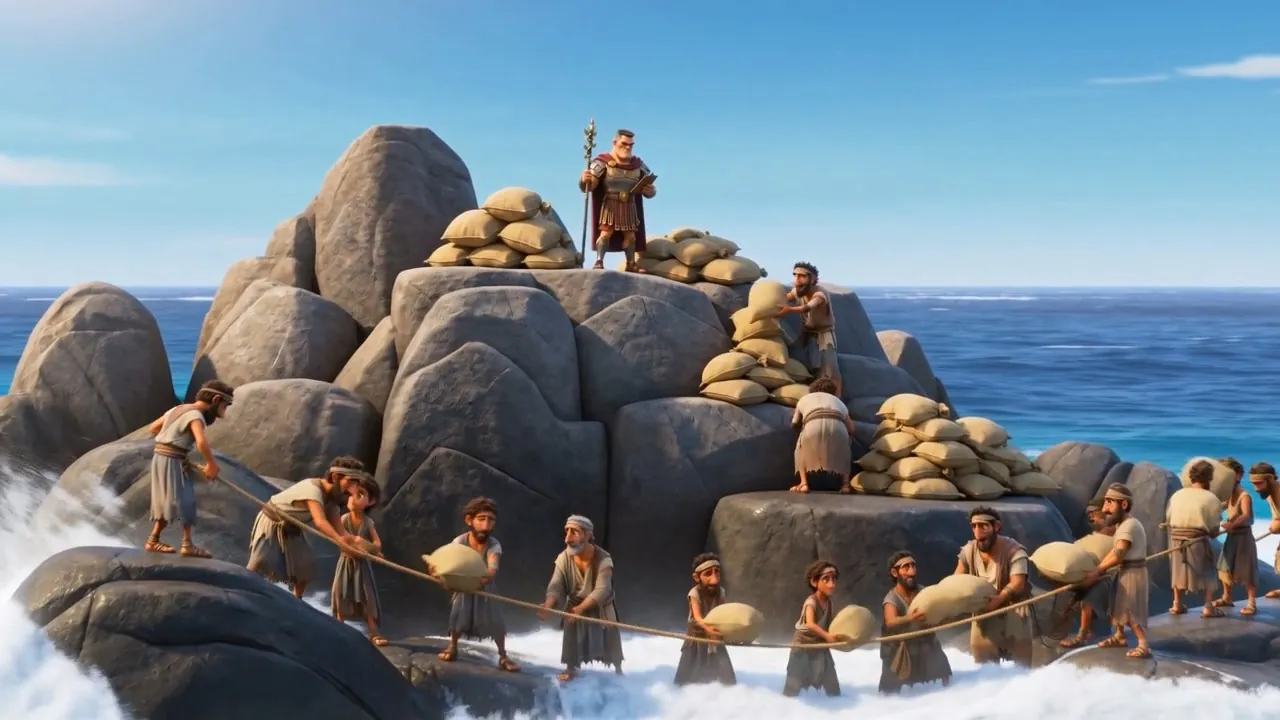
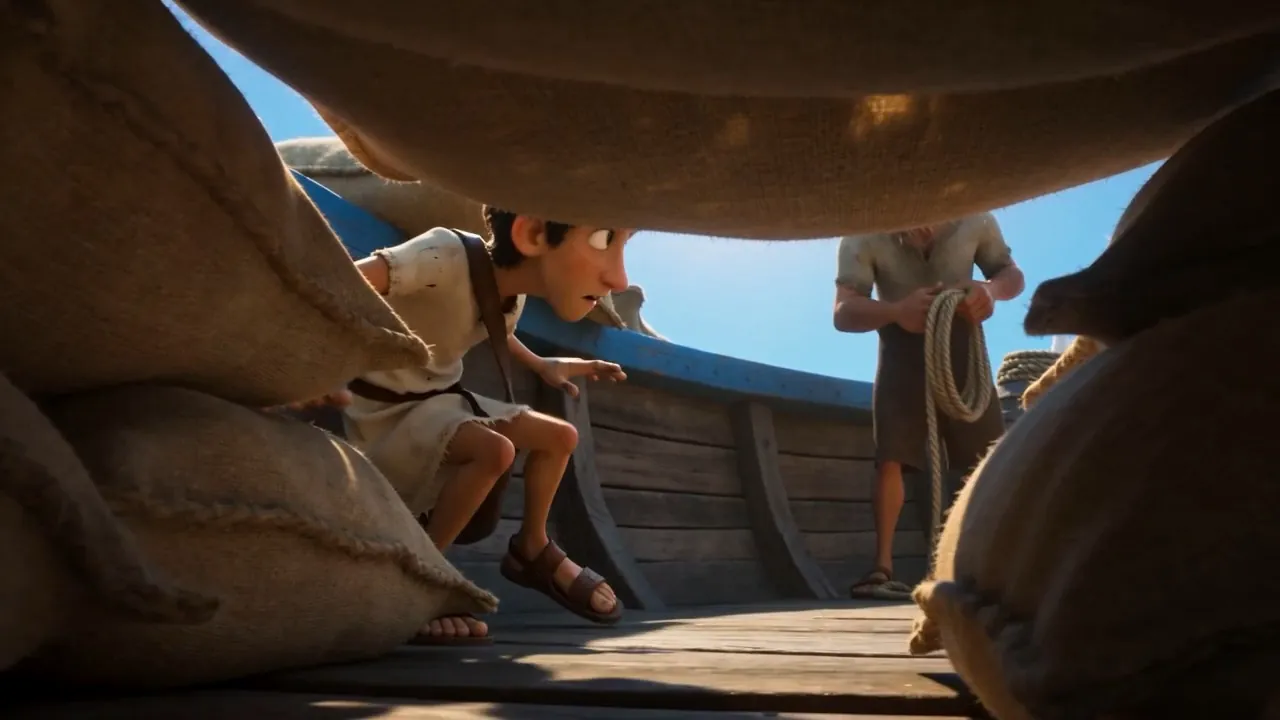
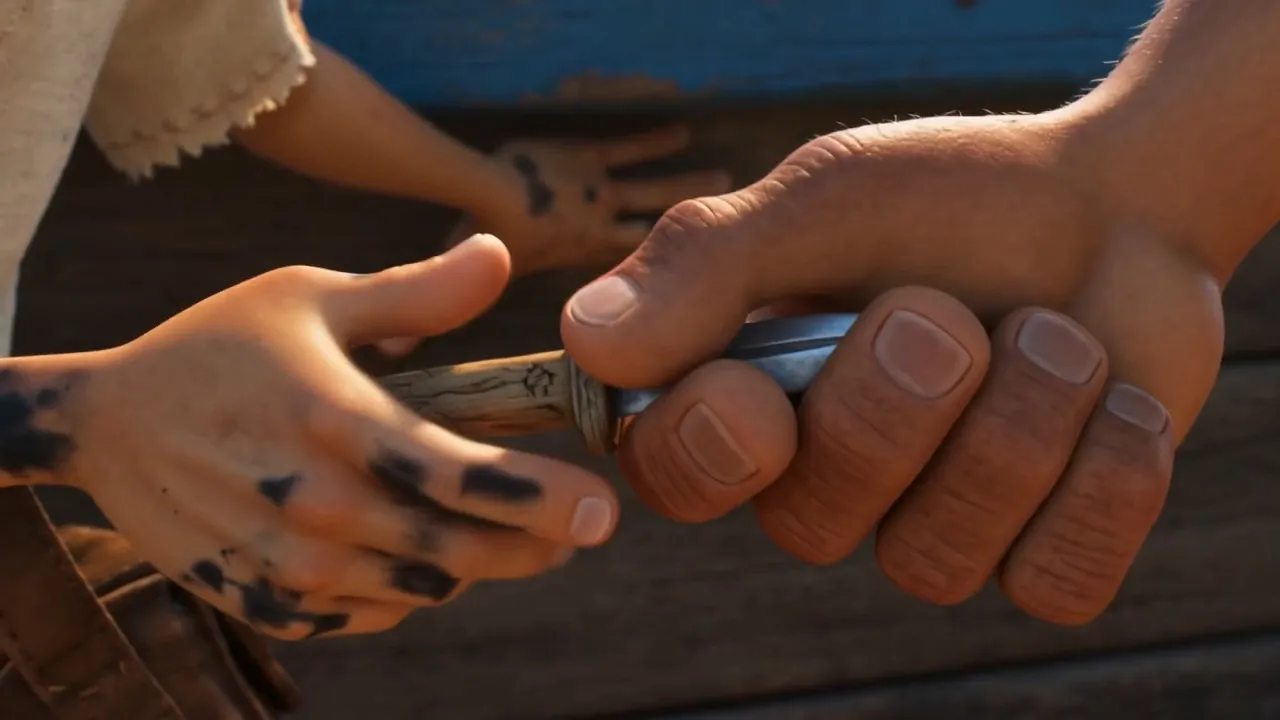
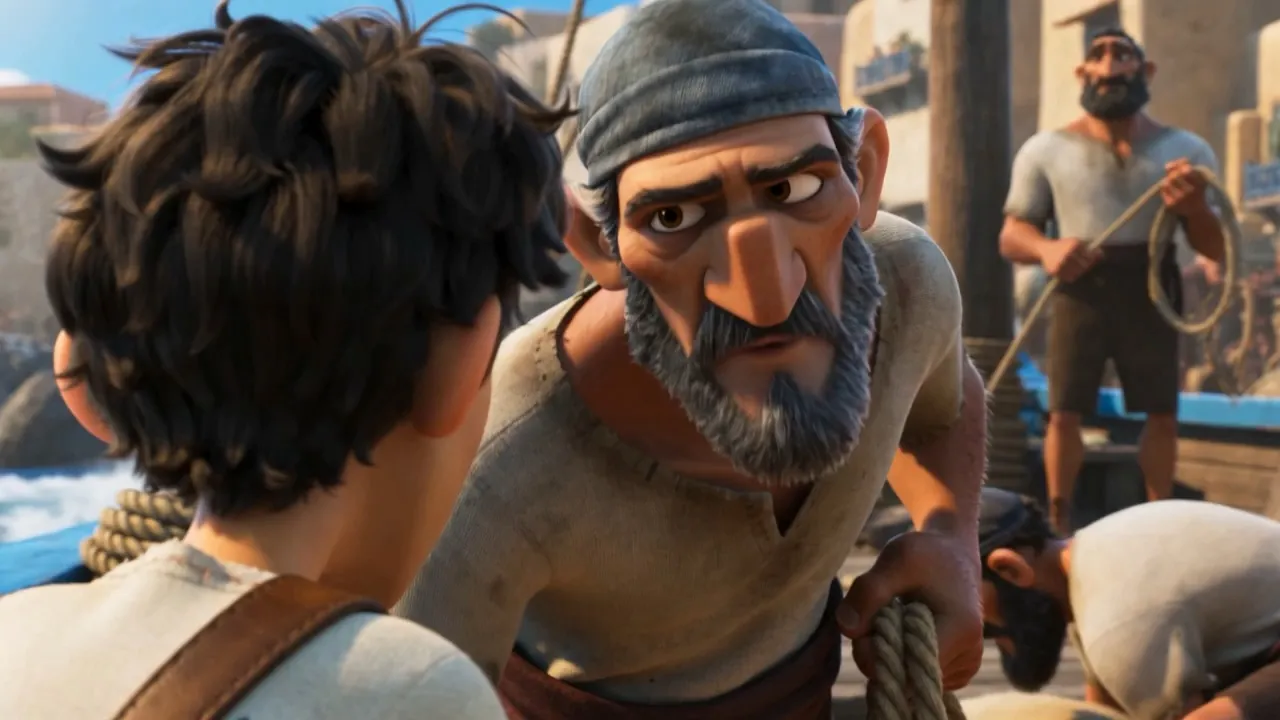

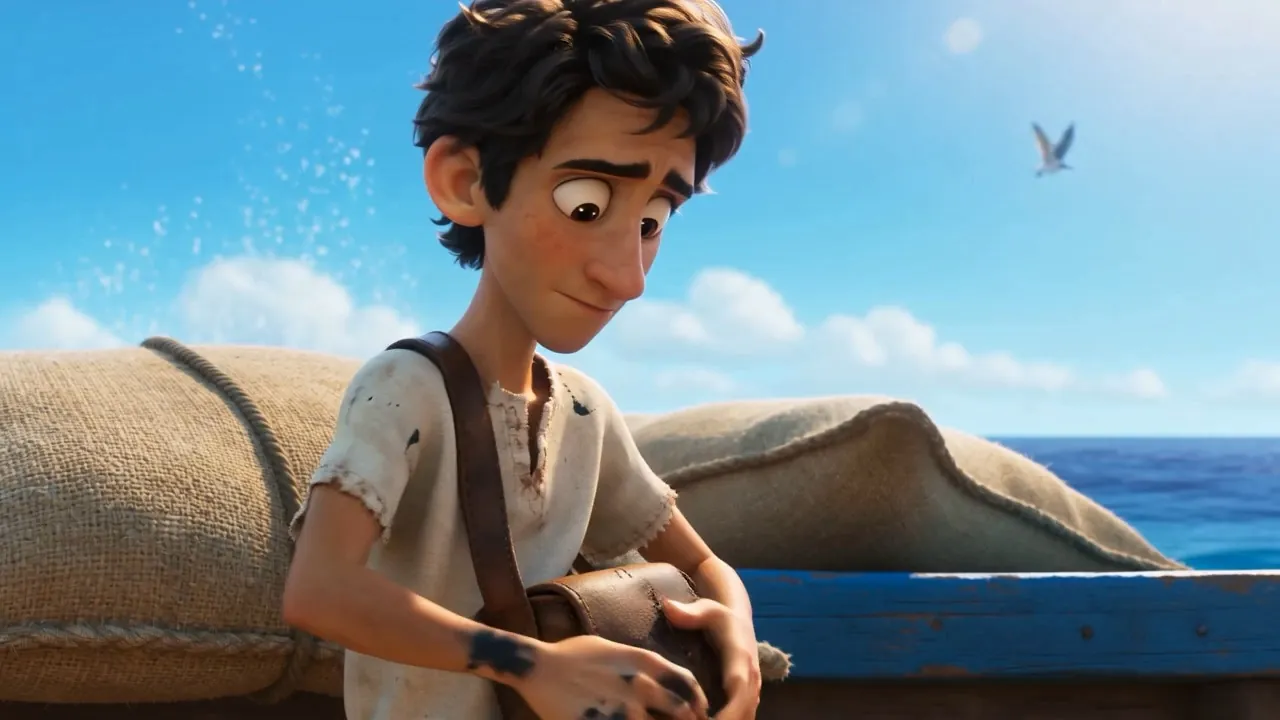
Once a month a boat brings grain, and the Captain meets it with a tally and counts the sacks twice, trusting arithmetic the way other men trust friends. He counts everything on that beach except the thing that matters: down at the gunwale, a whittled wooden comb changes hands, and a travel-stained letter comes back the other way. Tell the old man, the sailor murmurs under the noise, the churches still sing. Revelation 1 : 4

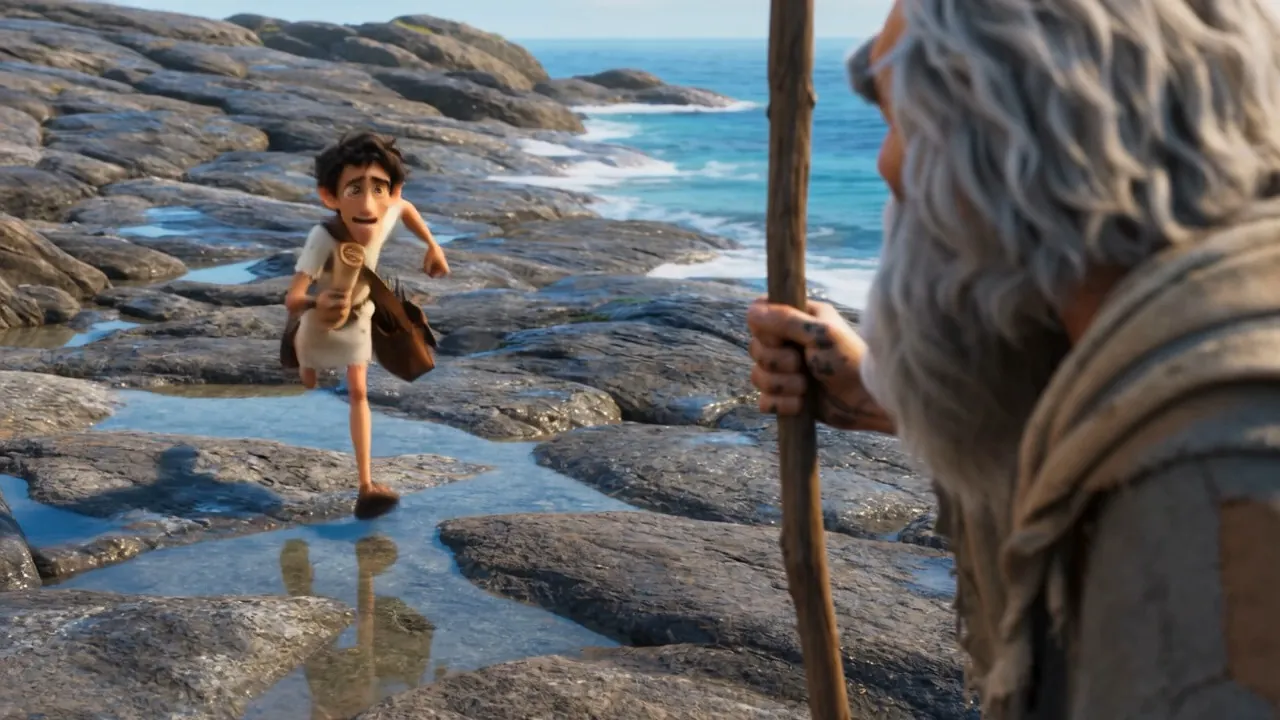
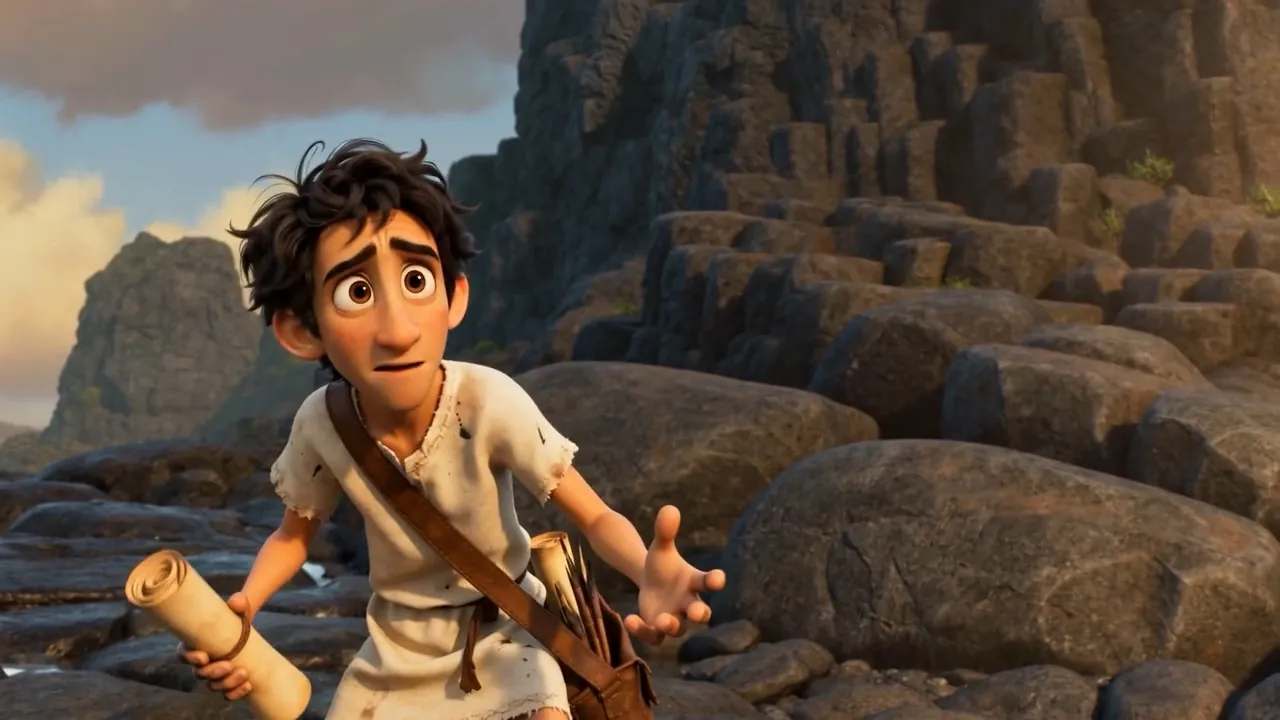
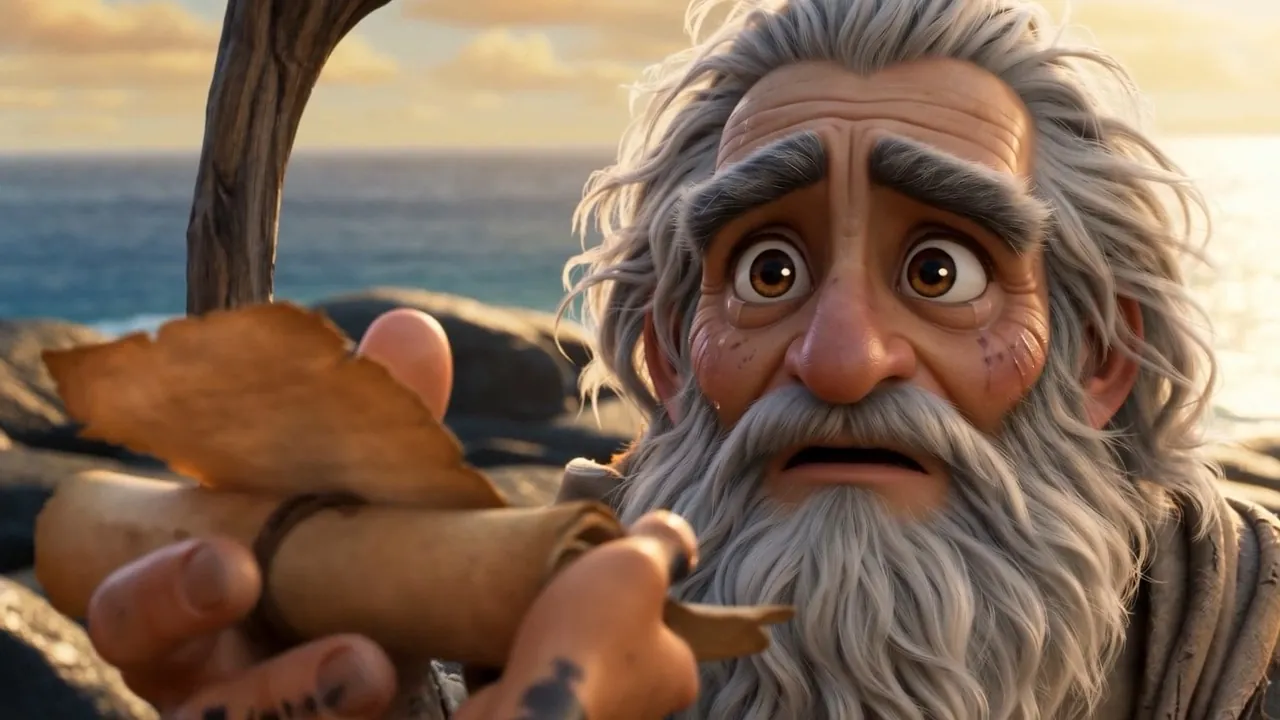
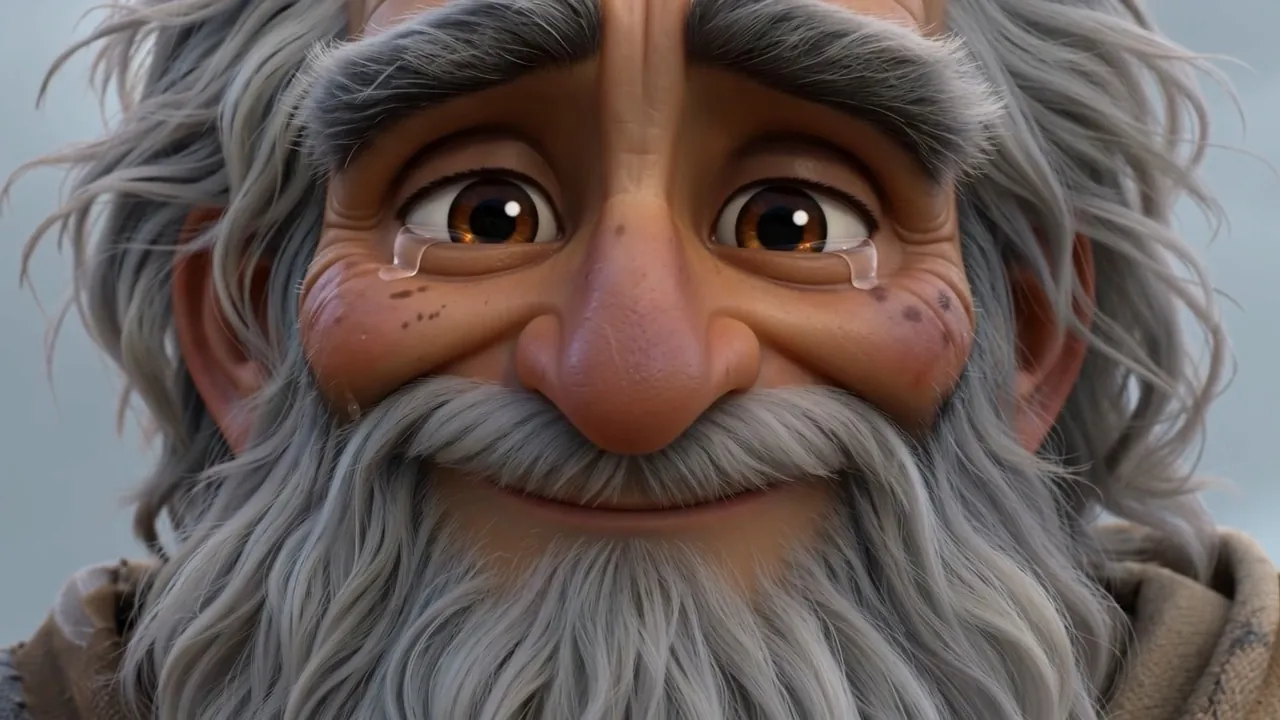
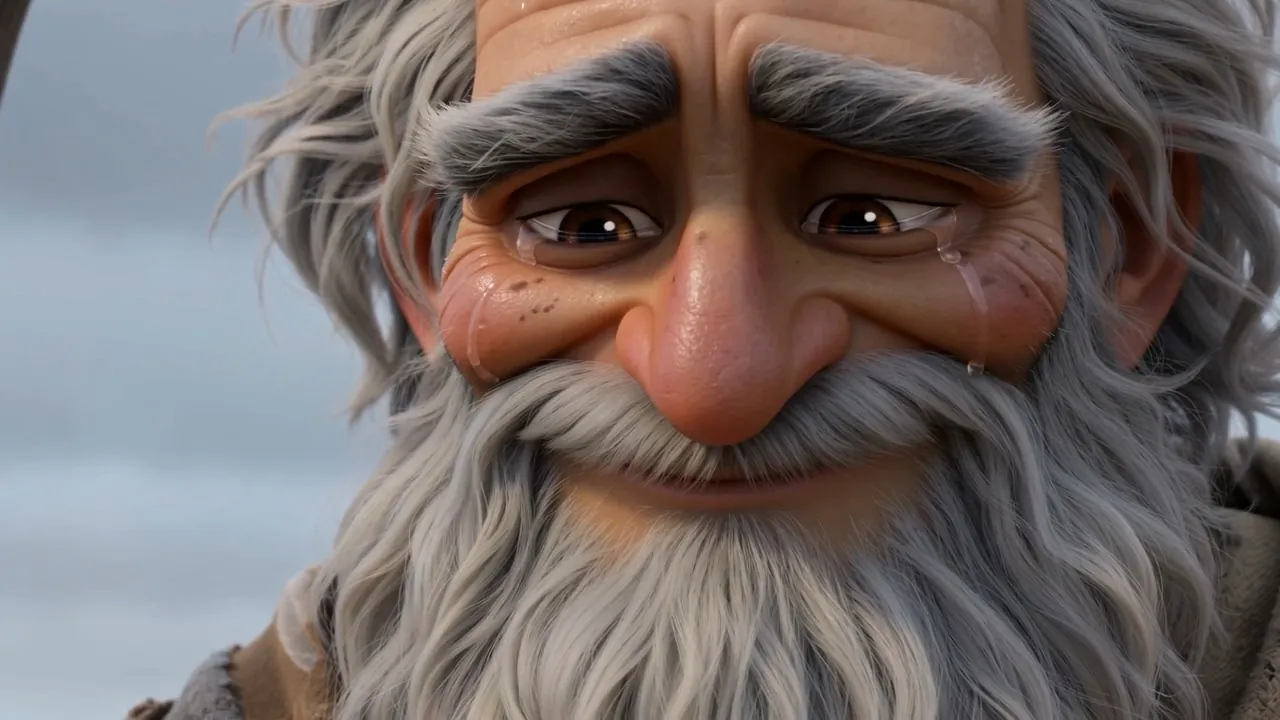
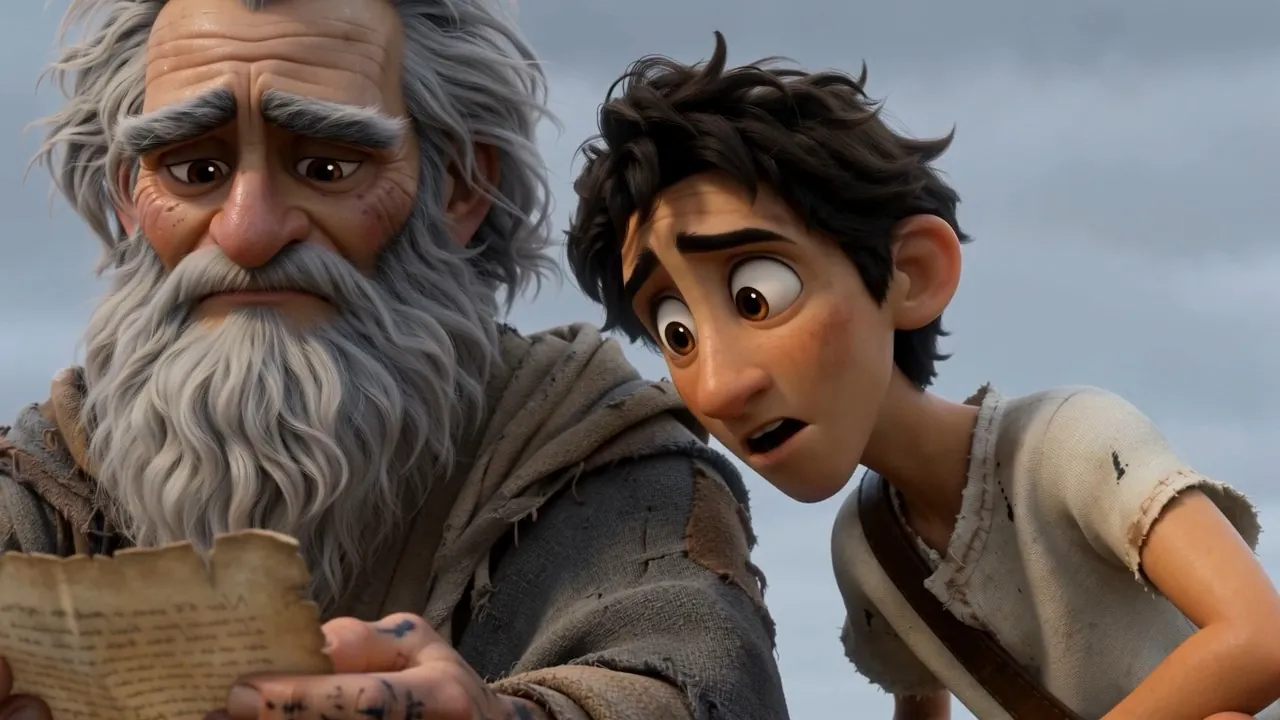
Prochorus runs the letter down the shore like a torch-bearer, shedding a pen into the sea and not even slowing. John reads it twice over: joy first, at names he thought he would never hear again — then, line by line, the light goes out of his face. Smyrna is suffering. Pergamum is confused. And Laodicea? Prochorus hunts for the word. John supplies it without looking up, heavy as a diagnosis: rich. Revelation 3 : 17
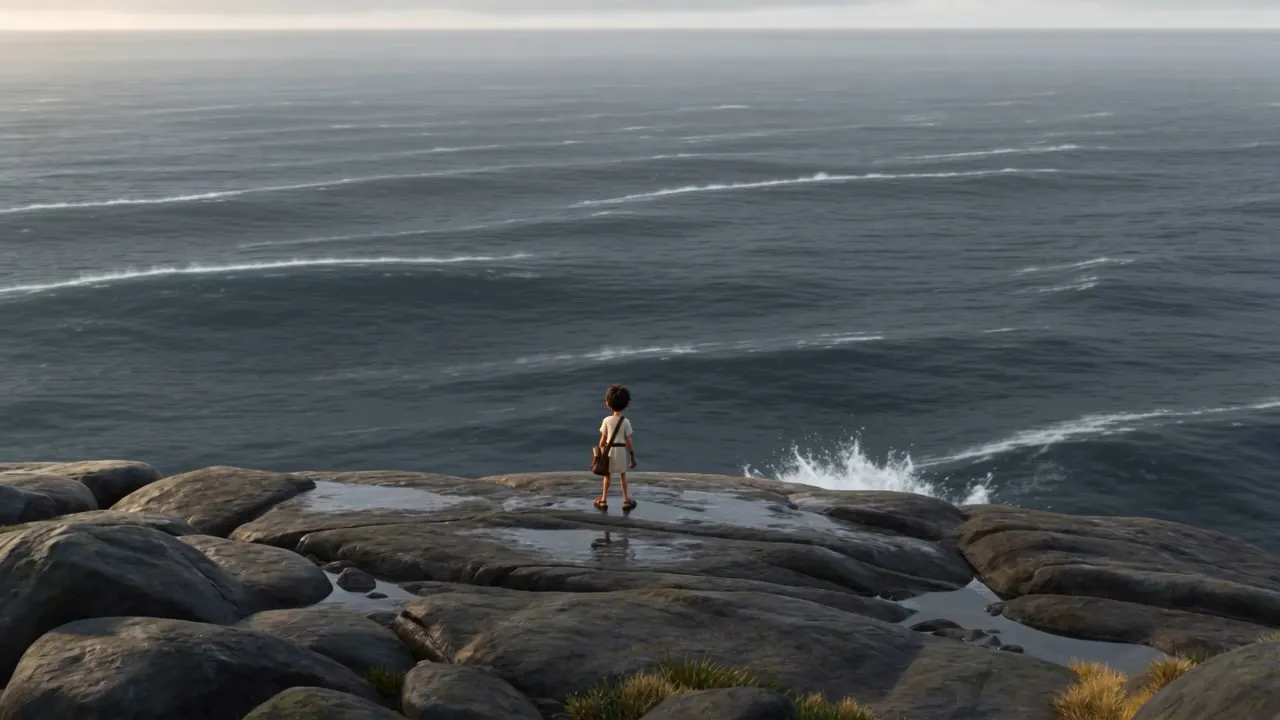
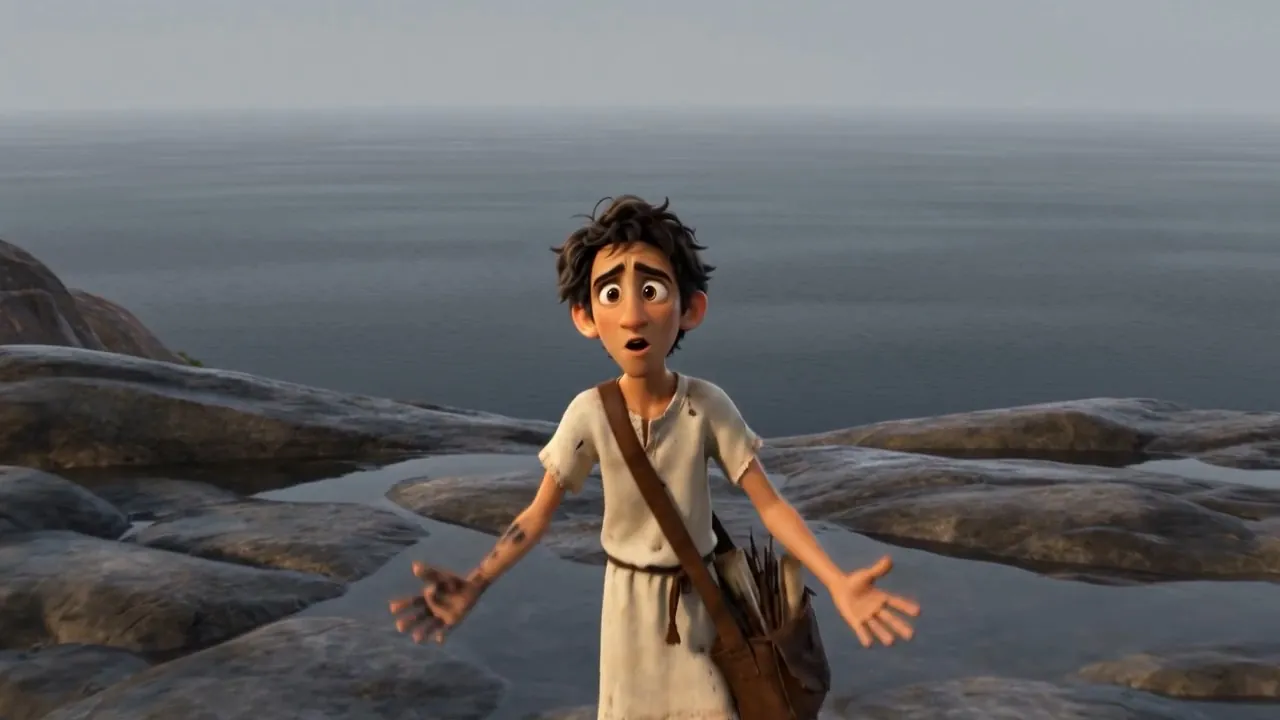
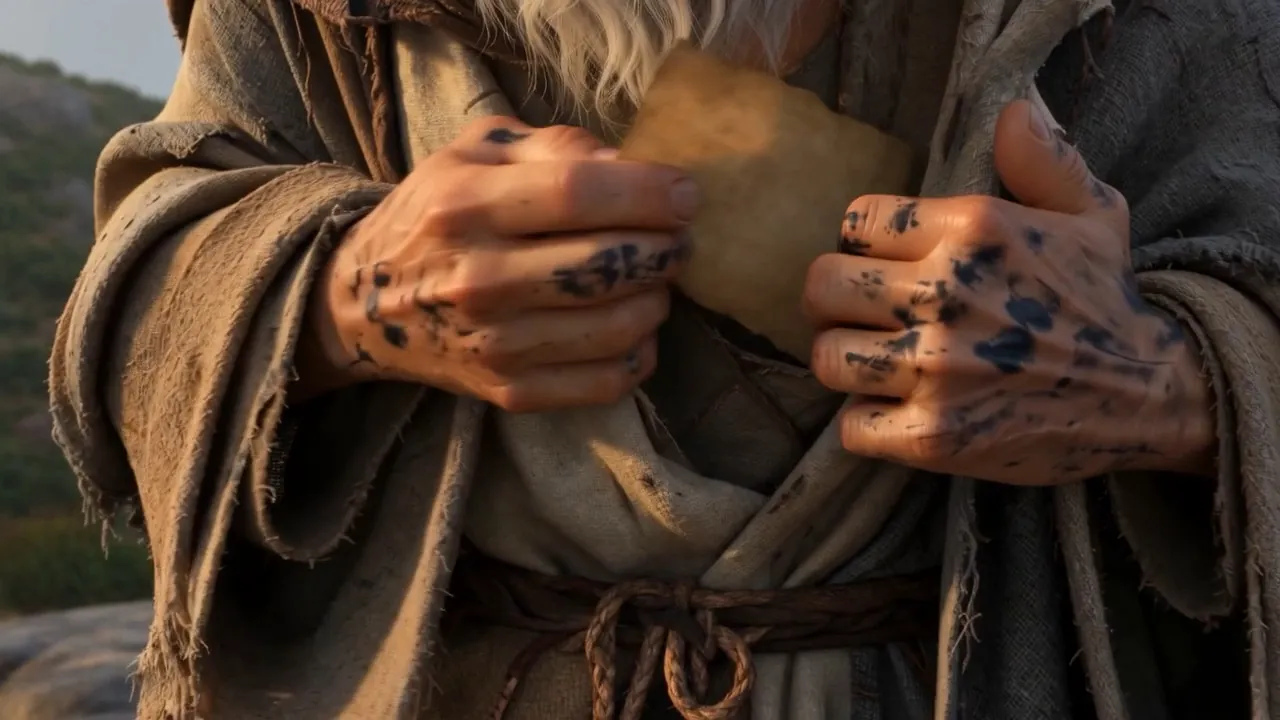
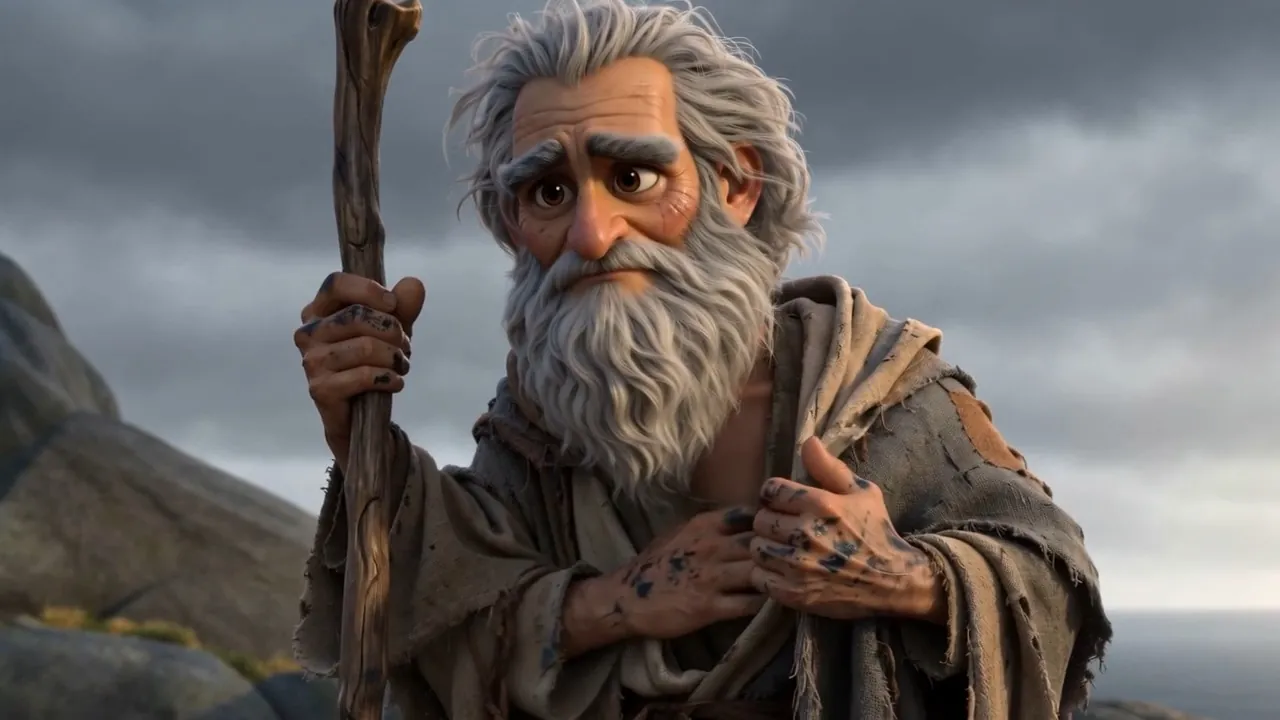
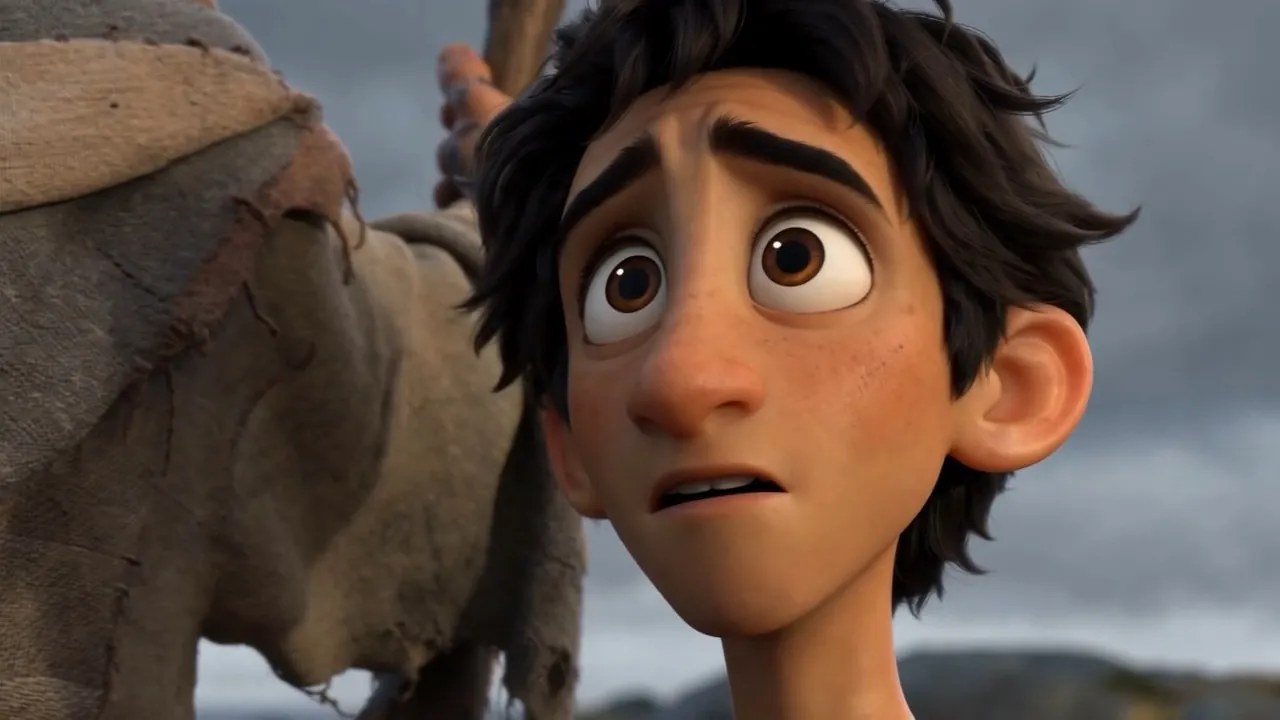
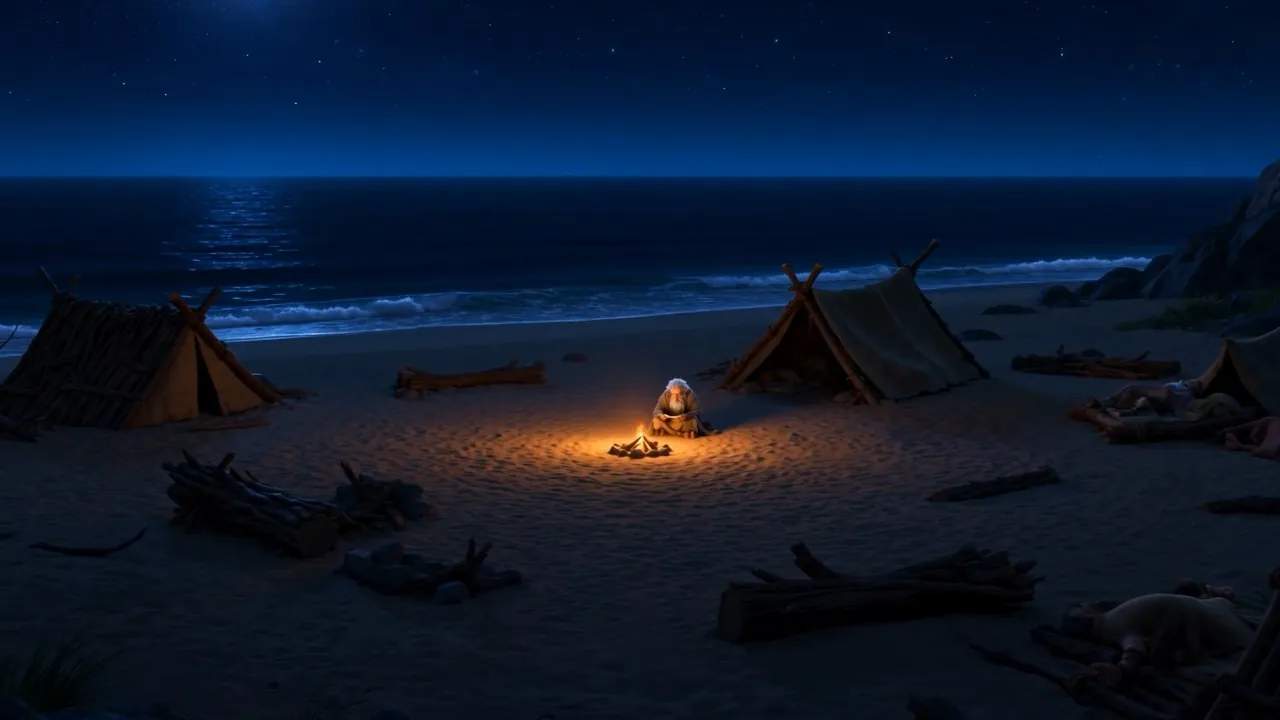
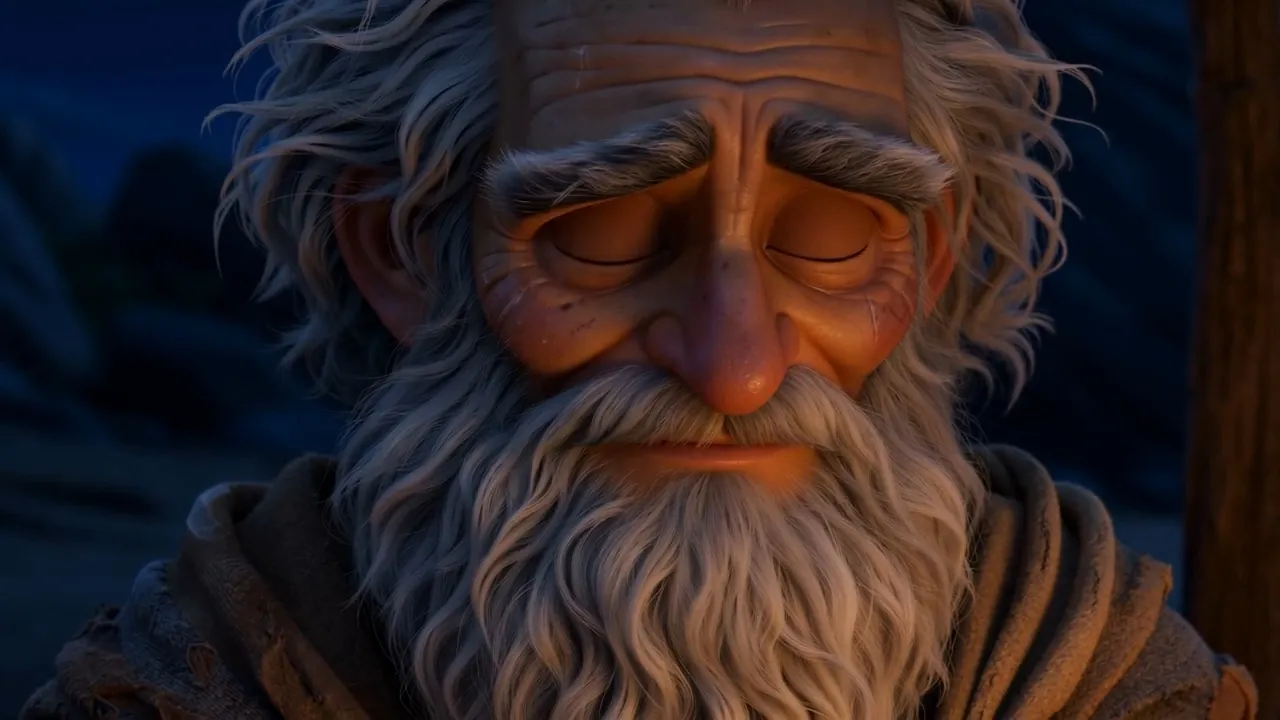

What can anyone do from here? Prochorus waves a helpless ink-stained hand at the entire Aegean. John folds the letter crease by crease, tucks it inside his cloak over his heart, and gives the boy the sentence the whole episode has been walking toward: we can pray, boy. It is not the smallest thing. It is the biggest one. That night, while the camp sleeps, an old man sits up by the embers praying whole cities through, name after name after name. Revelation 1 : 9


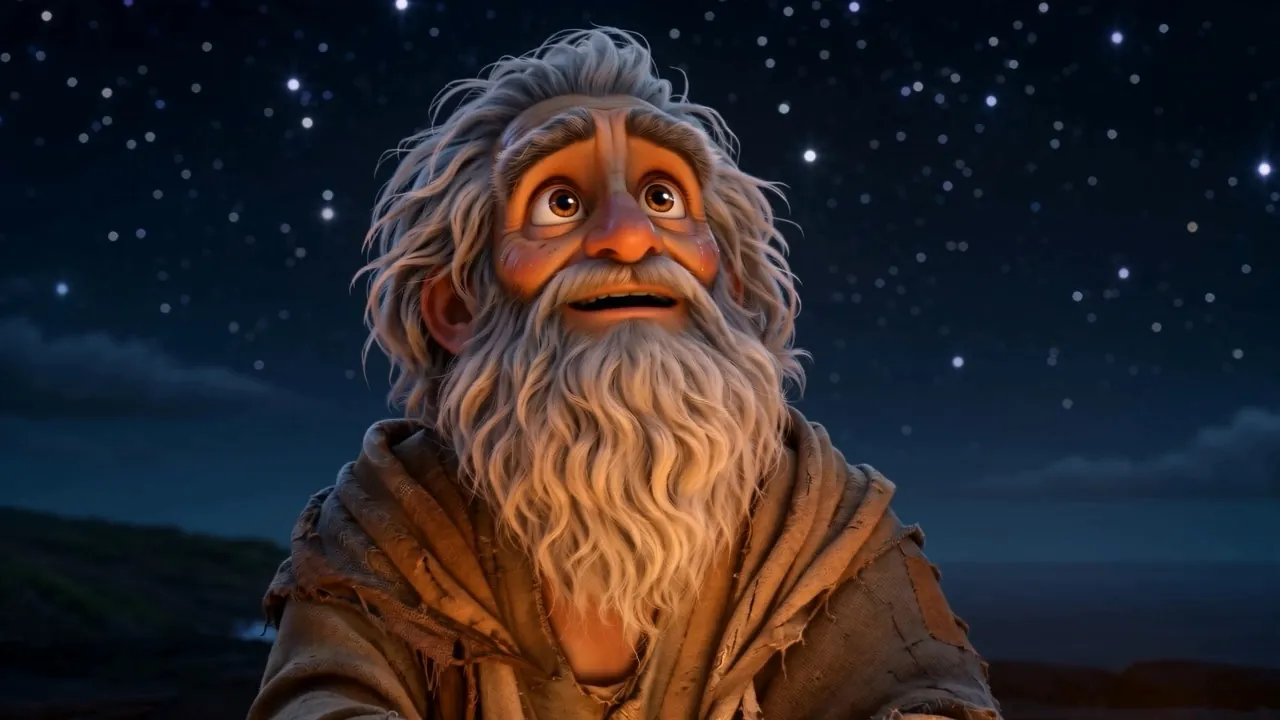
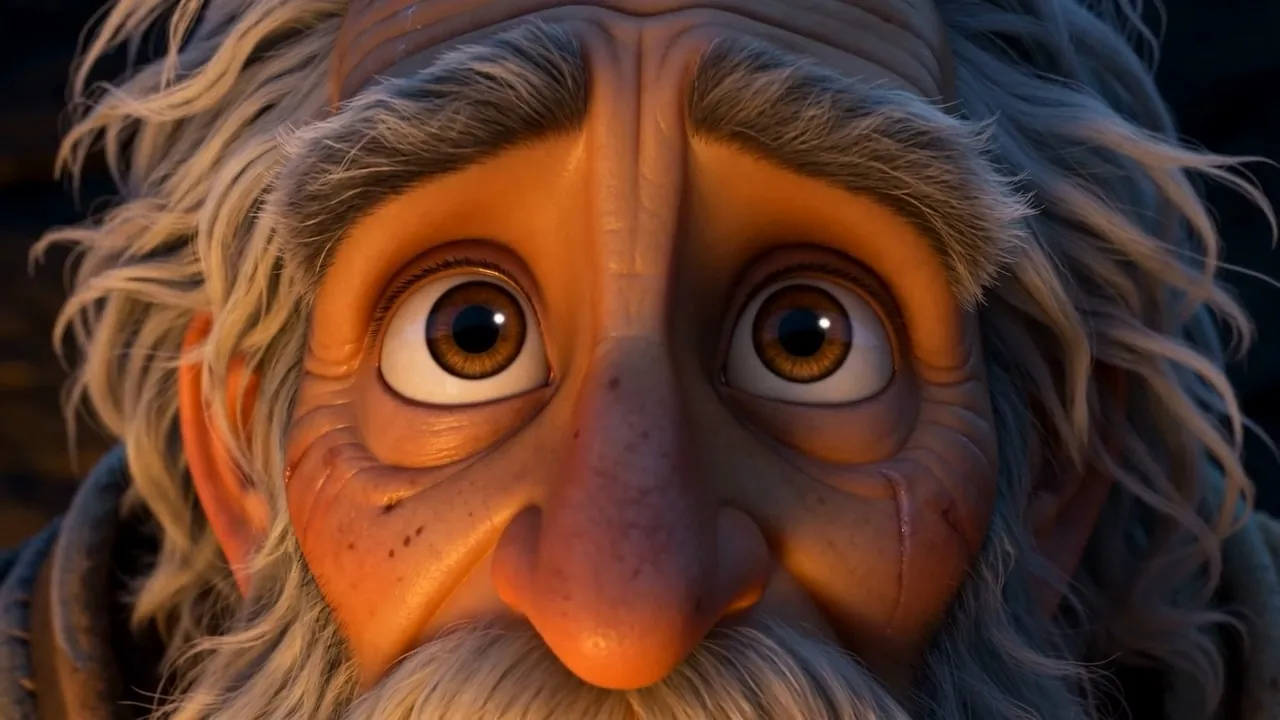
The prayer gets its answer without a single word — the answer is overhead. A river of ten thousand cold bright stars from one edge of the sky to the other, and beneath it, beside one dying ember, a speck of a man with his white head tilted back. He is the smallest thing under that sky by a factor of everything — and he does not look lonely at all. He looks expected. Revelation 1 : 8
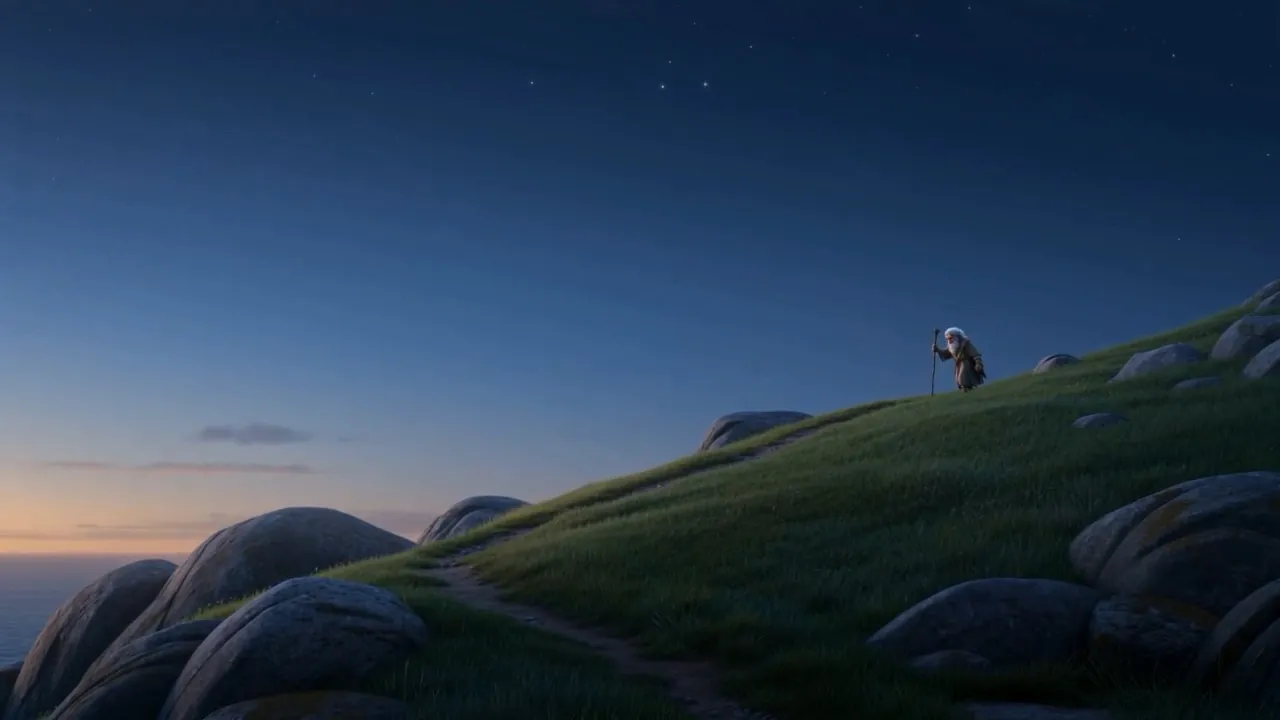
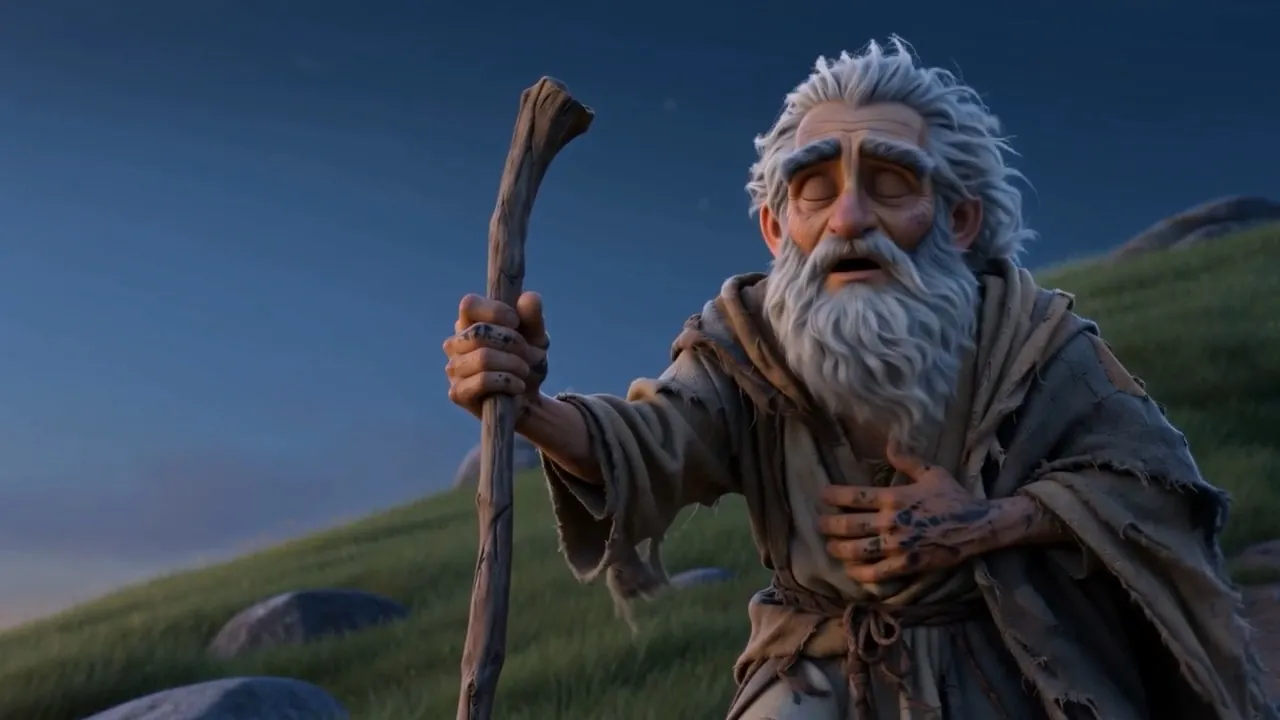
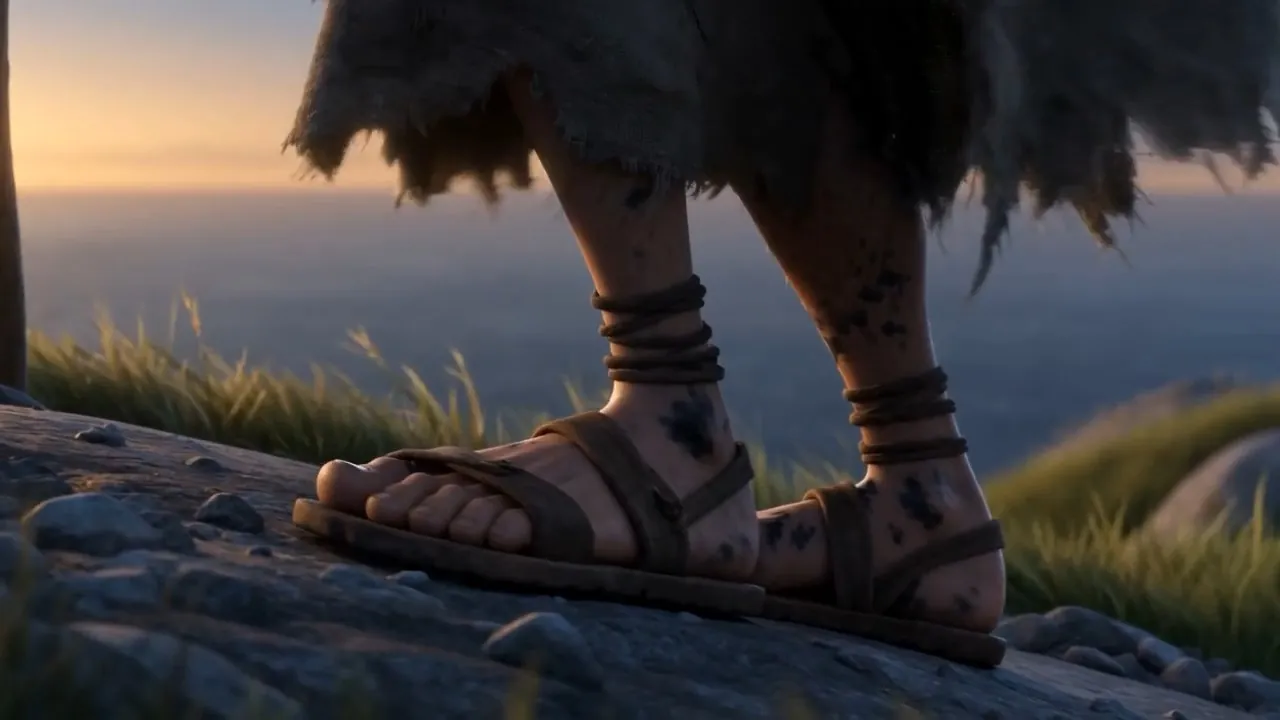
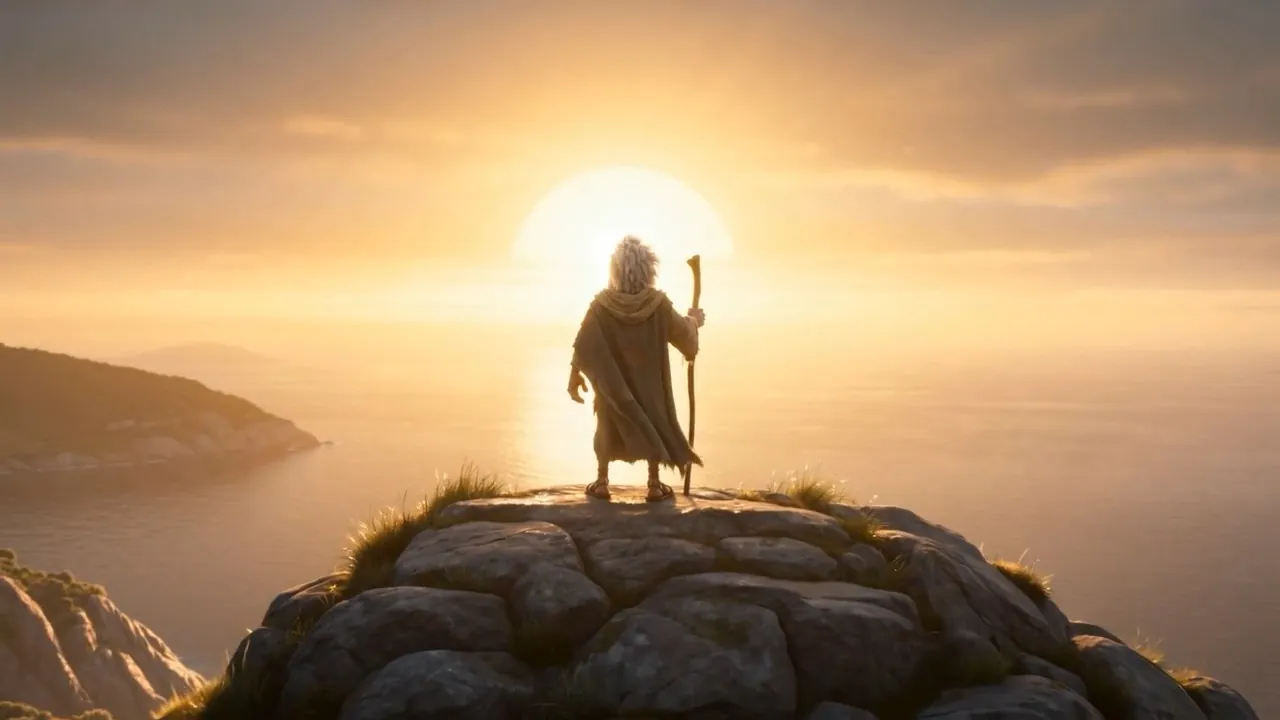
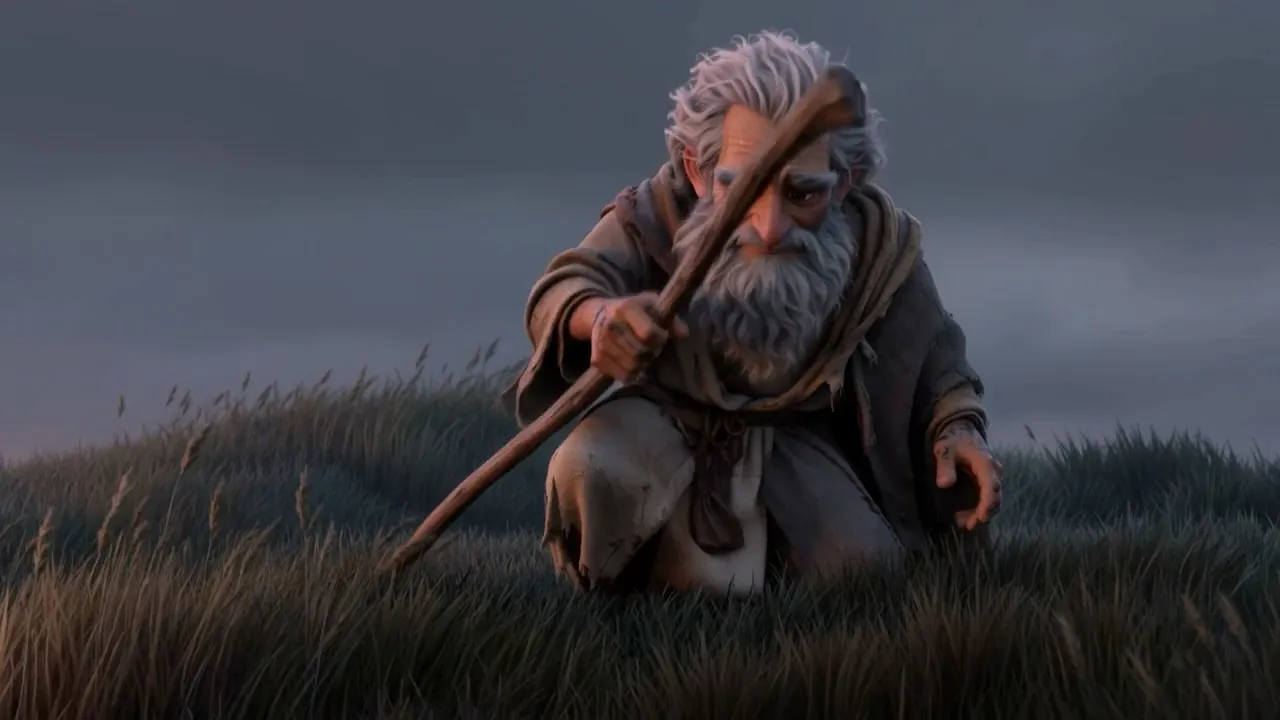
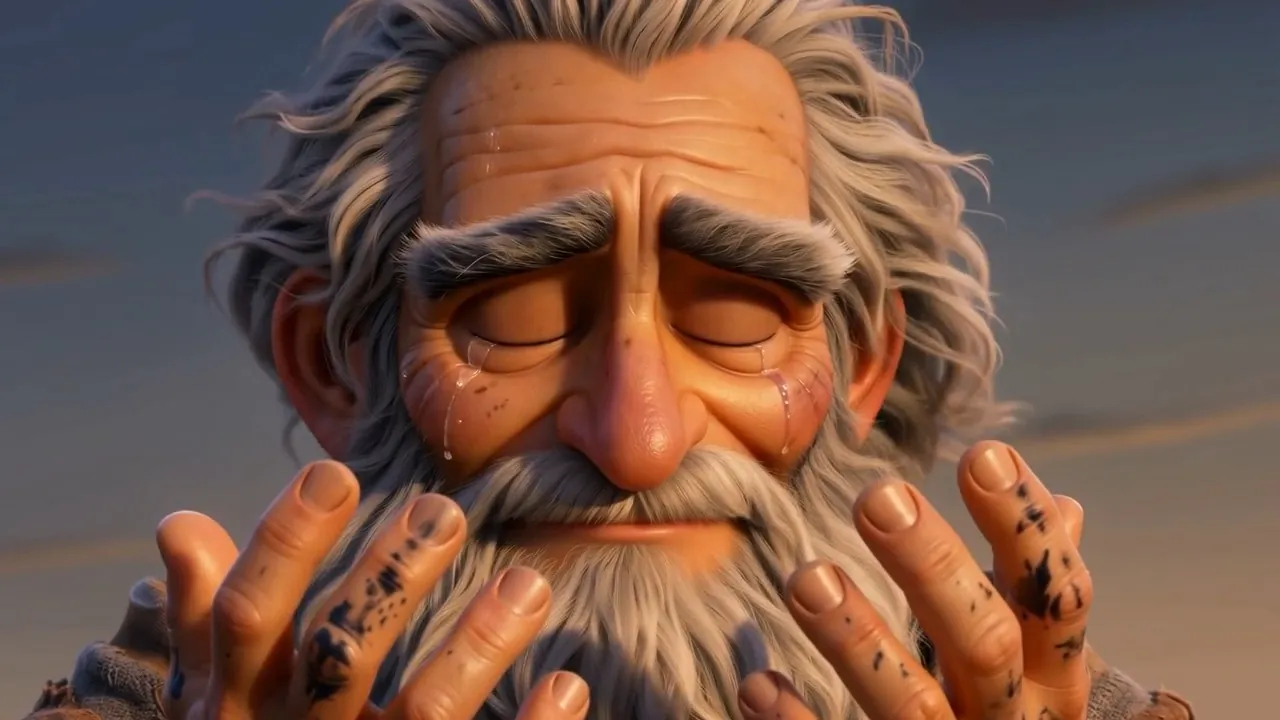
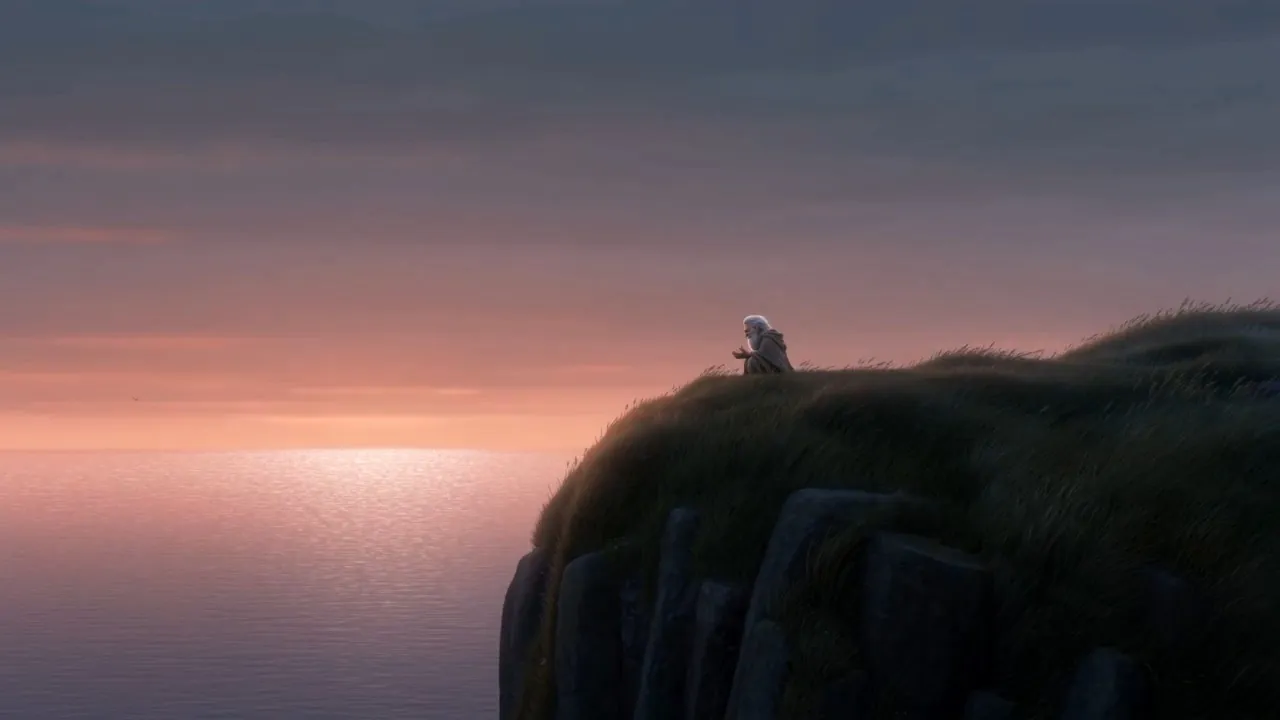
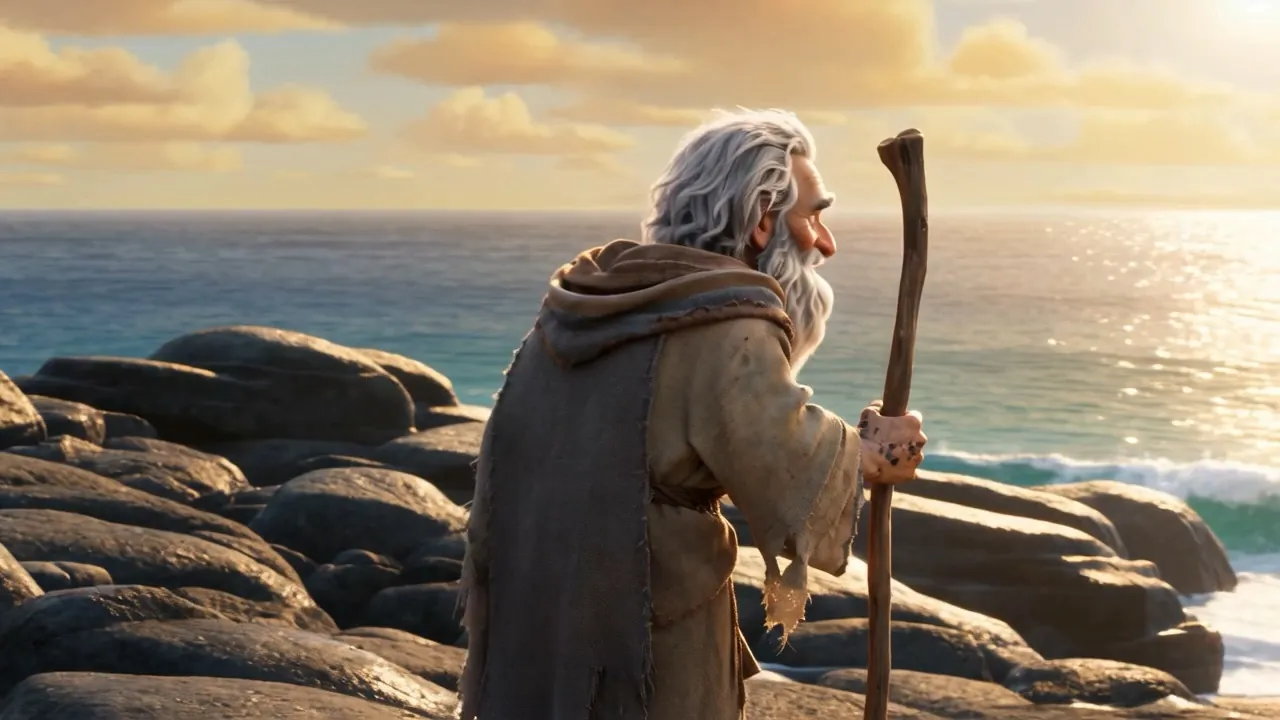
I was in the Spirit on the Lord's day. Before that sentence could be written, this had to happen first: a ninety-year-old man getting up before the sun, climbing the island's highest headland with a driftwood staff — three breaths per steep pitch, still going up — and kneeling in the deep grass with his palms open on his knees. He has kept this appointment for seventy years of mornings. This is the morning it is kept back. Revelation 1 : 10
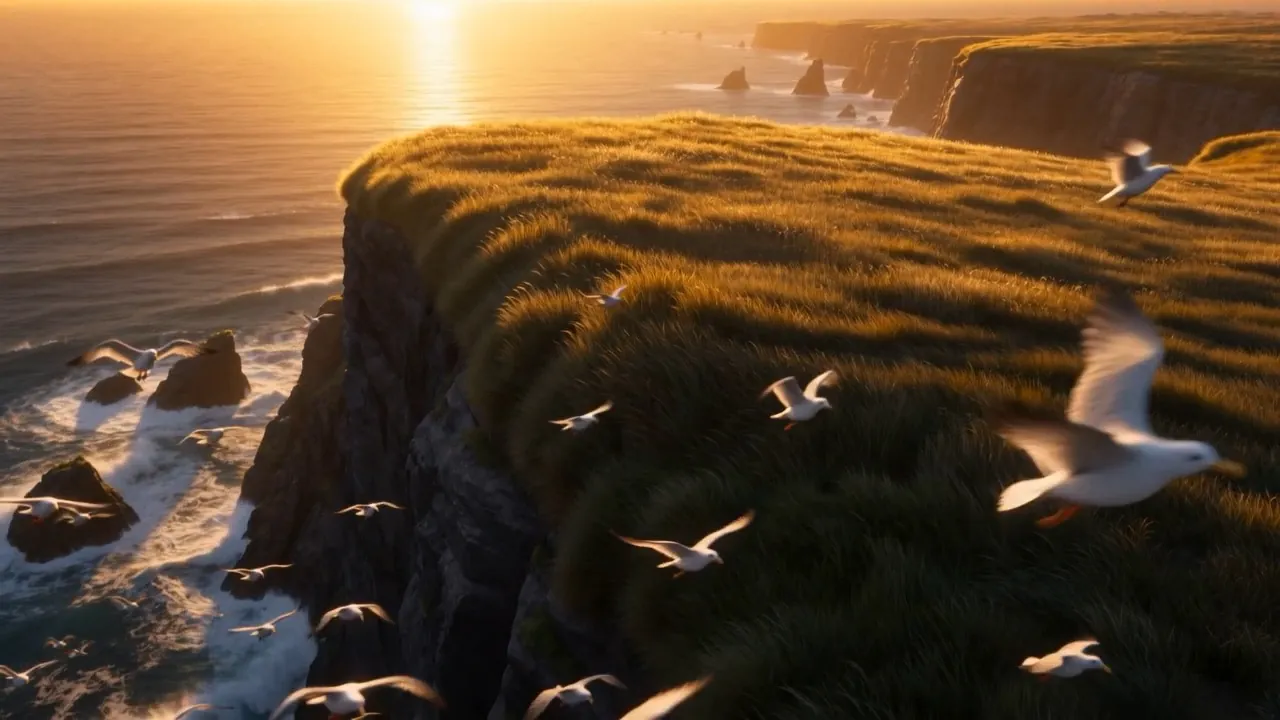
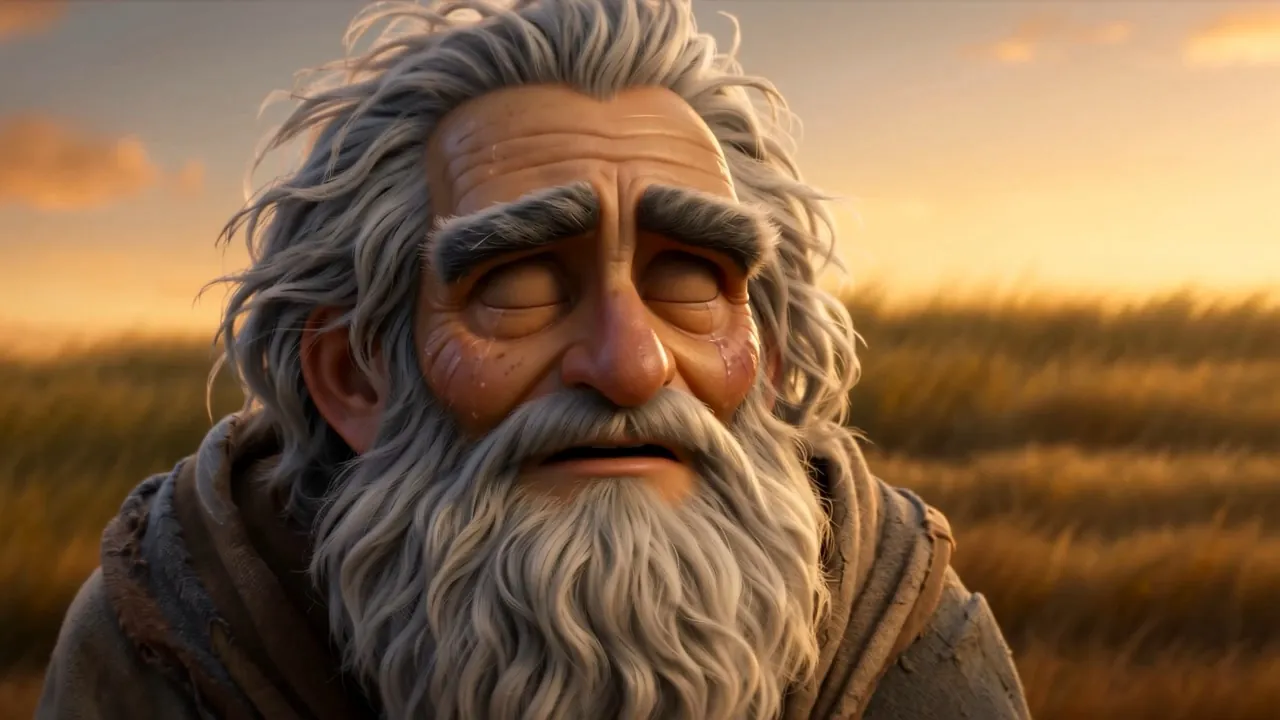
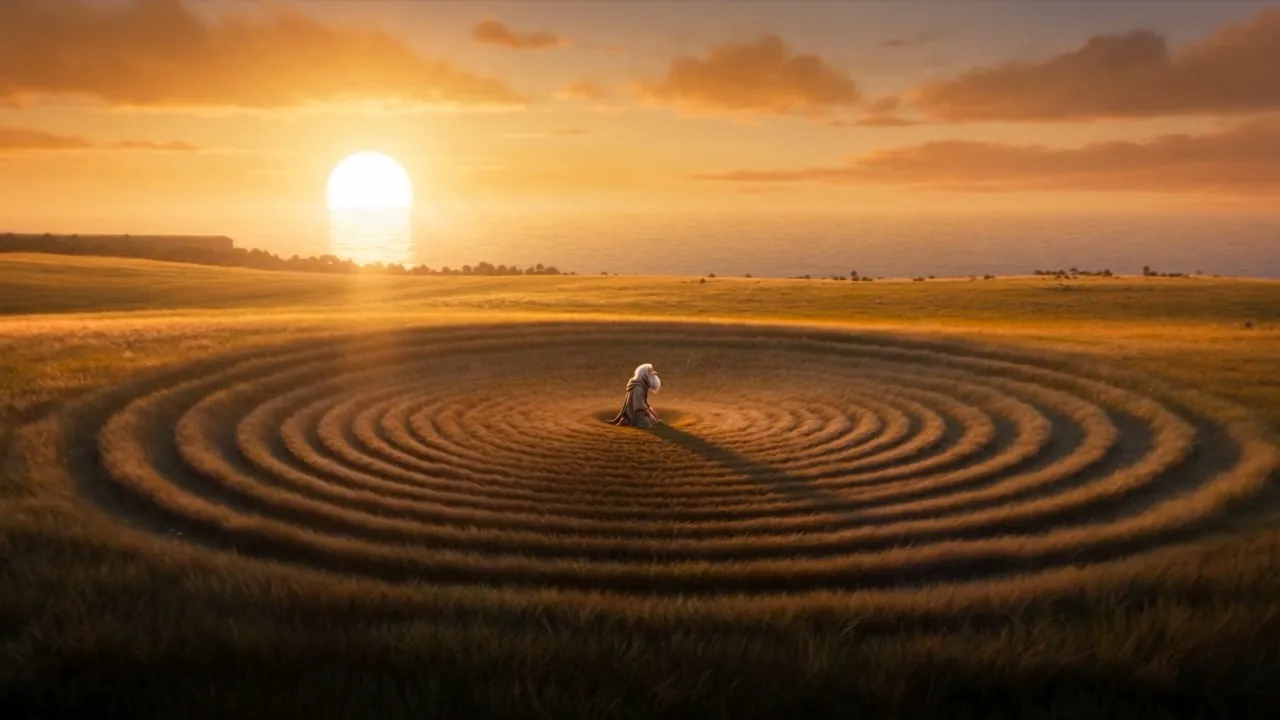



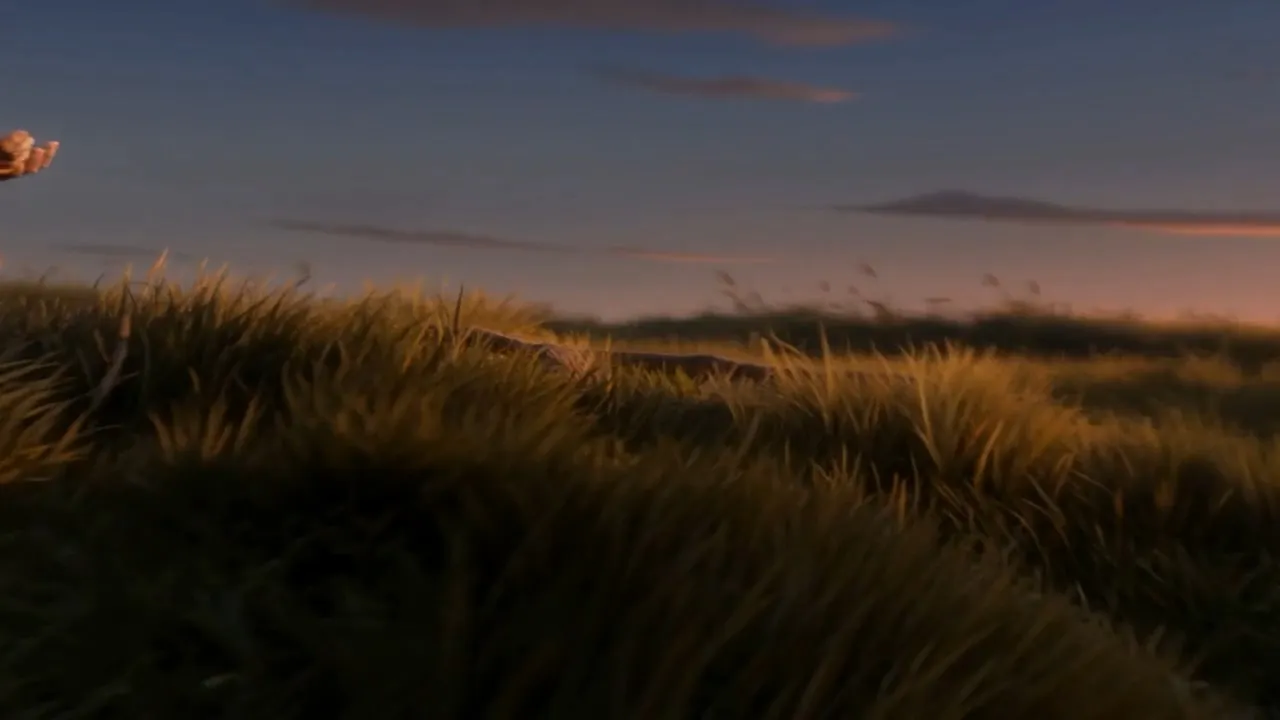
Then the morning stops. The gulls fall silent mid-cry. Around the kneeling man the grass lays itself flat in a slow, perfect ring, ripple by ripple outward, like water bowing — and below the headland the entire Aegean halts mid-wave, every crest held glassy and half-broken, spray hanging in the air with nowhere to fall. Physics, kneeling. The whole world listening. Revelation 1 : 10
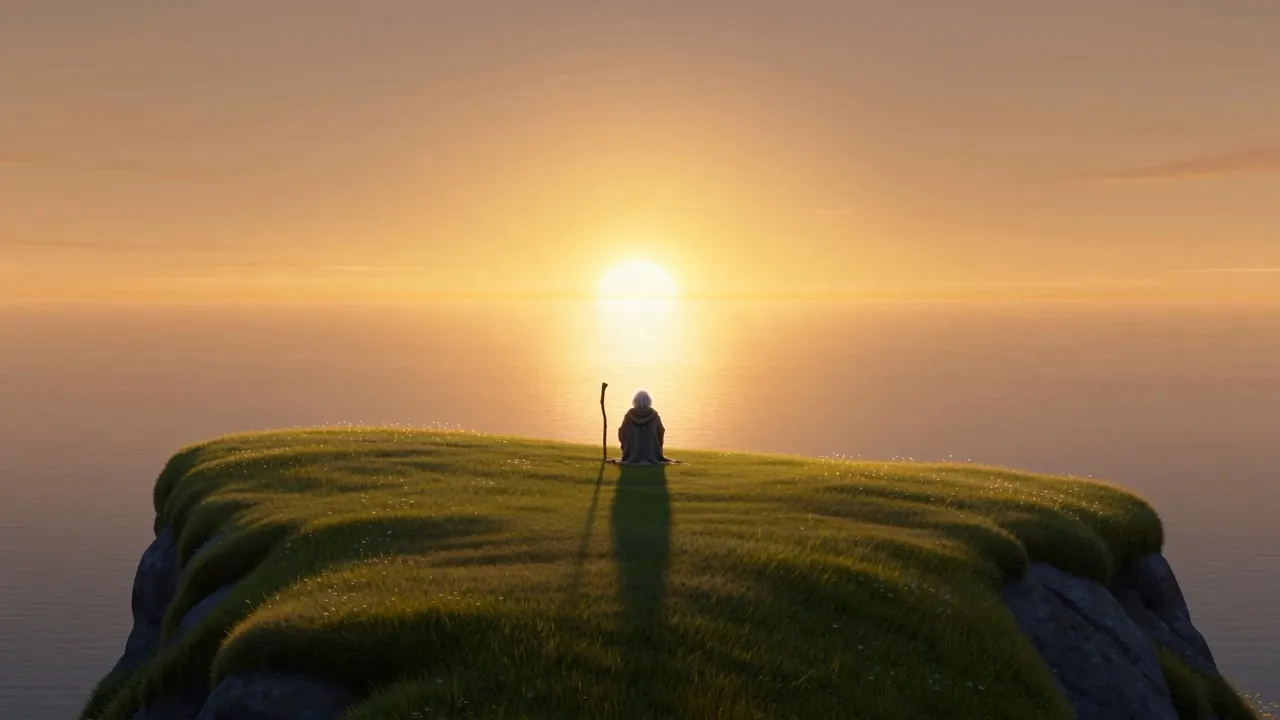


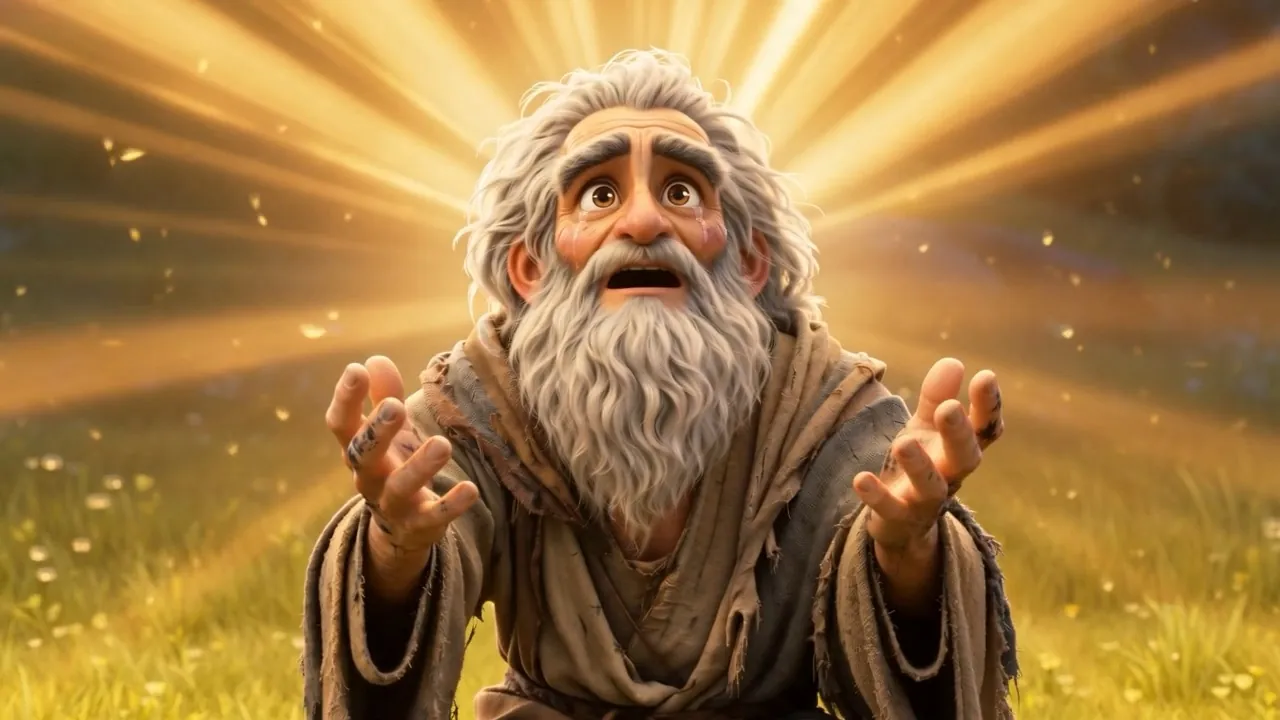
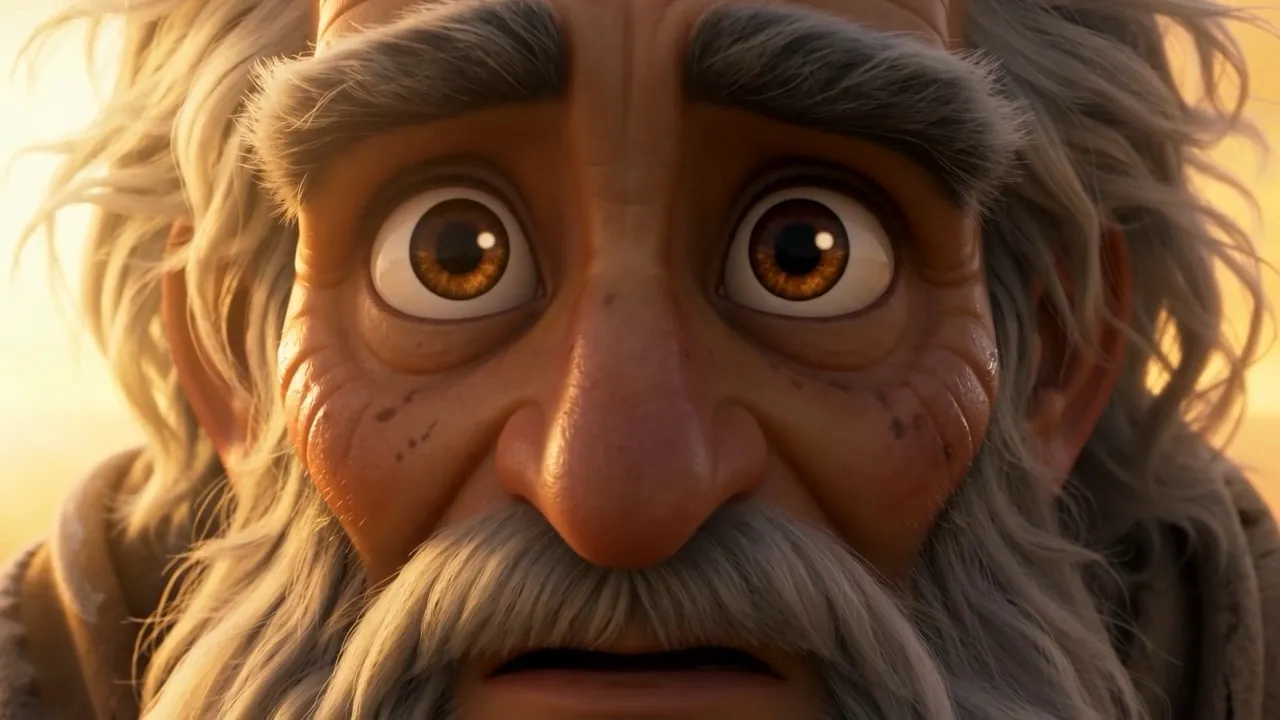
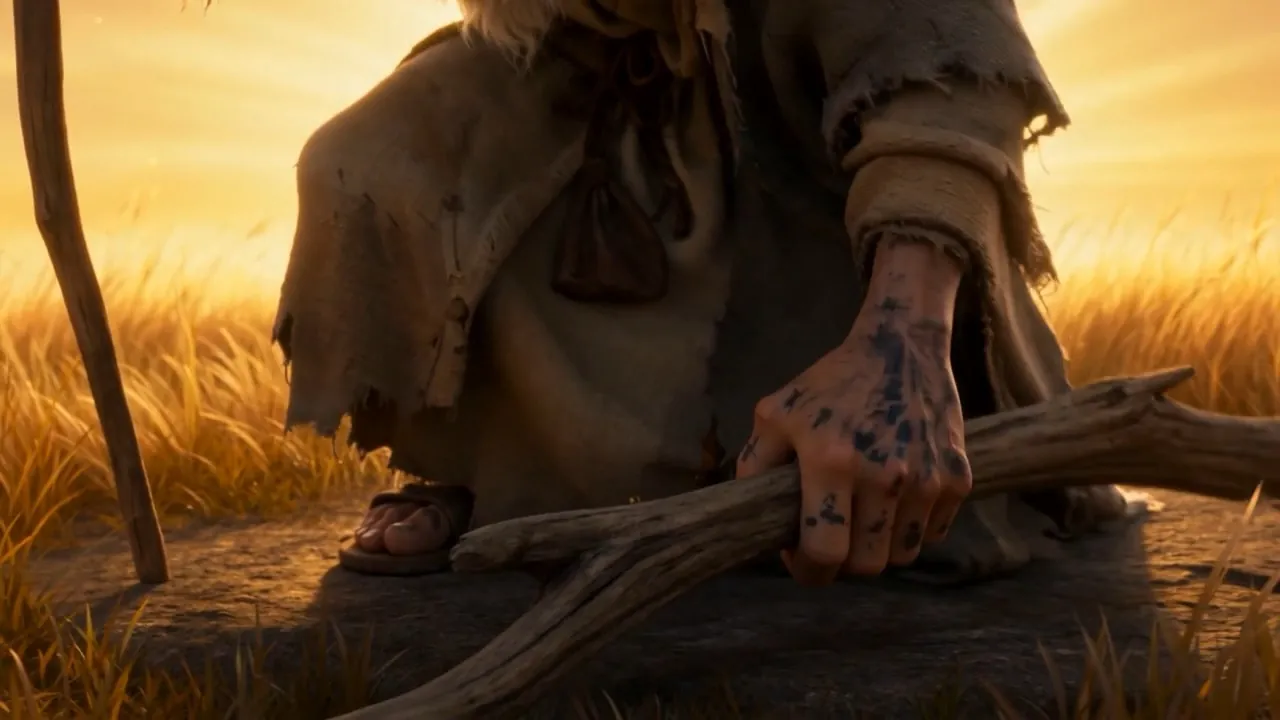
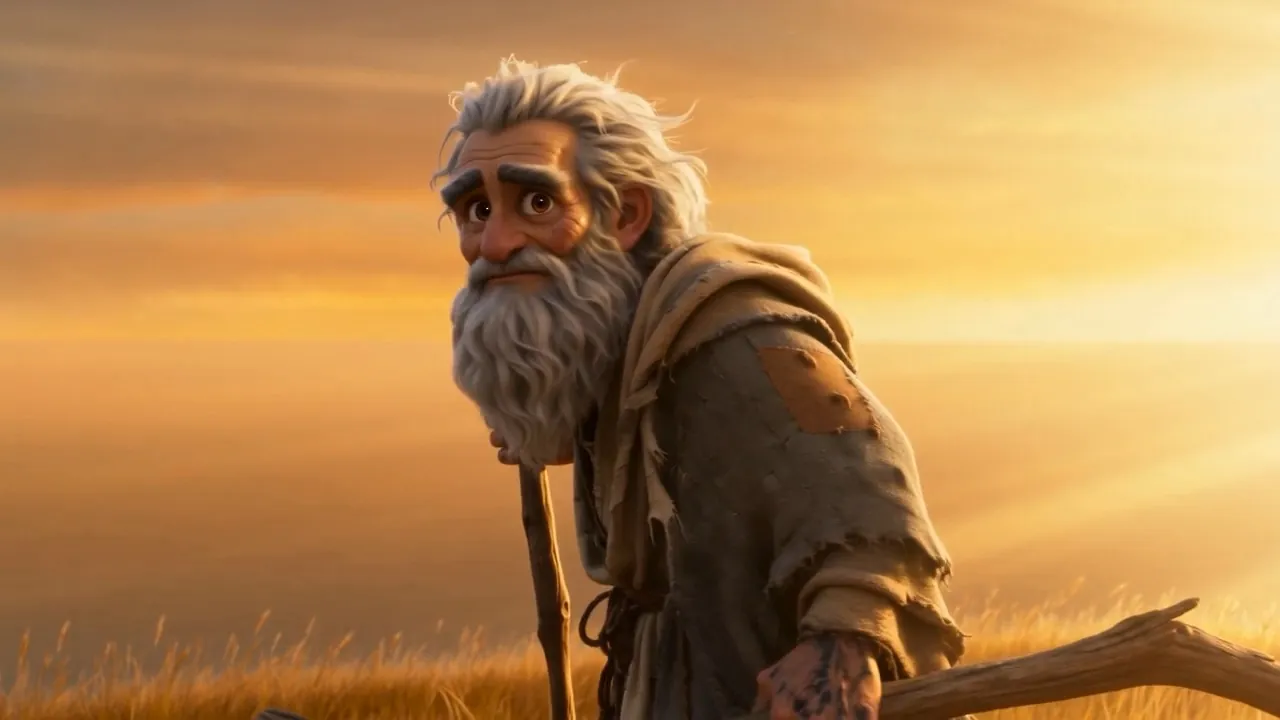
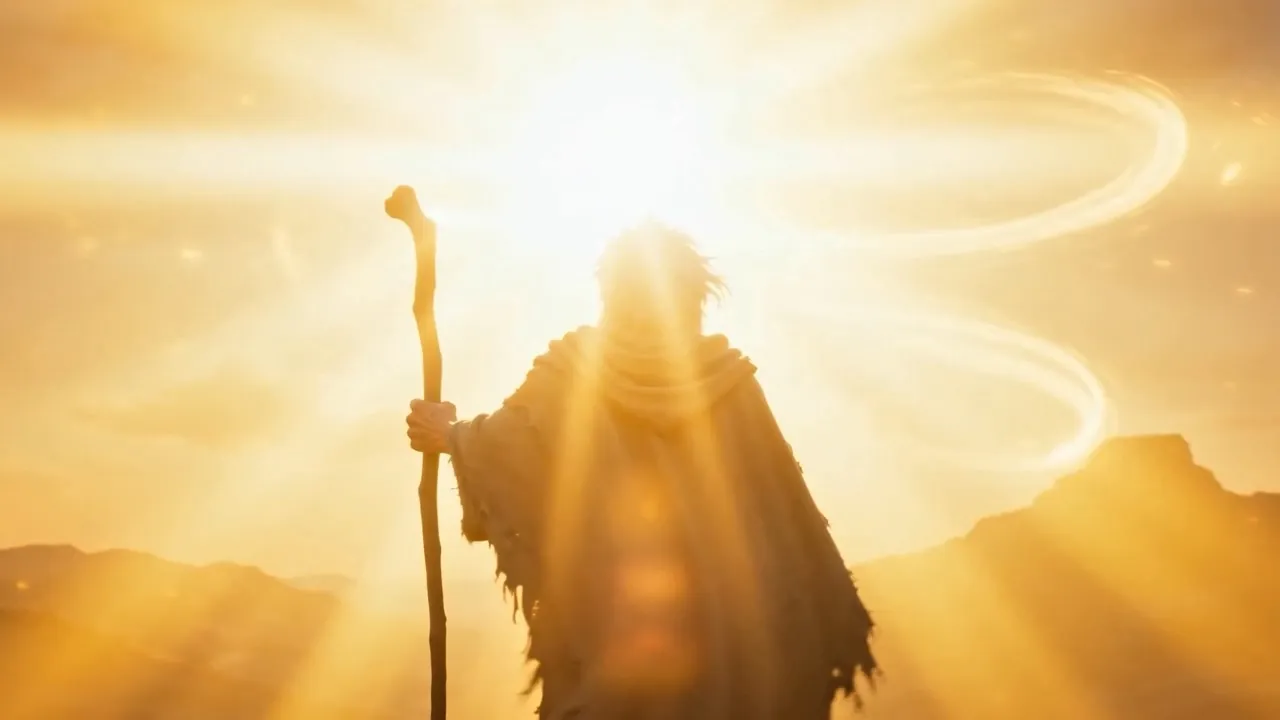
I heard behind me a loud voice, like a trumpet. The light does not come from the sun; it comes from everywhere, and his shadow splits into no direction at all. We never hear the Voice — we get only what it does to him: the beard stirring under sound-pressure, the flattened grass trembling, and a face flooding with recognition beyond fear. A command enters the world — write down what you are about to see, and send it to the seven churches — and one man built his whole life to hear it. He rises. He turns. The vision is next. Revelation 1 : 10–11
"What you see, write in a book" — and send it to the seven assemblies.
After the story
The joy is the argument.
Rome's theory was simple: take a man's home, his people and his freedom, and you have taken the man. This whole episode tests that theory against one ninety-year-old water-carrier — and the empire loses. Not because his life is easy, but because the one thing his joy stands on is the one thing outside Rome's reach: I watched him die. And three days later, he ate fish from my hand. A man like that can be exiled anywhere, and it will not stick.
Voices of the island · hover or tap to turn
John
"I John… was on the isle that is called Patmos because of God's Word and the testimony of Jesus Christ."
— Revelation 1:9
The Children
"I am the Alpha and the Omega, says the Lord God, who is and who was and who is to come, the Almighty."
— Revelation 1:8
The Voice
"What you see, write in a book and send to the seven assemblies."
— Revelation 1:11The Book of Revelation
How closely were you watching?
1. The Captain tells John to sit down before he dies on his island. What does John answer?
The island's whole comedy and its whole theology in two sentences — a man who has already died once is very hard to threaten (John 21:14).
2. What does the Old Teacher draw in the wet sand for the children?
And the tide stops just short of the letters. "I am the Alpha and the Omega, says the Lord God" (Revelation 1:8) — the book's ending is planted in the sand of its first act.
3. What comes ashore hidden in the grain-boat bustle?
Six hands and two miracles to get there — and the news that the churches still sing, and that Smyrna suffers while Laodicea is "rich" (Revelation 2–3).
4. Where does the Voice find John?
"I was in the Spirit on the Lord's day, and I heard behind me a loud voice, like a trumpet" (Revelation 1:10) — it arrives at an appointment he had kept for seventy years.
What this story teaches
Joy that makes no sense is evidence.
The guards audit his rations and find no explanation. John's cheerfulness runs on something that happened seventy years earlier and cannot be confiscated — which is exactly why it unsettles the empire.
"That disciple therefore whom Jesus loved said to Peter, 'It's the Lord!'" John 21:7Prayer is not the leftover option.
A boy waves at the uncrossable sea and asks what anyone can do from a rock. John's answer is the episode's spine: praying for people is not the smallest thing you can do for them. It is the biggest.
"I John, your brother and partner with you in the oppression, Kingdom, and perseverance in Christ Jesus." Revelation 1:9Kept habits are where God finds you.
John climbed that headland every Lord's Day for years before the morning the Voice came. The vision did not interrupt his life. It arrived at his standing appointment.
"I was in the Spirit on the Lord's day, and I heard behind me a loud voice, like a trumpet." Revelation 1:10Read the scripture itself. Revelation 1 · John 21 · World English Bible
Revelation 1
1This is the Revelation of Jesus Christ, which God gave him to show to his servants the things which must happen soon, which he sent and made known by his angel to his servant, John,
2who testified to God’s word, and of the testimony of Jesus Christ, about everything that he saw.
3Blessed is he who reads and those who hear the words of the prophecy, and keep the things that are written in it, for the time is at hand.
4John, to the seven assemblies that are in Asia: Grace to you and peace, from God, who is and who was and who is to come; and from the seven Spirits who are before his throne;
5and from Jesus Christ, the faithful witness, the firstborn of the dead, and the ruler of the kings of the earth. To him who loves us, and washed us from our sins by his blood;
6and he made us to be a Kingdom, priests to his God and Father; to him be the glory and the dominion forever and ever. Amen.
7Behold, he is coming with the clouds, and every eye will see him, including those who pierced him. All the tribes of the earth will mourn over him. Even so, Amen.
8“I am the Alpha and the Omega,” says the Lord God, “who is and who was and who is to come, the Almighty.”
9I John, your brother and partner with you in the oppression, Kingdom, and perseverance in Christ Jesus, was on the isle that is called Patmos because of God’s Word and the testimony of Jesus Christ.
10I was in the Spirit on the Lord’s day, and I heard behind me a loud voice, like a trumpet
11saying, “What you see, write in a book and send to the seven assemblies: to Ephesus, Smyrna, Pergamum, Thyatira, Sardis, Philadelphia, and to Laodicea.”
12I turned to see the voice that spoke with me. Having turned, I saw seven golden lamp stands.
13And among the lamp stands was one like a son of man, clothed with a robe reaching down to his feet, and with a golden sash around his chest.
14His head and his hair were white as white wool, like snow. His eyes were like a flame of fire.
15His feet were like burnished brass, as if it had been refined in a furnace. His voice was like the voice of many waters.
16He had seven stars in his right hand. Out of his mouth proceeded a sharp two-edged sword. His face was like the sun shining at its brightest.
17When I saw him, I fell at his feet like a dead man. He laid his right hand on me, saying, “Don’t be afraid. I am the first and the last,
18and the Living one. I was dead, and behold, I am alive forever and ever. Amen. I have the keys of Death and of Hades.
19Write therefore the things which you have seen, and the things which are, and the things which will happen hereafter;
20the mystery of the seven stars which you saw in my right hand, and the seven golden lamp stands. The seven stars are the angels of the seven assemblies. The seven lamp stands are seven assemblies.
John 21:1–14
1After these things, Jesus revealed himself again to the disciples at the sea of Tiberias. He revealed himself this way.
2Simon Peter, Thomas called Didymus, Nathanael of Cana in Galilee, and the sons of Zebedee, and two others of his disciples were together.
3Simon Peter said to them, “I’m going fishing.” They told him, “We are also coming with you.” They immediately went out, and entered into the boat. That night, they caught nothing.
4But when day had already come, Jesus stood on the beach, yet the disciples didn’t know that it was Jesus.
5Jesus therefore said to them, “Children, have you anything to eat?” They answered him, “No.”
6He said to them, “Cast the net on the right side of the boat, and you will find some.” They cast it therefore, and now they weren’t able to draw it in for the multitude of fish.
7That disciple therefore whom Jesus loved said to Peter, “It’s the Lord!” So when Simon Peter heard that it was the Lord, he wrapped his coat around him (for he was naked), and threw himself into the sea.
8But the other disciples came in the little boat (for they were not far from the land, but about two hundred cubits away), dragging the net full of fish.
9So when they got out on the land, they saw a fire of coals there, and fish laid on it, and bread.
10Jesus said to them, “Bring some of the fish which you have just caught.”
11Simon Peter went up, and drew the net to land, full of great fish, one hundred fifty-three; and even though there were so many, the net wasn’t torn.
12Jesus said to them, “Come and eat breakfast.” None of the disciples dared inquire of him, “Who are you?” knowing that it was the Lord.
13Then Jesus came and took the bread, gave it to them, and the fish likewise.
14This is now the third time that Jesus was revealed to his disciples, after he had risen from the dead.
World English Bible (WEB) — a public-domain modern English translation. Read it freely, share it freely.
The Book of Revelation — animated film 30% in production
These scenes are real frames from the film.
Help us finish it — and every story like it — free for the world.