The Books of Kings · The End
The littleflame.
Thirty months of siege, a breach in the wall, and the house Solomon built burning down in a night — and then, after all of it, the last four verses go and find one forgotten man in a prison cell. Every scene below is a real frame from our animated film.
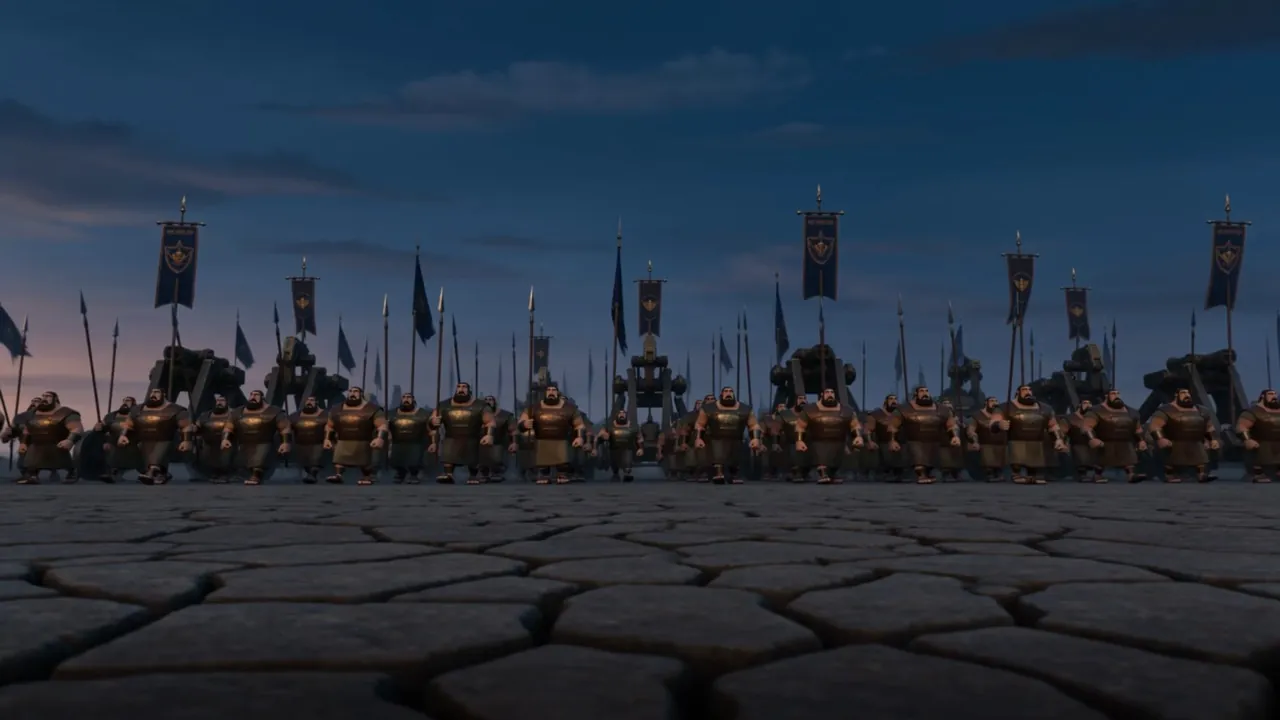
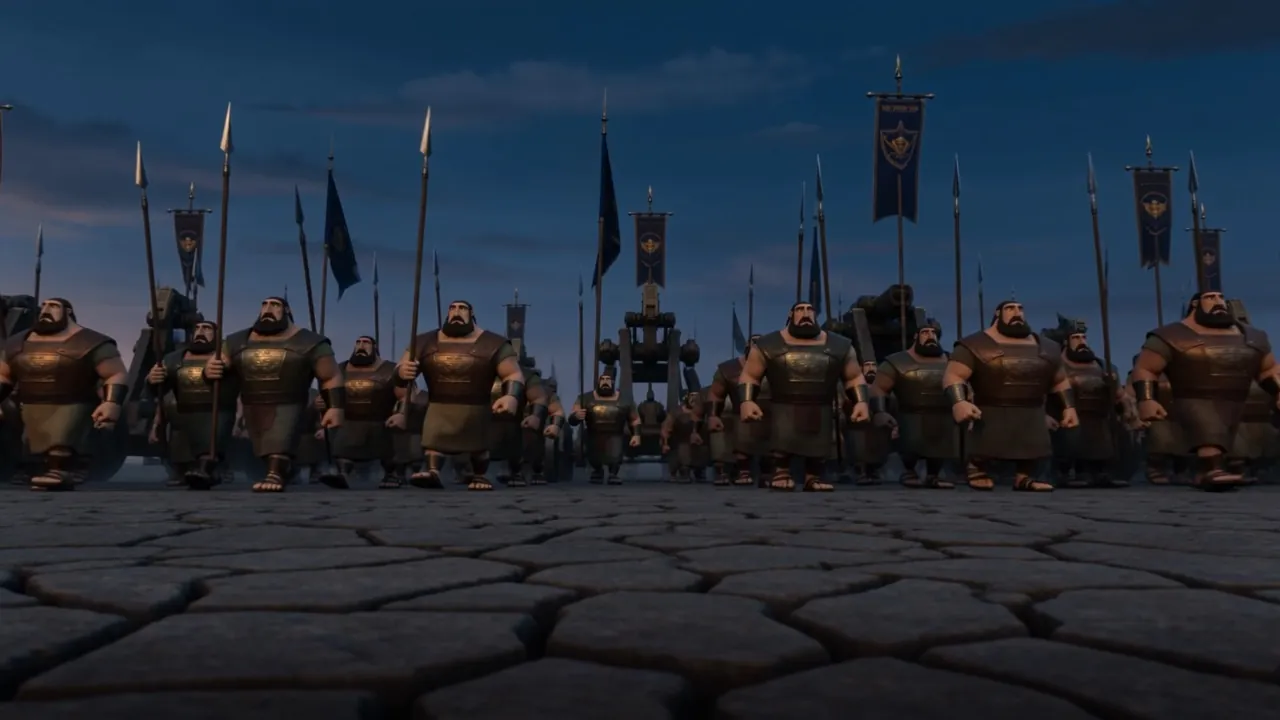
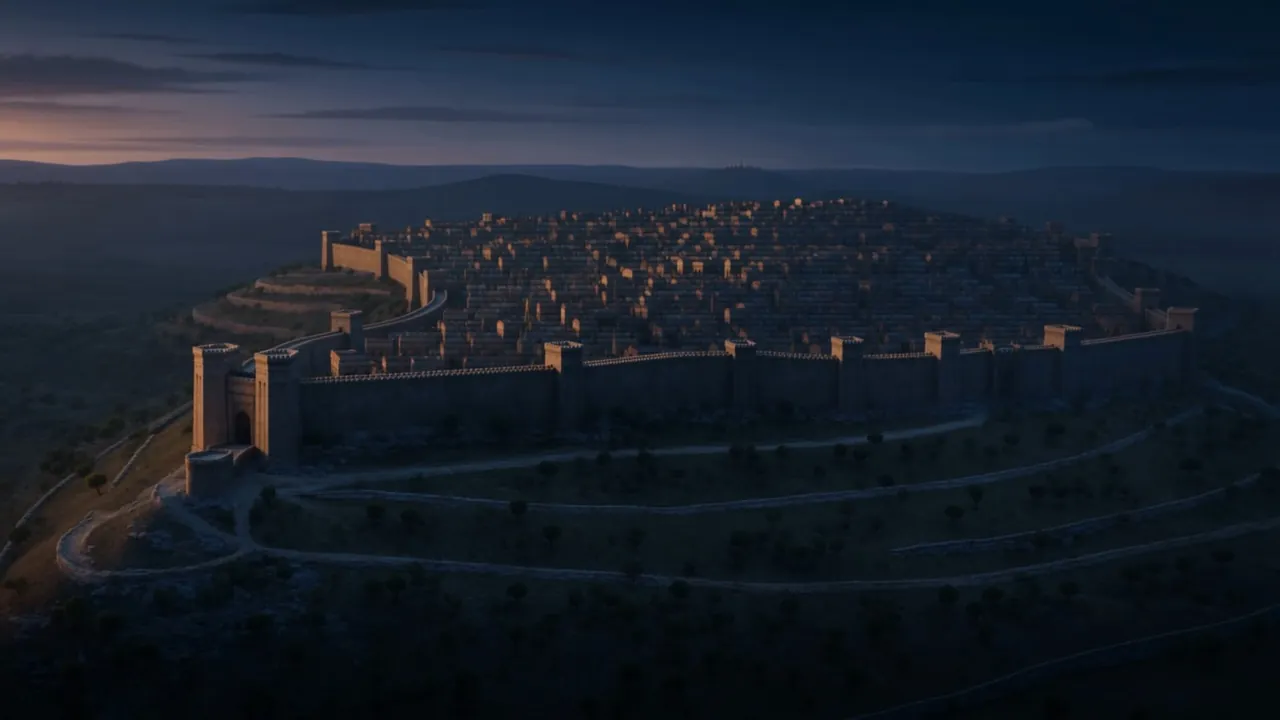
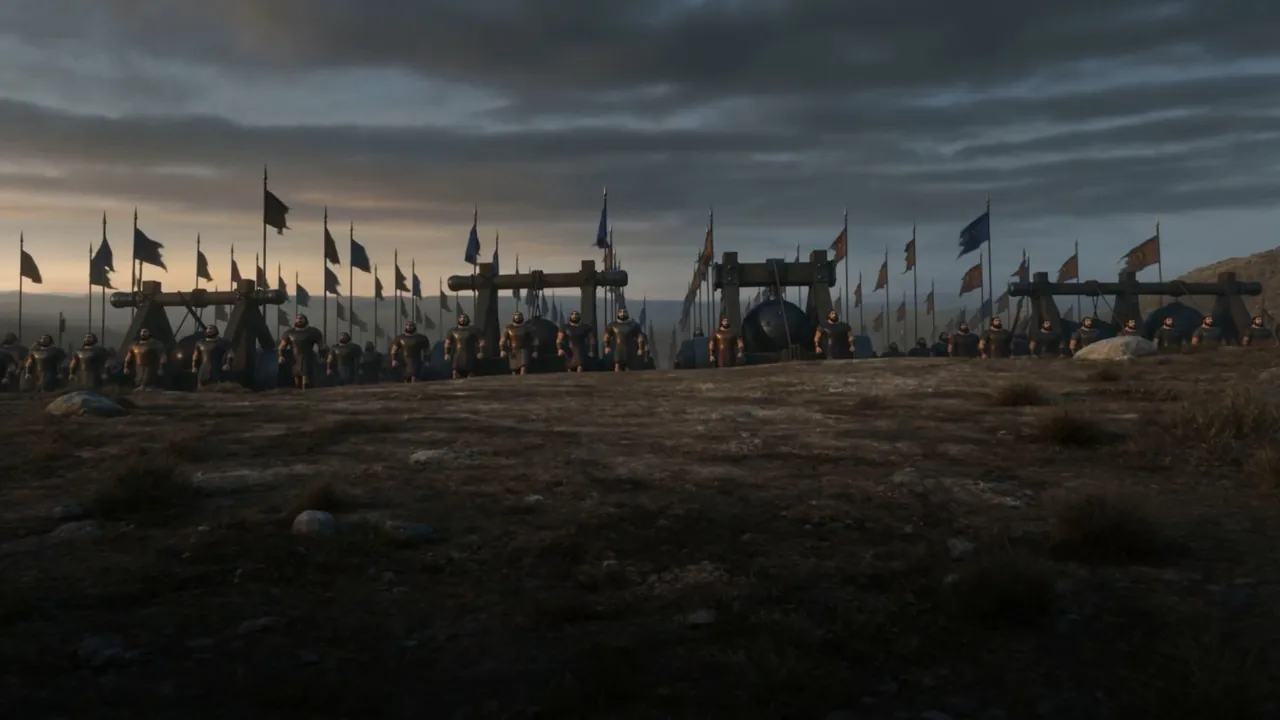
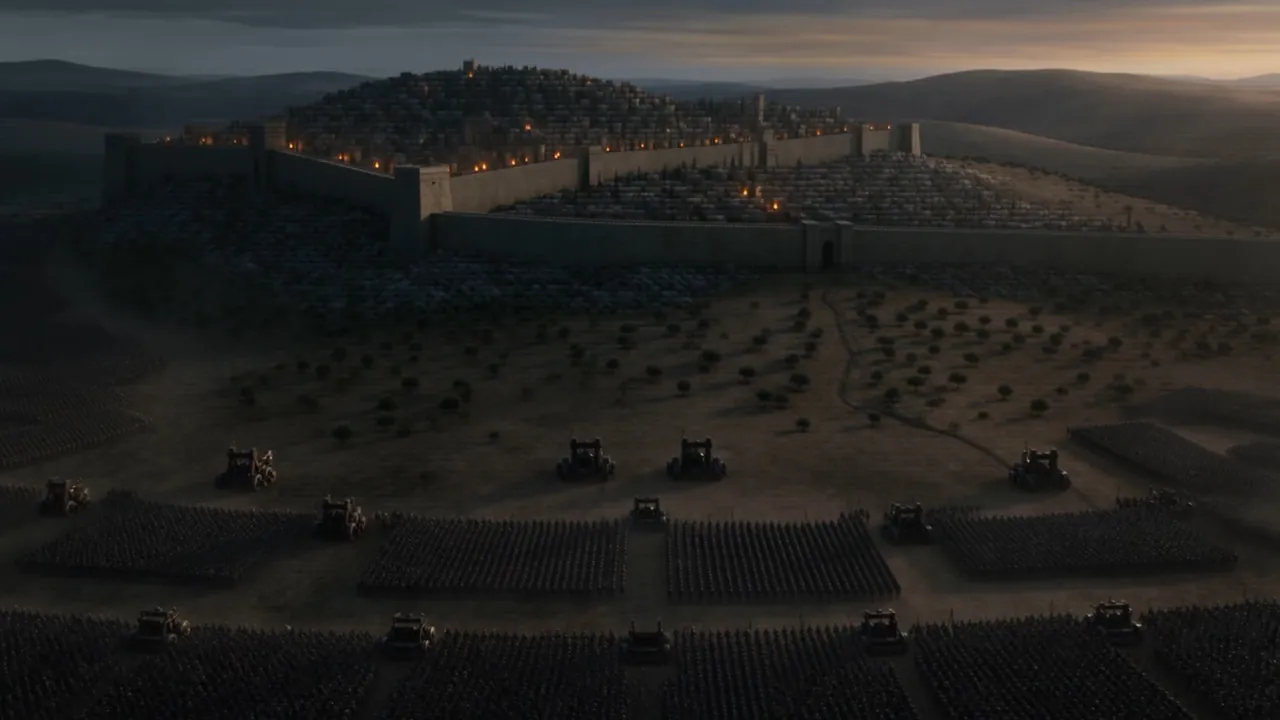
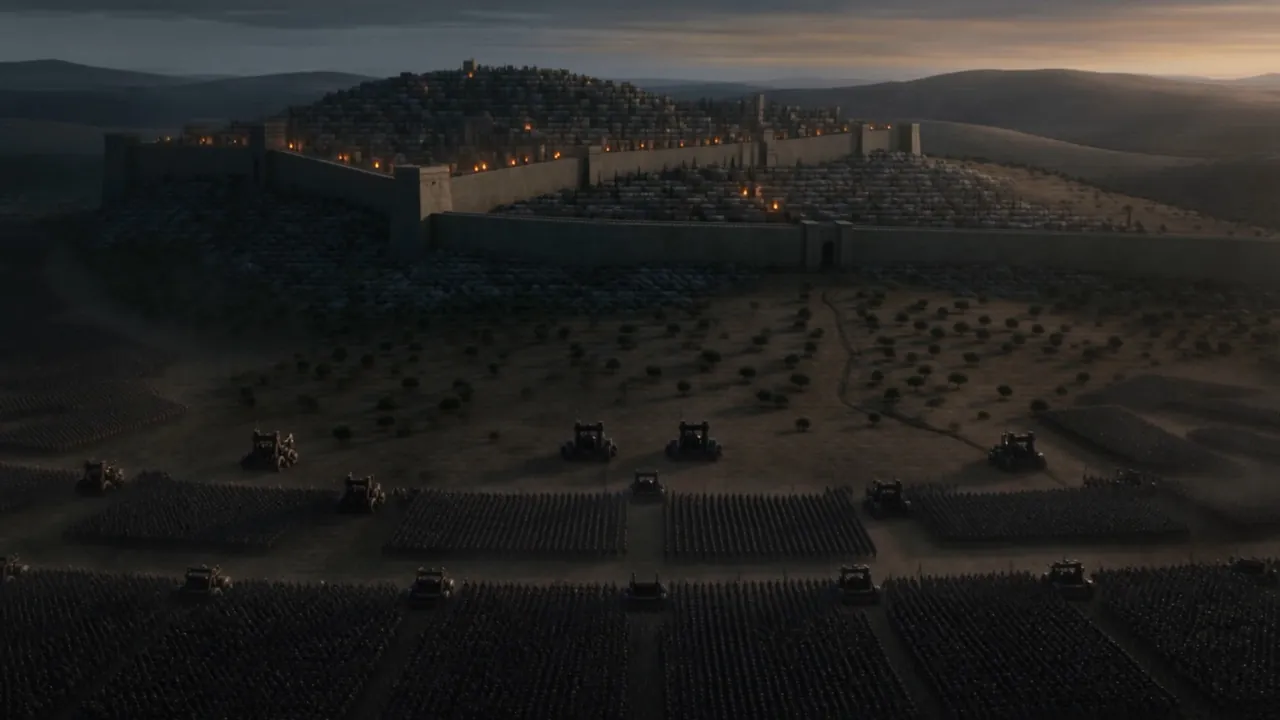
Josiah died at Megiddo, and it took twenty-two years and four kings to undo him. In the ninth year of his reign, in the tenth month, Nebuchadnezzar king of Babylon came, he and all his army, against Jerusalem, and encamped against it; and they built forts against it round about. 2 Kings 25 : 1
Nebuchadnezzar came up against the city.
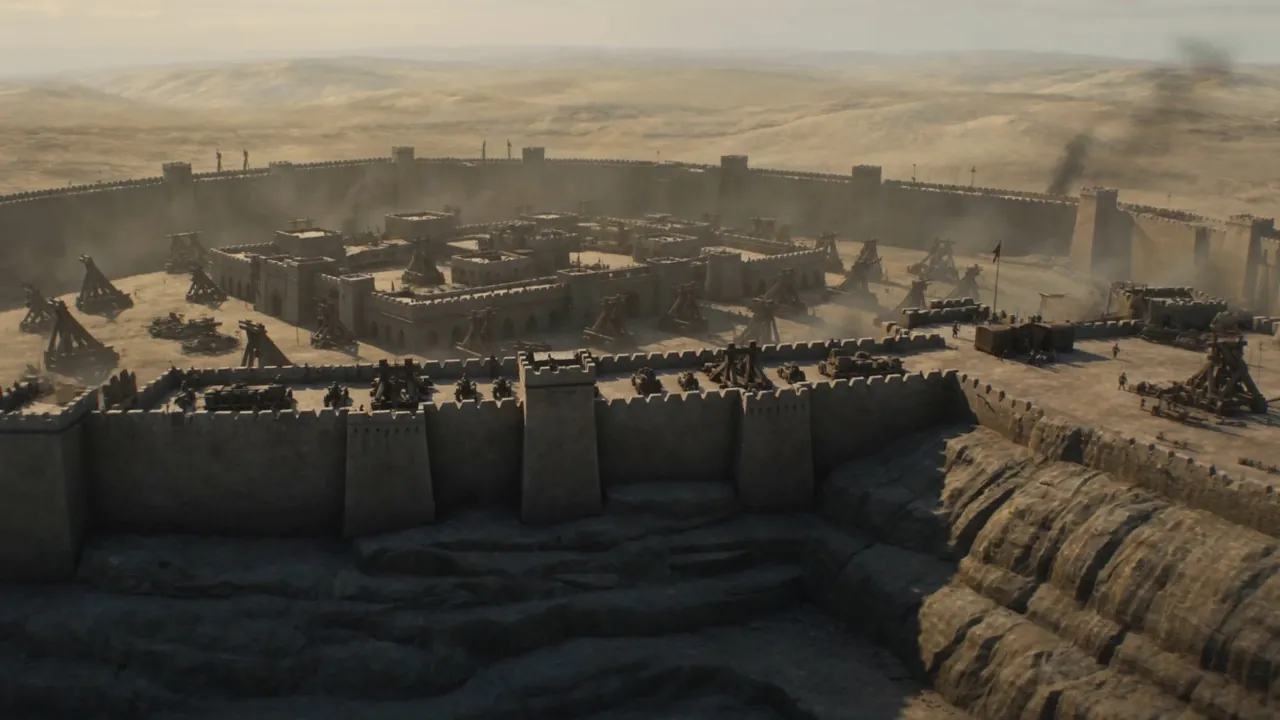
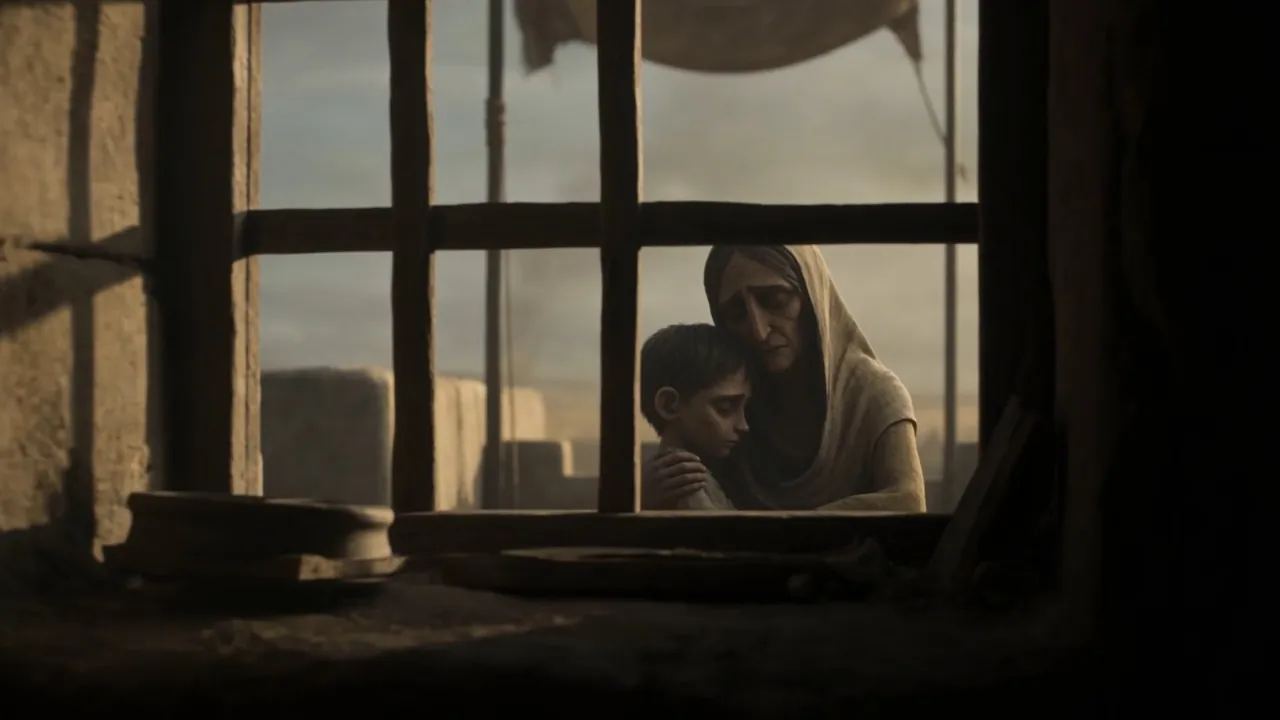
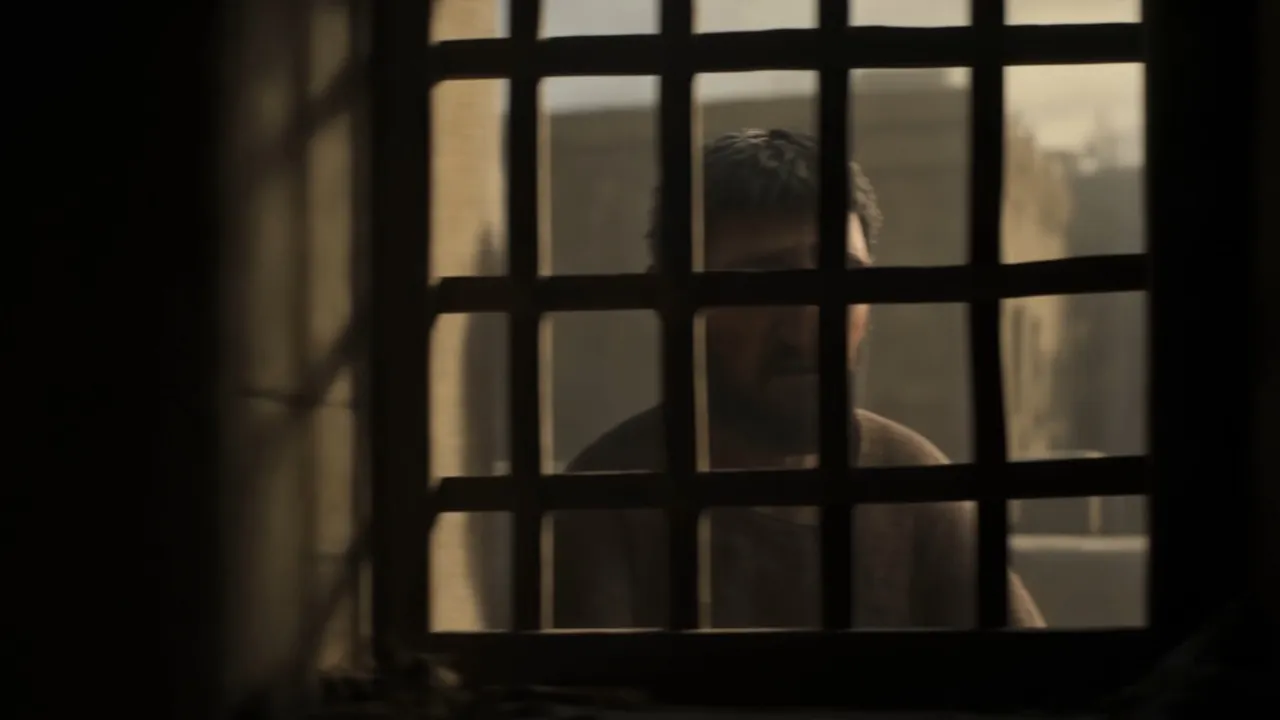
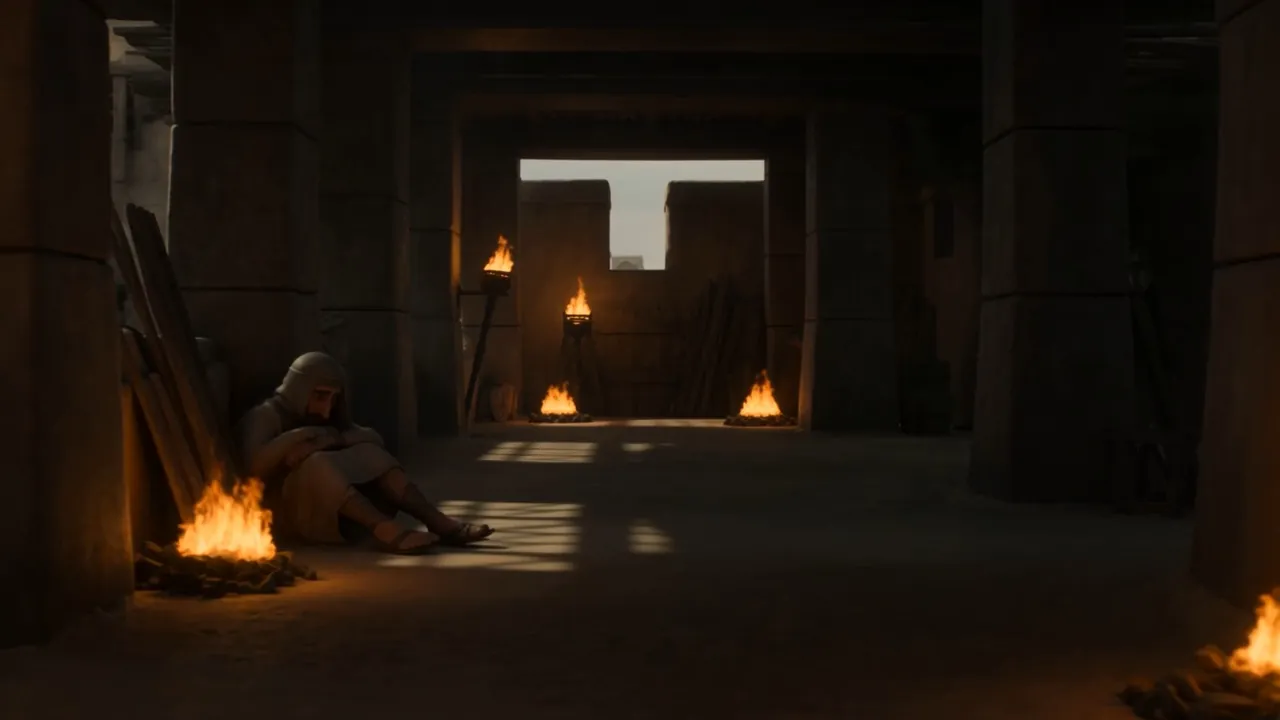
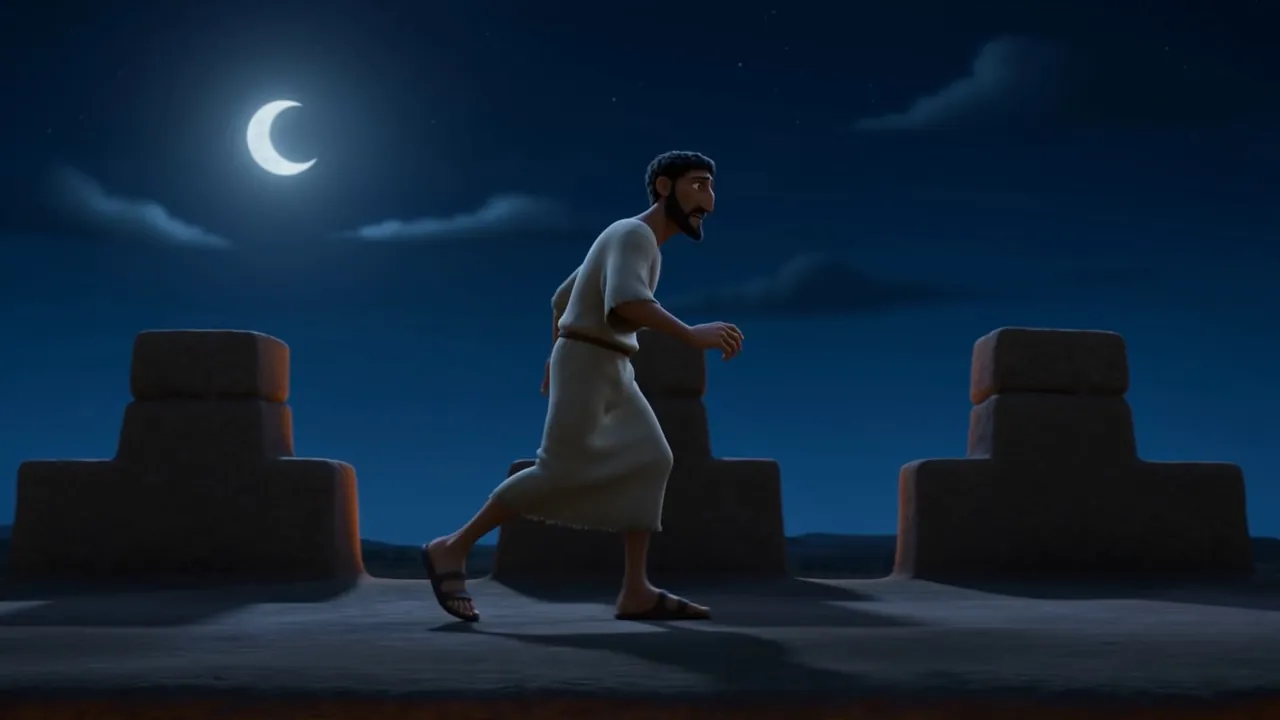

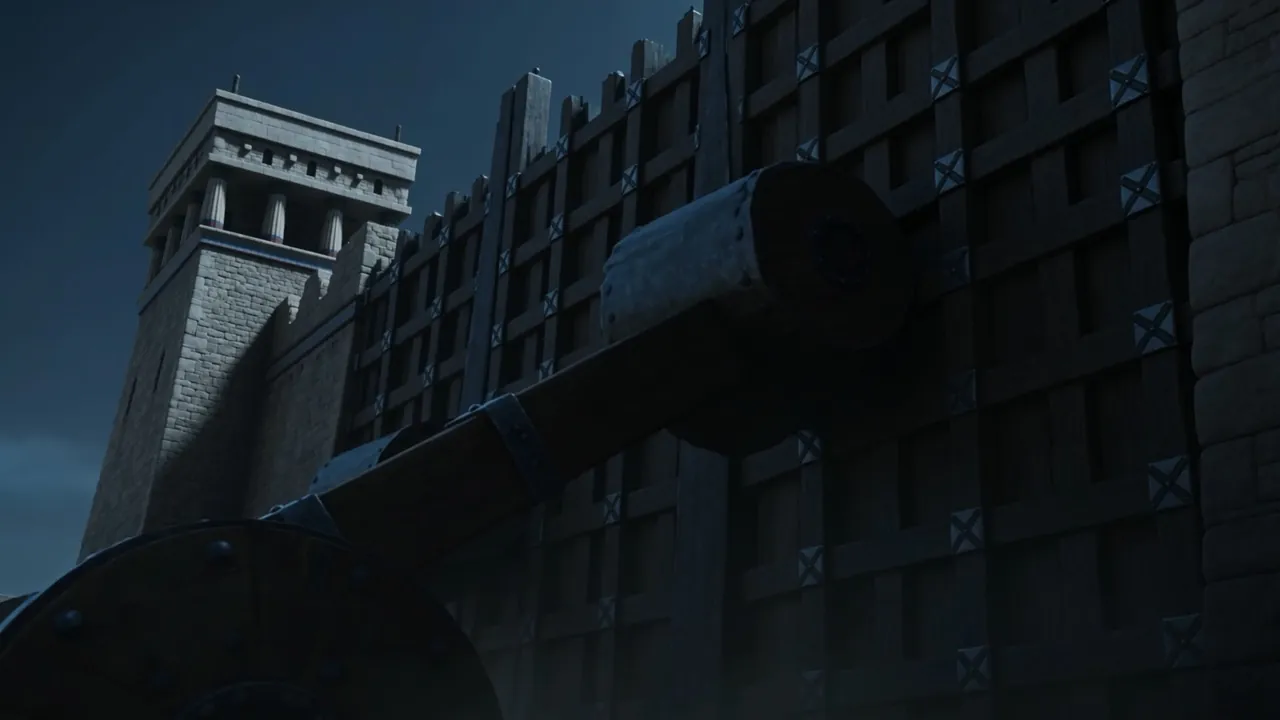
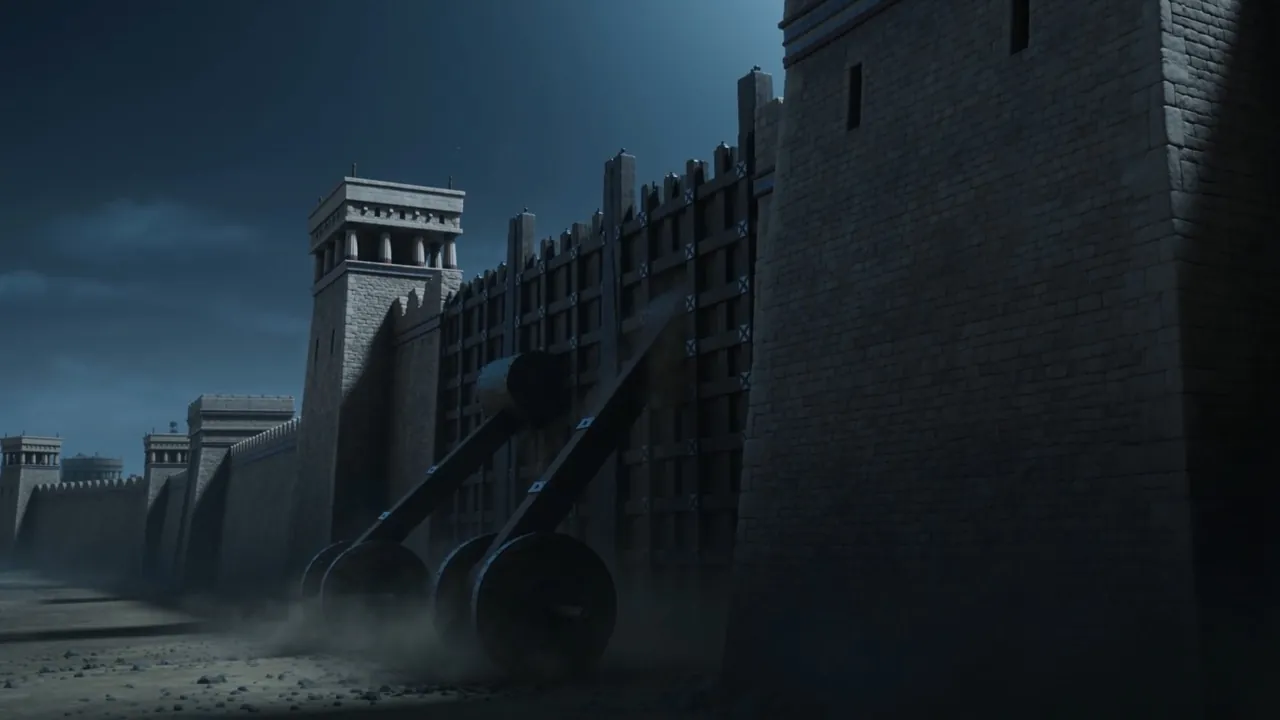
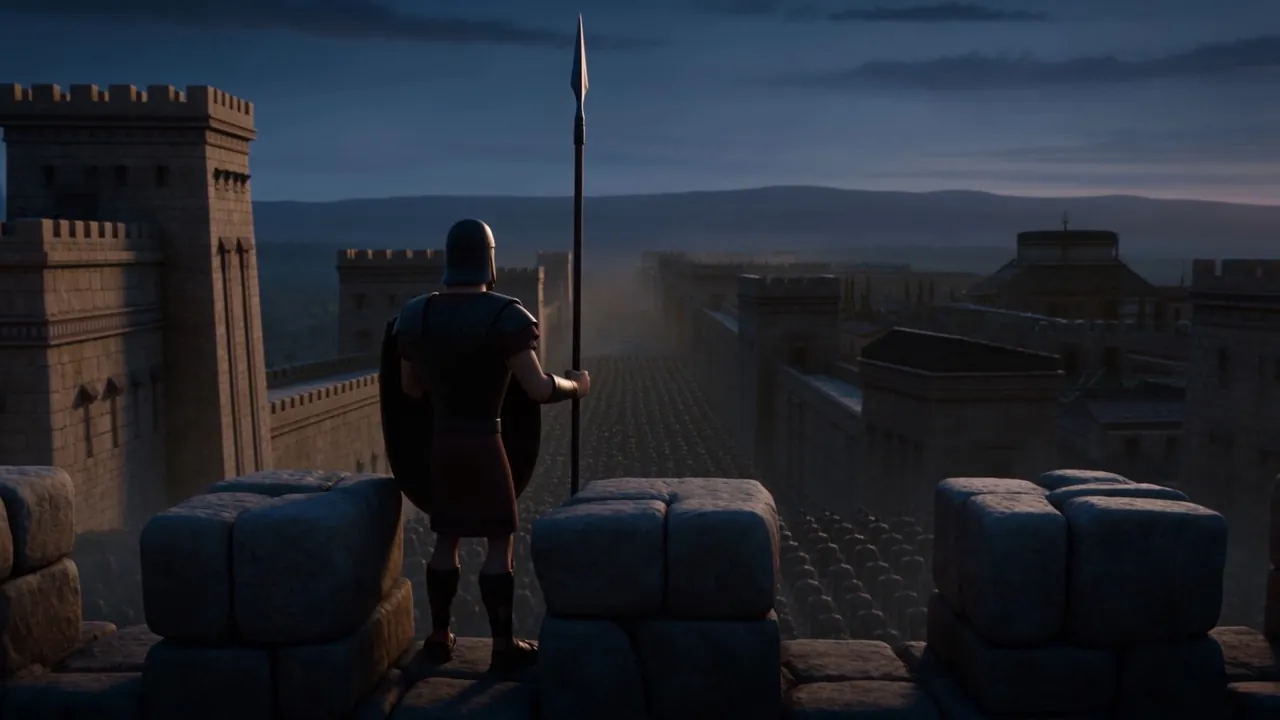
So the city was besieged to the eleventh year of king Zedekiah. Thirty months. Nothing else is happening anywhere, because nothing was: the whole of this stretch is people at windows, a ramp getting slowly higher, and a man on a wall at three in the morning who has run out of ideas. 2 Kings 25 : 2
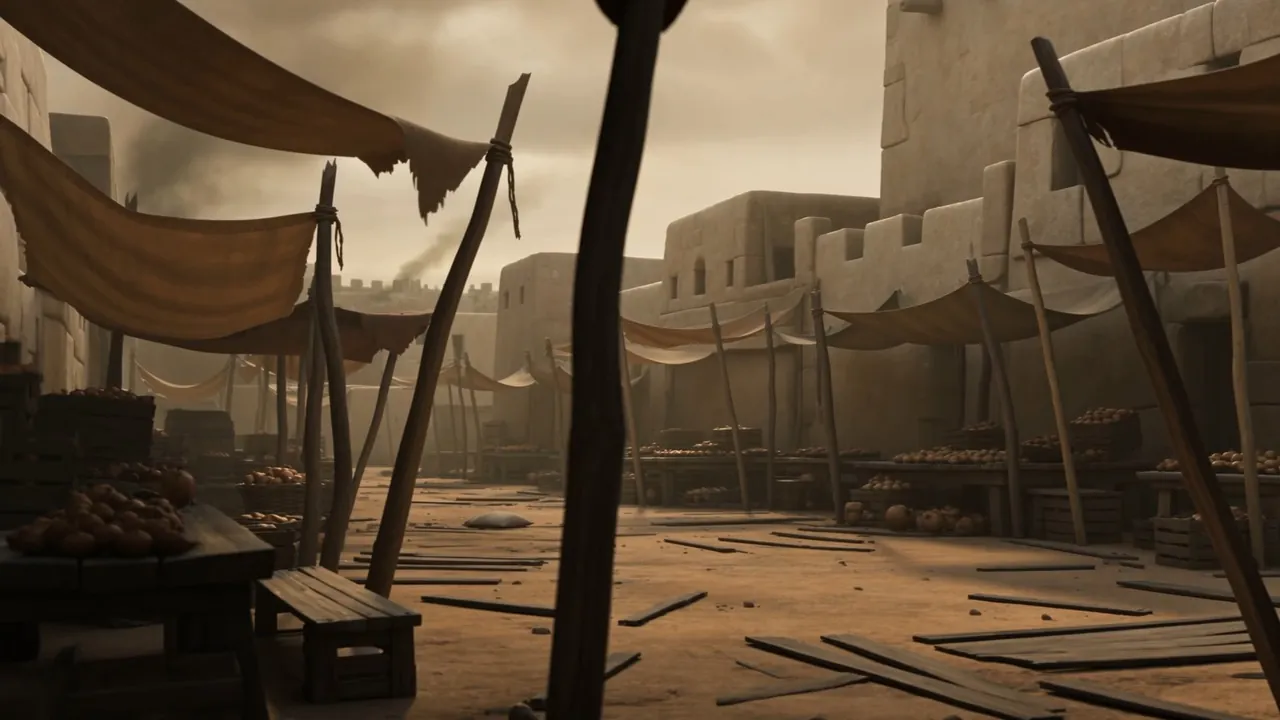
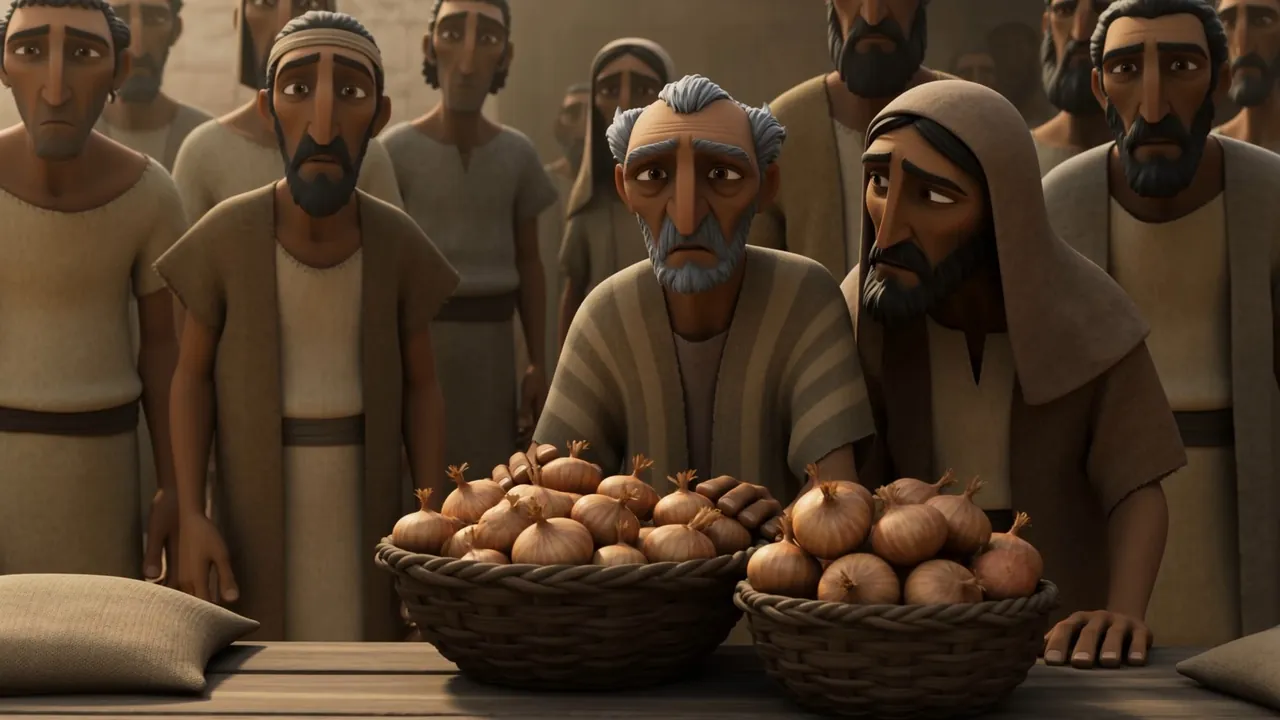
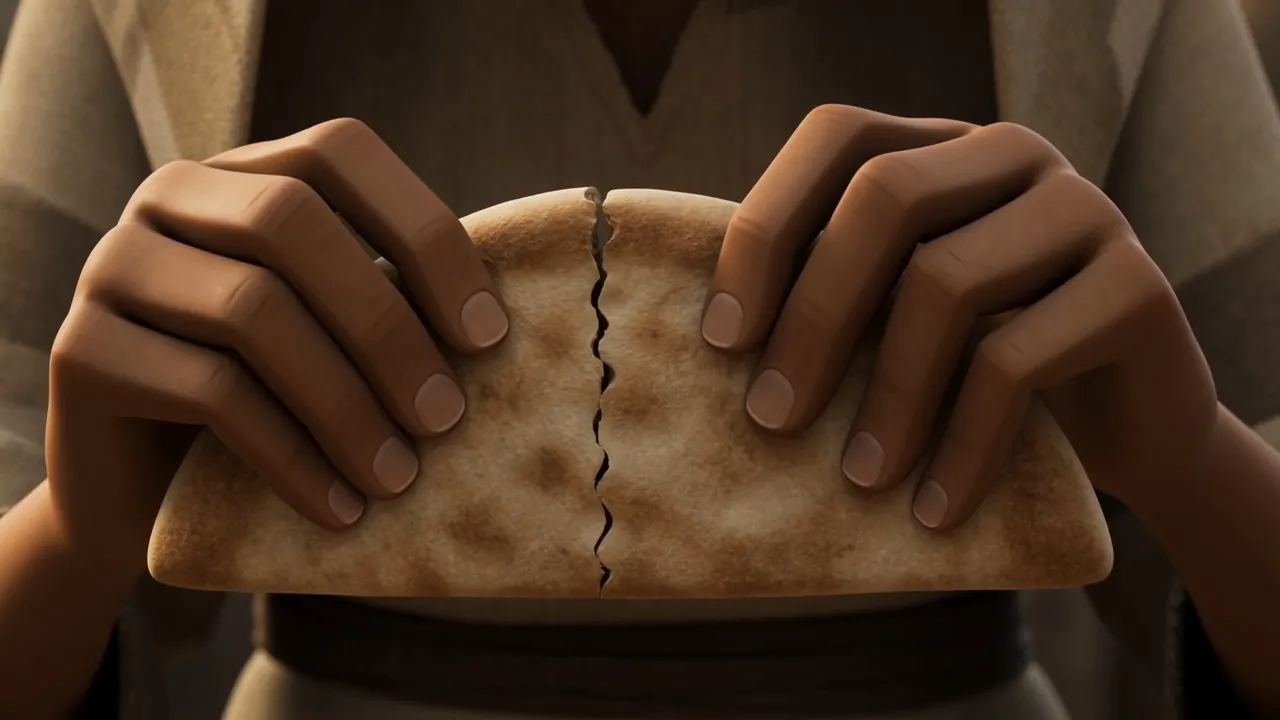

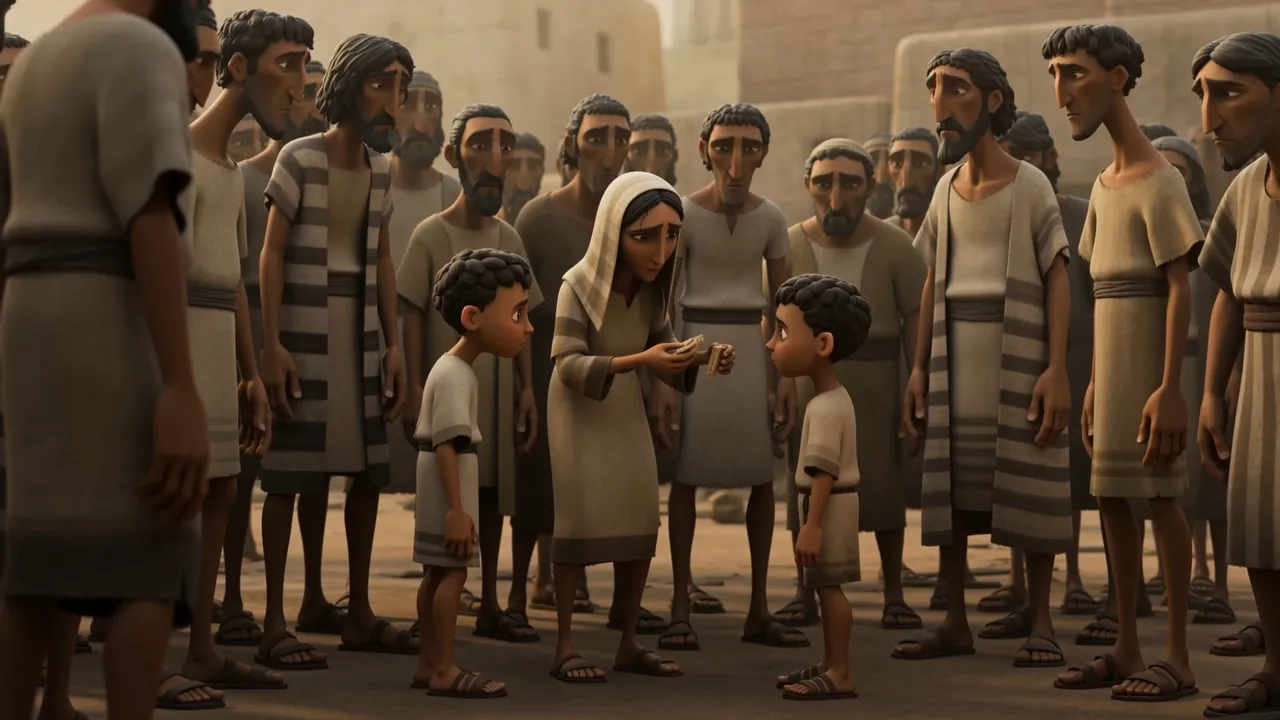
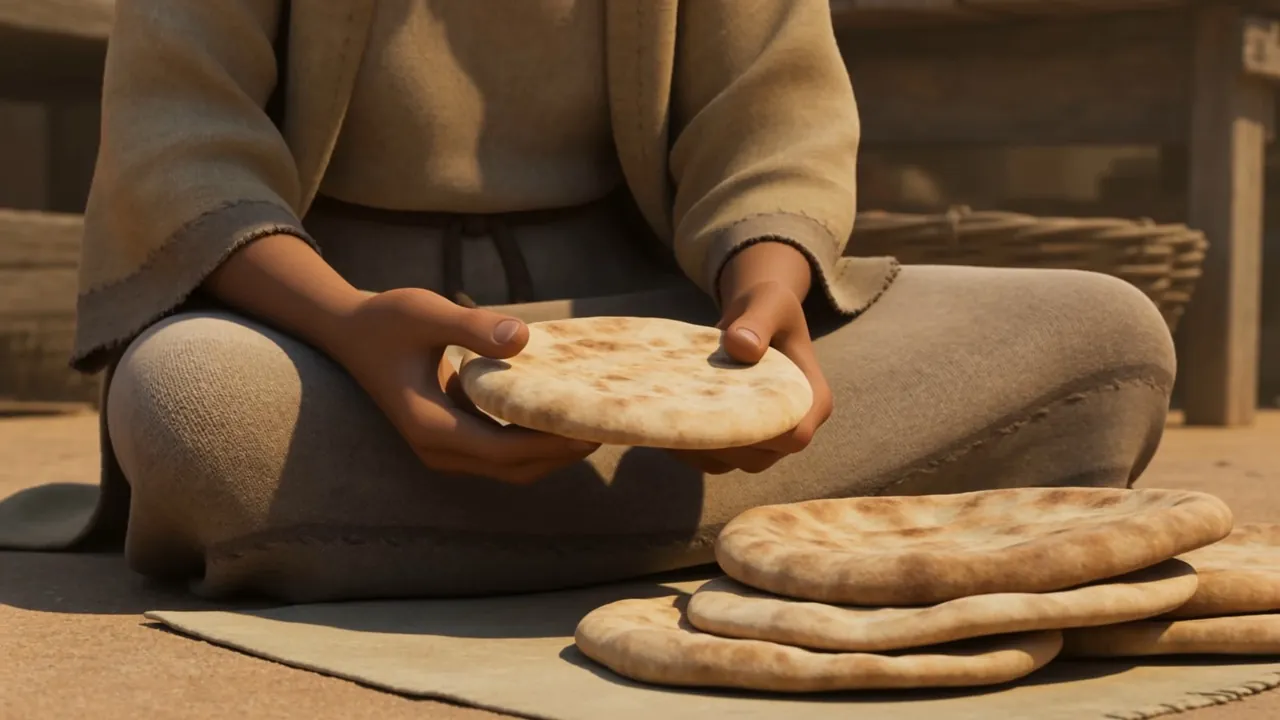
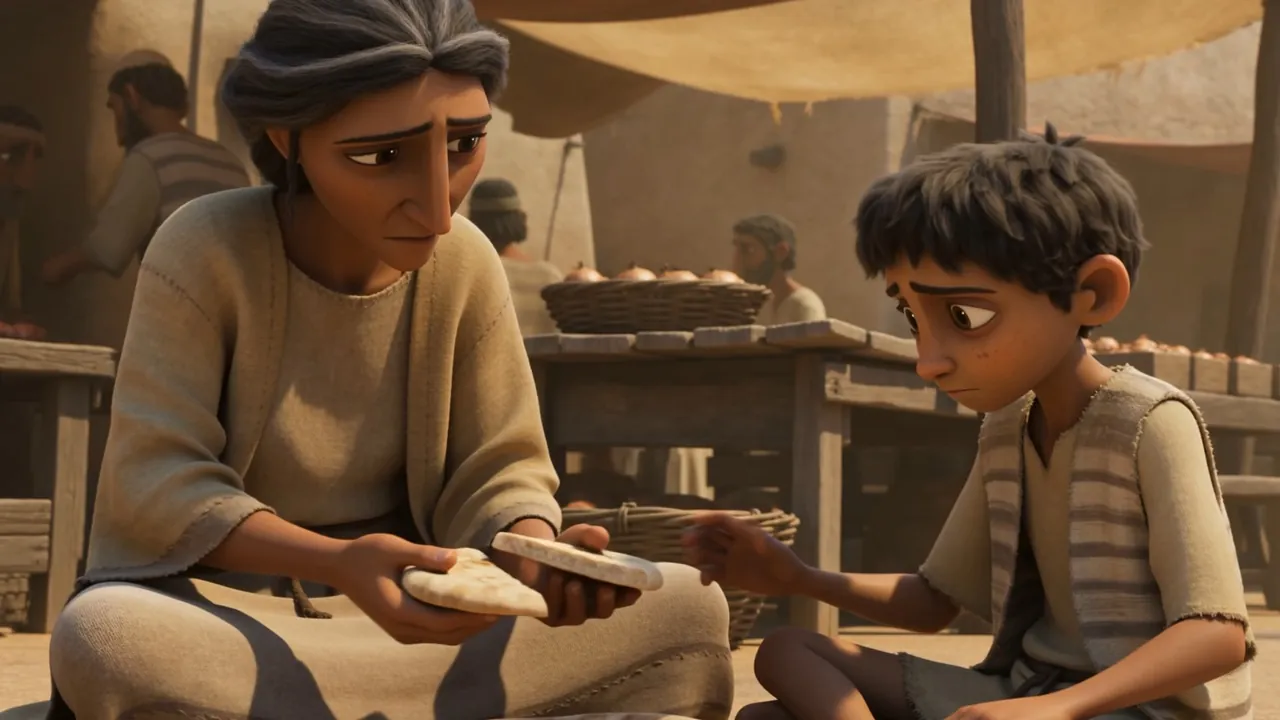
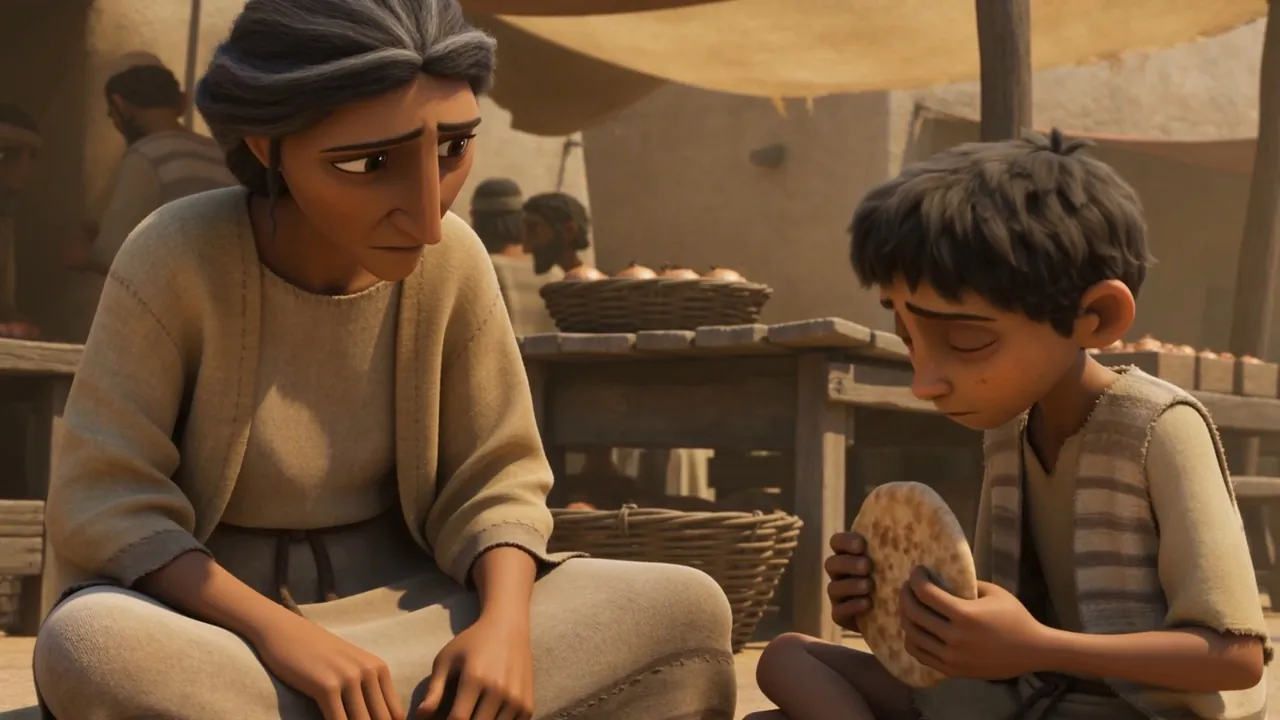
On the ninth day of the fourth month the famine was severe in the city, so that there was no bread for the people of the land. The famine shows itself as manners: nobody grabs, nobody shouts, one loaf gets divided very precisely, and a boy is given a piece and holds it with both hands. 2 Kings 25 : 3
There was no bread for the people of the land.
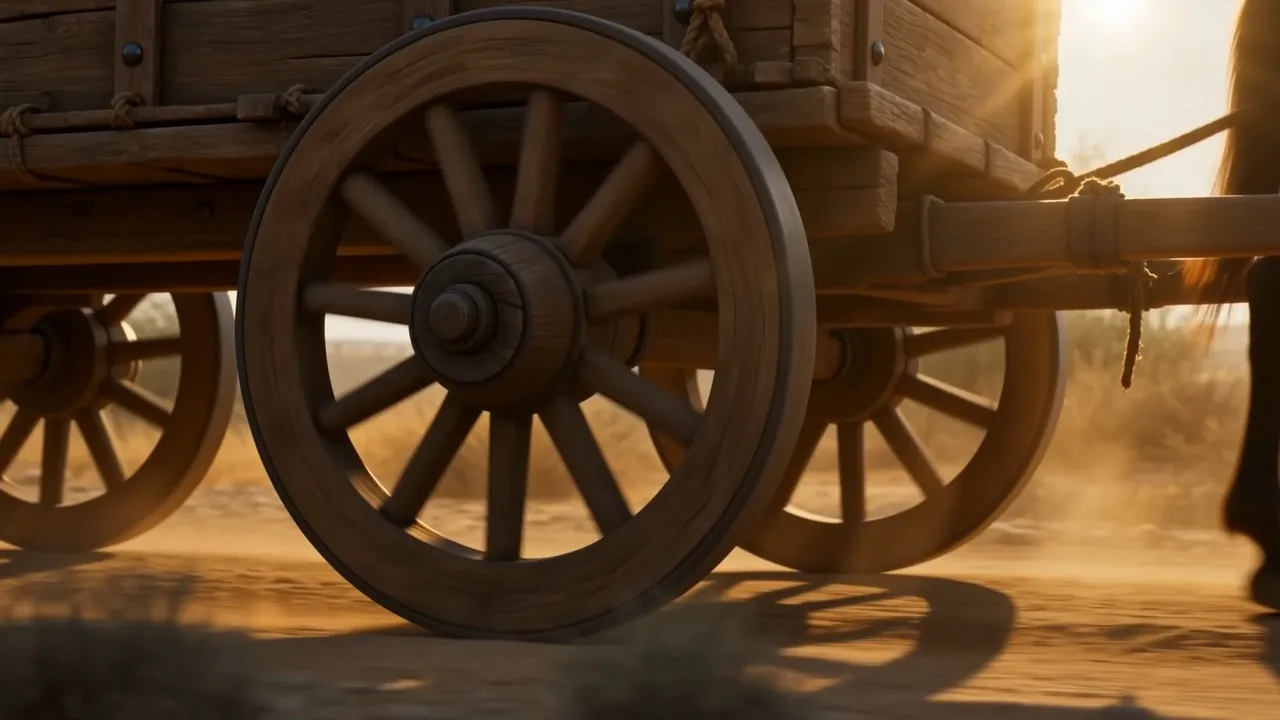
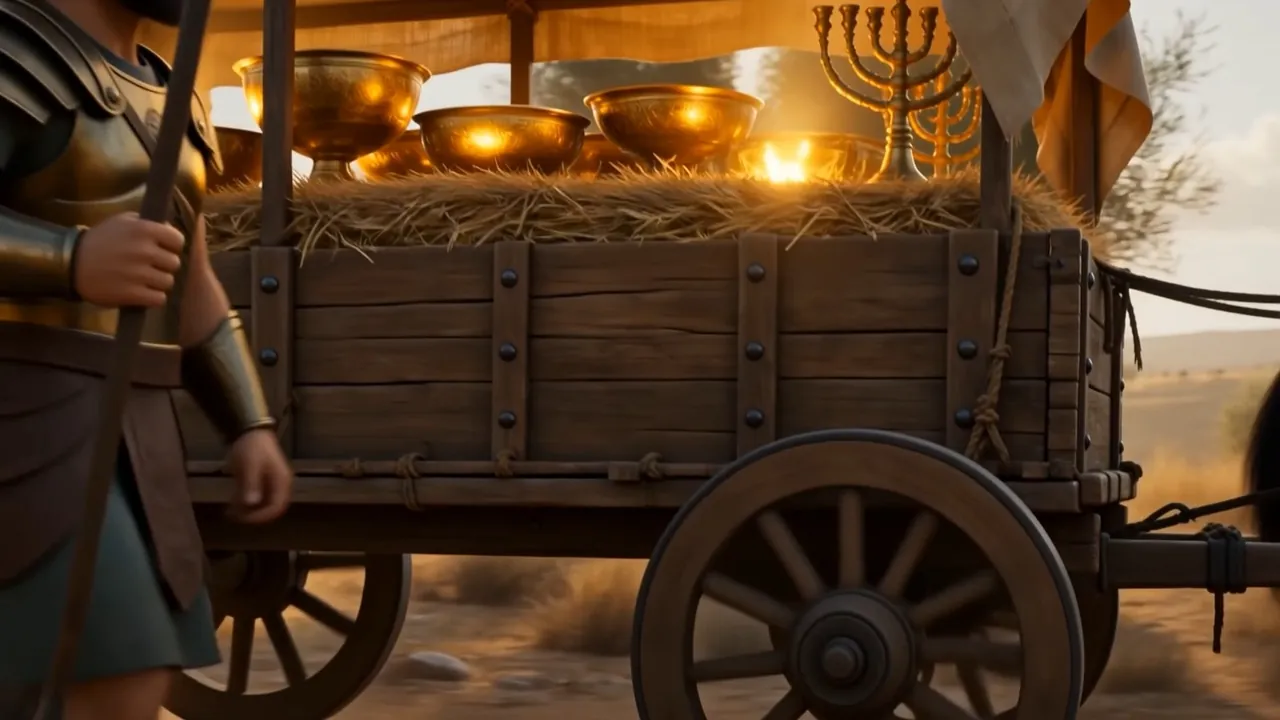
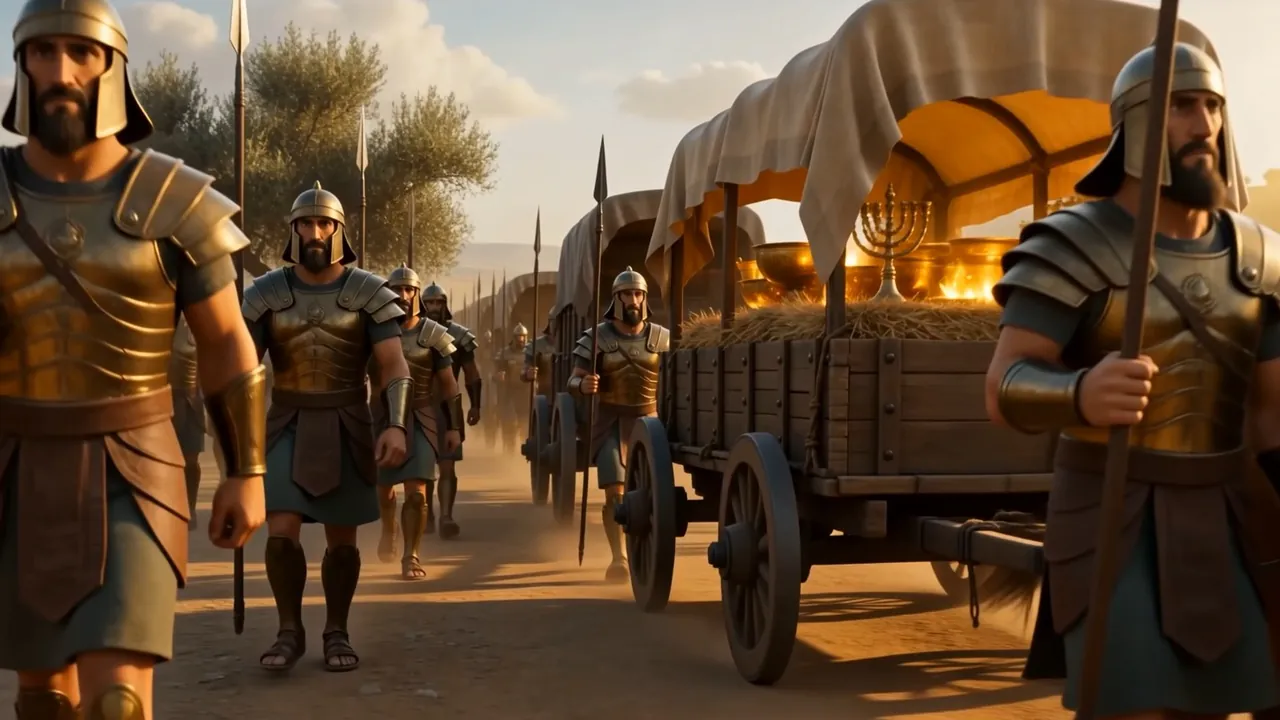


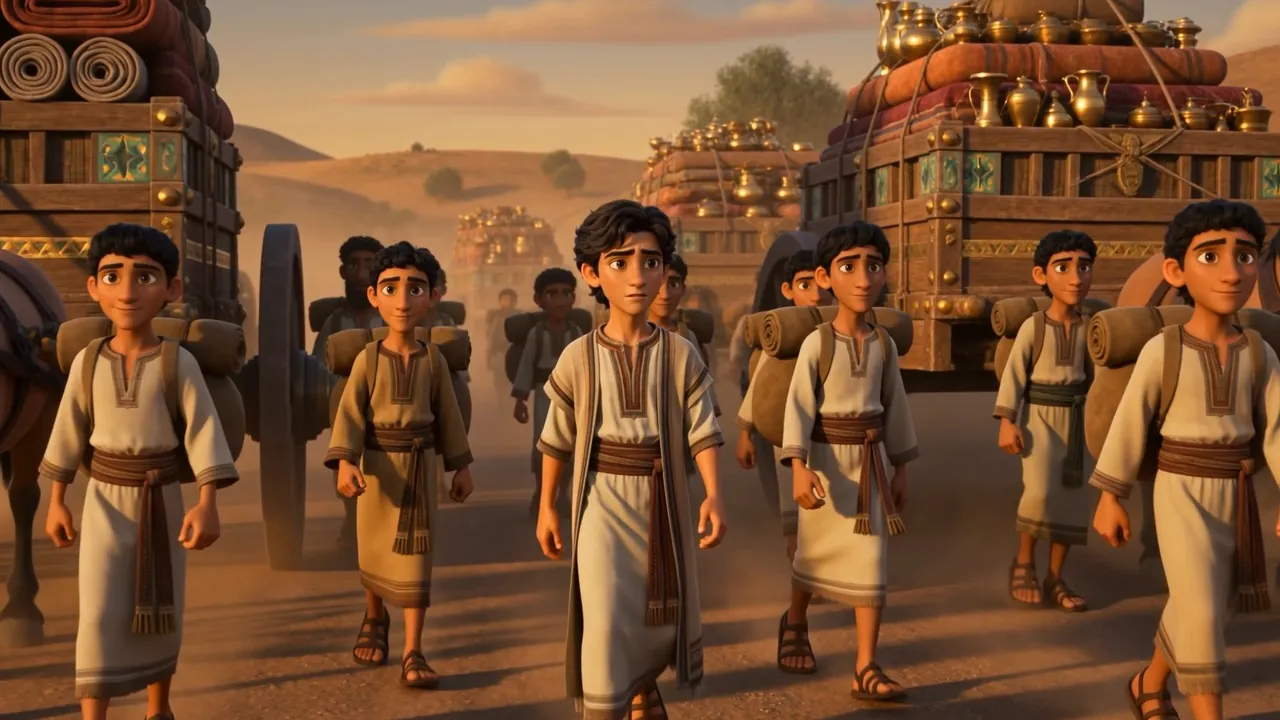

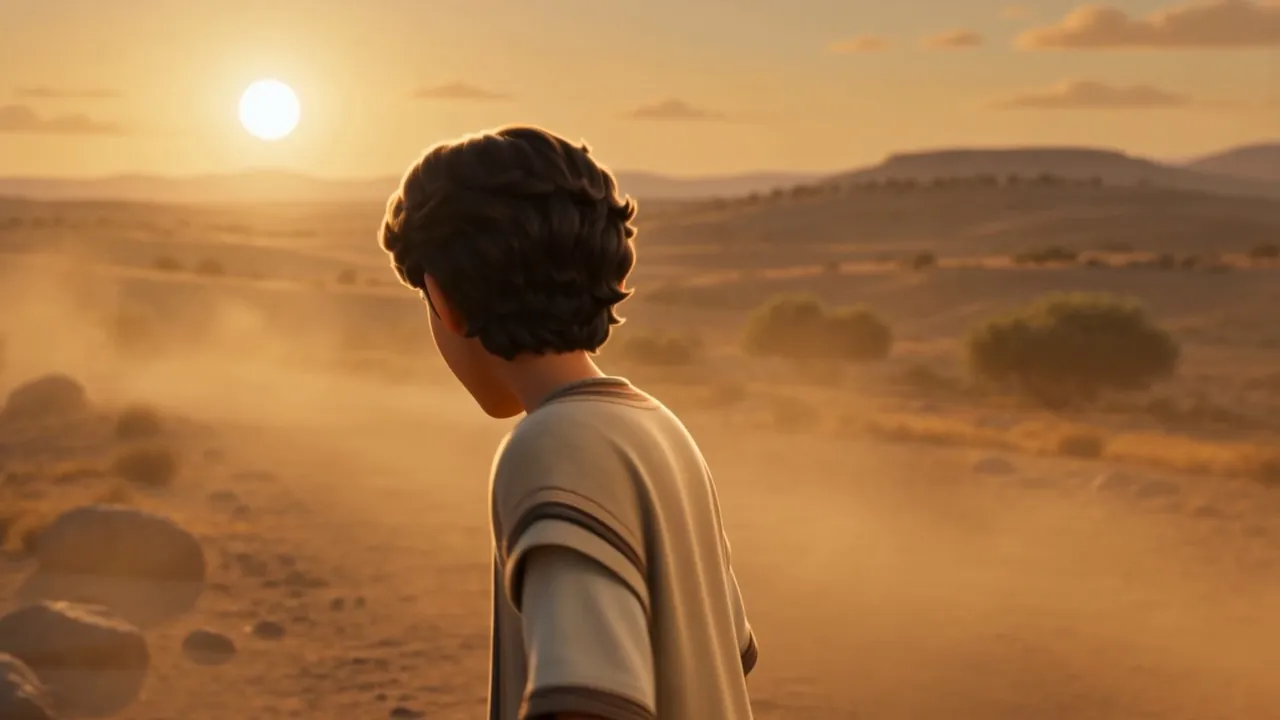

This had happened once already. Eleven years earlier Nebuchadnezzar had taken Jehoiachin, the craftsmen, the soldiers and the treasure, and left a puppet on the throne. That first deportation surfaces here as a memory — the carts, and one young man on the road who cannot stop turning round. 2 Kings 24 : 10–16
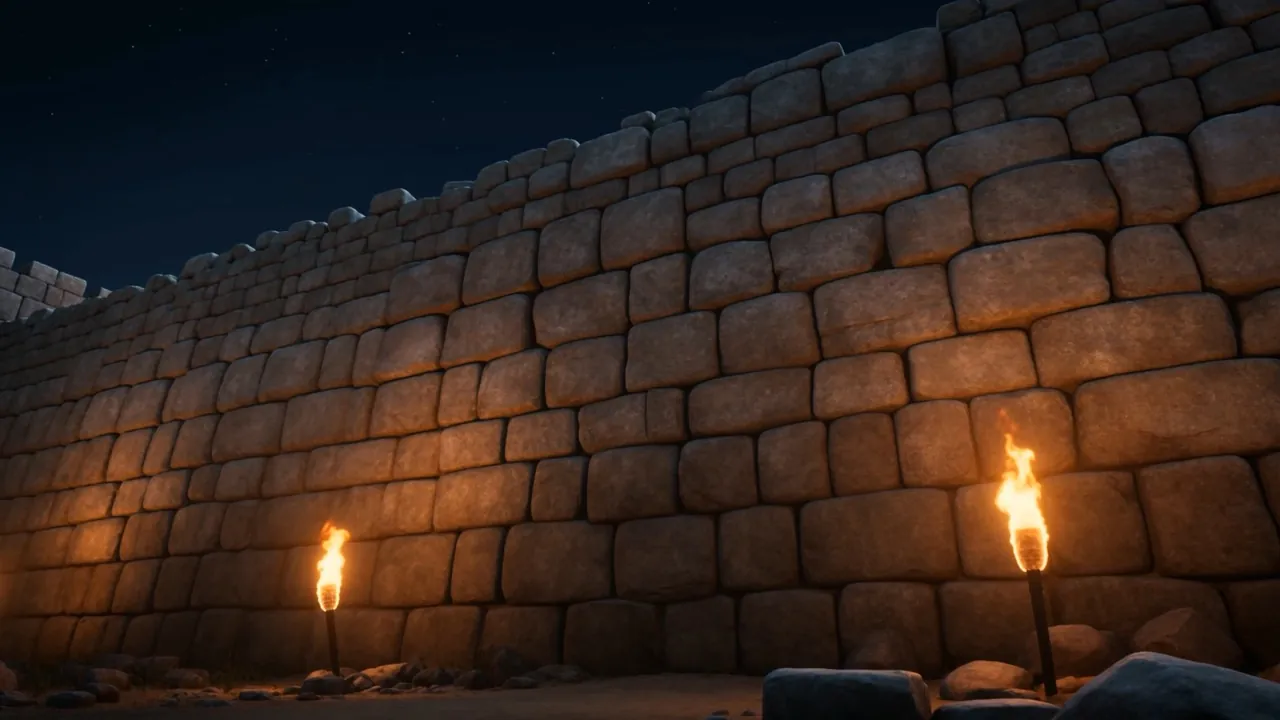
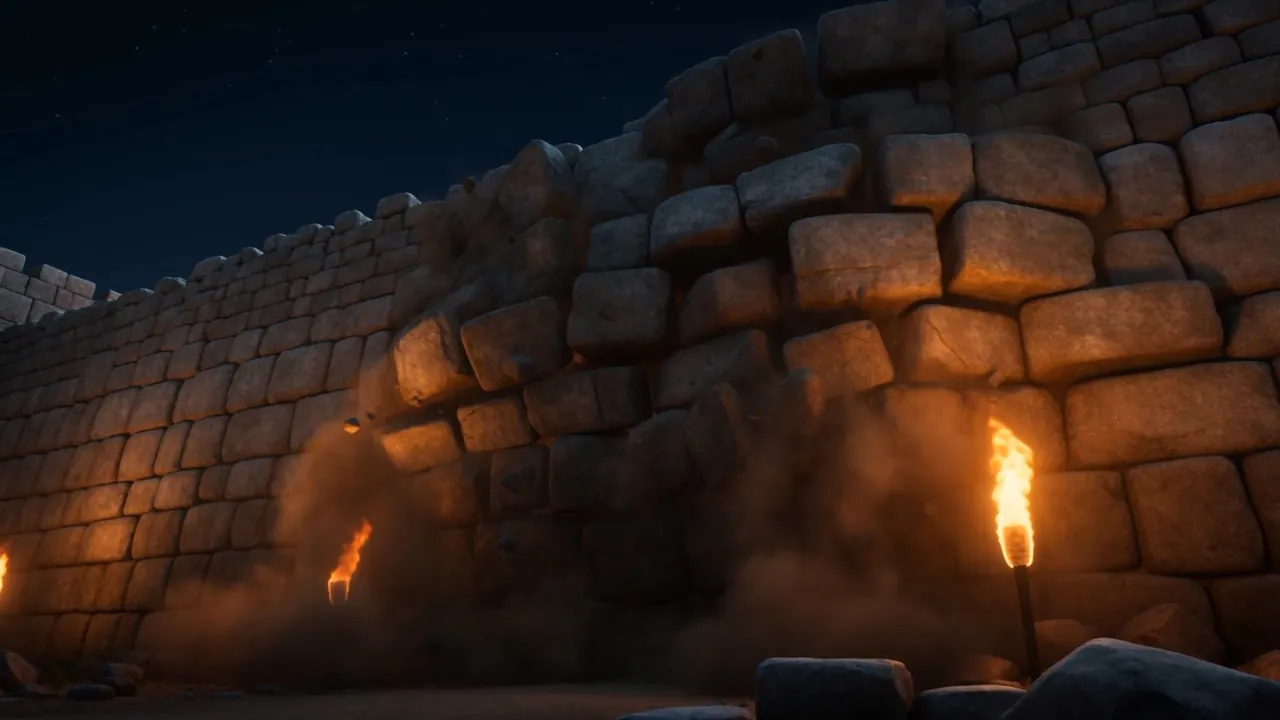
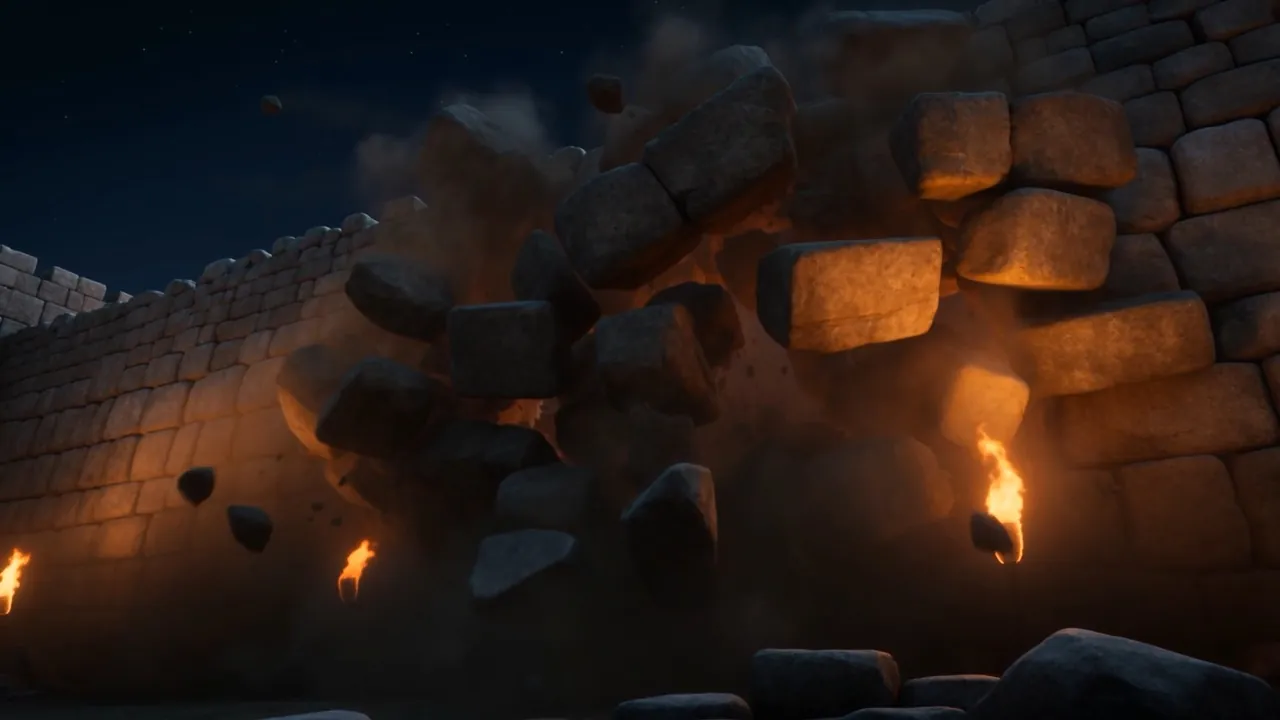
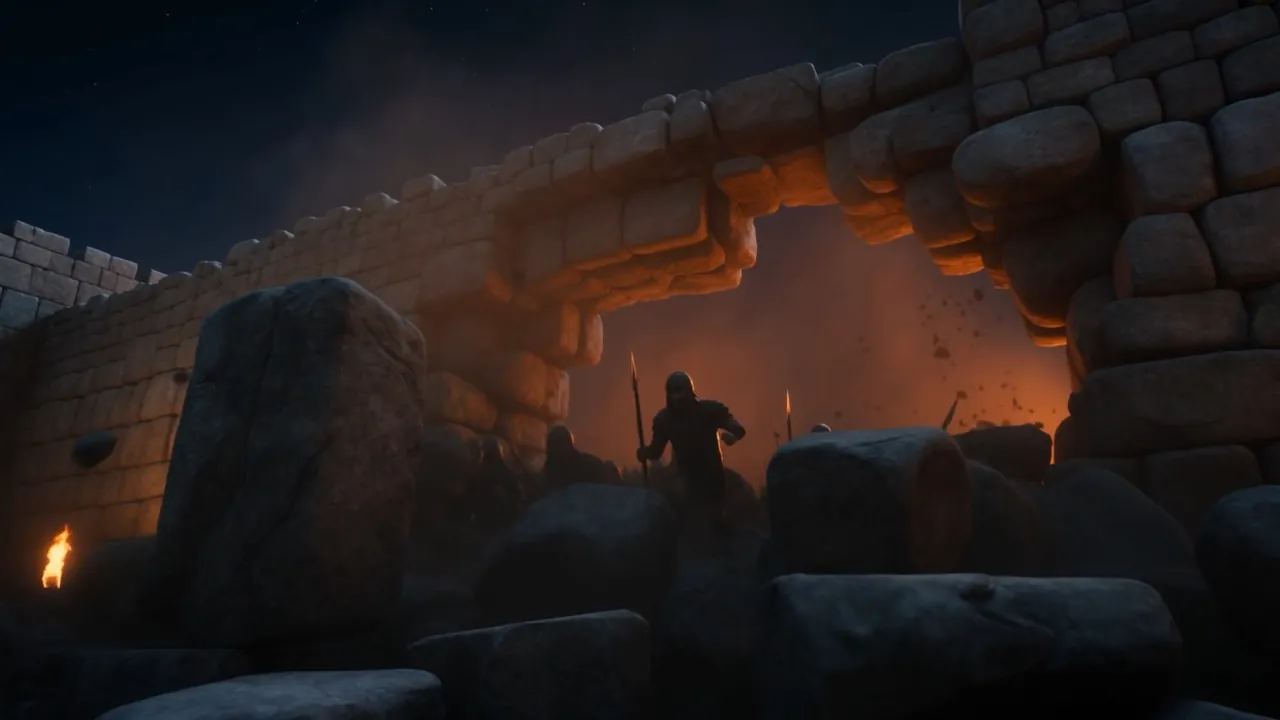
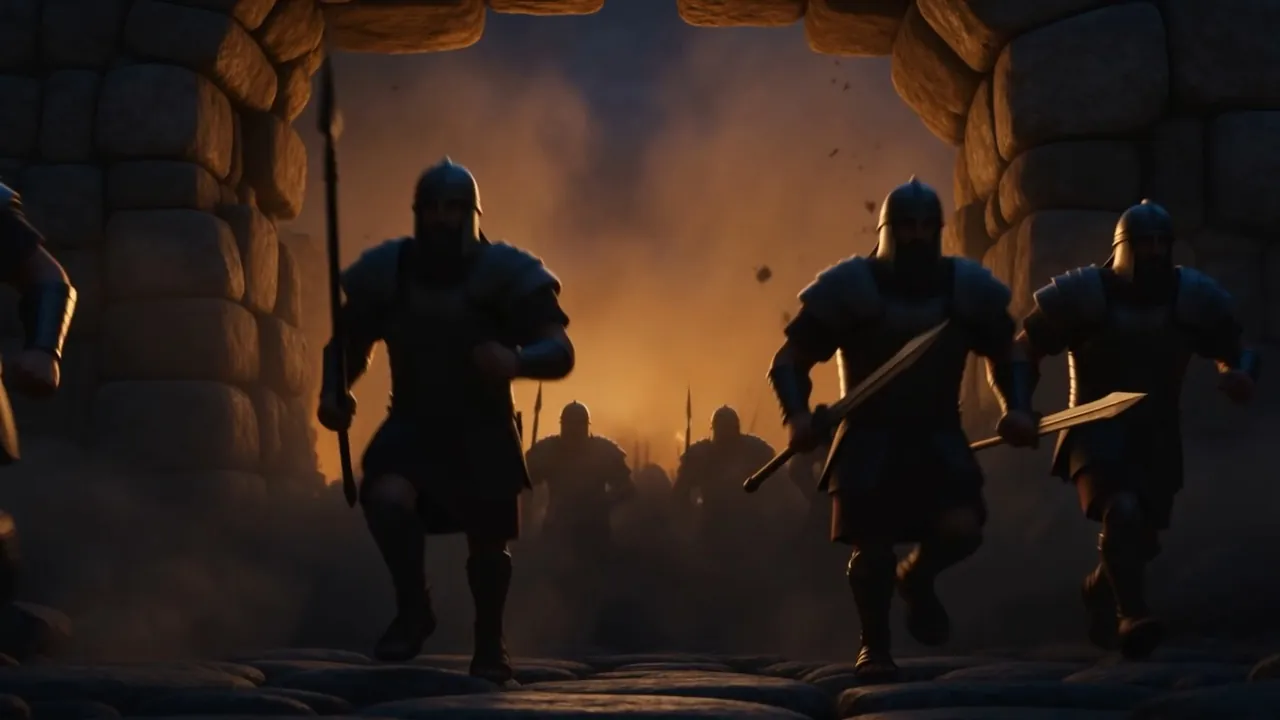
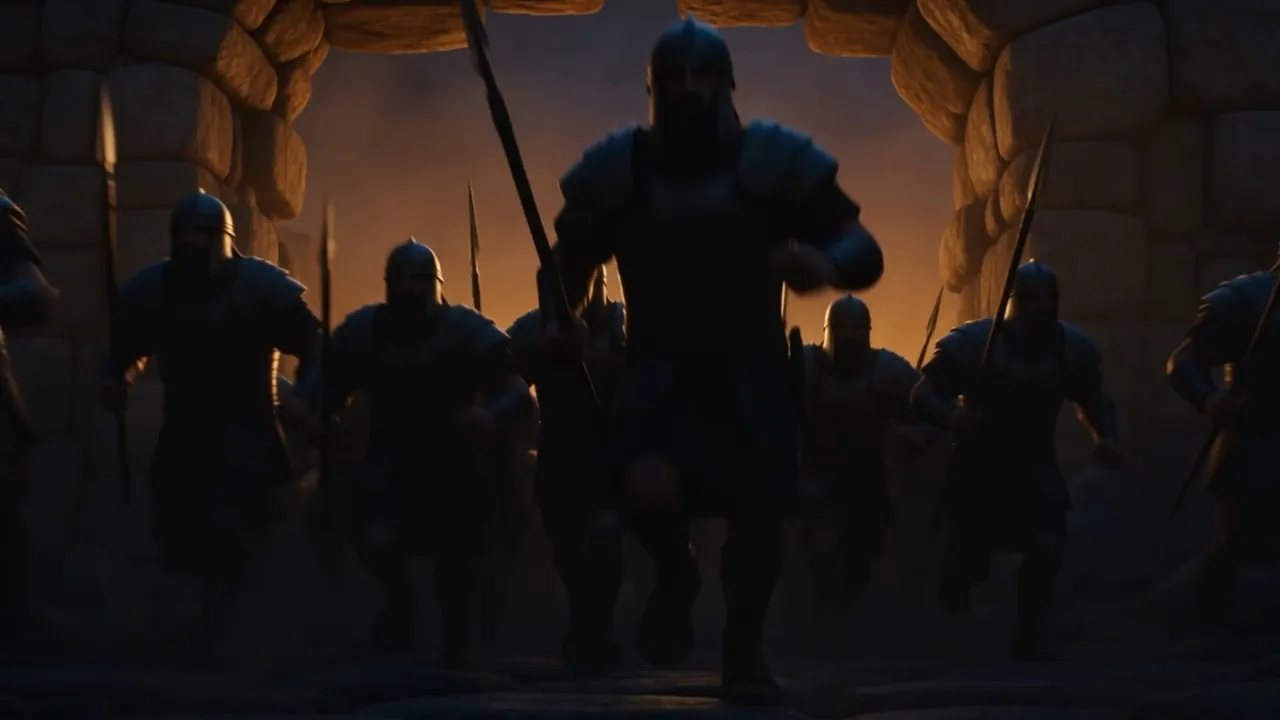
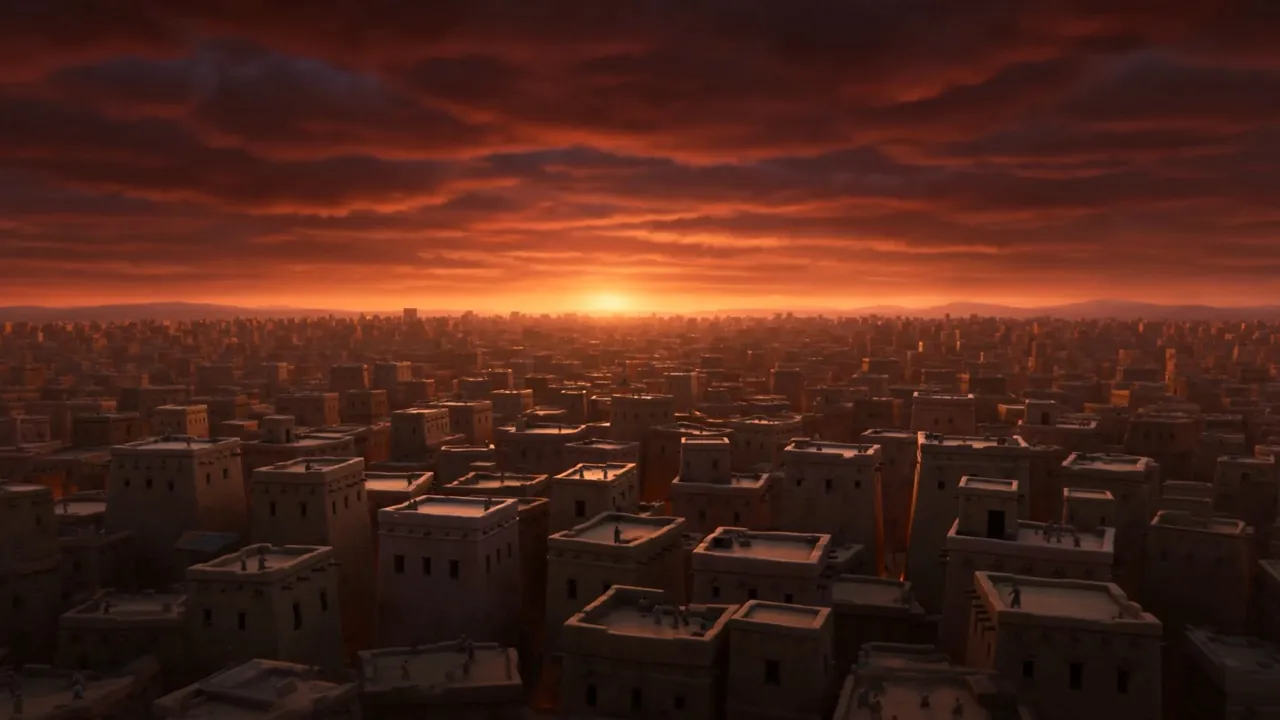

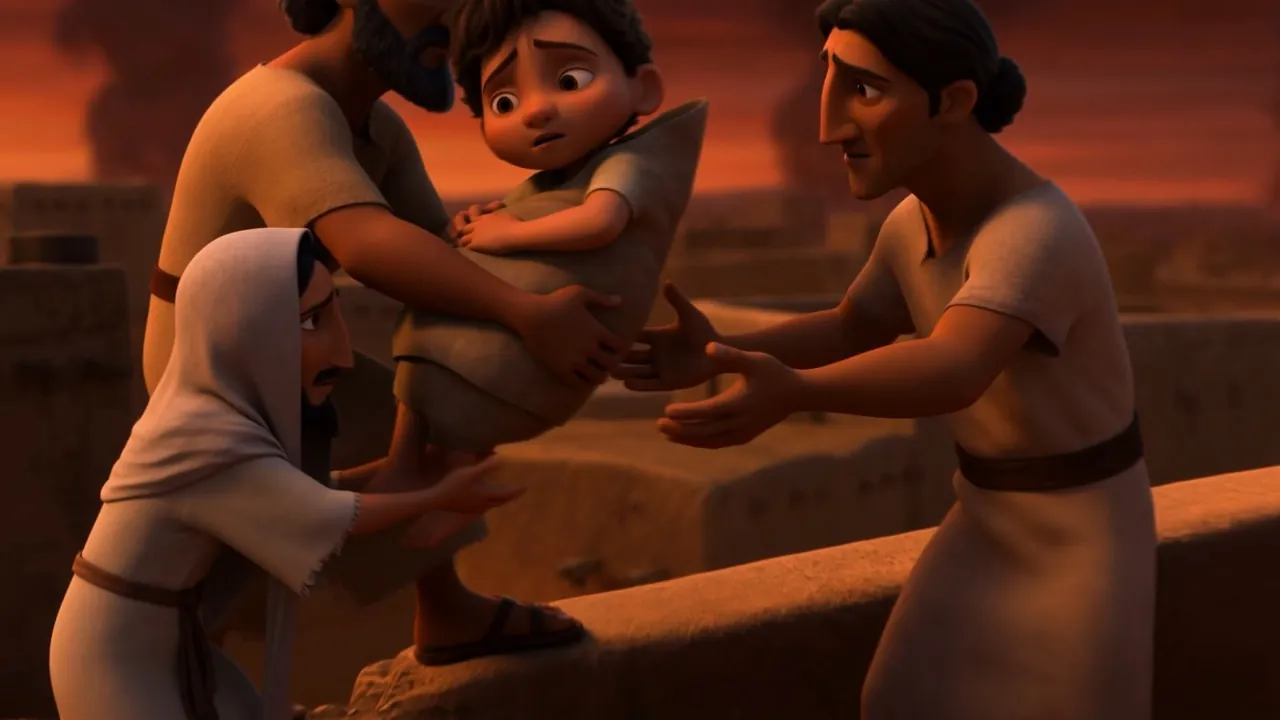
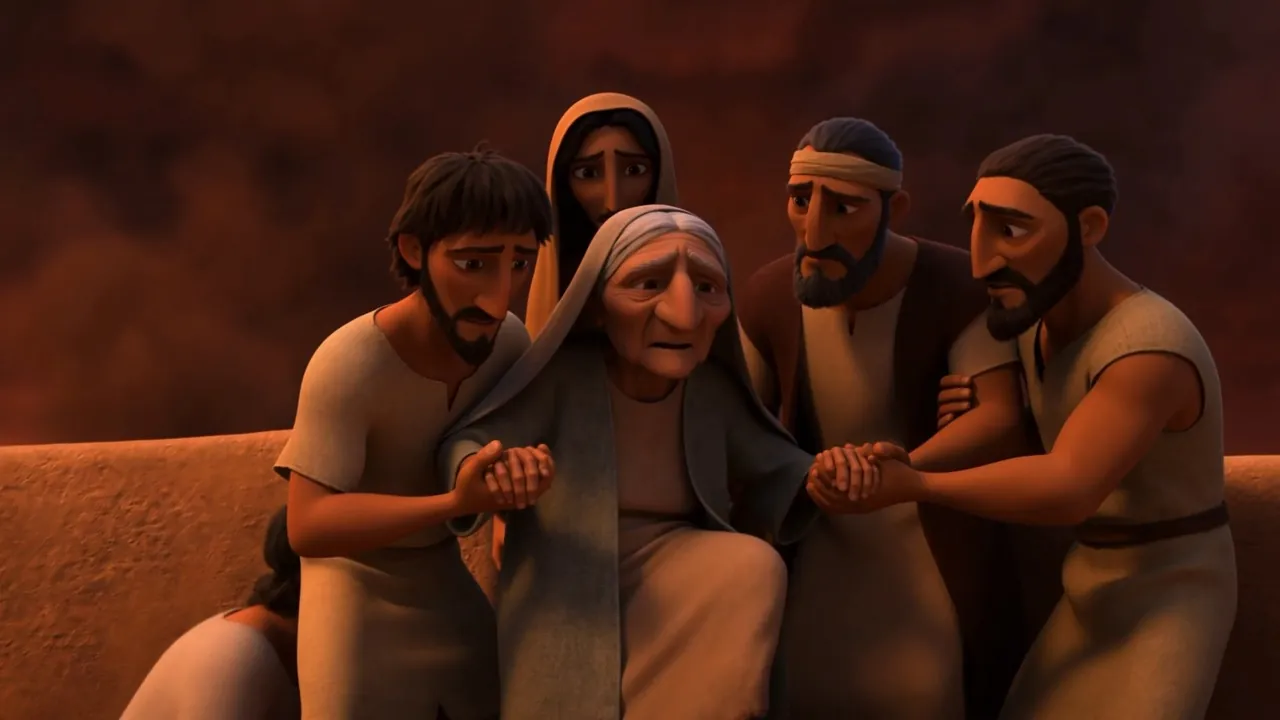
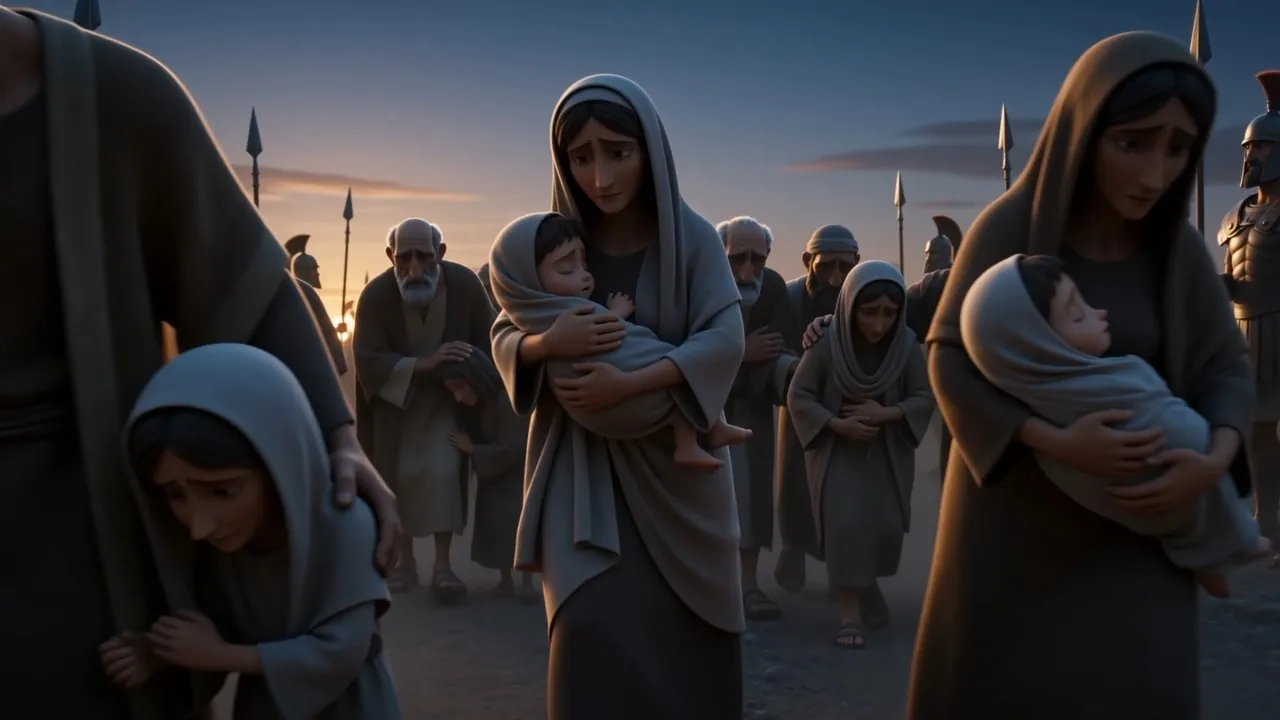
Then a breach was made in the city, and all the men of war fled by night. The wall gives way, and what matters is the people on the roofs — a child passed hand to hand across a gap, an old woman lifted over a parapet — not the soldiers coming through the hole. 2 Kings 25 : 4
Then a breach was made in the city.
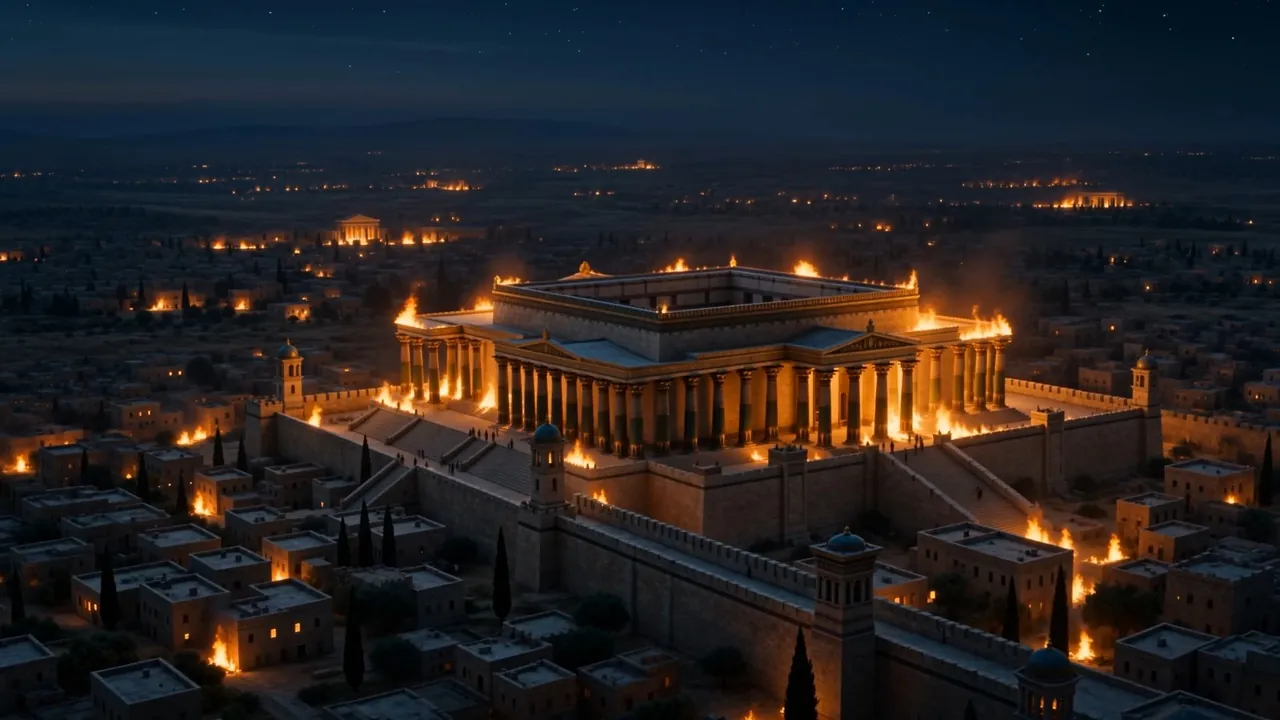
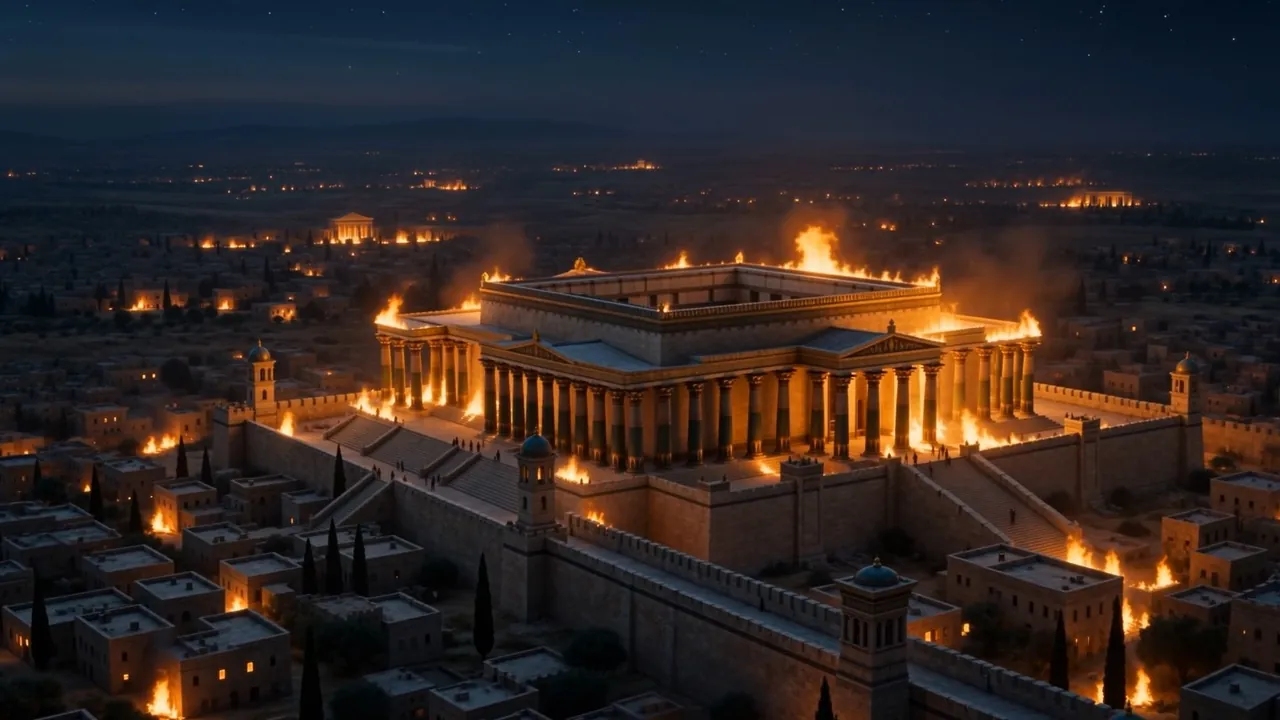
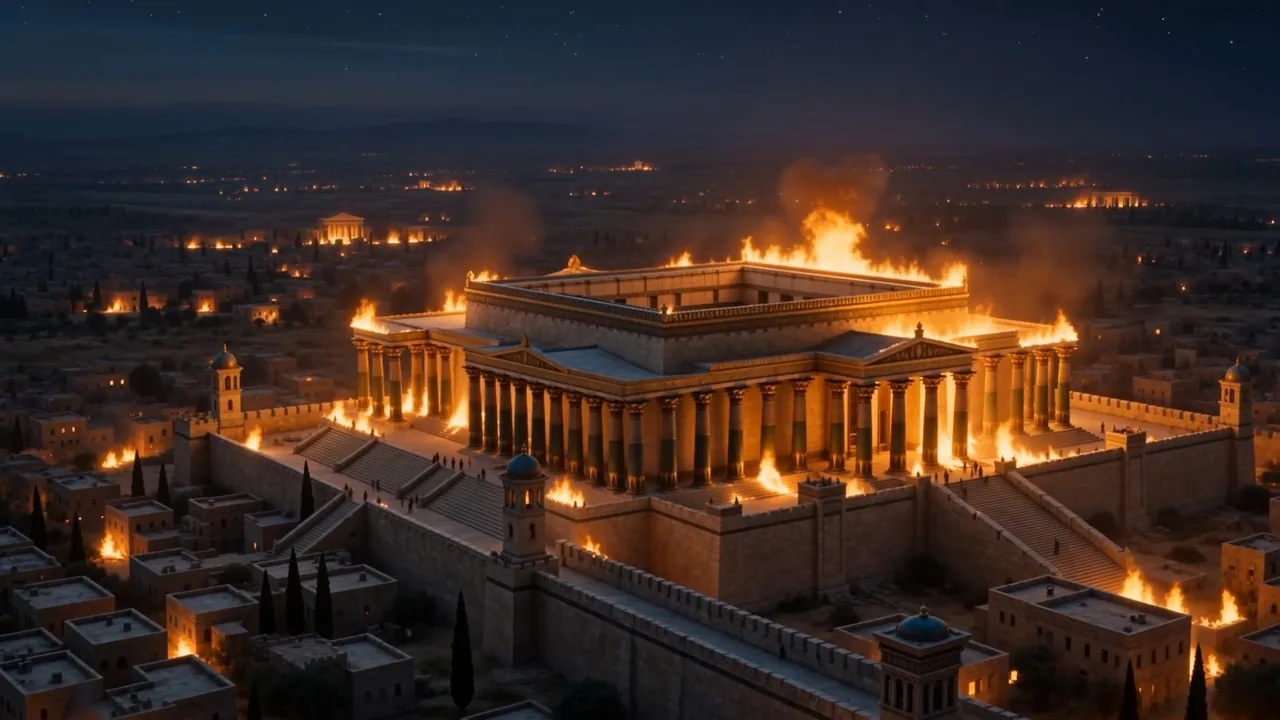
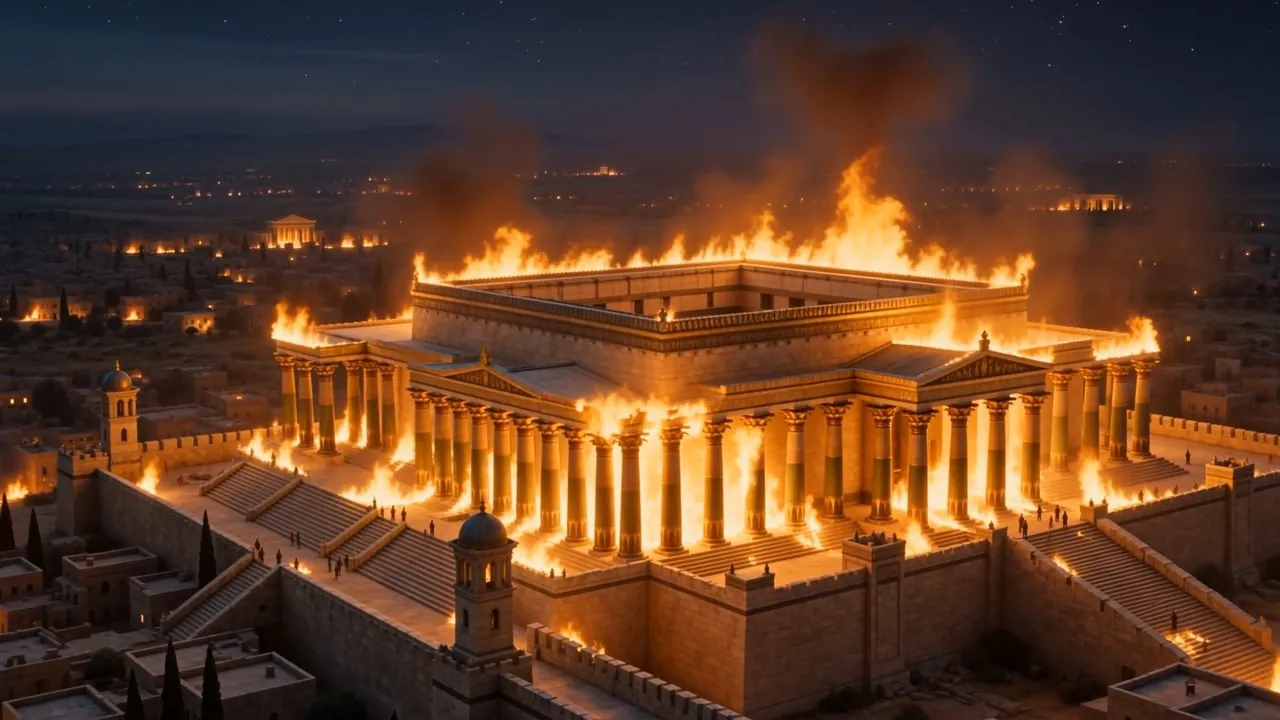
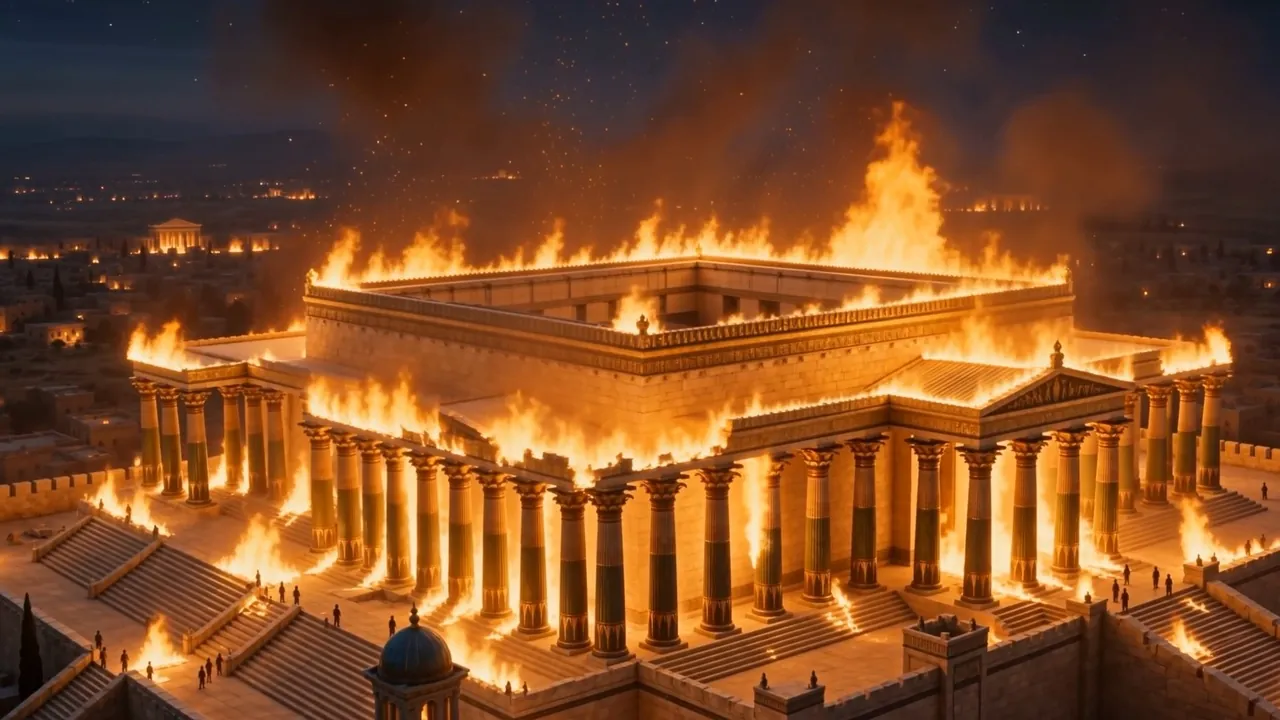
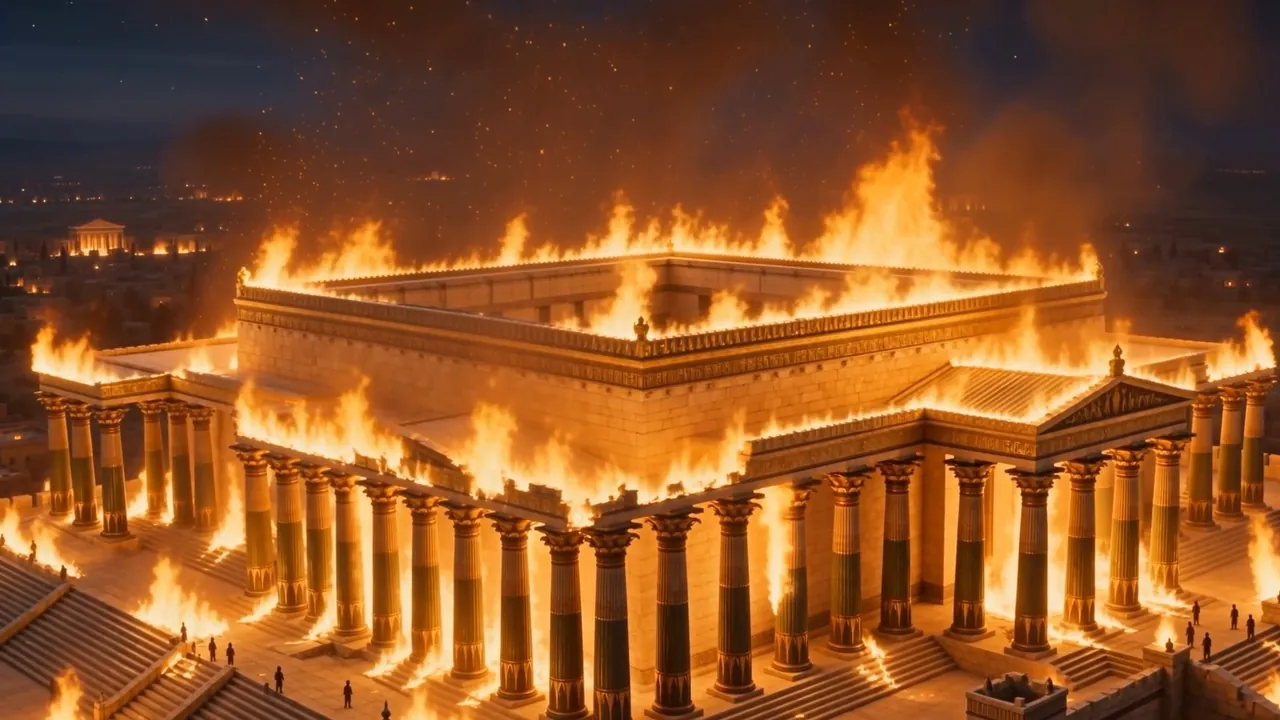
He burned Yahweh's house, and the king's house; and all the houses of Jerusalem, even every great house, he burned with fire. Four hundred and ten years after Solomon dedicated it and a cloud filled it so thickly the priests could not stand up to minister, the house of Yahweh burned down in a night. 2 Kings 25 : 9
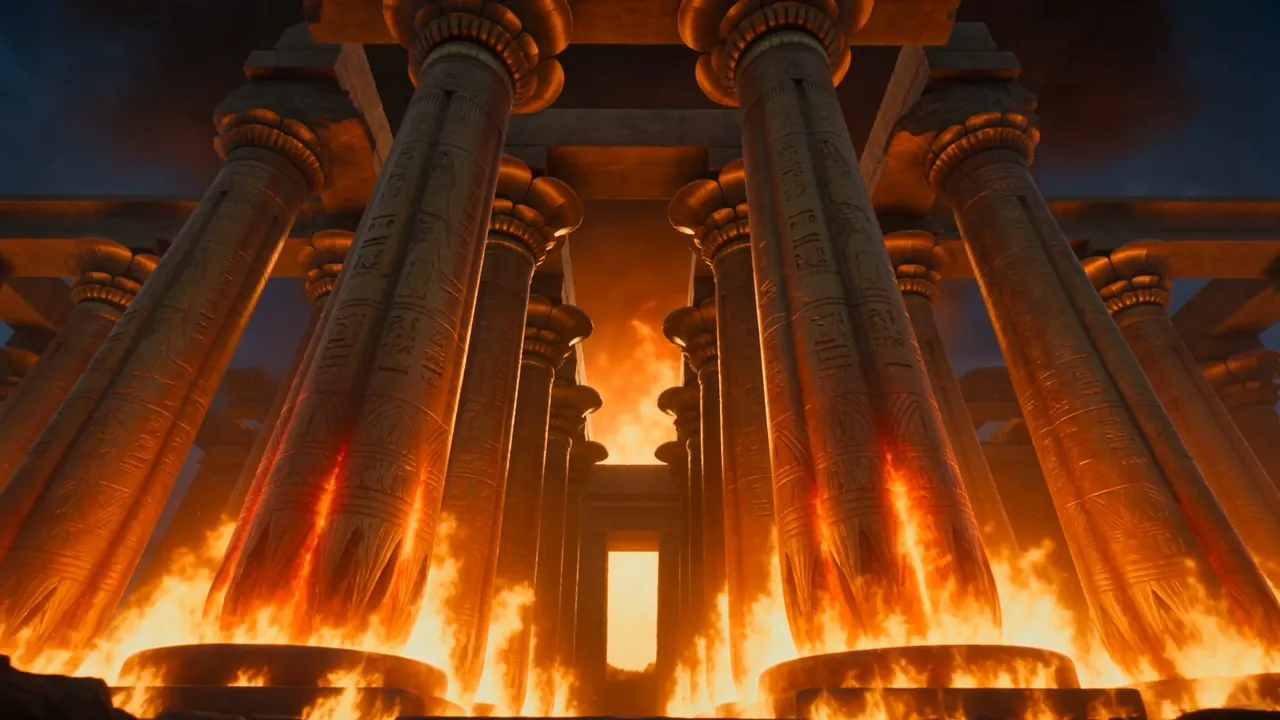
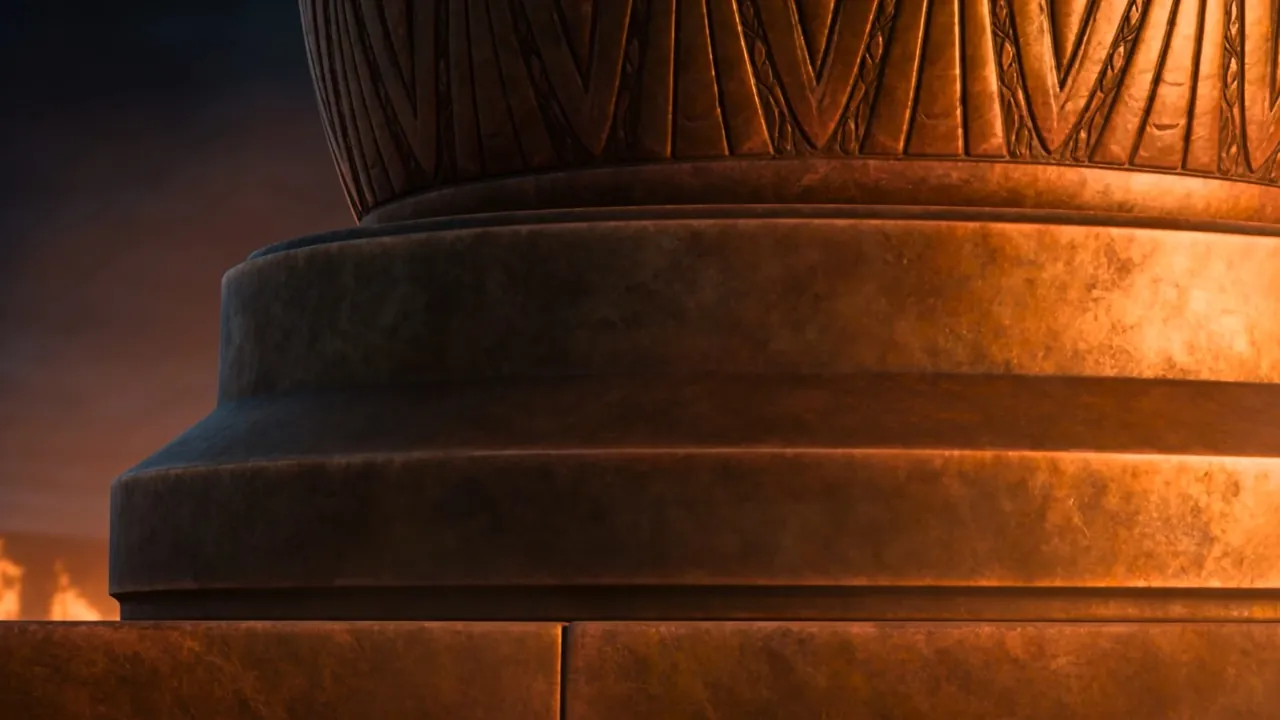
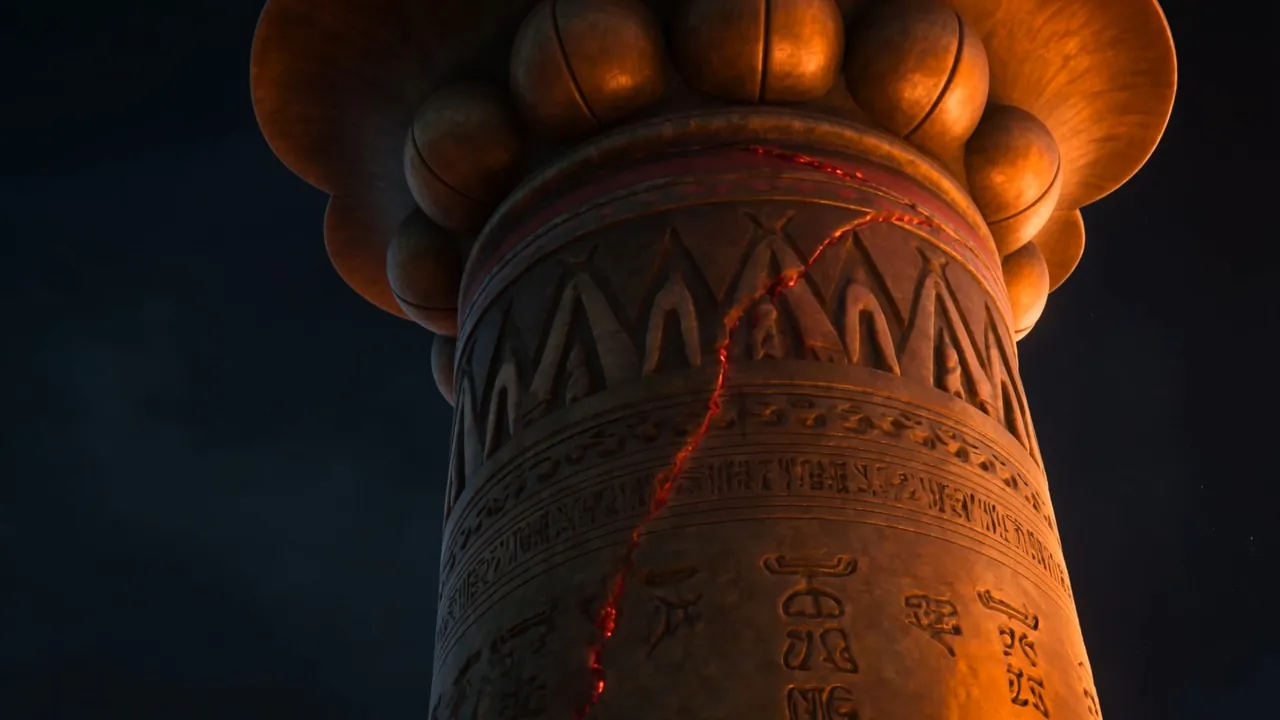
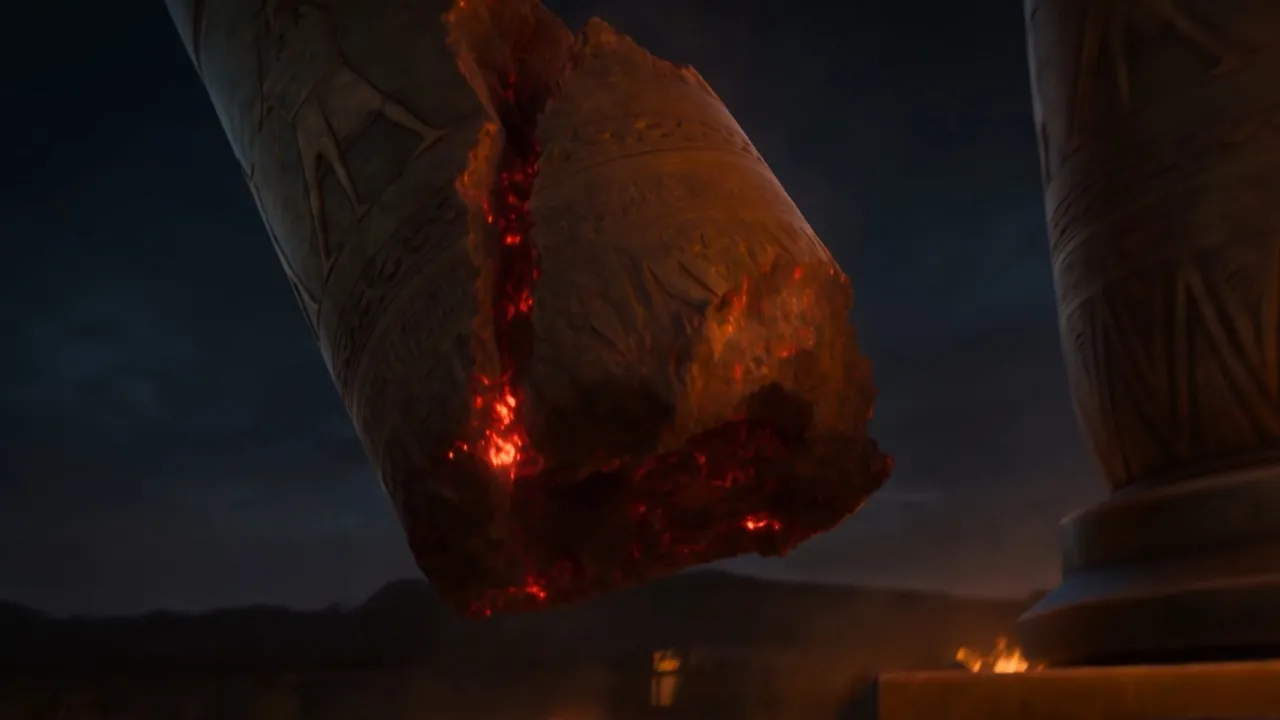
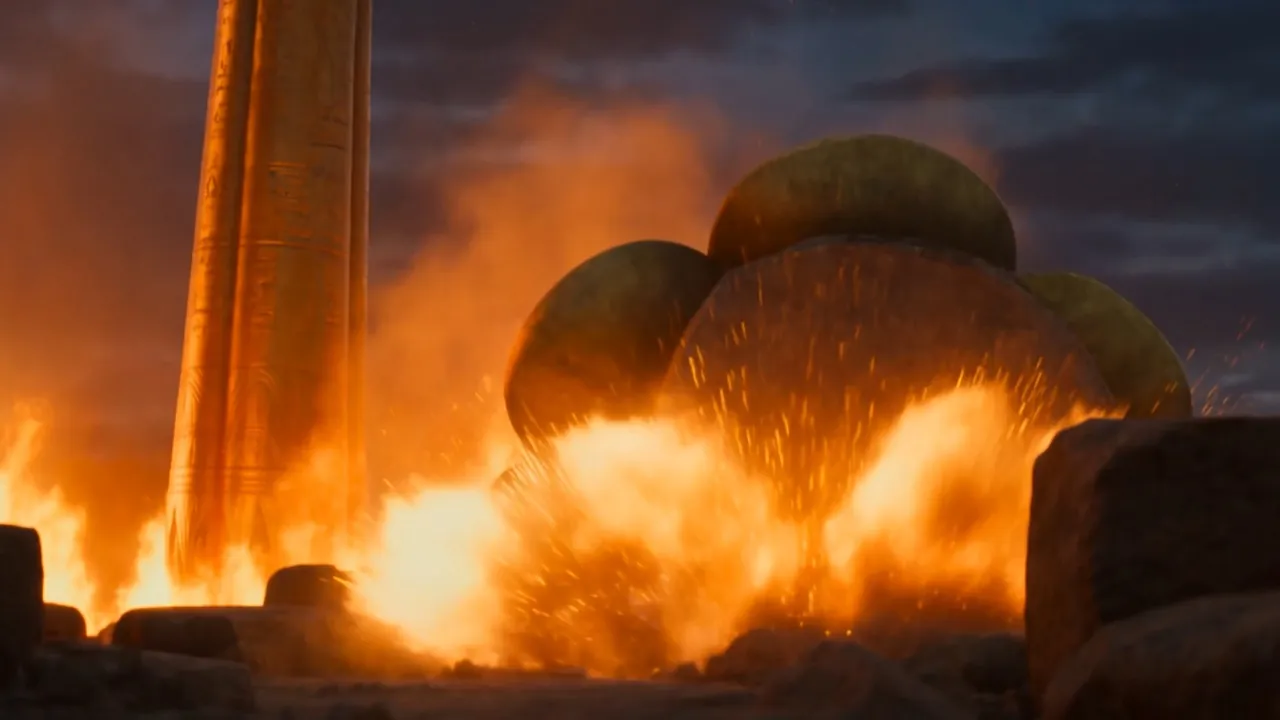
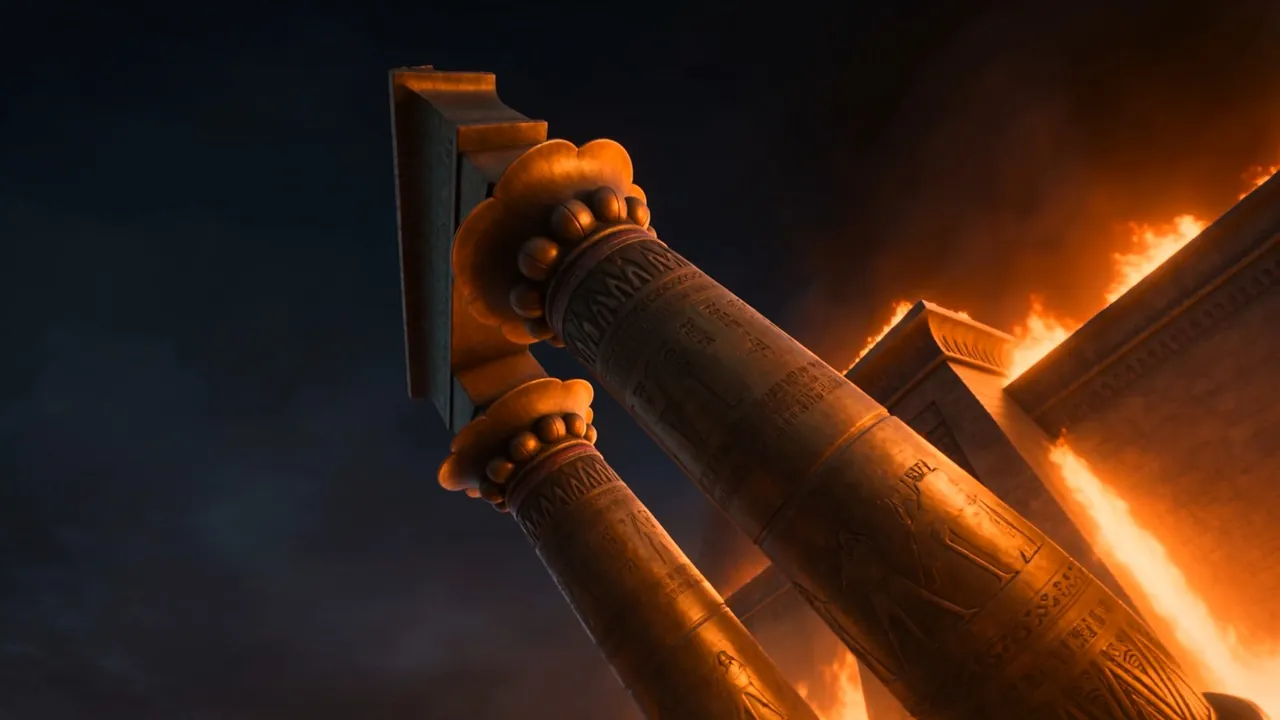
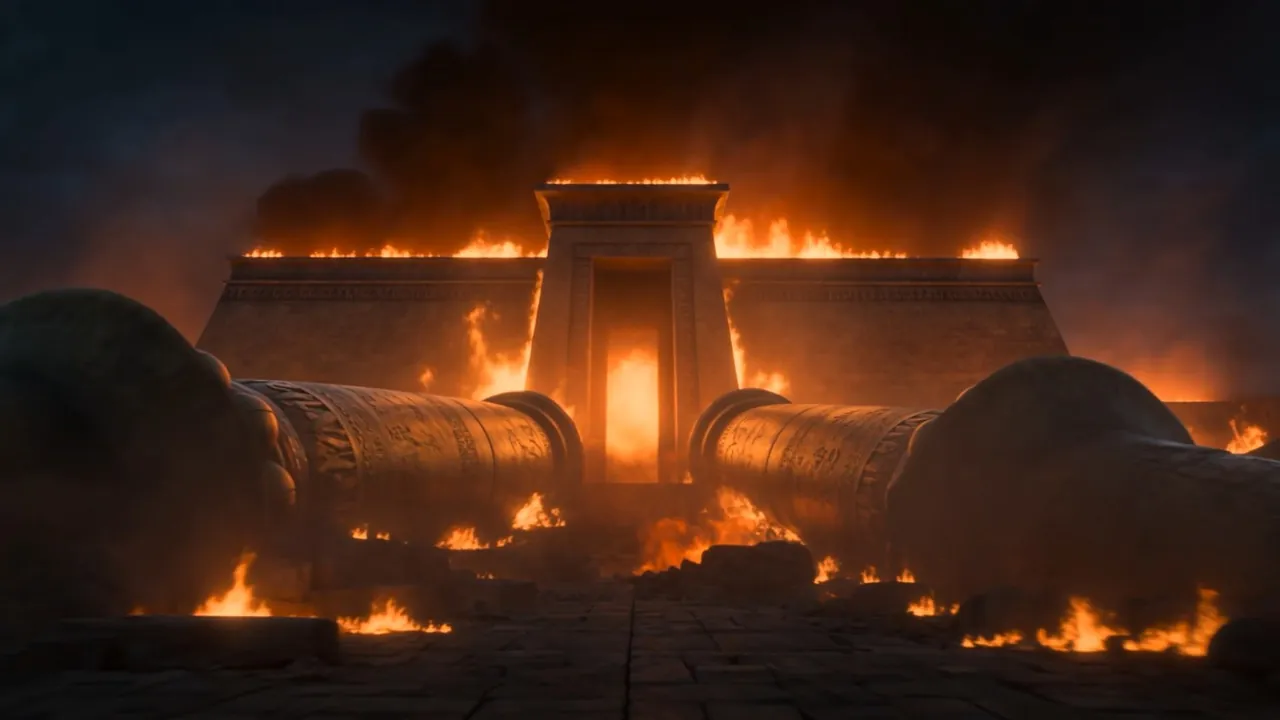
The pillars of brass that were in Yahweh's house, the Chaldeans broke in pieces, and carried the brass of them to Babylon. Jachin and Boaz — "he establishes" and "in him is strength" — the two pillars that had stood at the door of the temple since Solomon, cut up for scrap and carted east by weight. 2 Kings 25 : 13–17
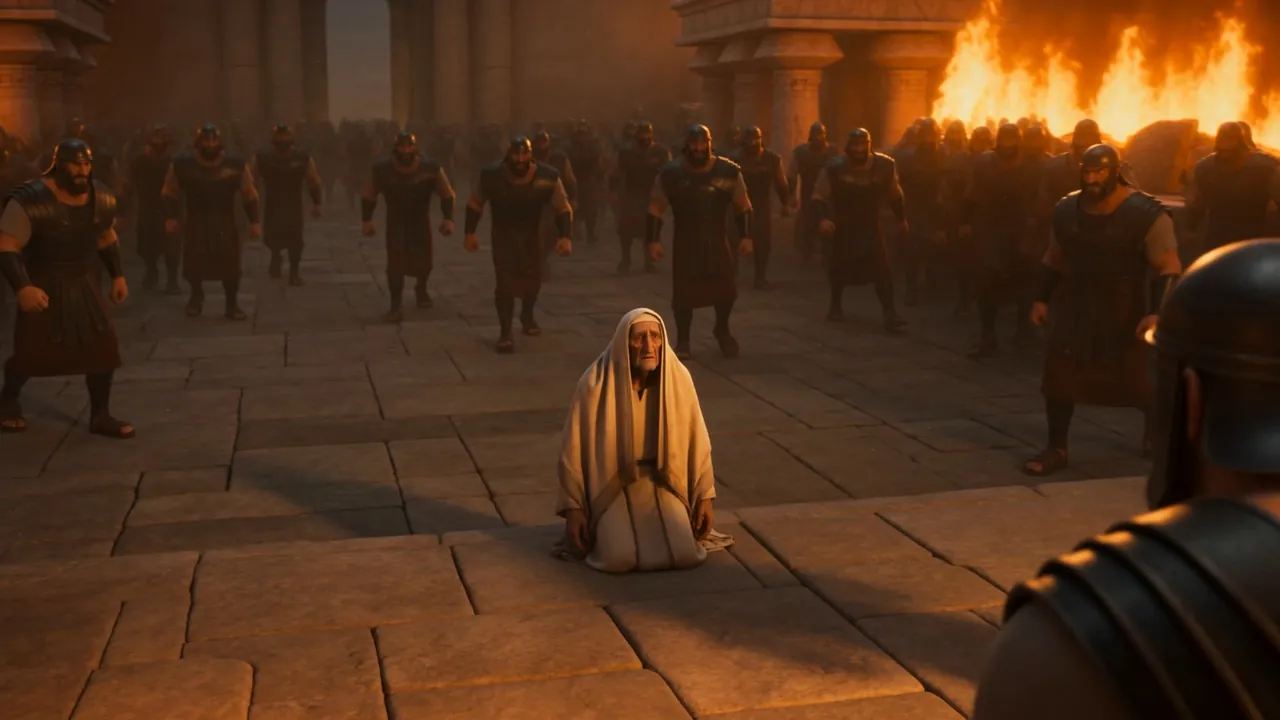
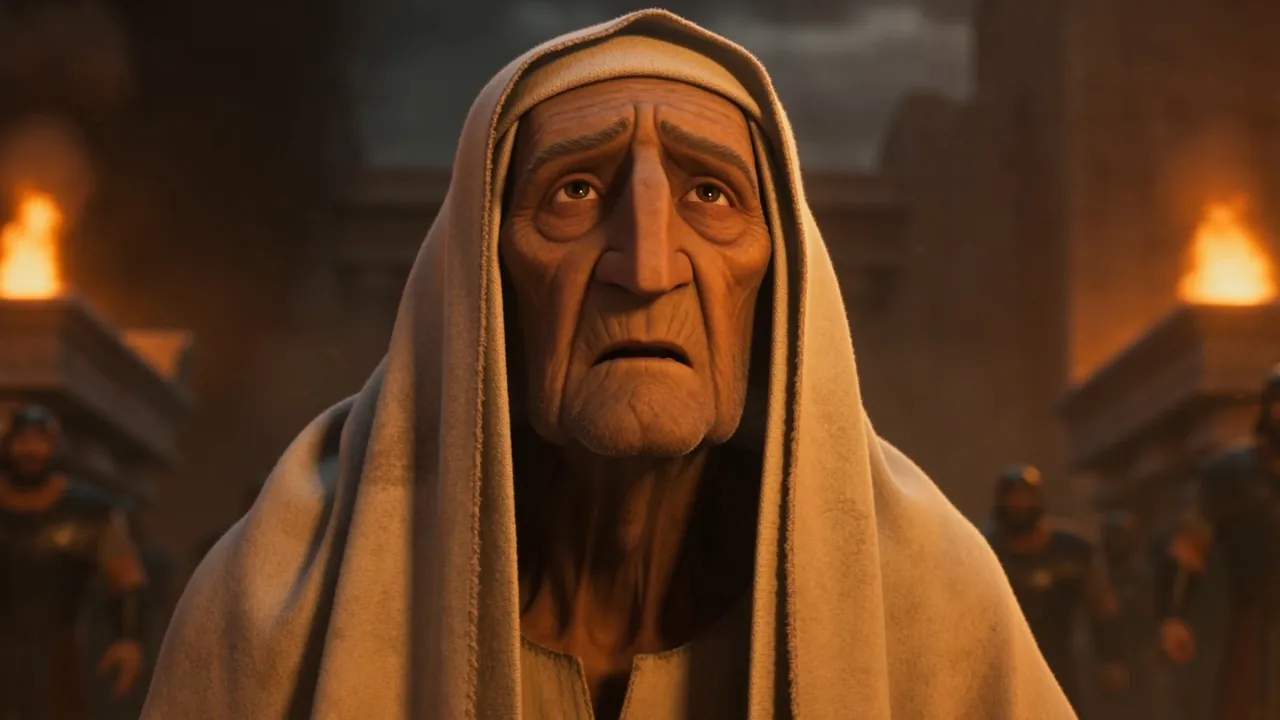
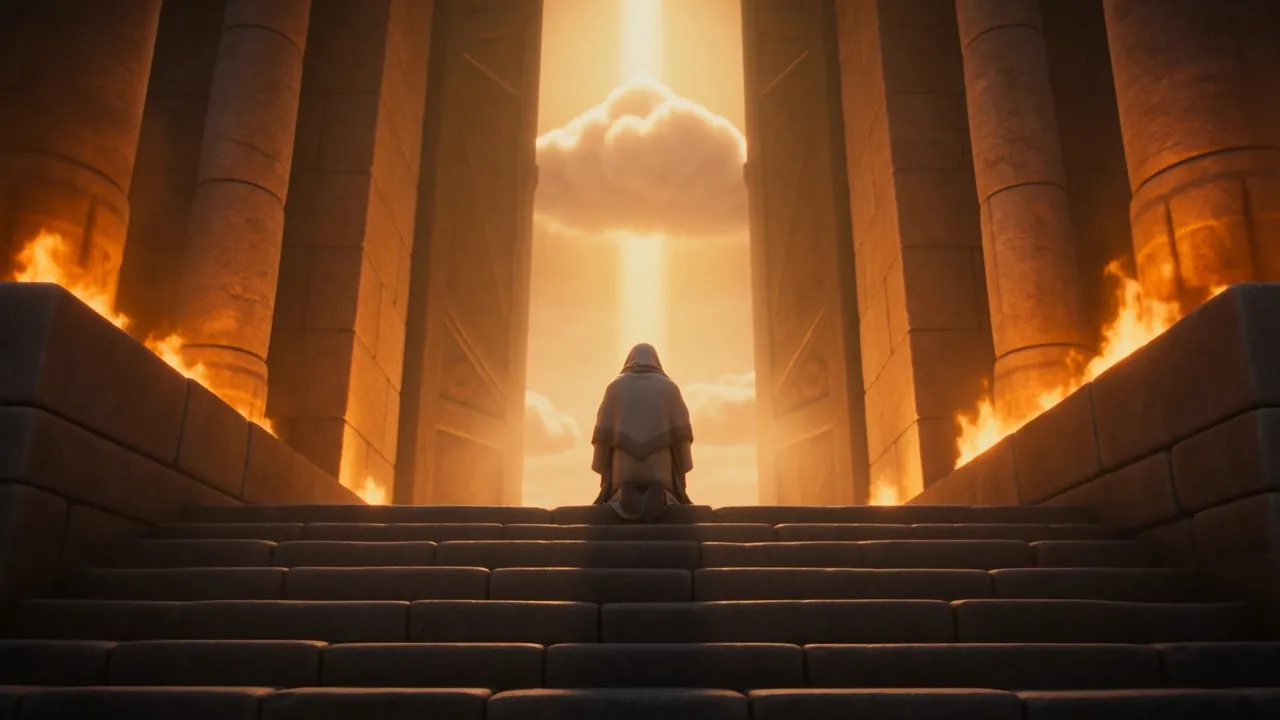
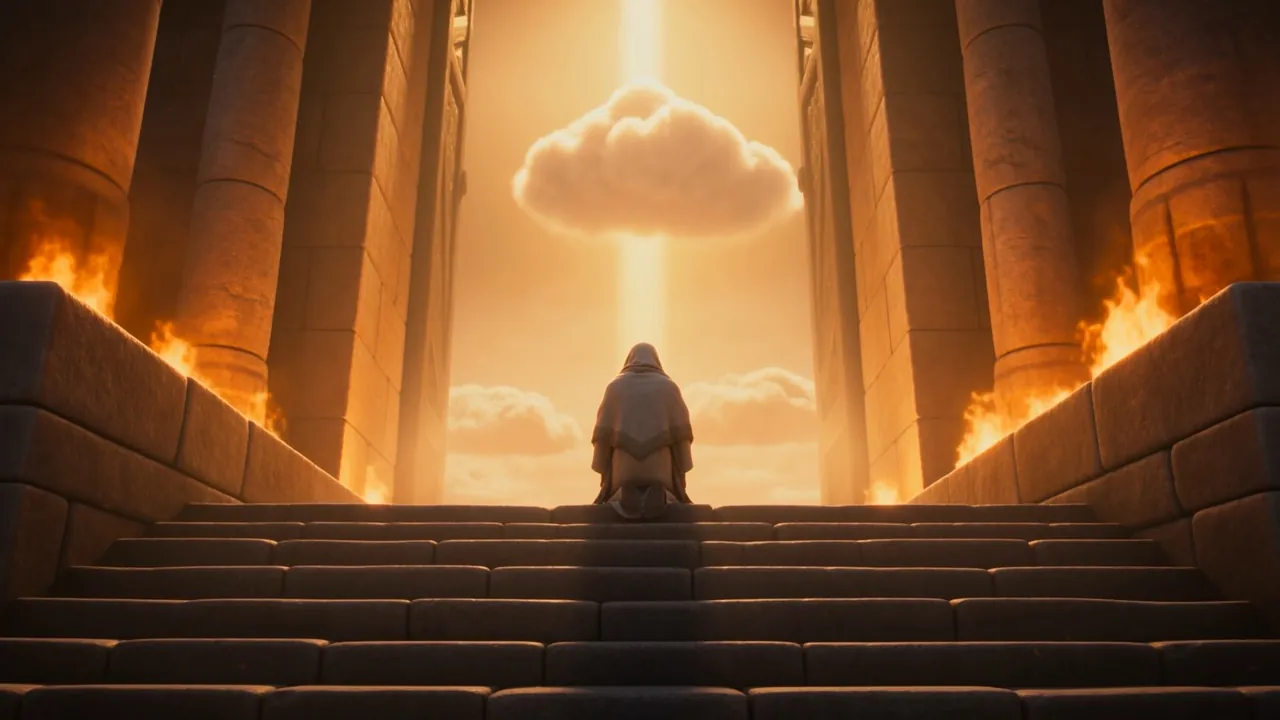
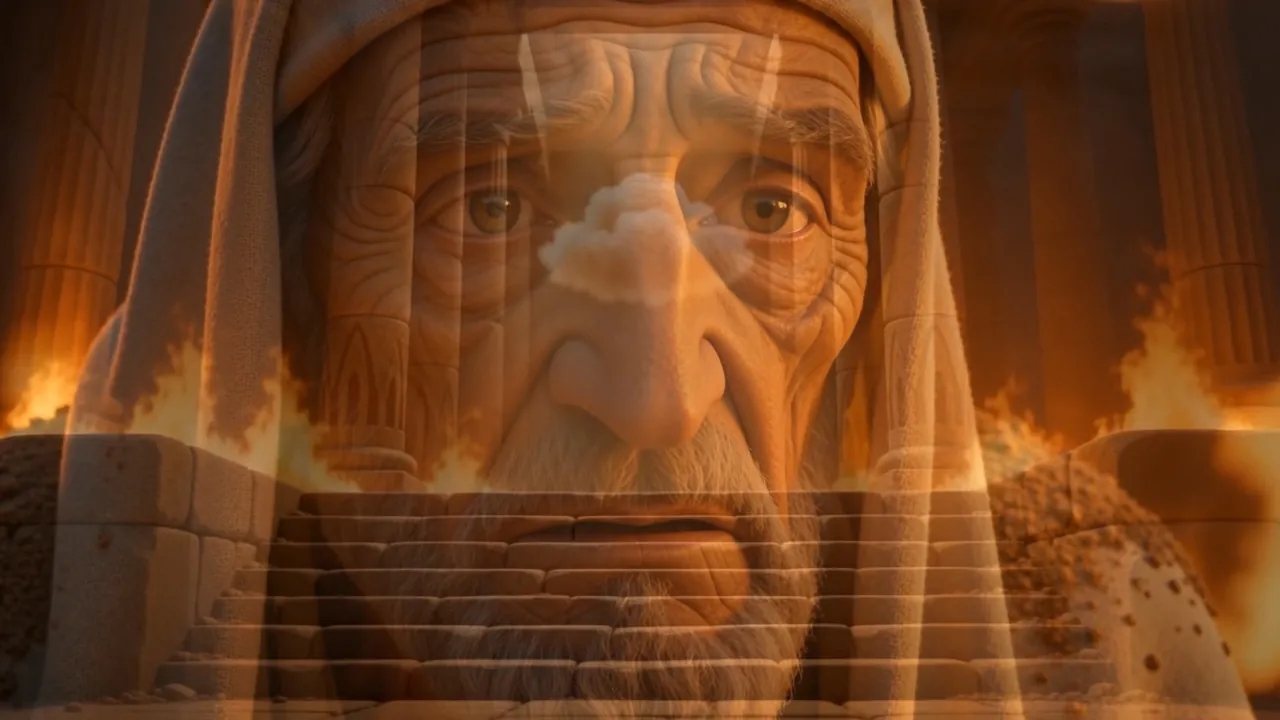
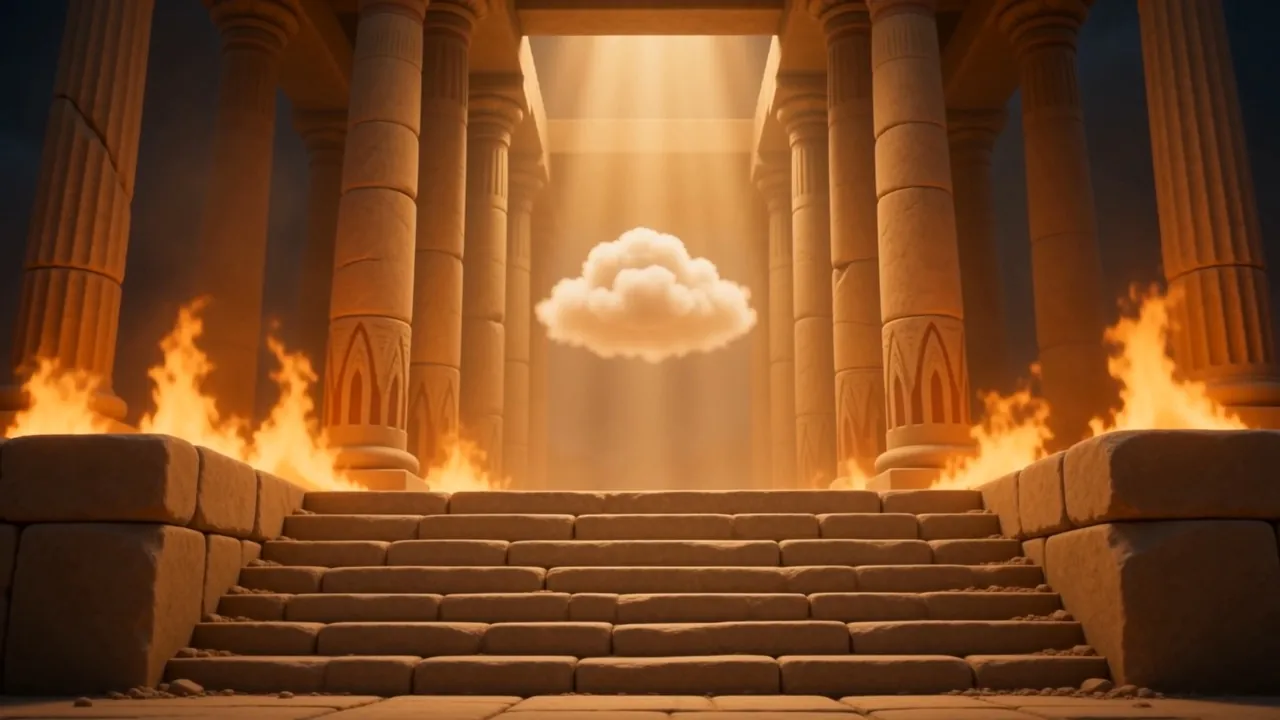
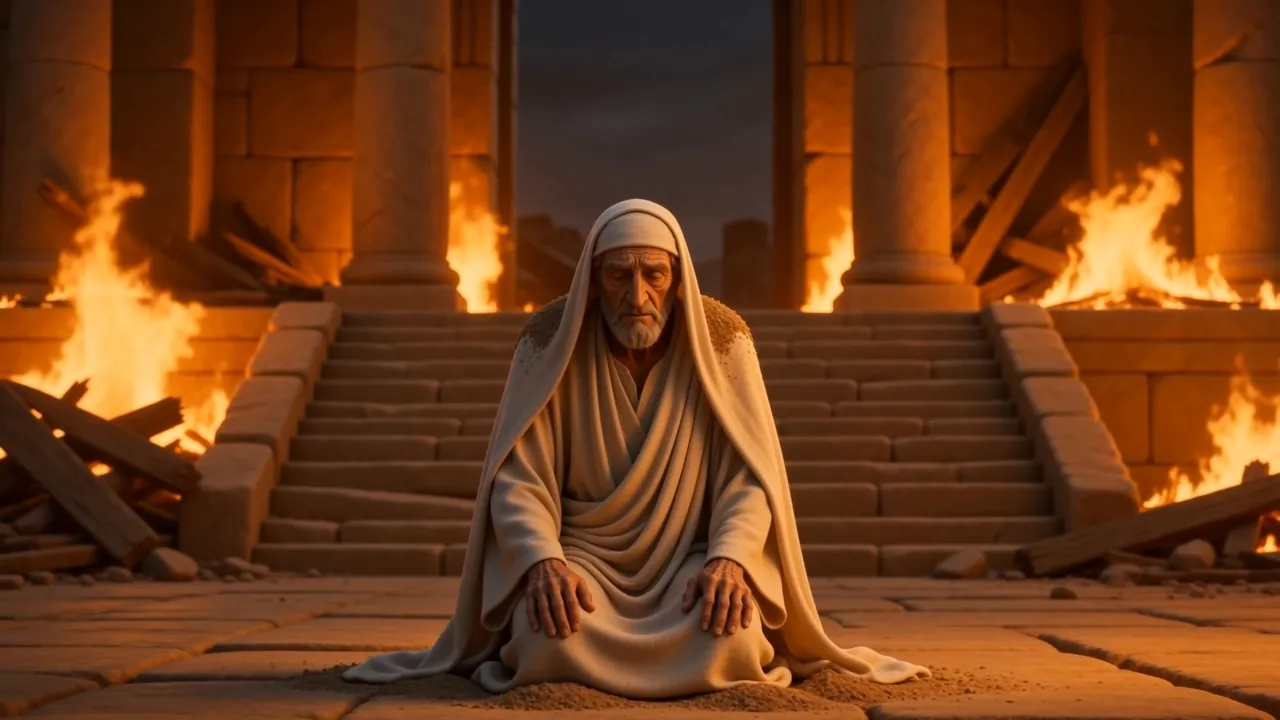
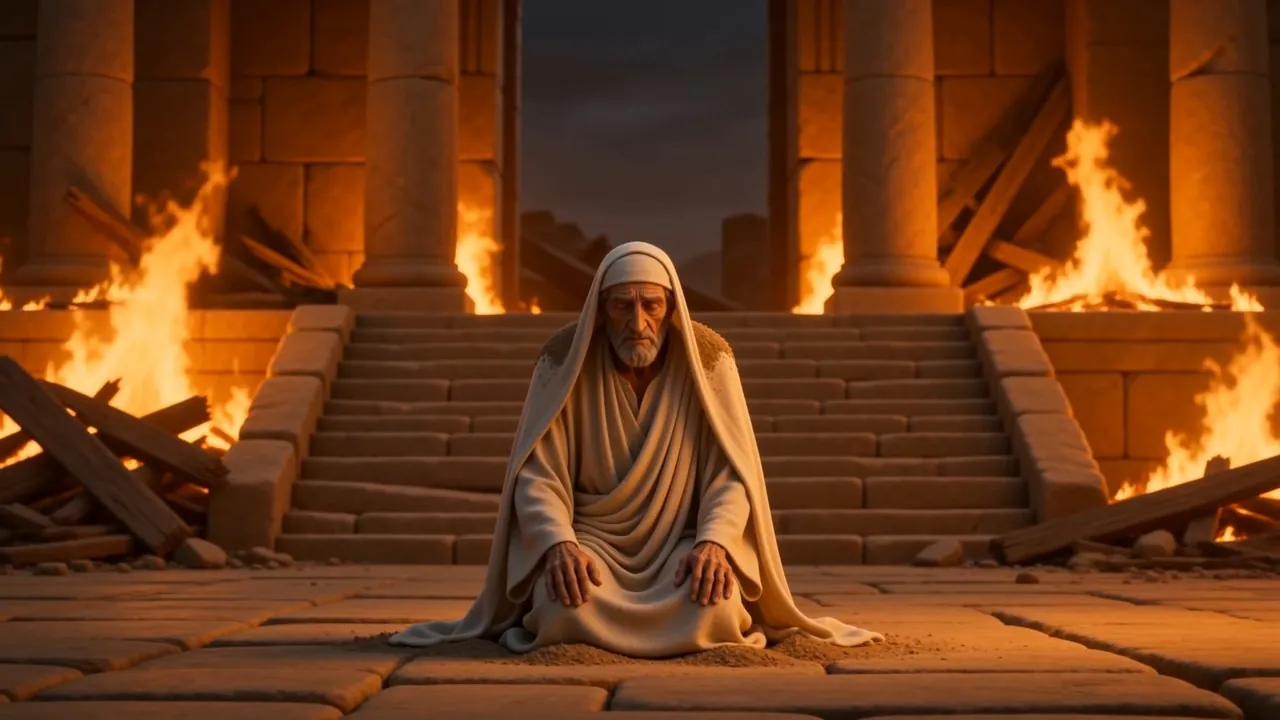
An old priest on his knees in the burning courts, and over the doorway, remembered, the cloud. The cloud filled Yahweh's house, so that the priests could not stand to minister by reason of the cloud. He is old enough to have been told about it by someone who was told about it. He is watching the room it filled burn down. 1 Kings 8 : 10–11


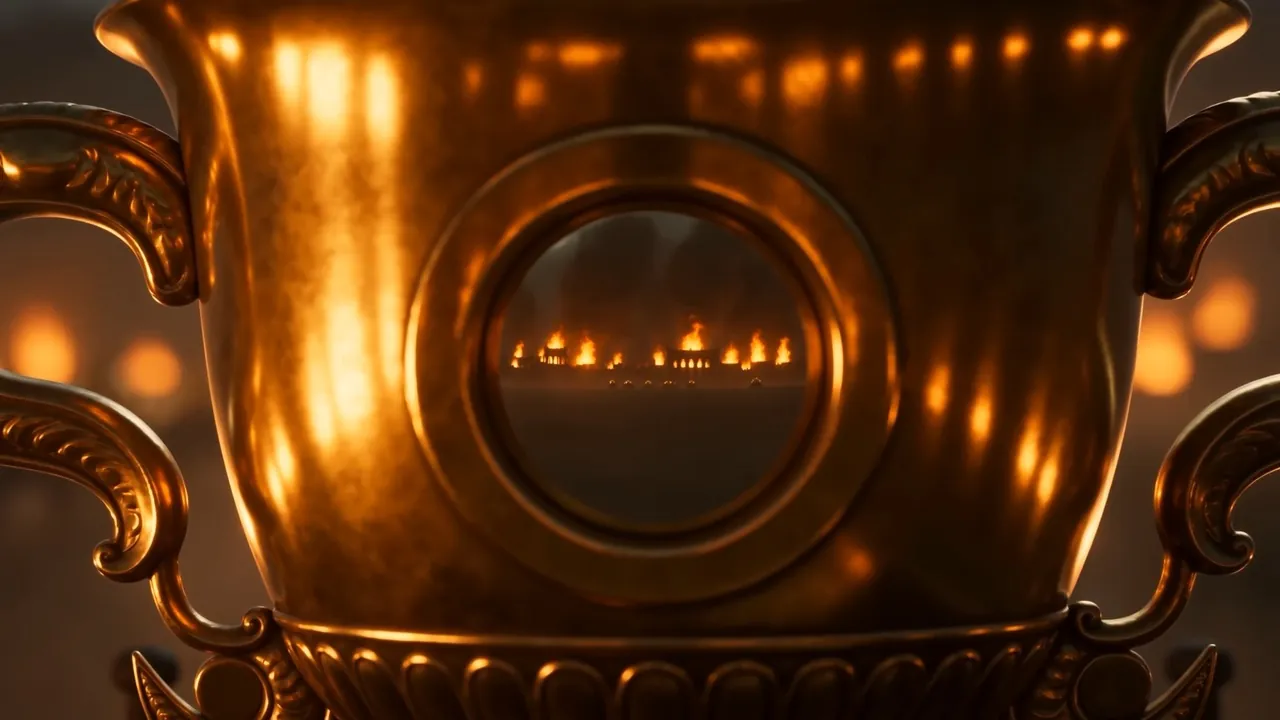

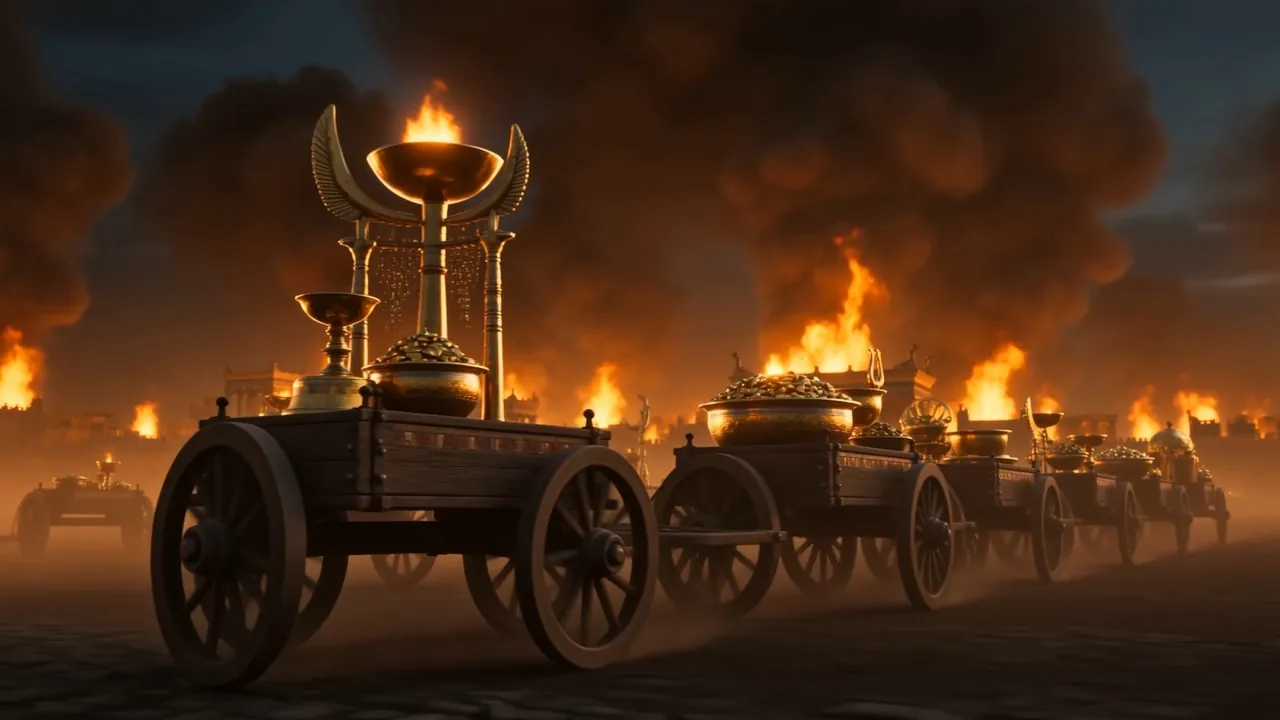
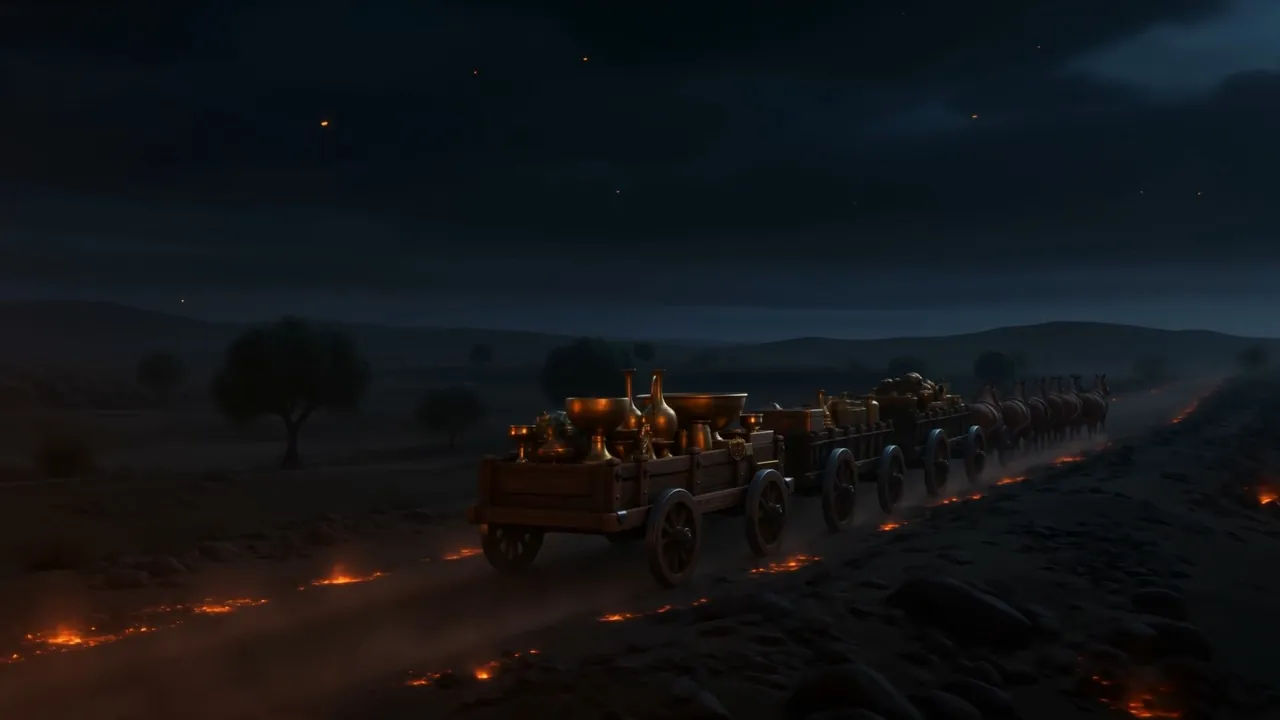
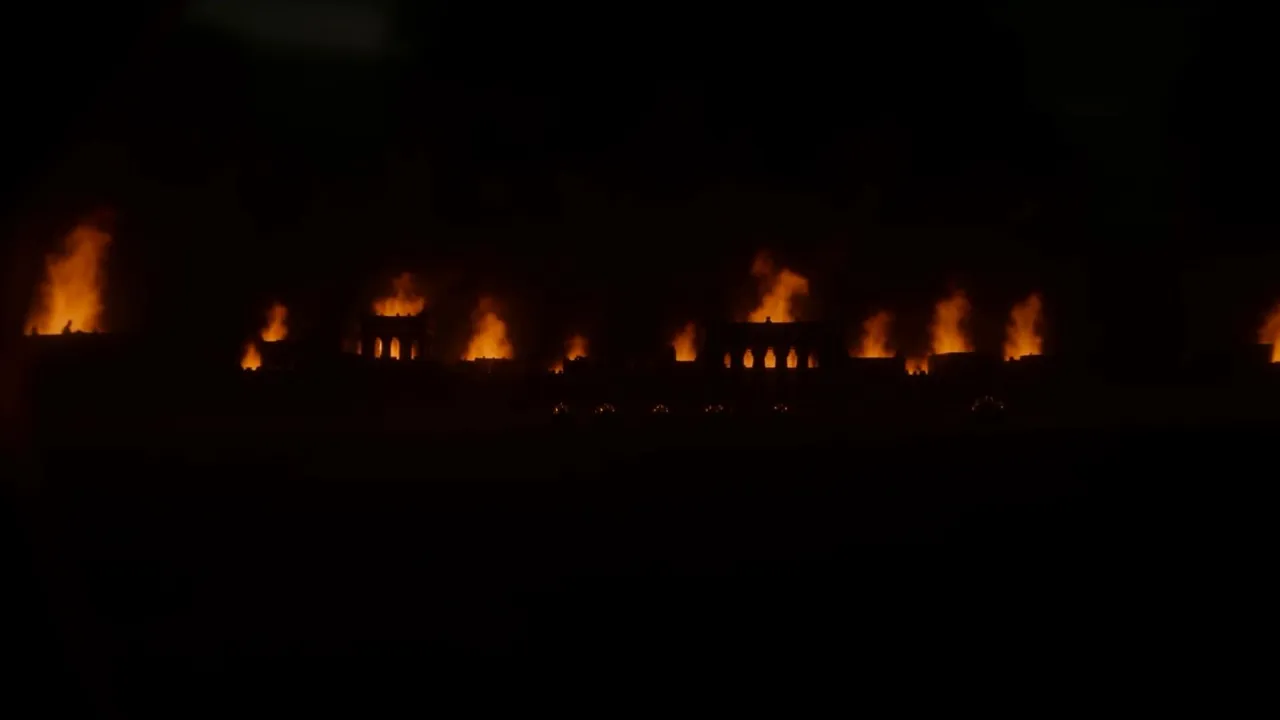
The pots, the shovels, the snuffers, the spoons, the basins, the two pillars, the one sea and the bases — the brass of all these vessels was without weight. Everything Solomon had made was inventoried, loaded and driven east. The city burns in the curve of a gold cup as it is carried out of the gate. 2 Kings 25 : 13–17
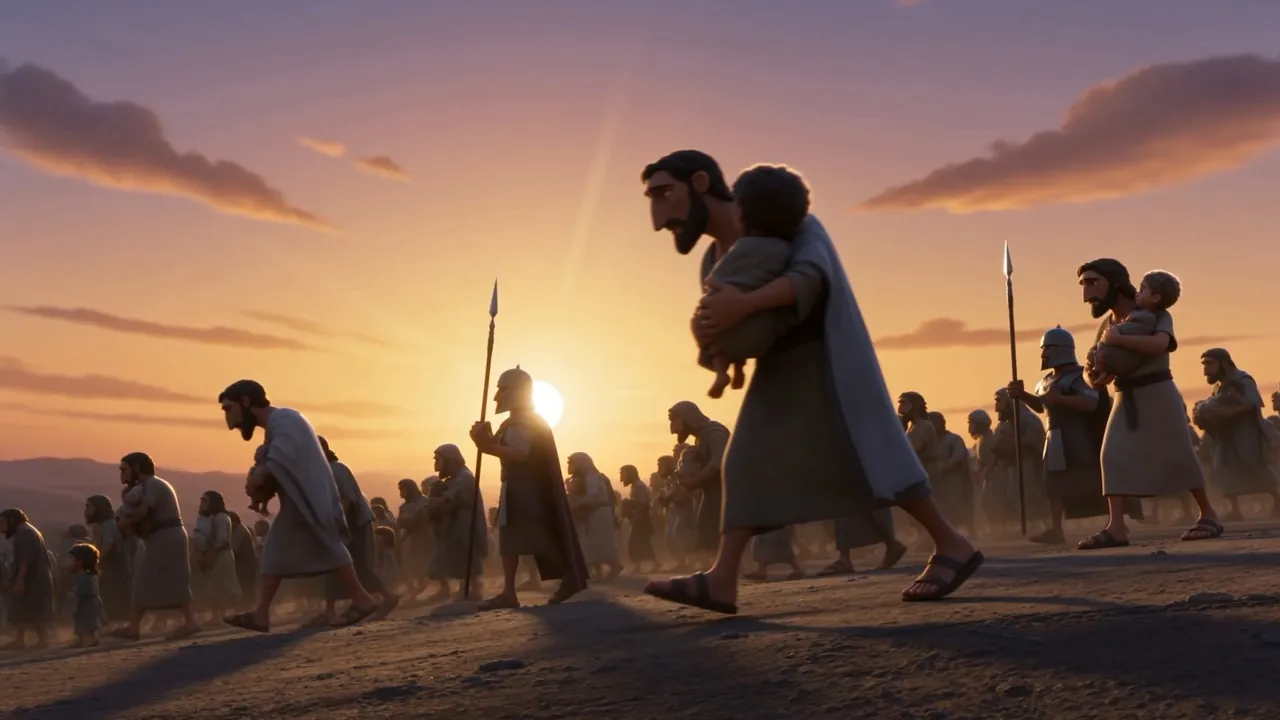
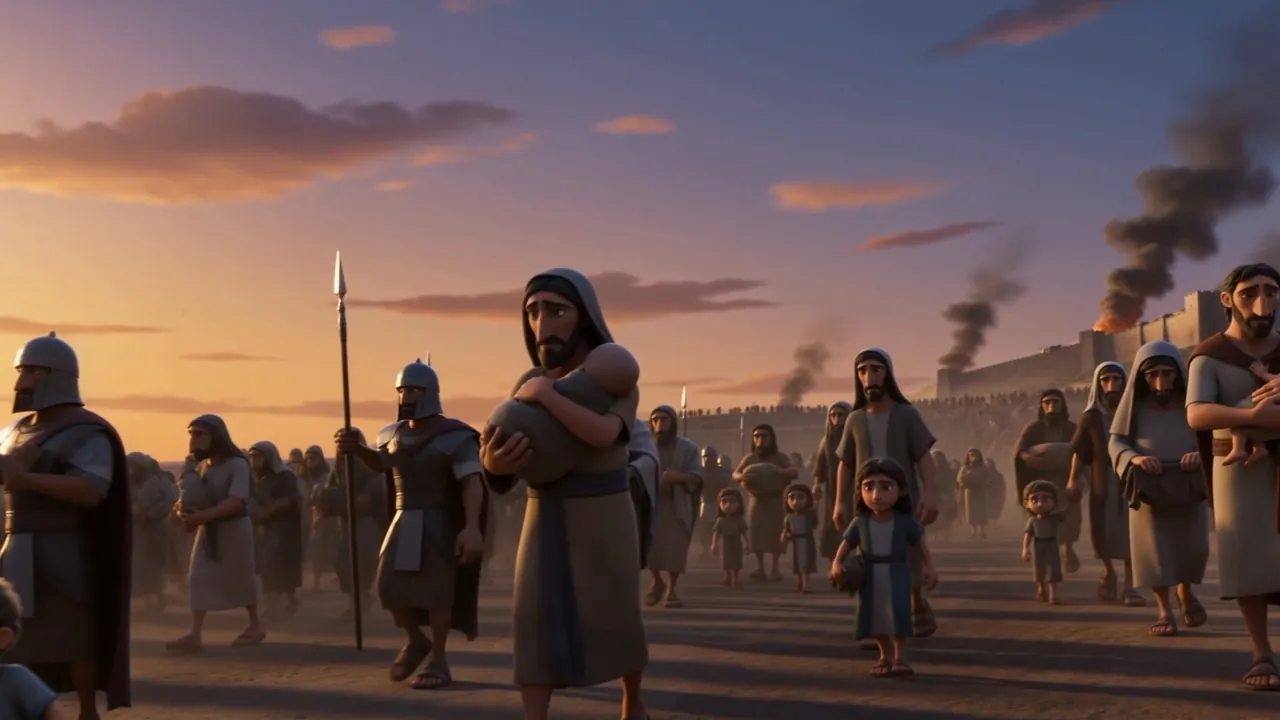
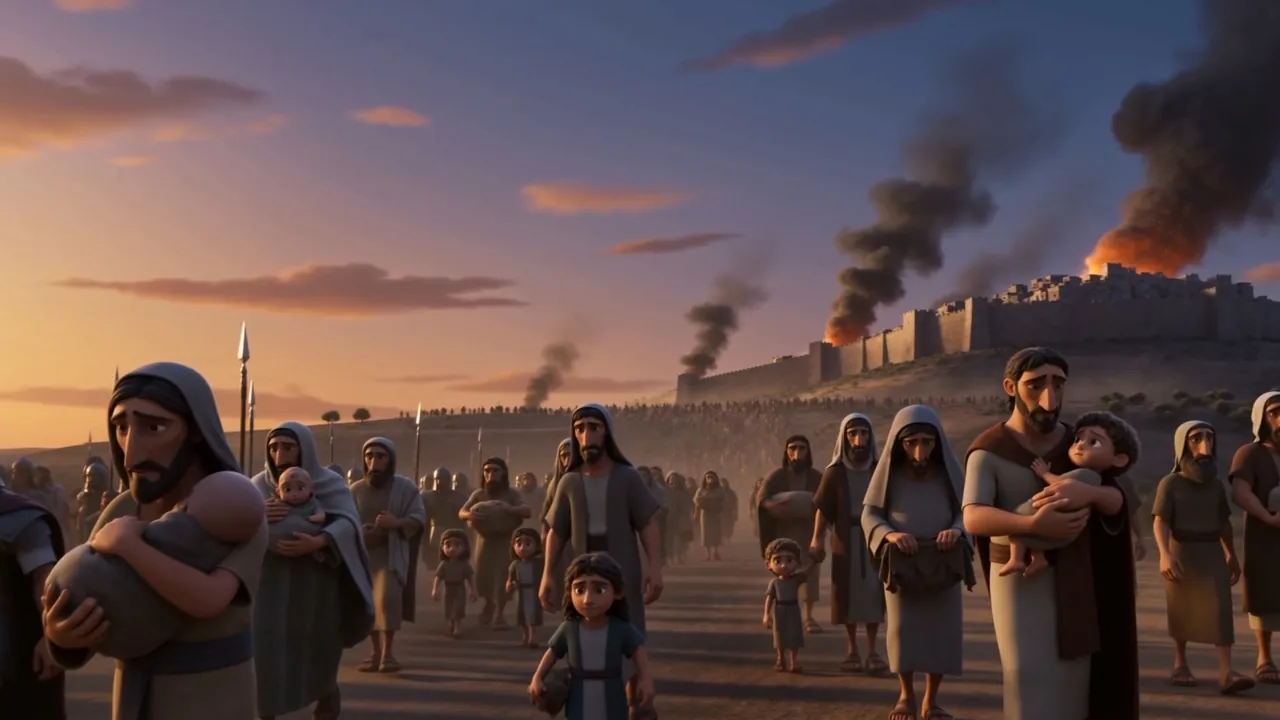
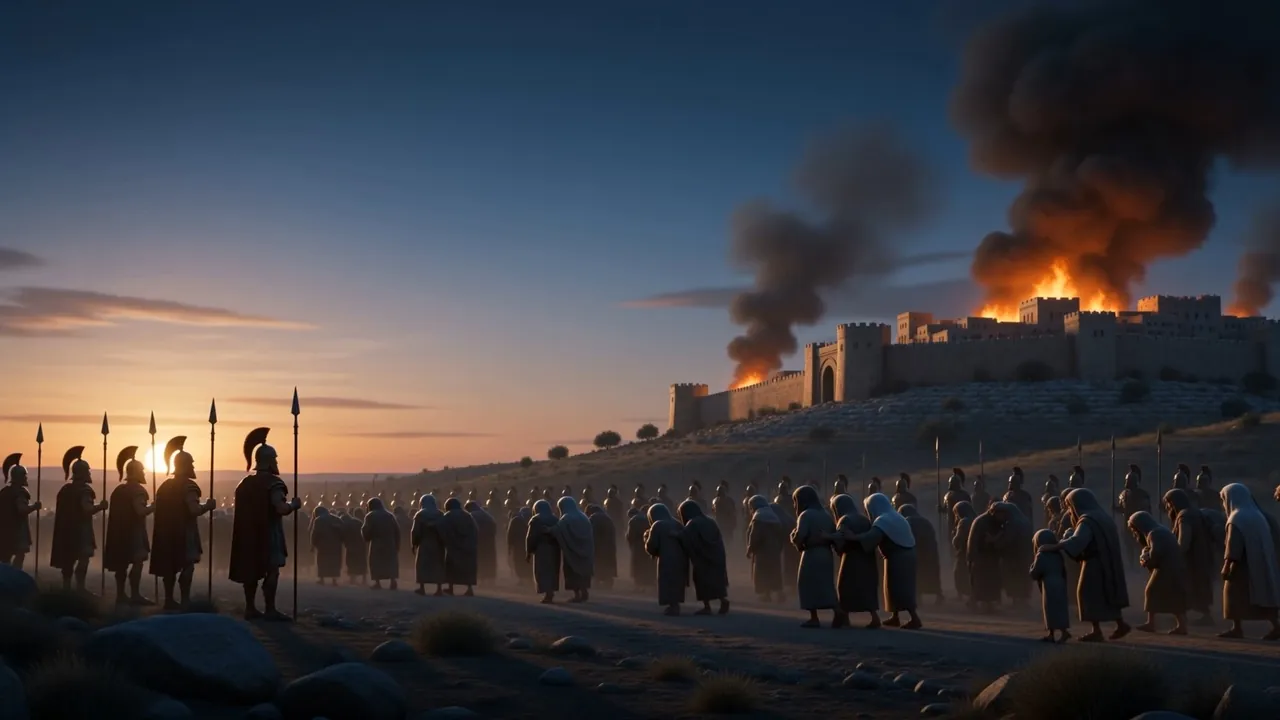
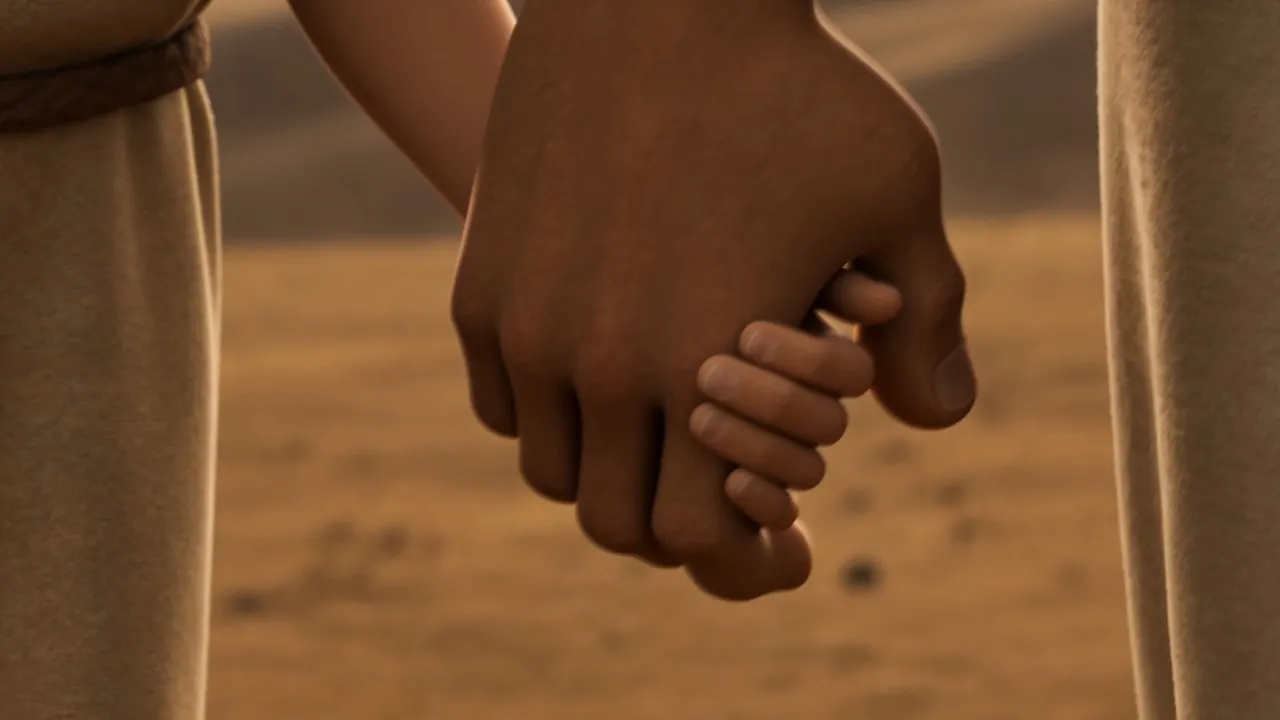

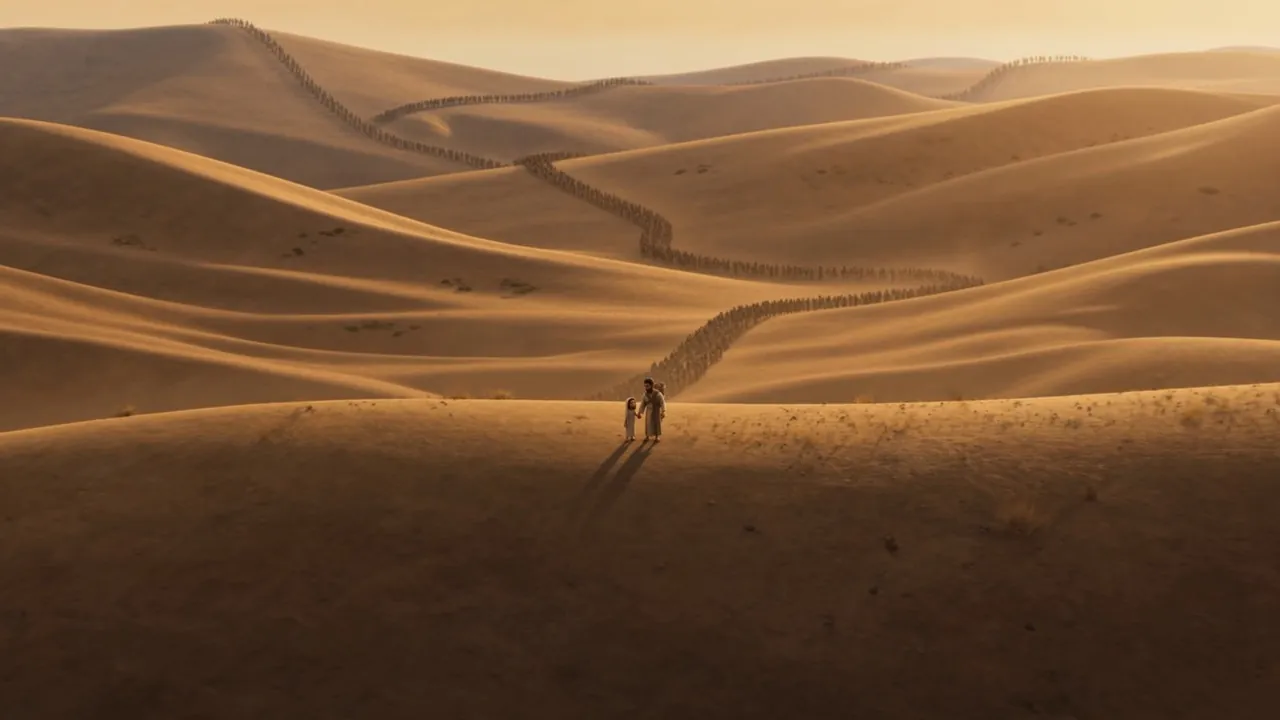
The rest of the people who were left in the city… did Nebuzaradan the captain of the guard carry away captive. But the captain of the guard left of the poorest of the land to be vinedressers and farmers. One family out of the many, and the only thing that really matters is a hand holding another hand. 2 Kings 25 : 11–12
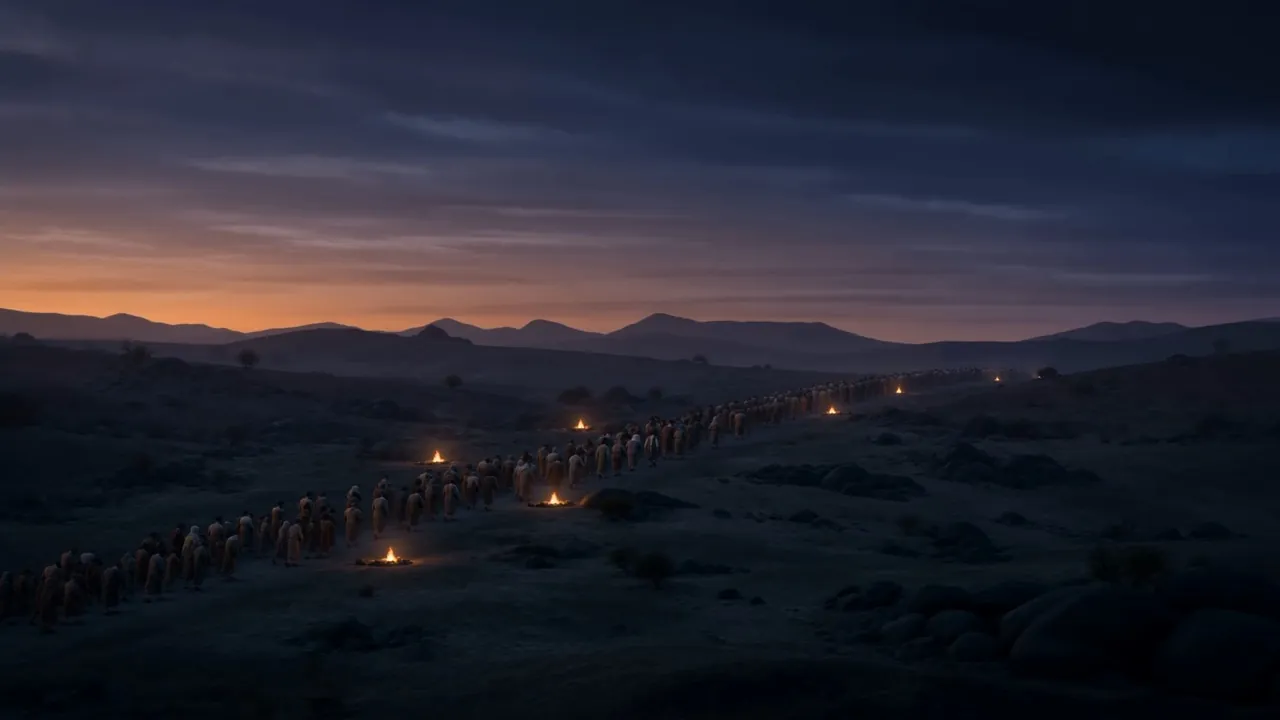
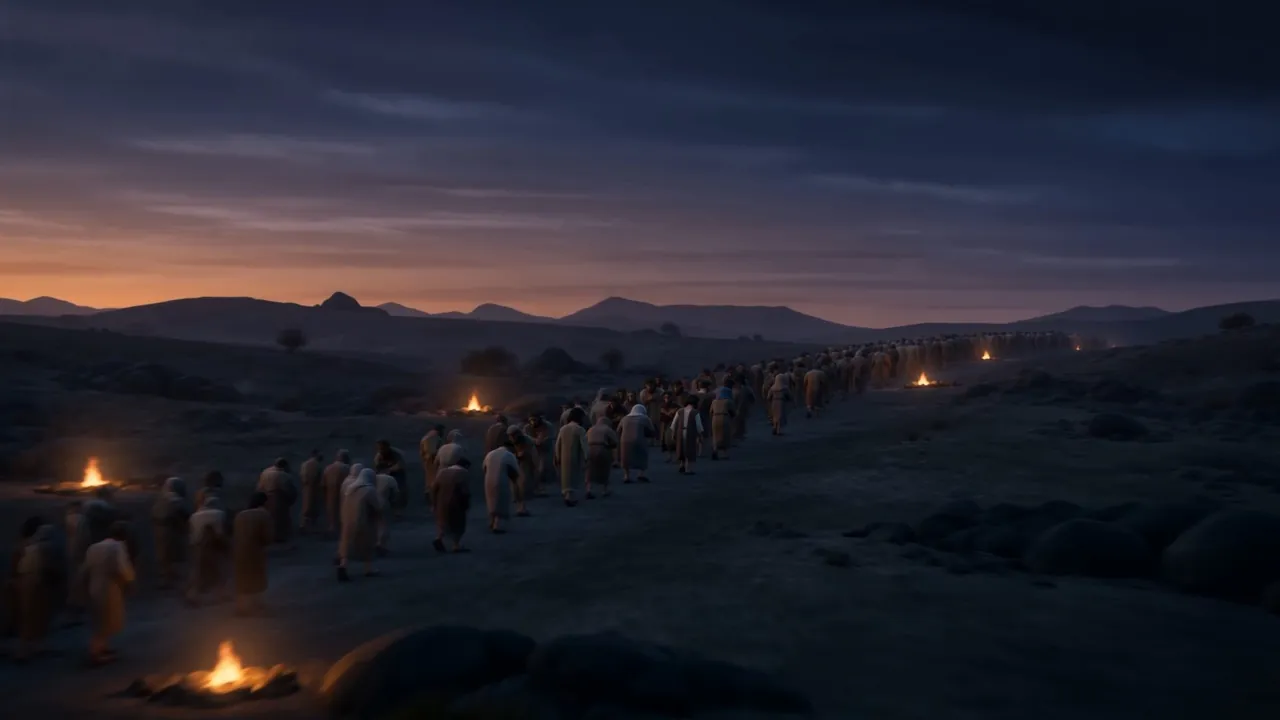
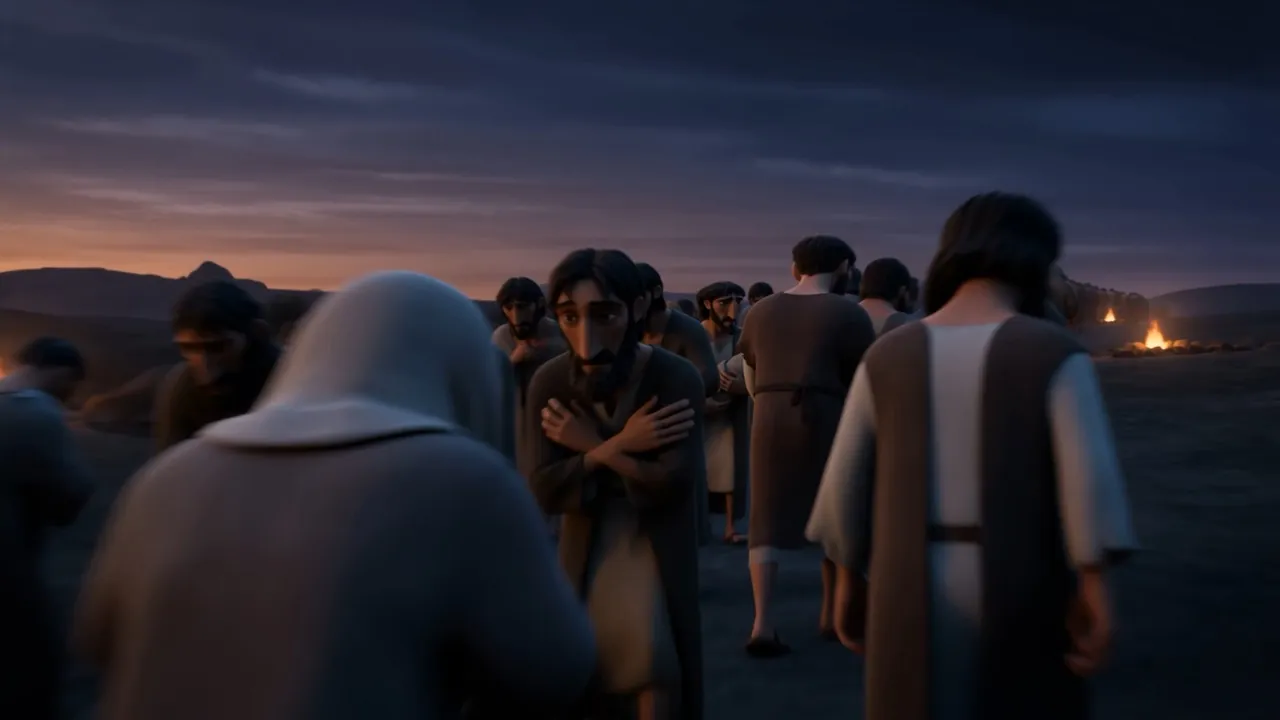
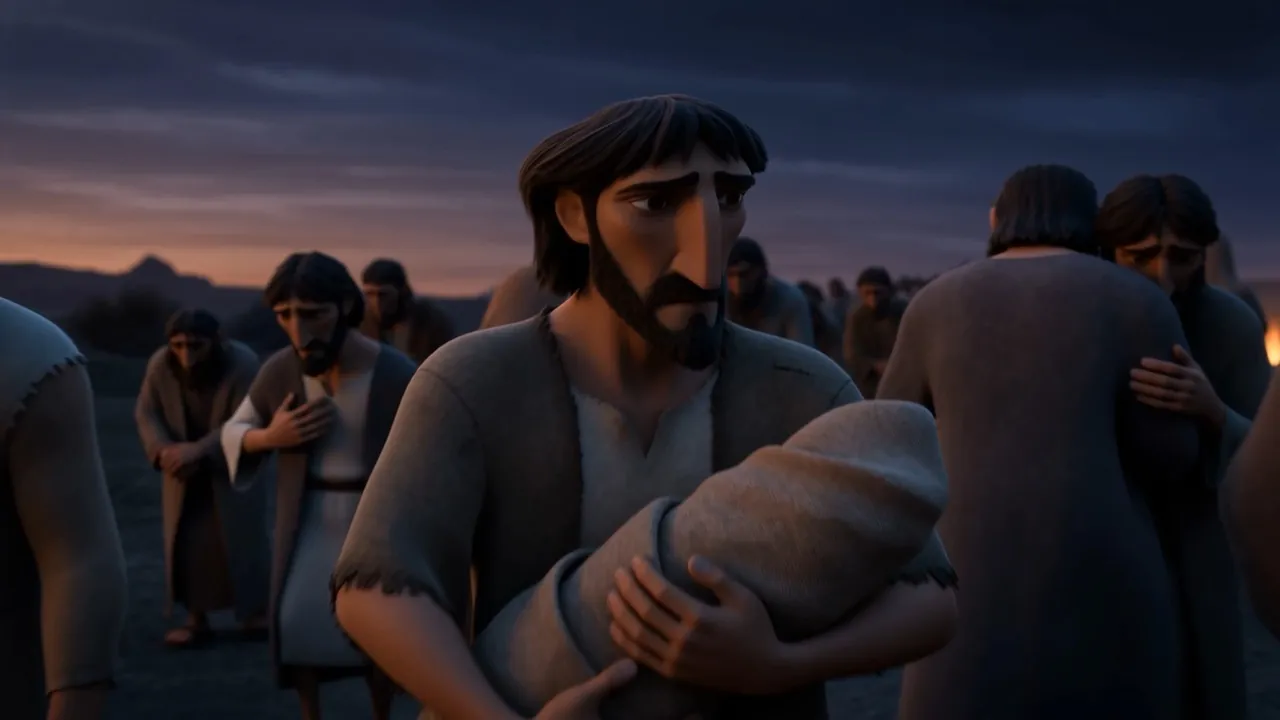
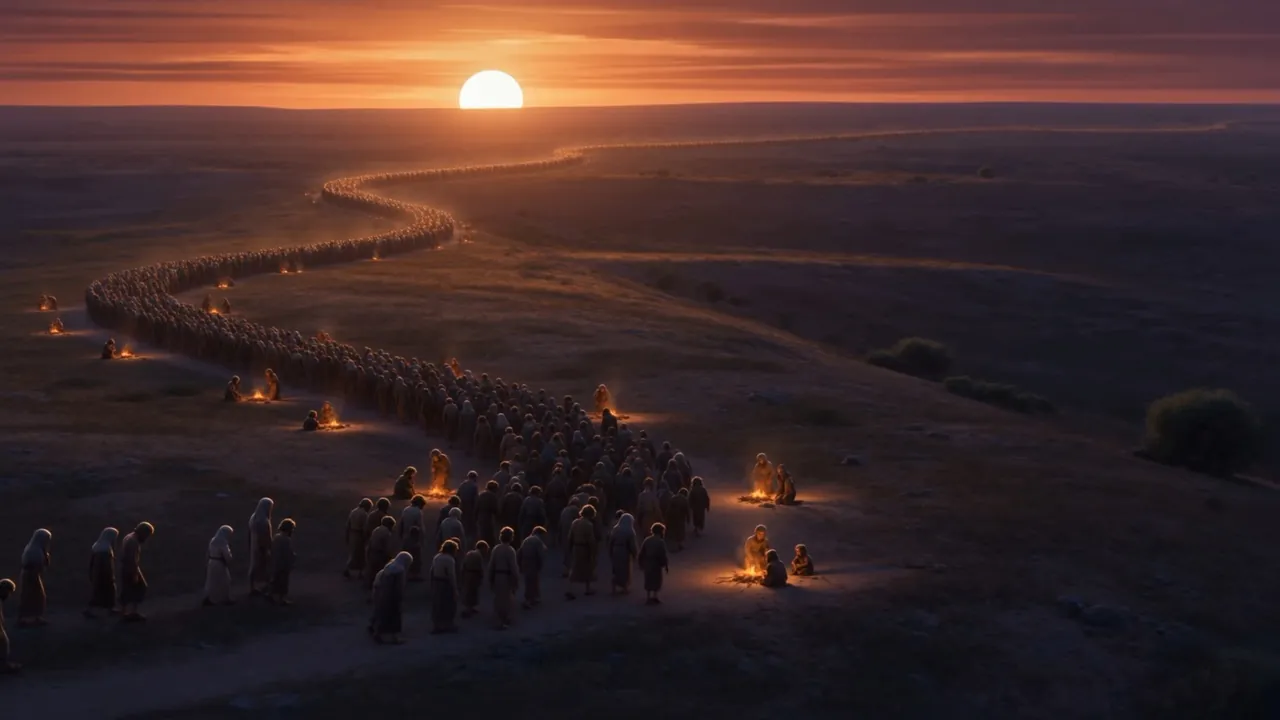
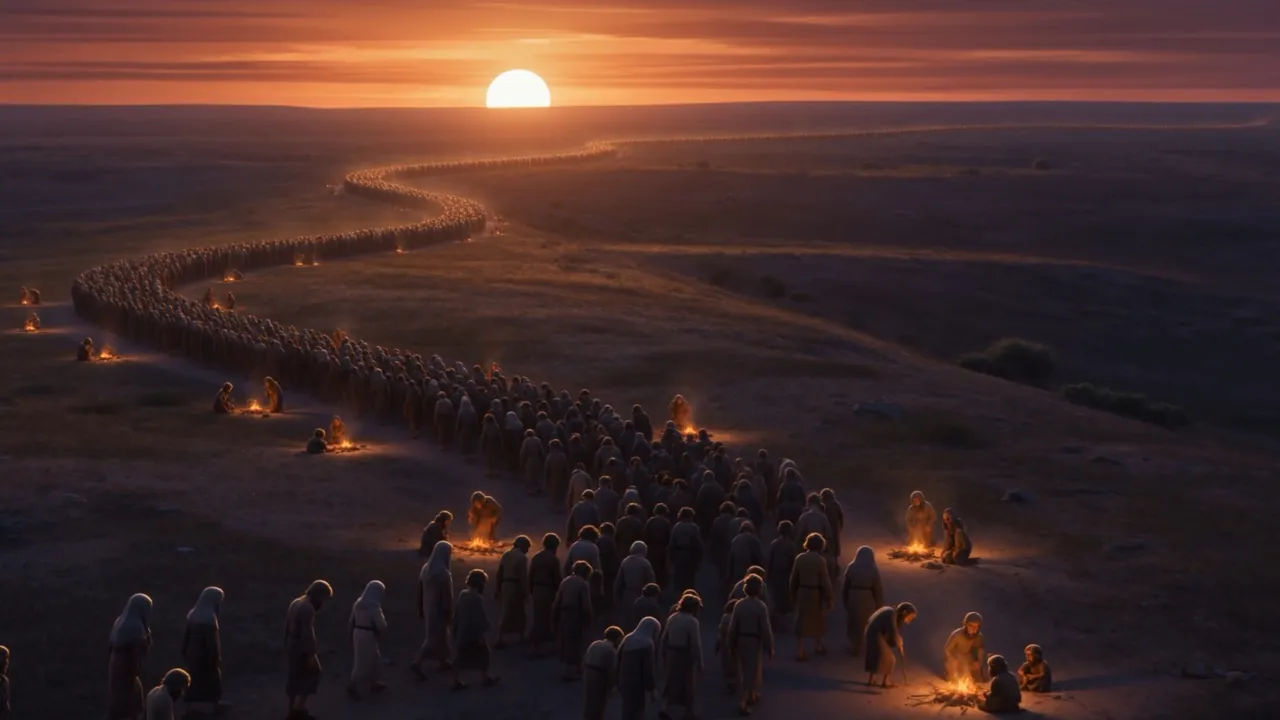
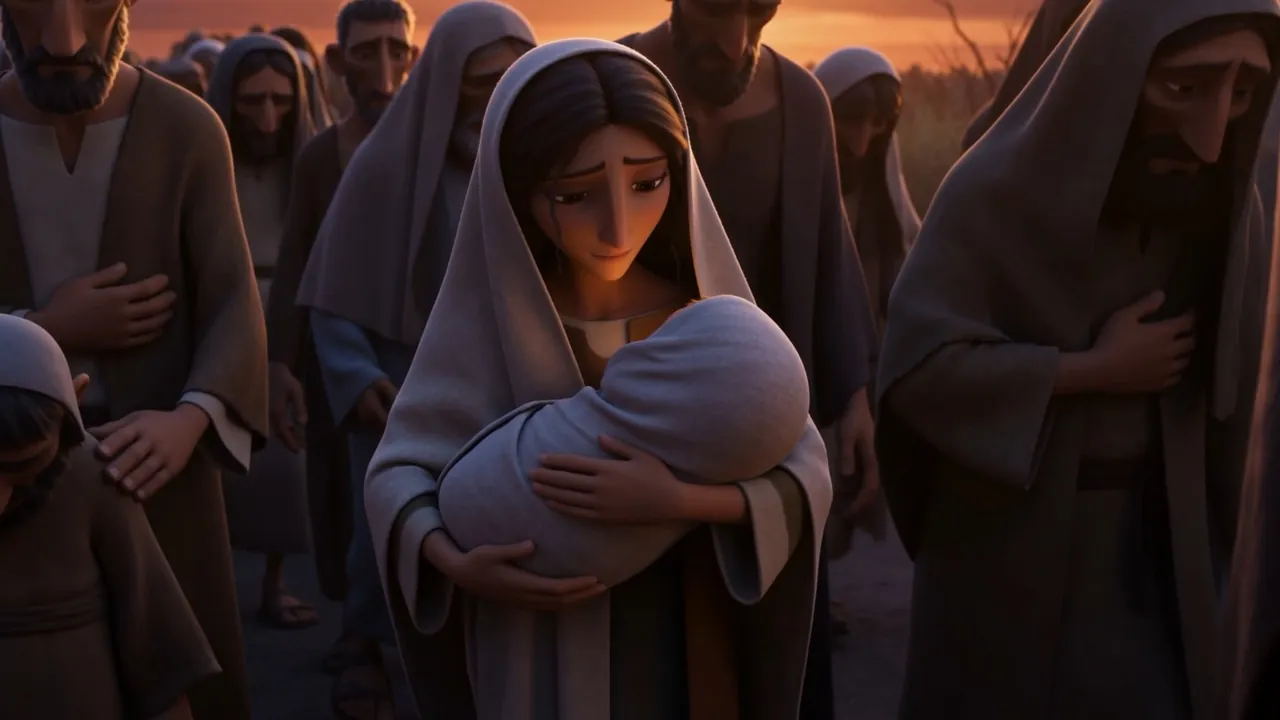

So Judah was carried away captive out of his land. Ten words for the end of a nation, four hundred years after David. A night, a sunrise and a road, and the line keeps walking after the words have stopped. 2 Kings 25 : 21
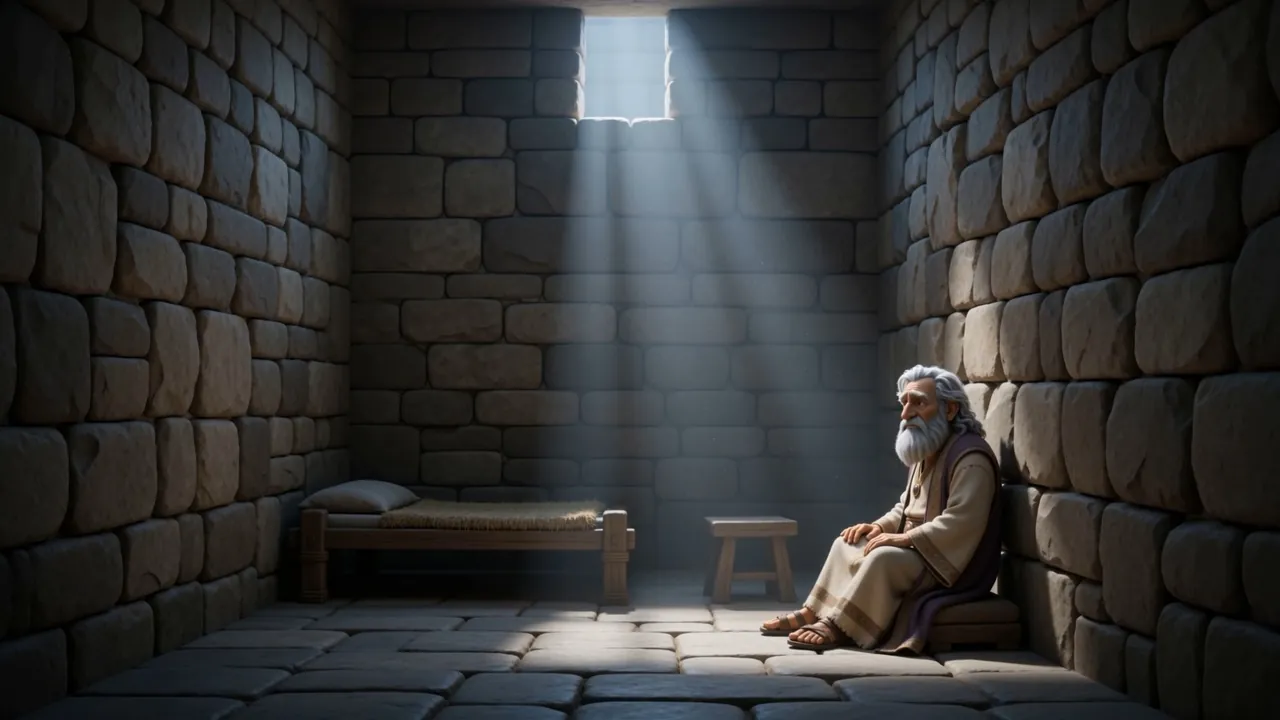
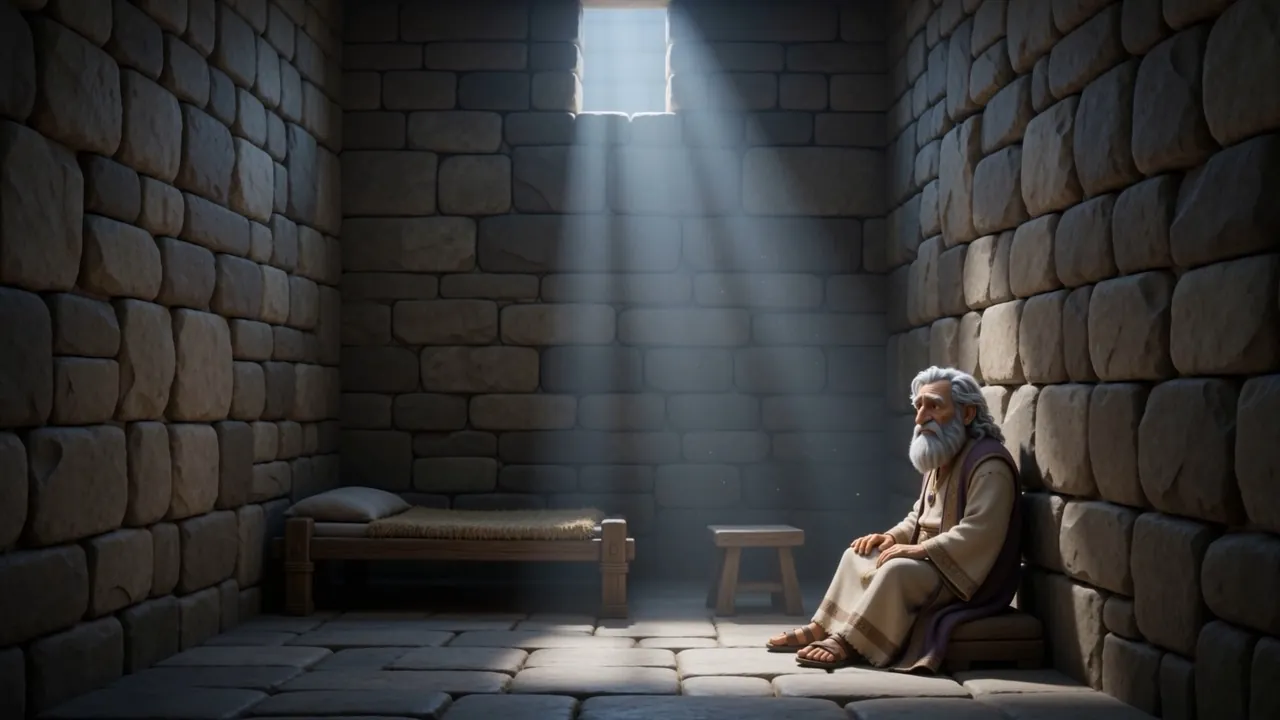
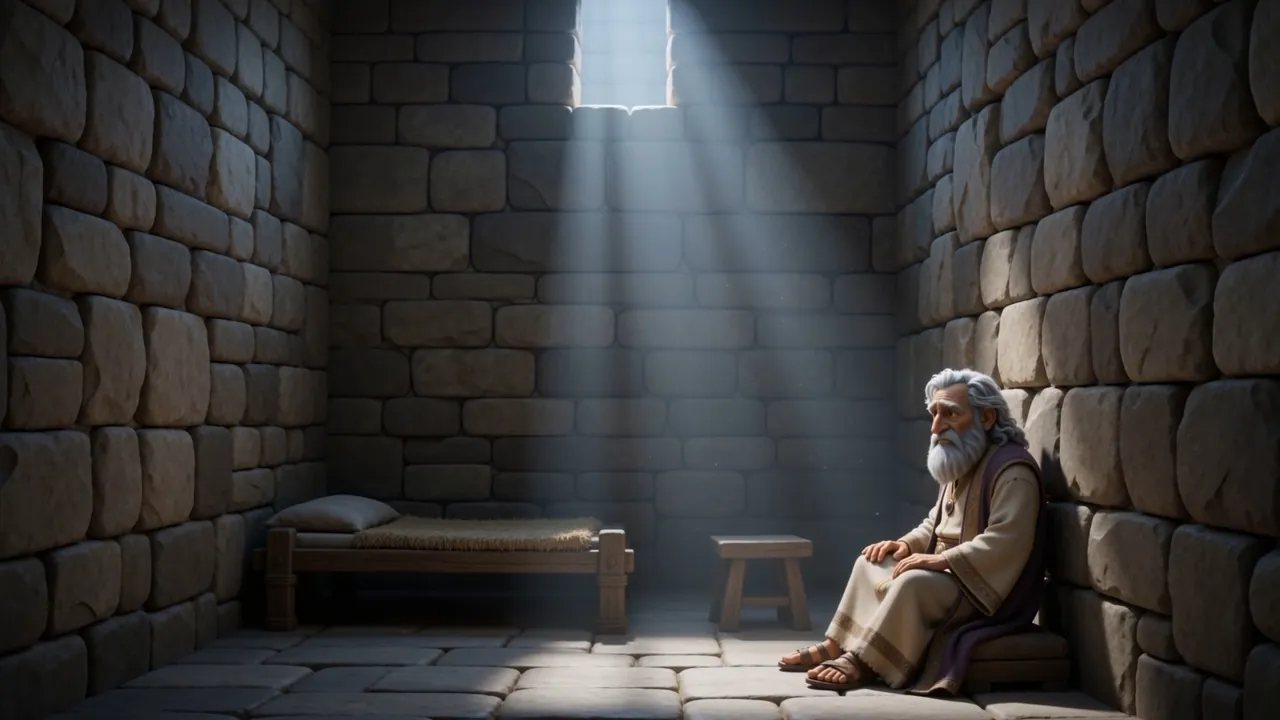

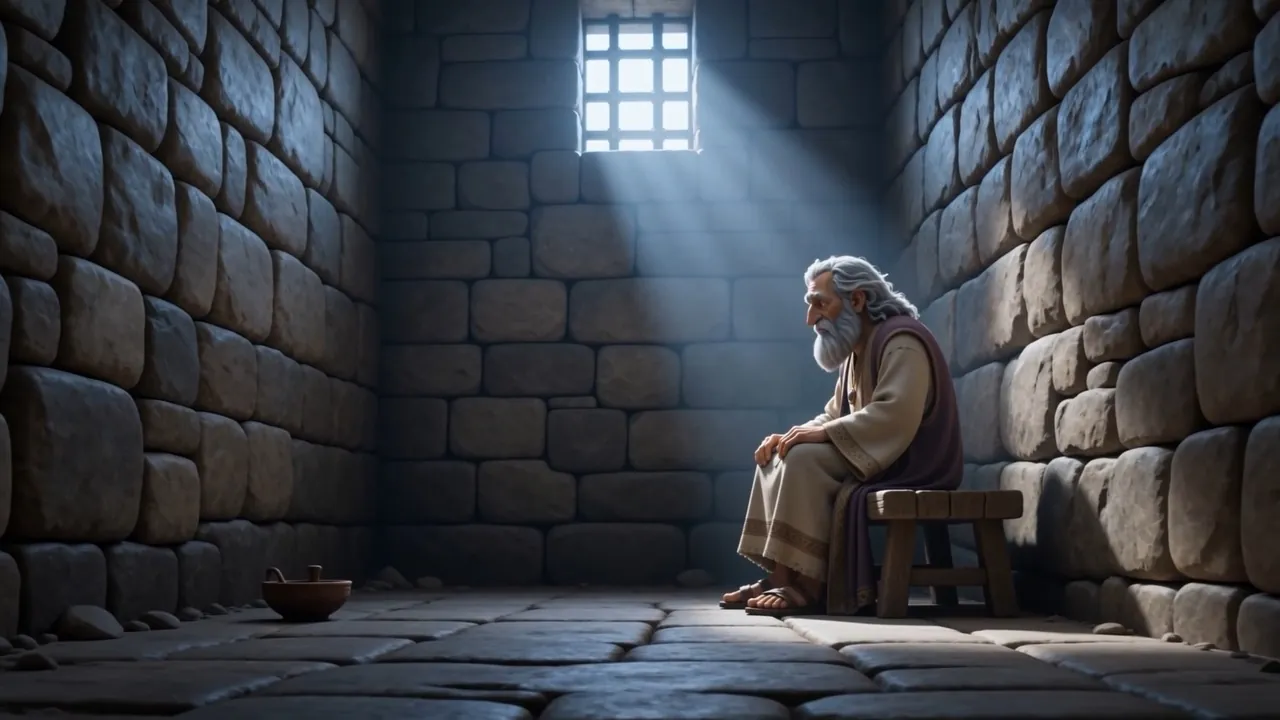
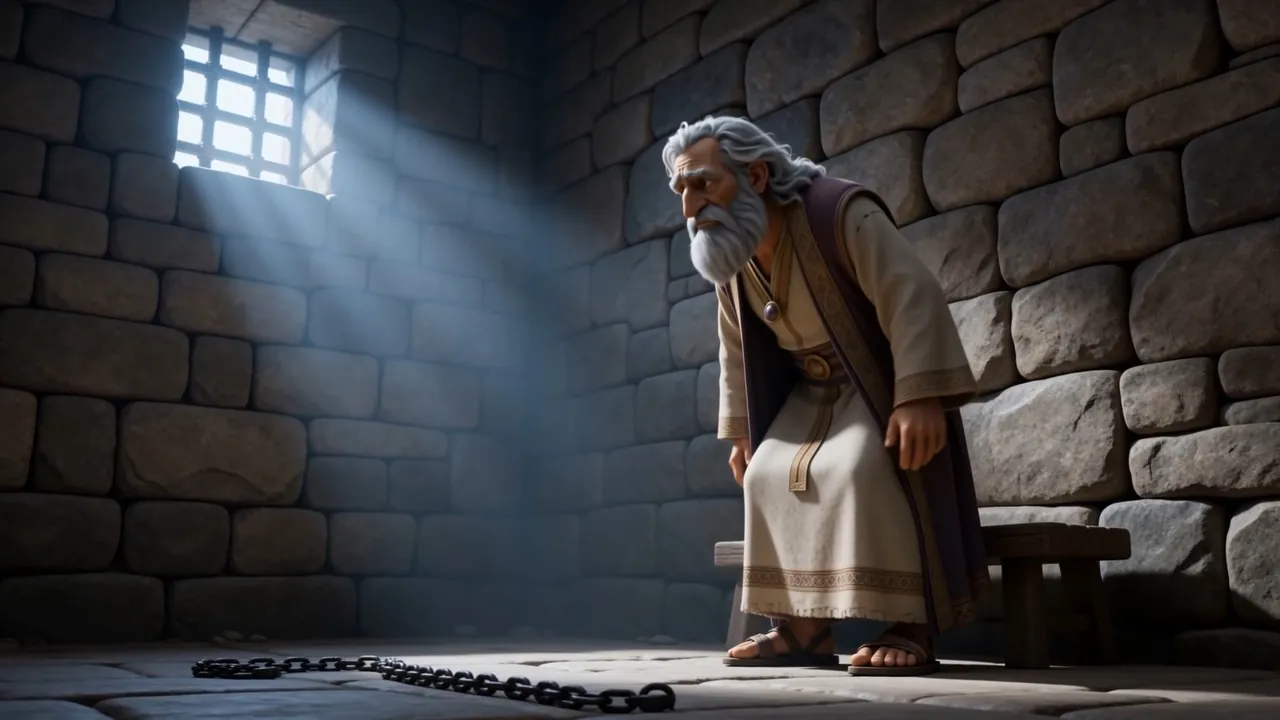
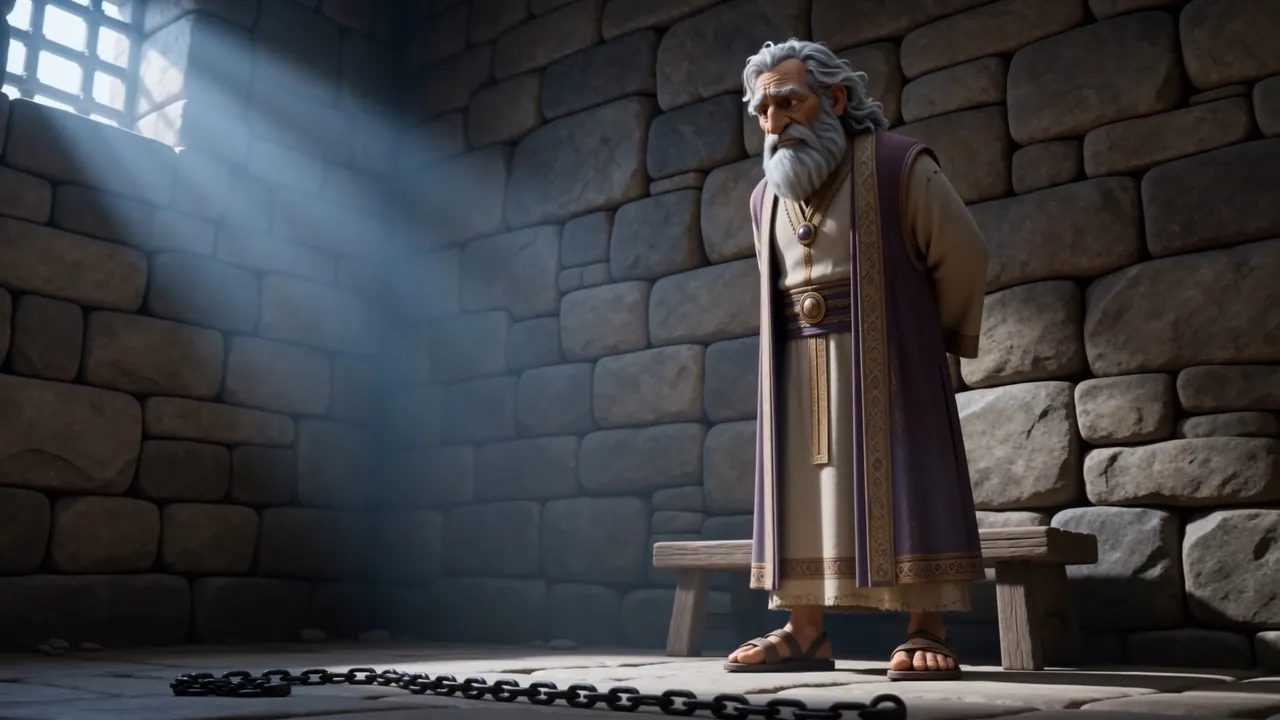
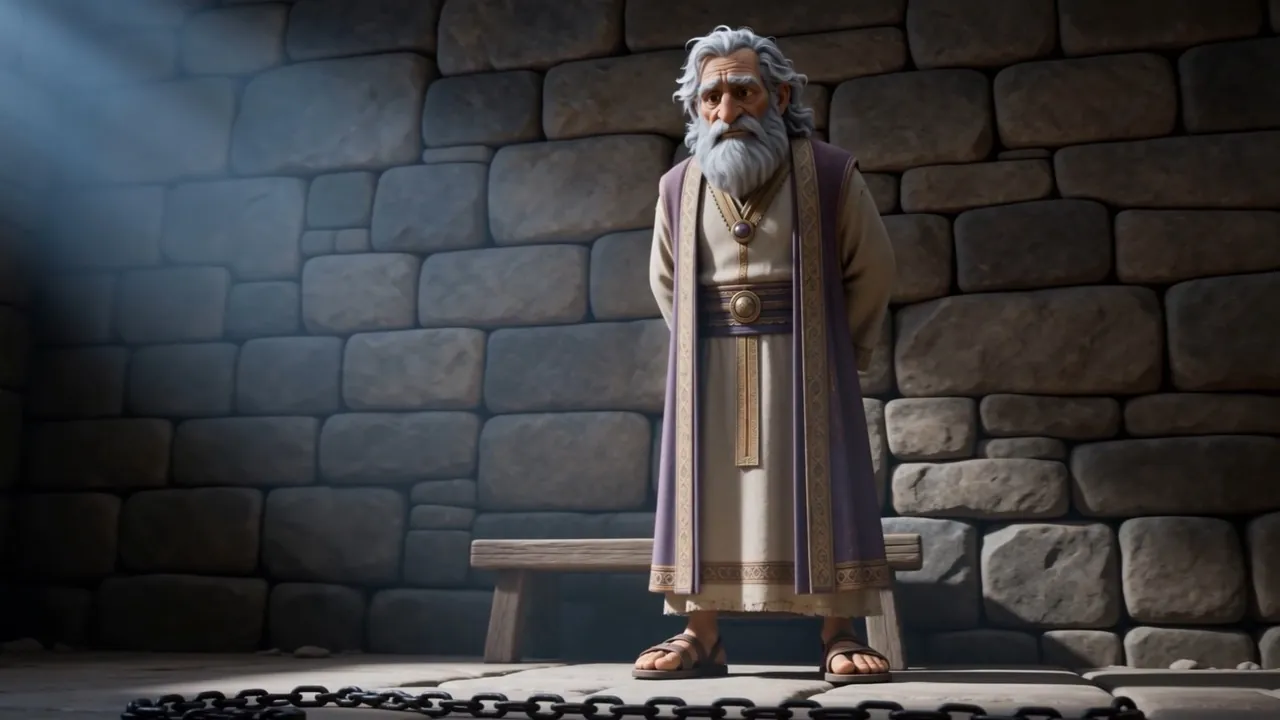
And then, after the fall of everything, the Books of Kings do something nobody expects. They go and find one man. Jehoiachin — carried off as a teenager in the first deportation, king of Judah for three months — has been in a Babylonian prison ever since. He gets a clean, tiny cell and a very long time. 2 Kings 25 : 27
Thirty-seven years in a room.
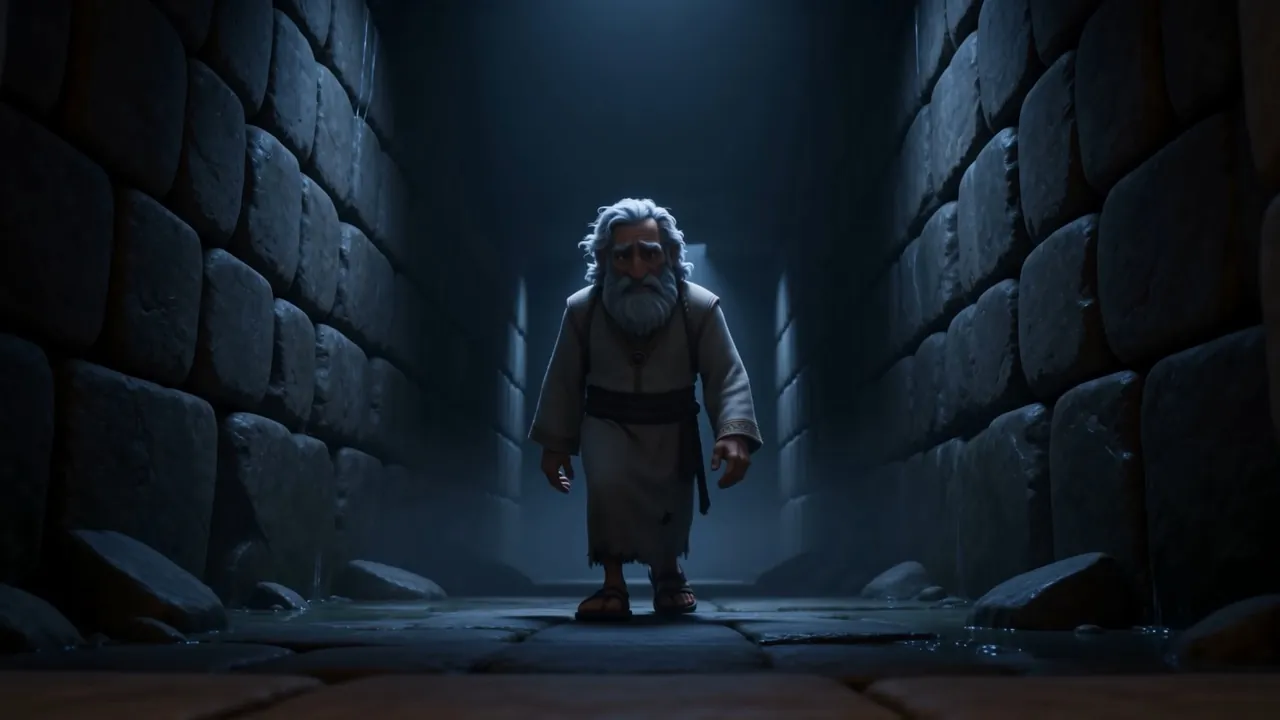
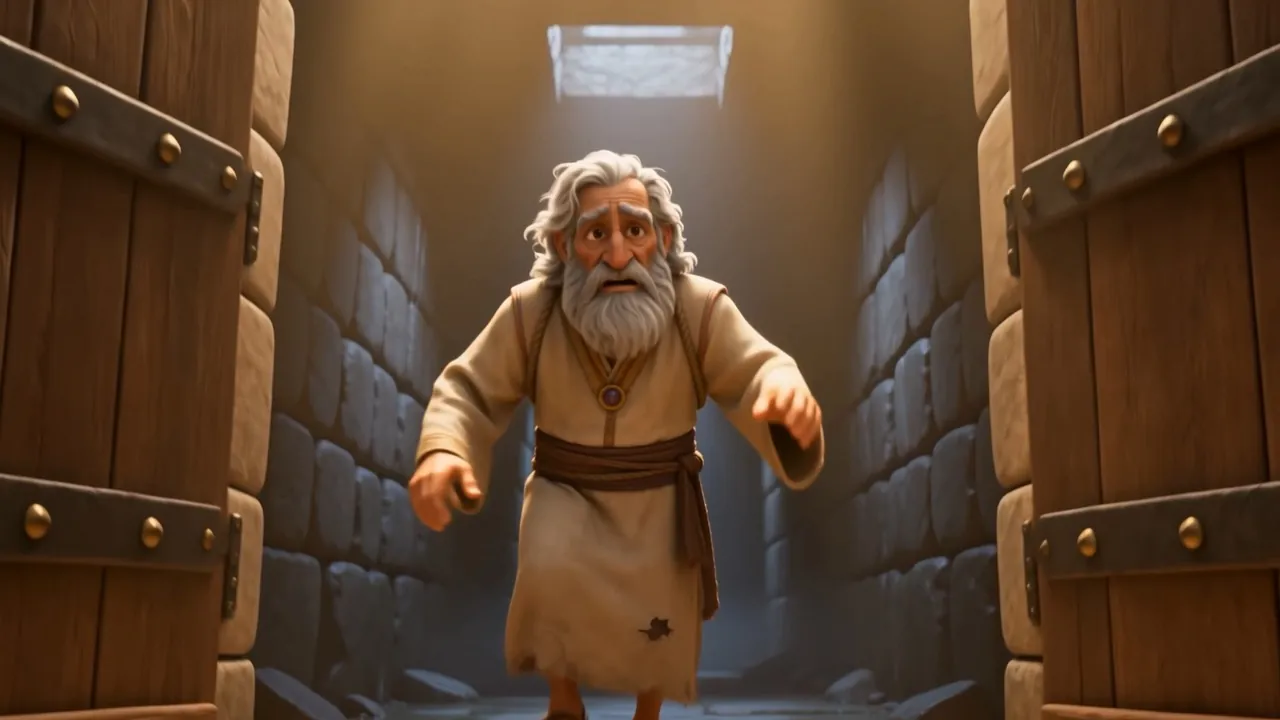

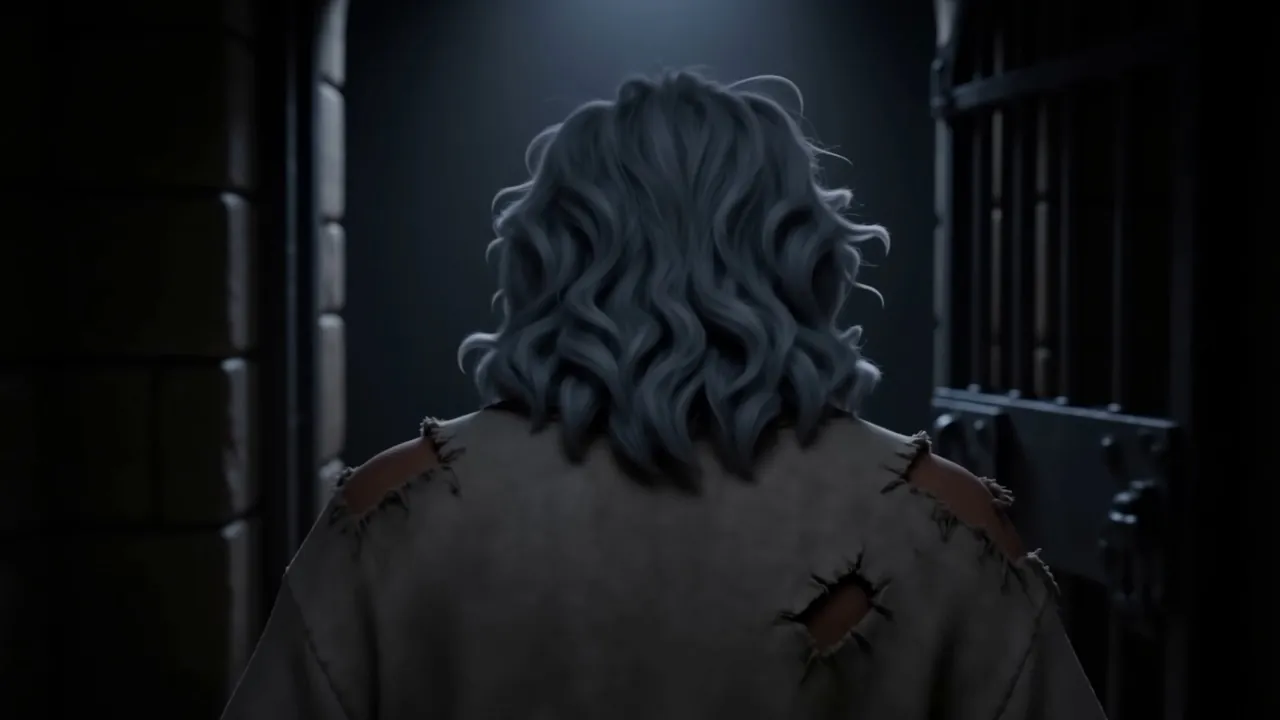


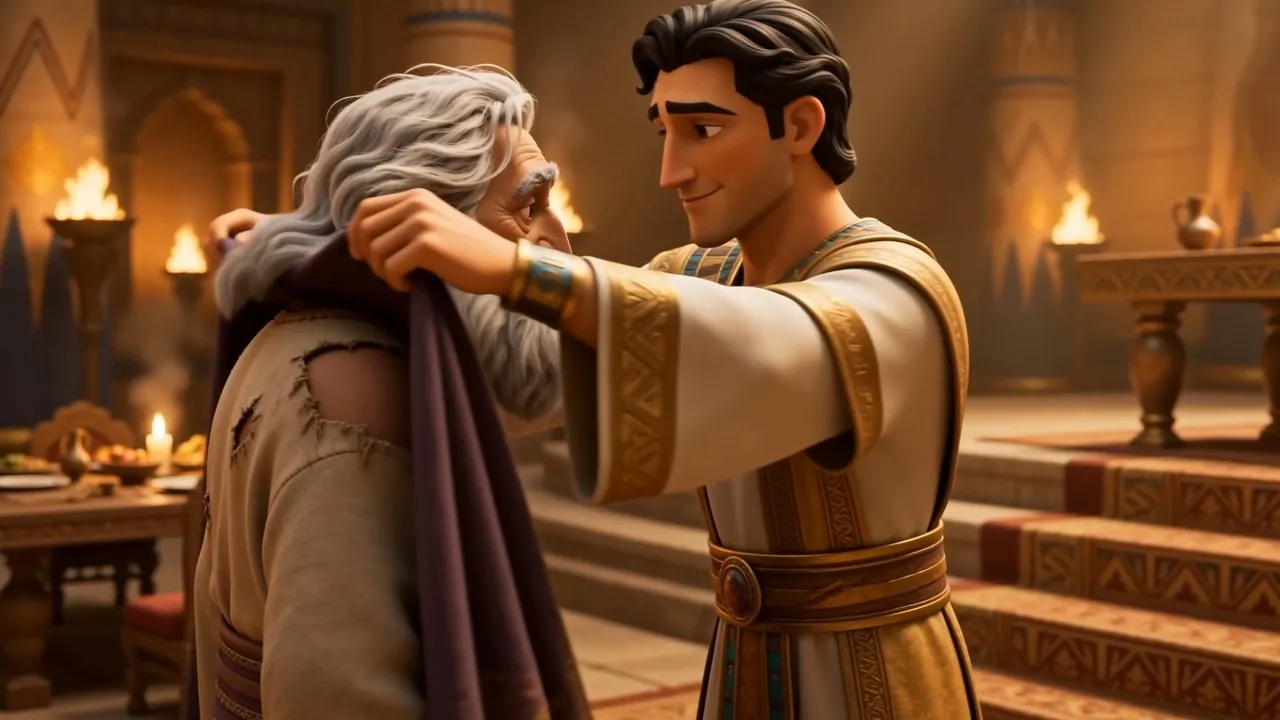
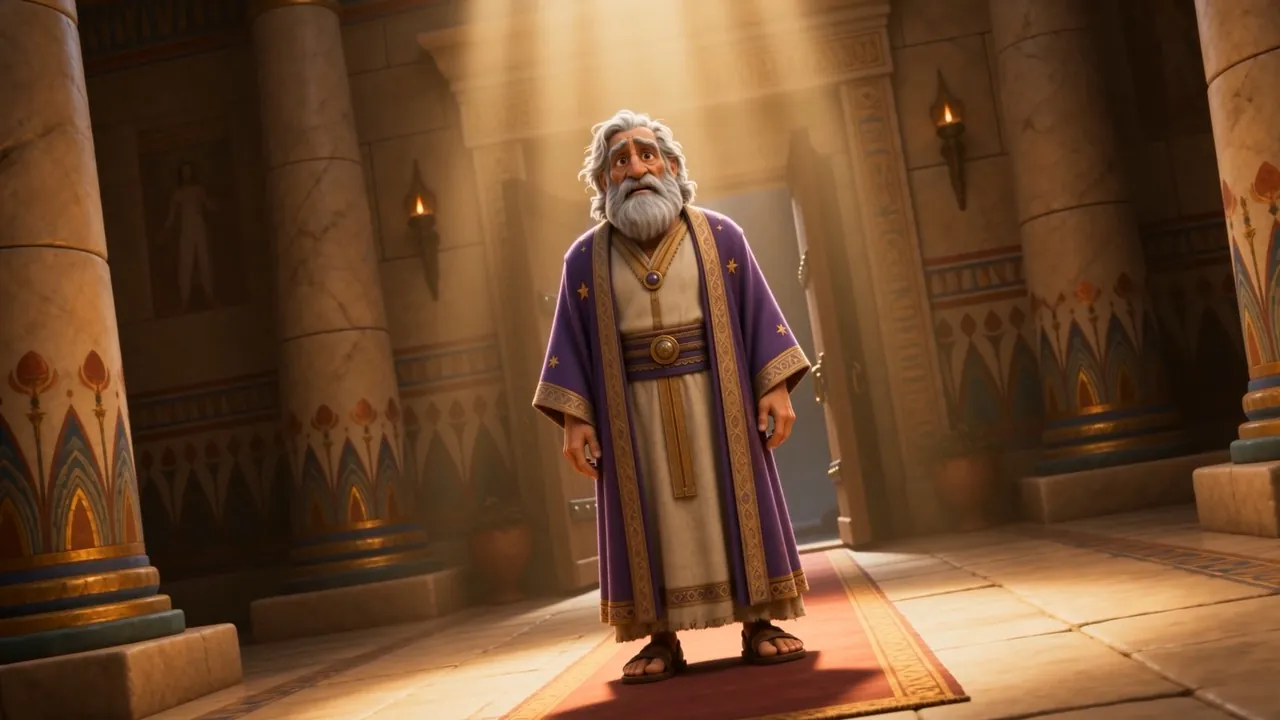
In the thirty-seventh year of the captivity of Jehoiachin king of Judah, in the twelfth month, Evil-merodach king of Babylon, in the year that he began to reign, lifted up the head of Jehoiachin king of Judah out of prison. "Lifted up the head" is the Hebrew idiom for a pardon. He also spoke kindly to him, which the text thought worth recording. 2 Kings 25 : 27–28
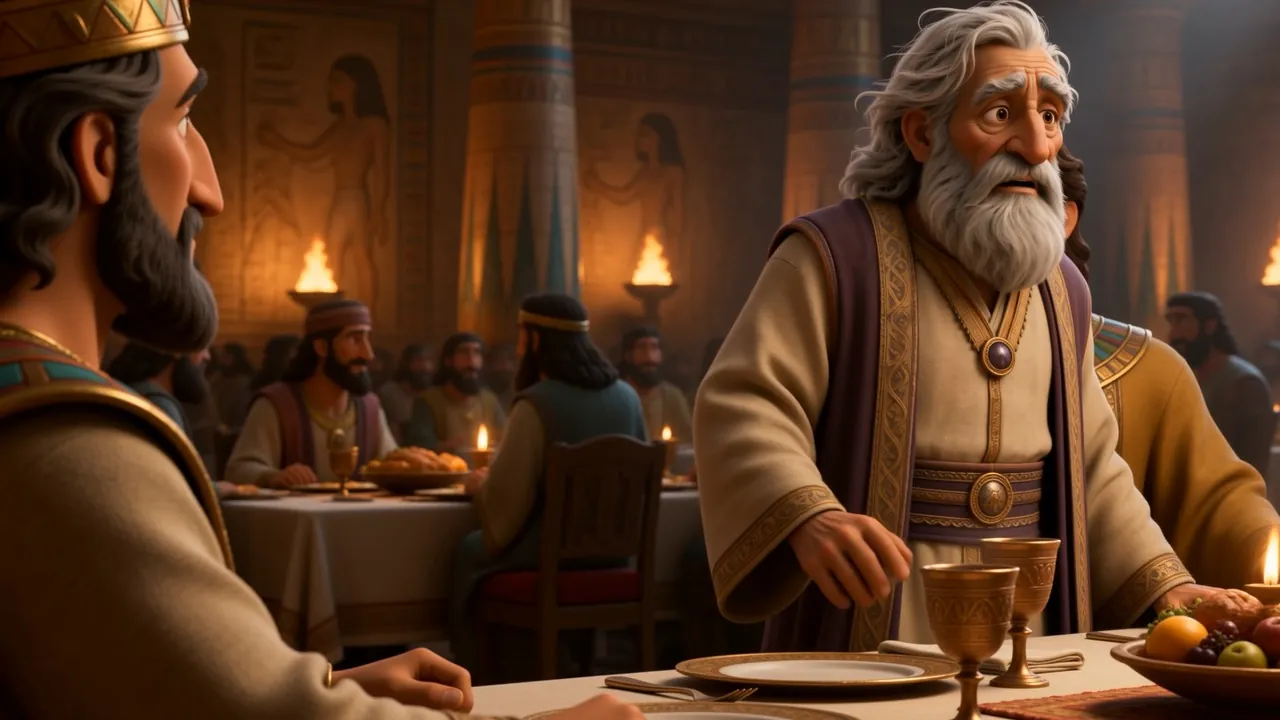
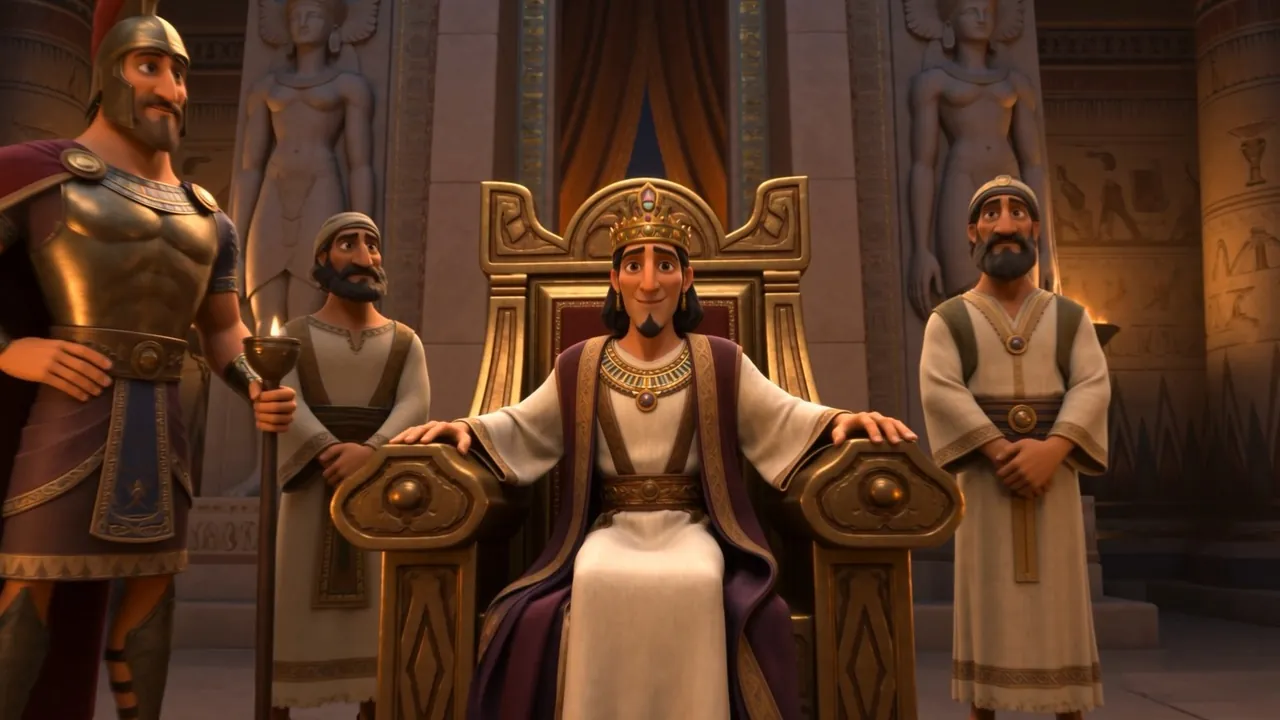
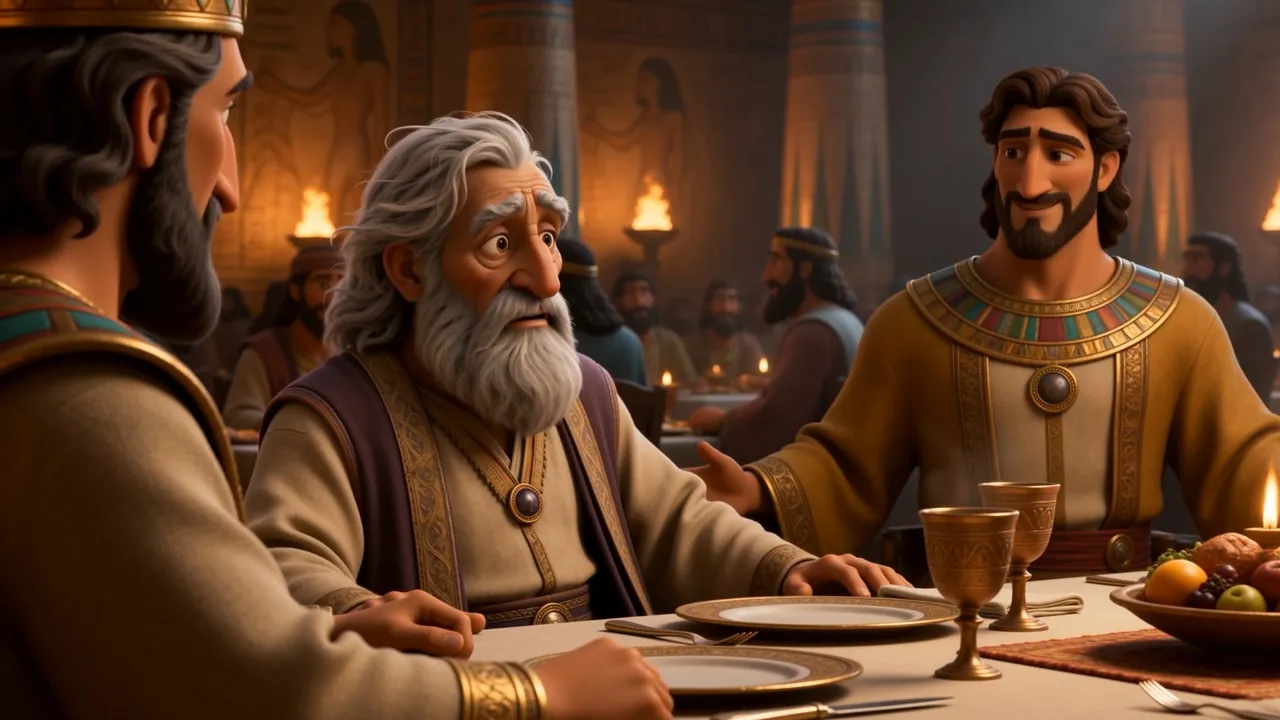
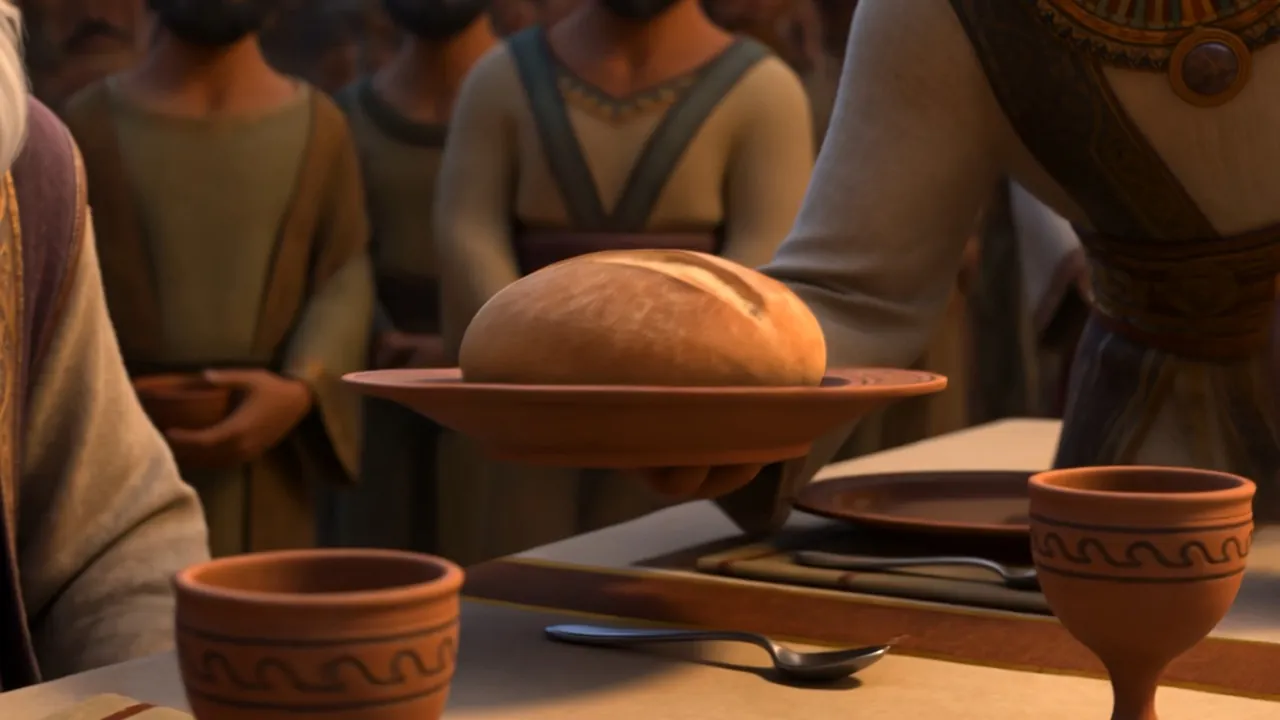

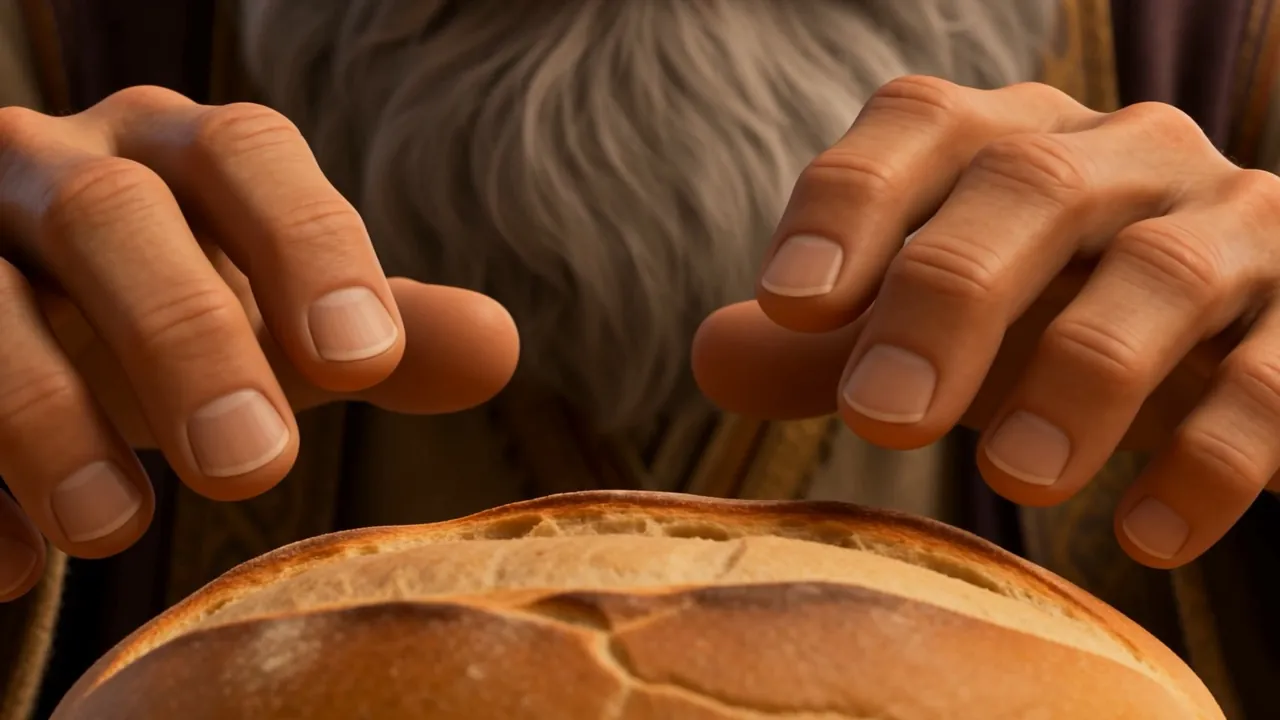
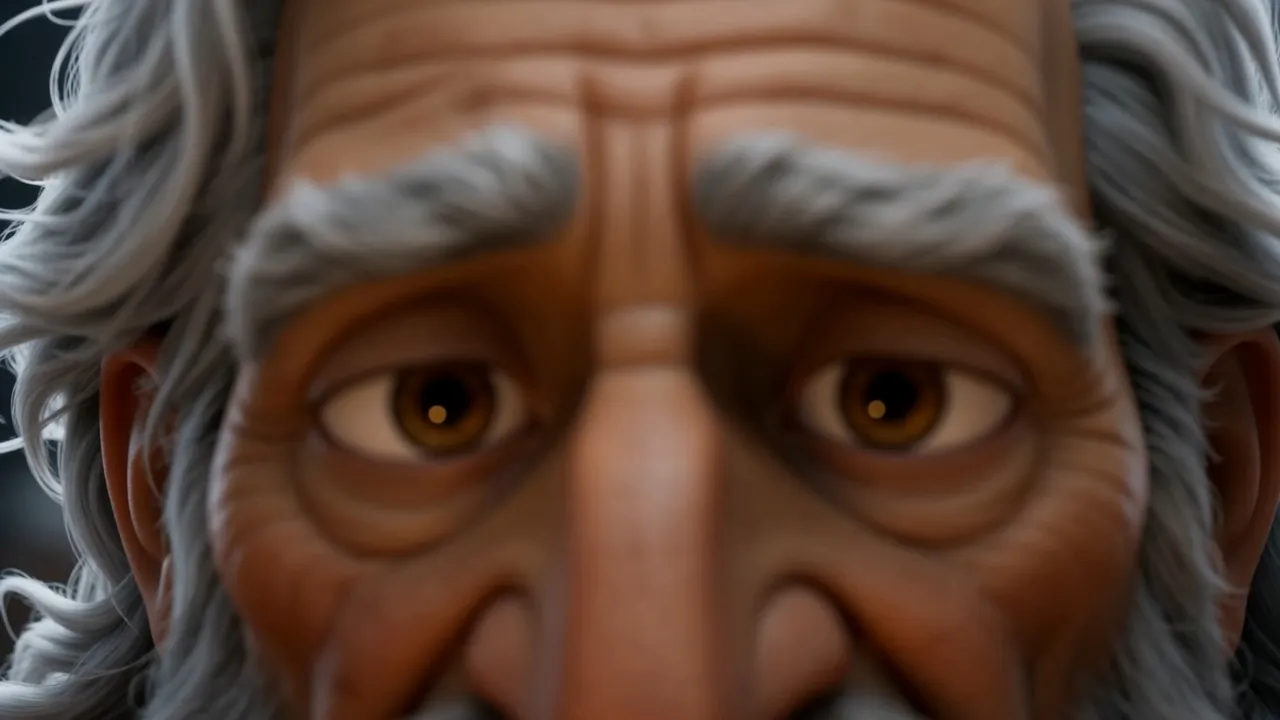

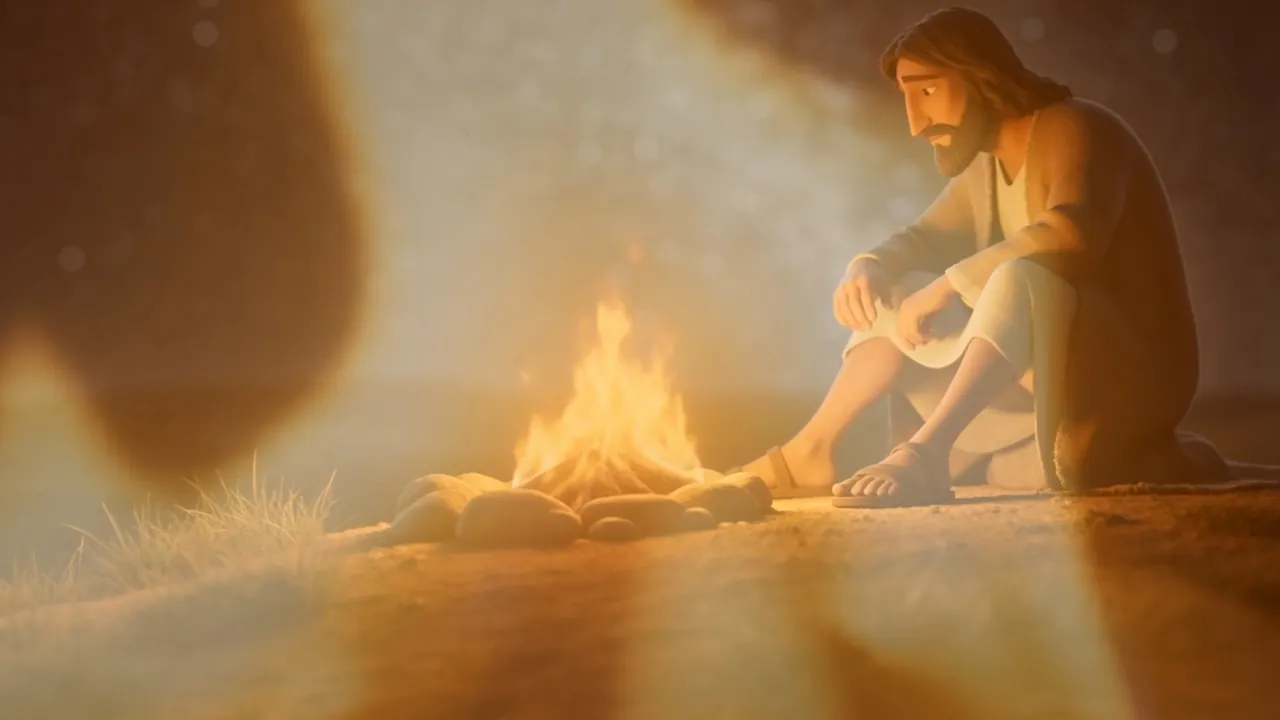
He changed his prison garments, and ate bread before him continually all the days of his life. Not a state visit. Not a release into exile. A permanent place at the table, every day, for the rest of his life. And the moment that matters is this one: a man who has eaten prison rations for thirty-seven years, putting both hands on a loaf of bread. 2 Kings 25 : 29
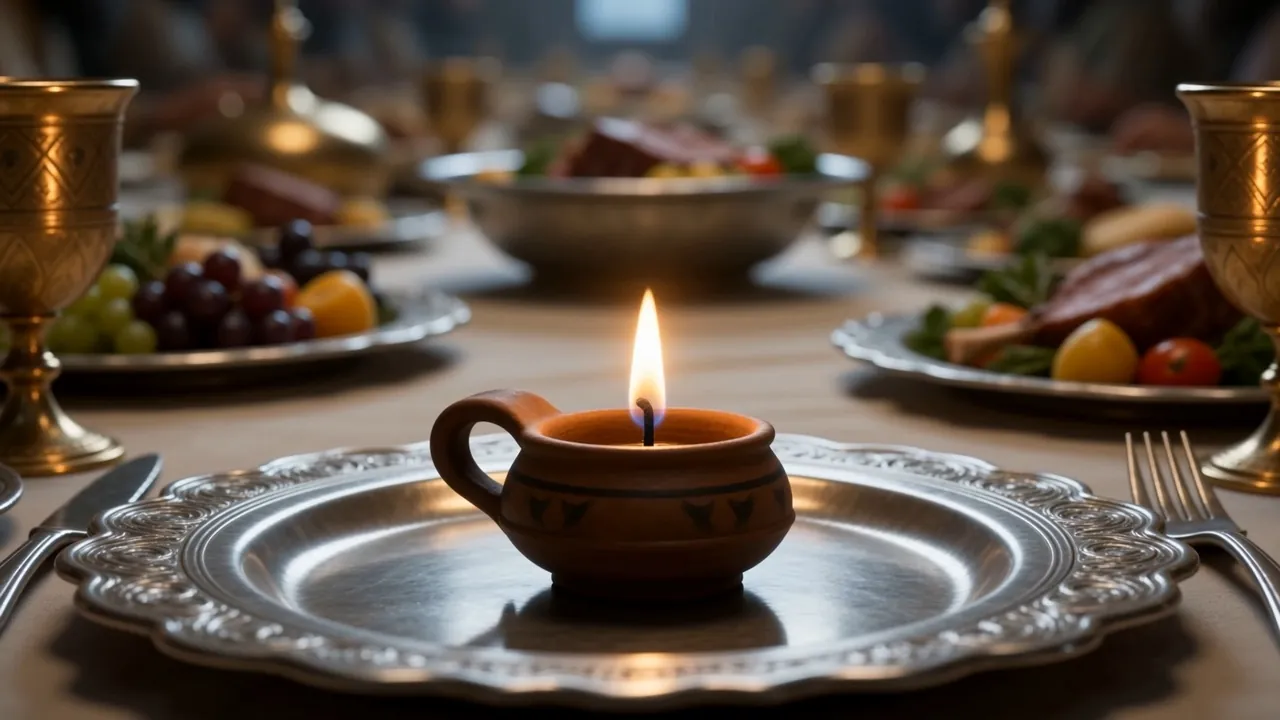
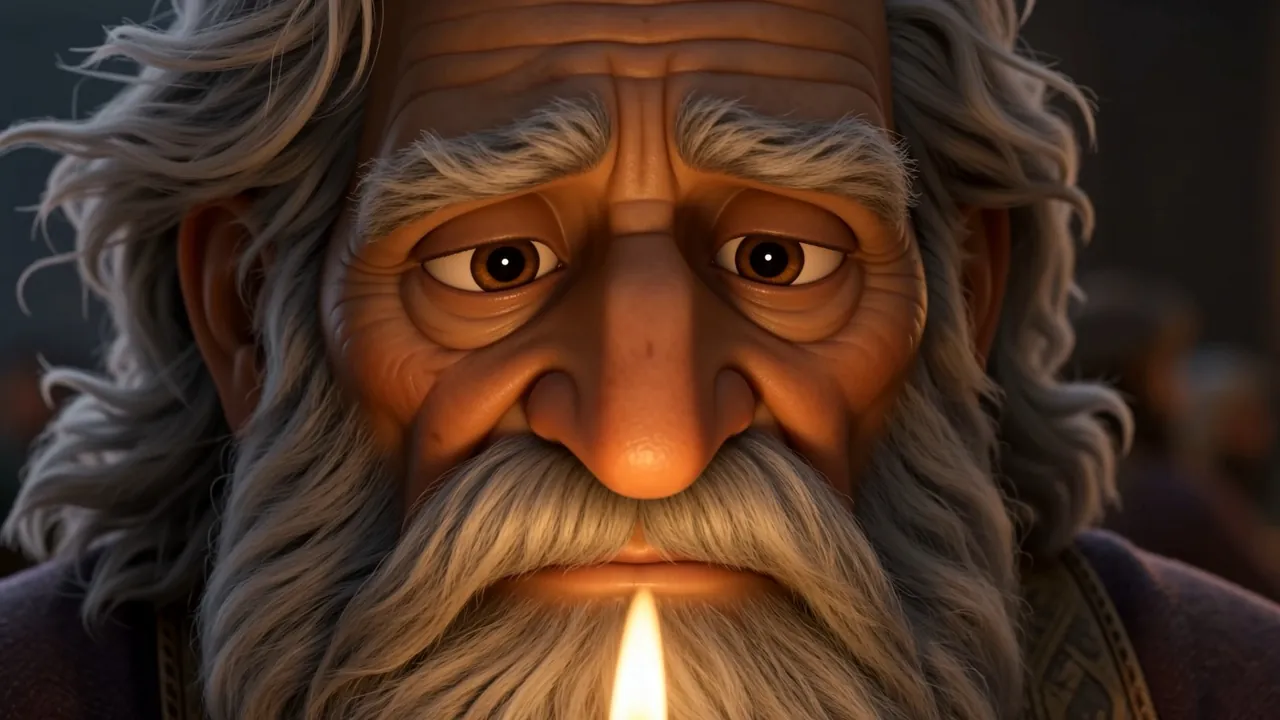




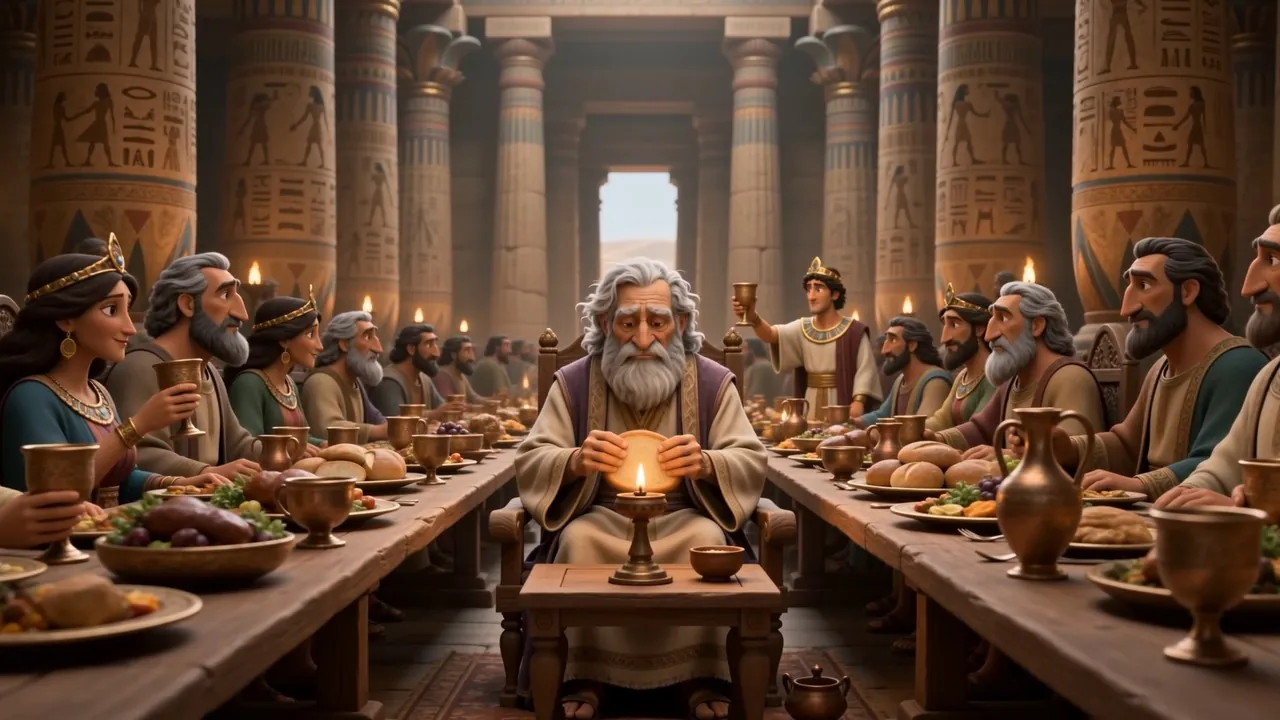
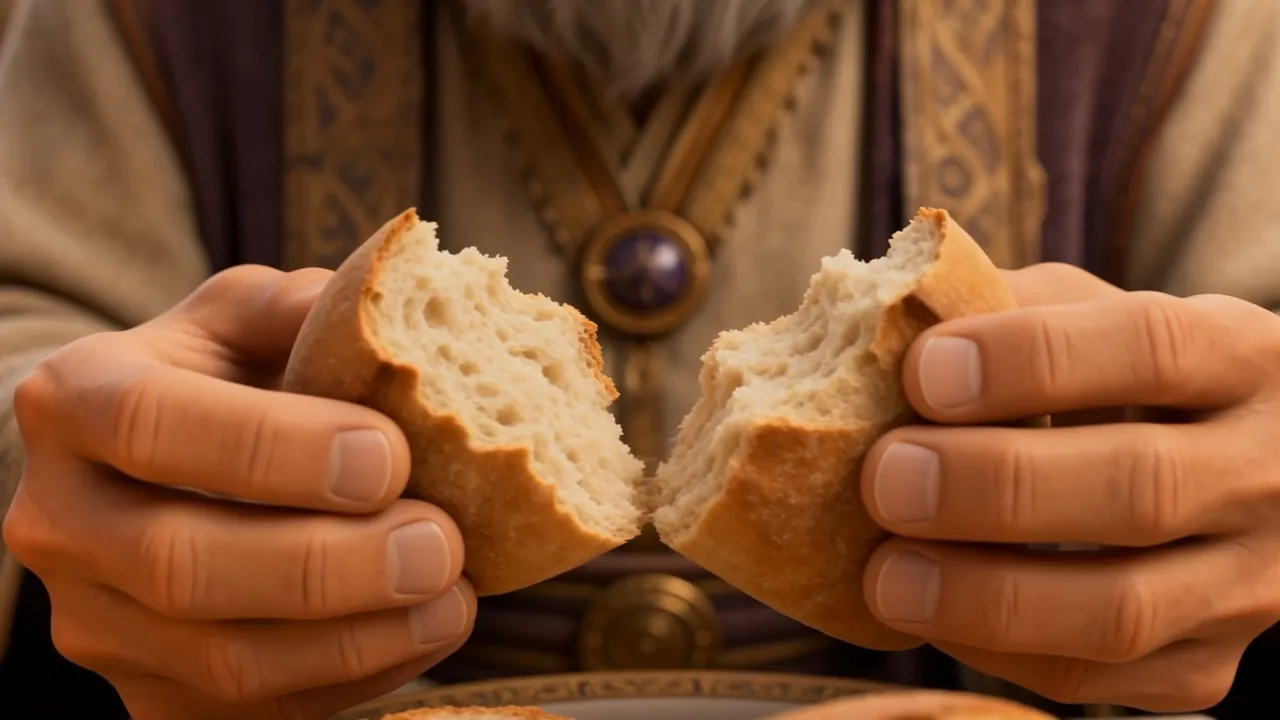
For his allowance, there was a continual allowance given him by the king, every day a portion, all the days of his life. That is the last sentence of the Books of Kings. Not a victory, not a restoration — a food allowance for one old man in a foreign capital, from a line God had promised would always have a lamp in Jerusalem. The lamp is very small. It is still lit. 2 Kings 25 : 30
A continual allowance — every day, all his life.





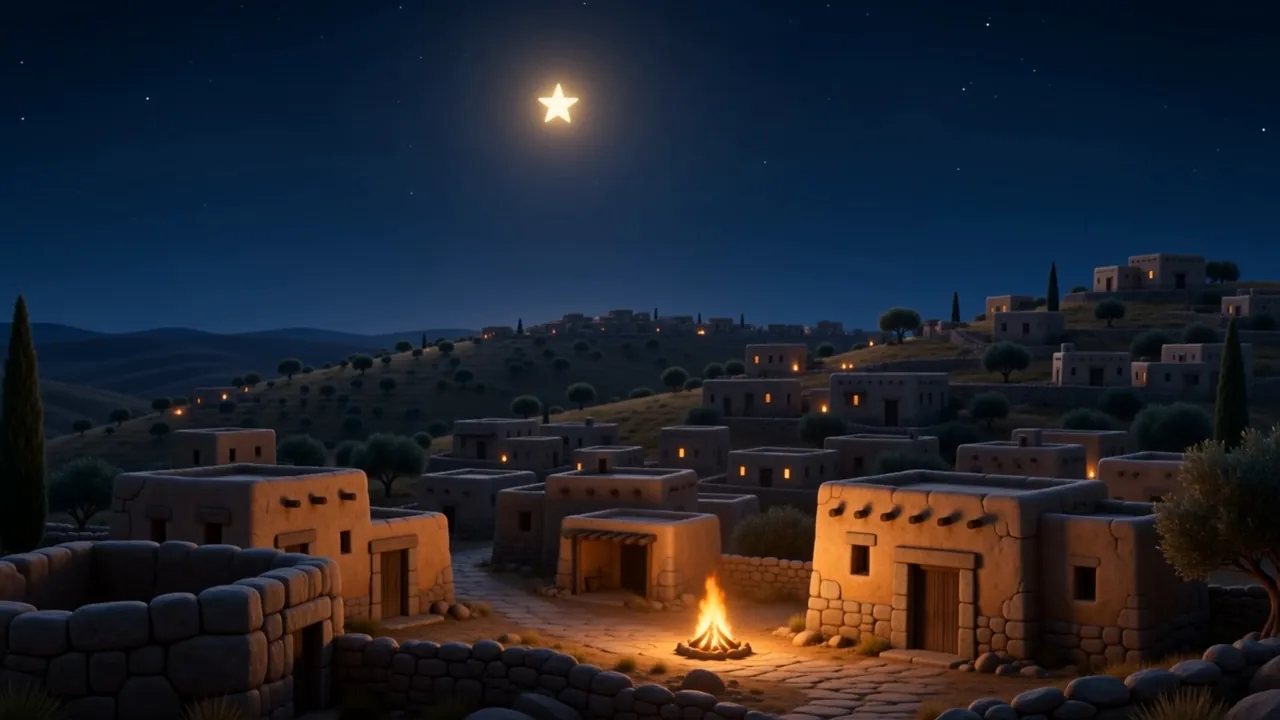
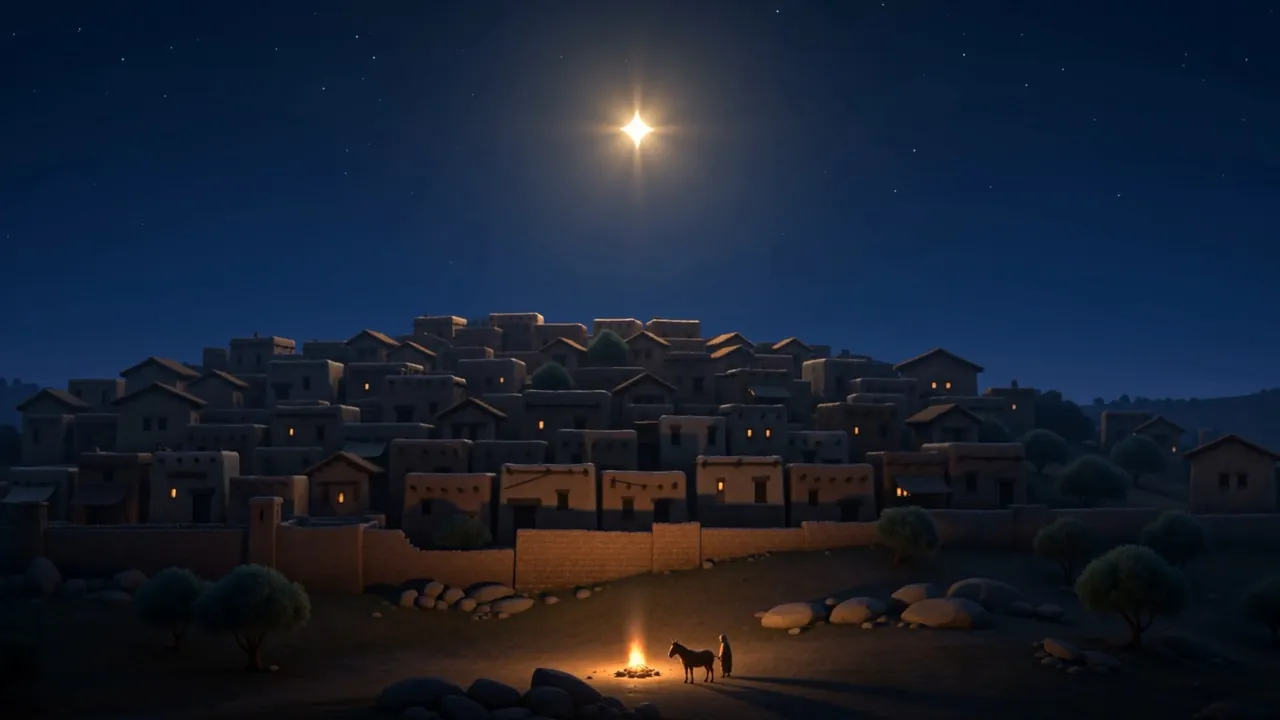
And then comes the thing the whole story has been building to. The little flame at the Babylonian table becomes a fire on a hillside, and the hillside is above a town called Bethlehem, and there is a star over it. The Books of Kings end in exile with a lamp that will not go out. Six hundred years later, somebody comes to that town to be born. 2 Kings 25 : 30 · Luke 2 : 8
After the story
The last sentence is a food allowance.
Two books, four hundred years, forty kings — and the closing line of the whole thing is an accounting note about a daily ration for a man in captivity. No restoration, no army, no return. But God had promised David a lamp always before me in Jerusalem, and here at the very end, after the city burned and the line was broken and the gold went east, there is still somebody alive from that family, and he is being fed. That is the whole of the hope the book leaves you with. It is enough.
Voices of the exile · hover or tap to turn
Jehoiachin
"Jehoiachin ate bread before him continually all the days of his life."
— 2 Kings 25:29
The City
"Then a breach was made in the city, and all the men of war fled by night…"
— 2 Kings 25:4
The Exiles
"So Judah was carried away captive out of his land."
— 2 Kings 25:21The end of Kings
How closely were you watching?
1. How long did the siege of Jerusalem last?
It began in the ninth year and the city was breached in the eleventh, with famine severe by the end (2 Kings 25:1–3).
2. What happened to the temple?
Jachin and Boaz — the two pillars that had stood since Solomon — were broken in pieces and taken east by weight (2 Kings 25:9, 13–17).
3. Who do the Books of Kings end with?
Evil-merodach "lifted up his head out of prison", spoke kindly to him, and gave him a place at the king's table for life (2 Kings 25:27–30).
4. What is the very last thing the book records?
An accounting note — and the only surviving sign of the promise that David's line would always have a lamp (2 Kings 25:30).
What this story teaches
God keeps promises at the smallest possible scale.
The promise was a lamp for David's line in Jerusalem. What survives at the end of the book is one pardoned prisoner eating dinner nine hundred miles from Jerusalem. The promise is not broken. It is just very small.
"…that David my servant may have a lamp always before me in Jerusalem…" 1 Kings 11:36Endings in the Bible are rarely tidy.
Kings does not end with a lesson or a victory. It ends mid-story, in exile, on a detail so ordinary it reads like an administrative note — and then stops.
"…every day a portion, all the days of his life." 2 Kings 25:30The hope was already in the room.
Nobody at that table knew what the family line would eventually produce. It cuts from the lamp to a hillside above Bethlehem and lets you do the rest.
"There were shepherds in the same country staying in the field, and keeping watch by night over their flock." Luke 2:8Read the scripture itself. 2 Kings 24 – 25 · World English Bible
2 Kings 24
1In his days Nebuchadnezzar king of Babylon came up, and Jehoiakim became his servant three years. Then he turned and rebelled against him.
2Yahweh sent against him bands of the Chaldeans, and bands of the Syrians, and bands of the Moabites, and bands of the children of Ammon, and sent them against Judah to destroy it, according to Yahweh’s word, which he spoke by his servants the prophets.
3Surely at the commandment of Yahweh this came on Judah, to remove them out of his sight, for the sins of Manasseh, according to all that he did,
4and also for the innocent blood that he shed; for he filled Jerusalem with innocent blood, and Yahweh would not pardon.
5Now the rest of the acts of Jehoiakim, and all that he did, aren’t they written in the book of the chronicles of the kings of Judah?
6So Jehoiakim slept with his fathers, and Jehoiachin his son reigned in his place.
7The king of Egypt didn’t come out of his land any more; for the king of Babylon had taken, from the brook of Egypt to the river Euphrates, all that belonged to the king of Egypt.
8Jehoiachin was eighteen years old when he began to reign, and he reigned in Jerusalem three months. His mother’s name was Nehushta the daughter of Elnathan of Jerusalem.
9He did that which was evil in Yahweh’s sight, according to all that his father had done.
10At that time the servants of Nebuchadnezzar king of Babylon came up to Jerusalem, and the city was besieged.
11Nebuchadnezzar king of Babylon came to the city while his servants were besieging it,
12and Jehoiachin the king of Judah went out to the king of Babylon, he, and his mother, and his servants, and his princes, and his officers; and the king of Babylon captured him in the eighth year of his reign.
13He carried out from there all the treasures of Yahweh’s house, and the treasures of the king’s house, and cut in pieces all the vessels of gold, which Solomon king of Israel had made in Yahweh’s temple, as Yahweh had said.
14He carried away all Jerusalem, and all the princes, and all the mighty men of valor, even ten thousand captives, and all the craftsmen and the smiths. No one remained, except the poorest people of the land.
15He carried away Jehoiachin to Babylon, with the king’s mother, the king’s wives, his officers, and the chief men of the land. He carried them into captivity from Jerusalem to Babylon.
16All the men of might, even seven thousand, and the craftsmen and the smiths one thousand, all of them strong and fit for war, even them the king of Babylon brought captive to Babylon.
17The king of Babylon made Mattaniah, Jehoiachin’s father’s brother, king in his place, and changed his name to Zedekiah.
18Zedekiah was twenty-one years old when he began to reign, and he reigned eleven years in Jerusalem. His mother’s name was Hamutal the daughter of Jeremiah of Libnah.
19He did that which was evil in Yahweh’s sight, according to all that Jehoiakim had done.
20For through the anger of Yahweh, this happened in Jerusalem and Judah, until he had cast them out from his presence. Then Zedekiah rebelled against the king of Babylon.
2 Kings 25
1In the ninth year of his reign, in the tenth month, in the tenth day of the month, Nebuchadnezzar king of Babylon came, he and all his army, against Jerusalem, and encamped against it; and they built forts against it around it.
2So the city was besieged until the eleventh year of king Zedekiah.
3On the ninth day of the fourth month, the famine was severe in the city, so that there was no bread for the people of the land.
4Then a breach was made in the city, and all the men of war fled by night by the way of the gate between the two walls, which was by the king’s garden (now the Chaldeans were against the city around it); and the king went by the way of the Arabah.
5But the Chaldean army pursued the king, and overtook him in the plains of Jericho; and all his army was scattered from him.
6Then they captured the king, and carried him up to the king of Babylon to Riblah; and they passed judgment on him.
7They killed Zedekiah’s sons before his eyes, then put out Zedekiah’s eyes, bound him in fetters, and carried him to Babylon.
8Now in the fifth month, on the seventh day of the month, which was the nineteenth year of king Nebuchadnezzar, king of Babylon, Nebuzaradan the captain of the guard, a servant of the king of Babylon, came to Jerusalem.
9He burned Yahweh’s house, the king’s house, and all the houses of Jerusalem, even every great house, he burned with fire.
10All the army of the Chaldeans, who were with the captain of the guard, broke down the walls around Jerusalem.
11Nebuzaradan the captain of the guard carried away captive the residue of the people who were left in the city, and those who fell away, who fell to the king of Babylon, and the residue of the multitude.
12But the captain of the guard left some of the poorest of the land to work the vineyards and fields.
13The Chaldeans broke up the pillars of brass that were in Yahweh’s house and the bases and the bronze sea that were in Yahweh’s house, and carried the brass pieces to Babylon.
14They took away the pots, the shovels, the snuffers, the spoons, and all the vessels of brass with which they ministered.
15The captain of the guard took away the fire pans, the basins, that which was of gold, in gold, and that which was of silver, in silver.
16The two pillars, the one sea, and the bases, which Solomon had made for Yahweh’s house, the brass of all these vessels was not weighed.
17The height of the one pillar was eighteen cubits, and a capital of brass was on it. The height of the capital was three cubits, with network and pomegranates on the capital around it, all of brass; and the second pillar with its network was like these.
18The captain of the guard took Seraiah the chief priest, Zephaniah the second priest, and the three keepers of the threshold;
19and out of the city he took an officer who was set over the men of war; and five men of those who saw the king’s face, who were found in the city; and the scribe, the captain of the army, who mustered the people of the land; and sixty men of the people of the land, who were found in the city.
20Nebuzaradan the captain of the guard took them, and brought them to the king of Babylon to Riblah.
21The king of Babylon attacked them, and put them to death at Riblah in the land of Hamath. So Judah was carried away captive out of his land.
22As for the people who were left in the land of Judah, whom Nebuchadnezzar king of Babylon had left, even over them he made Gedaliah the son of Ahikam, the son of Shaphan, governor.
23Now when all the captains of the forces, they and their men, heard that the king of Babylon had made Gedaliah governor, they came to Gedaliah to Mizpah, even Ishmael the son of Nethaniah, and Johanan the son of Kareah, and Seraiah the son of Tanhumeth the Netophathite, and Jaazaniah the son of the Maacathite, they and their men.
24Gedaliah swore to them and to their men, and said to them, “Don’t be afraid because of the servants of the Chaldeans. Dwell in the land, and serve the king of Babylon, and it will be well with you.”
25But in the seventh month, Ishmael the son of Nethaniah, the son of Elishama, of the royal offspring came, and ten men with him, and struck Gedaliah, so that he died, with the Jews and the Chaldeans that were with him at Mizpah.
26All the people, both small and great, and the captains of the forces, arose, and came to Egypt; for they were afraid of the Chaldeans.
27In the thirty-seventh year of the captivity of Jehoiachin king of Judah, in the twelfth month, on the twenty-seventh day of the month, Evilmerodach king of Babylon, in the year that he began to reign, lifted up the head of Jehoiachin king of Judah out of prison;
28and he spoke kindly to him, and set his throne above the throne of the kings who were with him in Babylon,
29and changed his prison garments. Jehoiachin ate bread before him continually all the days of his life;
30and for his allowance, there was a continual allowance given him from the king, every day a portion, all the days of his life.
World English Bible (WEB) — a public-domain modern English translation. Read it freely, share it freely.
The Books of Kings — animated film 30% in production
These scenes are real frames from the film.
Help us finish it — and every story like it — free for the world.