The Books of Kings · Elisha
It wasborrowed.
He asked for a double portion of Elijah's spirit, parted the Jordan with it — and then spent it on a bad spring, a widow's debt, a ruined supper and a workman's lost axe head. Every scene below is a real frame from our animated film.



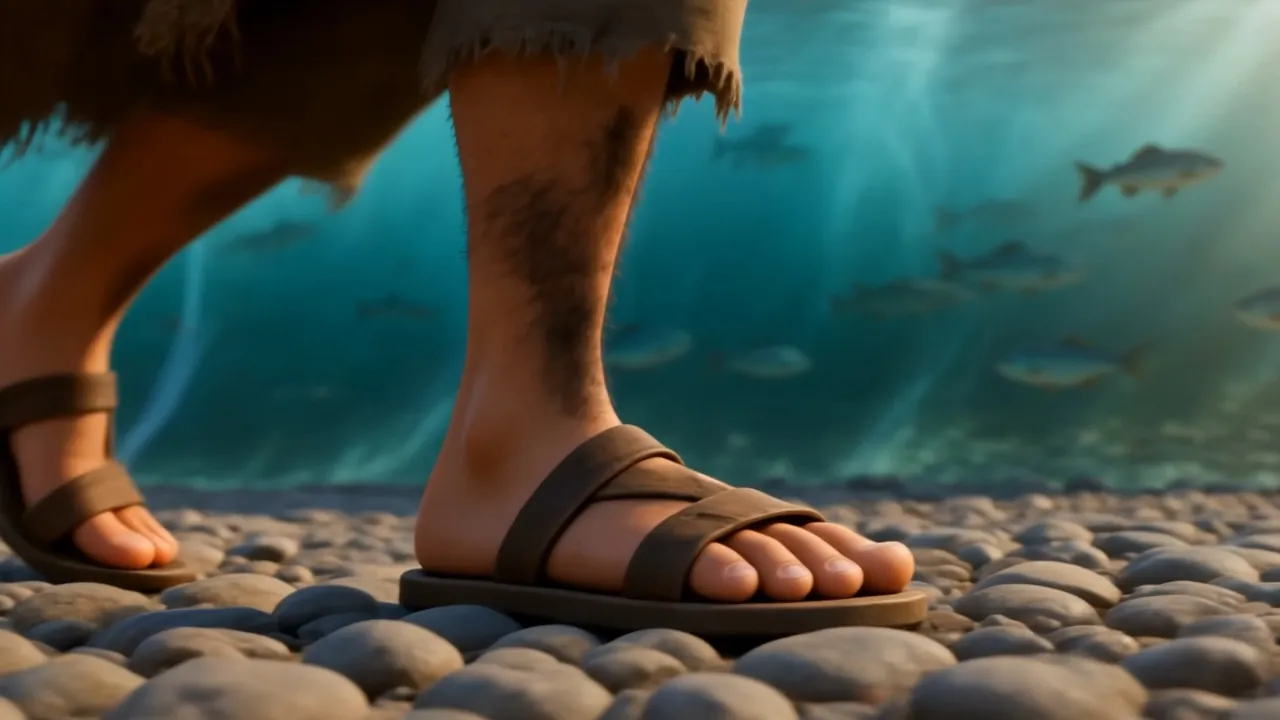
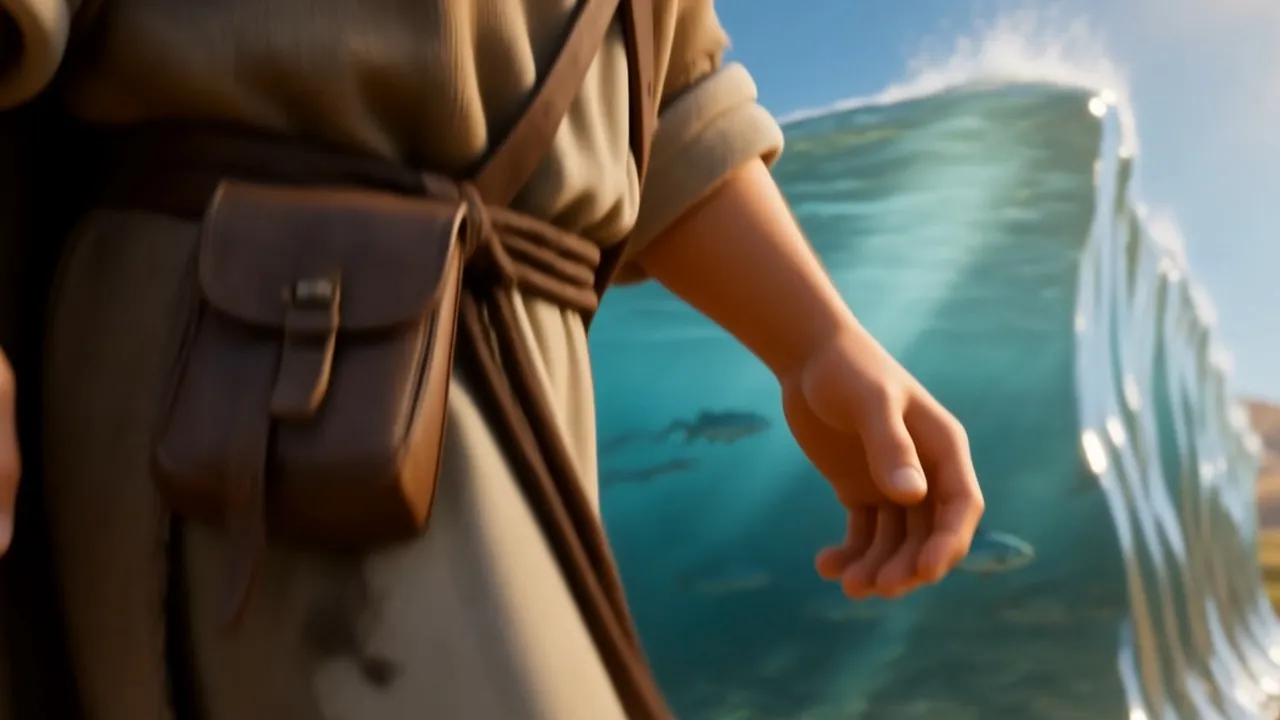
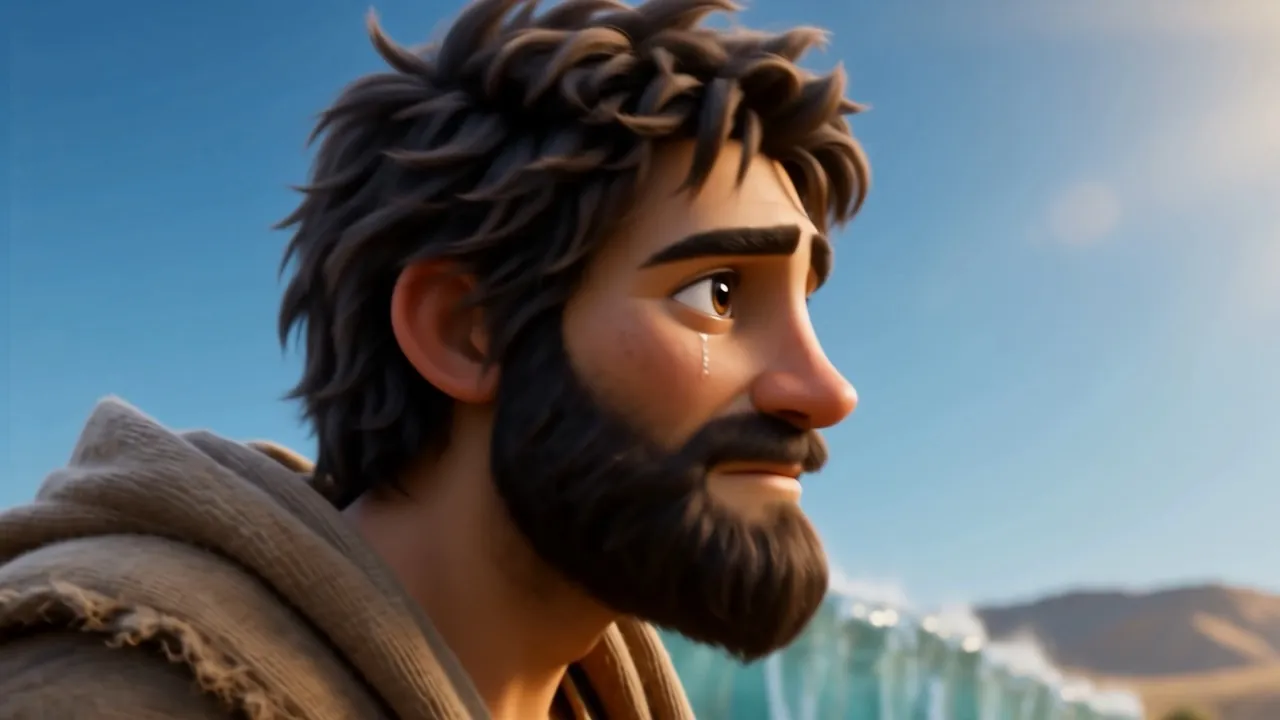
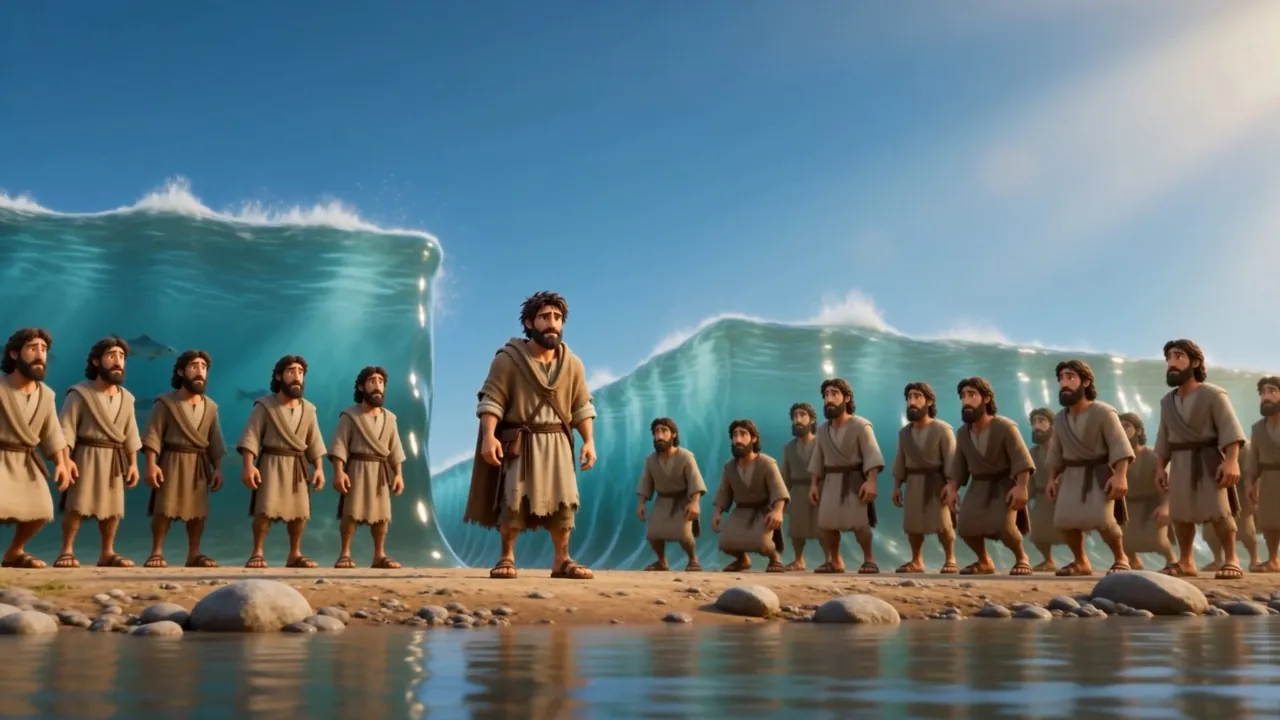
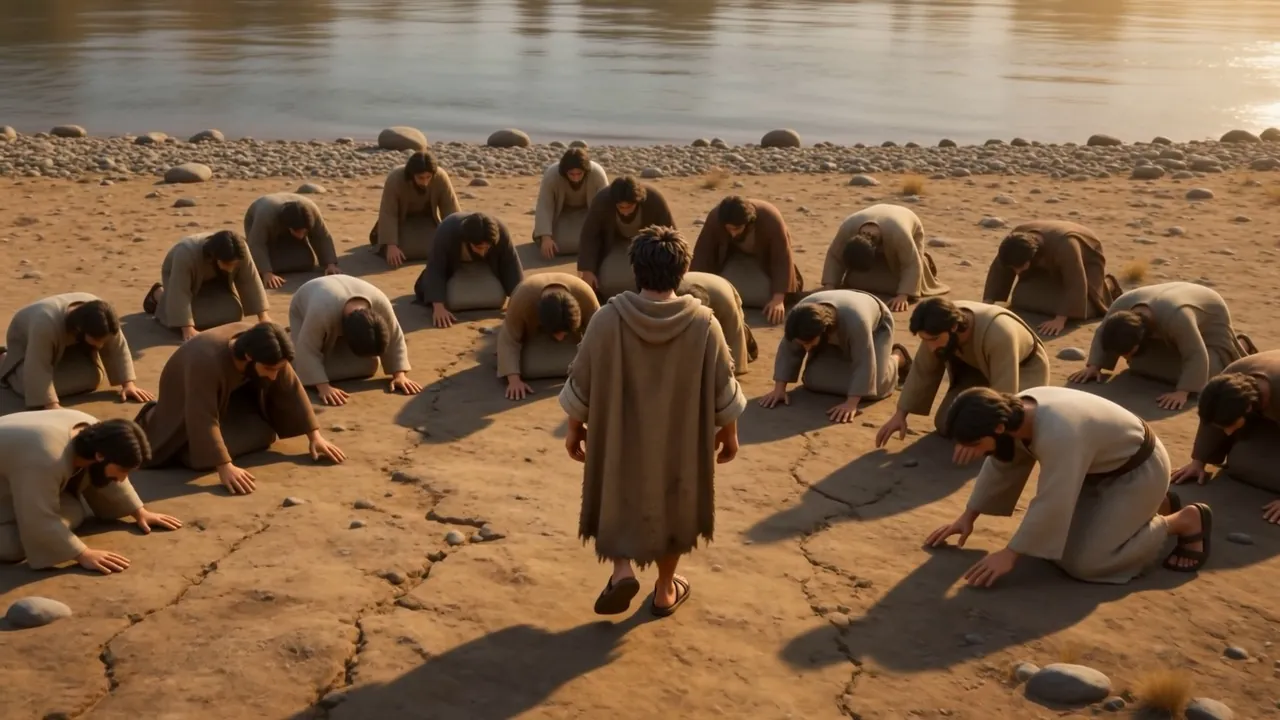
Elijah had gone up in the whirlwind, and Elisha was standing on a riverbank holding a coat. He had asked for one thing — “please let a double portion of your spirit be on me” — and now he had to find out whether he had it. He struck the water and said the only question that mattered: “Where is Yahweh, the God of Elijah?” The river opened. Fifty men on the far bank watched it happen and bowed to the ground. 2 Kings 2 : 9–15
The water parted — again.
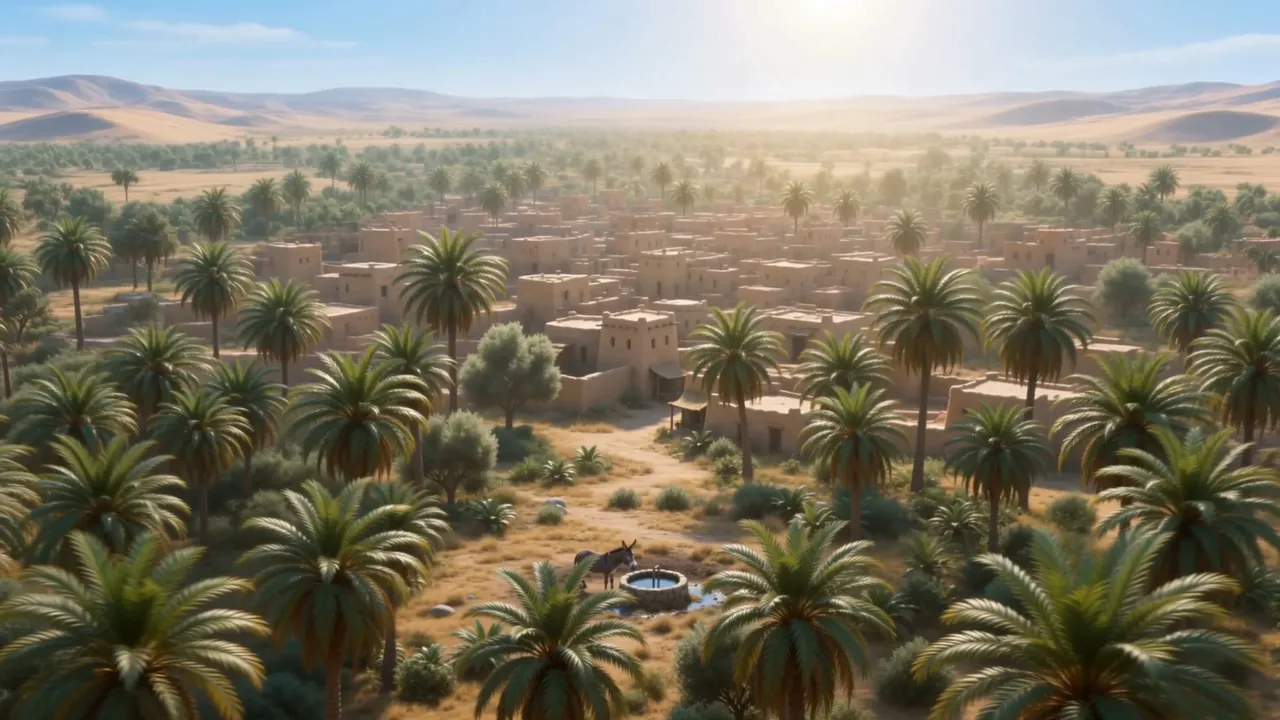
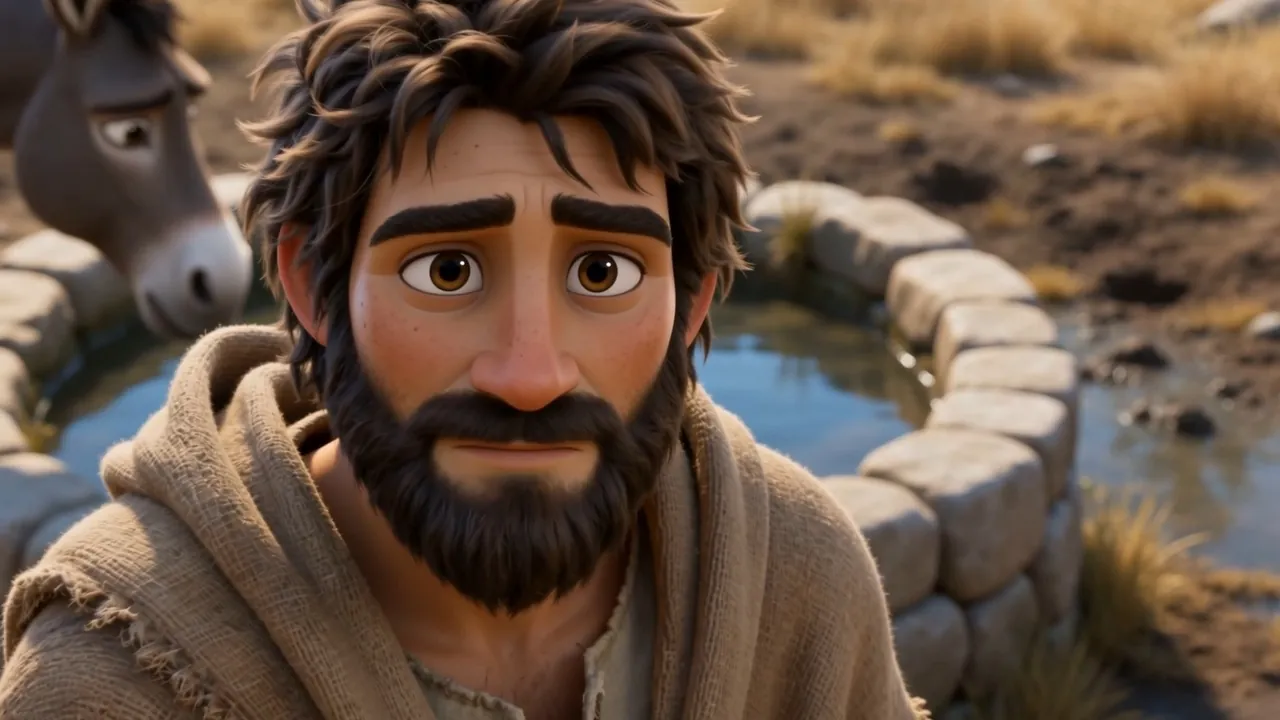
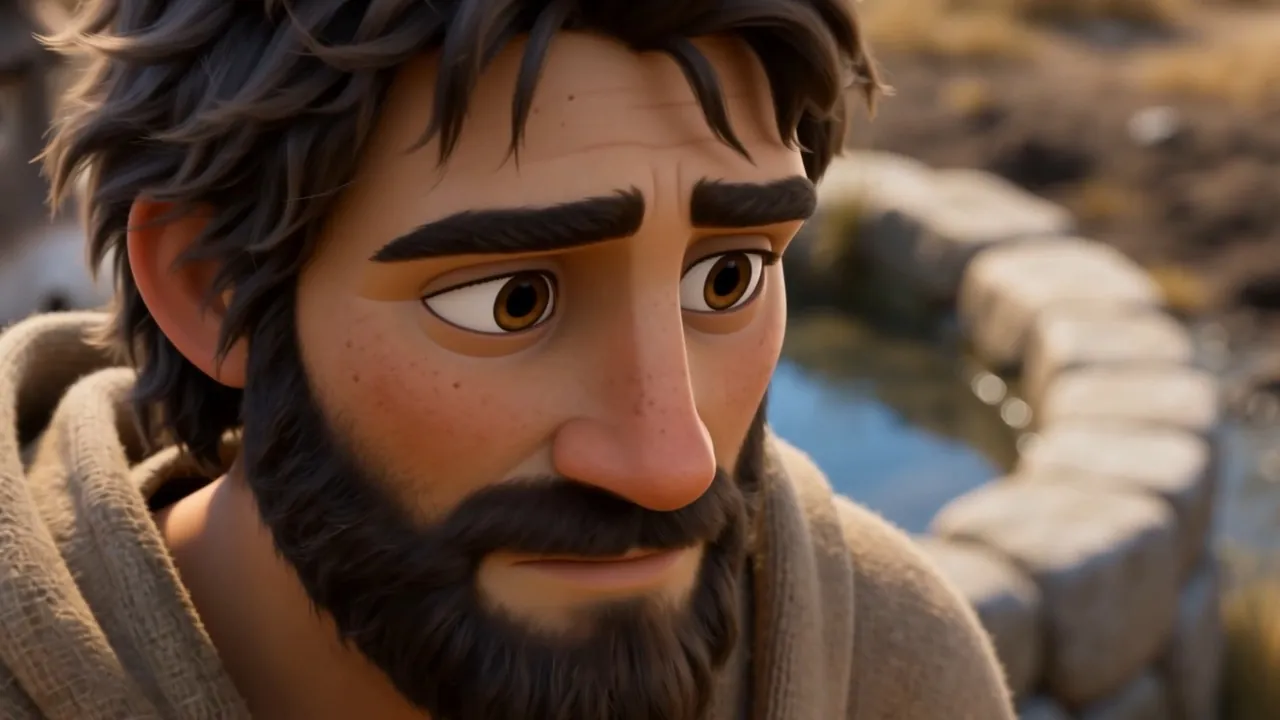




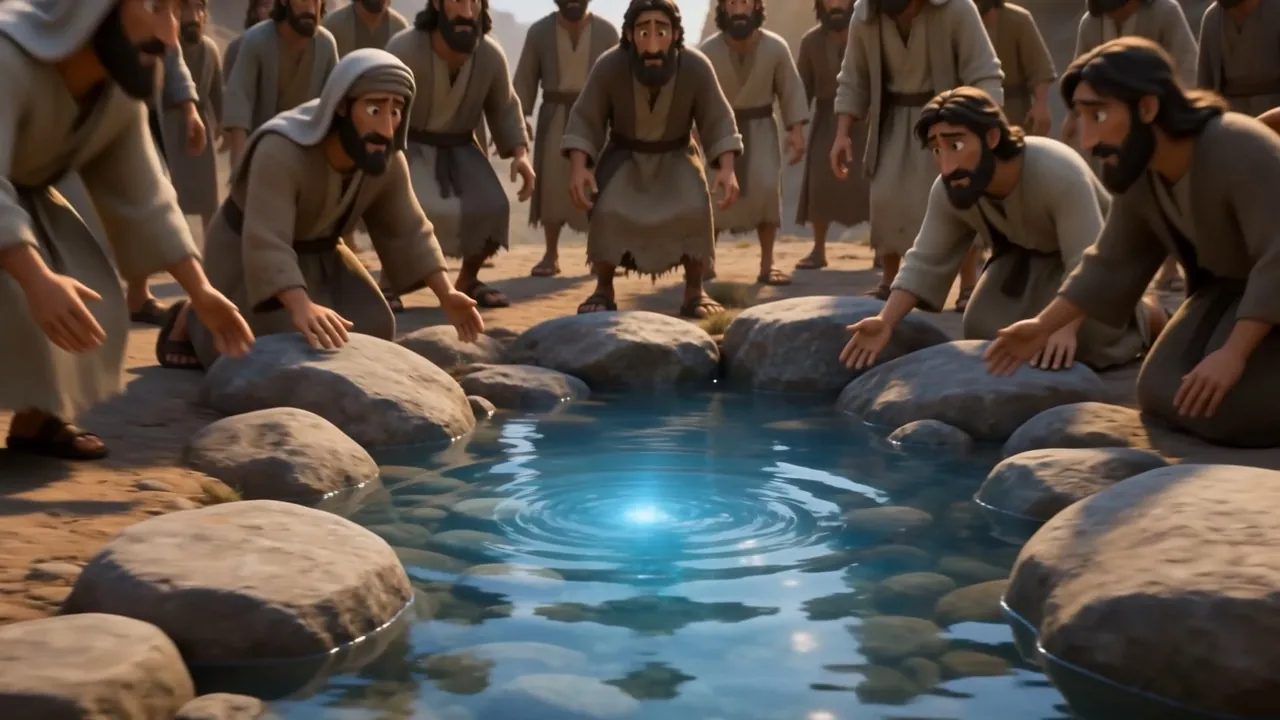
His first act as a prophet was plumbing. Jericho was beautifully situated and the water was bad, so the land kept miscarrying its crops. He asked for a new bowl and some salt — no ceremony, no crowd-pleasing — threw it in the spring, and said Yahweh had healed the water. So the waters were healed to this day. The very first thing the double portion is spent on is a town's drinking supply. 2 Kings 2 : 19–22
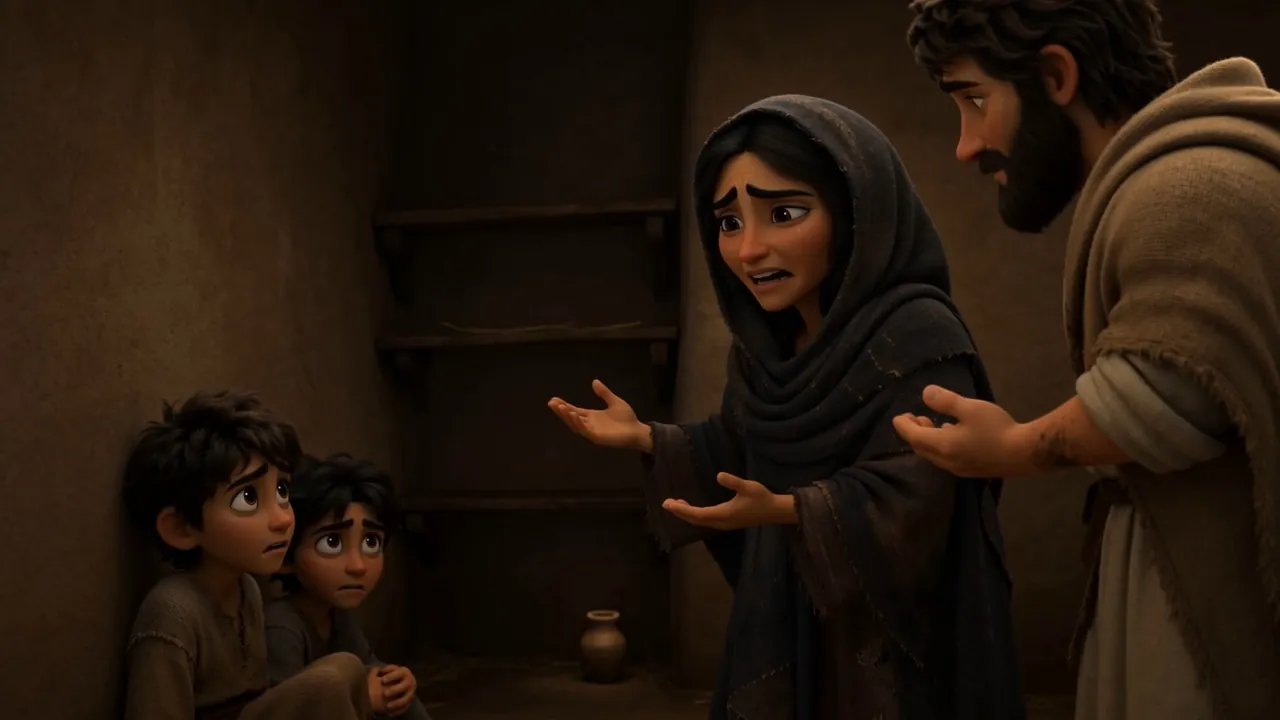
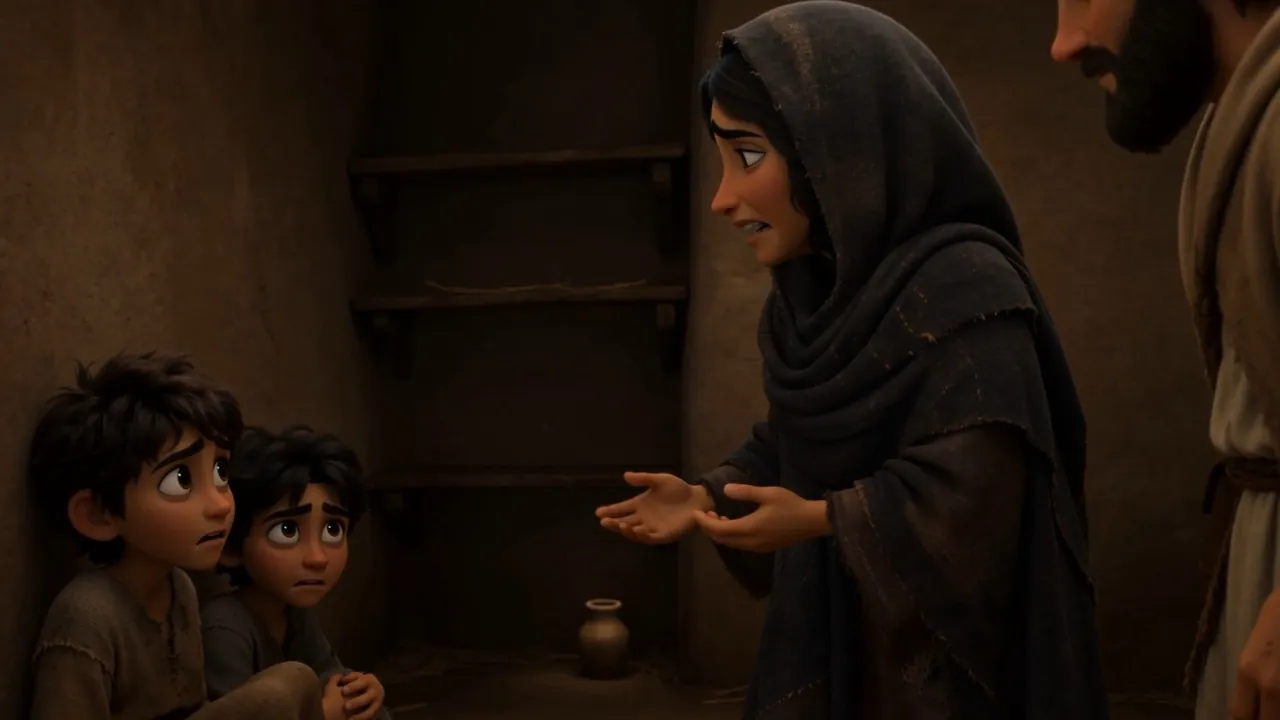

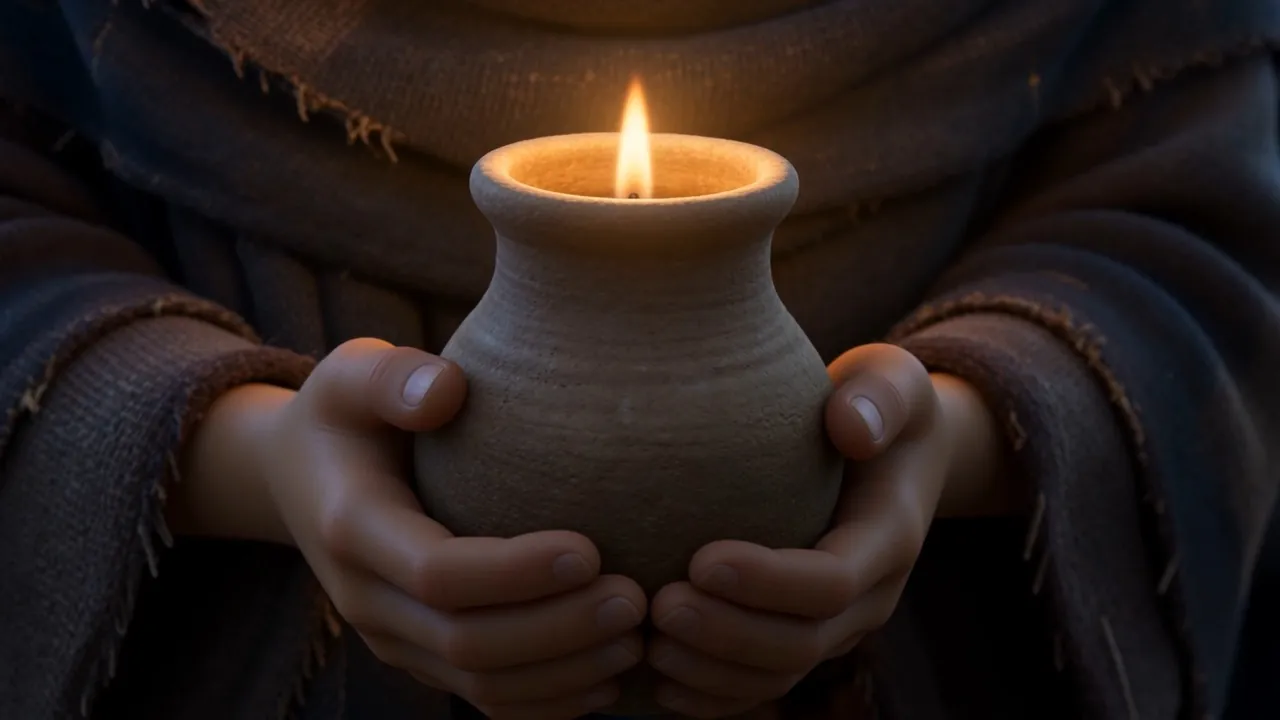
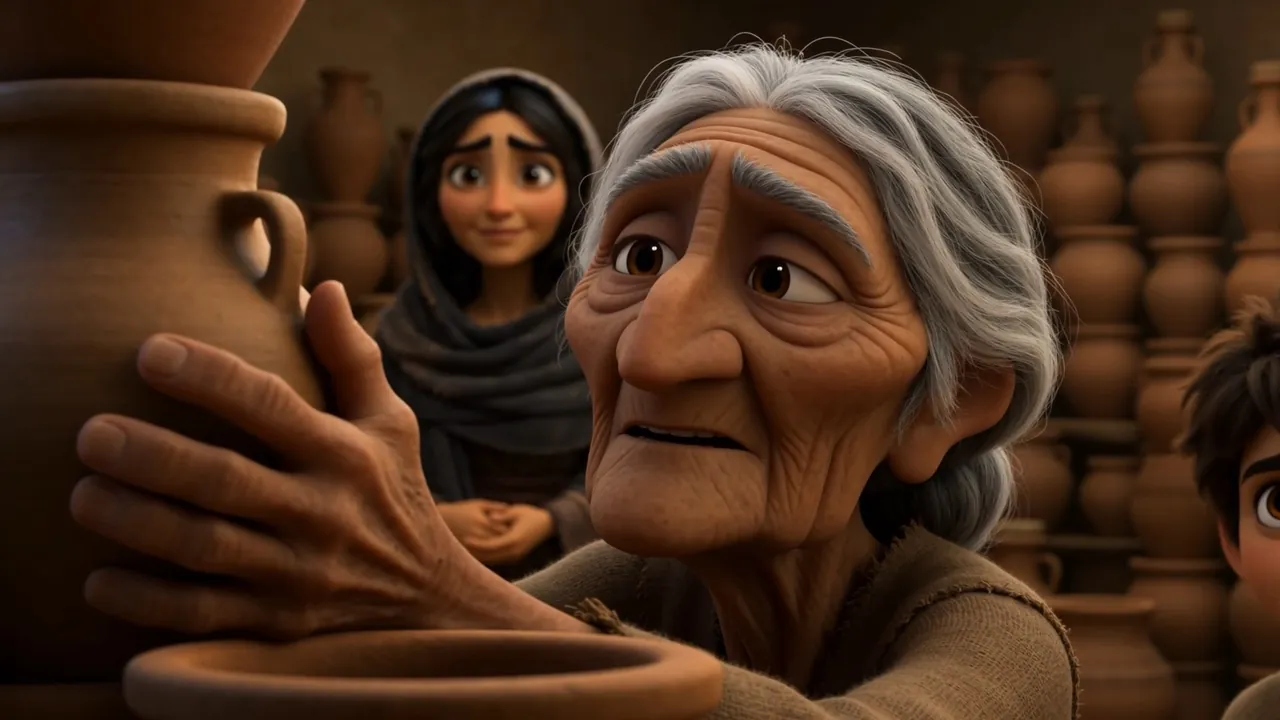

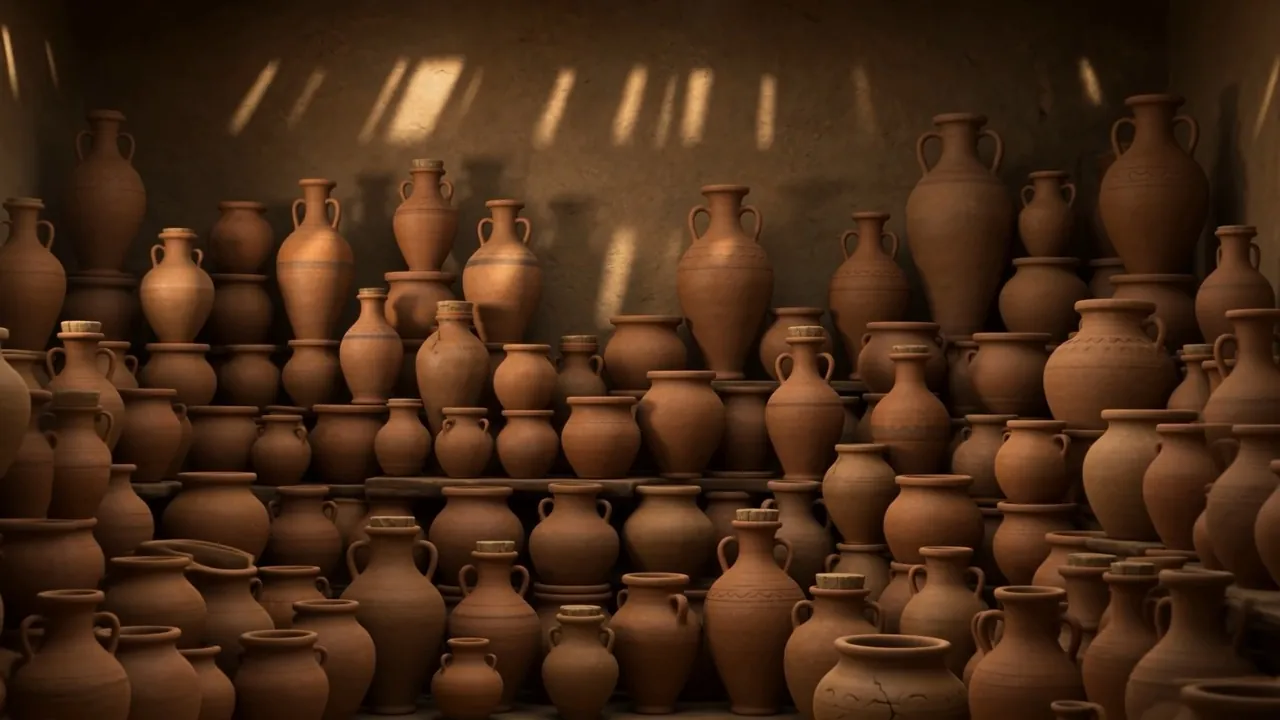
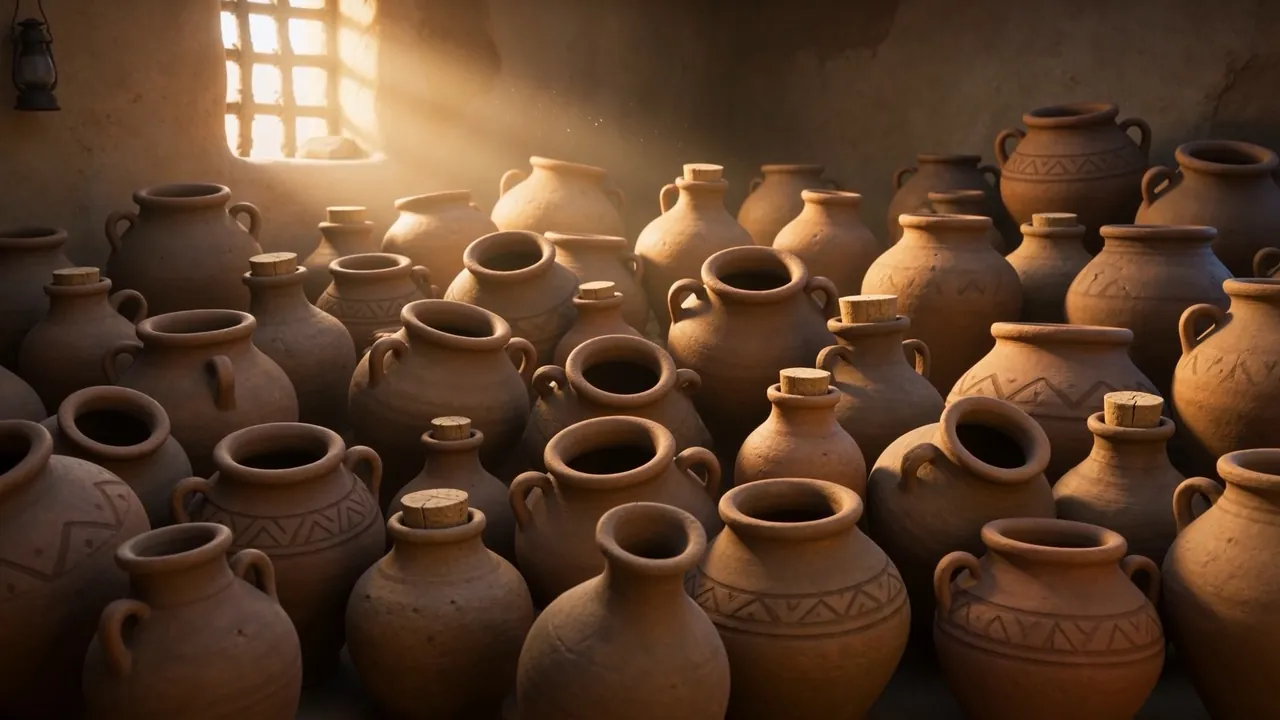
A widow from the prophets' community was about to lose her two sons to a creditor — debt slavery was legal and ordinary. Elisha asked the least prophetic question imaginable: “What do you have in the house?” She had one jar of oil. So he told her to go and borrow vessels from all her neighbors — don't borrow just a few — shut the door, and start pouring. 2 Kings 4 : 1–4
Nothing — except one jar of oil.
Interlude · Your turn
“Go, borrow empty containers from all your neighbors. Don't borrow just a few.”
Tap the jars to gather them — take as many as you can carry.
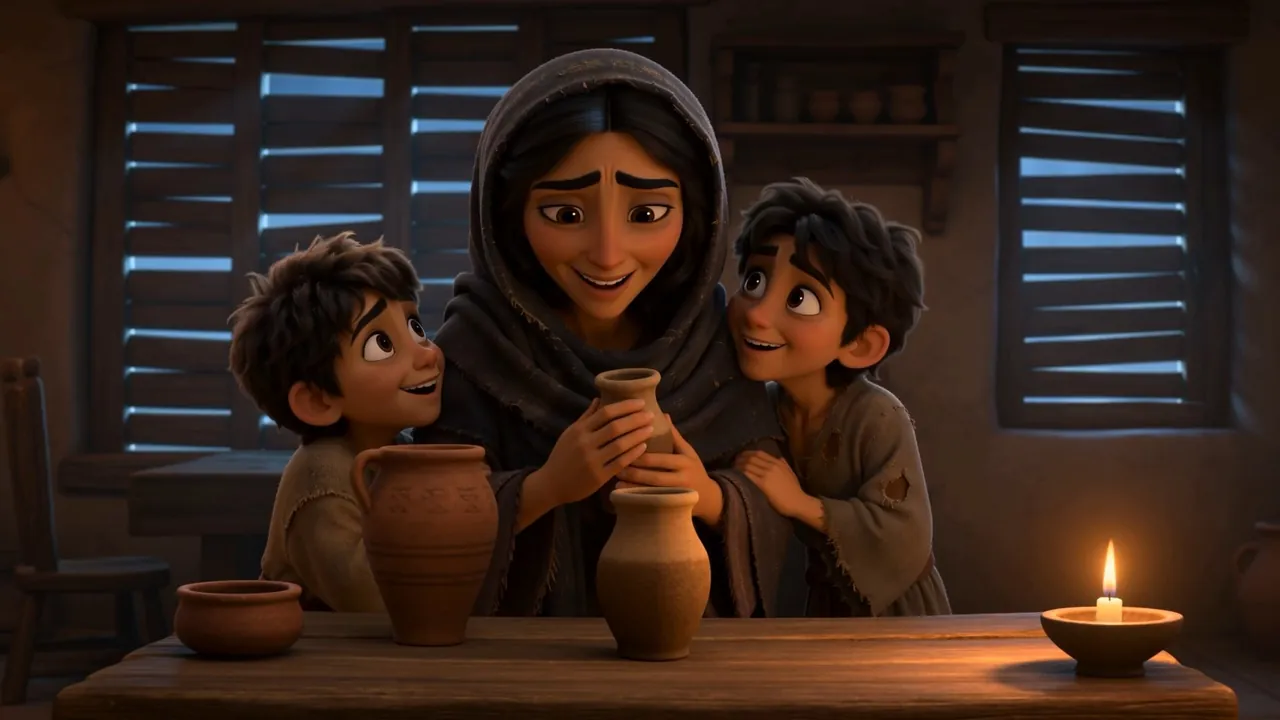


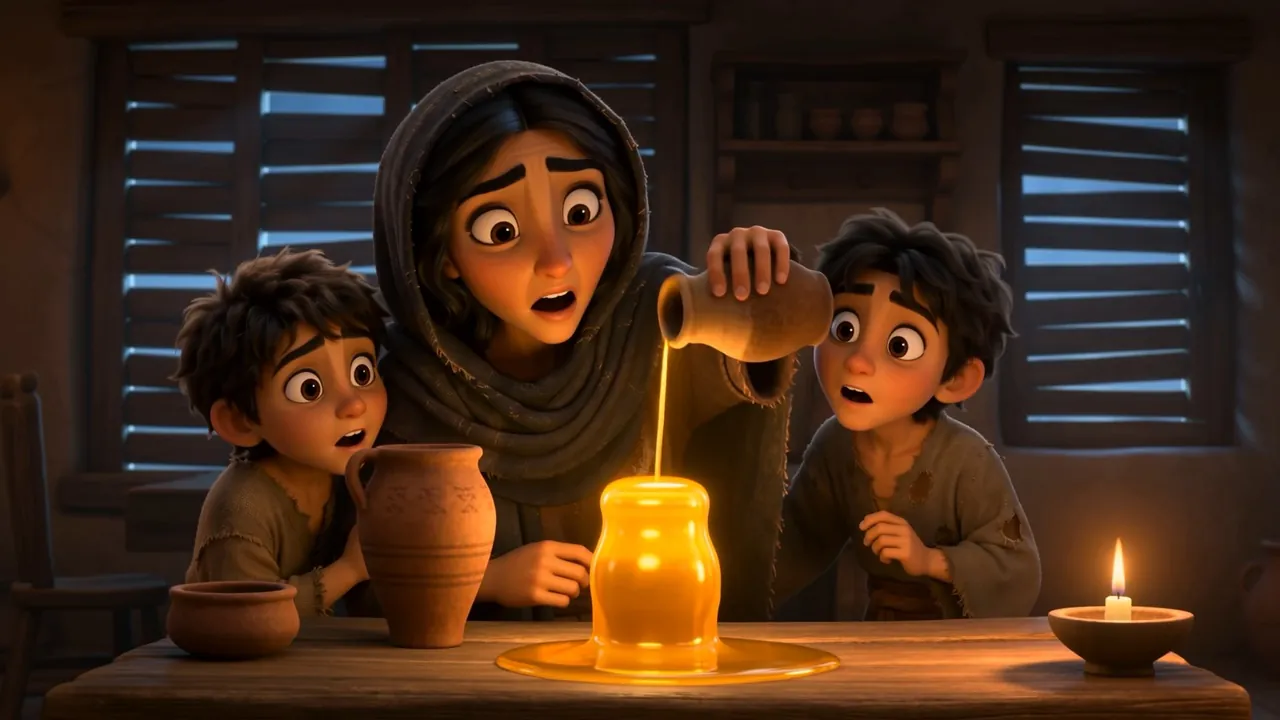

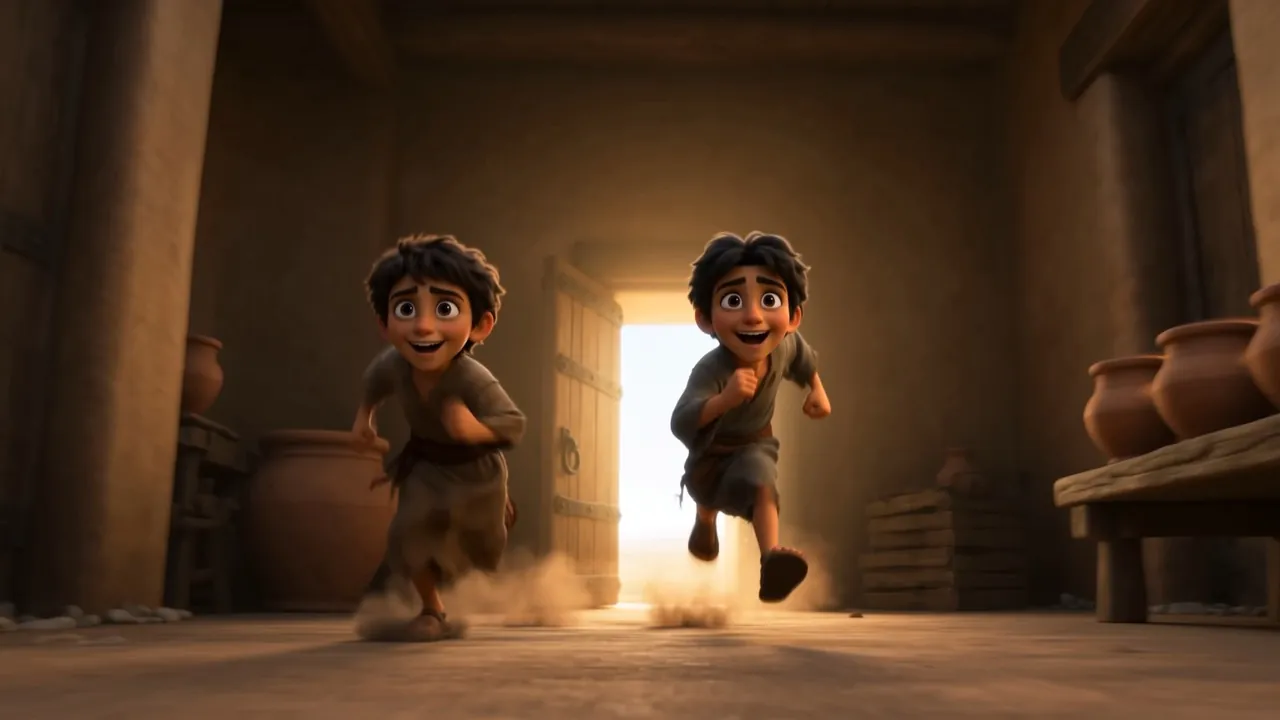
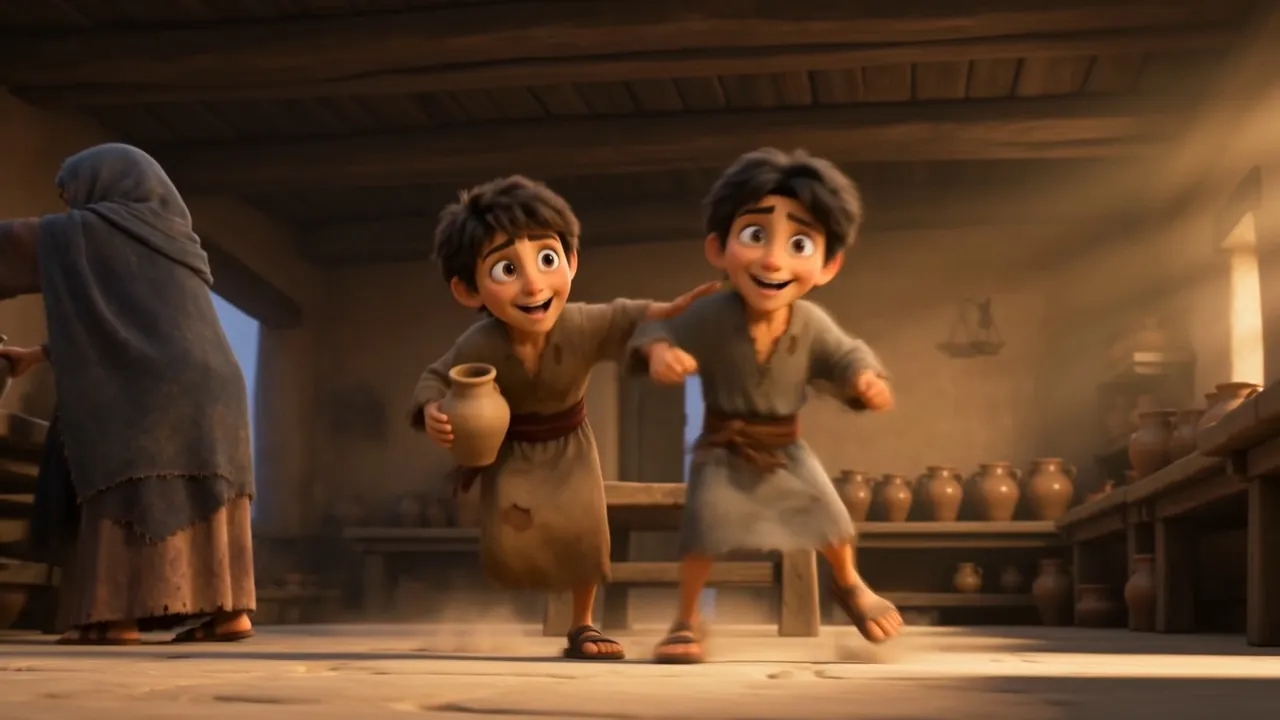
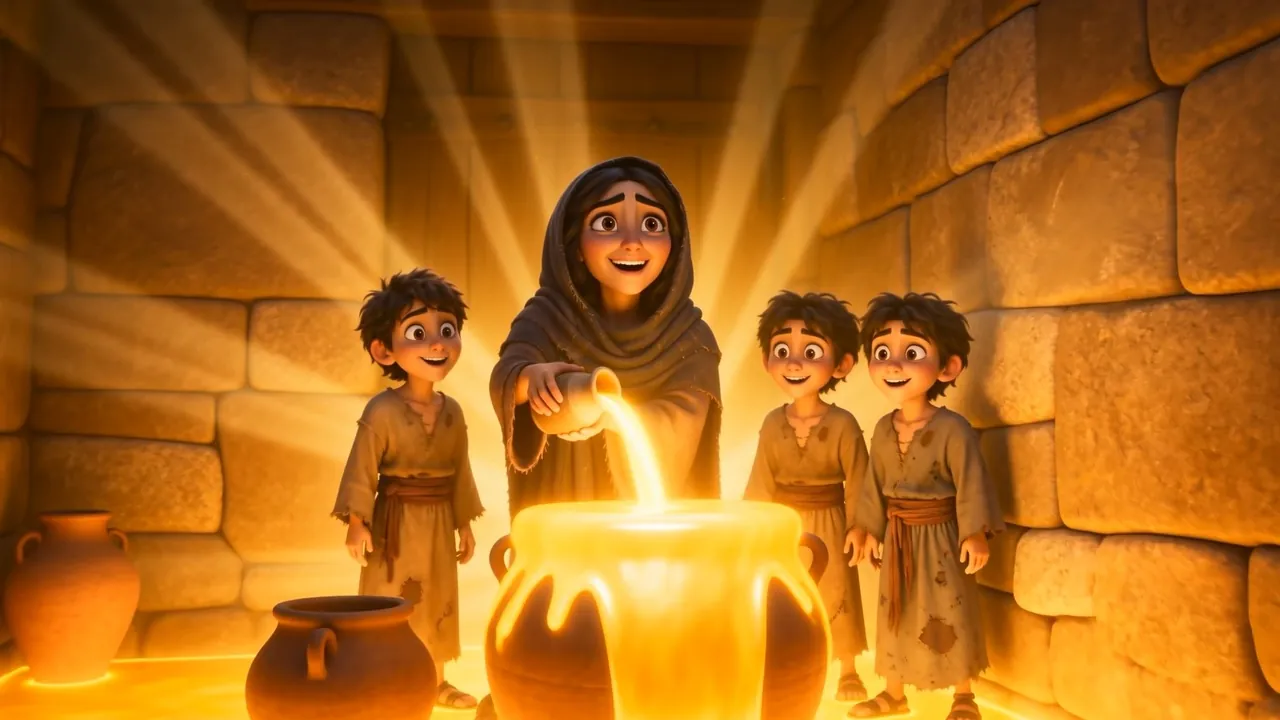
And then comes the thing that makes this story: the miracle is a sprint. Two boys running the length of the town for more pots, the mother pouring and pouring, everybody shouting, oil filling everything they can find, and the jar in her hand never getting any lighter. 2 Kings 4 : 5
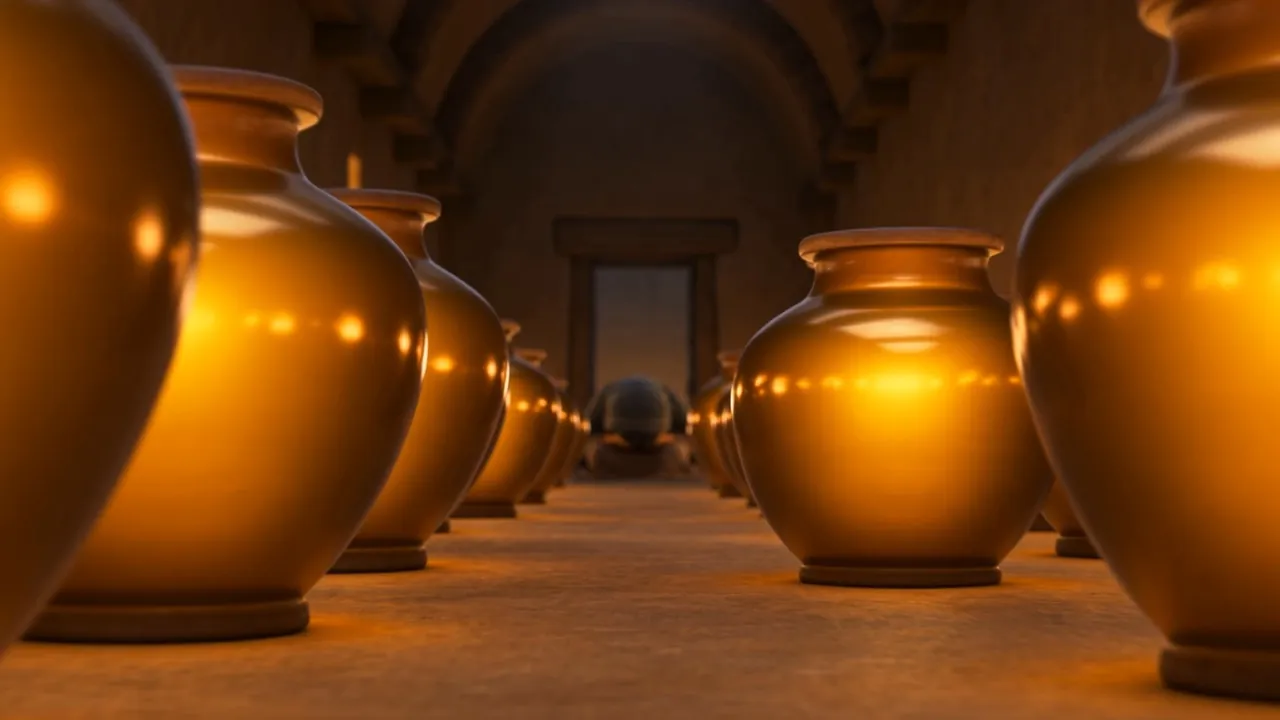
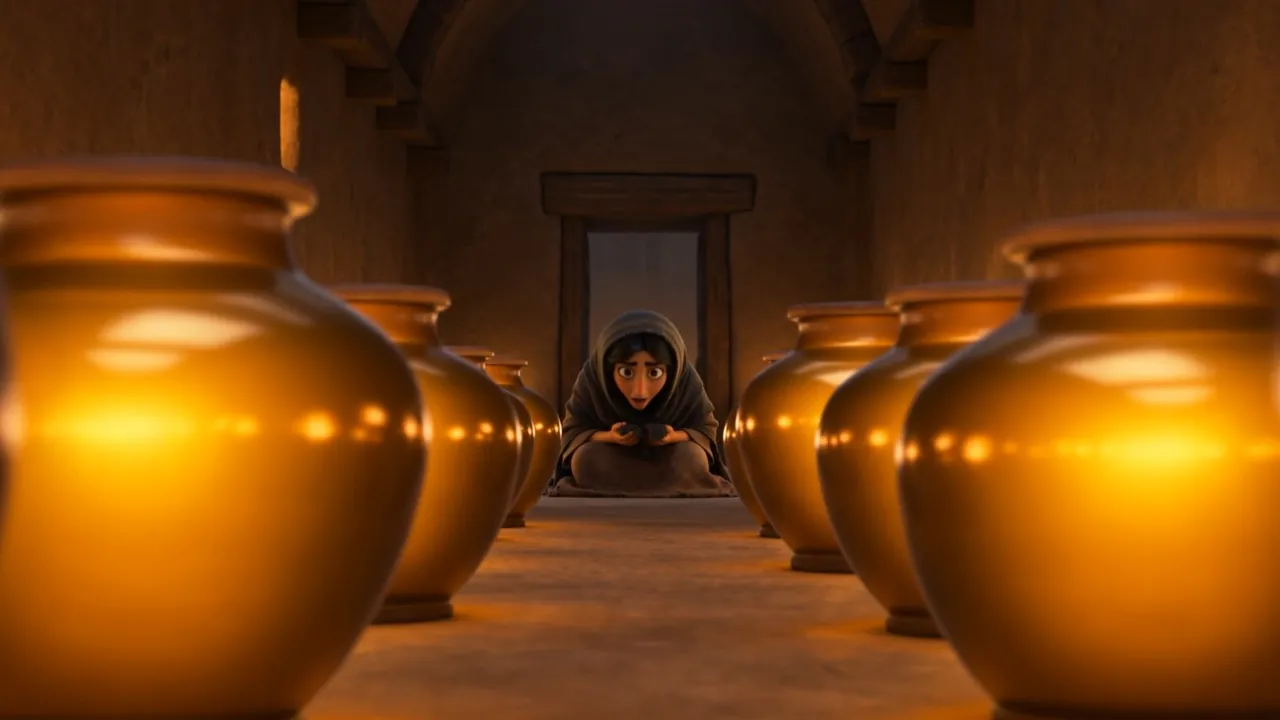

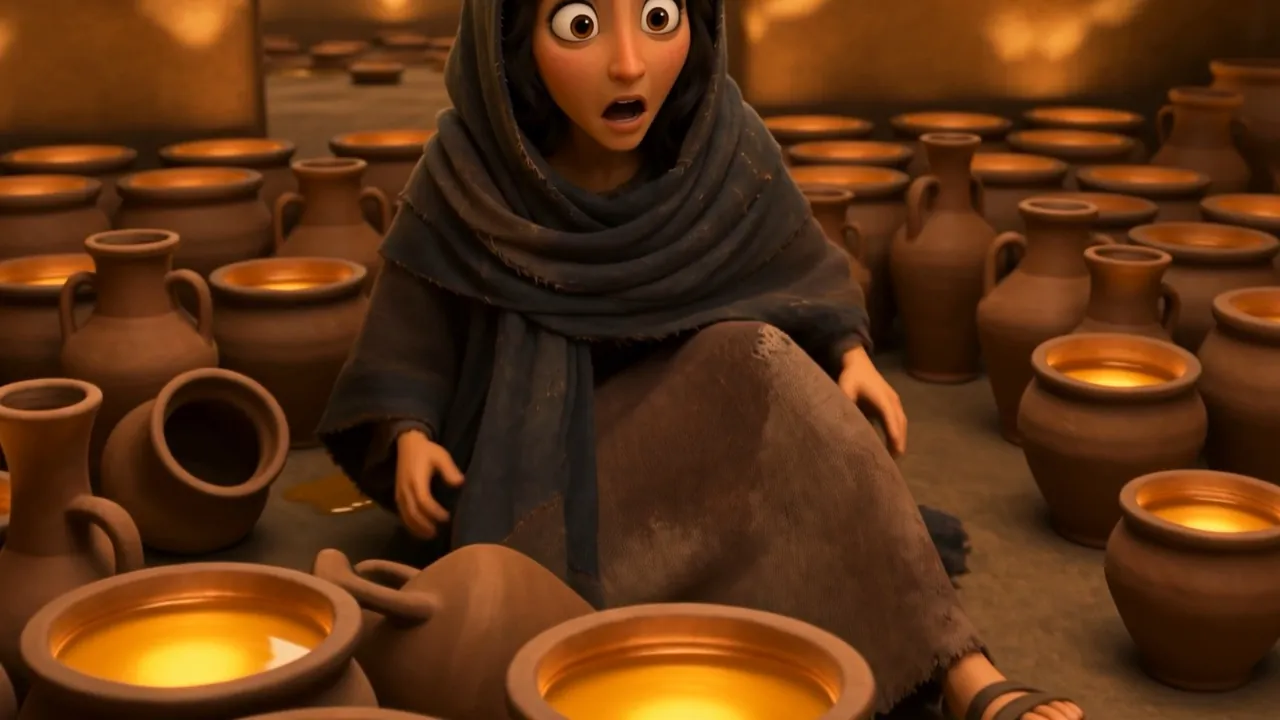

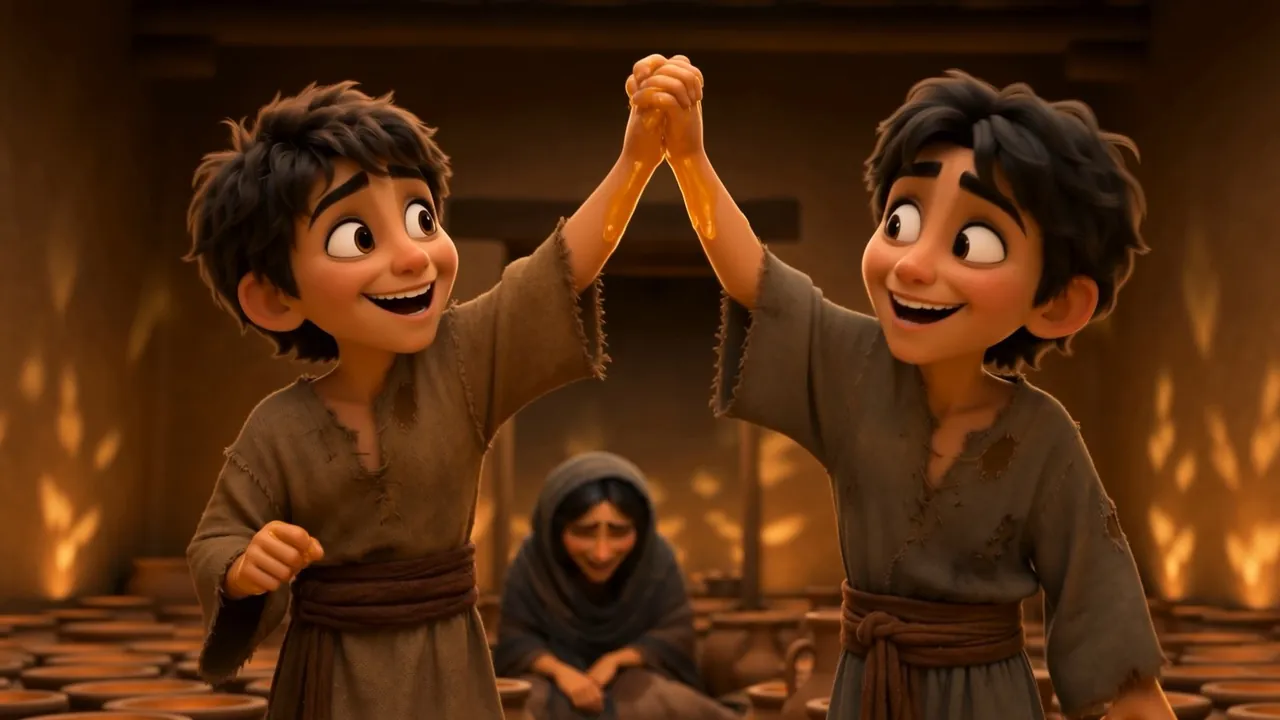


She said “bring me another vessel”, and her son said the sentence the whole scene has been waiting for: “There is not a vessel more.” And the oil stopped. Not one drop was wasted and not one drop was spare — the supply was measured exactly by how much room they had made for it. Sell the oil, pay the debt, and live on the rest. 2 Kings 4 : 6–7
There is not a vessel more.
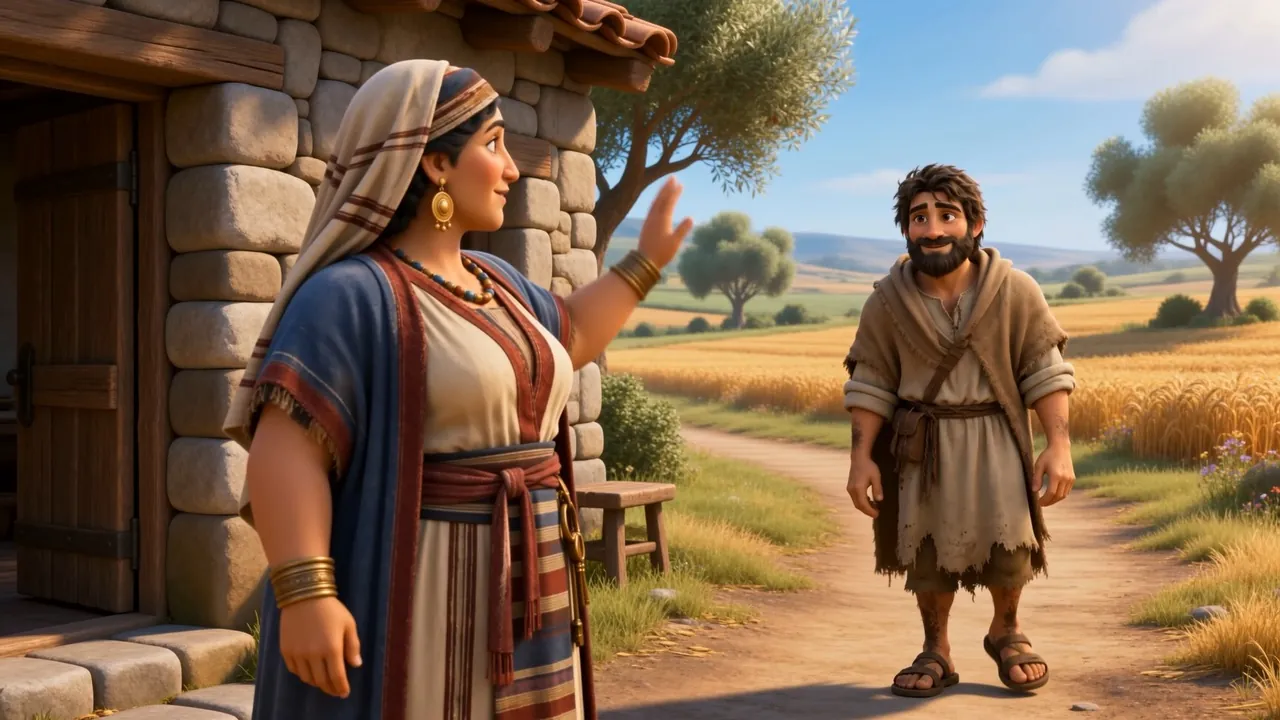
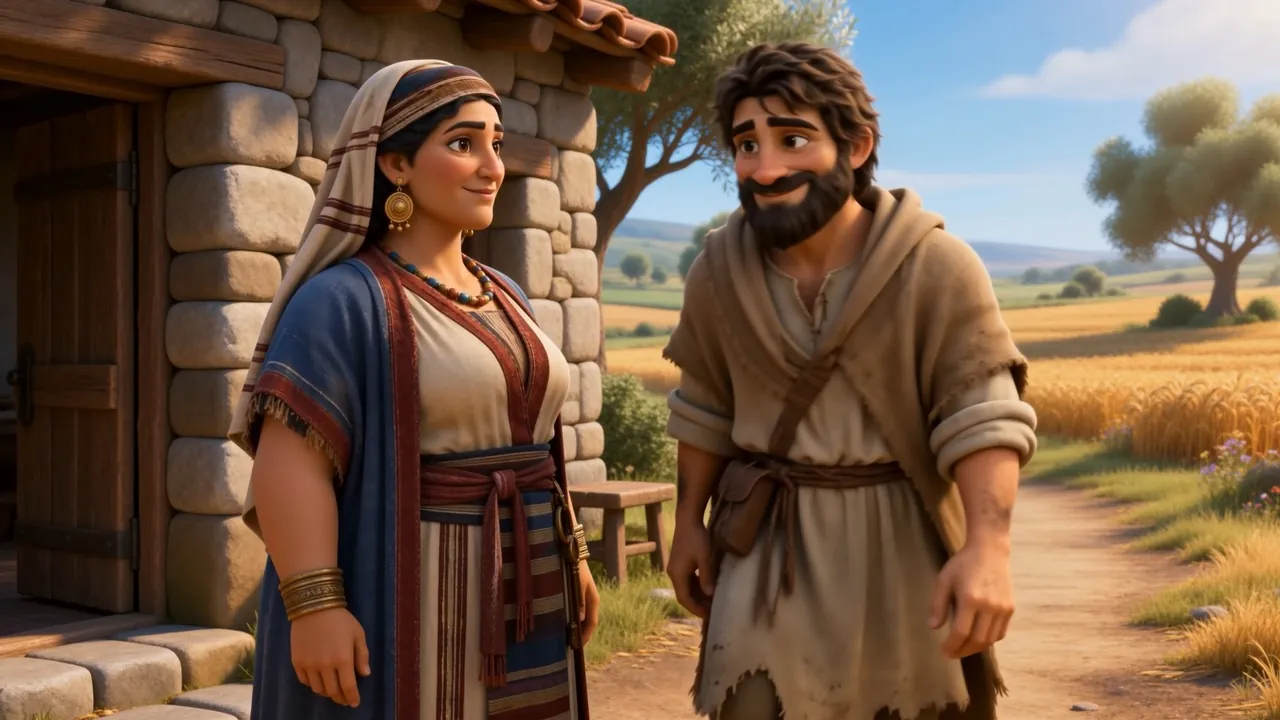
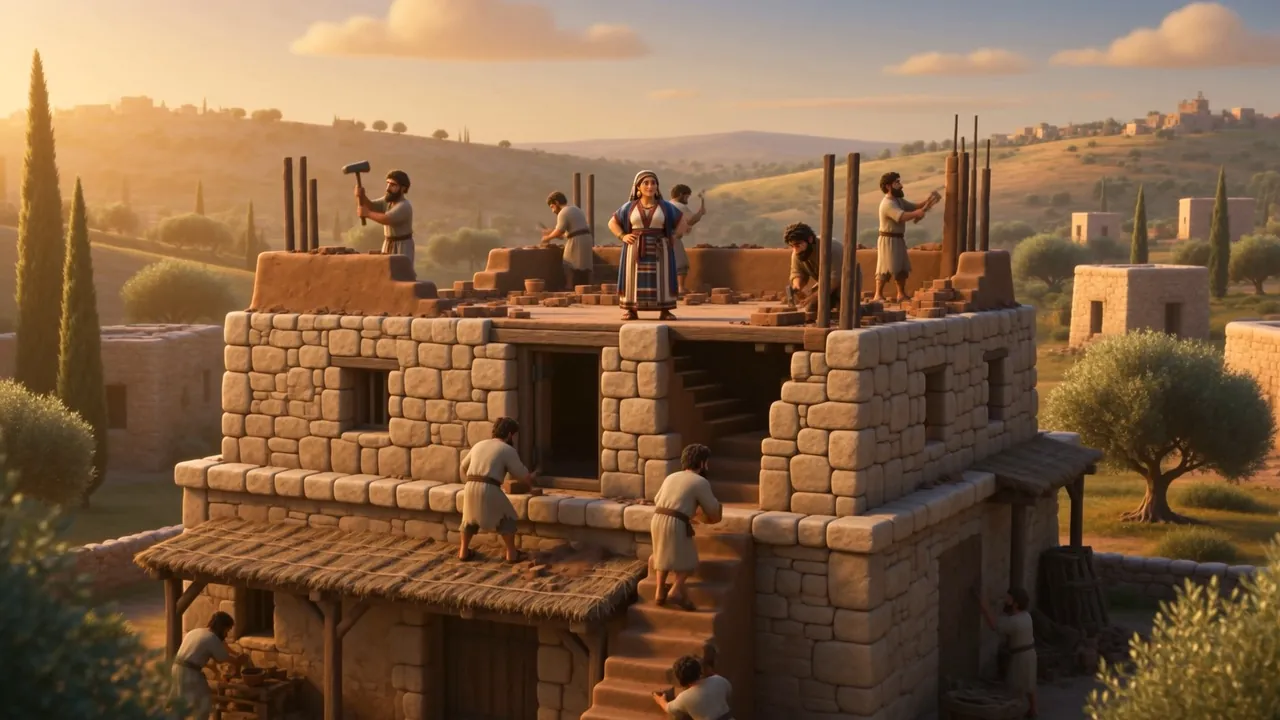
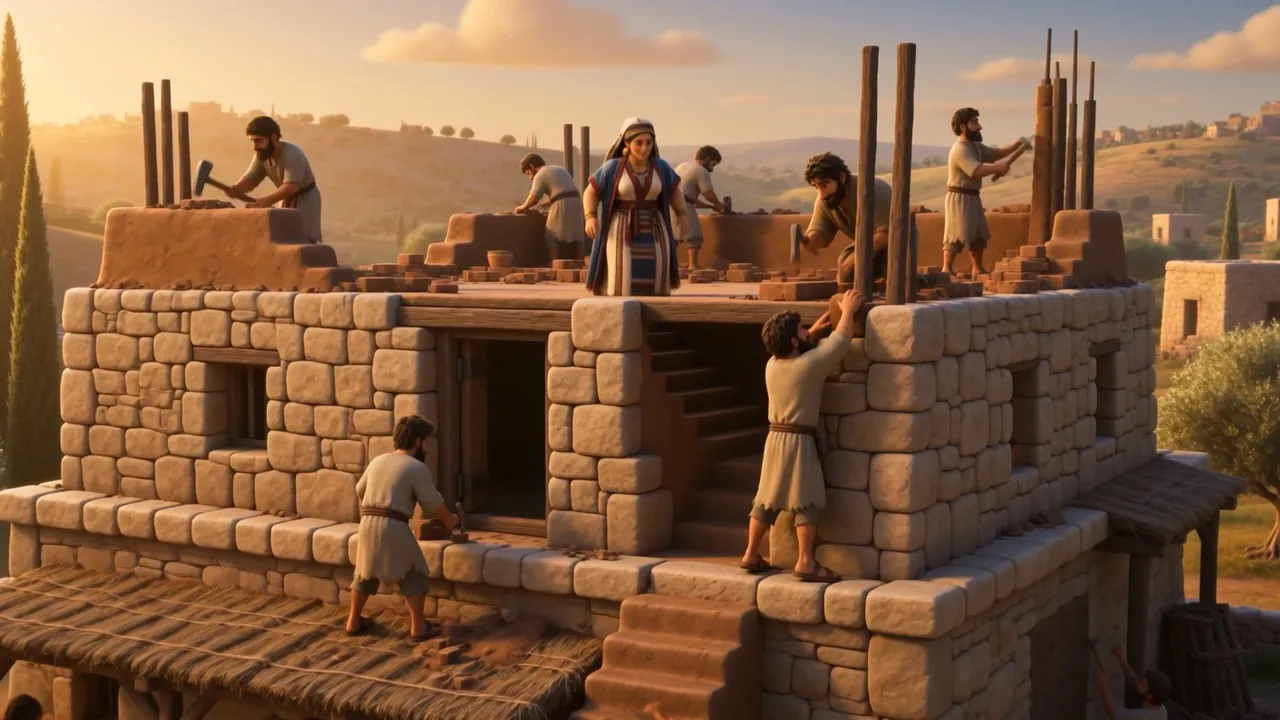
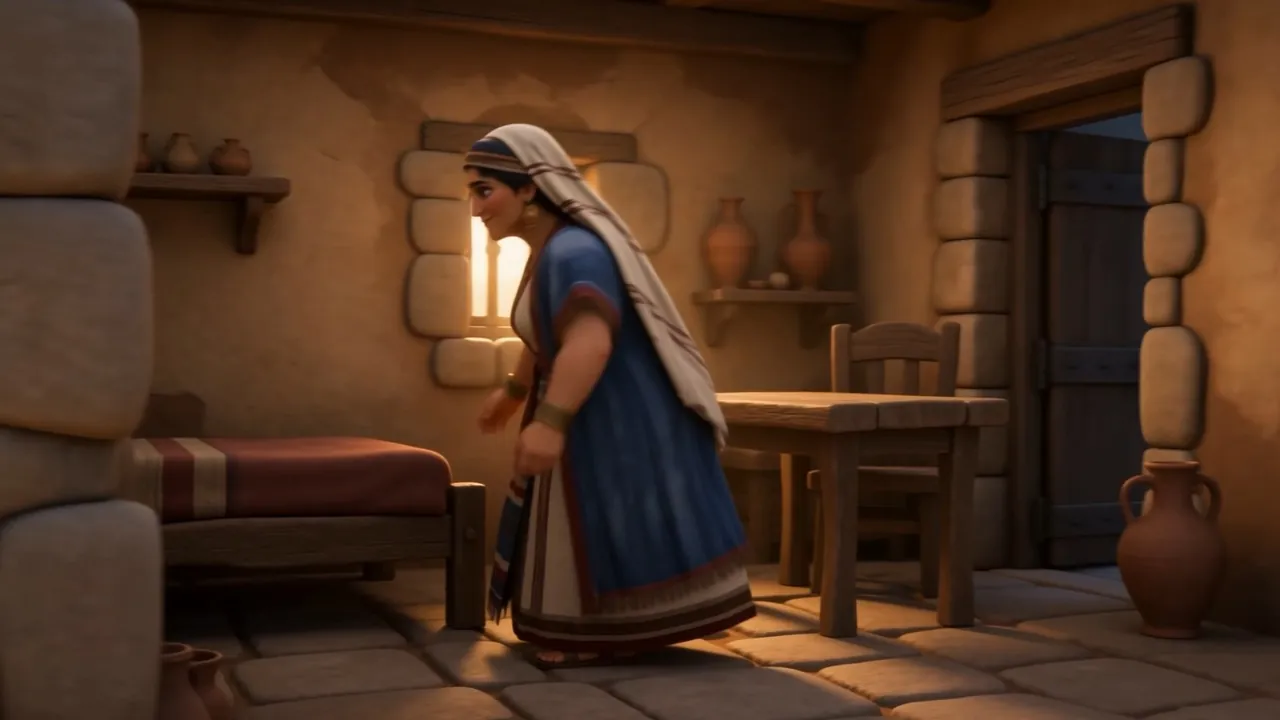
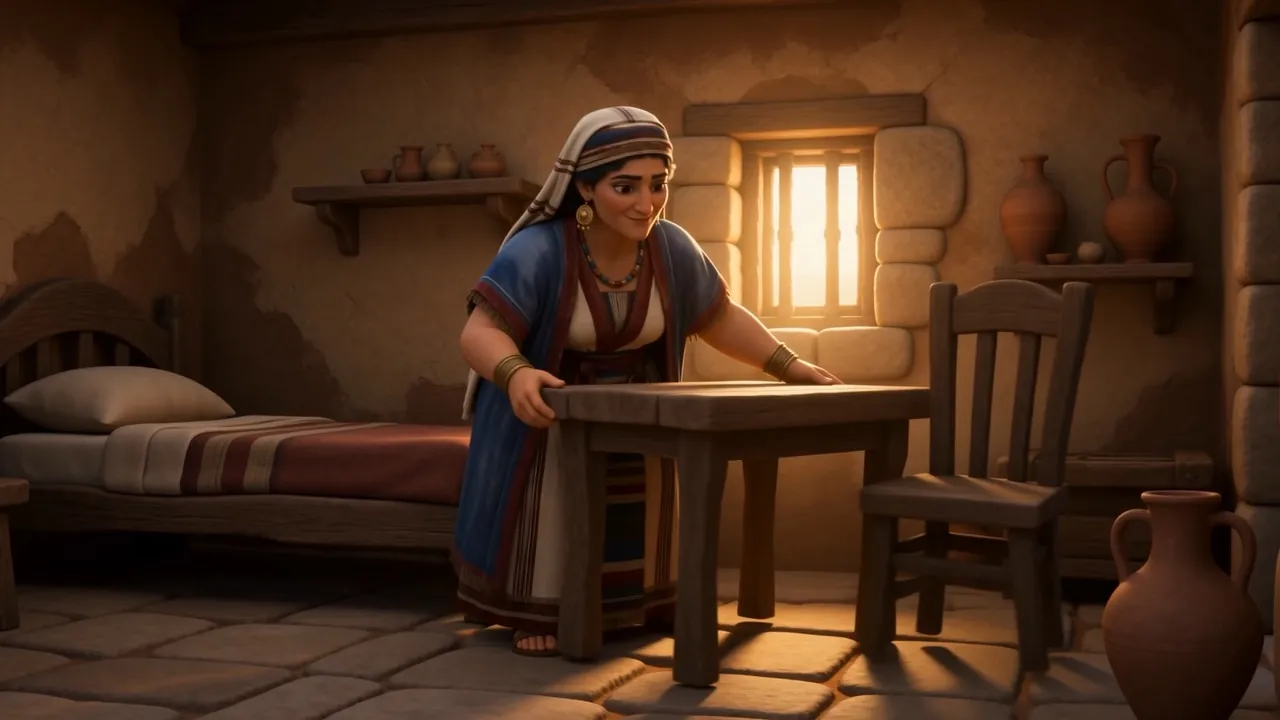
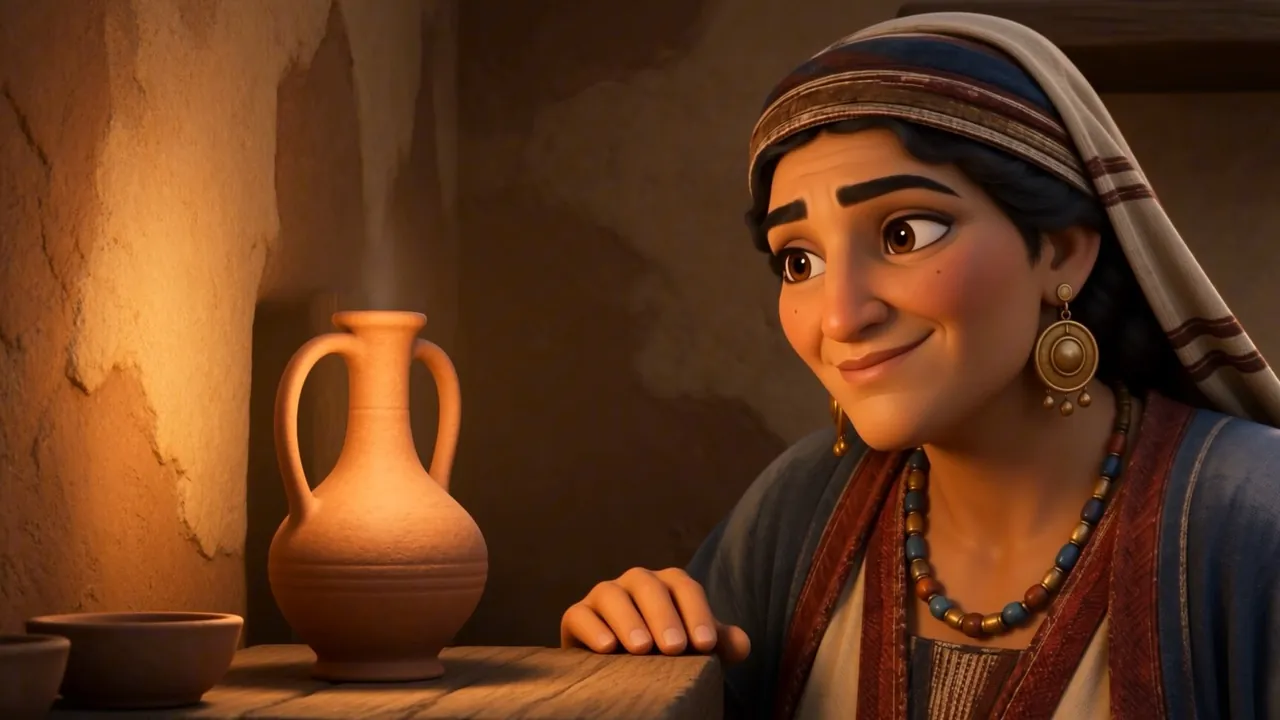

At Shunem a well-off woman started feeding him whenever he passed, and then said to her husband: “let's make a little room on the roof; and let's set a bed, a table, a seat and a lamp stand for him there.” Four objects. The Bible lists them. It is the most specific description of hospitality in the Old Testament, and none of it was asked for. 2 Kings 4 : 8–10

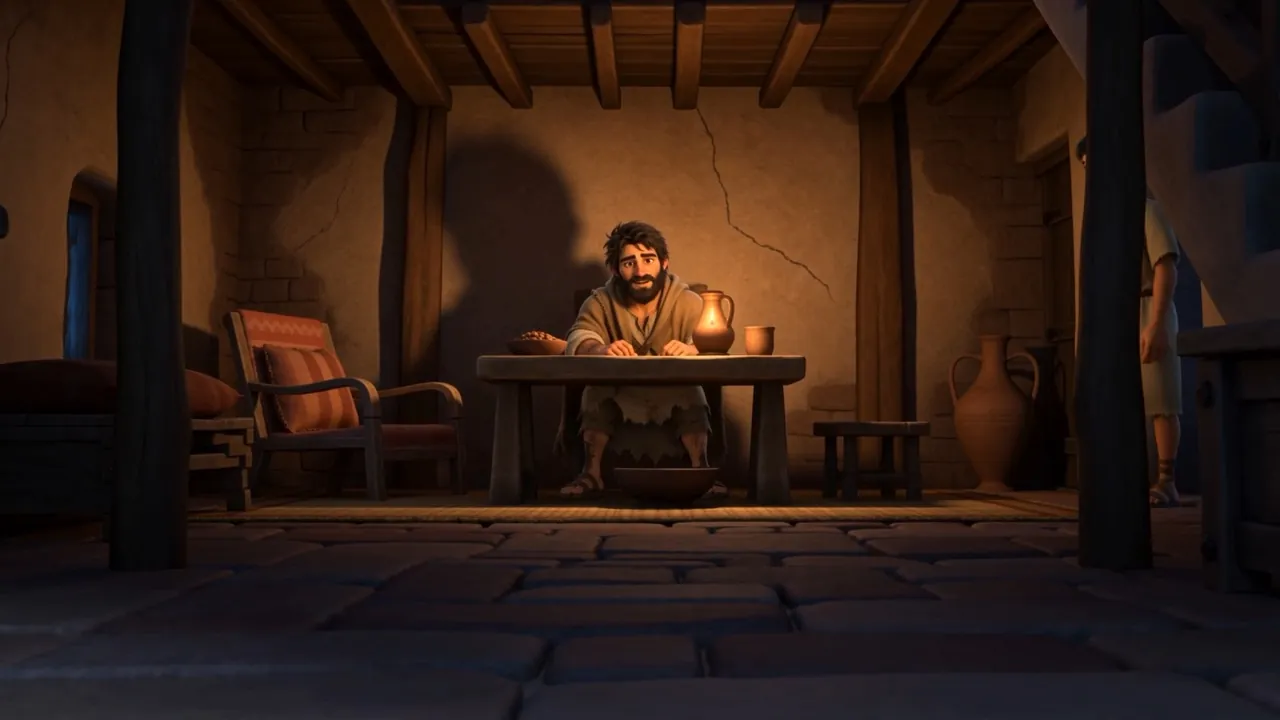
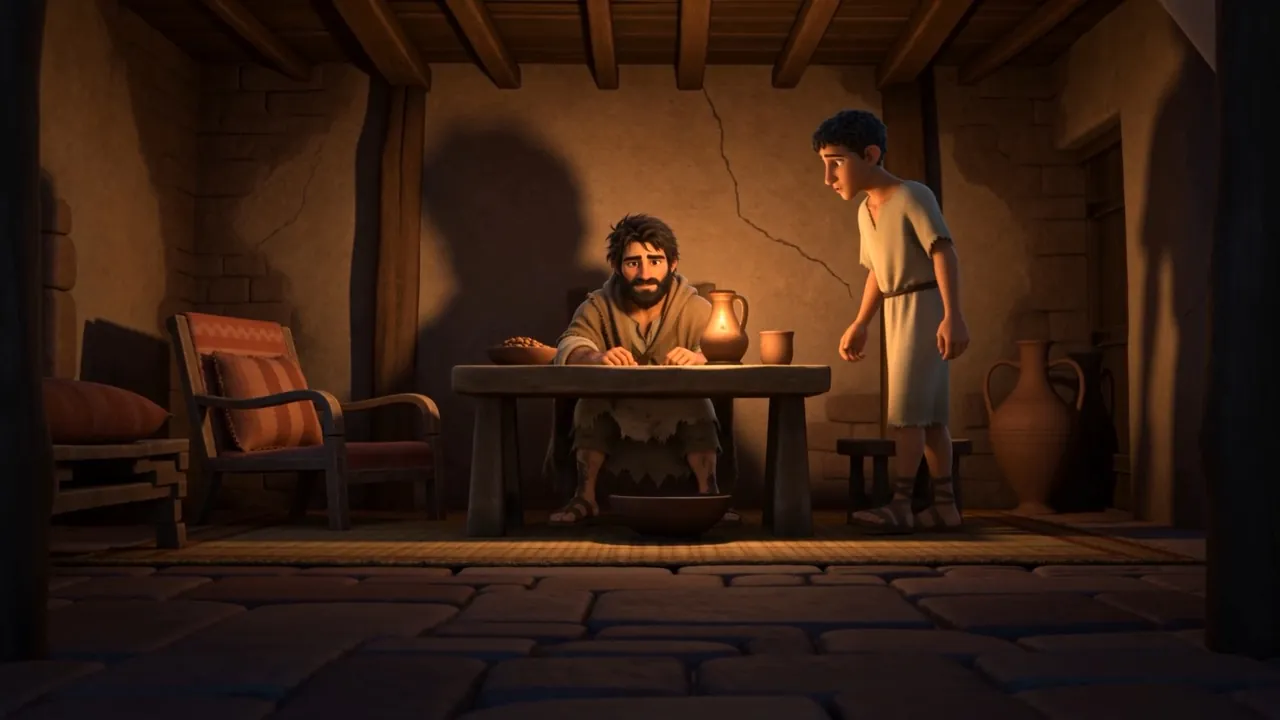
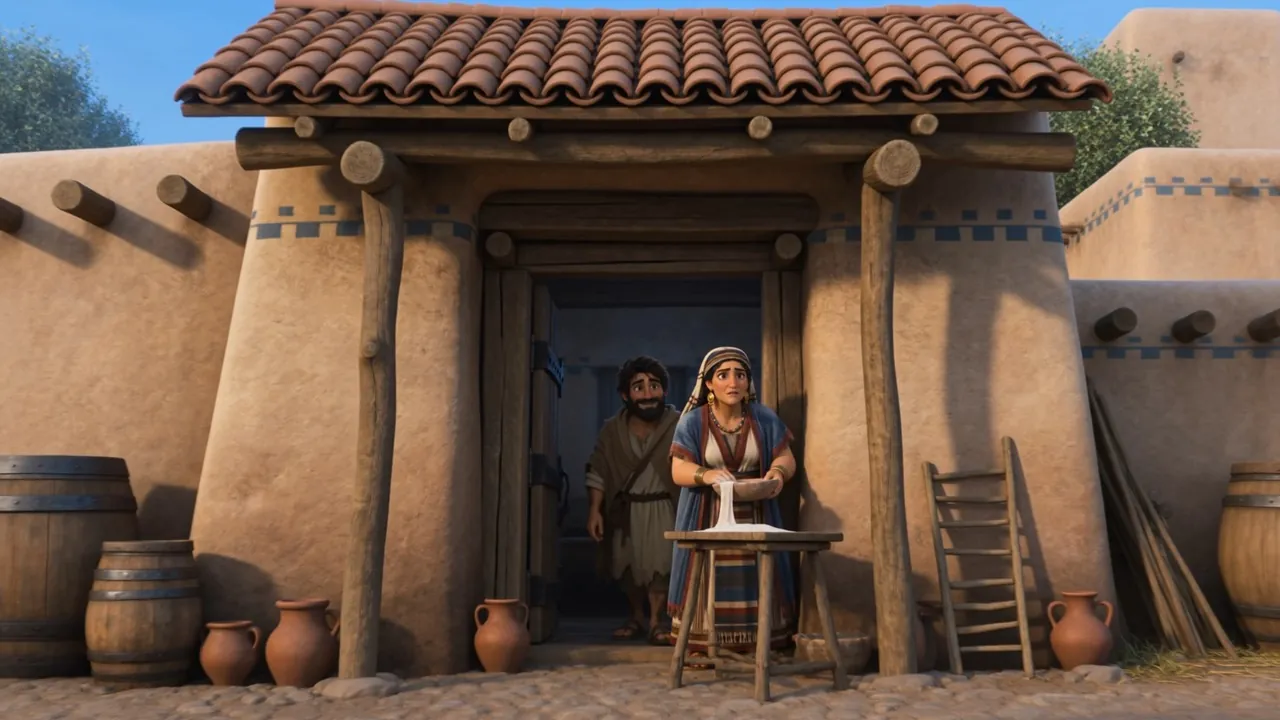




He wanted to do something for her and she wanted nothing — “I dwell among my own people.” It was his servant who worked out what she had never said: she had no child, and her husband was old. So he called her, and she stood in the doorway, and he told her that this time next year she would be holding a son. She begged him not to raise a hope like that. And then it happened. 2 Kings 4 : 11–17
You will hold a son.




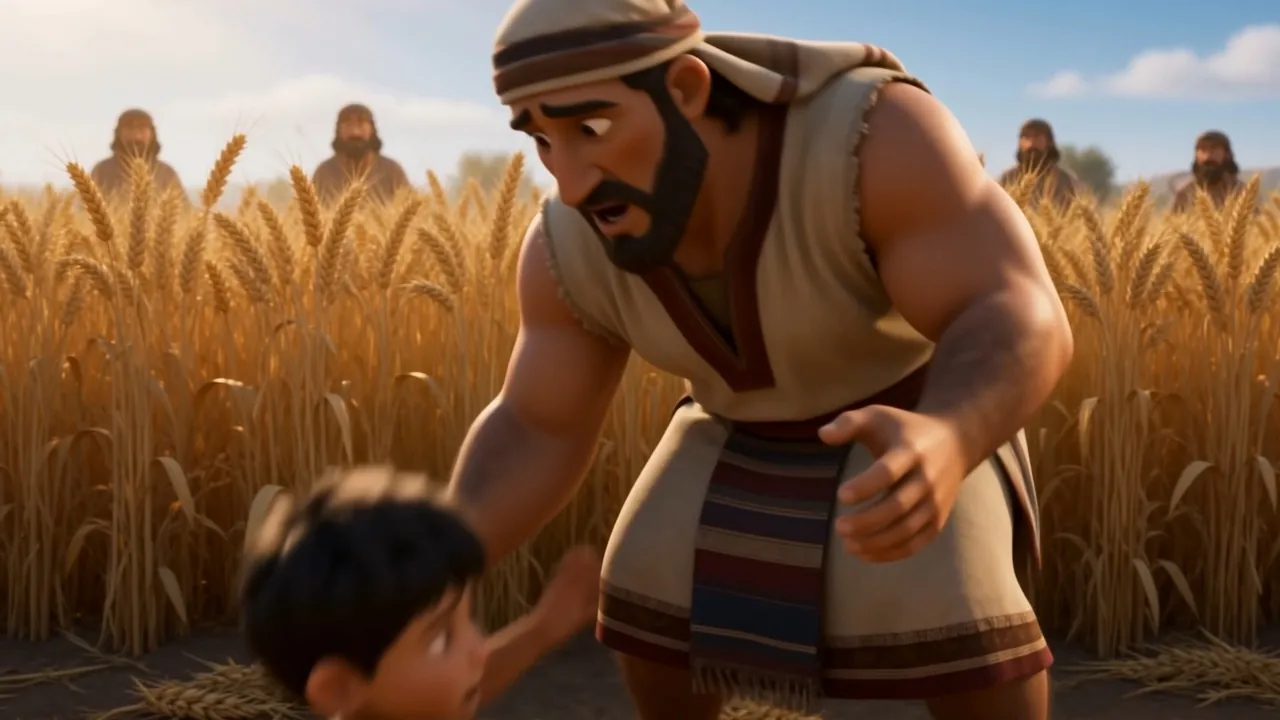
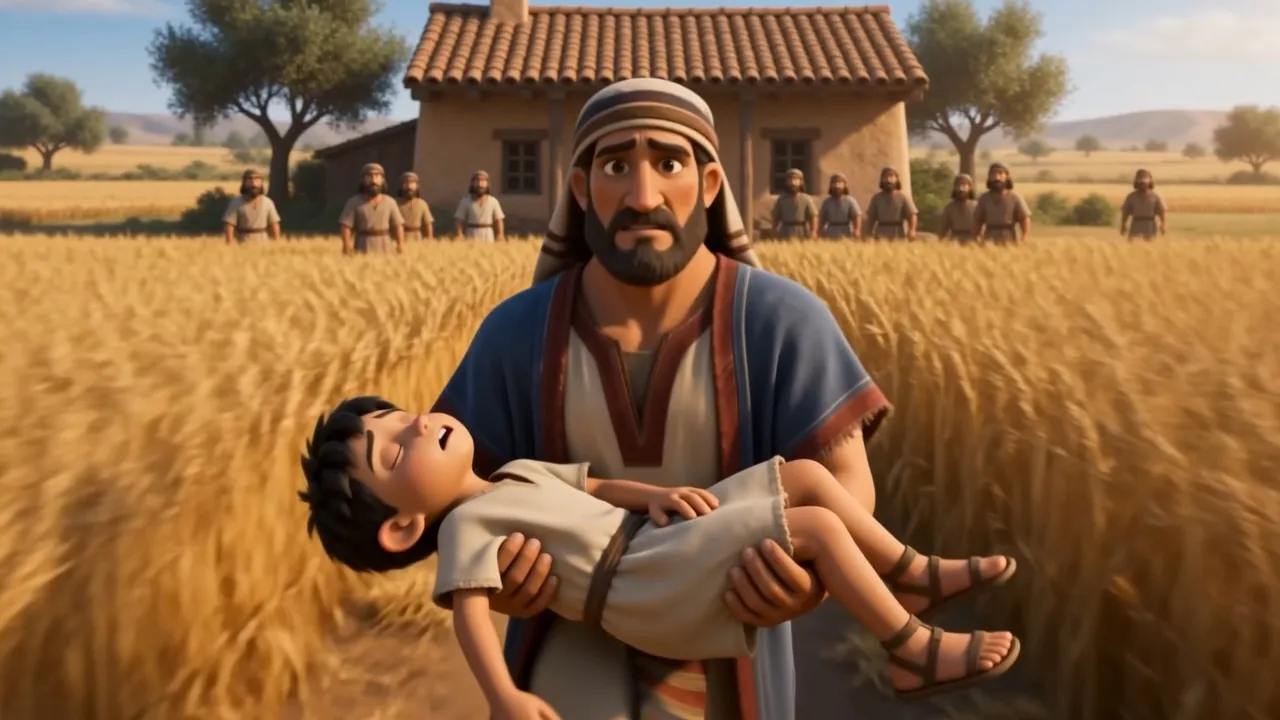
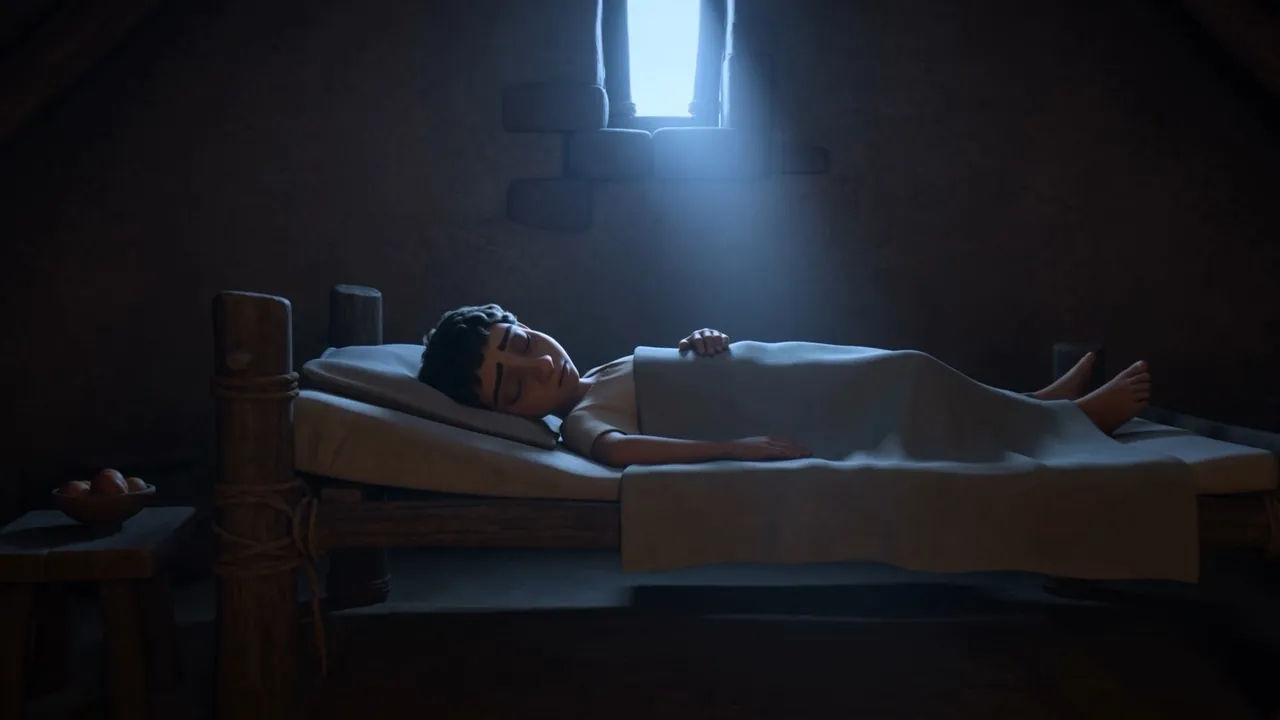
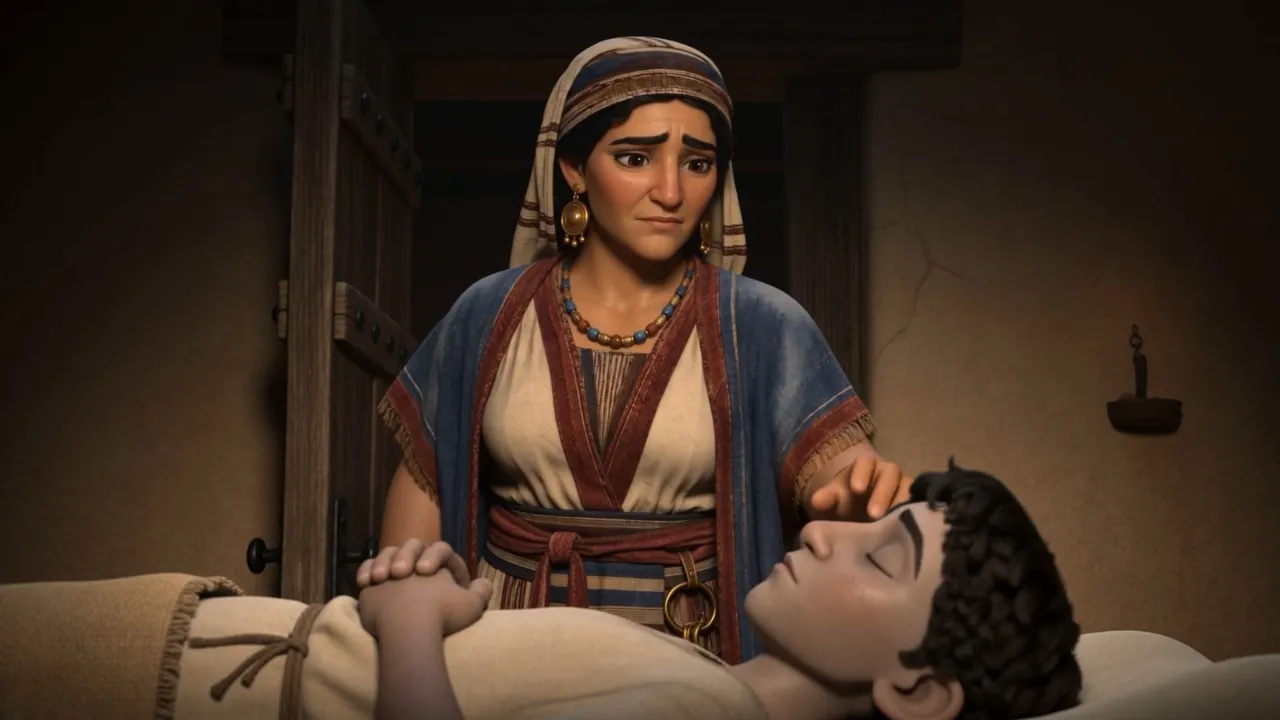
The child grew, and one day he went out to his father in the harvest field, and said “my head, my head.” They carried him home. He sat on his mother's knees until noon, and then he died. And she carried him up to the roof room, laid him on the prophet's bed, shut the door, and went out. 2 Kings 4 : 18–21
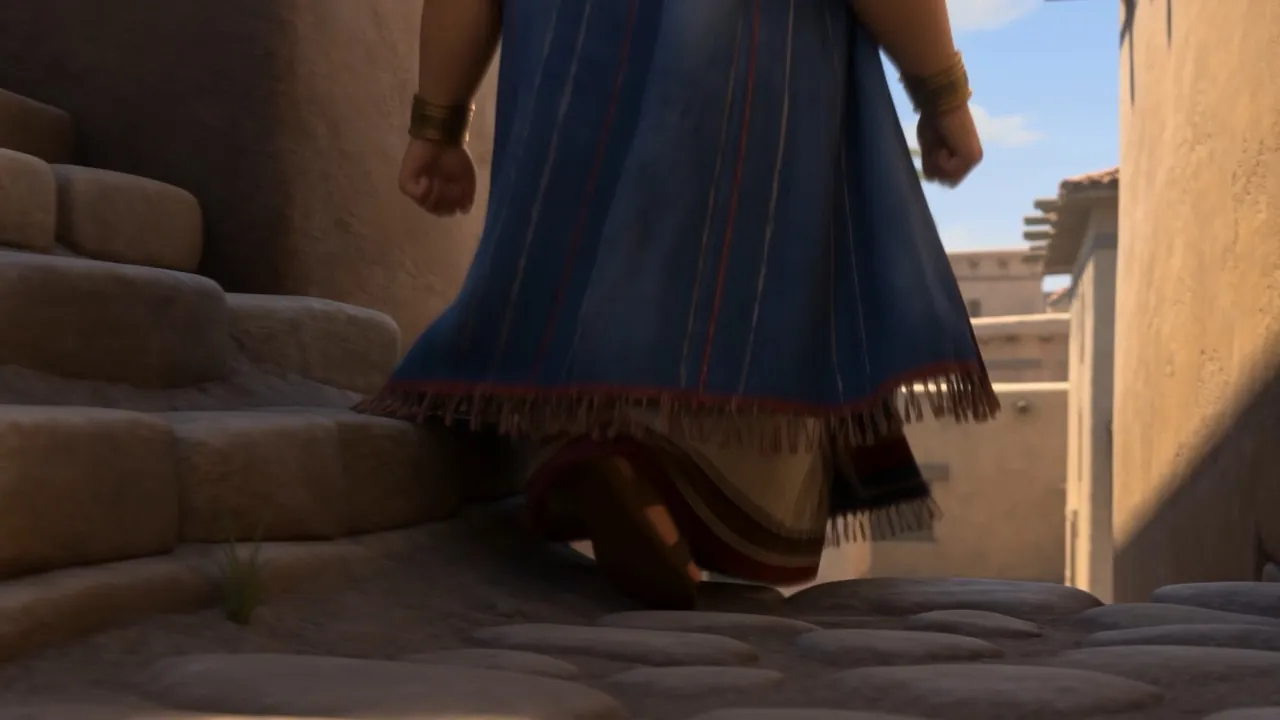
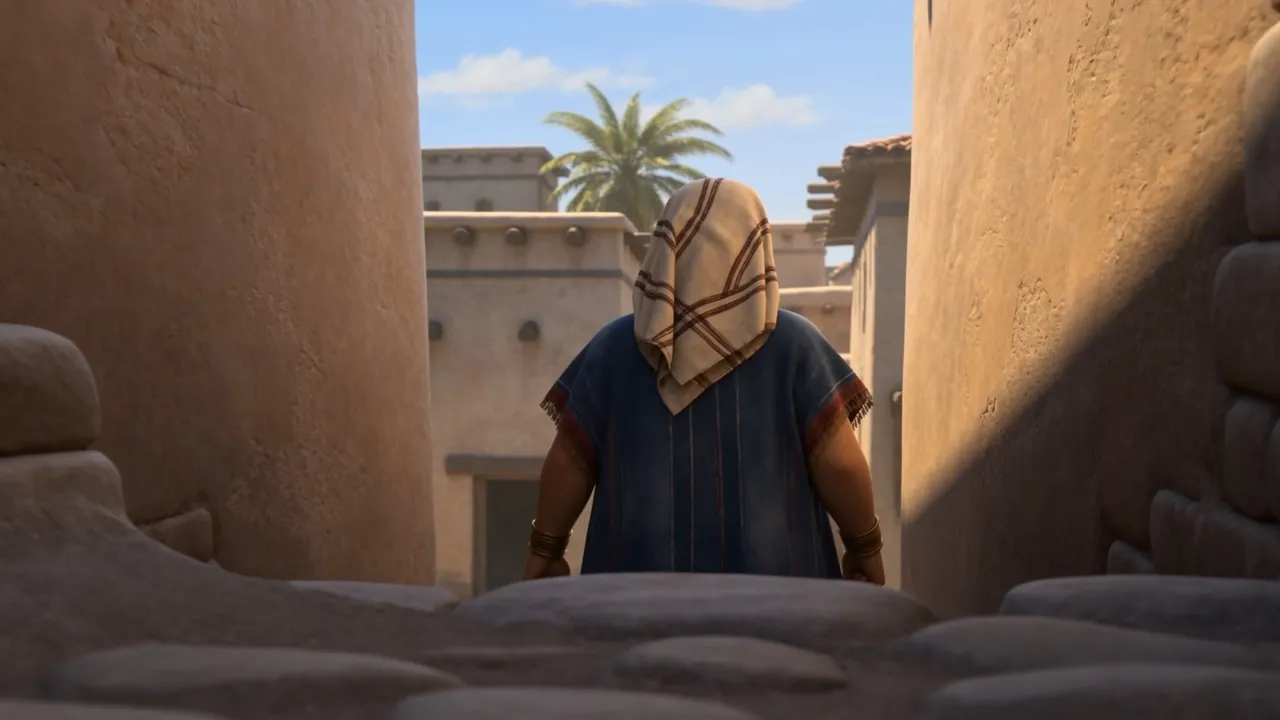
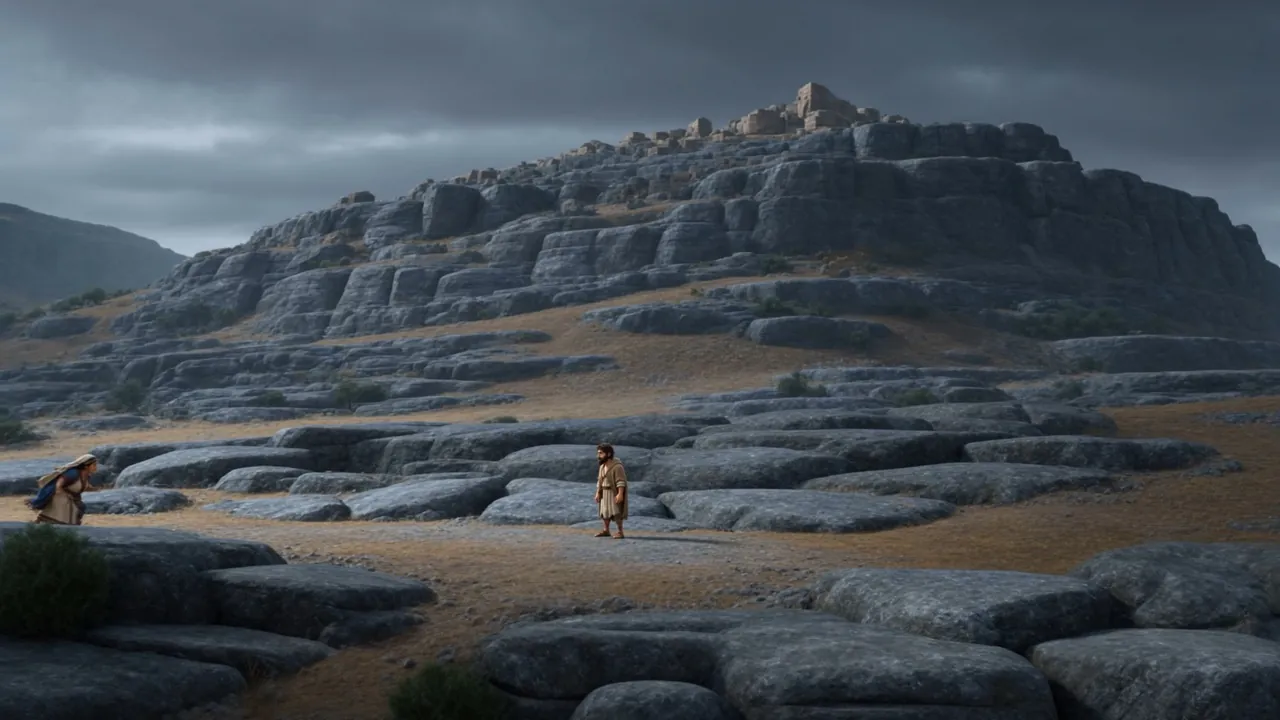
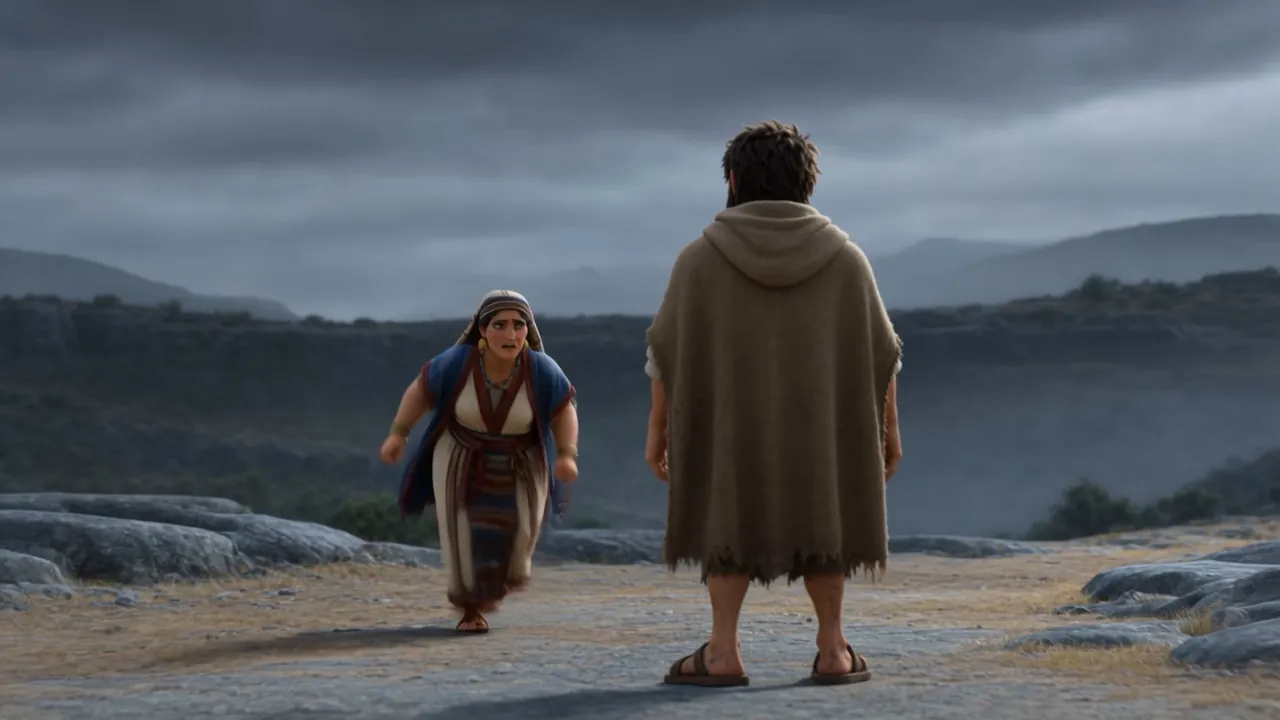
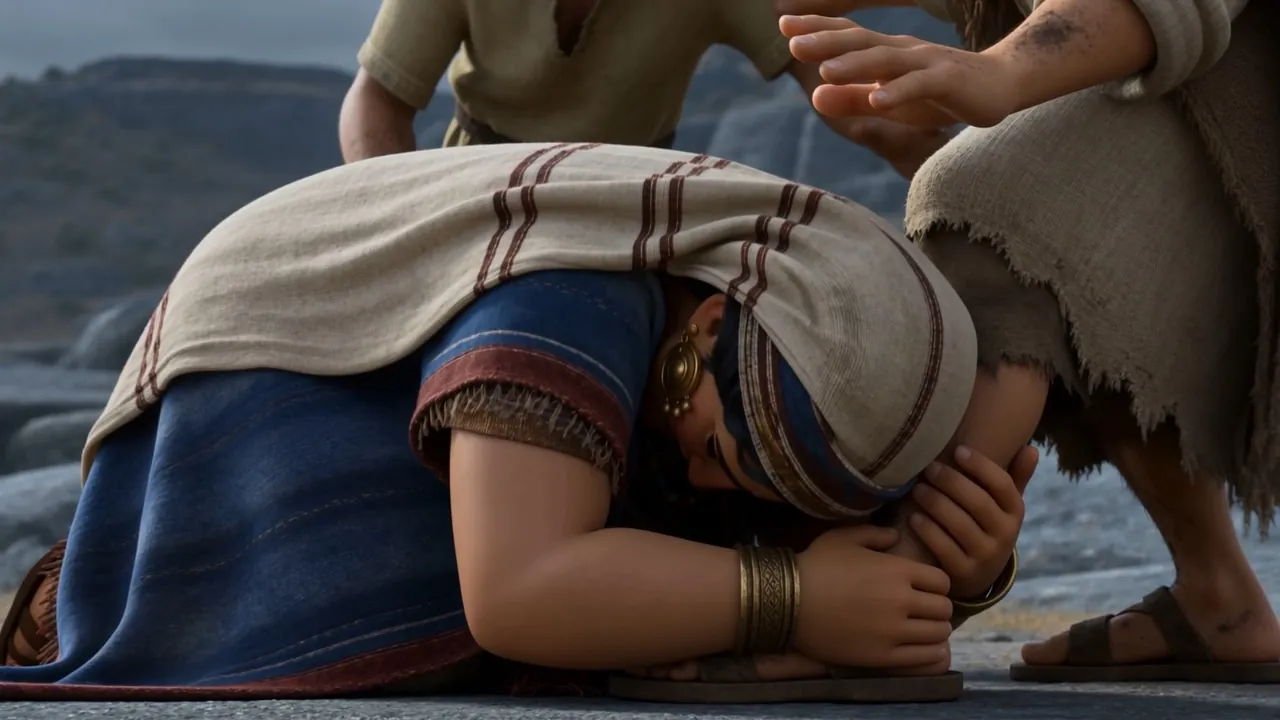
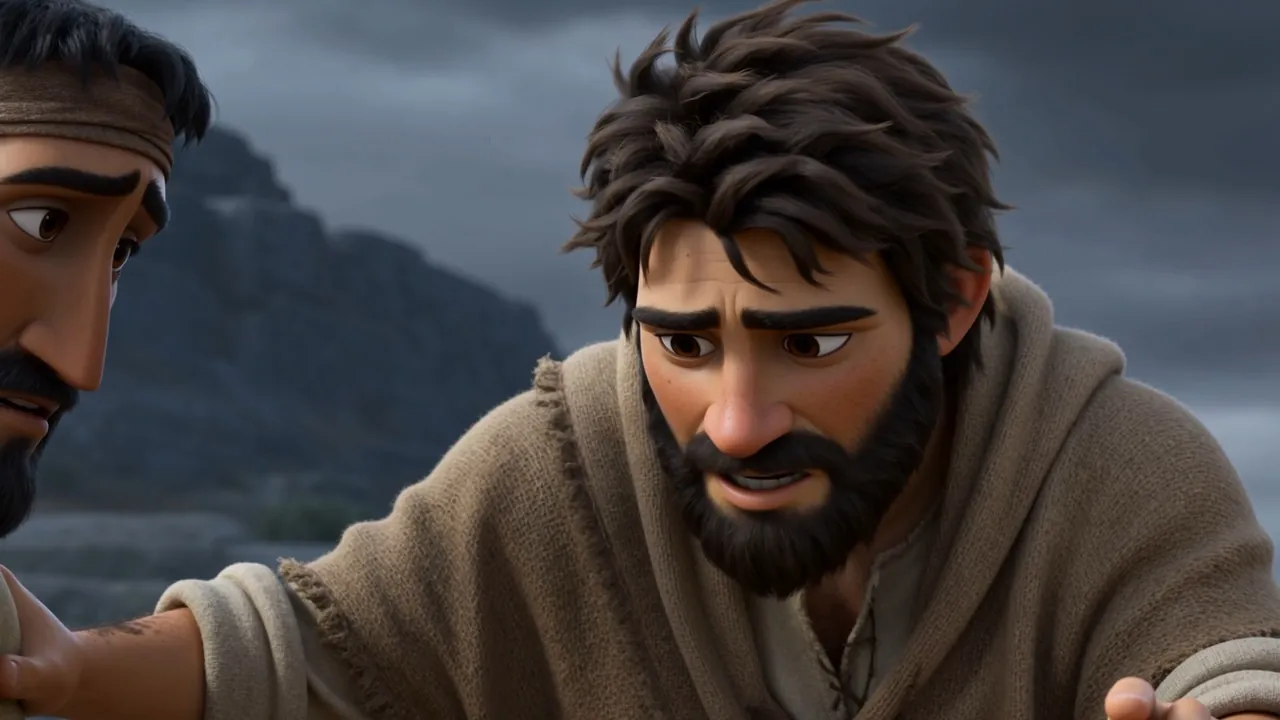

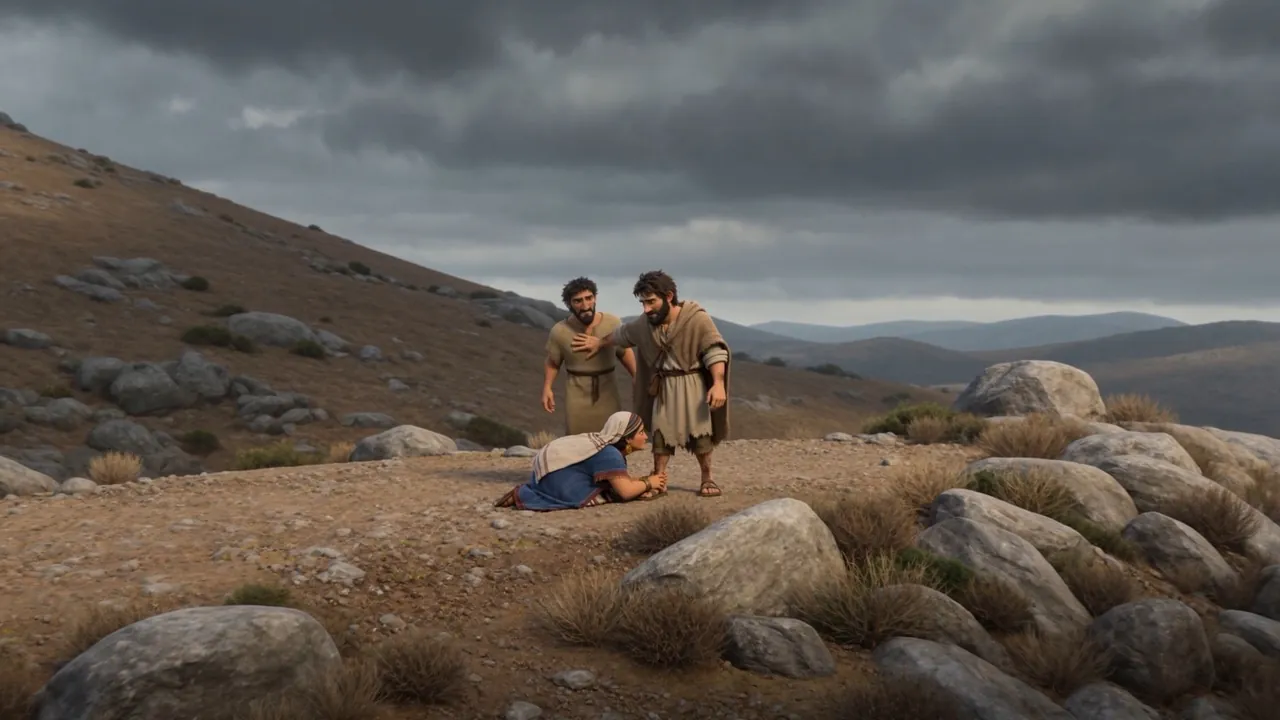
She saddled a donkey and rode to Carmel, and on the way she said one thing to everyone who asked, including her own husband and the prophet's servant: “It is well.” Only when she reached Elisha did she take hold of his feet and say the rest. “Let her alone, for her soul is troubled within her, and Yahweh has hidden it from me.” He did not know. He went anyway. 2 Kings 4 : 22–31
It is well.
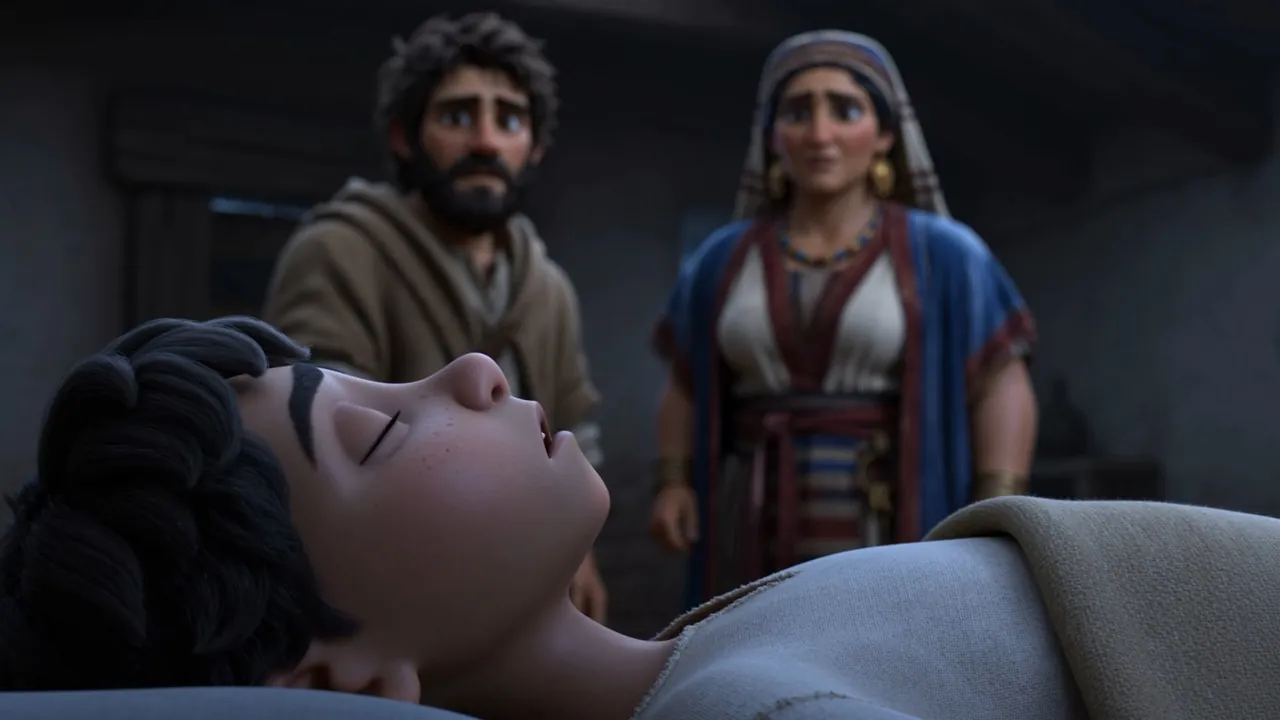


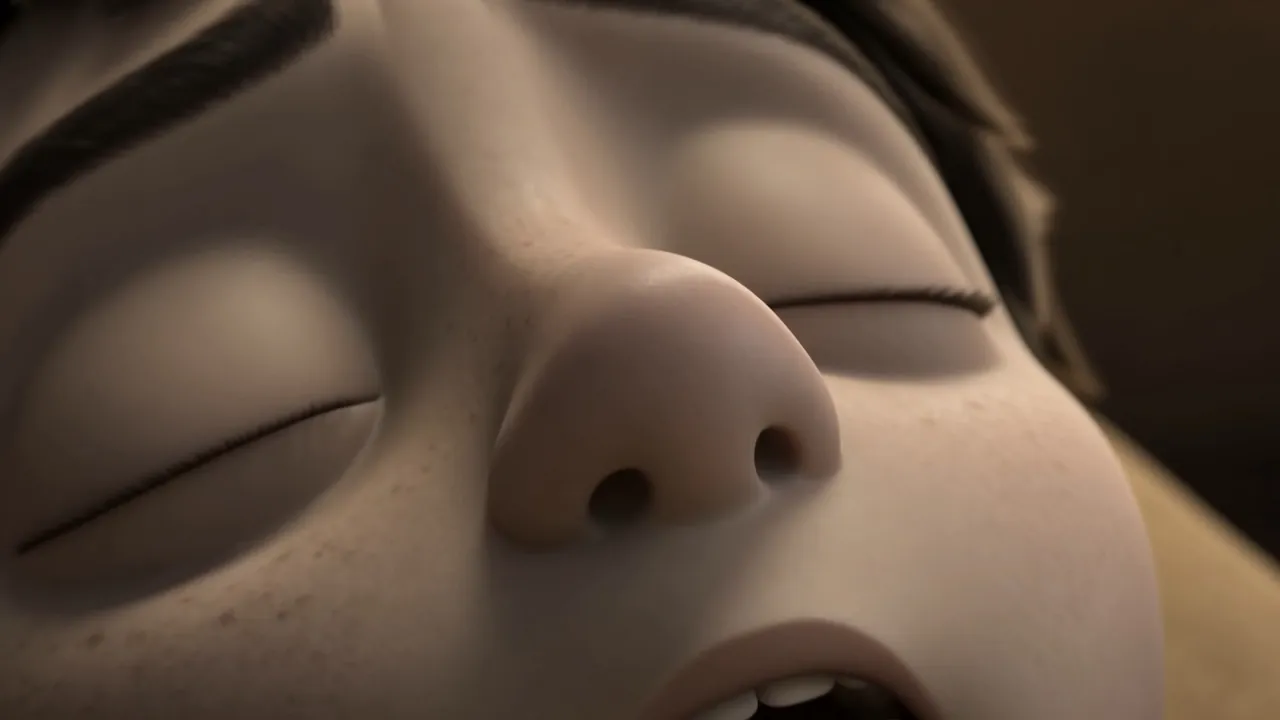

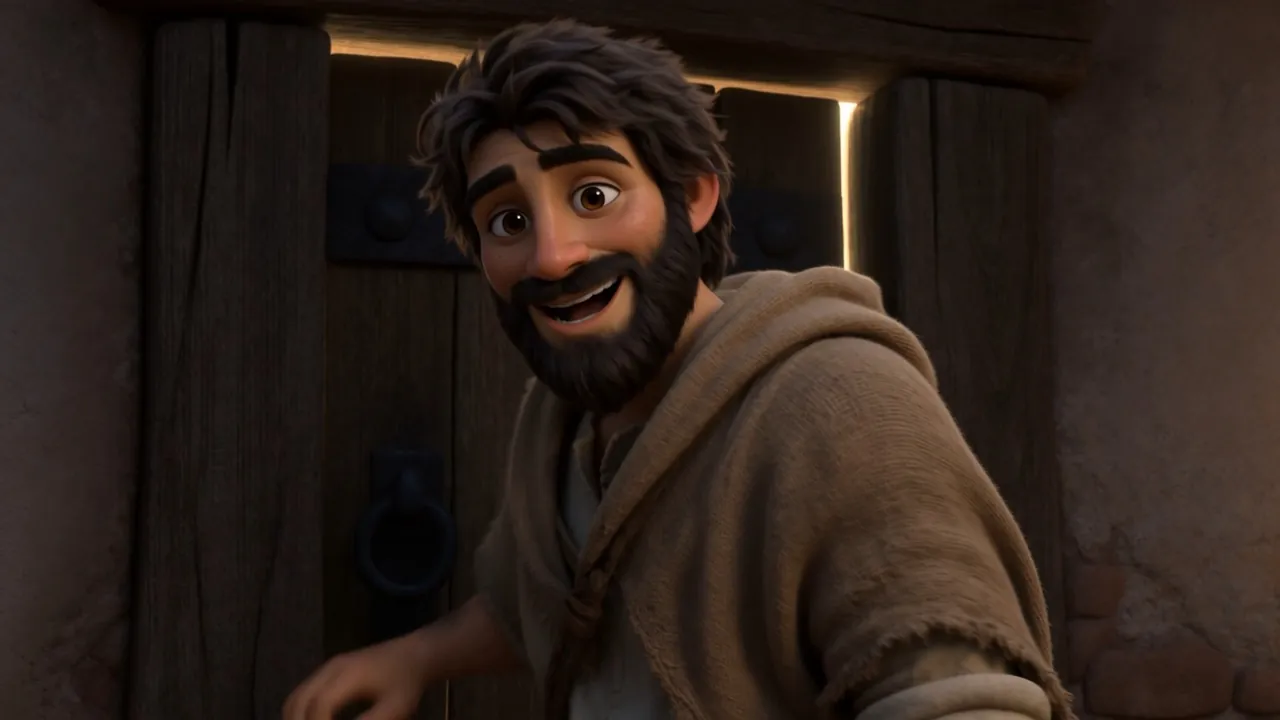
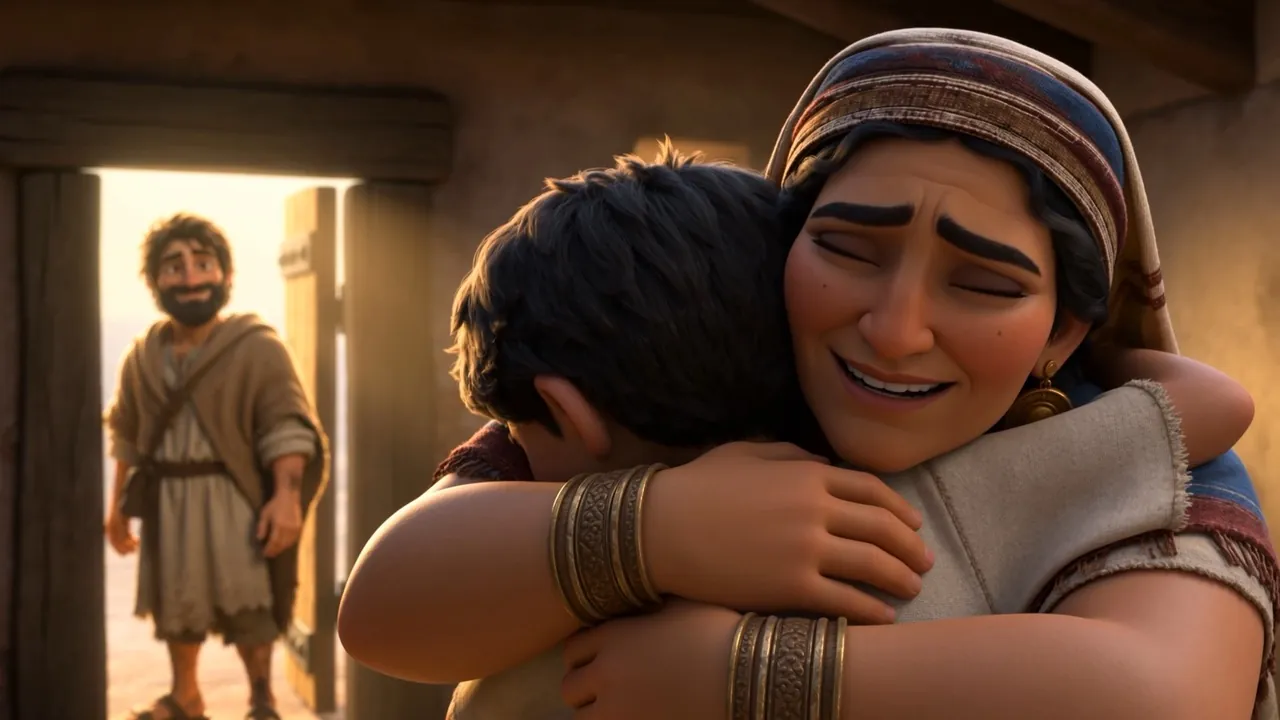
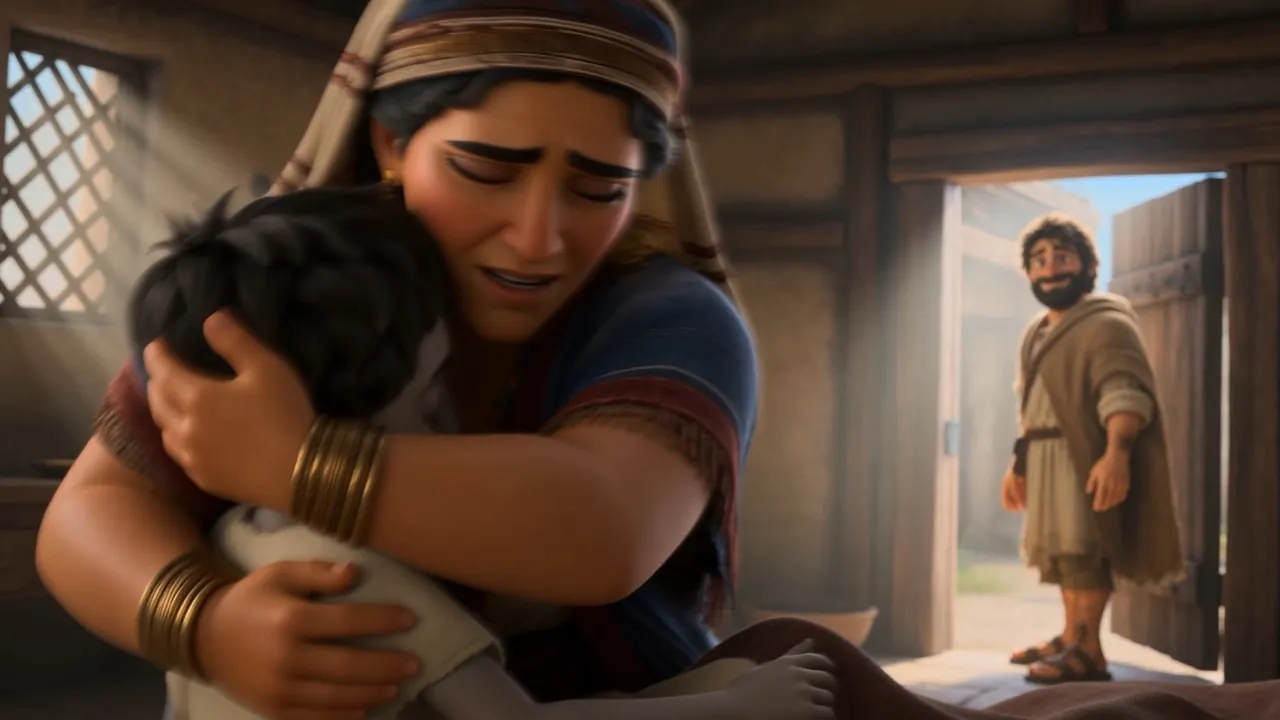
He shut the door on the two of them and prayed. And the child sneezed seven times, and opened his eyes. Every single one of them gets counted. Then Elisha called the mother up and said four words — “Take up your son” — and she fell at his feet and picked her boy up off the bed and went out. 2 Kings 4 : 32–37








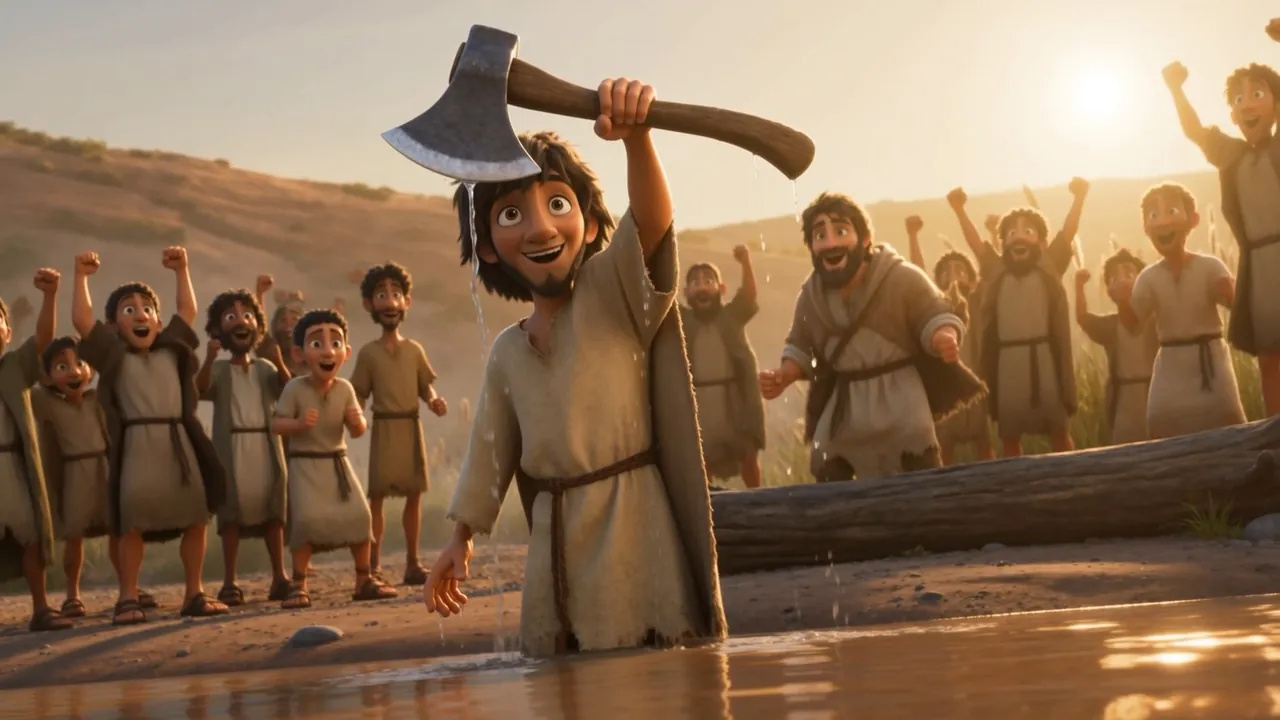
A student borrowed an axe to help build a bigger house for the school, and the head came off into the Jordan. His cry is the most ordinary sentence in the book of Kings: “Alas, my master! For it was borrowed.” He was not afraid of the river. He was afraid of facing the man he had borrowed it from. And God floated iron for that. 2 Kings 6 : 1–7
Alas, my master! It was borrowed.
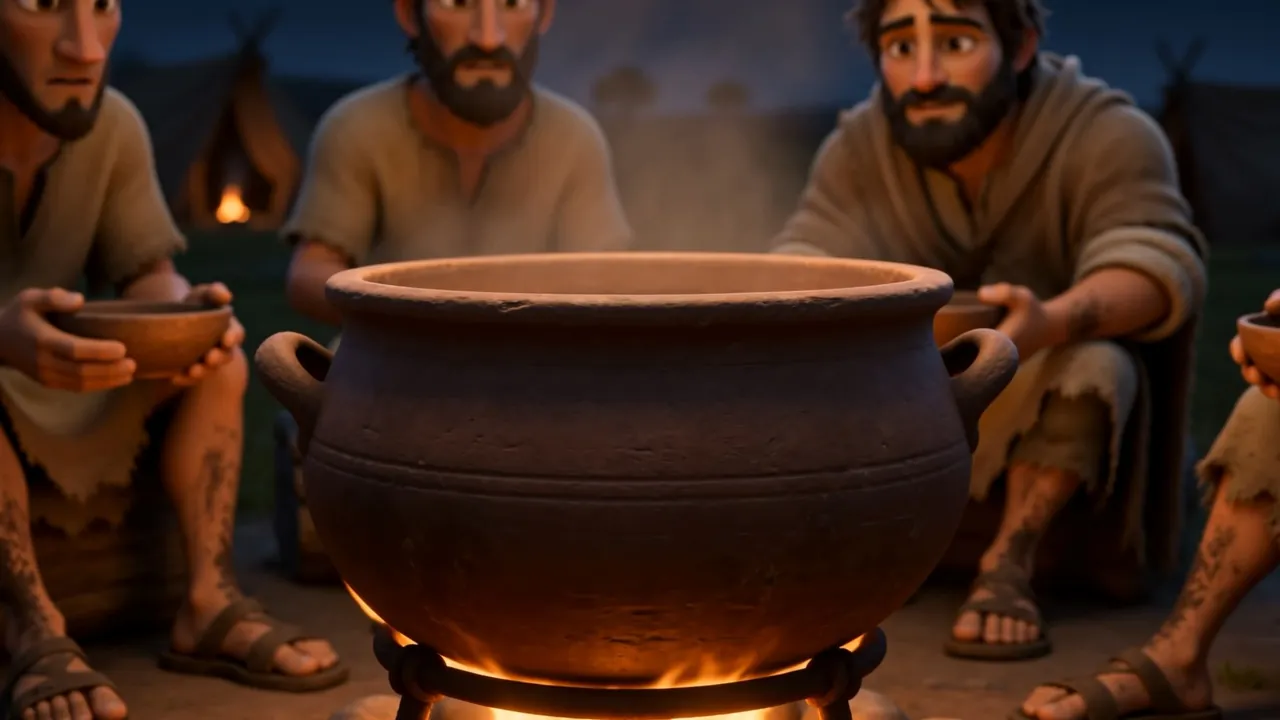
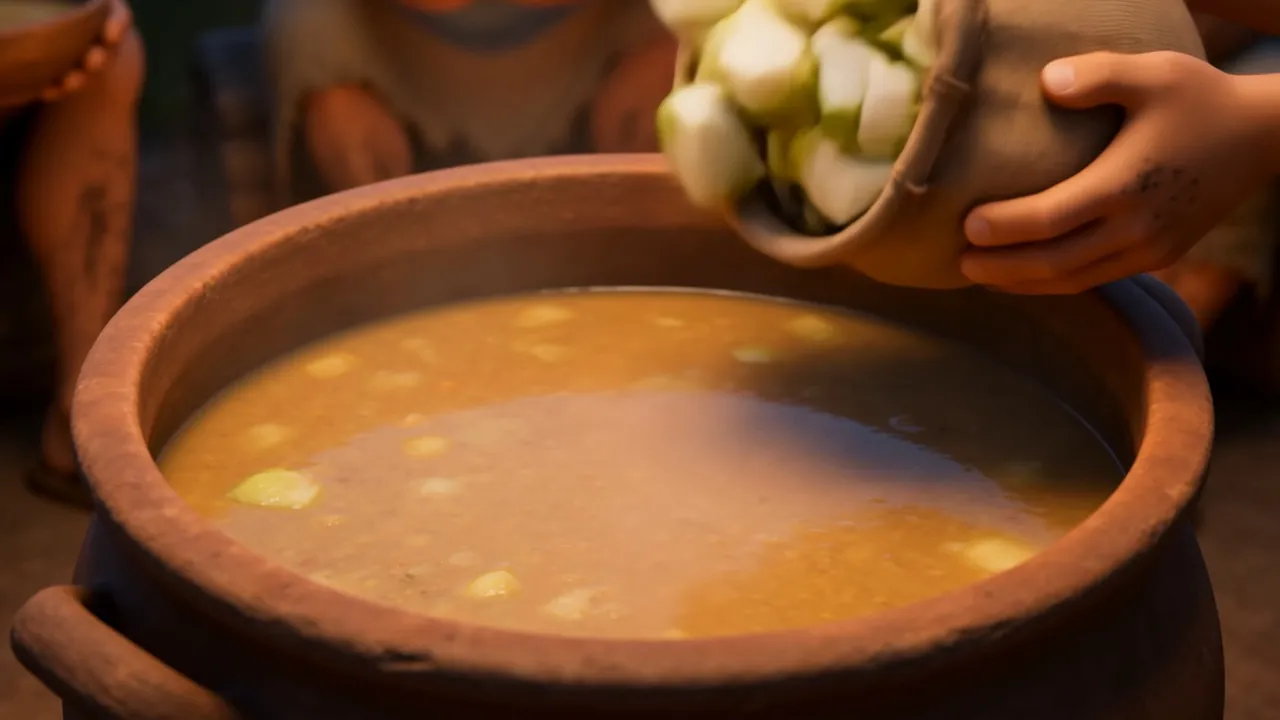
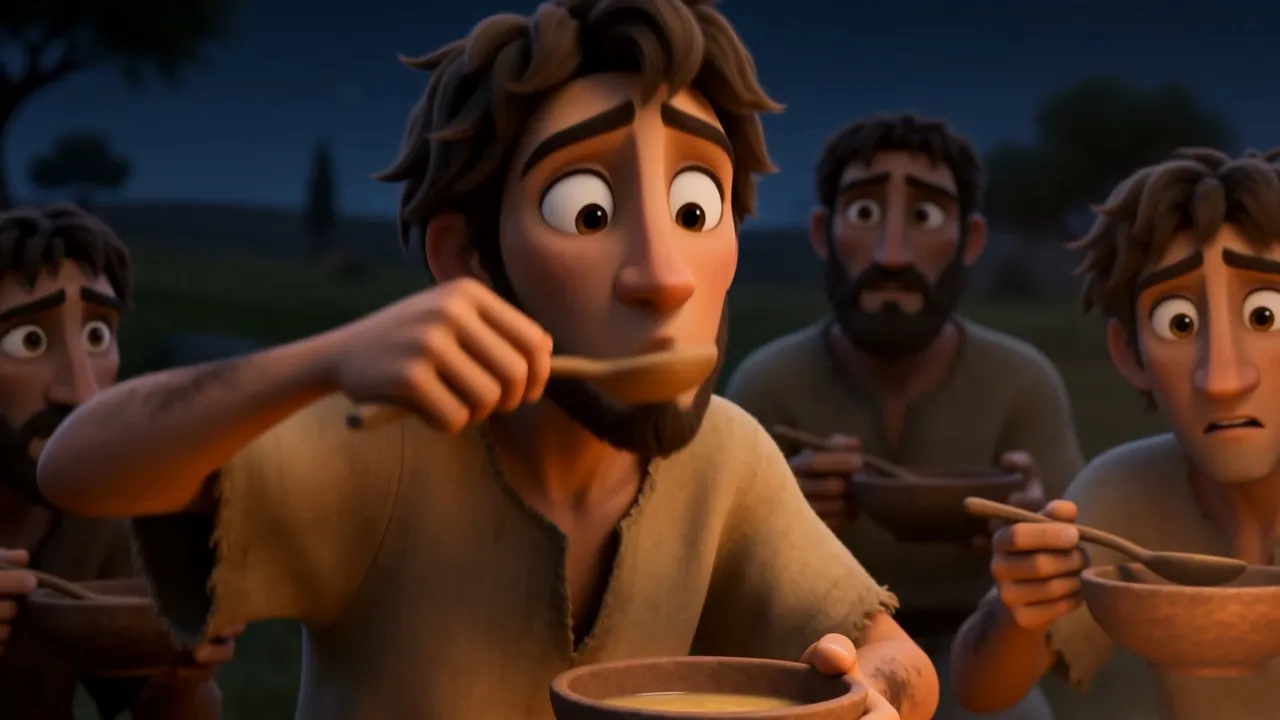
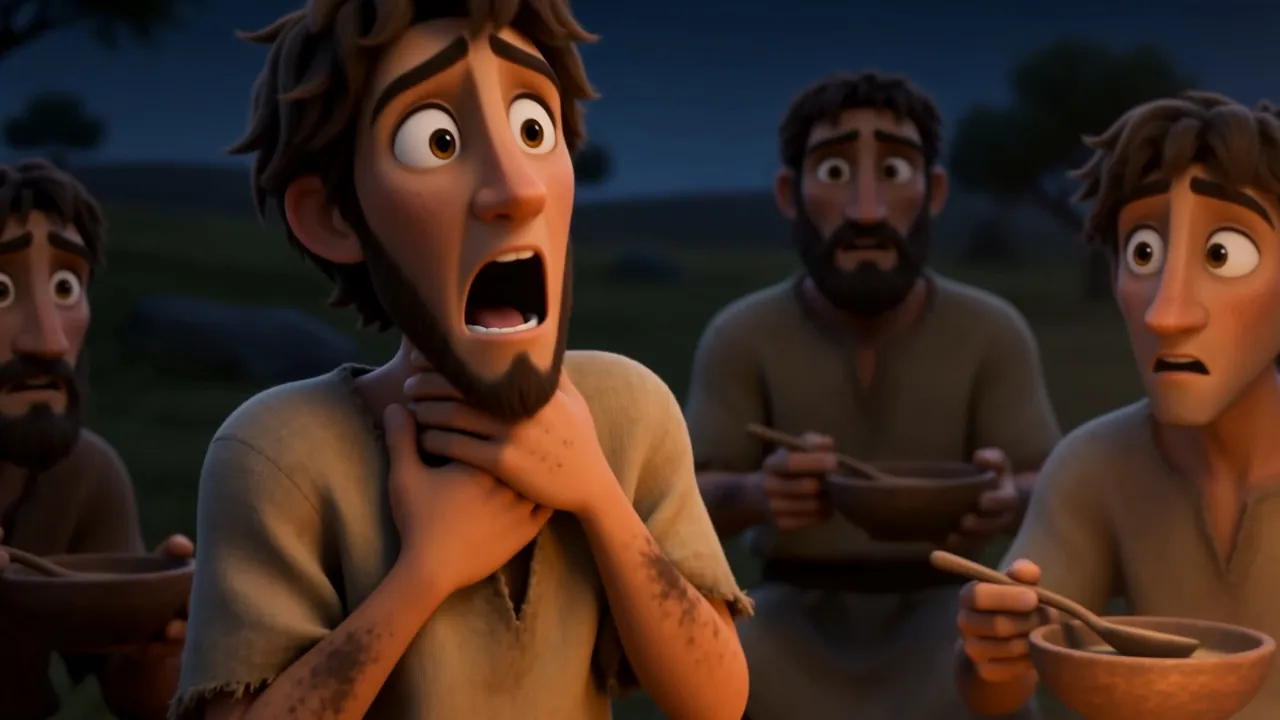
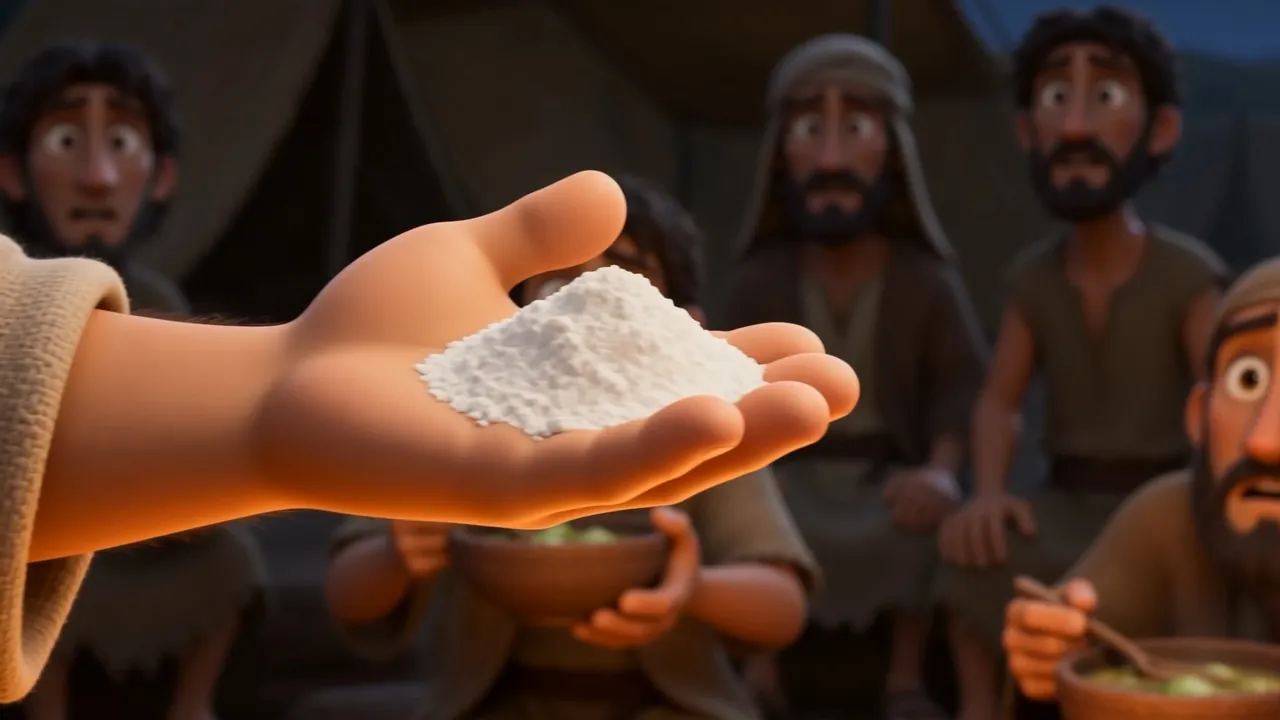
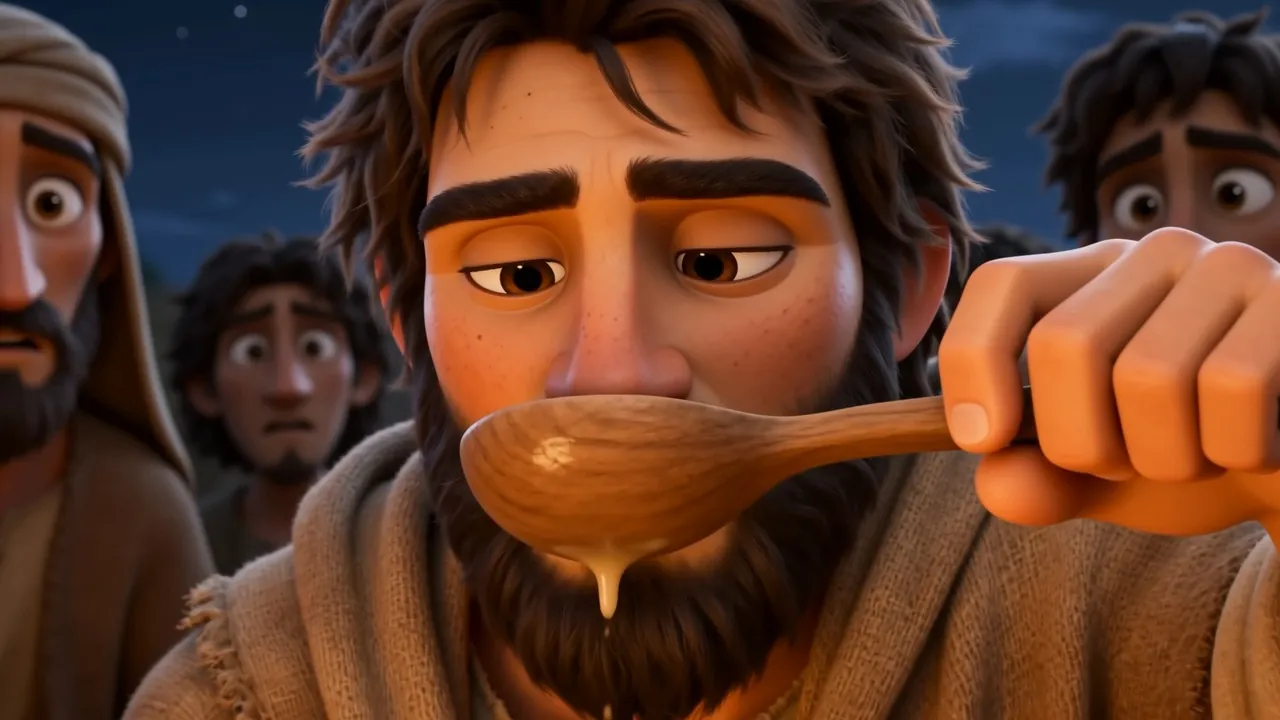
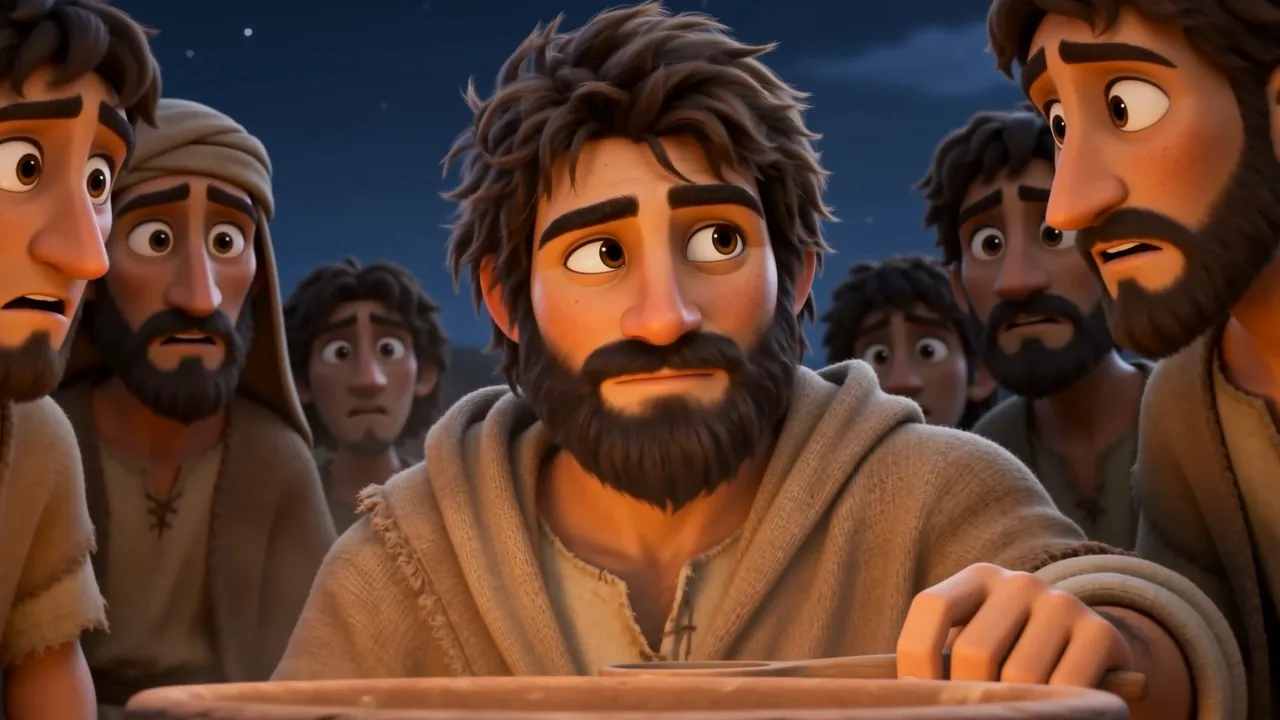
There was a famine, and somebody gathering herbs for the pot found a wild vine and shredded it in without knowing what it was. “Man of God, there is death in the pot!” He asked for meal, threw it in, and told them to serve it. The whole scene is four verses long and it is about a ruined supper for a house full of students. 2 Kings 4 : 38–41
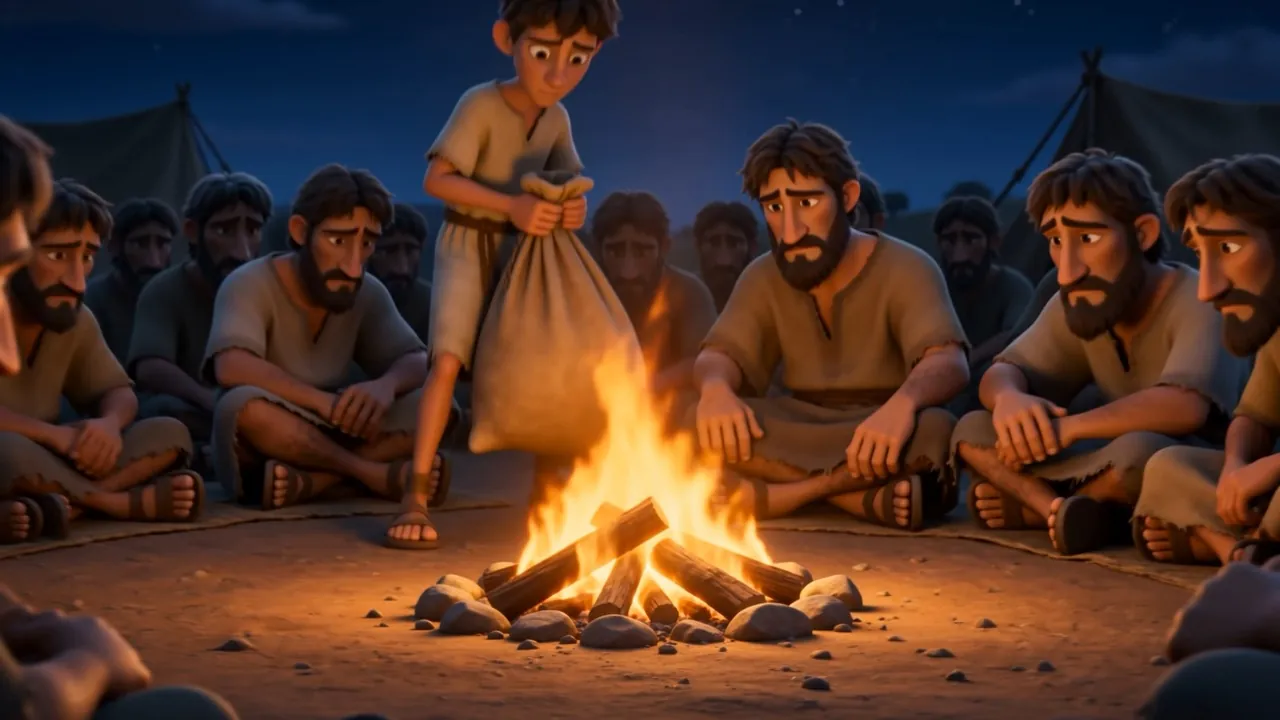
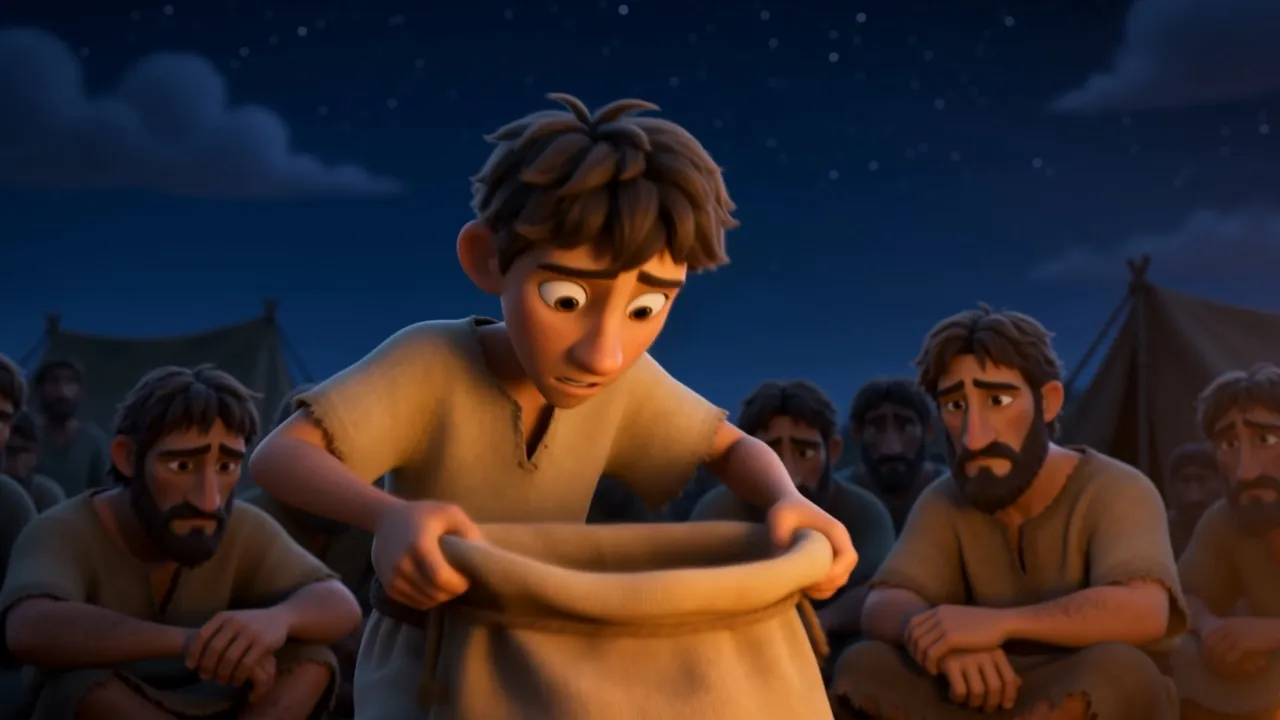
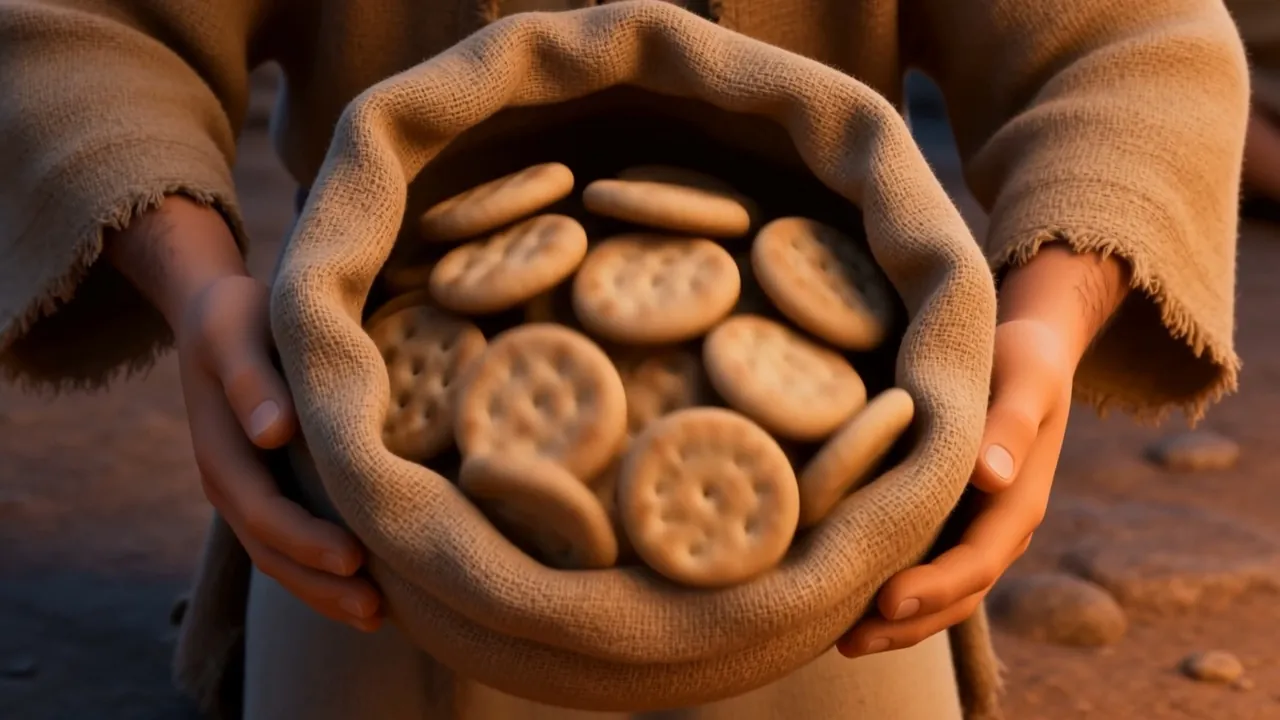
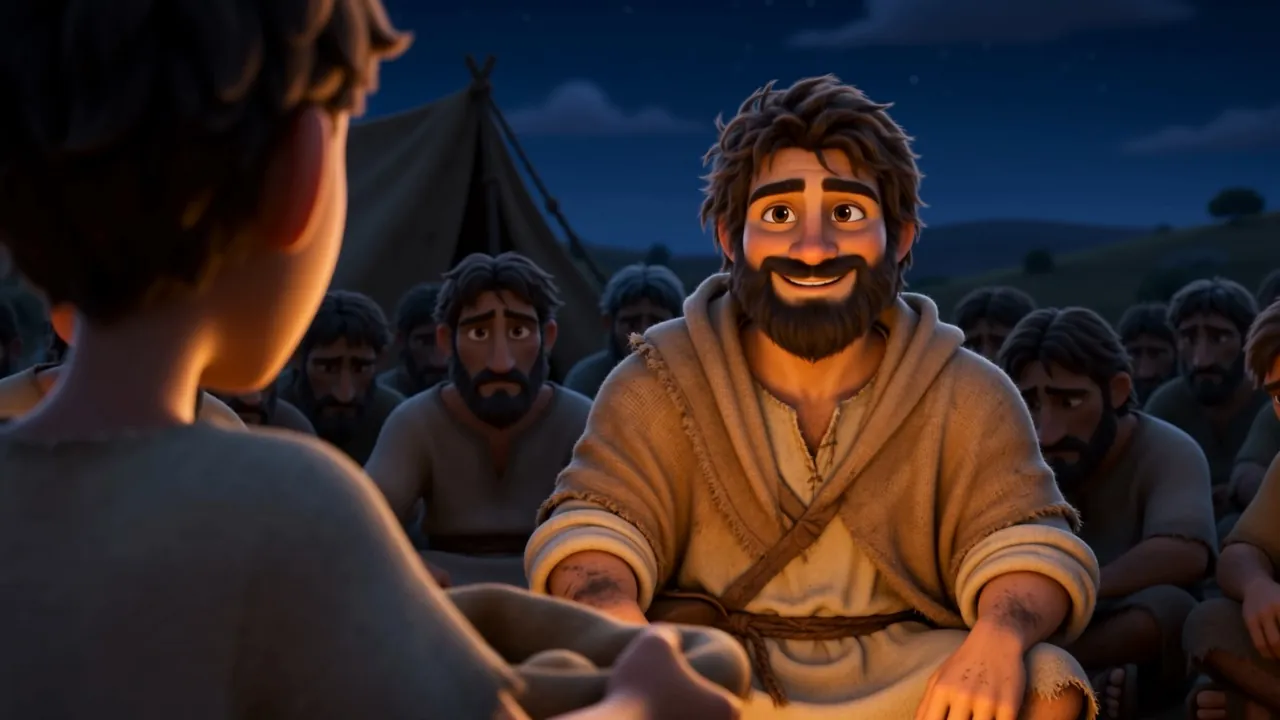
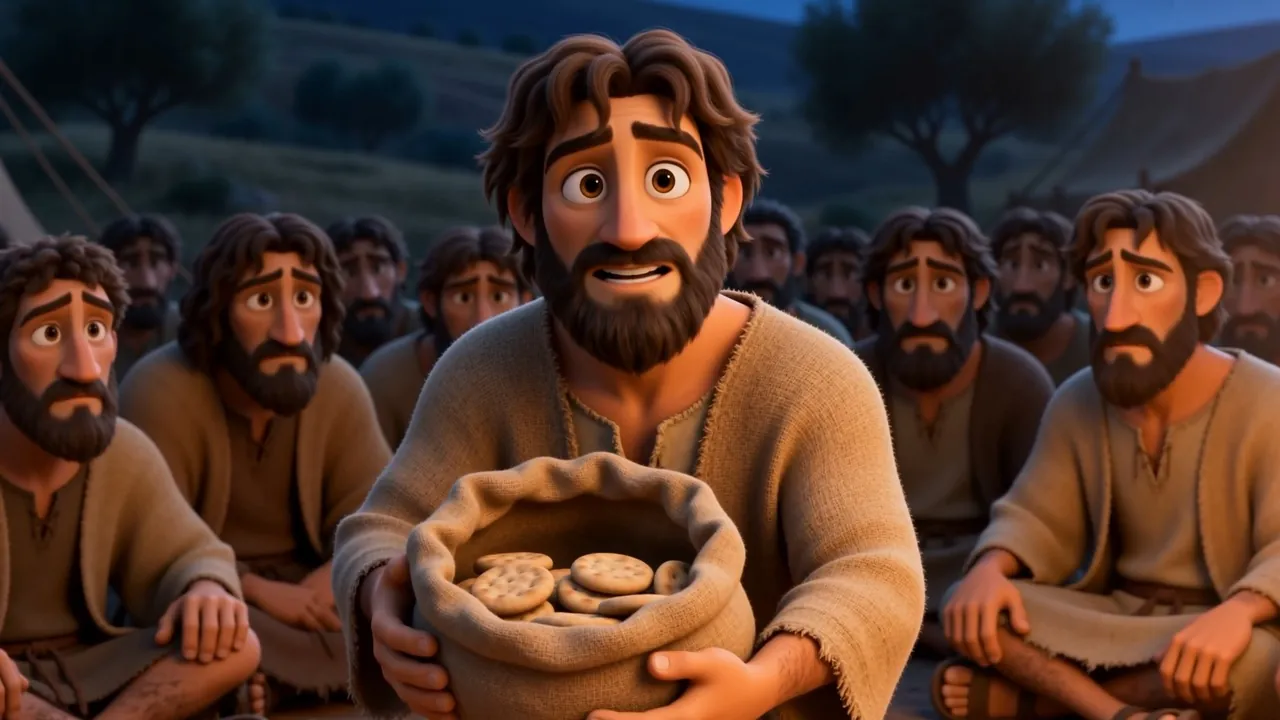
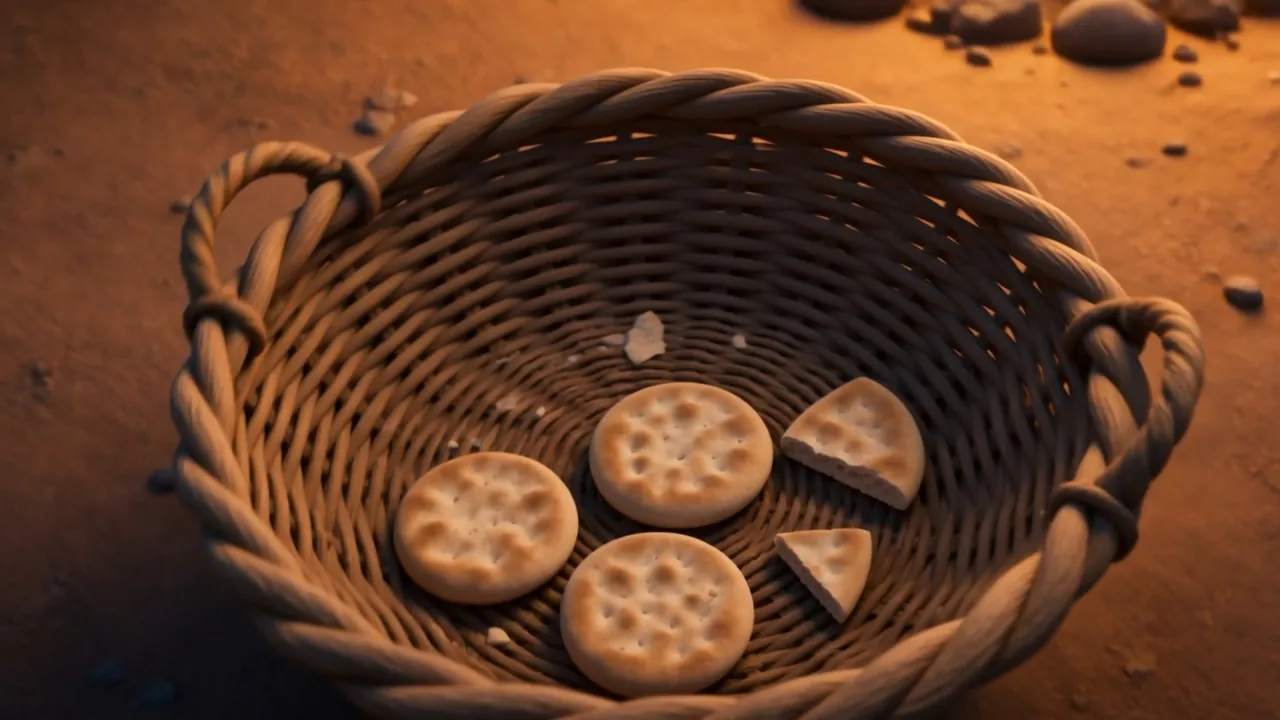
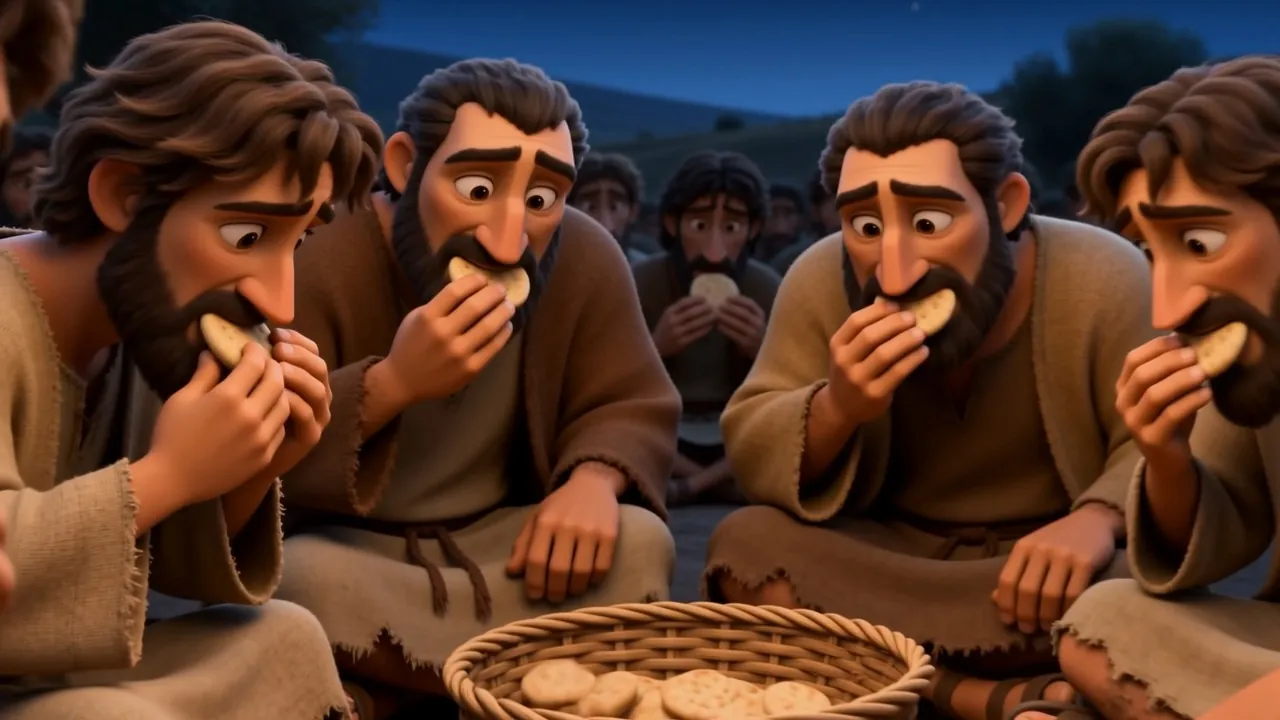
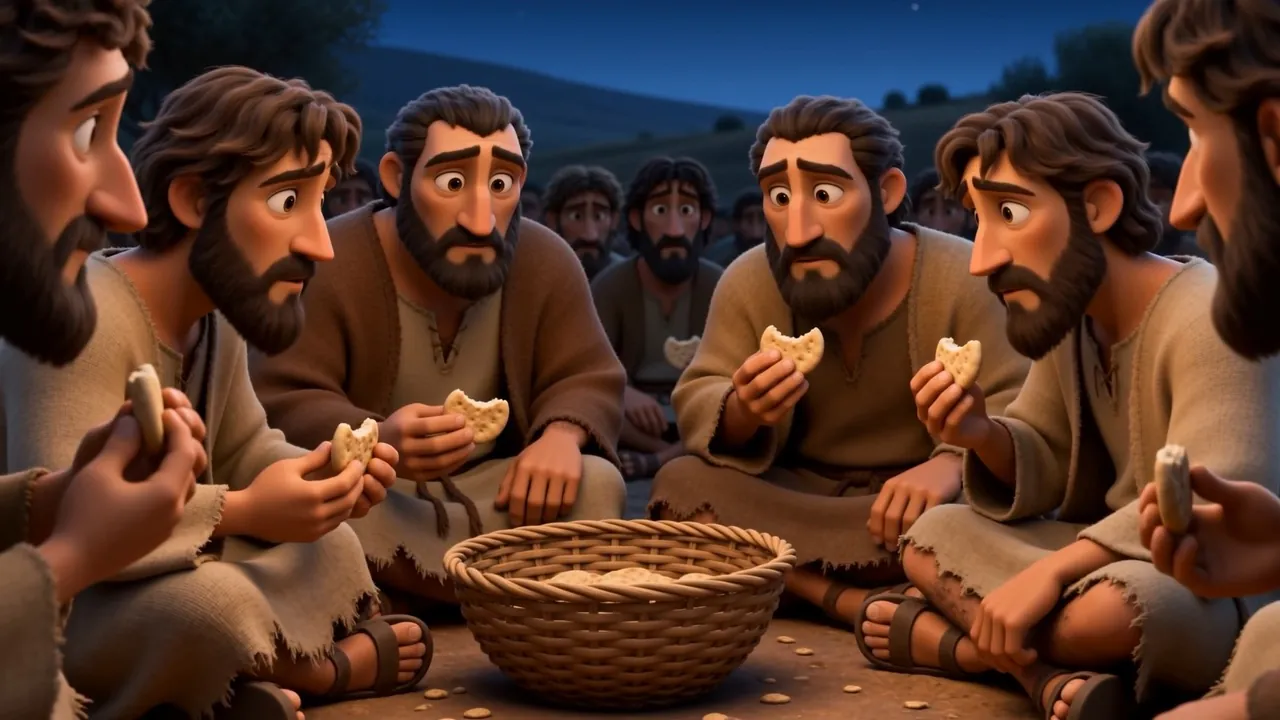
A man came from Baal Shalishah with twenty loaves of barley and some fresh grain, and Elisha said to give it to the hundred men in front of him. His servant pointed out the obvious. Elisha repeated it, and added why: “They will eat, and will have some left over.” They ate, and had some left over — eight hundred years before anyone did the same thing on a Galilean hillside with five loaves and two fish. 2 Kings 4 : 42–44
They ate, and had some left.
After the story
Elijah called down fire. Elisha fixed the water.
Elijah's miracles are national: drought, fire on Carmel, kings confronted in vineyards. Elisha inherited a double portion of the same spirit and spent most of it on a town's drinking supply, a family's debt, a childless couple, a bad pot of stew and a borrowed tool. The scale collapses and the tenderness goes up. Nothing in 2 Kings suggests that is a step down.
Voices of the Jordan · hover or tap to turn
Elisha
"Where is Yahweh, the God of Elijah?"
— 2 Kings 2:14
The Widow
"Your servant has nothing in the house, except a pot of oil."
— 2 Kings 4:2
The Student
"Alas, my master! For it was borrowed."
— 2 Kings 6:5Elisha
How closely were you watching?
1. What did Elisha ask Elijah for?
The double portion was the eldest son's share of an inheritance — he was asking to be treated as Elijah's heir (2 Kings 2:9).
2. What was the first thing he did with it?
Jericho's spring was making the land unproductive. No ceremony, no crowd — a new bowl, some salt, and the water was healed (2 Kings 2:19–22).
3. When did the widow's oil stop flowing?
"There is not a vessel more." The supply was measured by how much room she had borrowed for it (2 Kings 4:6).
4. Why was the lost axe head such a problem?
"Alas, my master! For it was borrowed." Iron was expensive and he could not replace it. God floated it (2 Kings 6:5–7).
What this story teaches
Nothing is too small to bring.
A lost axe head is not a national crisis. It was somebody else's axe, and the man who lost it was ashamed, and that was enough. The Bible spends seven verses on it.
"He cut down a stick, threw it in there, and made the iron float." 2 Kings 6:6You get as much as you make room for.
The oil stopped the moment the jars ran out — not before. What she had to do first was go round the whole town asking to borrow empty things, which is its own kind of courage.
"There isn’t another container." Then the oil stopped flowing. 2 Kings 4:6Even the prophet did not always know.
"Her soul is troubled within her, and Yahweh has hidden it from me." Elisha went up that mountain road with no idea what he was walking into. Not knowing was not a reason to stay put.
"…her soul is troubled within her; and Yahweh has hidden it from me…" 2 Kings 4:27Read the scripture itself. 2 Kings 2 – 6 · World English Bible
2 Kings 2
1When Yahweh was about to take Elijah up by a whirlwind into heaven, Elijah went with Elisha from Gilgal.
2Elijah said to Elisha, “Please wait here, for Yahweh has sent me as far as Bethel.” Elisha said, “As Yahweh lives, and as your soul lives, I will not leave you.” So they went down to Bethel.
3The sons of the prophets who were at Bethel came out to Elisha, and said to him, “Do you know that Yahweh will take away your master from your head today?” He said, “Yes, I know it. Hold your peace.”
4Elijah said to him, “Elisha, please wait here, for Yahweh has sent me to Jericho.” He said, “As Yahweh lives, and as your soul lives, I will not leave you.” So they came to Jericho.
5The sons of the prophets who were at Jericho came near to Elisha, and said to him, “Do you know that Yahweh will take away your master from your head today?” He answered, “Yes, I know it. Hold your peace.”
6Elijah said to him, “Please wait here, for Yahweh has sent me to the Jordan.” He said, “As Yahweh lives, and as your soul lives, I will not leave you.” Then they both went on.
7Fifty men of the sons of the prophets went, and stood opposite them at a distance; and they both stood by the Jordan.
8Elijah took his mantle, and rolled it up, and struck the waters, and they were divided here and there, so that they both went over on dry ground.
9When they had gone over, Elijah said to Elisha, “Ask what I shall do for you, before I am taken from you.” Elisha said, “Please let a double portion of your spirit be on me.”
10He said, “You have asked a hard thing. If you see me when I am taken from you, it will be so for you; but if not, it will not be so.”
11As they continued on and talked, behold, a chariot of fire and horses of fire separated them, and Elijah went up by a whirlwind into heaven.
12Elisha saw it, and he cried, “My father, my father, the chariots of Israel and its horsemen!” He saw him no more. Then he took hold of his own clothes, and tore them in two pieces.
13He also took up Elijah’s mantle that fell from him, and went back, and stood by the bank of the Jordan.
14He took Elijah’s mantle that fell from him, and struck the waters, and said, “Where is Yahweh, the God of Elijah?” When he also had struck the waters, they were divided apart, and Elisha went over.
15When the sons of the prophets who were at Jericho over against him saw him, they said, “The spirit of Elijah rests on Elisha.” They came to meet him, and bowed themselves to the ground before him.
16They said to him, “See now, there are with your servants fifty strong men. Please let them go and seek your master. Perhaps Yahweh’s Spirit has taken him up, and put him on some mountain, or into some valley.” He said, “Don’t send them.”
17When they urged him until he was ashamed, he said, “Send them.” Therefore they sent fifty men; and they searched for three days, but didn’t find him.
18They came back to him, while he stayed at Jericho; and he said to them, “Didn’t I tell you, ‘Don’t go?’”
19The men of the city said to Elisha, “Behold, please, the situation of this city is pleasant, as my lord sees; but the water is bad, and the land is barren.”
20He said, “Bring me a new jar, and put salt in it.” Then they brought it to him.
21He went out to the spring of the waters, and threw salt into it, and said, “Yahweh says, ‘I have healed these waters. There shall not be from there any more death or barren wasteland.’”
22So the waters were healed to this day, according to Elisha’s word which he spoke.
23He went up from there to Bethel. As he was going up by the way, some youths came out of the city and mocked him, and said to him, “Go up, you baldy! Go up, you baldy!”
24He looked behind him and saw them, and cursed them in Yahweh’s name. Then two female bears came out of the woods, and mauled forty-two of those youths.
25He went from there to Mount Carmel, and from there he returned to Samaria.
2 Kings 4
1Now a certain woman of the wives of the sons of the prophets cried out to Elisha, saying, “Your servant my husband is dead. You know that your servant feared Yahweh. Now the creditor has come to take for himself my two children to be slaves.”
2Elisha said to her, “What should I do for you? Tell me: what do you have in the house?” She said, “Your servant has nothing in the house, except a pot of oil.”
3Then he said, “Go, borrow empty containers from of all your neighbors. Don’t borrow just a few containers.
4Go in and shut the door on you and on your sons, and pour oil into all those containers; and set aside those which are full.”
5So she went from him, and shut the door on herself and on her sons. They brought the containers to her, and she poured oil.
6When the containers were full, she said to her son, “Bring me another container.” He said to her, “There isn’t another container.” Then the oil stopped flowing.
7Then she came and told the man of God. He said, “Go, sell the oil, and pay your debt; and you and your sons live on the rest.”
8One day Elisha went to Shunem, where there was a prominent woman; and she persuaded him to eat bread. So it was, that as often as he passed by, he turned in there to eat bread.
9She said to her husband, “See now, I perceive that this is a holy man of God who passes by us continually.
10Please let us make a little room on the roof. Let us set for him there a bed, a table, a chair, and a lamp stand. When he comes to us, he can stay there.”
11One day he came there, and he went to the room and lay there.
12He said to Gehazi his servant, “Call this Shunammite.” When he had called her, she stood before him.
13He said to him, “Say now to her, ‘Behold, you have cared for us with all this care. What is to be done for you? Would you like to be spoken for to the king, or to the captain of the army?’” She answered, “I dwell among my own people.”
14He said, “What then is to be done for her?” Gehazi answered, “Most certainly she has no son, and her husband is old.”
15He said, “Call her.” When he had called her, she stood in the door.
16He said, “At this season, when the time comes around, you will embrace a son.” She said, “No, my lord, you man of God, do not lie to your servant.”
17The woman conceived, and bore a son at that season, when the time came around, as Elisha had said to her.
18When the child was grown, one day he went out to his father to the reapers.
19He said to his father, “My head! My head!” He said to his servant, “Carry him to his mother.”
20When he had taken him, and brought him to his mother, he sat on her knees until noon, and then died.
21She went up and laid him on the man of God’s bed, and shut the door on him, and went out.
22She called to her husband, and said, “Please send me one of the servants, and one of the donkeys, that I may run to the man of God, and come again.”
23He said, “Why would you want go to him today? It is not a new moon or a Sabbath.” She said, “It’s alright.”
24Then she saddled a donkey, and said to her servant, “Drive, and go forward! Don’t slow down for me, unless I ask you to.”
25So she went, and came to the man of God to Mount Carmel. When the man of God saw her afar off, he said to Gehazi his servant, “Behold, there is the Shunammite.
26Please run now to meet her, and ask her, ‘Is it well with you? Is it well with your husband? Is it well with your child?’” She answered, “It is well.”
27When she came to the man of God to the hill, she caught hold of his feet. Gehazi came near to thrust her away; but the man of God said, “Leave her alone; for her soul is troubled within her; and Yahweh has hidden it from me, and has not told me.”
28Then she said, “Did I ask you for a son, my lord? Didn’t I say, ‘Do not deceive me’?”
29Then he said to Gehazi, “Tuck your cloak into your belt, take my staff in your hand, and go your way. If you meet any man, don’t greet him; and if anyone greets you, don’t answer him again. Then lay my staff on the child’s face.”
30The child’s mother said, “As Yahweh lives, and as your soul lives, I will not leave you.” So he arose, and followed her.
31Gehazi went ahead of them, and laid the staff on the child’s face; but there was no voice and no hearing. Therefore he returned to meet him, and told him, “The child has not awakened.”
32When Elisha had come into the house, behold, the child was dead, and lying on his bed.
33He went in therefore, and shut the door on them both, and prayed to Yahweh.
34He went up, and lay on the child, and put his mouth on his mouth, and his eyes on his eyes, and his hands on his hands. He stretched himself on him; and the child’s flesh grew warm.
35Then he returned, and walked in the house once back and forth; and went up, and stretched himself out on him. Then the child sneezed seven times, and the child opened his eyes.
36He called Gehazi, and said, “Call this Shunammite!” So he called her. When she had come in to him, he said, “Take up your son.”
37Then she went in, fell at his feet, and bowed herself to the ground; then she picked up her son, and went out.
38Elisha came again to Gilgal. There was a famine in the land; and the sons of the prophets were sitting before him; and he said to his servant, “Get the large pot, and boil stew for the sons of the prophets.”
39One went out into the field to gather herbs, and found a wild vine, and gathered a lap full of wild gourds from it, and came and cut them up into the pot of stew; for they didn’t recognize them.
40So they poured out for the men to eat. As they were eating some of the stew, they cried out, and said, “Man of God, there is death in the pot!” And they could not eat it.
41But he said, “Then bring meal.” He threw it into the pot; and he said, “Serve it to the people, that they may eat.” And there was nothing harmful in the pot.
42A man from Baal Shalishah came, and brought the man of God some bread of the first fruits: twenty loaves of barley and fresh ears of grain in his sack. He said, “Give to the people, that they may eat.”
43His servant said, “What, should I set this before a hundred men?” But he said, “Give the people, that they may eat; for Yahweh says, ‘They will eat, and will have some left over.’”
44So he set it before them, and they ate, and had some left over, according to Yahweh’s word.
2 Kings 6 : 1–7
1The sons of the prophets said to Elisha, “See now, the place where we live and meet with you is too small for us.
2Please let us go to the Jordan, and each man take a beam from there, and let us make us a place there, where we may live.” He answered, “Go!”
3One said, “Please be pleased to go with your servants.” He answered, “I will go.”
4So he went with them. When they came to the Jordan, they cut down wood.
5But as one was cutting down a tree, the ax head fell into the water. Then he cried, and said, “Alas, my master! For it was borrowed.”
6The man of God asked, “Where did it fall?” He showed him the place. He cut down a stick, threw it in there, and made the iron float.
7He said, “Take it.” So he put out his hand and took it.
World English Bible (WEB) — a public-domain modern English translation. Read it freely, share it freely.
The Books of Kings — animated film 30% in production
These scenes are real frames from the film.
Help us finish it — and every story like it — free for the world.