The Book of Judges · Abimelech & Jephthah
Whatever comes outof my door.
A crown bought with temple silver, a parable shouted down a mountain, and a promise that cost a man everything he had. The two hardest chapters in Judges. Every scene below is a real frame from our animated film.
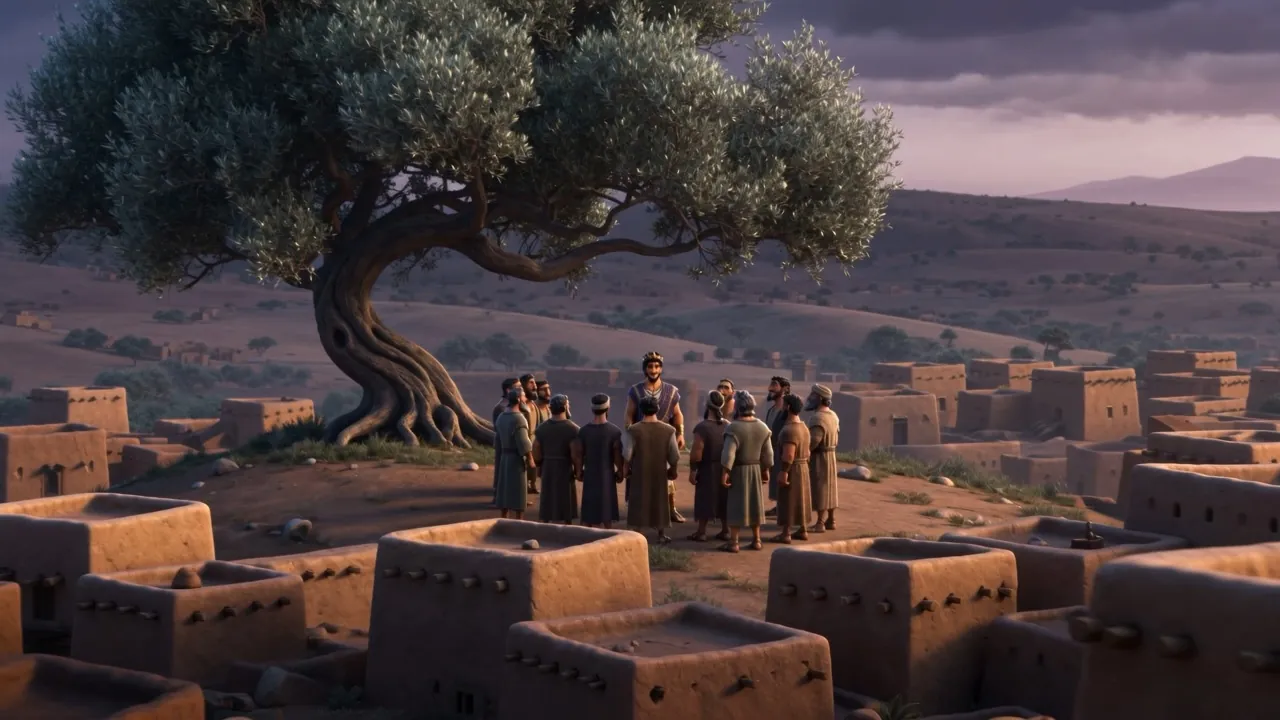
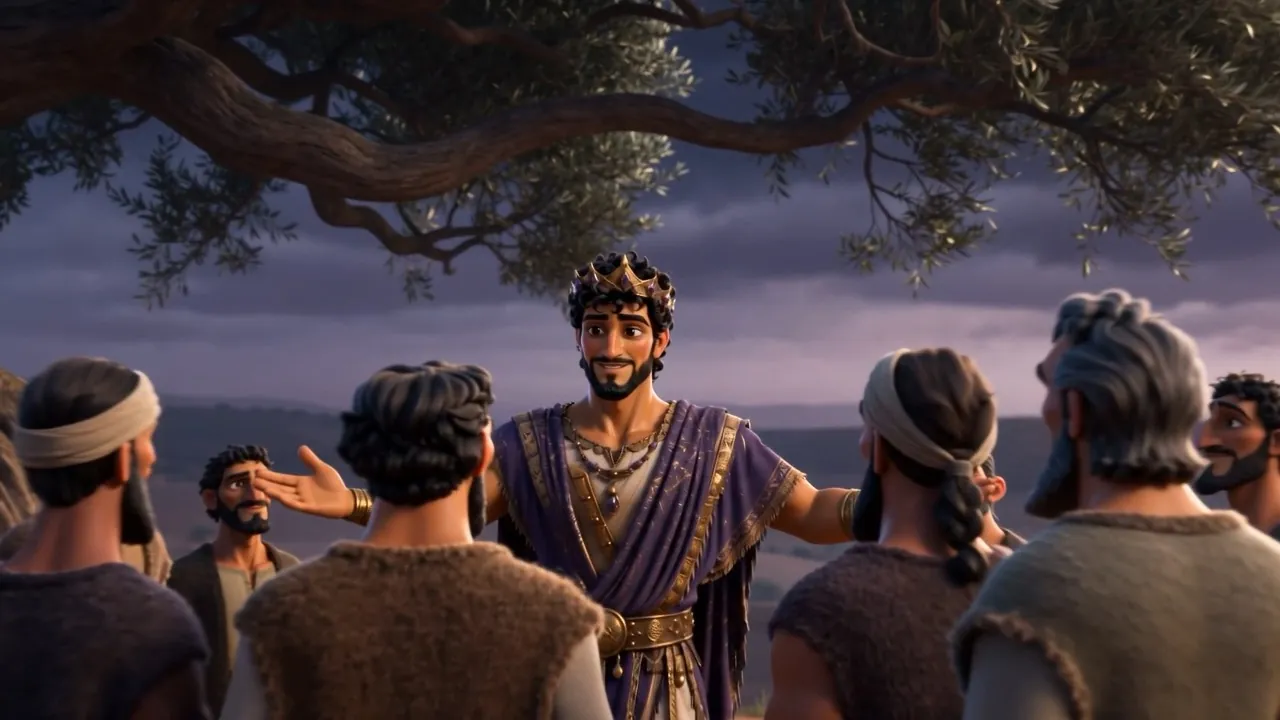
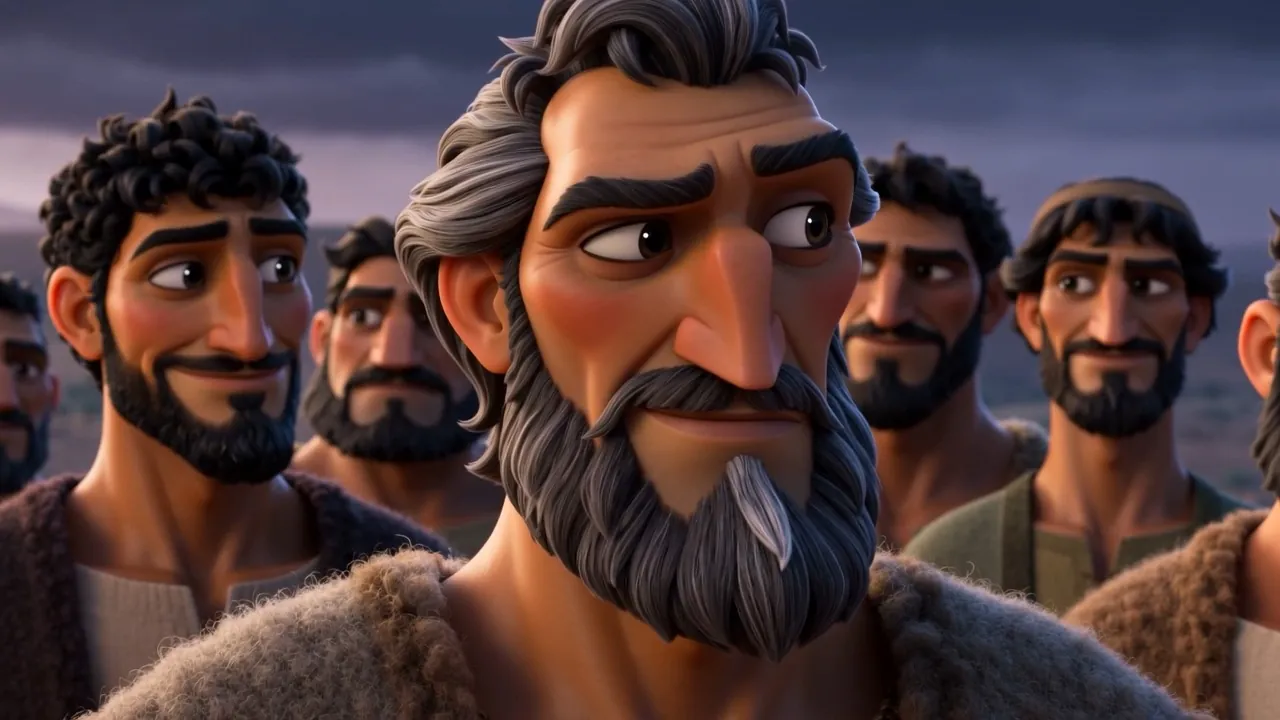
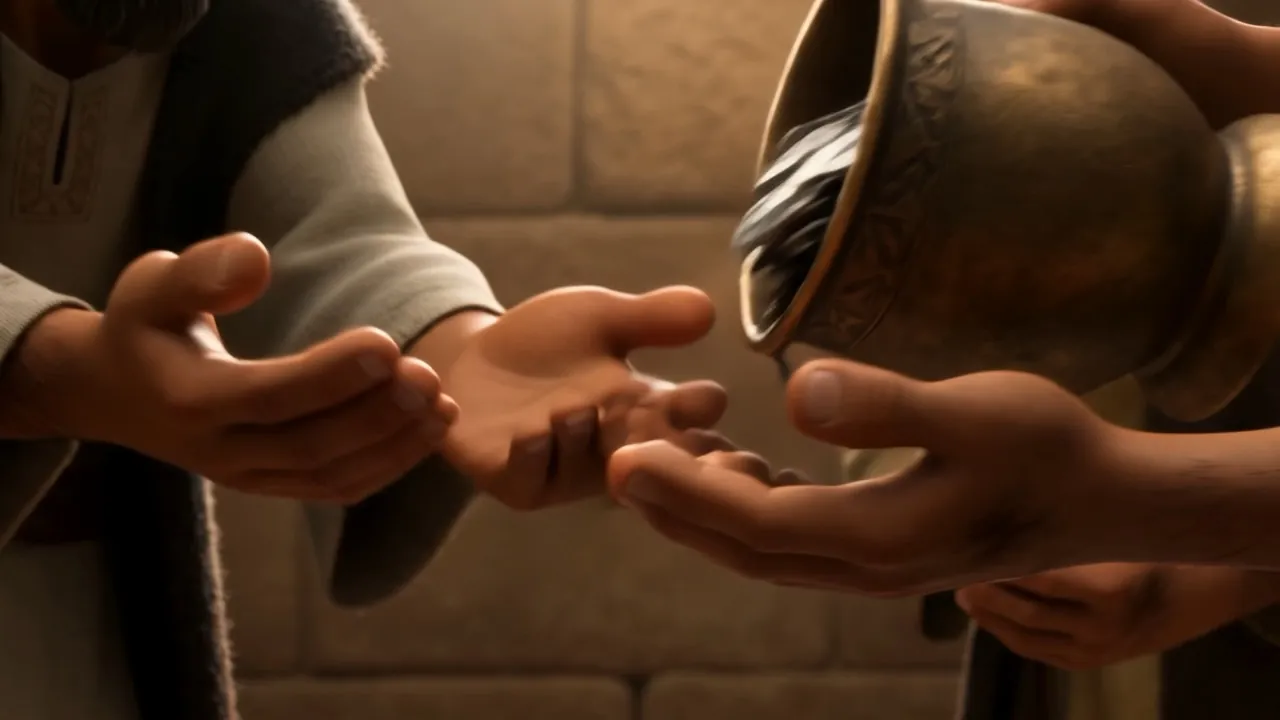
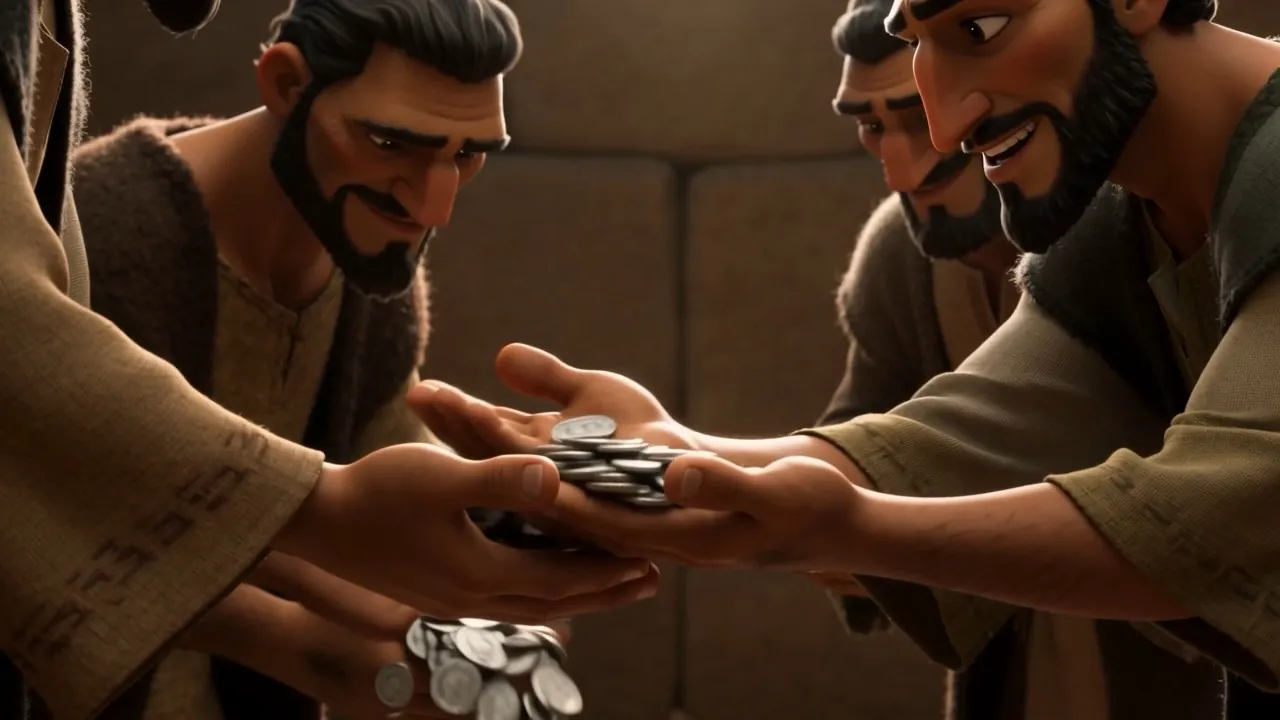
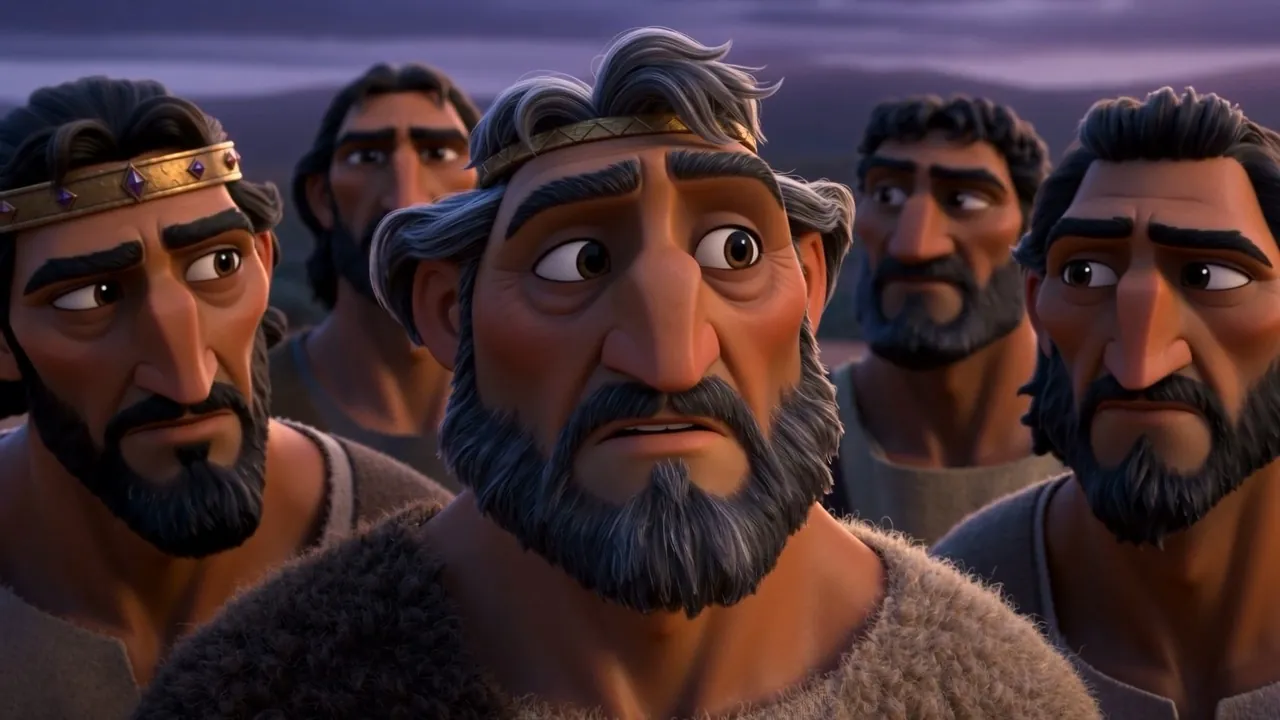
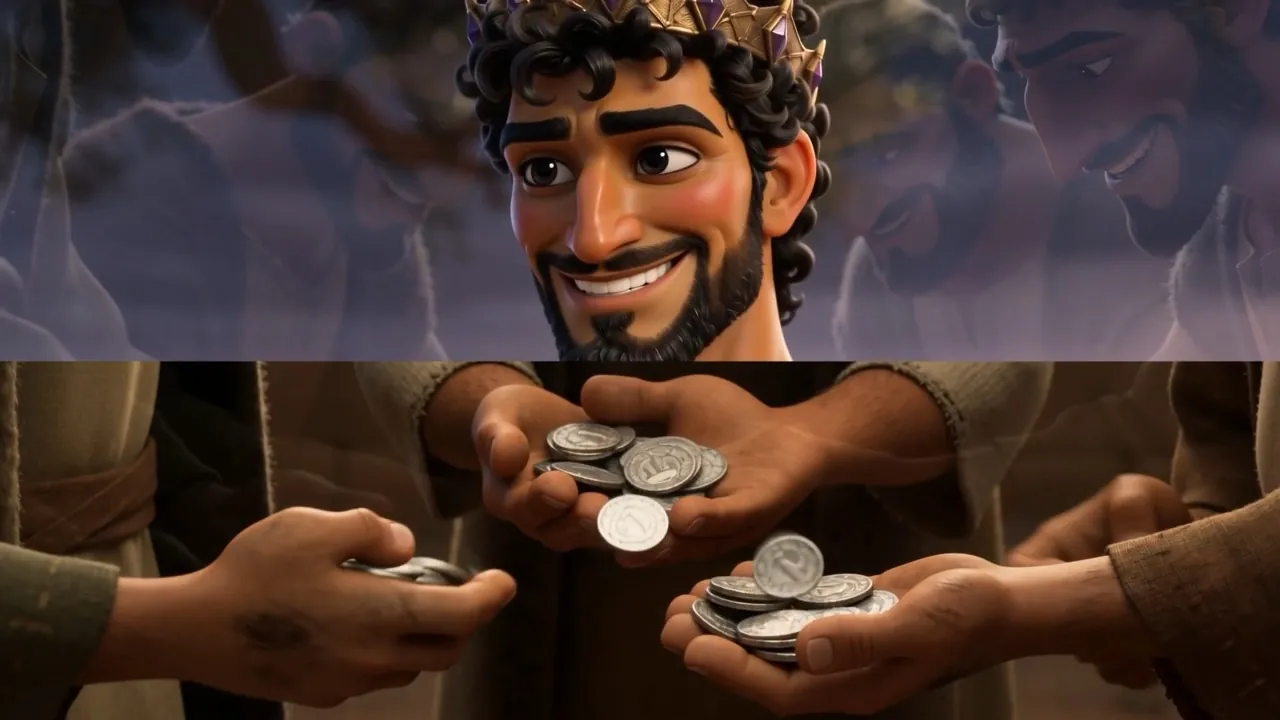
Gideon refused a crown. One of his sons did not. Abimelech went to his mother's family at Shechem and made the argument that would work: “Which is better for you, that all seventy of Jerubbaal's sons rule over you, or that one rule over you?” They gave him seventy pieces of silver out of the temple of Baal-Berith, and he hired exactly the men that money buys. Judges 9 : 1–4
He hired vain and reckless fellows.
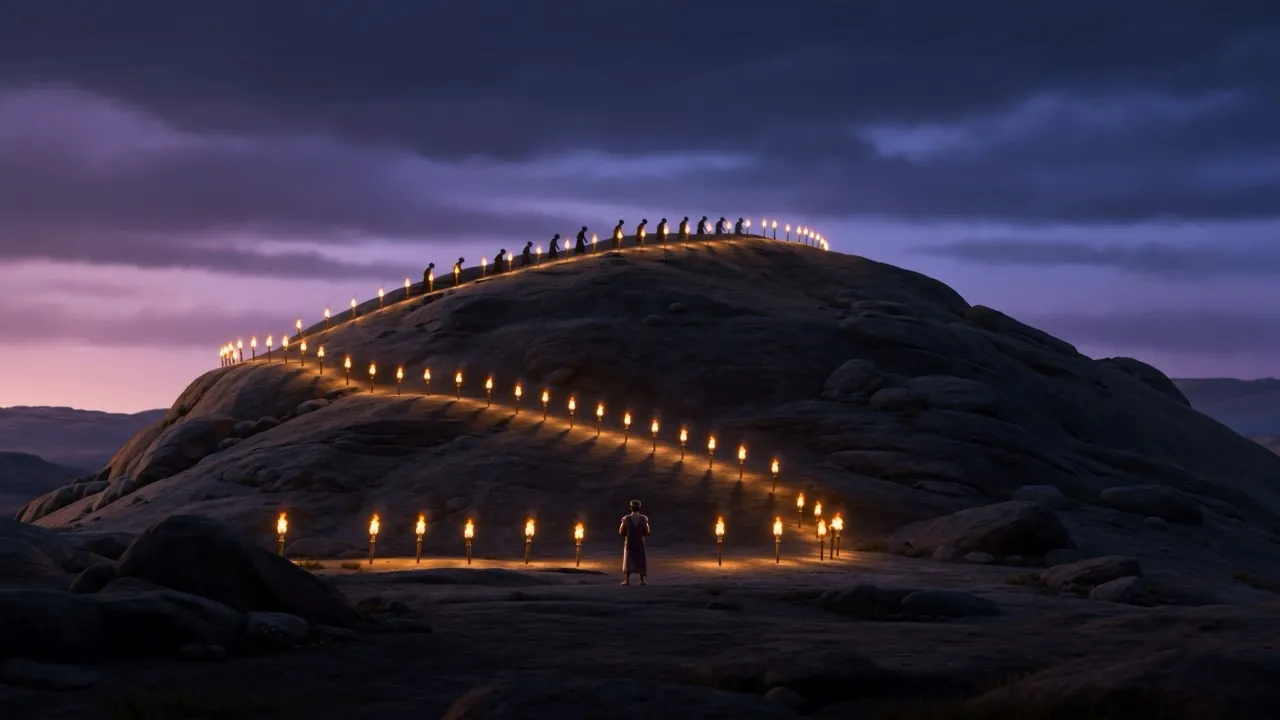
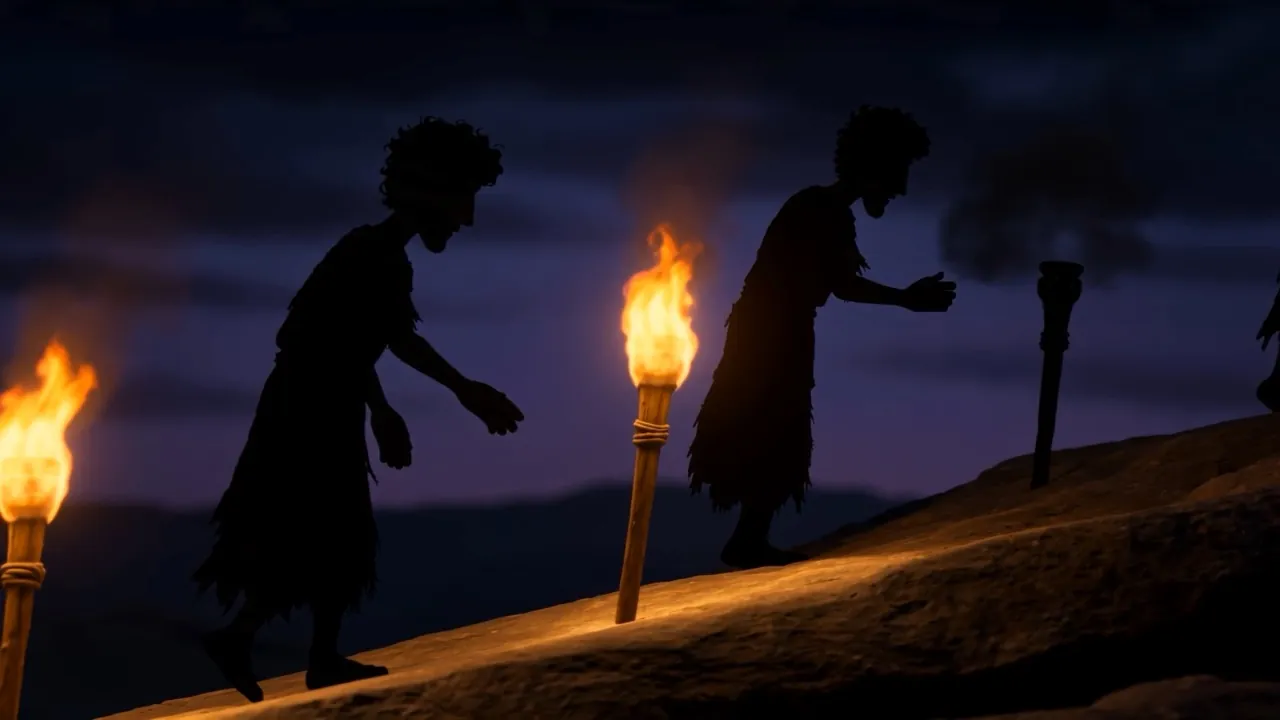
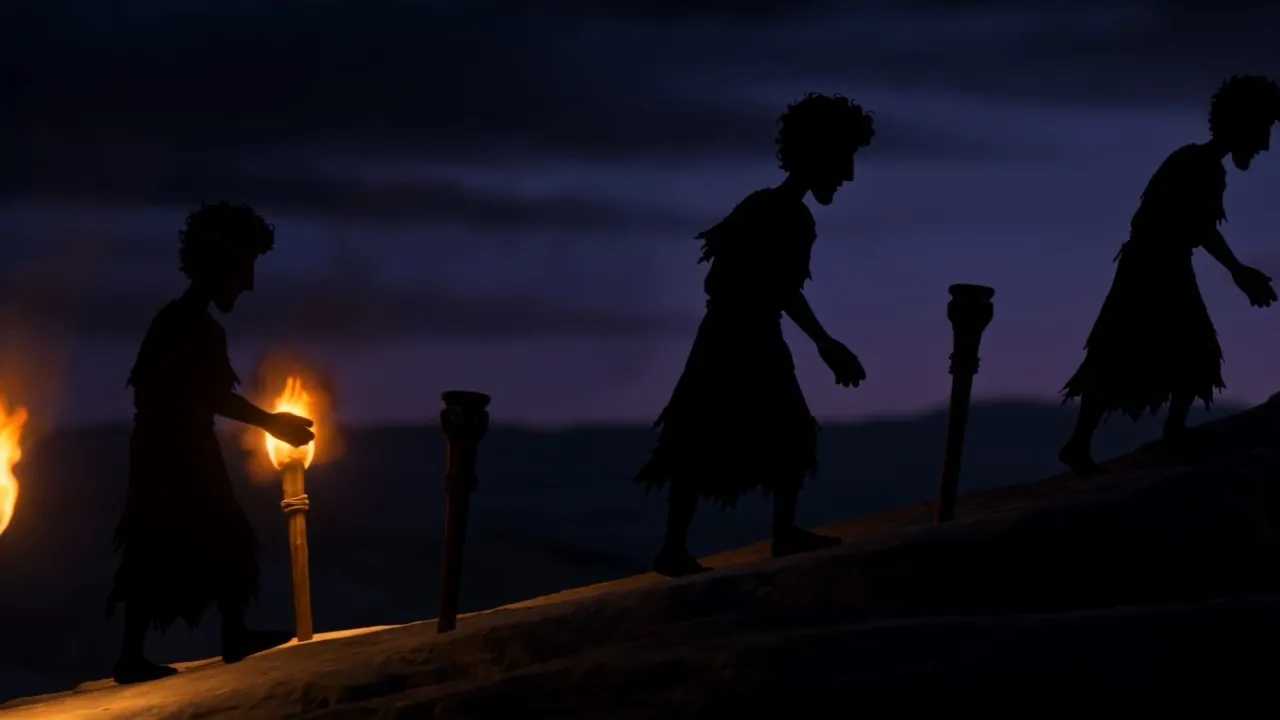
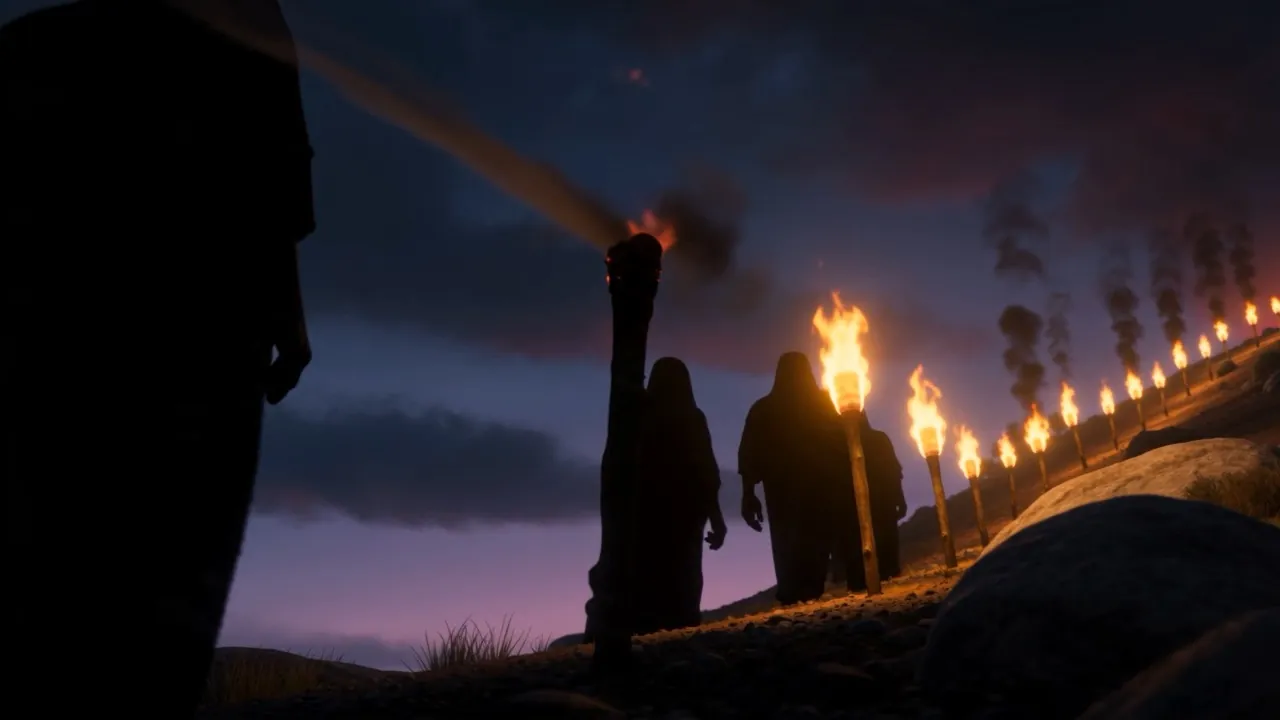
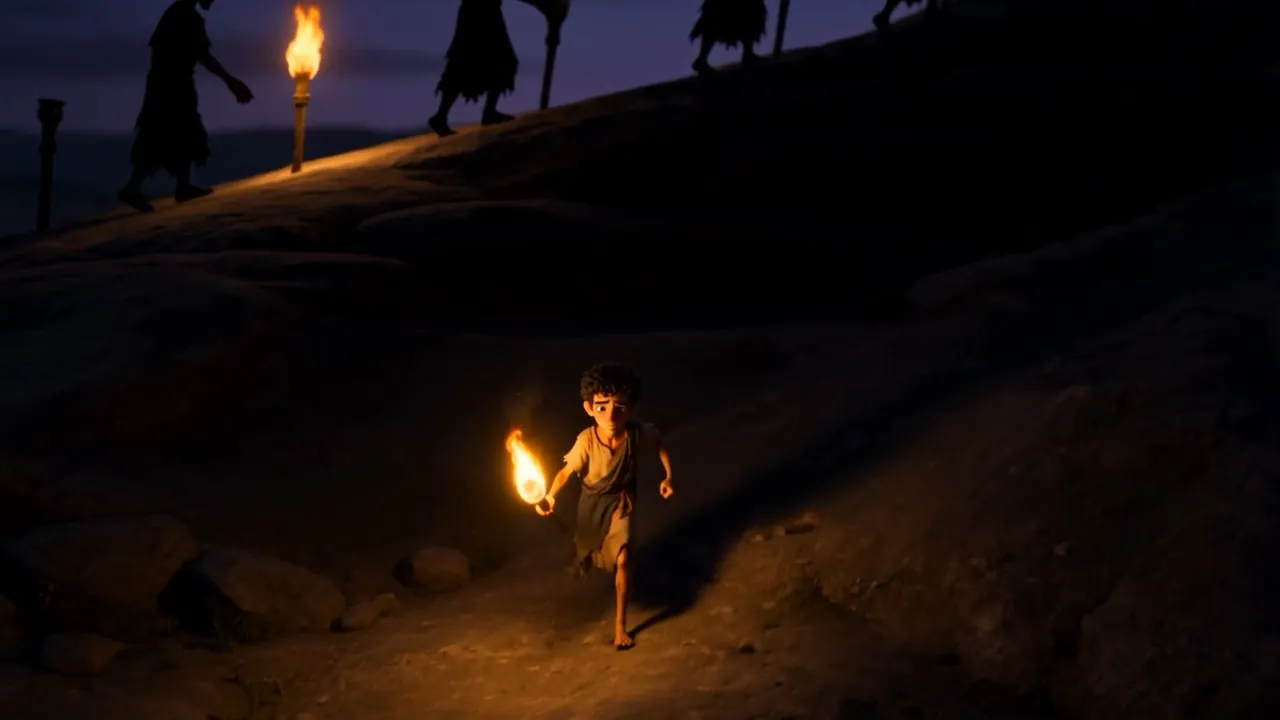



What happened next is one line in the Bible. Seventy of his brothers did not come back down. All you are shown is a hillside at night and a line of torches climbing it — the rest you work out yourself. Yet Jotham the youngest son was left; for he hid himself. Judges 9 : 5

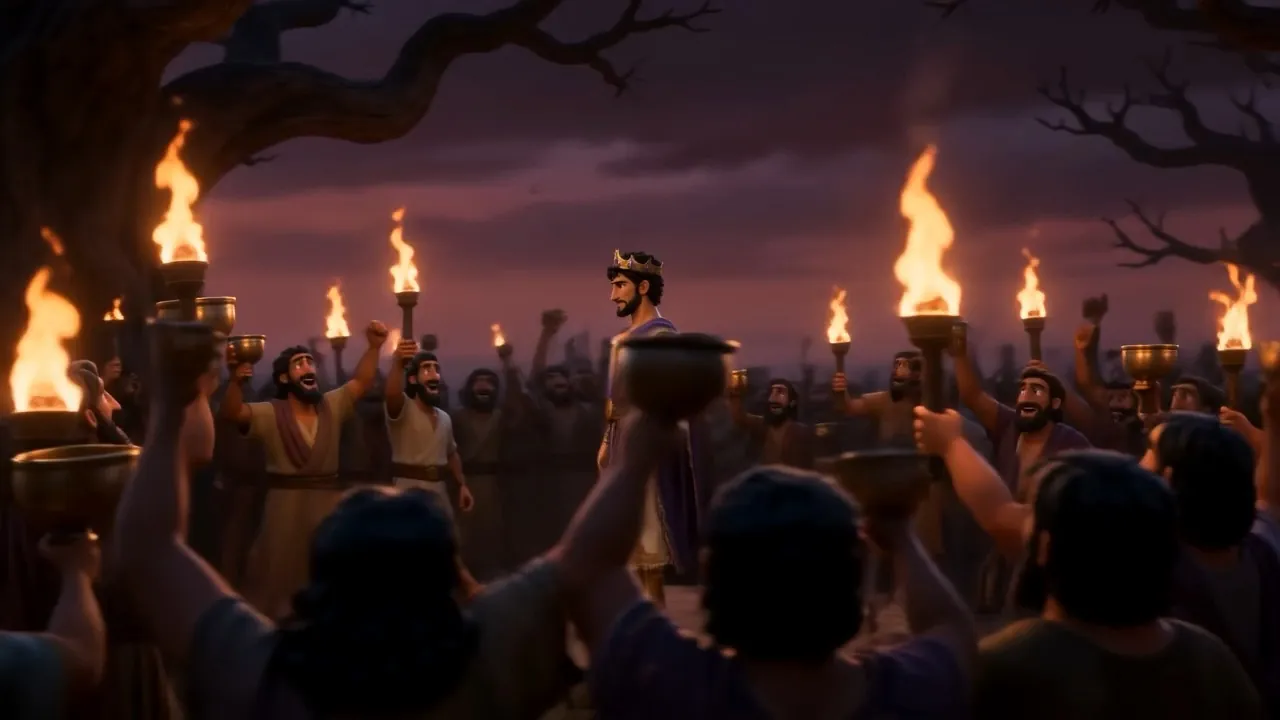
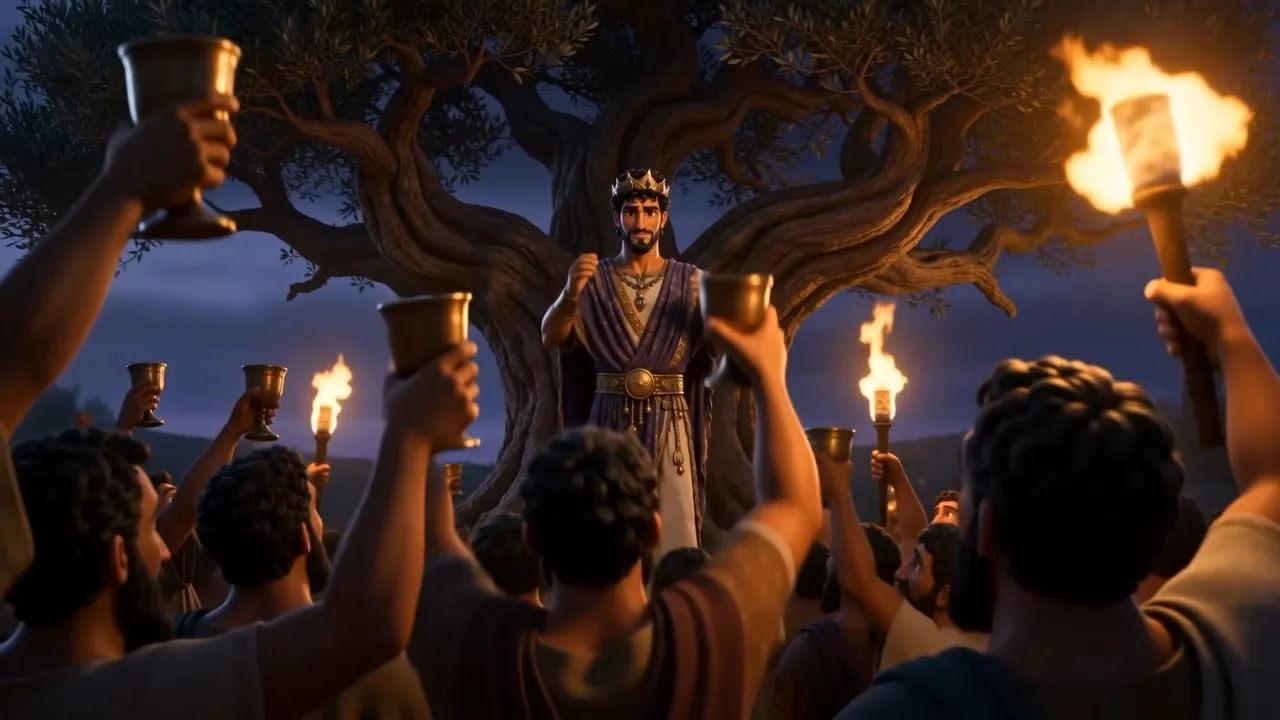
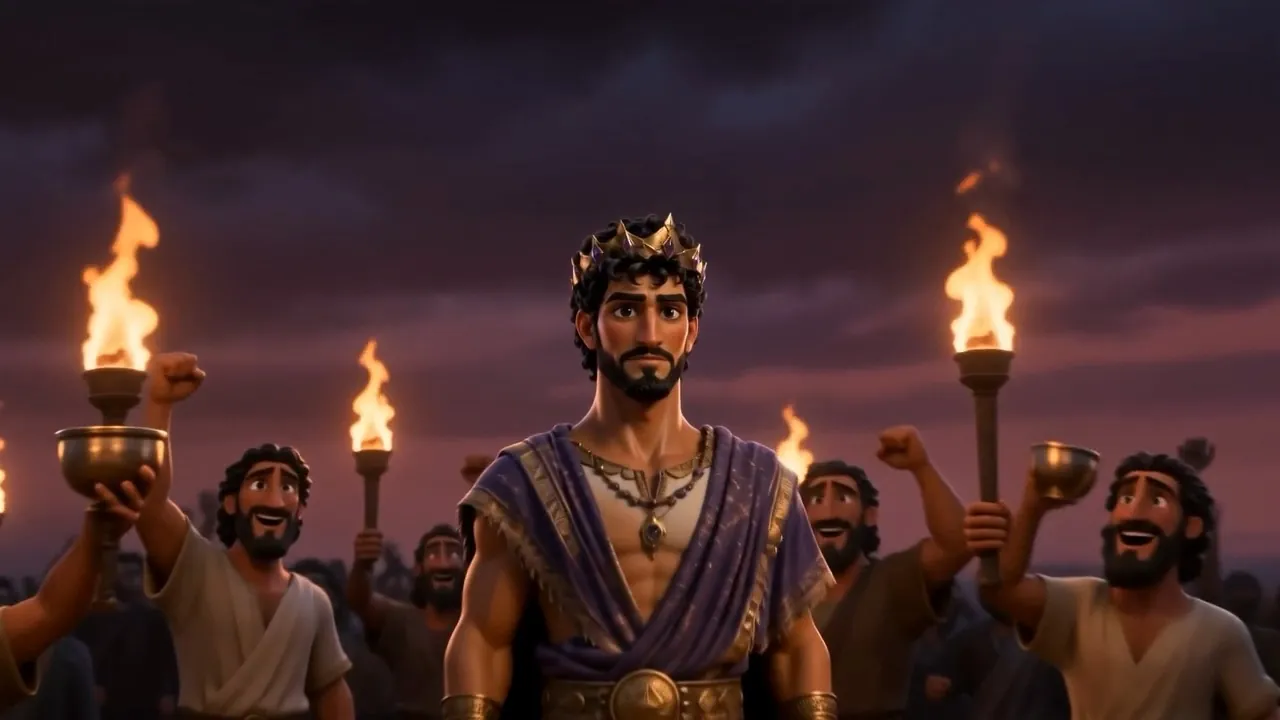


All the men of Shechem assembled themselves together… and went and made Abimelech king, by the oak of the pillar that was in Shechem. Israel's first experiment with monarchy is not Saul. It is this, and it lasts three years. Judges 9 : 6





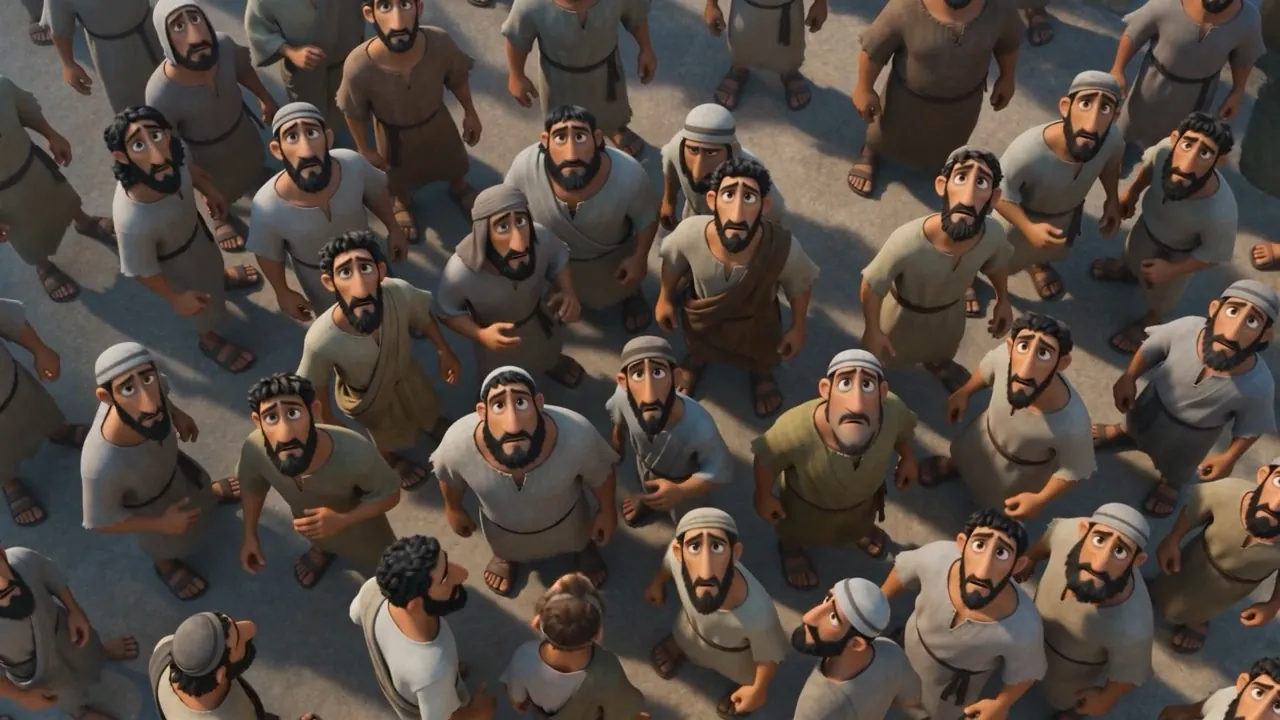

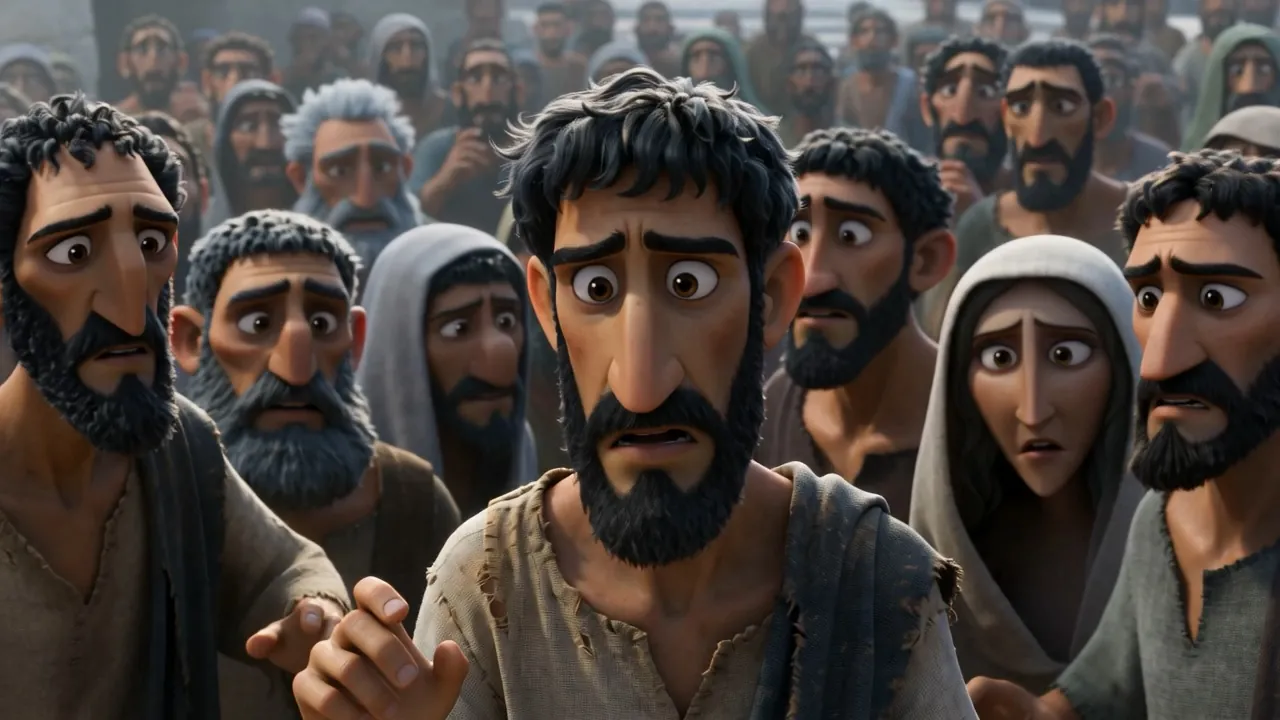

Jotham climbed Mount Gerizim and shouted the Bible's first parable down at the city. The trees went looking for a king. The olive would not leave its oil, the fig its sweetness, the vine its wine — so they asked the bramble, the one plant with nothing to give and nothing to lose, and it said yes immediately: “Come and take refuge in my shade — and if not, let fire come out of the bramble and devour the cedars.” Judges 9 : 7–15
Come and reign over us.
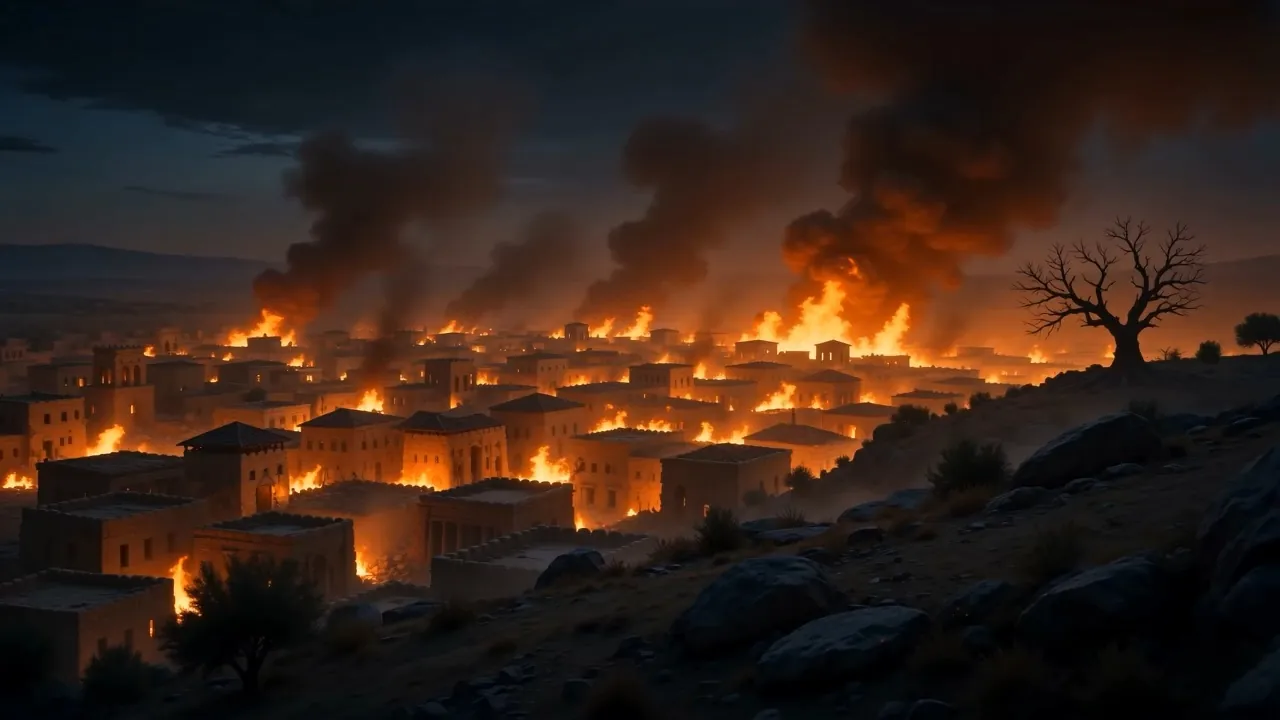
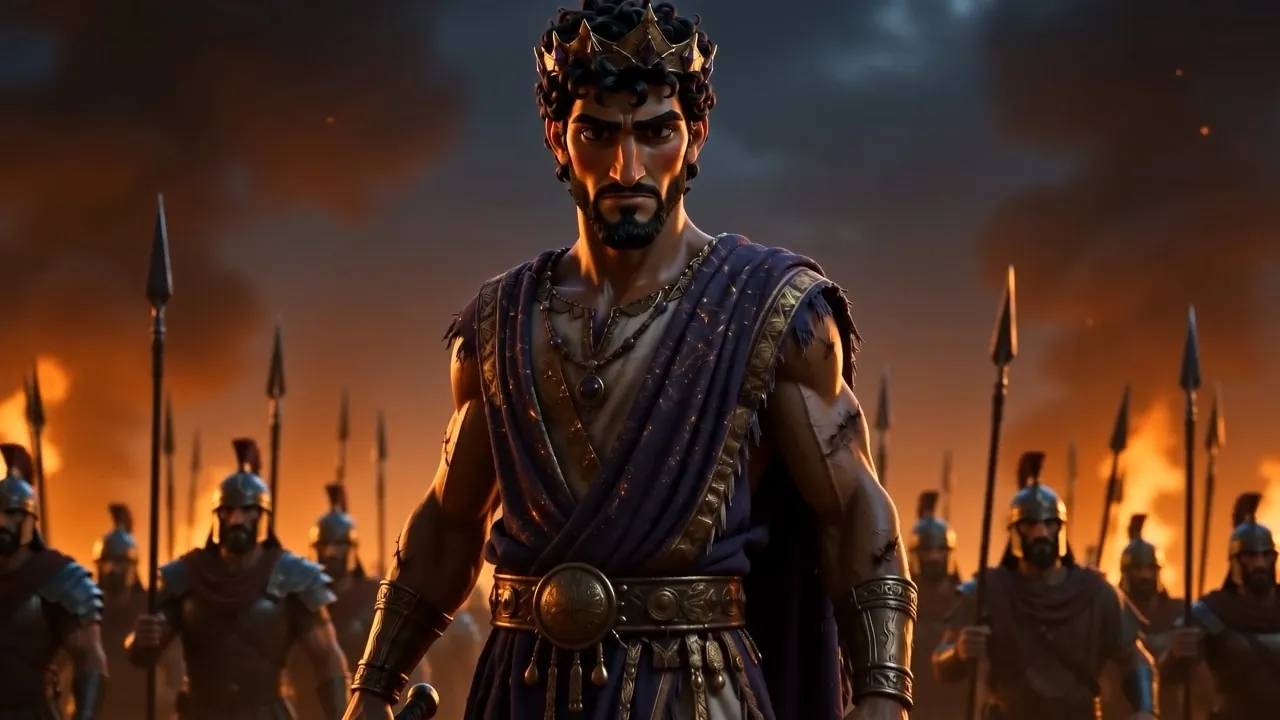
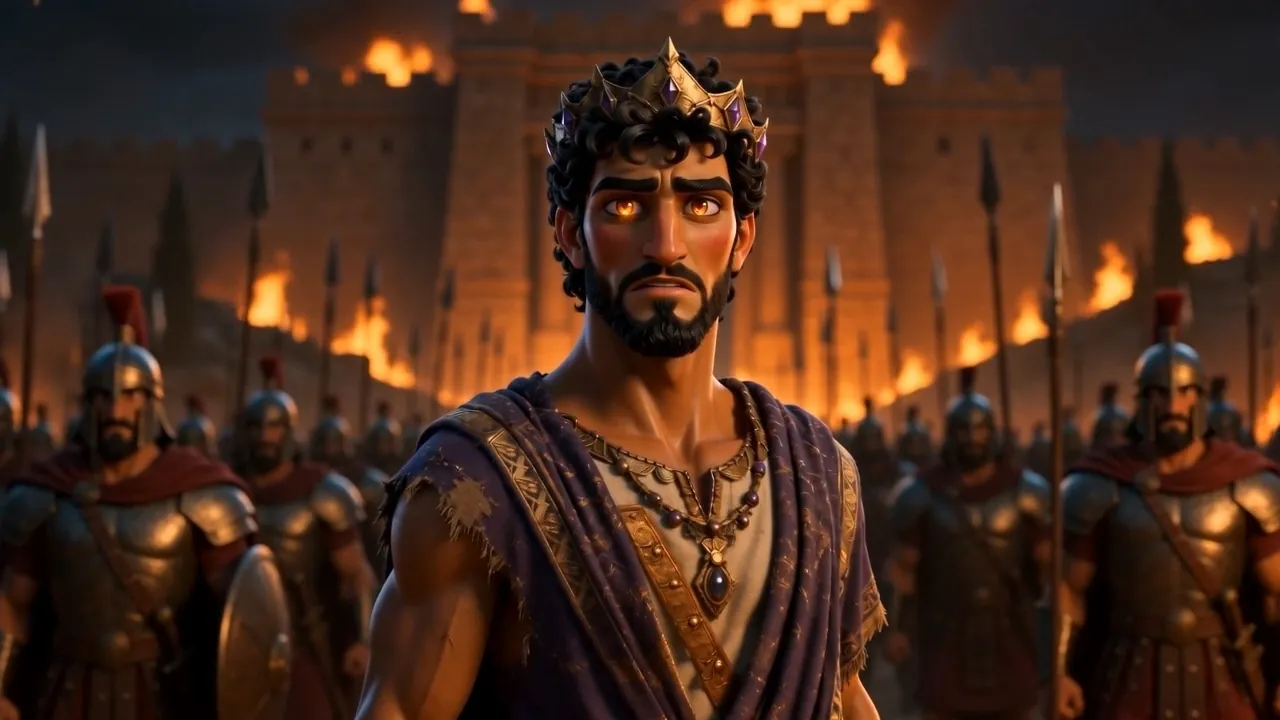
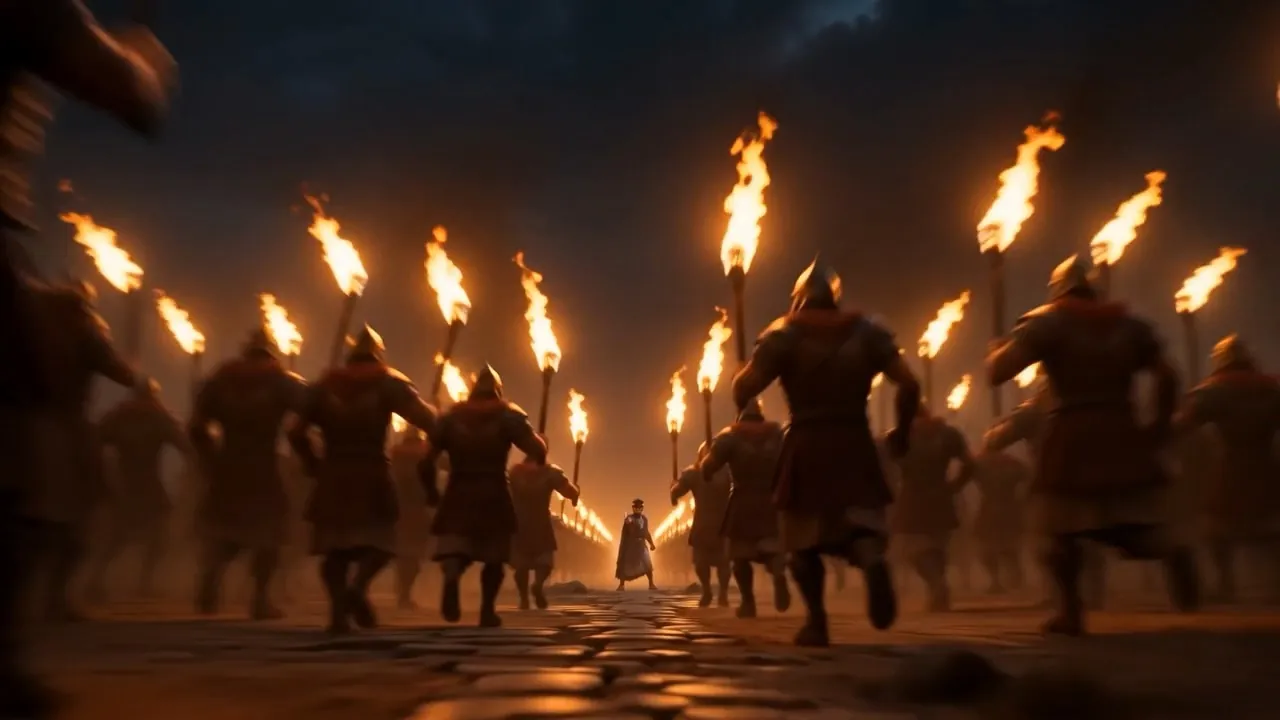
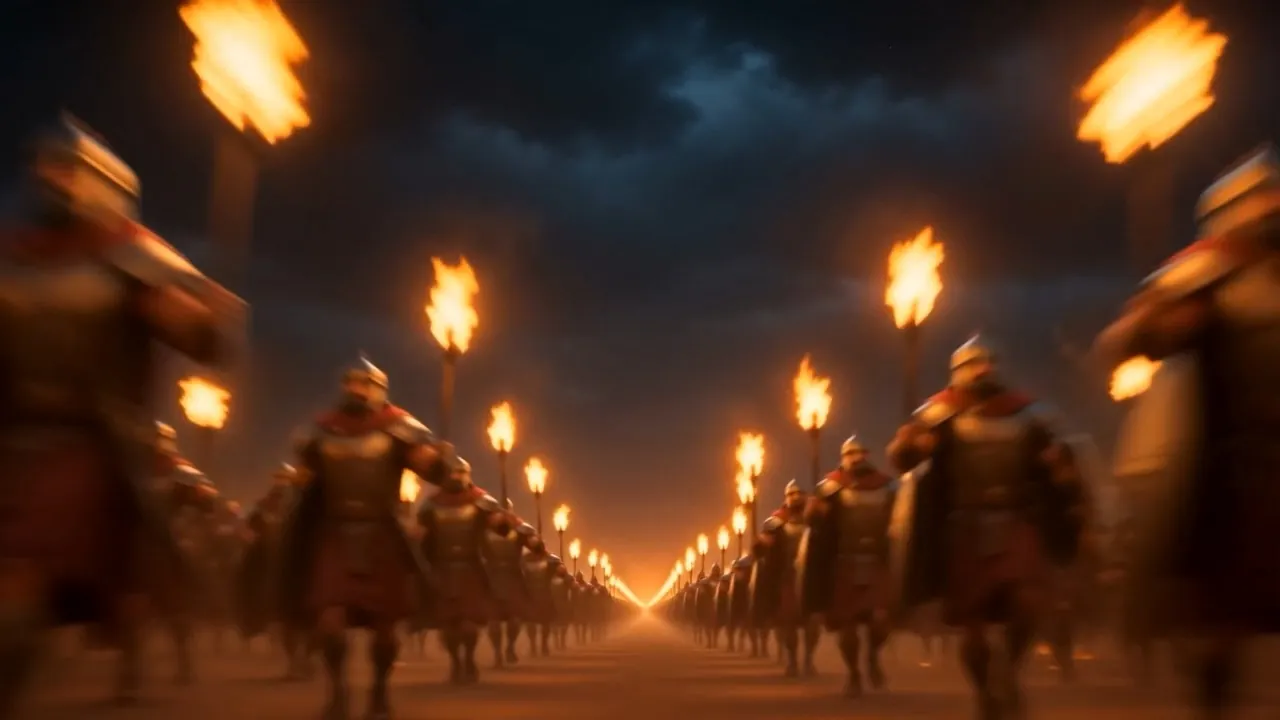
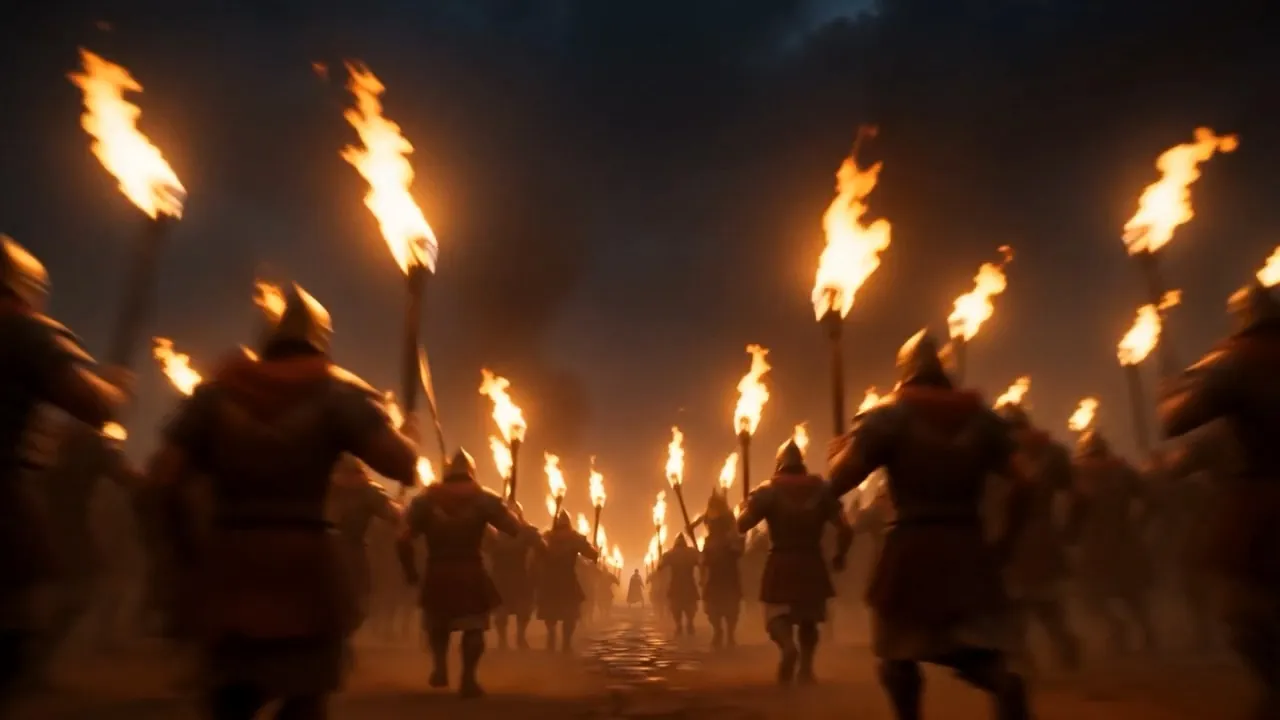
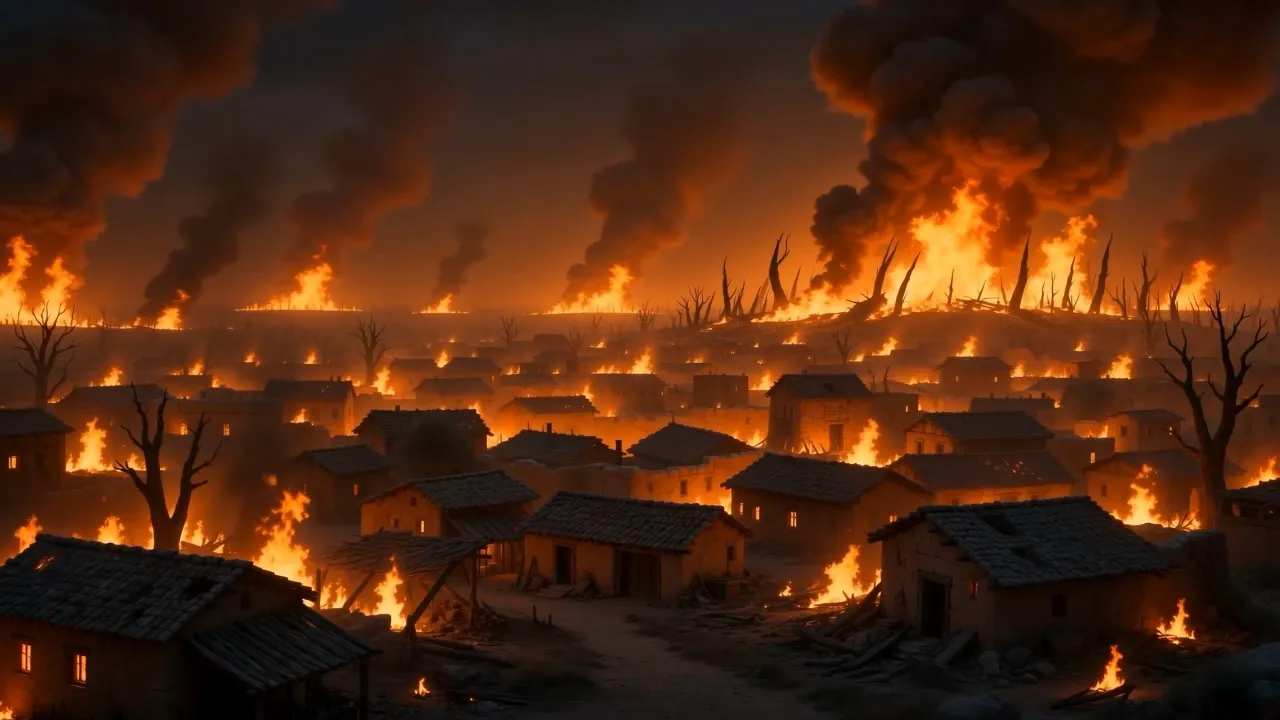
Three years later Shechem turned on him, and Abimelech did to the men who had crowned him exactly what the bramble promised. Jotham's parable had not been a warning about the future. It was a description of what they had already chosen. Judges 9 : 22–49

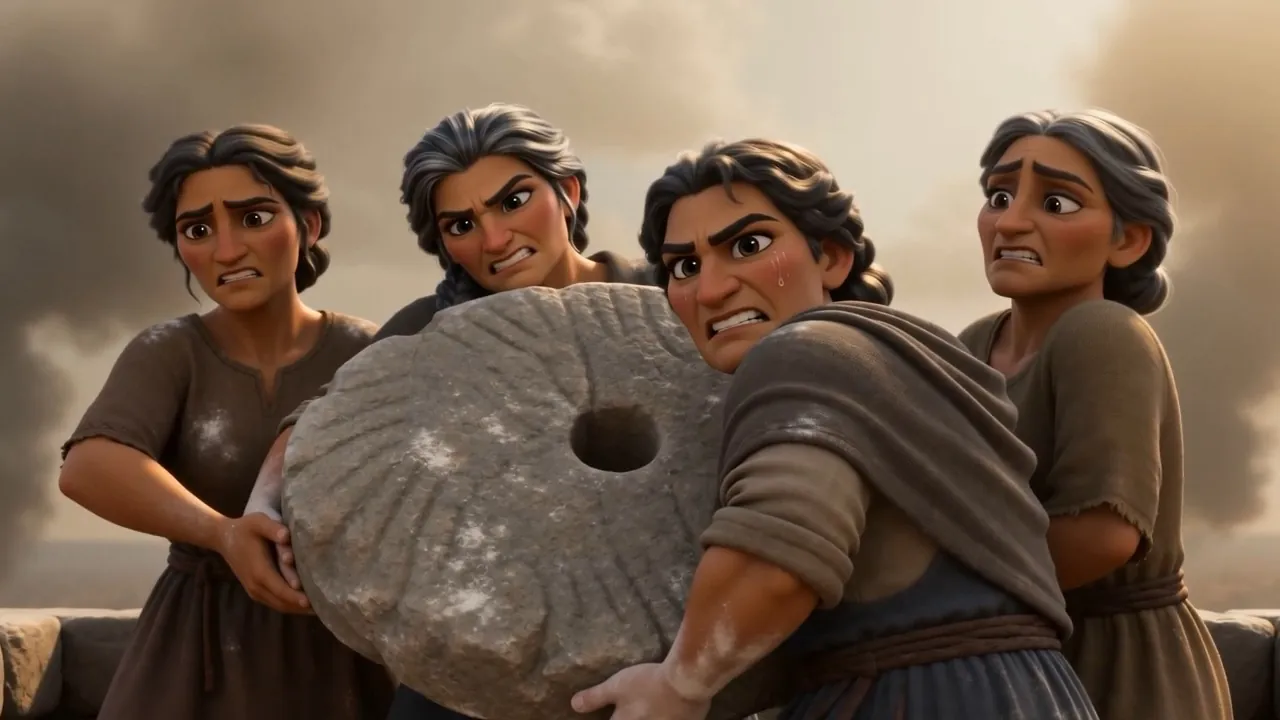
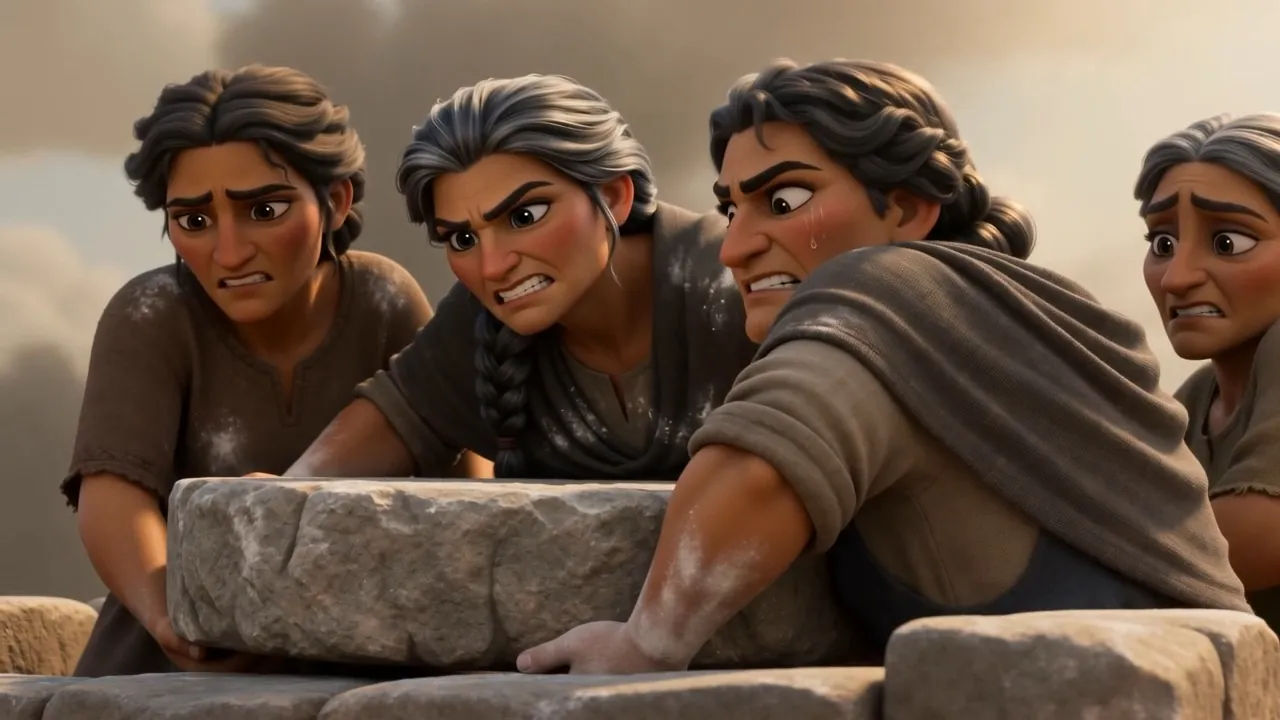



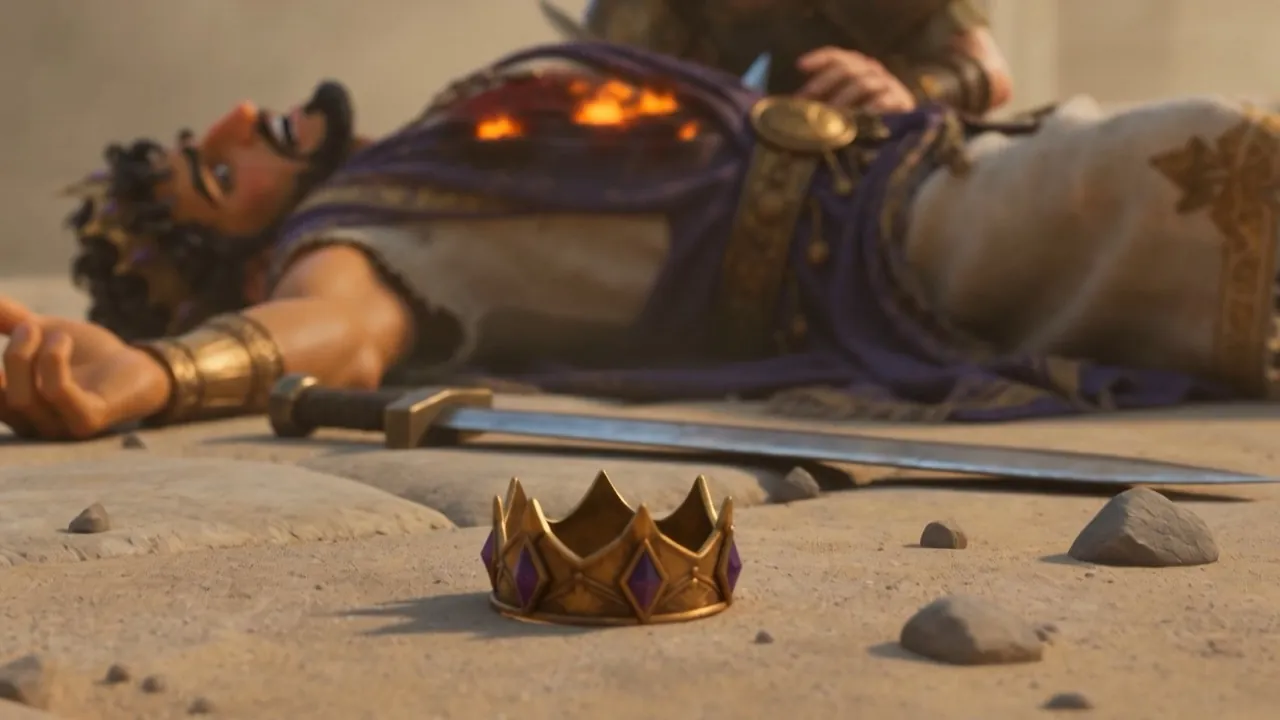

At Thebez everyone ran into the strong tower and got up on the roof — and while Abimelech was at the door with a torch, a certain woman cast an upper millstone on Abimelech's head, and broke his skull. His last order was to his armor-bearer: finish it, so nobody says a woman brought him down. Everybody says a woman did it. It is in the Bible twice. Judges 9 : 50–57
A woman on the tower.


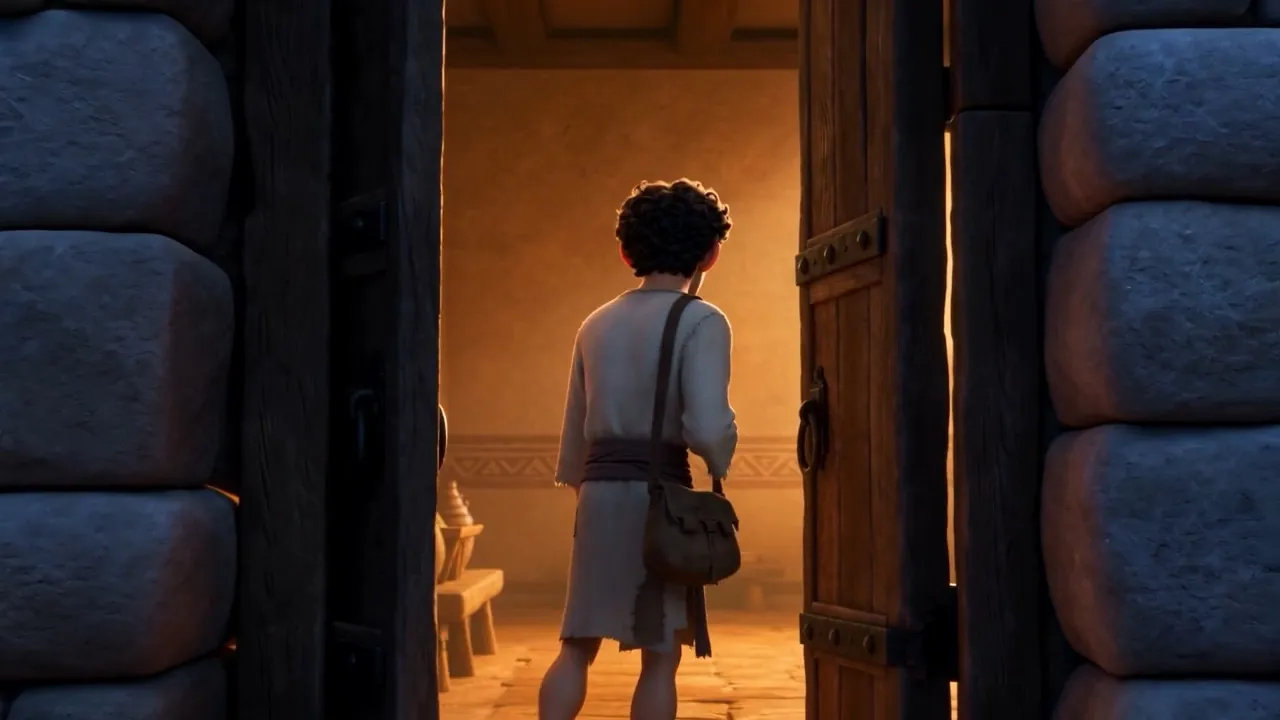
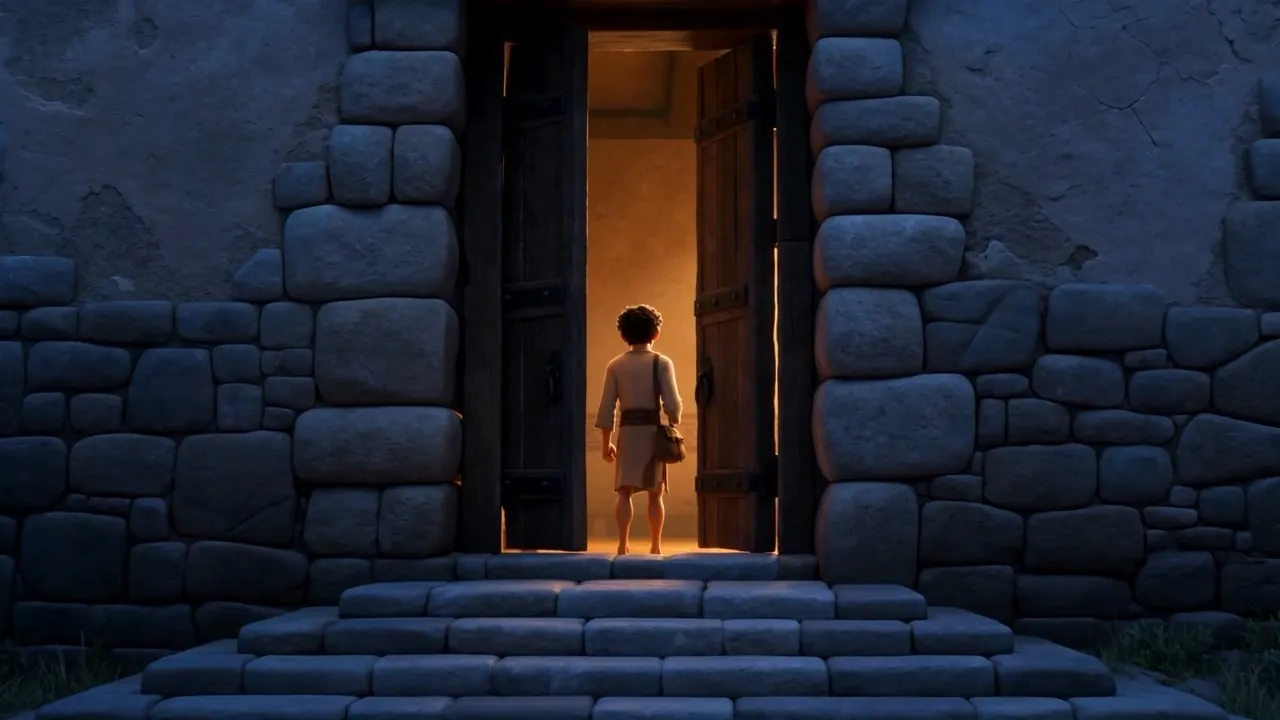
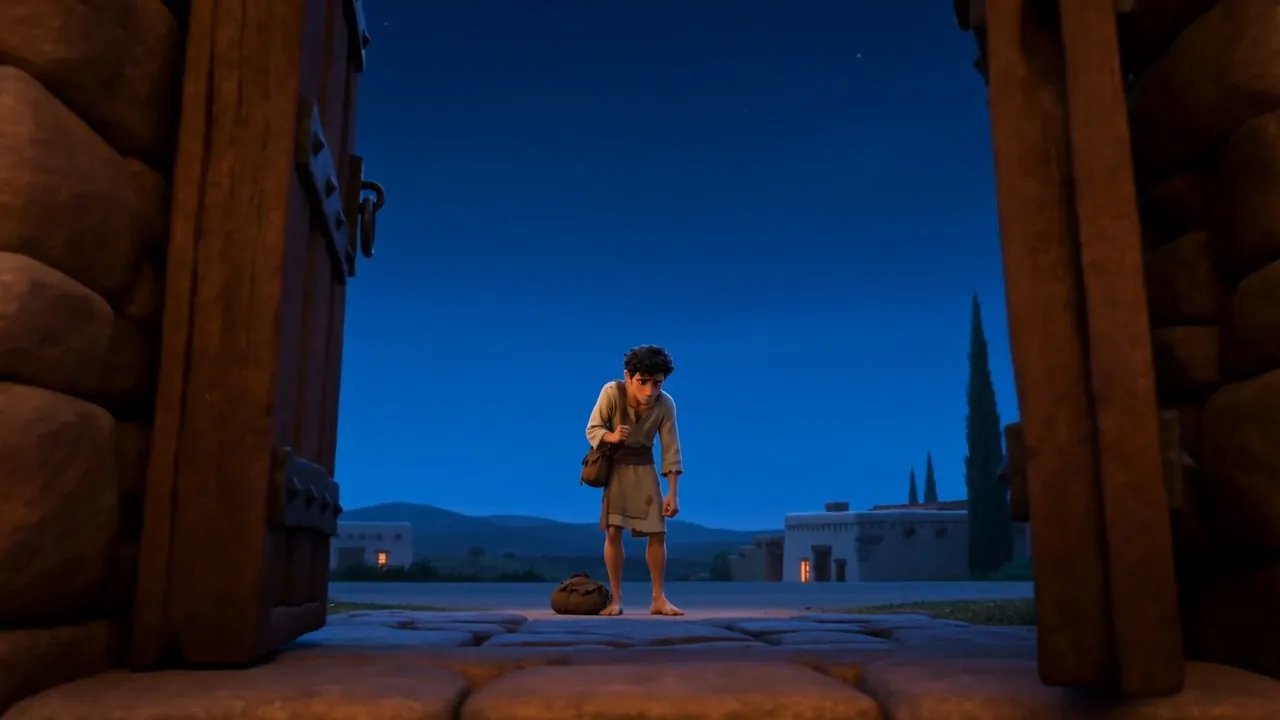


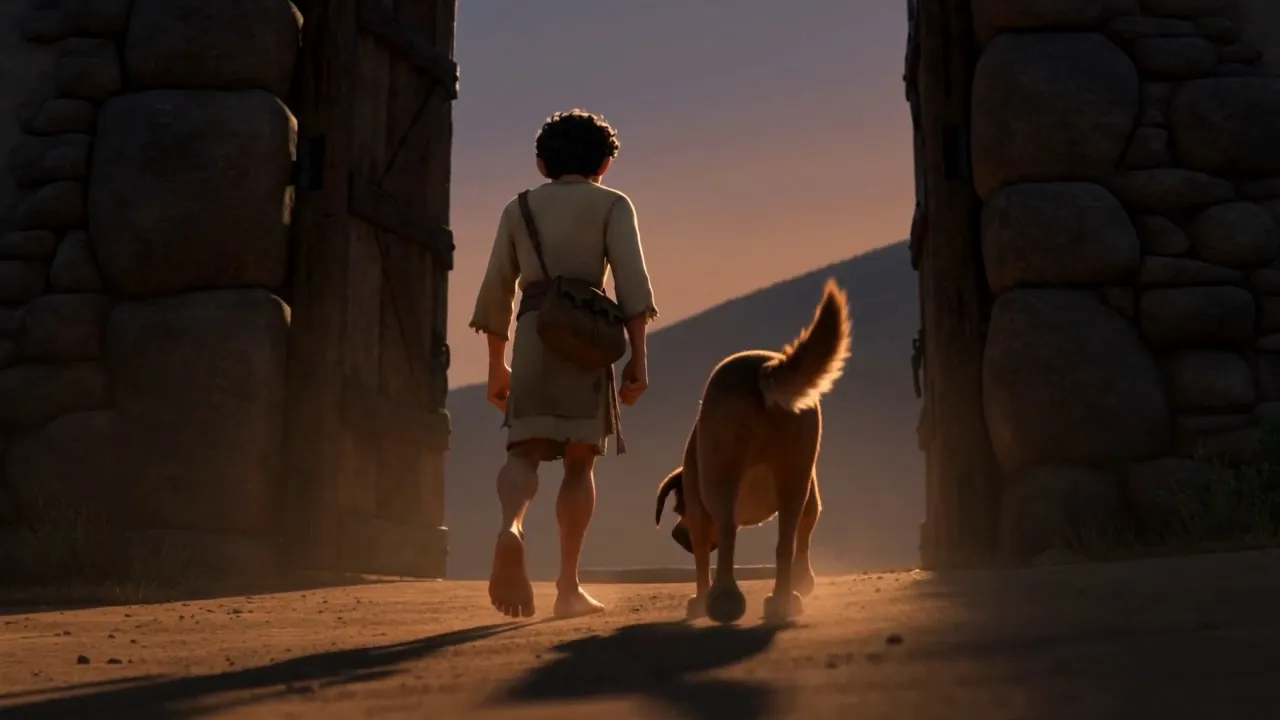
Jephthah was a mighty man of valor, and the son of a prostitute, and his half-brothers made sure he knew which of those mattered: “You shall not inherit in our father's house, for you are the son of another woman.” So he left, and lived in the land of Tob, and worthless men gathered themselves to him and went out with him. Judges 11 : 1–3
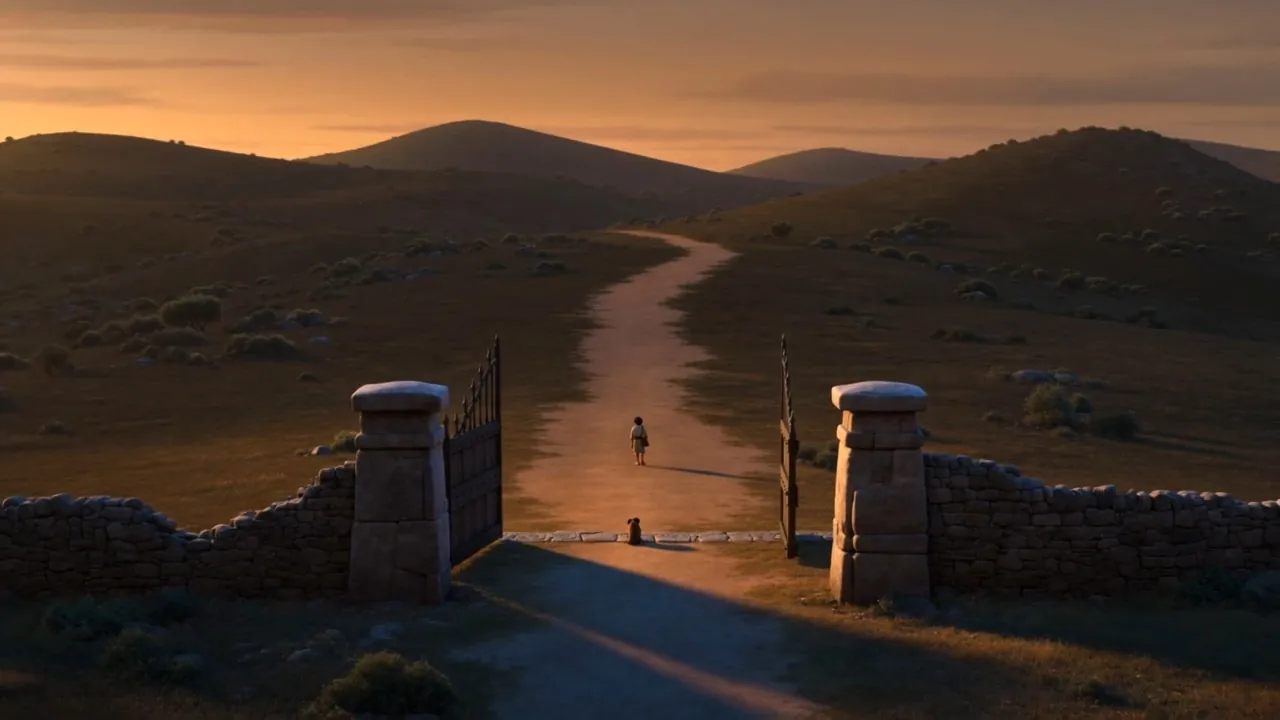
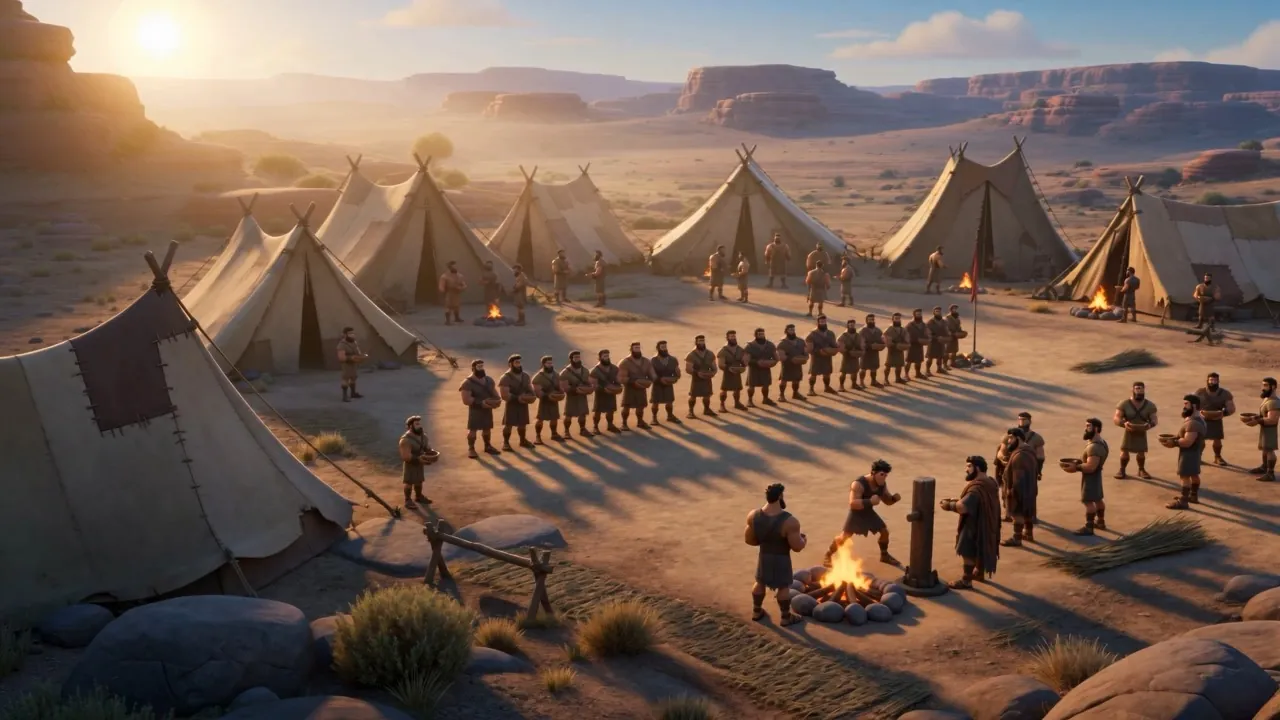
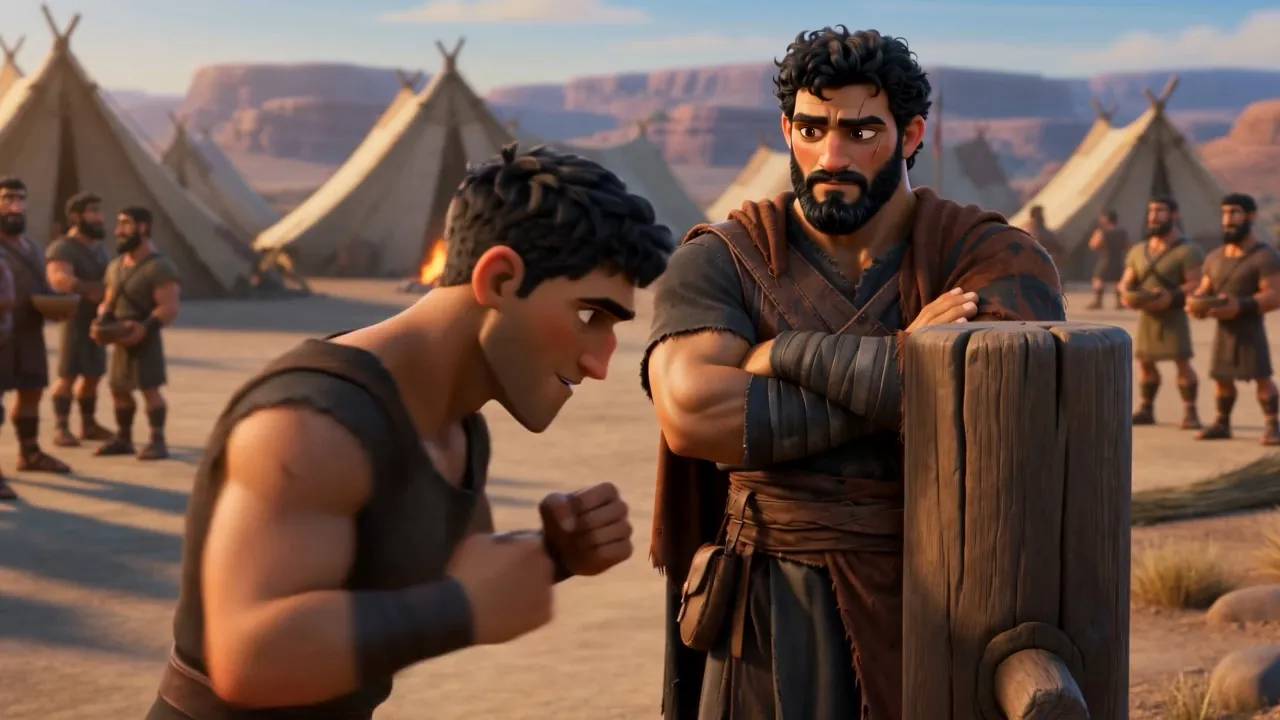
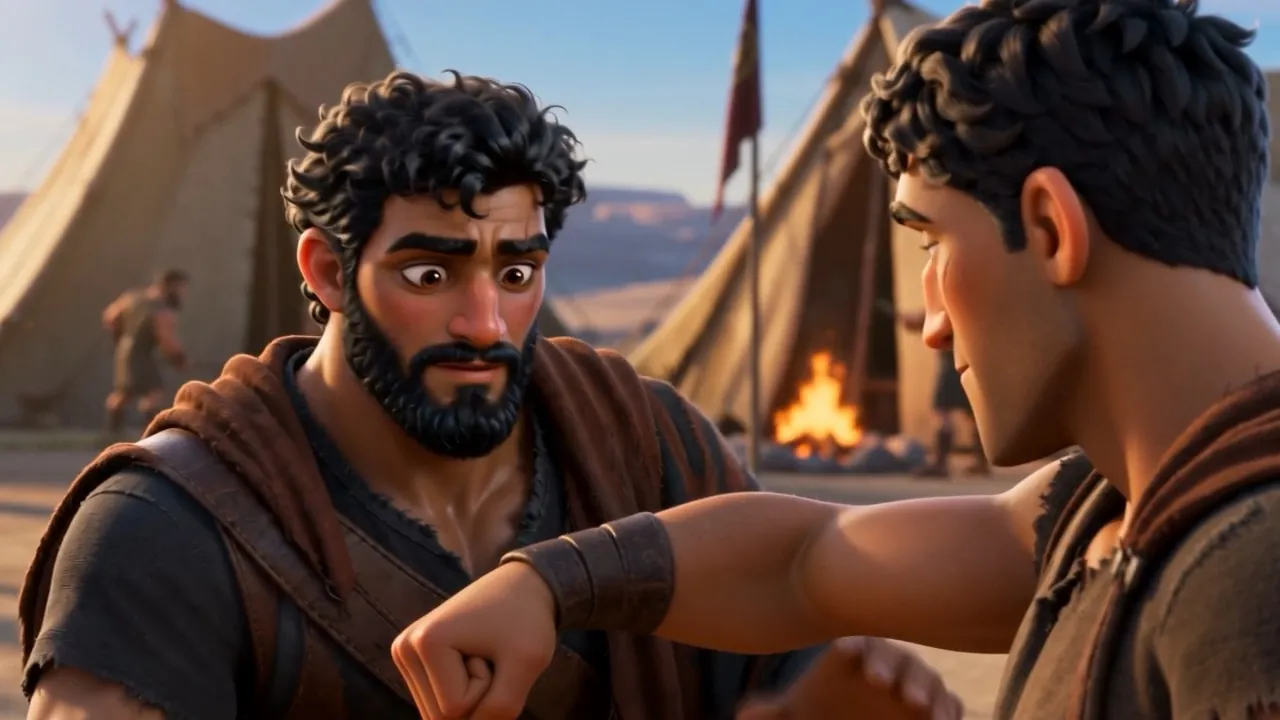
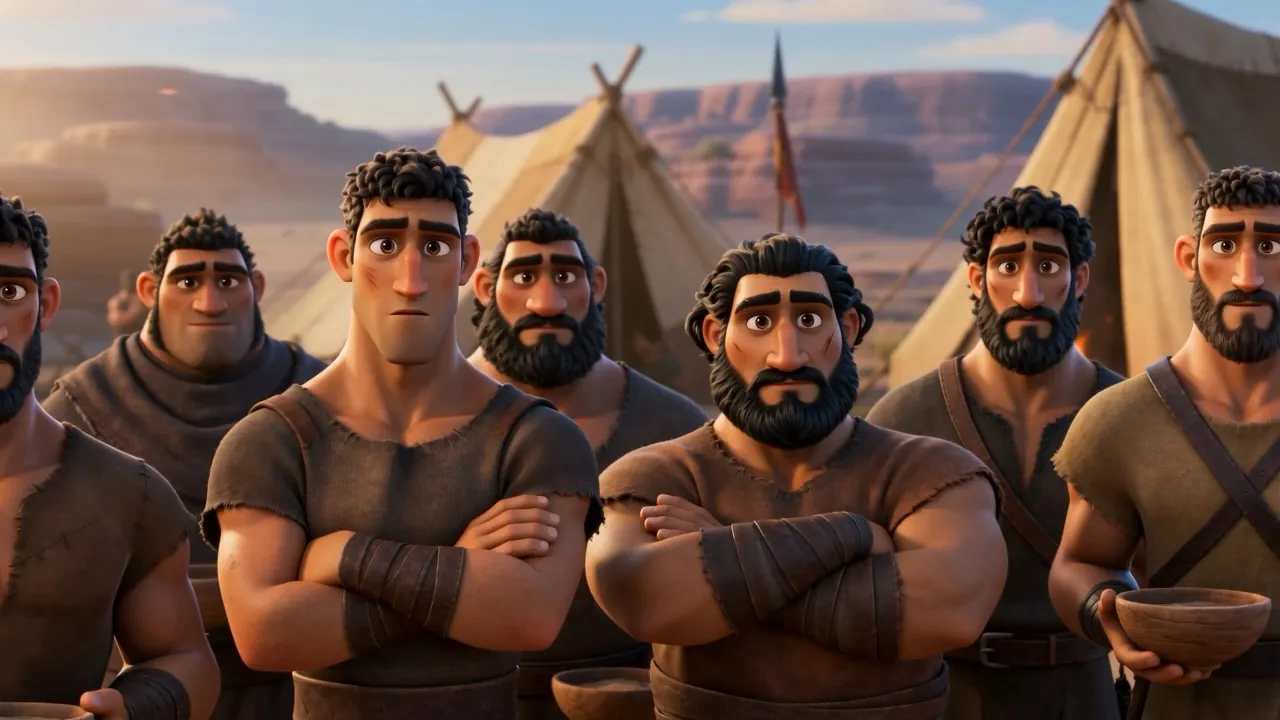
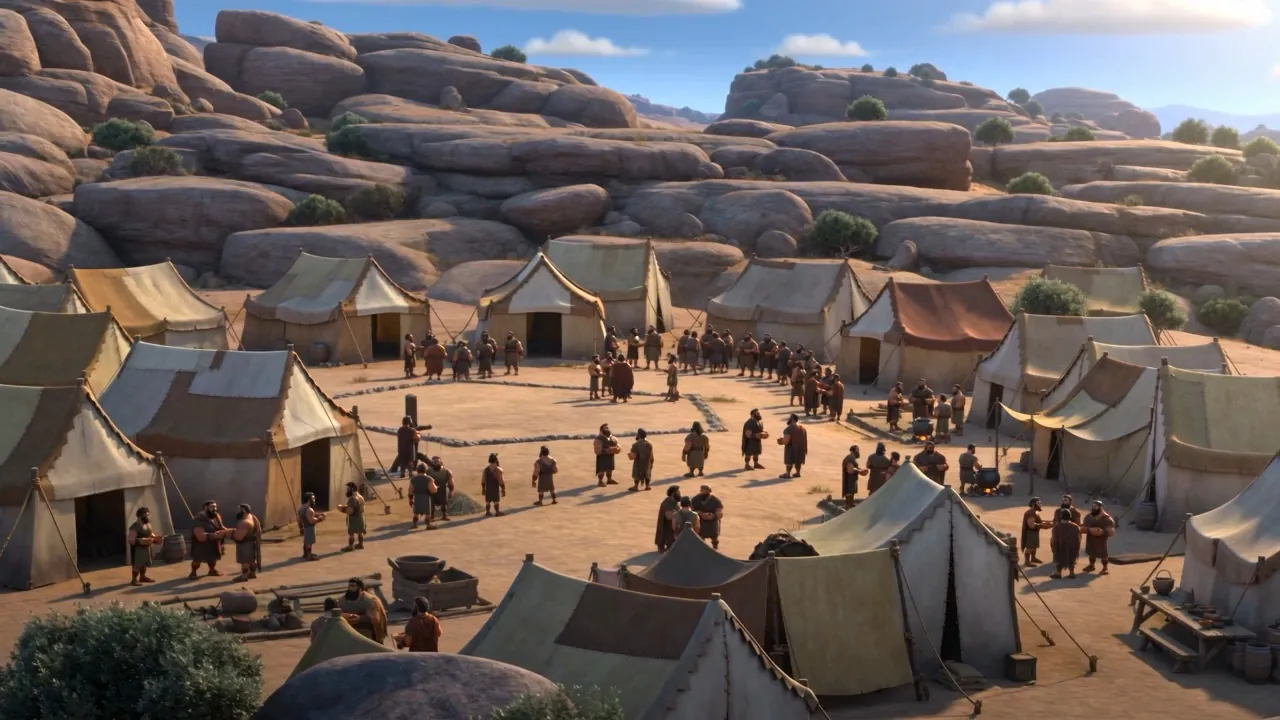
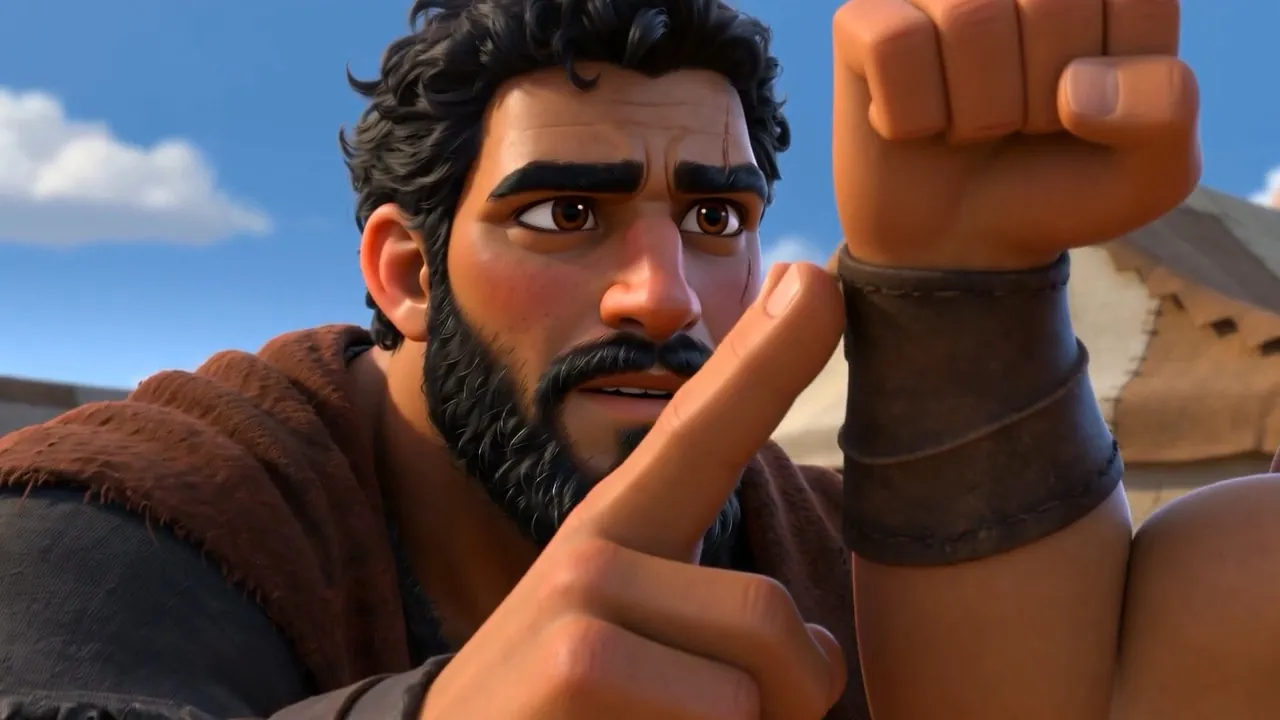
Years pass between two verses. The boy thrown out of his father's house has become a man other men follow — with no title, no inheritance and no city, running what is frankly a private army in the badlands east of the Jordan. Judges 11 : 3
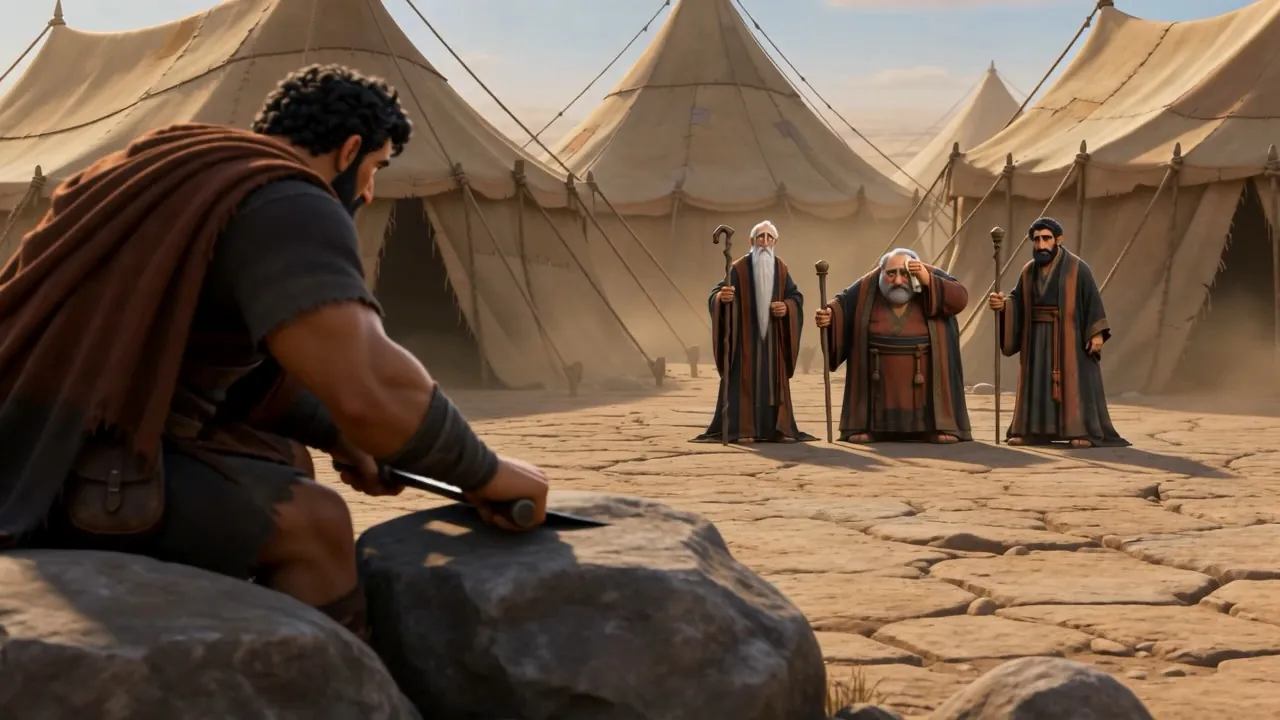
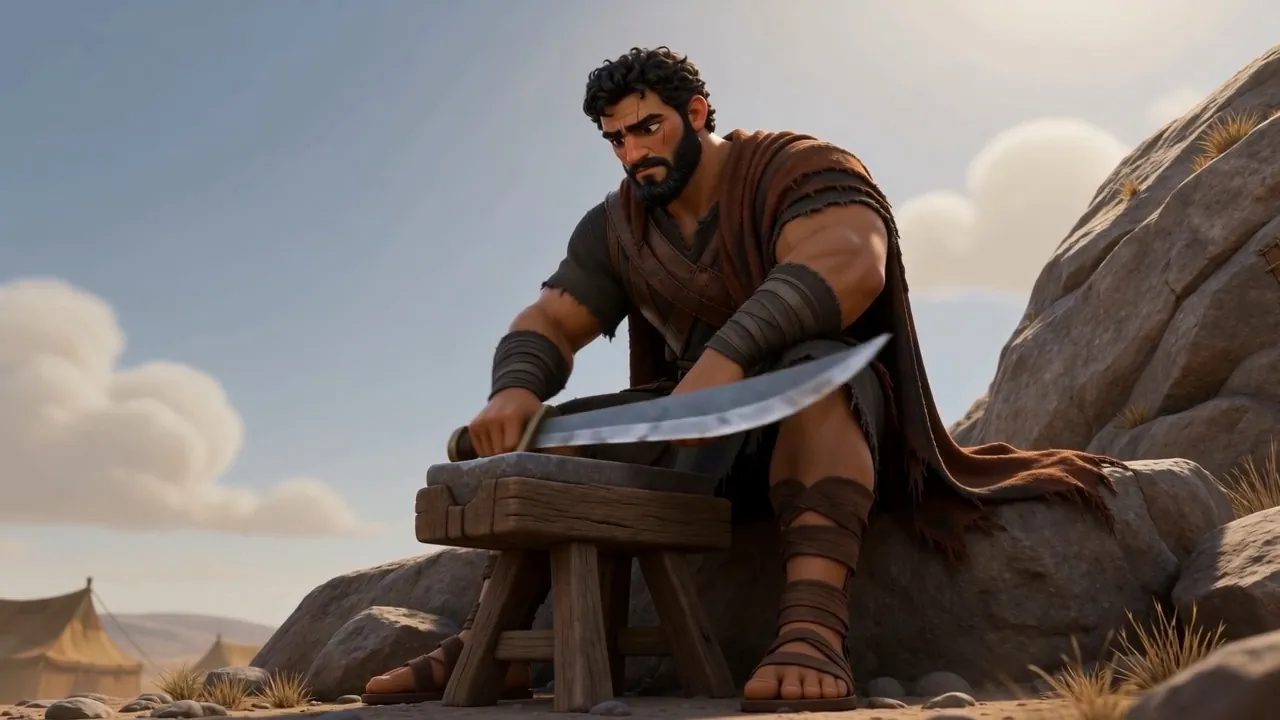

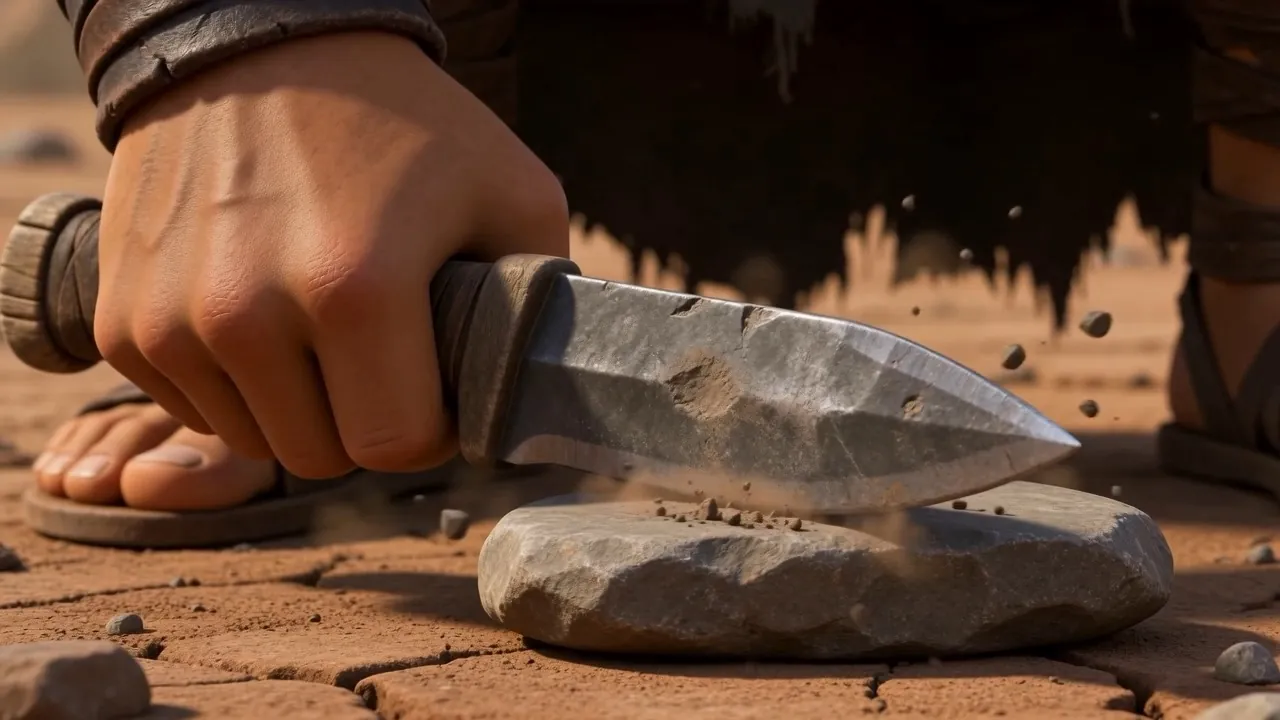



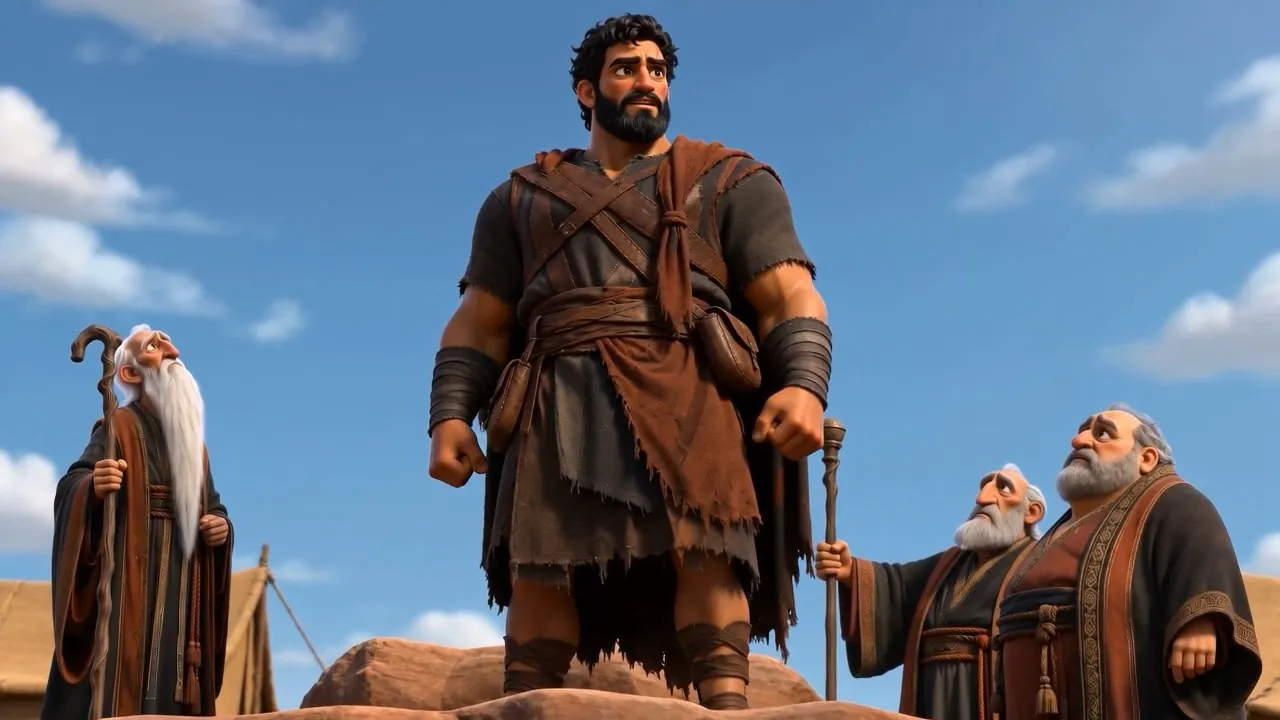

Ammon went to war, and the elders of Gilead went to find the man they had run out of town. His reply is the least diplomatic sentence in the chapter: “Didn't you hate me, and drive me out of my father's house? Why have you come to me now when you are in distress?” They made him head over all of them. He took it. Judges 11 : 4–11
Didn't you hate me, and drive me out?
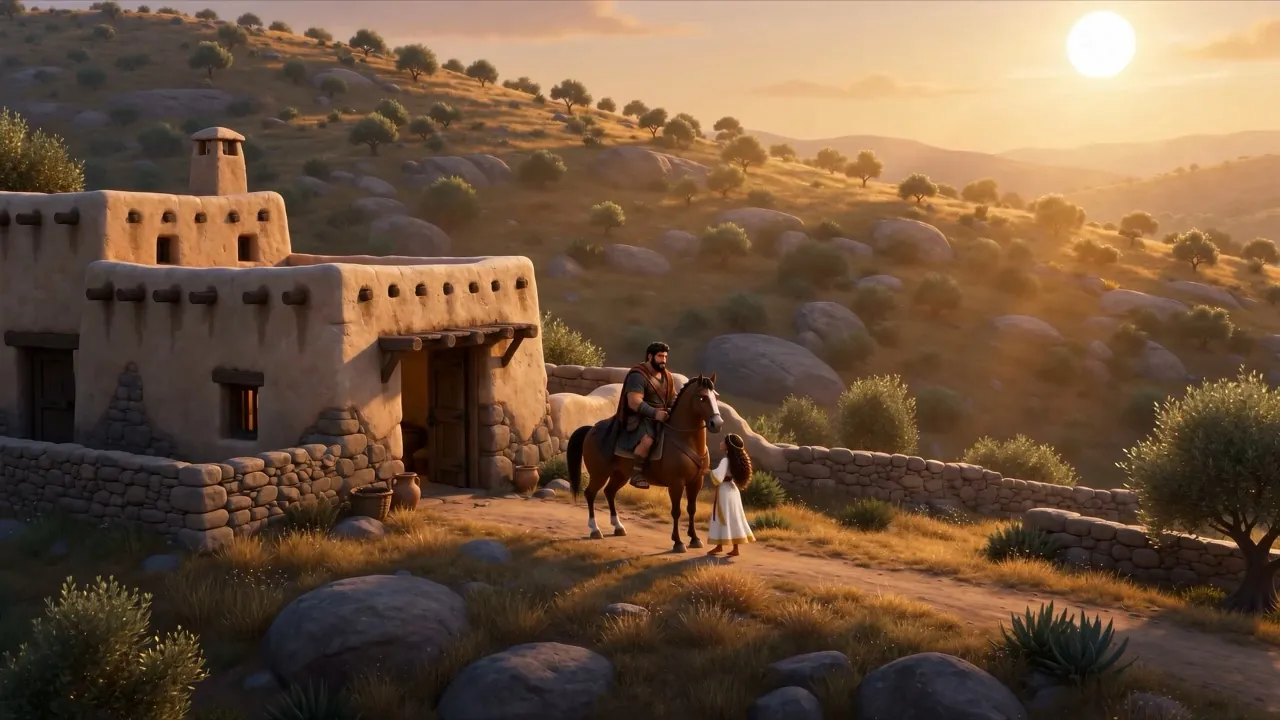
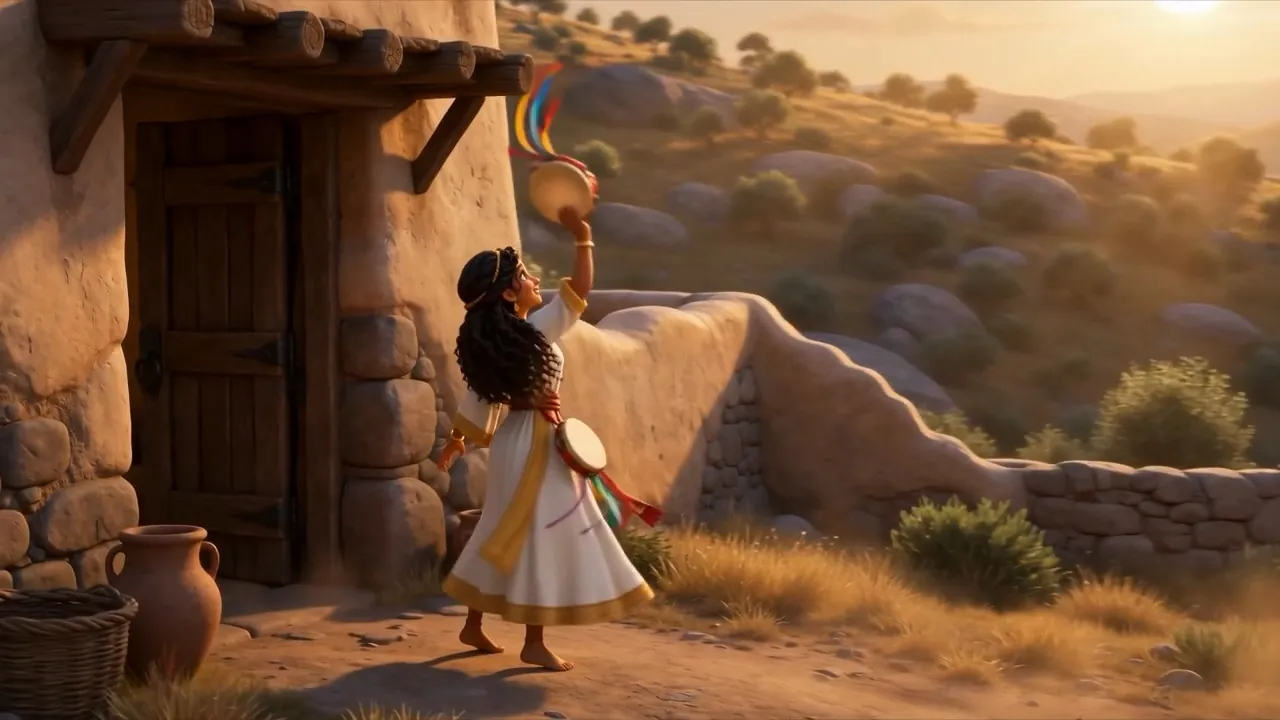
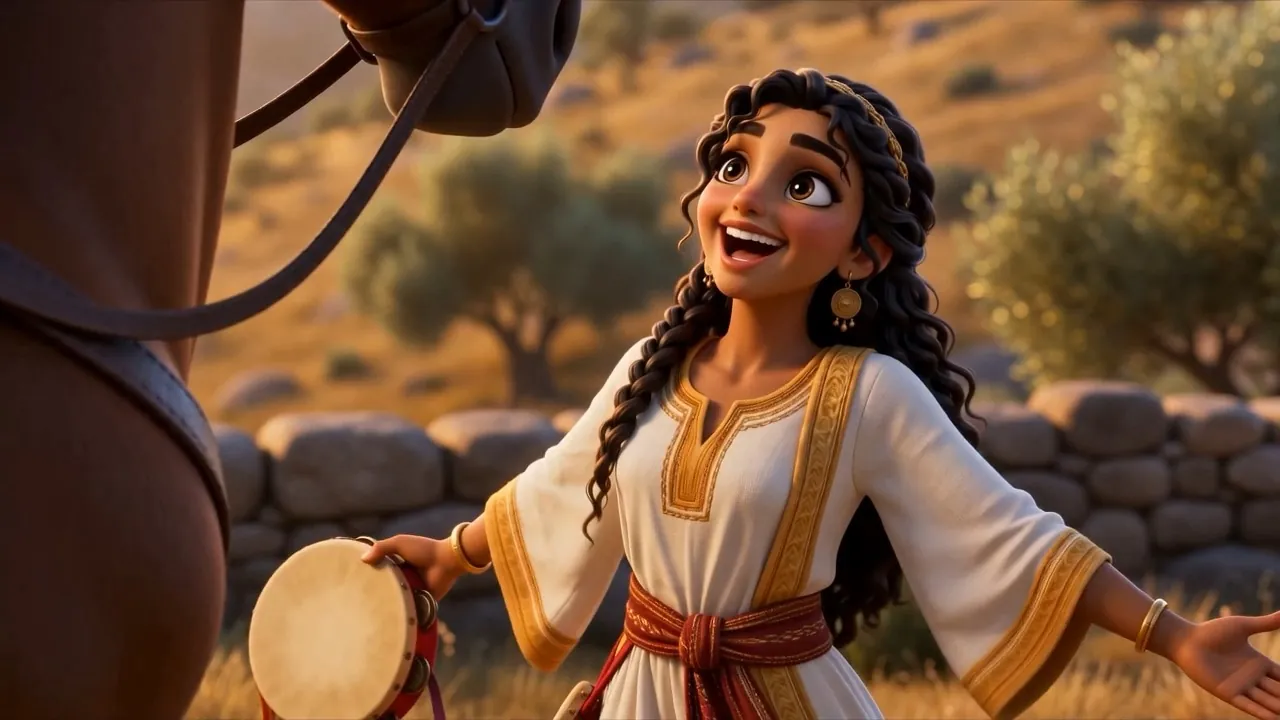

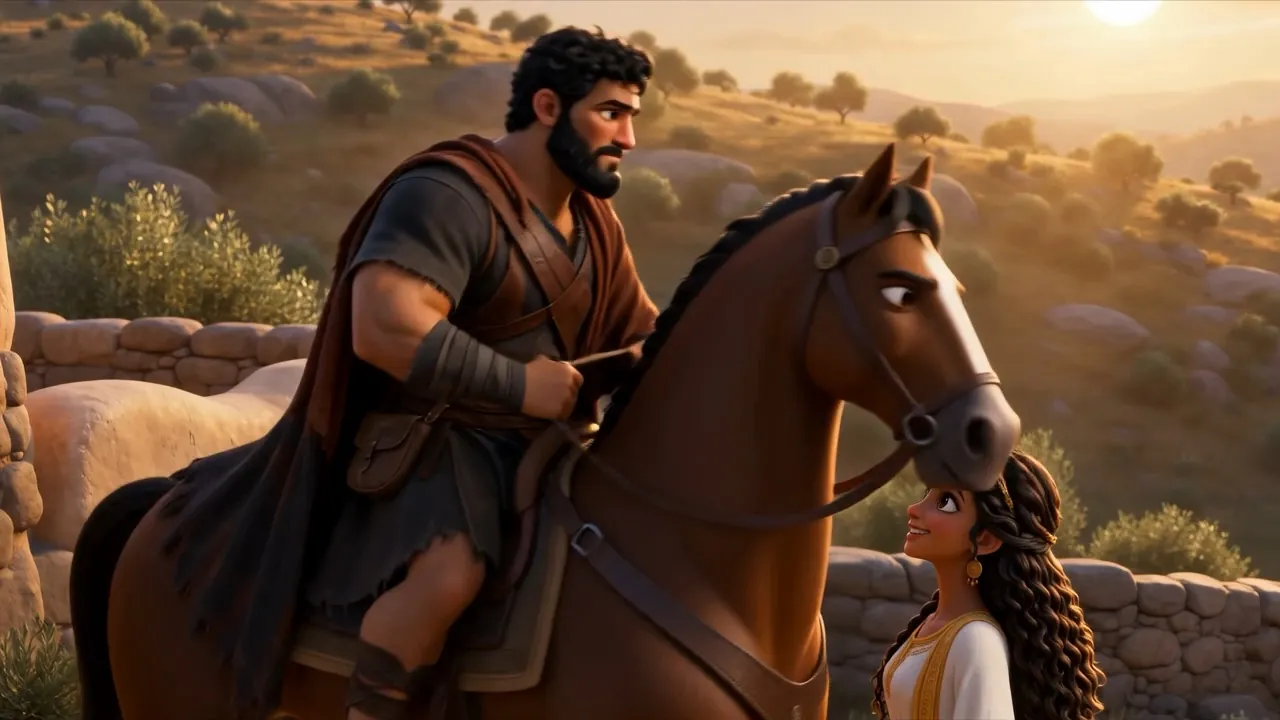

Before any of it, one quiet look at what he has: a house on a hill, and a daughter who comes running out to meet him with a tambourine because that is what she always does. Remember the tambourine. Judges 11 : 34
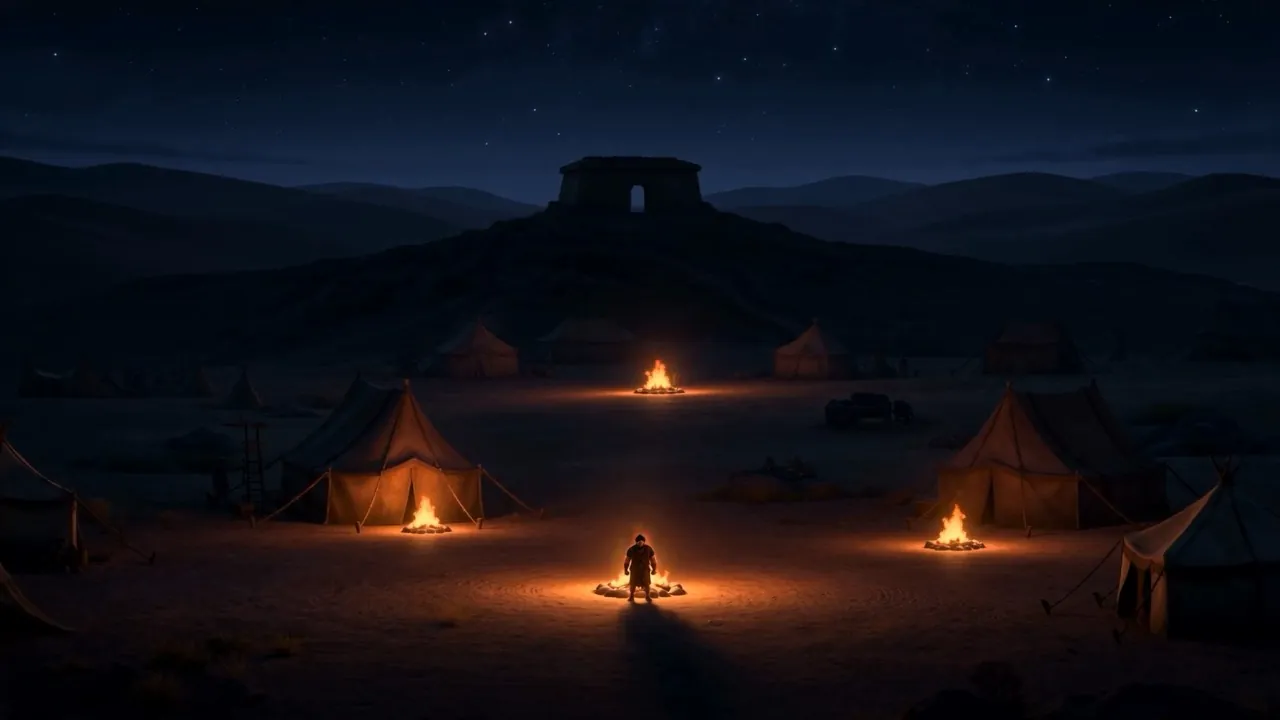
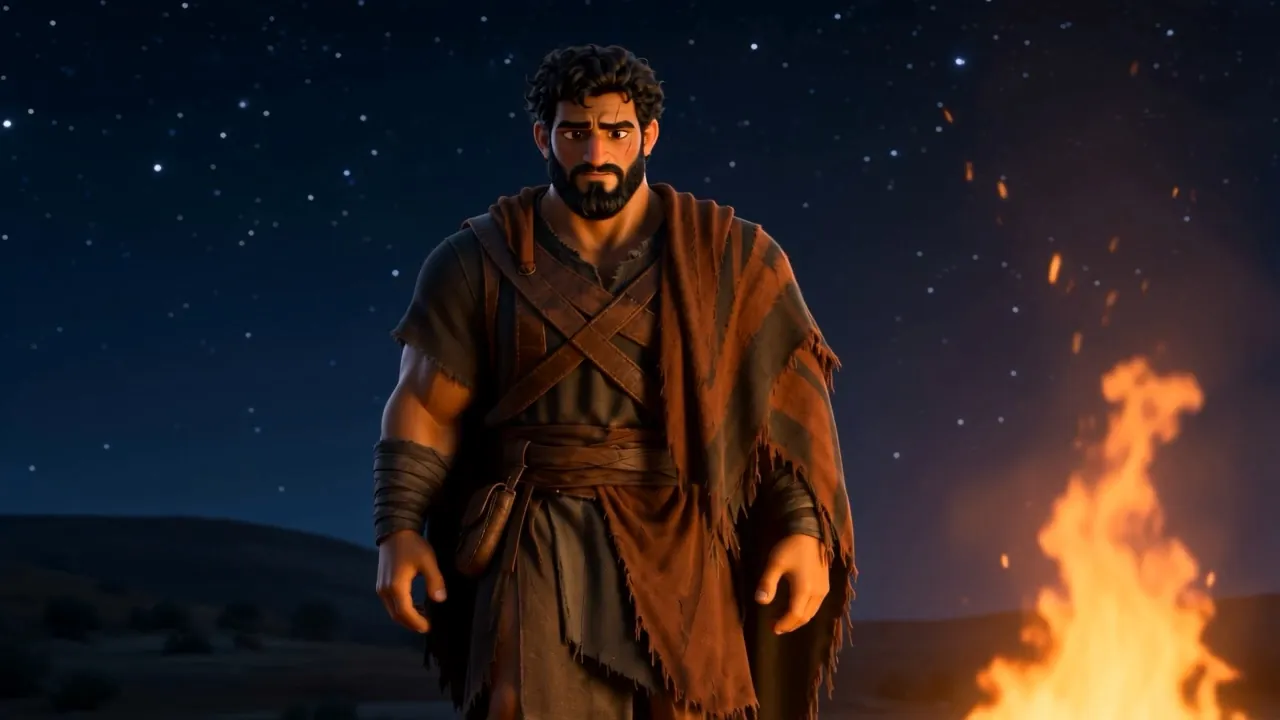
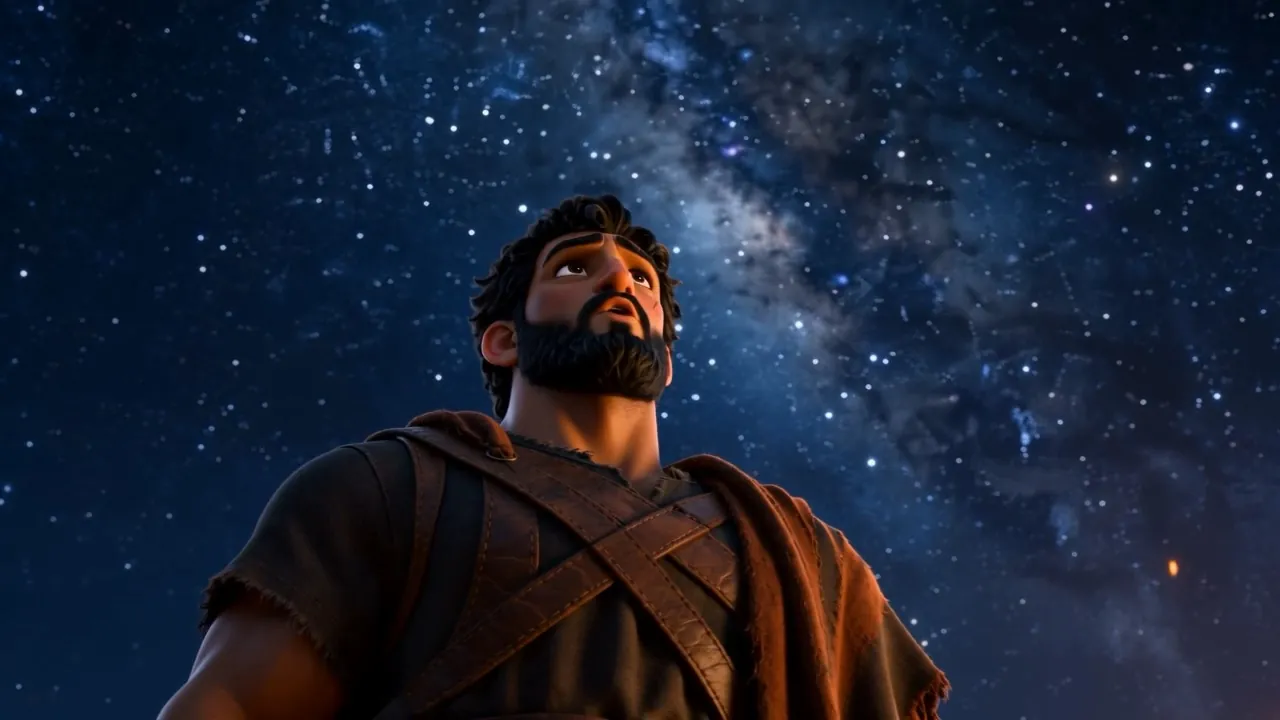

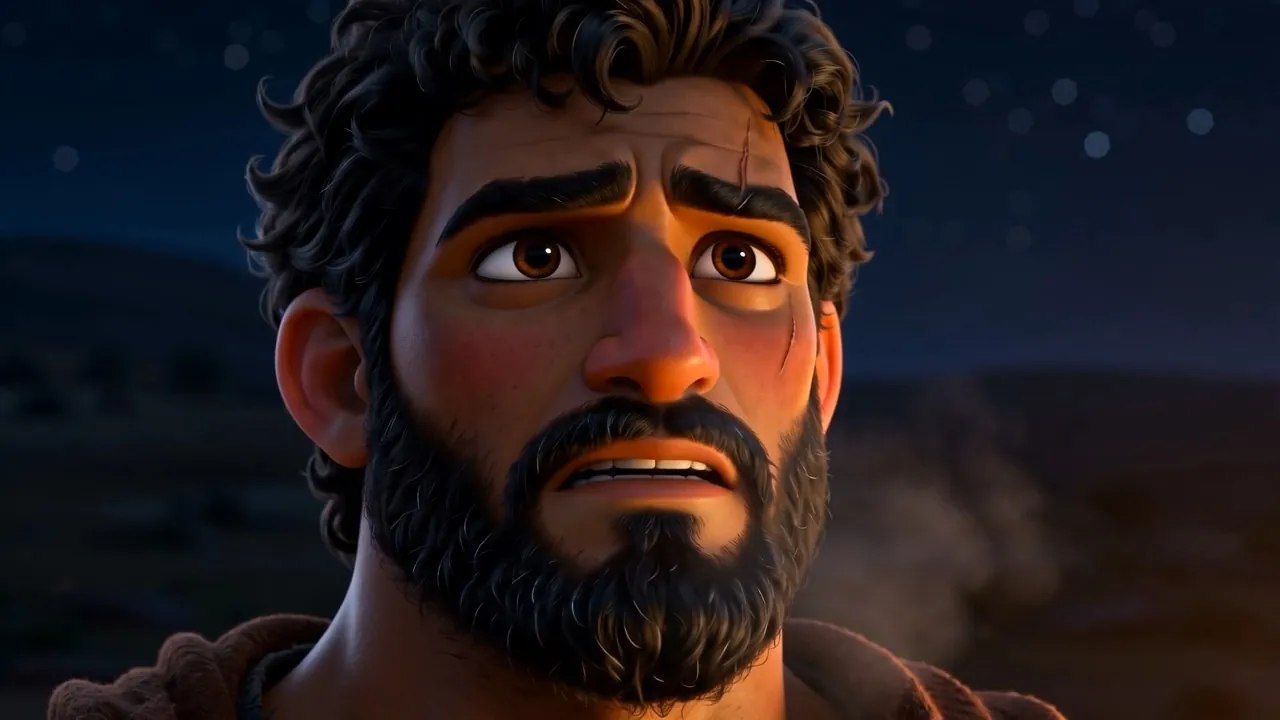

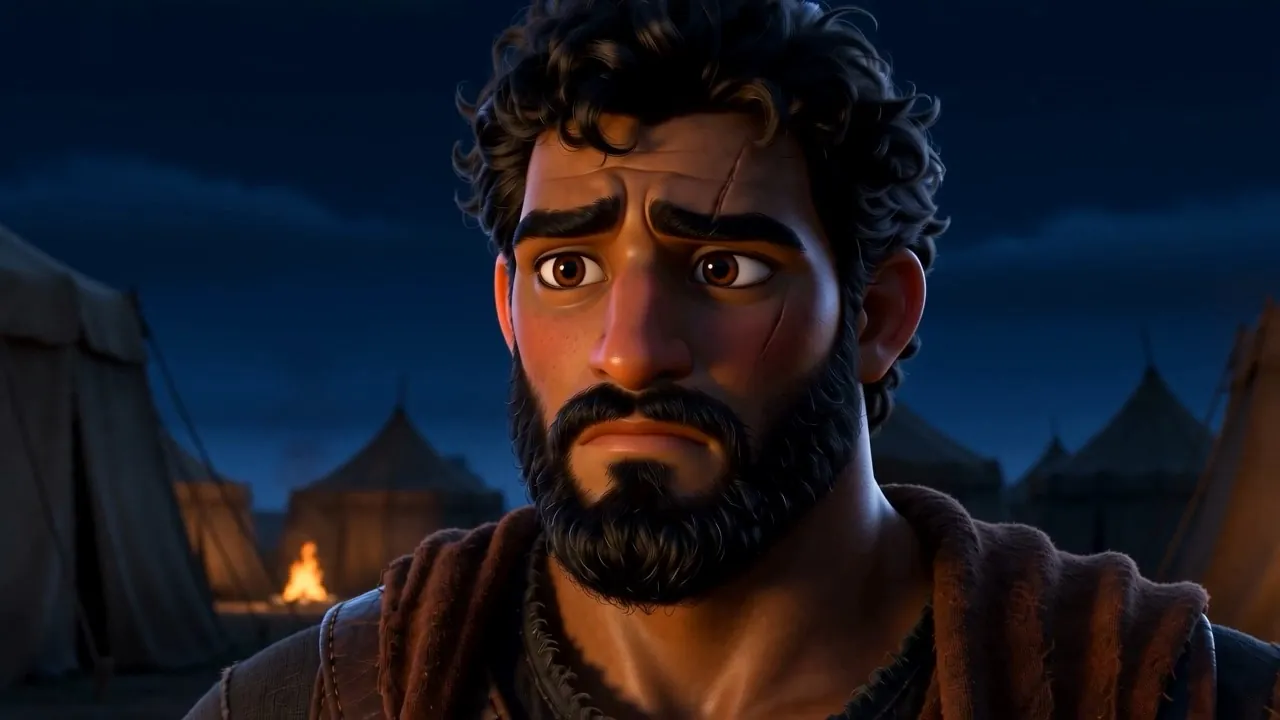
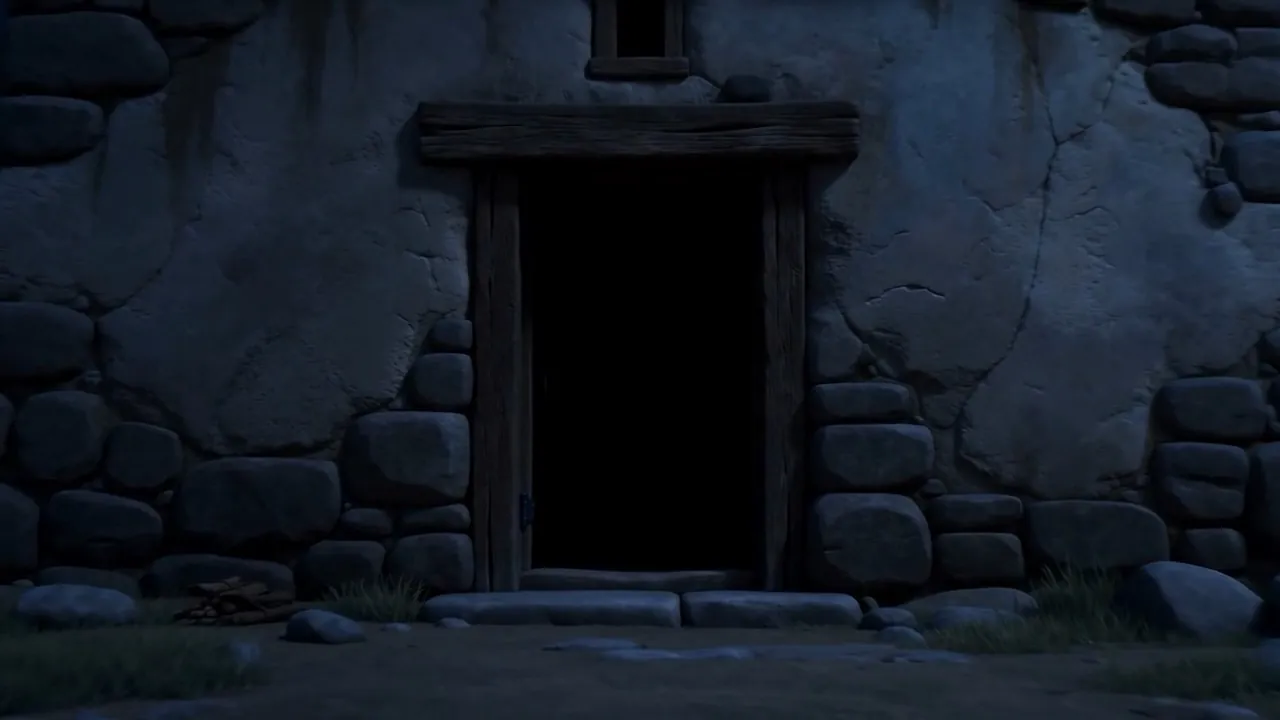
Then Jephthah made a promise nobody asked him for. “If you will indeed deliver the children of Ammon into my hand, then it shall be that whatever comes out of the doors of my house to meet me when I return in peace shall be Yahweh's, and I will offer it up for a burnt offering.” The Spirit of Yahweh was already on him. He had already been given the victory. The vow bought him nothing at all. Judges 11 : 29–31
Whatever comes out of the doors of my house.
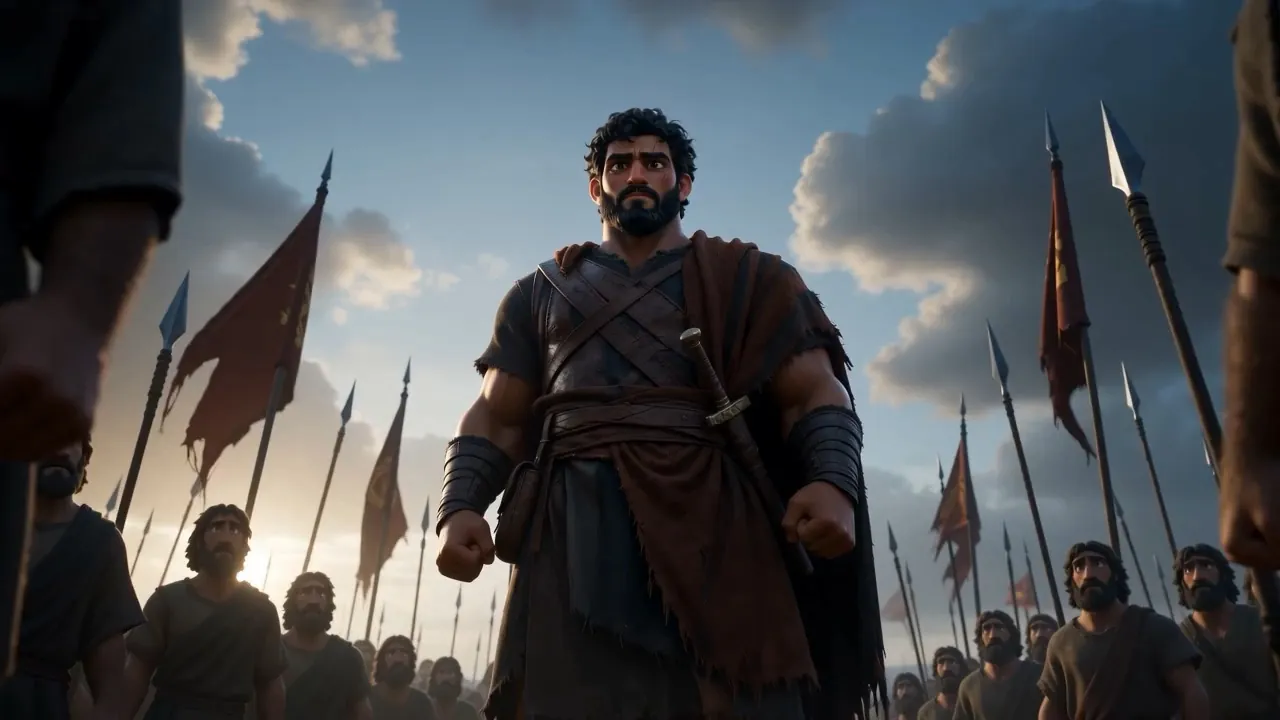
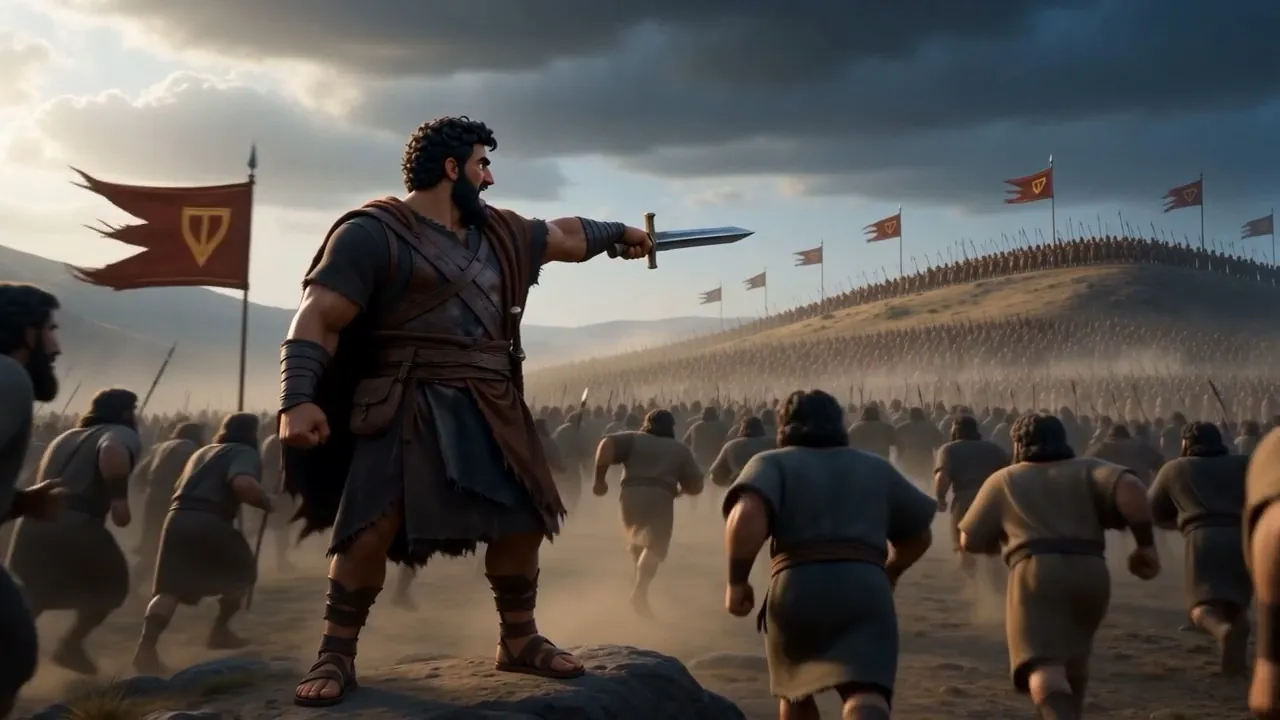
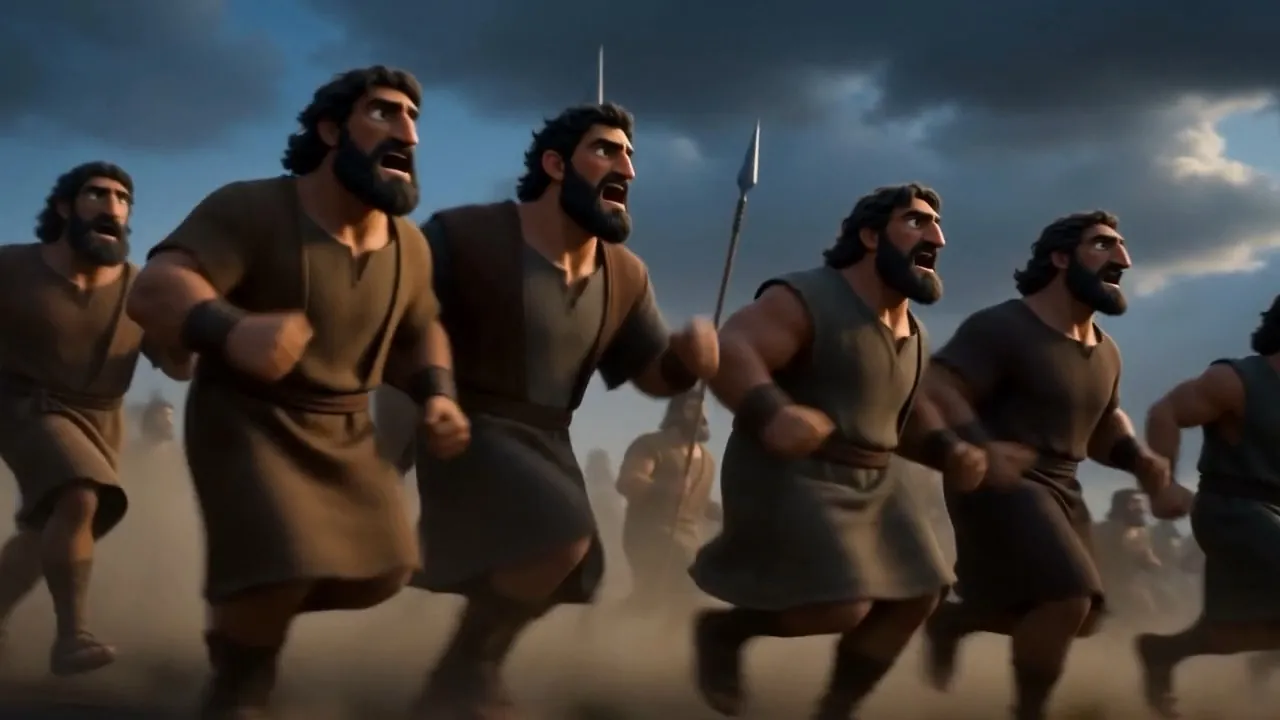
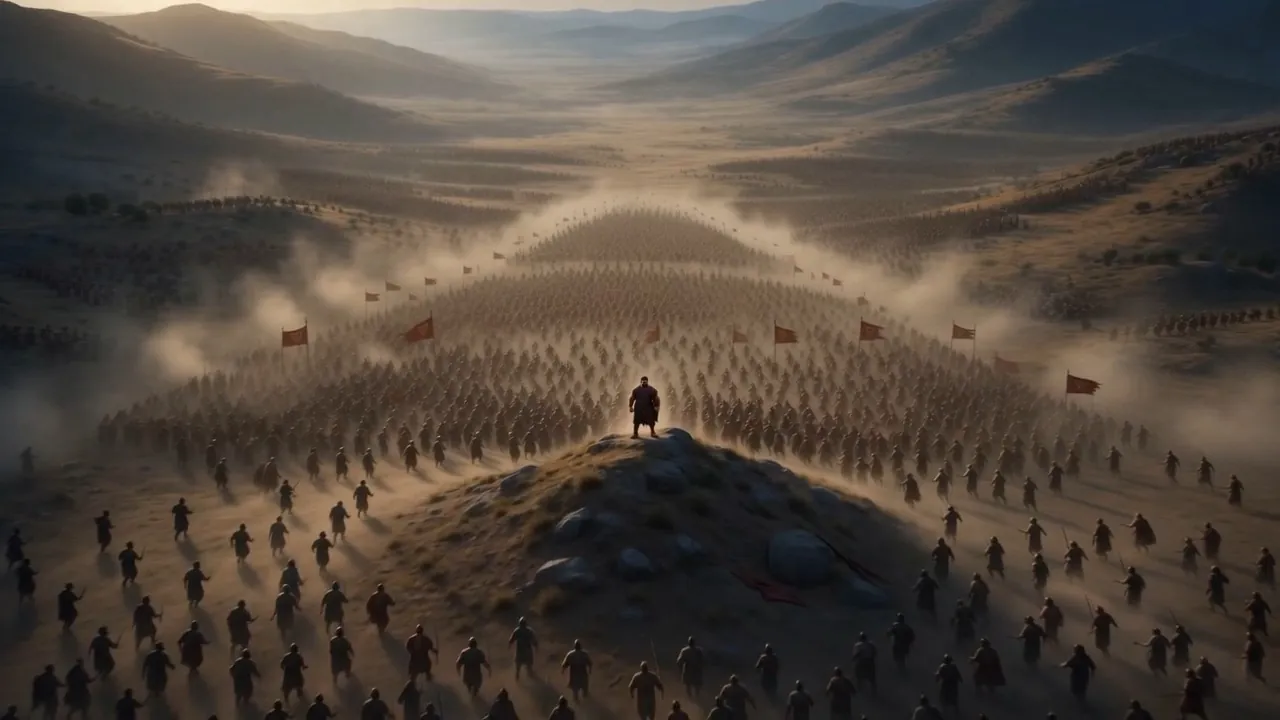

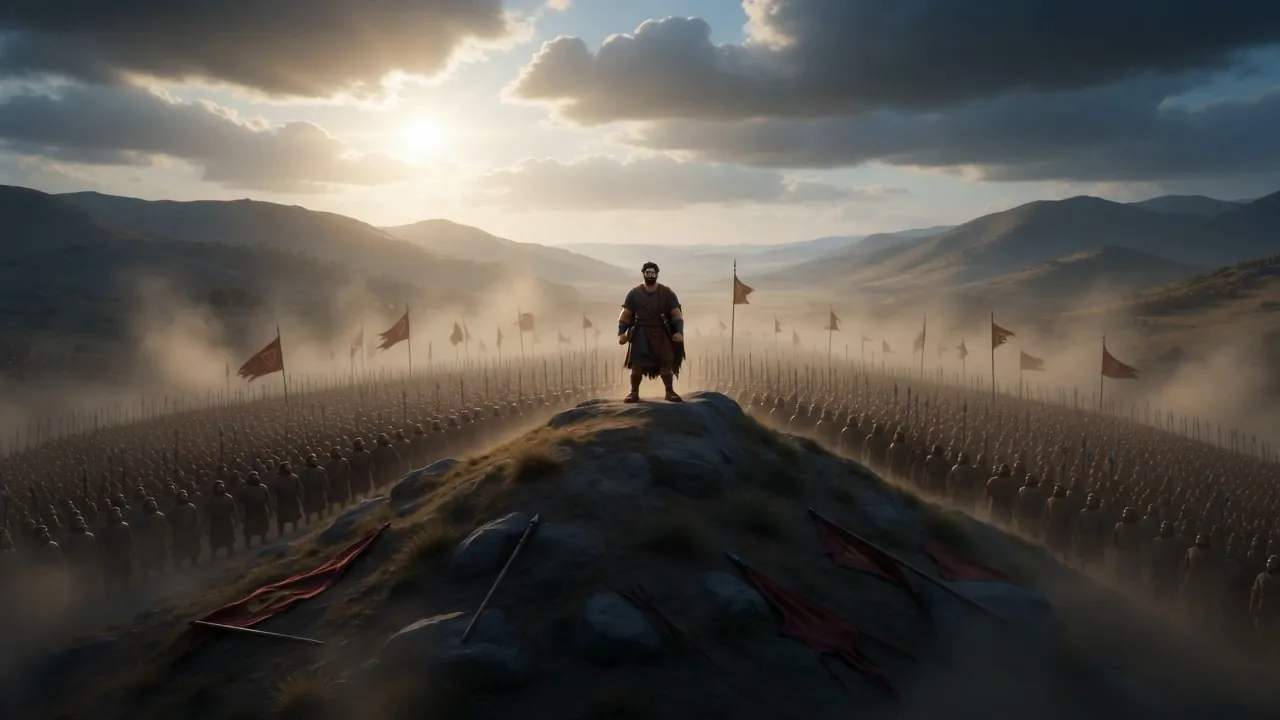
Yahweh delivered them into his hand… and they were subdued before the children of Israel. Twenty cities, and a defeat so complete the record barely pauses on it. The war is four verses long, because the war is not what this story is about. Judges 11 : 32–33
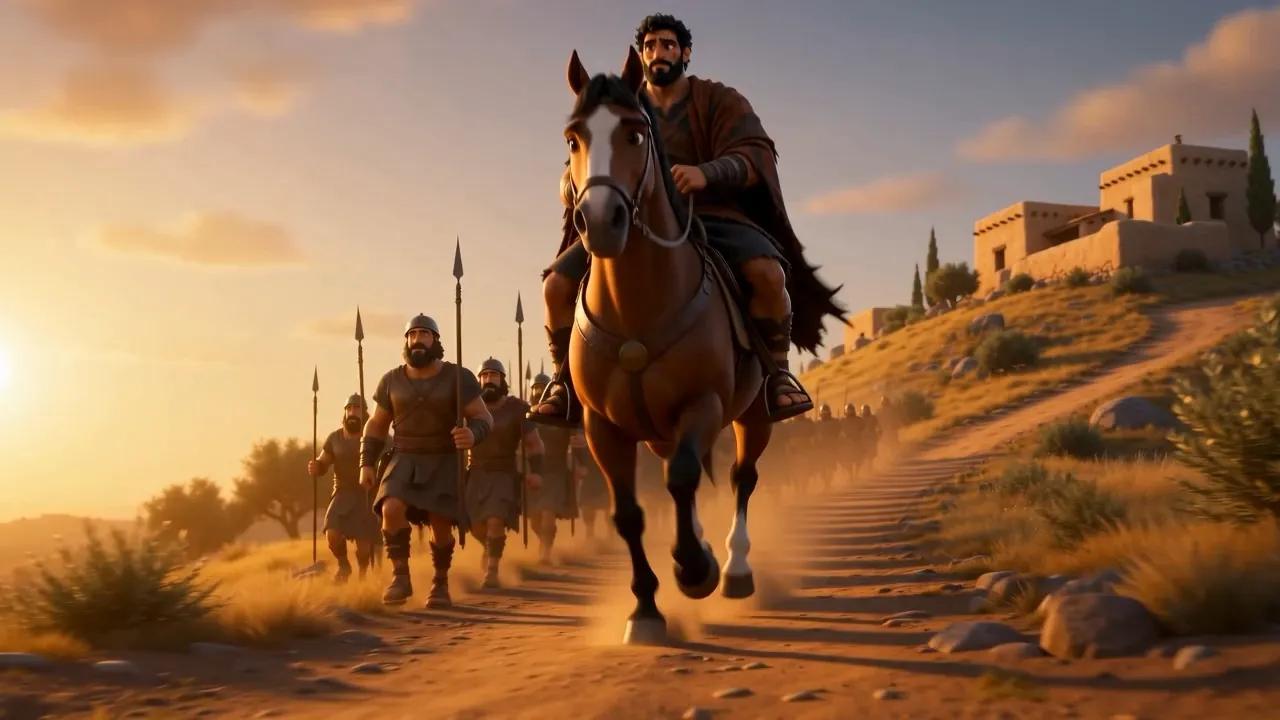
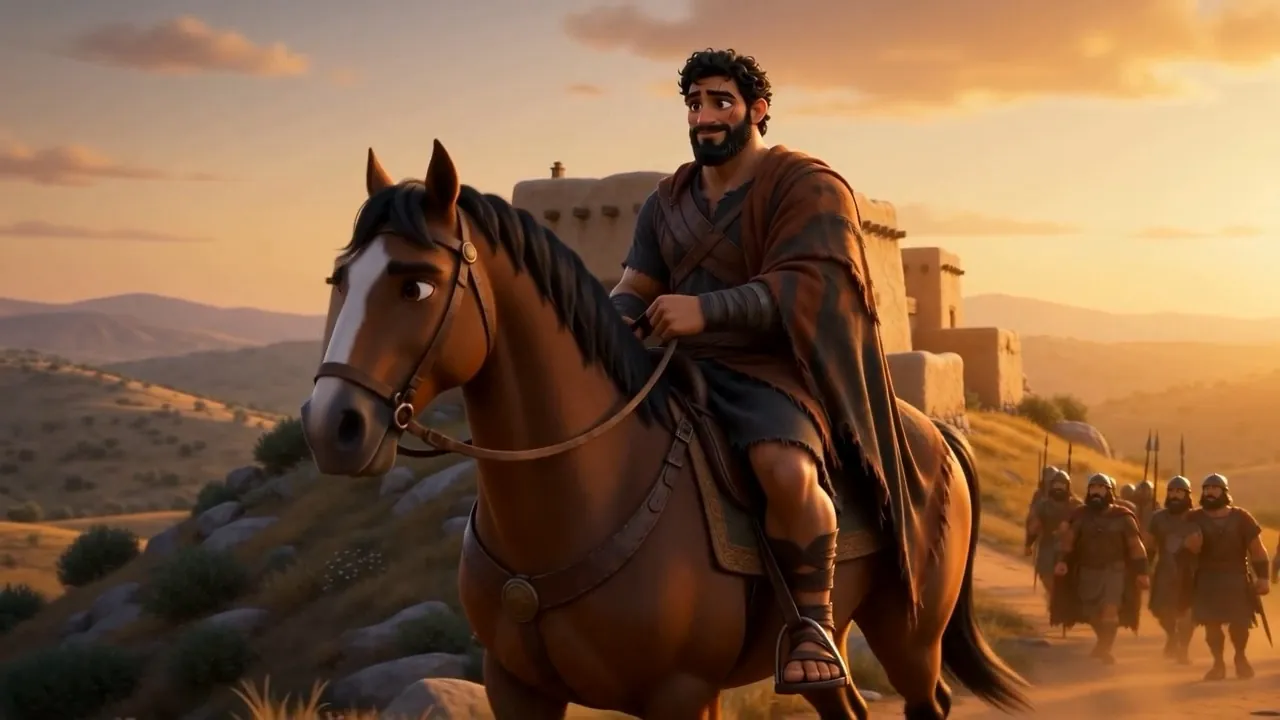




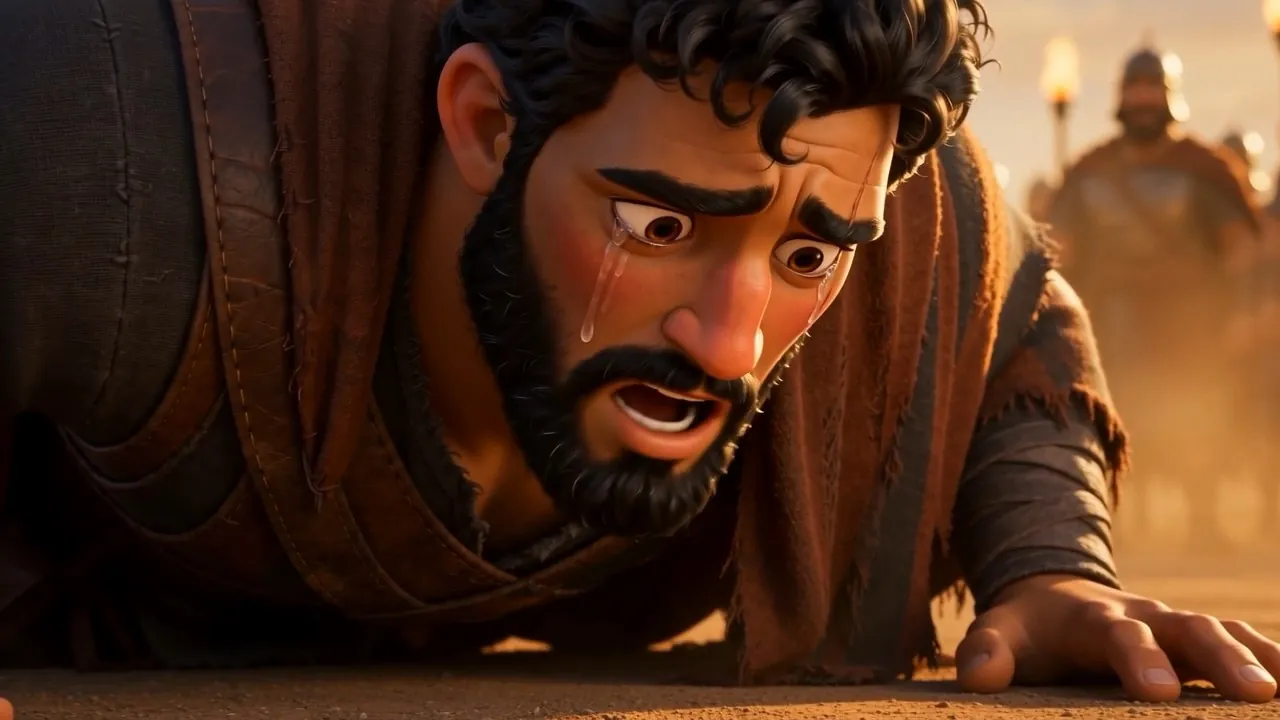
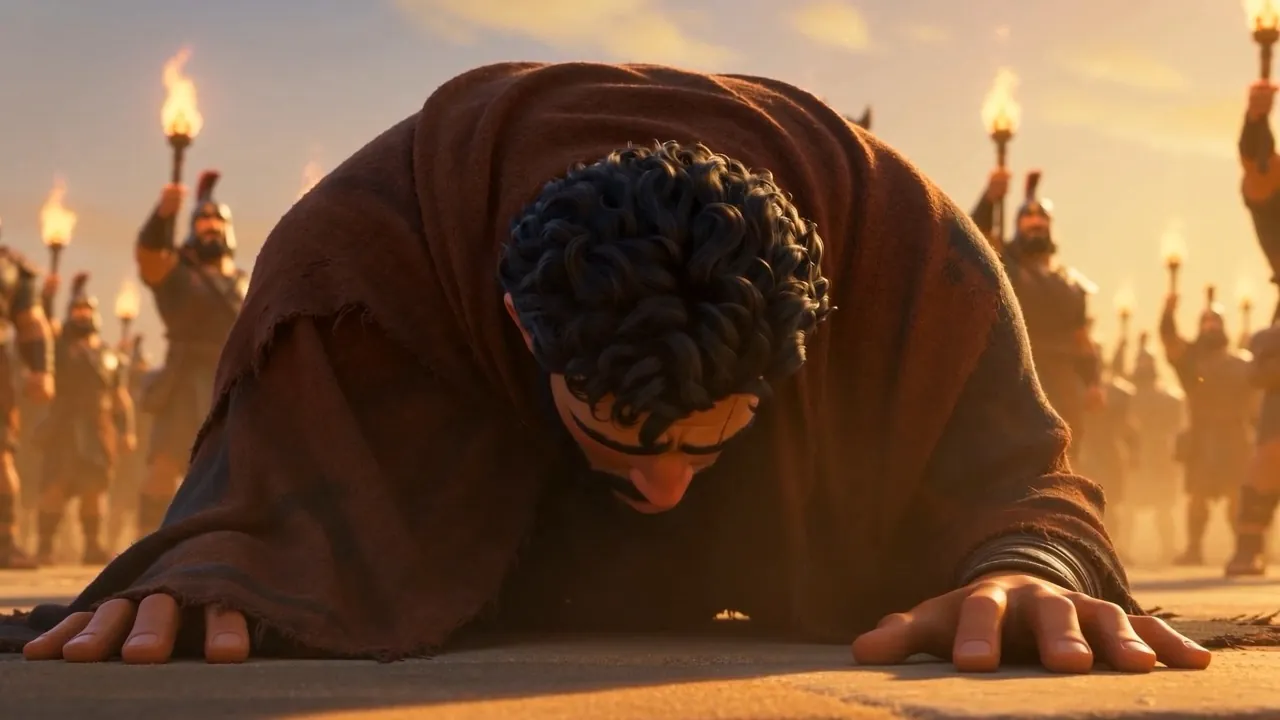
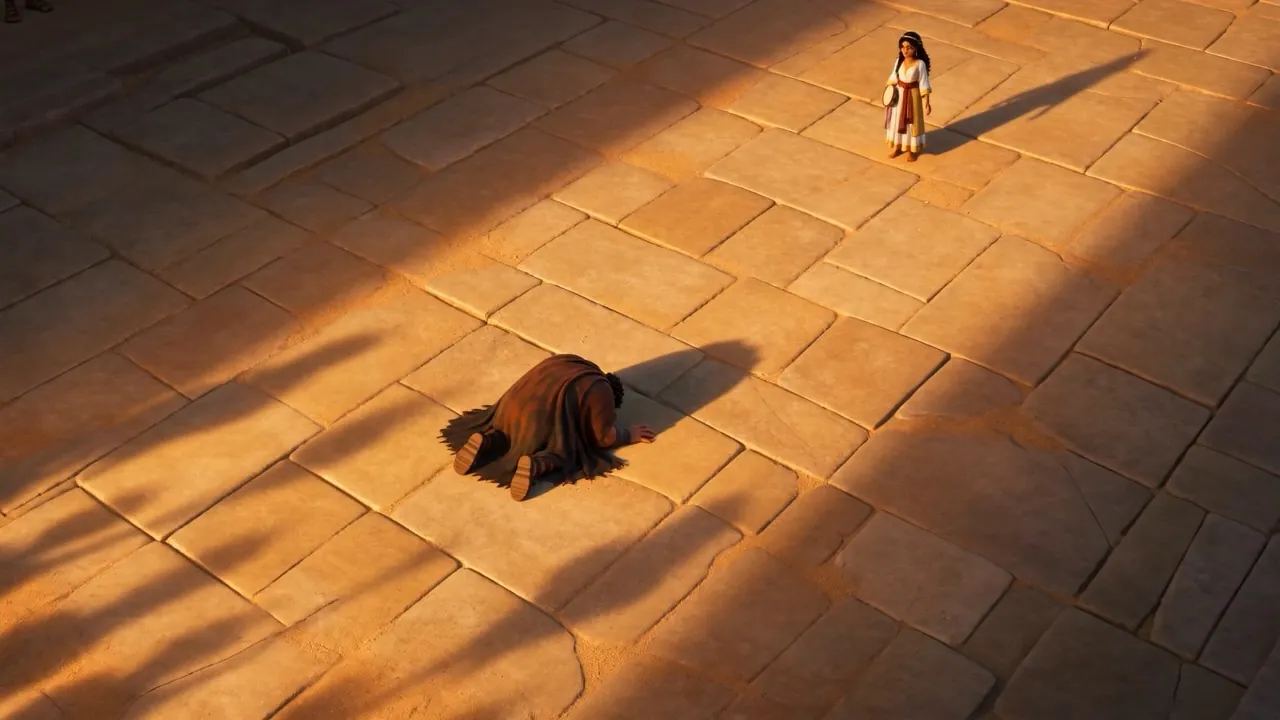
Jephthah came to Mizpah to his house; and behold, his daughter came out to meet him with tambourines and with dances. She was his only child; he had neither son nor daughter besides her. He tore his clothes in the road in front of his whole army, and the first thing he said to her was that she had brought him very low. Judges 11 : 34–35
She was his only child.



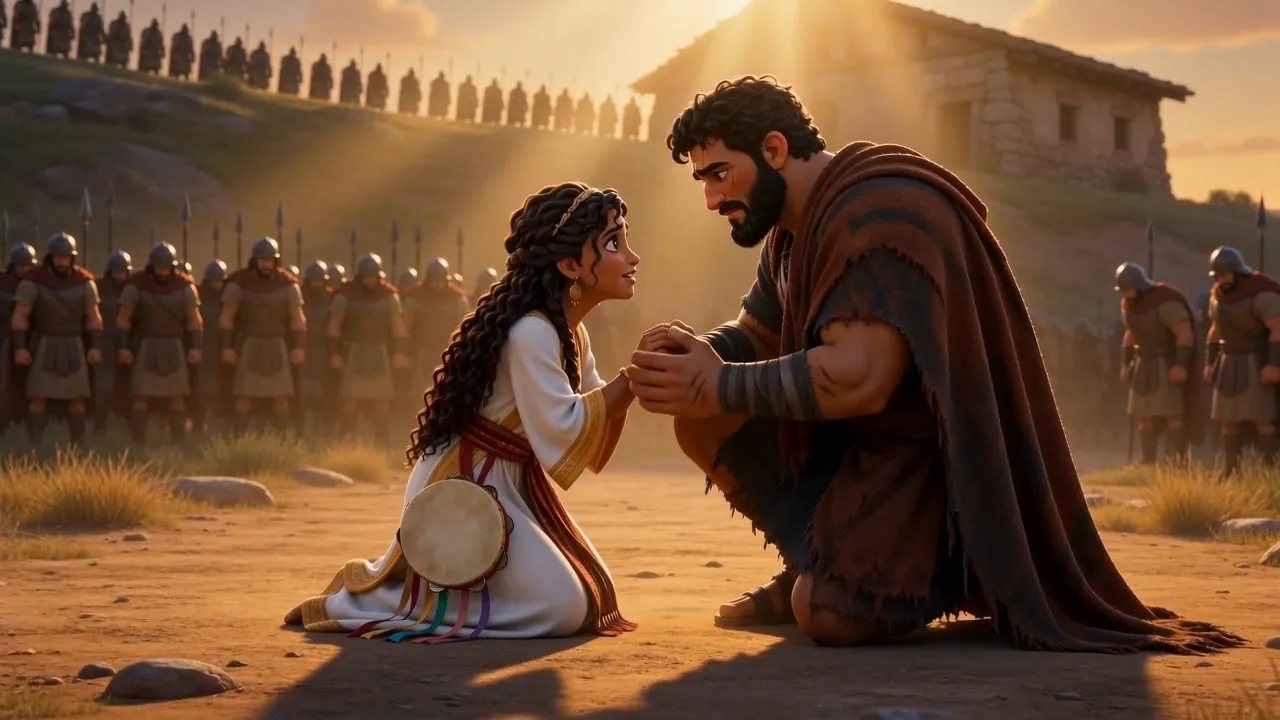

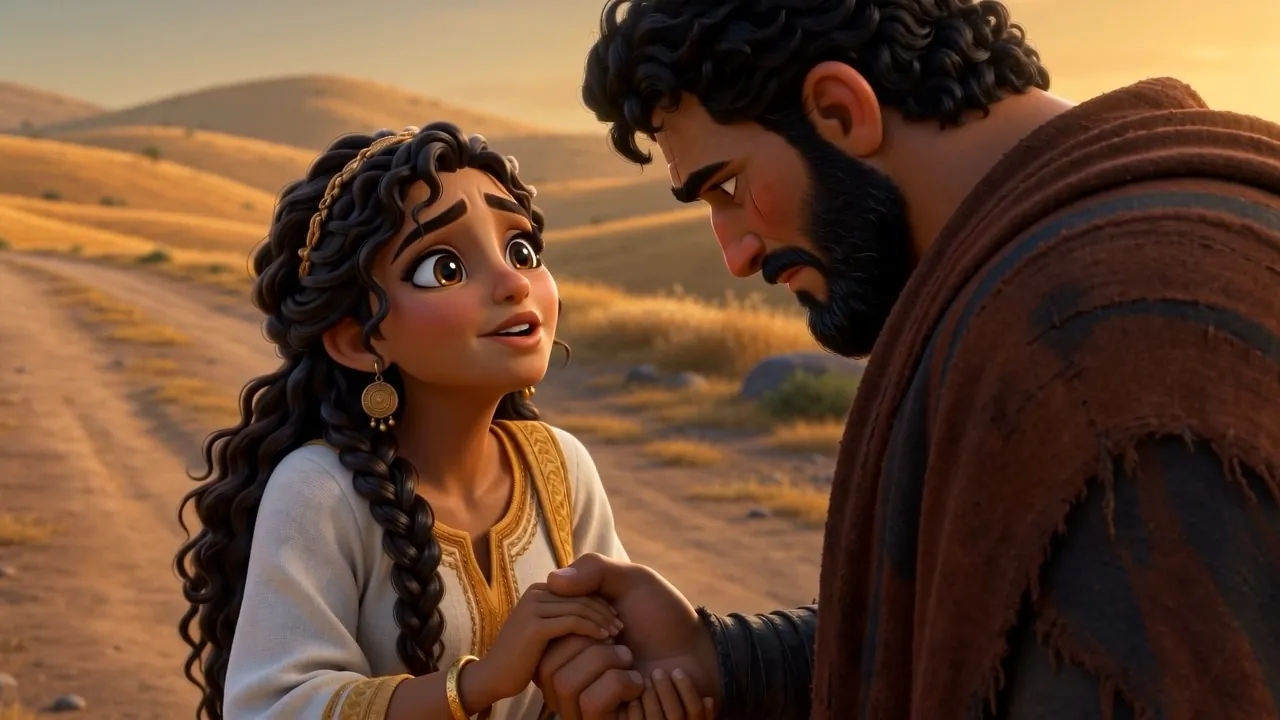
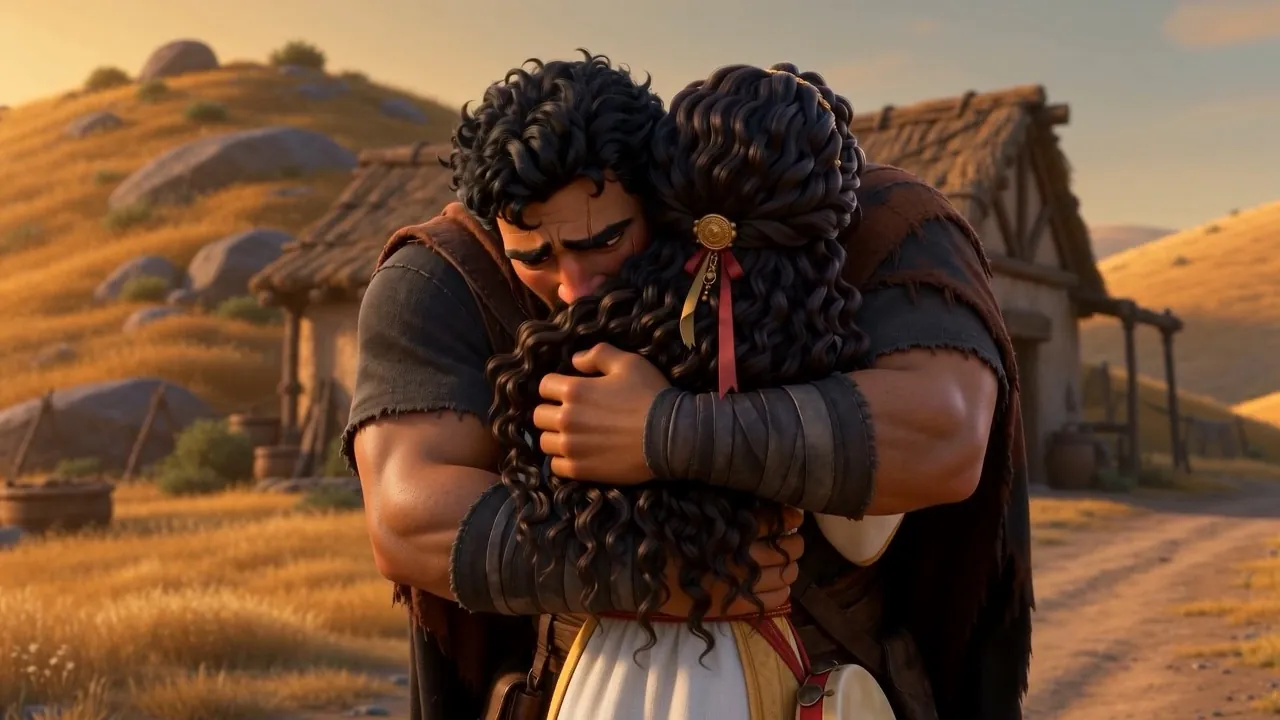

And then the daughter, who is never named, says the bravest line in the book: “My father, you have opened your mouth to Yahweh; do to me according to that which has proceeded out of your mouth.” And then one request — “let me alone two months, that I may depart and go down on the mountains, and weep with my companions.” Judges 11 : 36–37


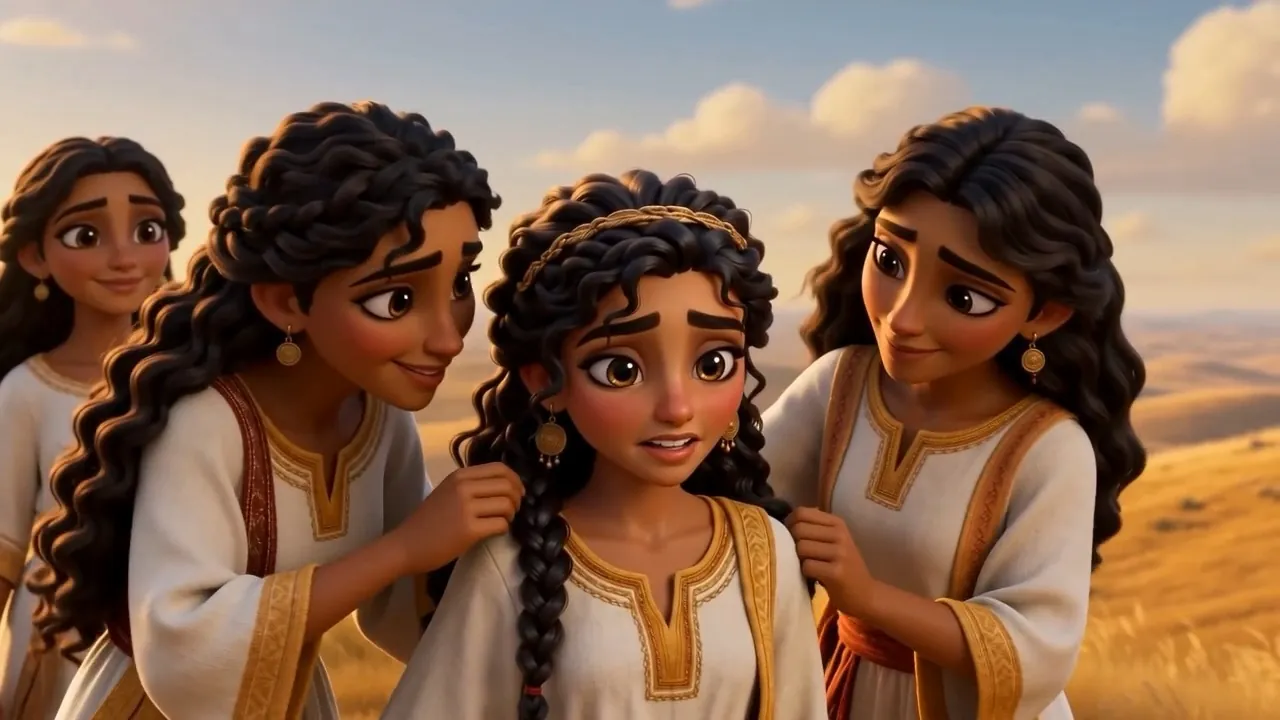
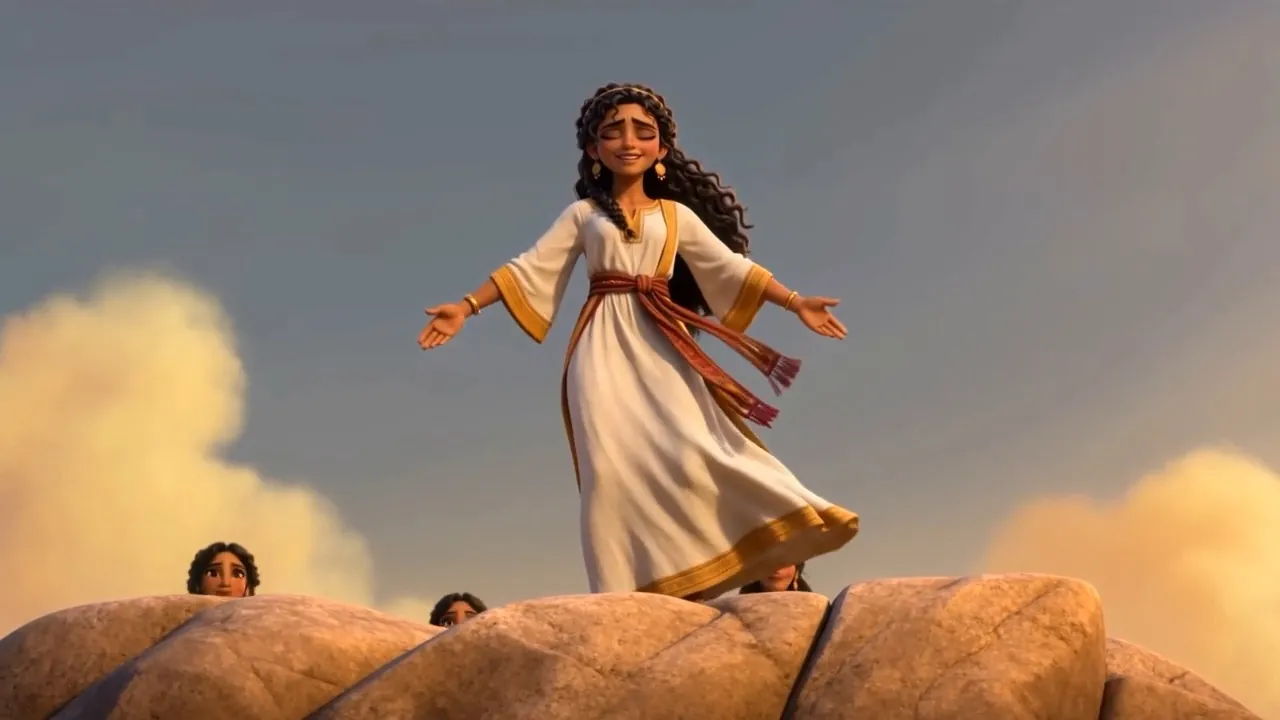

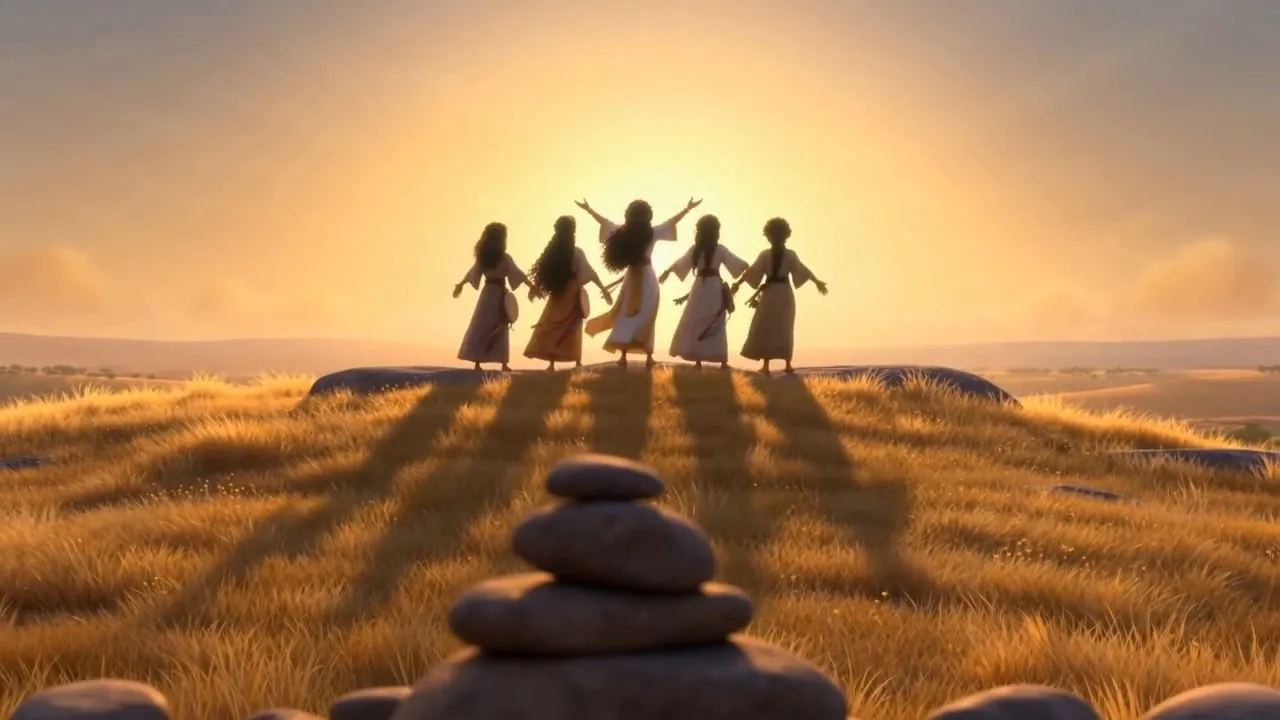




Scripture gives these two months more room than the war. Four girls on a hillside for eight weeks, walking and talking and stacking stones and dancing in the grass at sunset — and it lets you sit in it. And it became a custom in Israel, that the daughters of Israel went yearly to celebrate the daughter of Jephthah the Gileadite, four days in a year. Judges 11 : 38–40
She went, and her companions.
Interlude · In remembrance
Her friends are raising a cairn on the ridge. Add your stone.
This is how she is remembered — one stone at a time, every year.
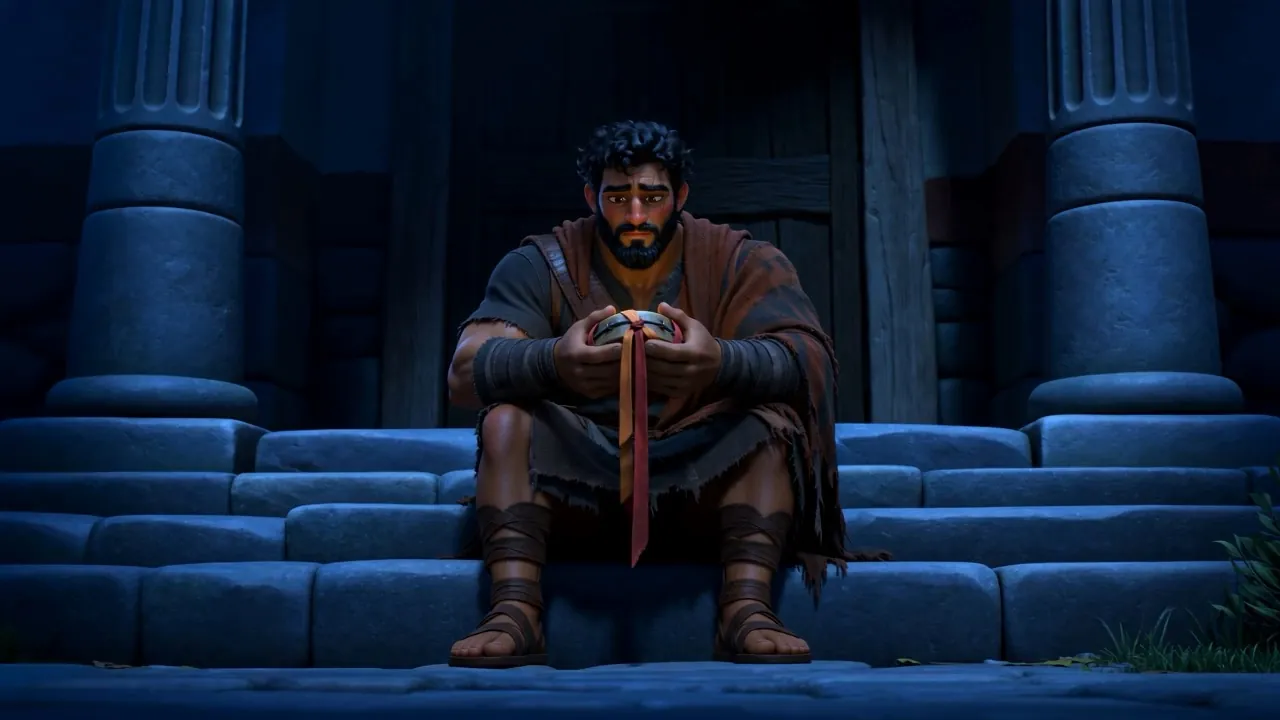

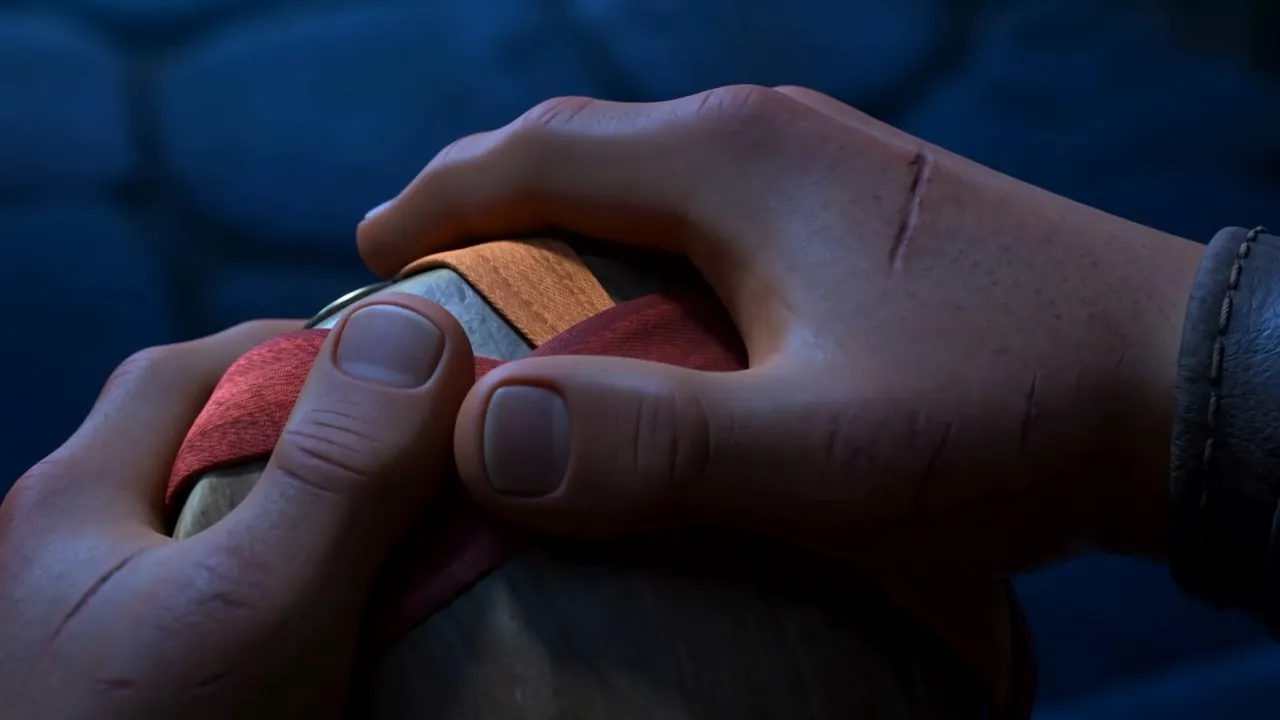
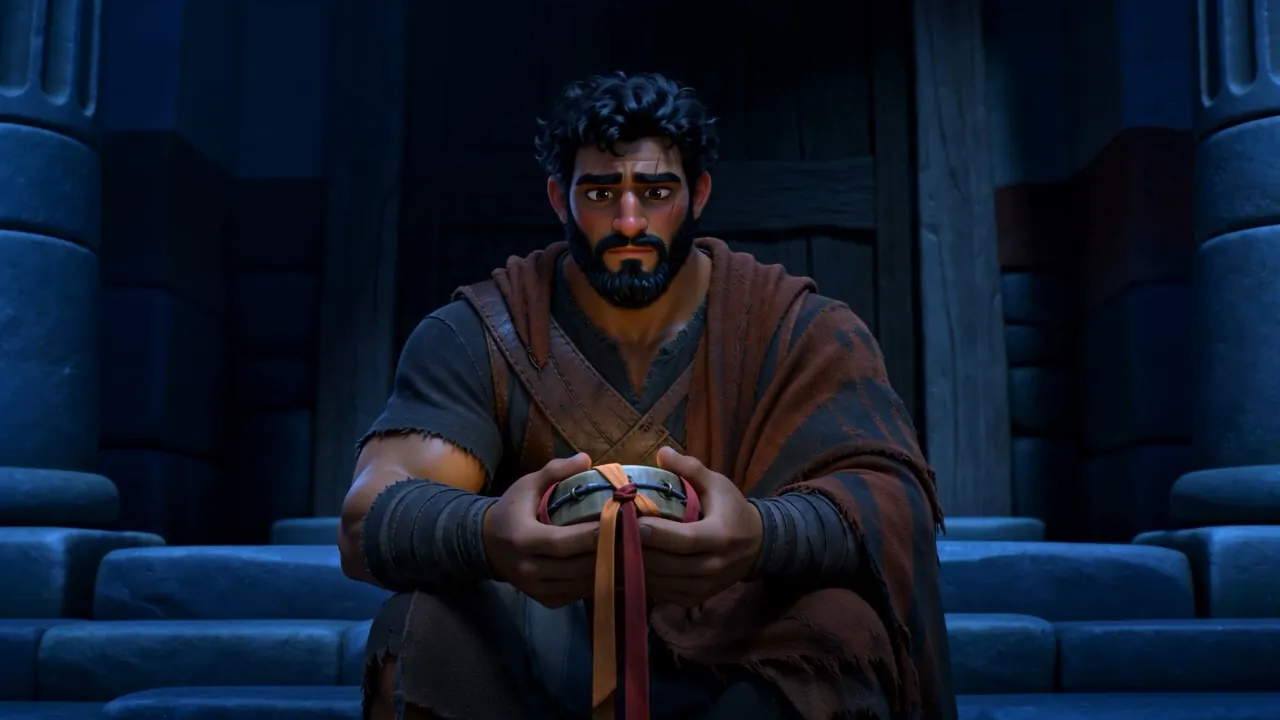
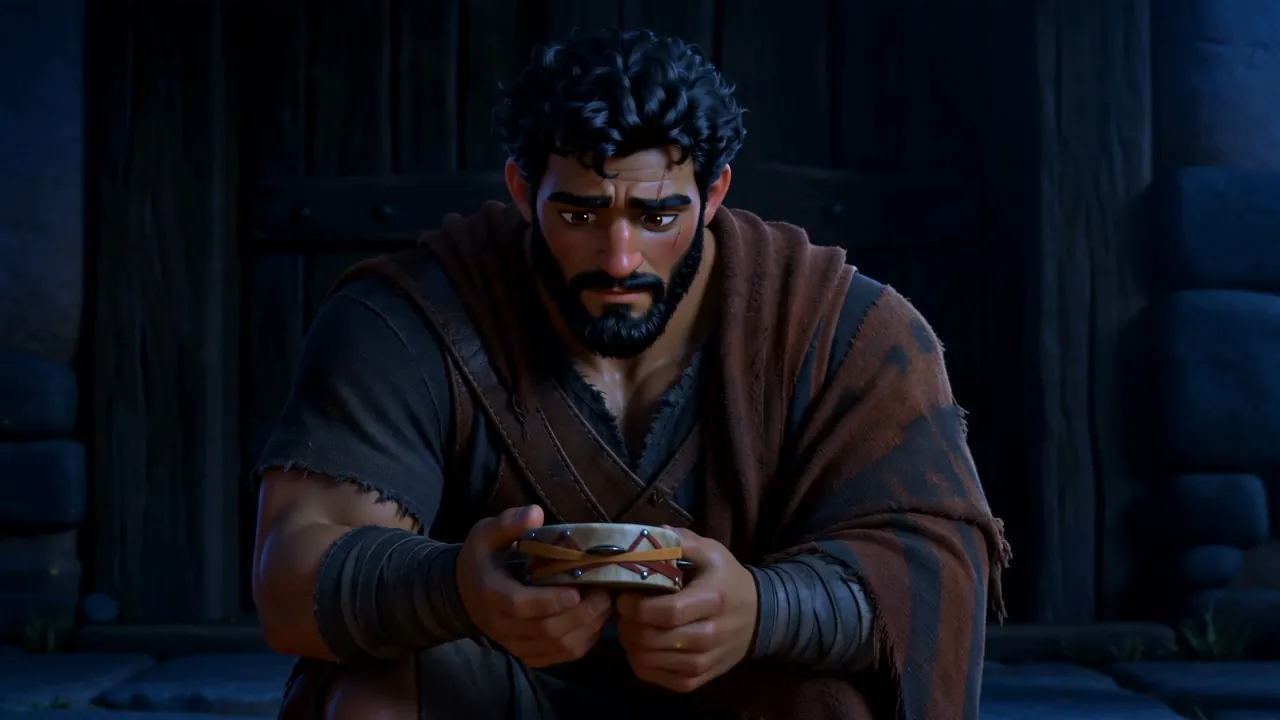
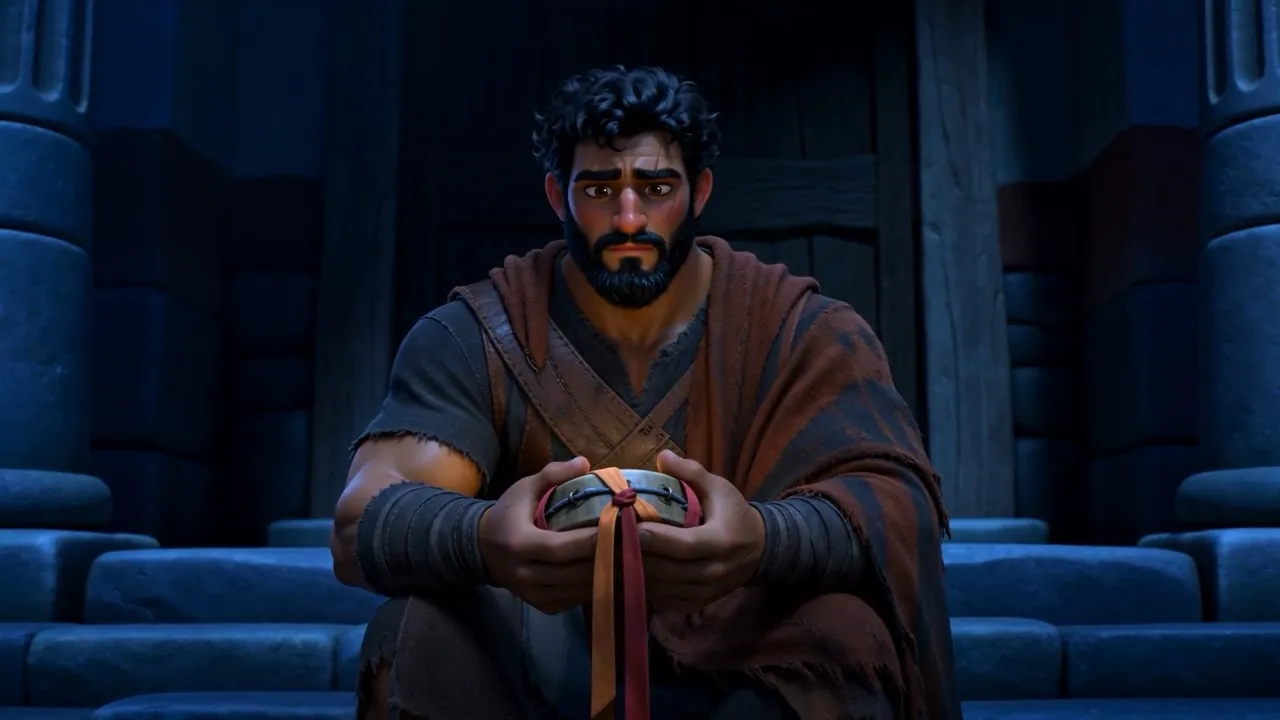
What happened is never shown. It ends on a man sitting on his own steps in the dark, holding a tambourine. Judges does not tell you this story to be admired. It tells you because this is what happens to people who no longer know their own God well enough to know what he would never ask for. Judges 11 : 39 · 12 : 7
After the story
Judges does not tell you this to be admired.
Nowhere does the text approve of the vow. God never asks for it, never accepts it, and never speaks a word to Jephthah about it — the Spirit had already come on him and the victory was already promised before he opened his mouth. Human sacrifice is condemned outright everywhere else in the law. This is a story about a man so far from knowing his own God that he thought that was the kind of God he was dealing with. That is what the whole book has been describing.
Voices of the vow · hover or tap to turn
Jephthah
"Whatever comes out of the doors of my house to meet me, when I return in peace… it shall be Yahweh's."
— Judges 11:31
The Daughter
"My father, you have opened your mouth to Yahweh; do to me according to that which has proceeded out of your mouth."
— Judges 11:36
Abimelech
"Is it better for you that all the sons of Jerubbaal… rule over you, or that one rule over you?"
— Judges 9:2The vow
How closely were you watching?
1. How did Abimelech become king of Shechem?
Silver out of the house of Baal-Berith, used to hire "vain and reckless fellows" who followed him (Judges 9:4).
2. In Jotham's parable, which tree accepts the crown?
The olive, fig and vine all had work worth more than a throne. The bramble said yes at once, and threatened to burn the cedars (Judges 9:8–15).
3. Why did Jephthah's own family drive him out?
"You shall not inherit in our father's house, for you are the son of another woman" — and years later those same elders came looking for him (Judges 11:2).
4. Did God ask Jephthah for the vow?
God neither requests it nor responds to it, and human sacrifice is condemned outright elsewhere in the law. The vow bought nothing and cost everything (Judges 11:29–31).
What this story teaches
Ambition will always find someone to fund it.
Abimelech had no claim, no calling and no support — and seventy pieces of silver out of a temple treasury bought him all three. Jotham's bramble says the quiet part: the one who most wants the throne is usually the one with least to give up for it.
"They gave him seventy pieces of silver out of the house of Baal Berith." Judges 9:4You cannot bargain for what you already have.
The Spirit of Yahweh was on Jephthah and the victory was already promised when he made his vow. It bought him nothing. It only cost.
"Then Yahweh's Spirit came on Jephthah, and he passed over Gilead and Manasseh." Judges 11:29What you believe about God shapes what you do to people.
Jephthah thought he was dealing with a God who wanted that. He was wrong, and a girl paid for it. Judges records it without approving of it — as the end point of a nation that had forgotten who it was talking to.
"I have opened my mouth to Yahweh, and I can't go back." Judges 11:35Read the scripture itself. Judges 9 – 12 · World English Bible
Judges 9
1Abimelech the son of Jerubbaal went to Shechem to his mother’s brothers, and spoke with them, and with all the family of the house of his mother’s father, saying,
2“Please speak in the ears of all the men of Shechem, ‘Is it better for you that all the sons of Jerubbaal, who are seventy persons, rule over you, or that one rule over you?’ Remember also that I am your bone and your flesh.”
3His mother’s brothers spoke of him in the ears of all the men of Shechem all these words. Their hearts inclined to follow Abimelech; for they said, “He is our brother.”
4They gave him seventy pieces of silver out of the house of Baal Berith, with which Abimelech hired vain and light fellows, who followed him.
5He went to his father’s house at Ophrah, and killed his brothers the sons of Jerubbaal, being seventy persons, on one stone: but Jotham the youngest son of Jerubbaal was left; for he hid himself.
6All the men of Shechem assembled themselves together, and all the house of Millo, and went and made Abimelech king, by the oak of the pillar that was in Shechem.
7When they told it to Jotham, he went and stood on the top of Mount Gerizim, and lifted up his voice, cried out, and said to them, “Listen to me, you men of Shechem, that God may listen to you.
8The trees set out to anoint a king over themselves. They said to the olive tree, ‘Reign over us.’
9“But the olive tree said to them, ‘Should I stop producing my oil, with which they honor God and man by me, and go to wave back and forth over the trees?’
10“The trees said to the fig tree, ‘Come and reign over us.’
11“But the fig tree said to them, ‘Should I leave my sweetness, and my good fruit, and go to wave back and forth over the trees?’
12“The trees said to the vine, ‘Come and reign over us.’
13“The vine said to them, ‘Should I leave my new wine, which cheers God and man, and go to wave back and forth over the trees?’
14“Then all the trees said to the bramble, ‘Come and reign over us.’
15“The bramble said to the trees, ‘If in truth you anoint me king over you, then come and take refuge in my shade; and if not, let fire come out of the bramble, and devour the cedars of Lebanon.’
16“Now therefore, if you have dealt truly and righteously, in that you have made Abimelech king, and if you have dealt well with Jerubbaal and his house, and have done to him according to the deserving of his hands
17(for my father fought for you, and risked his life, and delivered you out of the hand of Midian;
18and you have risen up against my father’s house today, and have slain his sons, seventy persons, on one stone, and have made Abimelech, the son of his female servant, king over the men of Shechem, because he is your brother);
19if you then have dealt truly and righteously with Jerubbaal and with his house today, then rejoice in Abimelech, and let him also rejoice in you;
20but if not, let fire come out from Abimelech, and devour the men of Shechem, and the house of Millo; and let fire come out from the men of Shechem, and from the house of Millo, and devour Abimelech.”
21Jotham ran away, and fled, and went to Beer, and lived there, for fear of Abimelech his brother.
22Abimelech was prince over Israel three years.
23Then God sent an evil spirit between Abimelech and the men of Shechem; and the men of Shechem dealt treacherously with Abimelech,
24that the violence done to the seventy sons of Jerubbaal might come, and that their blood might be laid on Abimelech their brother, who killed them, and on the men of Shechem, who strengthened his hands to kill his brothers.
25The men of Shechem set an ambush for him on the tops of the mountains, and they robbed all who came along that way by them, and Abimelech was told about it.
26Gaal the son of Ebed came with his brothers, and went over to Shechem; and the men of Shechem put their trust in him.
27They went out into the field, harvested their vineyards, trod the grapes, held festival, and went into the house of their god, and ate and drank, and cursed Abimelech.
28Gaal the son of Ebed said, “Who is Abimelech, and who is Shechem, that we should serve him? Isn’t he the son of Jerubbaal? Isn’t Zebul his officer? Serve the men of Hamor the father of Shechem, but why should we serve him?
29I wish that this people were under my hand! Then I would remove Abimelech.” He said to Abimelech, “Increase your army, and come out!”
30When Zebul the ruler of the city heard the words of Gaal the son of Ebed, his anger burned.
31He sent messengers to Abimelech craftily, saying, “Behold, Gaal the son of Ebed and his brothers have come to Shechem; and behold, they incite the city against you.
32Now therefore, go up by night, you and the people who are with you, and lie in wait in the field.
33It shall be that in the morning, as soon as the sun is up, you shall rise early, and rush on the city. Behold, when he and the people who are with him come out against you, then may you do to them as you shall find occasion.”
34Abimelech rose up, and all the people who were with him, by night, and they laid wait against Shechem in four companies.
35Gaal the son of Ebed went out, and stood in the entrance of the gate of the city. Abimelech rose up, and the people who were with him, from the ambush.
36When Gaal saw the people, he said to Zebul, “Behold, people are coming down from the tops of the mountains.” Zebul said to him, “You see the shadow of the mountains as if they were men.”
37Gaal spoke again and said, “Behold, people are coming down by the middle of the land, and one company comes by the way of the oak of Meonenim.”
38Then Zebul said to him, “Now where is your mouth, that you said, ‘Who is Abimelech, that we should serve him?’ Isn’t this the people that you have despised? Please go out now and fight with them.”
39Gaal went out before the men of Shechem, and fought with Abimelech.
40Abimelech chased him, and he fled before him, and many fell wounded, even to the entrance of the gate.
41Abimelech lived at Arumah; and Zebul drove out Gaal and his brothers, that they should not dwell in Shechem.
42On the next day, the people went out into the field; and they told Abimelech.
43He took the people, and divided them into three companies, and laid wait in the field; and he looked, and behold, the people came out of the city. So, he rose up against them, and struck them.
44Abimelech and the companies that were with him rushed forward, and stood in the entrance of the gate of the city; and the two companies rushed on all who were in the field, and struck them.
45Abimelech fought against the city all that day; and he took the city, and killed the people in it. He beat down the city, and sowed it with salt.
46When all the men of the tower of Shechem heard of it, they entered into the stronghold of the house of Elberith.
47Abimelech was told that all the men of the tower of Shechem were gathered together.
48Abimelech went up to Mount Zalmon, he and all the people who were with him; and Abimelech took an ax in his hand, and cut down a bough from the trees, and took it up, and laid it on his shoulder. Then he said to the people who were with him, “What you have seen me do, make haste, and do as I have done!”
49All the people likewise each cut down his bough, and followed Abimelech, and put them at the base of the stronghold, and set the stronghold on fire on them; so that all the people of the tower of Shechem died also, about a thousand men and women.
50Then Abimelech went to Thebez, and encamped against Thebez, and took it.
51But there was a strong tower within the city, and all the men and women of the city fled there, and shut themselves in, and went up to the roof of the tower.
52Abimelech came to the tower, and fought against it, and came near to the door of the tower to burn it with fire.
53A certain woman cast an upper millstone on Abimelech’s head, and broke his skull.
54Then he called hastily to the young man his armor bearer, and said to him, “Draw your sword, and kill me, that men not say of me, ‘A woman killed him.’” His young man thrust him through, and he died.
55When the men of Israel saw that Abimelech was dead, they each departed to his place.
56Thus God repaid the wickedness of Abimelech, which he did to his father, in killing his seventy brothers;
57and God repaid all the wickedness of the men of Shechem on their heads; and the curse of Jotham the son of Jerubbaal came on them.
Judges 11
1Now Jephthah the Gileadite was a mighty man of valor, and he was the son of a prostitute. Gilead became the father of Jephthah.
2Gilead’s wife bore him sons. When his wife’s sons grew up, they drove Jephthah out, and said to him, “You will not inherit in our father’s house, for you are the son of another woman.”
3Then Jephthah fled from his brothers, and lived in the land of Tob. Outlaws joined up with Jephthah, and they went out with him.
4After a while, the children of Ammon made war against Israel.
5When the children of Ammon made war against Israel, the elders of Gilead went to get Jephthah out of the land of Tob.
6They said to Jephthah, “Come and be our chief, that we may fight with the children of Ammon.”
7Jephthah said to the elders of Gilead, “Didn’t you hate me, and drive me out of my father’s house? Why have you come to me now when you are in distress?”
8The elders of Gilead said to Jephthah, “Therefore we have turned again to you now, that you may go with us, and fight with the children of Ammon. You will be our head over all the inhabitants of Gilead.”
9Jephthah said to the elders of Gilead, “If you bring me home again to fight with the children of Ammon, and Yahweh delivers them before me, will I be your head?”
10The elders of Gilead said to Jephthah, “Yahweh will be witness between us. Surely we will do what you say.”
11Then Jephthah went with the elders of Gilead, and the people made him head and chief over them. Jephthah spoke all his words before Yahweh in Mizpah.
12Jephthah sent messengers to the king of the children of Ammon, saying, “What have you to do with me, that you have come to me to fight against my land?”
13The king of the children of Ammon answered to the messengers of Jephthah, “Because Israel took away my land, when he came up out of Egypt, from the Arnon even to the Jabbok, and to the Jordan. Now therefore restore that territory again peaceably.”
14Jephthah sent messengers again to the king of the children of Ammon;
15and he said to him, “Thus says Jephthah: Israel didn’t take away the land of Moab, nor the land of the children of Ammon,
16but when they came up from Egypt, and Israel went through the wilderness to the Red Sea, and came to Kadesh;
17then Israel sent messengers to the king of Edom, saying, ‘Please let me pass through your land;’ but the king of Edom didn’t listen. In the same way, he sent to the king of Moab; but he would not: and Israel stayed in Kadesh.
18Then they went through the wilderness, and went around the land of Edom, and the land of Moab, and came by the east side of the land of Moab, and they encamped on the other side of the Arnon; but they didn’t come within the border of Moab, for the Arnon was the border of Moab.
19Israel sent messengers to Sihon king of the Amorites, the king of Heshbon; and Israel said to him, ‘Please let us pass through your land to my place.’
20But Sihon didn’t trust Israel to pass through his border; but Sihon gathered all his people together, and encamped in Jahaz, and fought against Israel.
21Yahweh, the God of Israel, delivered Sihon and all his people into the hand of Israel, and they struck them. So Israel possessed all the land of the Amorites, the inhabitants of that country.
22They possessed all the border of the Amorites, from the Arnon even to the Jabbok, and from the wilderness even to the Jordan.
23So now Yahweh, the God of Israel, has dispossessed the Amorites from before his people Israel, and should you possess them?
24Won’t you possess that which Chemosh your god gives you to possess? So whoever Yahweh our God has dispossessed from before us, them will we possess.
25Now are you anything better than Balak the son of Zippor, king of Moab? Did he ever strive against Israel, or did he ever fight against them?
26While Israel lived in Heshbon and its towns, and in Aroer and its towns, and in all the cities that are along by the side of the Arnon, three hundred years; why didn’t you recover them within that time?
27I therefore have not sinned against you, but you do me wrong to war against me. May Yahweh the Judge be judge today between the children of Israel and the children of Ammon.”
28However the king of the children of Ammon didn’t listen to the words of Jephthah which he sent him.
29Then Yahweh’s Spirit came on Jephthah, and he passed over Gilead and Manasseh, and passed over Mizpah of Gilead, and from Mizpah of Gilead he passed over to the children of Ammon.
30Jephthah vowed a vow to Yahweh, and said, “If you will indeed deliver the children of Ammon into my hand,
31then it shall be, that whatever comes out of the doors of my house to meet me, when I return in peace from the children of Ammon, it shall be Yahweh’s, and I will offer it up for a burnt offering.”
32So Jephthah passed over to the children of Ammon to fight against them; and Yahweh delivered them into his hand.
33He struck them from Aroer until you come to Minnith, even twenty cities, and to Abelcheramim, with a very great slaughter. So the children of Ammon were subdued before the children of Israel.
34Jephthah came to Mizpah to his house; and behold, his daughter came out to meet him with tambourines and with dances. She was his only child. Besides her he had neither son nor daughter.
35When he saw her, he tore his clothes, and said, “Alas, my daughter! You have brought me very low, and you are one of those who trouble me; for I have opened my mouth to Yahweh, and I can’t go back.”
36She said to him, “My father, you have opened your mouth to Yahweh; do to me according to that which has proceeded out of your mouth, because Yahweh has taken vengeance for you on your enemies, even on the children of Ammon.”
37She said to her father, “Let this thing be done for me. Leave me alone two months, that I may depart and go down on the mountains, and bewail my virginity, I and my companions.”
38He said, “Go.” He sent her away for two months: and she departed, she and her companions, and mourned her virginity on the mountains.
39At the end of two months, she returned to her father, who did with her according to his vow which he had vowed. She was a virgin. It was a custom in Israel
40that the daughters of Israel went yearly to celebrate the daughter of Jephthah the Gileadite four days in a year.
Judges 12 : 1–7
1The men of Ephraim were gathered together, and passed northward; and they said to Jephthah, “Why did you pass over to fight against the children of Ammon, and didn’t call us to go with you? We will burn your house around you with fire!”
2Jephthah said to them, “I and my people were at great strife with the children of Ammon; and when I called you, you didn’t save me out of their hand.
3When I saw that you didn’t save me, I put my life in my hand, and passed over against the children of Ammon, and Yahweh delivered them into my hand. Why then have you come up to me today, to fight against me?”
4Then Jephthah gathered together all the men of Gilead, and fought with Ephraim. The men of Gilead struck Ephraim, because they said, “You are fugitives of Ephraim, you Gileadites, in the middle of Ephraim, and in the middle of Manasseh.”
5The Gileadites took the fords of the Jordan against the Ephraimites. When the fugitives of Ephraim said, “Let me go over,” the men of Gilead said to him, “Are you an Ephraimite?” If he said, “No”;
6then they said to him, “Now say ‘Shibboleth;’” and he said “Sibboleth”; for he couldn’t manage to pronounce it right: then they seized him, and killed him at the fords of the Jordan. At that time, forty-two thousand of Ephraim fell.
7Jephthah judged Israel six years. Then Jephthah the Gileadite died, and was buried in the cities of Gilead.
World English Bible (WEB) — a public-domain modern English translation. Read it freely, share it freely.
The Book of Judges — animated film in production
These scenes are real frames from the film.
Help us finish it — and every story like it — free for the world.