The Book of Jonah · The Vine and the Worm
He wasn't angrythat God was cruel.
A hundred and twenty thousand people are spared, and the man who preached to them goes out east of the city, sits down on a rock and waits to see whether it burns anyway. What he gets instead is a plant, a worm, a hot wind, and a question nobody answers. Every scene below is a real frame from our animated film.
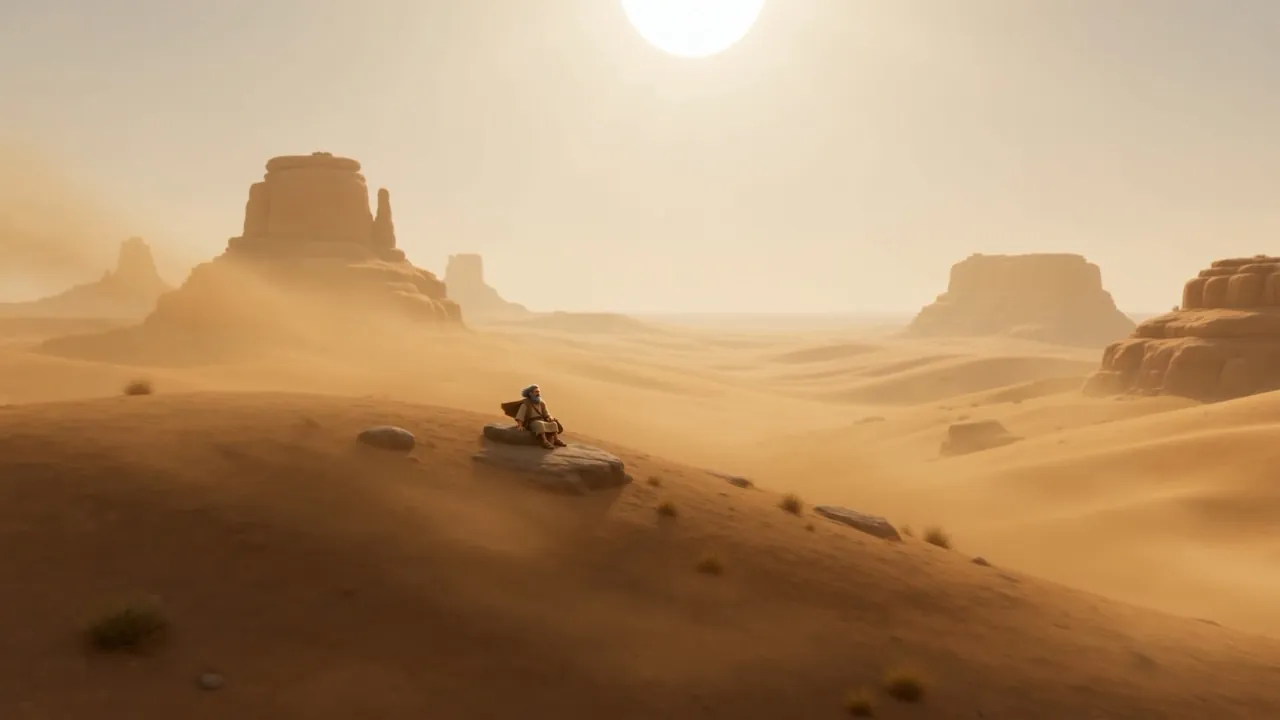

Jonah's reaction to the largest revival in scripture is to lose his temper. Isn't this what I said while I was still in my own country? That is why I fled — I knew that you are a gracious God, and merciful, slow to anger. He is not angry that God is cruel. He is angry that God is kind. So he goes out east of the city, sits down on a rock, and waits to see if it burns anyway. Jonah 4 : 1–3
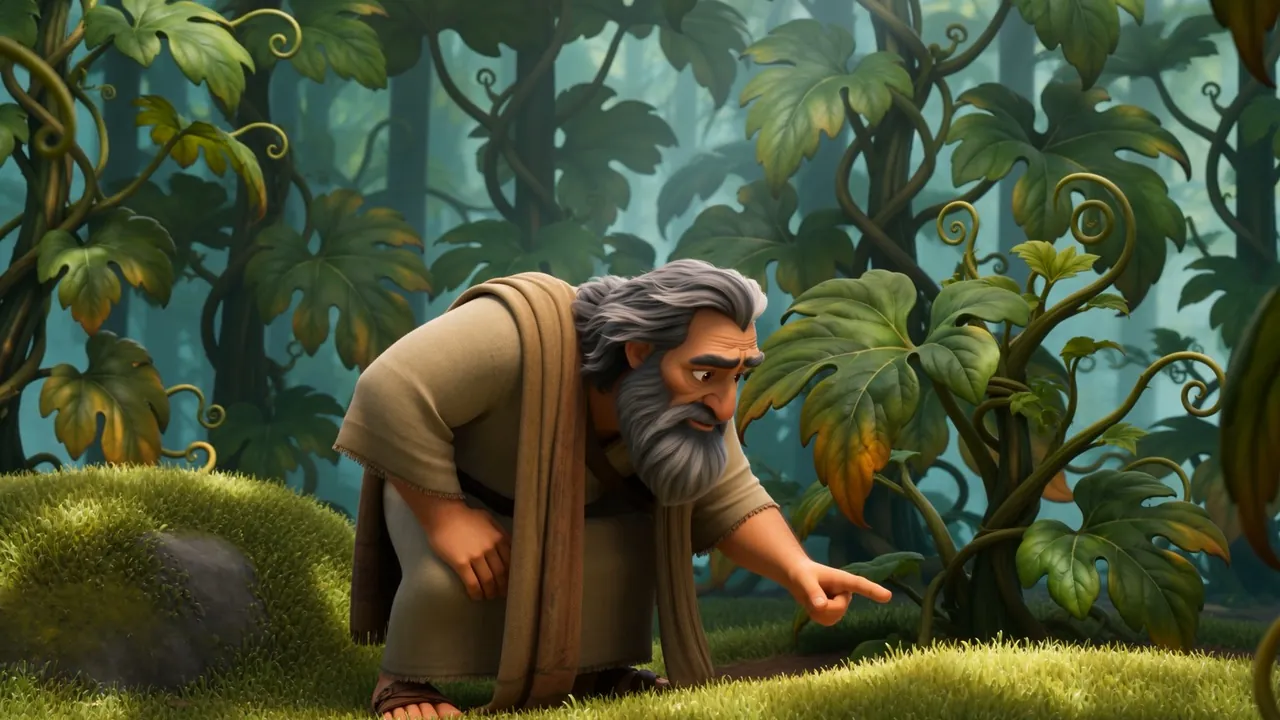
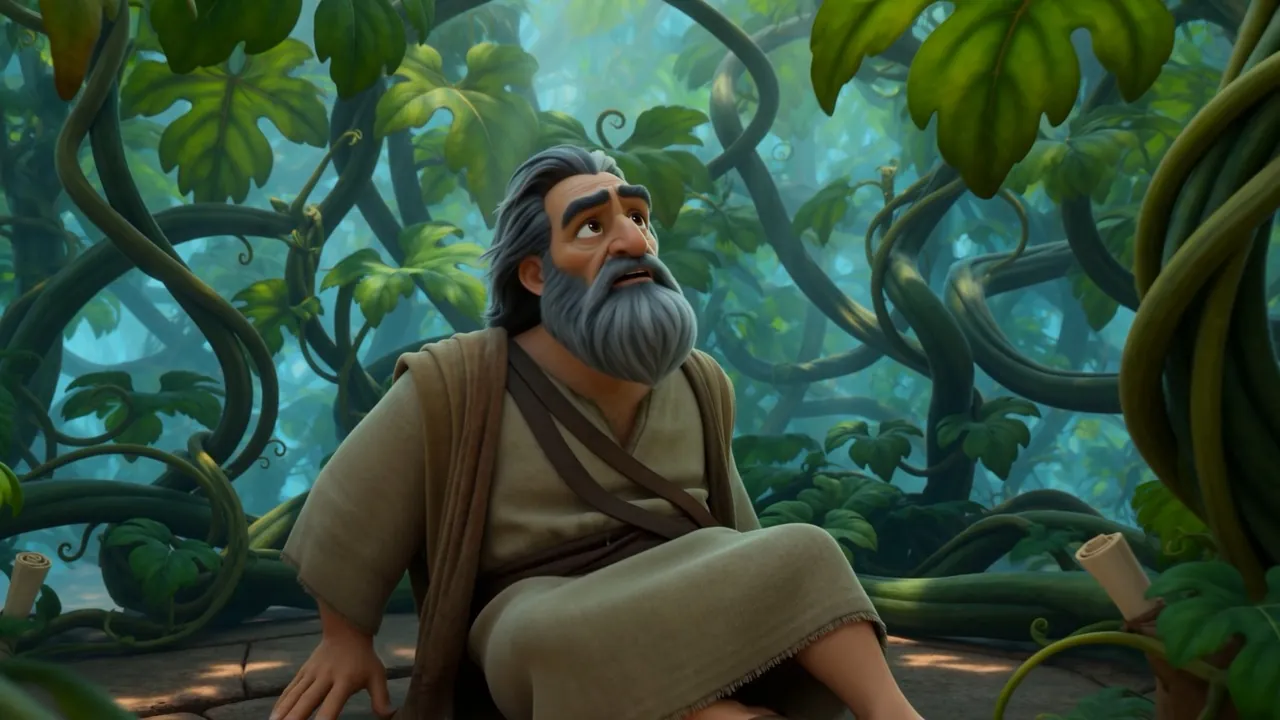
He is asked one question out there — is it right for you to be angry? — and does not answer it. And instead of an argument he is given a plant. It comes up out of the dry ground overnight, and by the time he wakes it is over his head and still going, huge ribbed leaves unrolling above him in the heat. Jonah 4 : 4–6
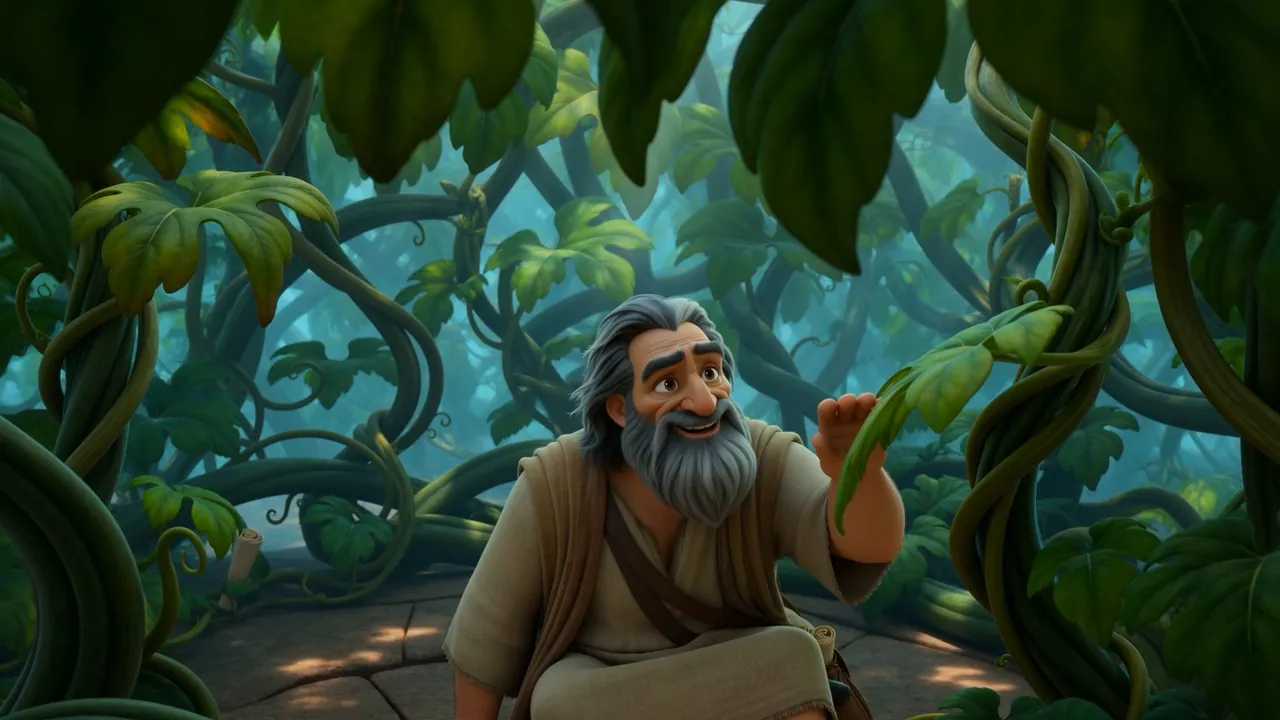

And here is the only moment in four chapters where Jonah is happy. So Jonah was exceedingly glad because of the vine. He touches the leaves. He looks up through them at the sun. The man who has spent the whole book furious about mercy is absolutely delighted to receive some, and does not notice that this is the joke. Jonah 4 : 6
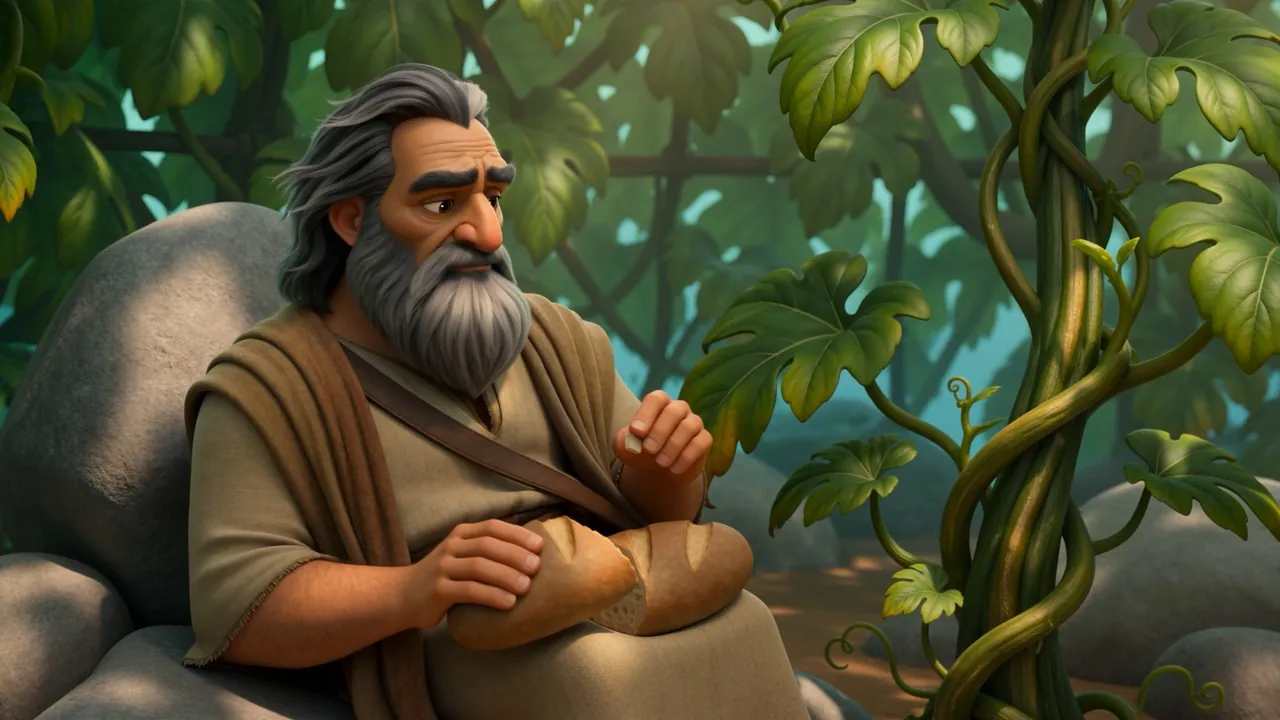
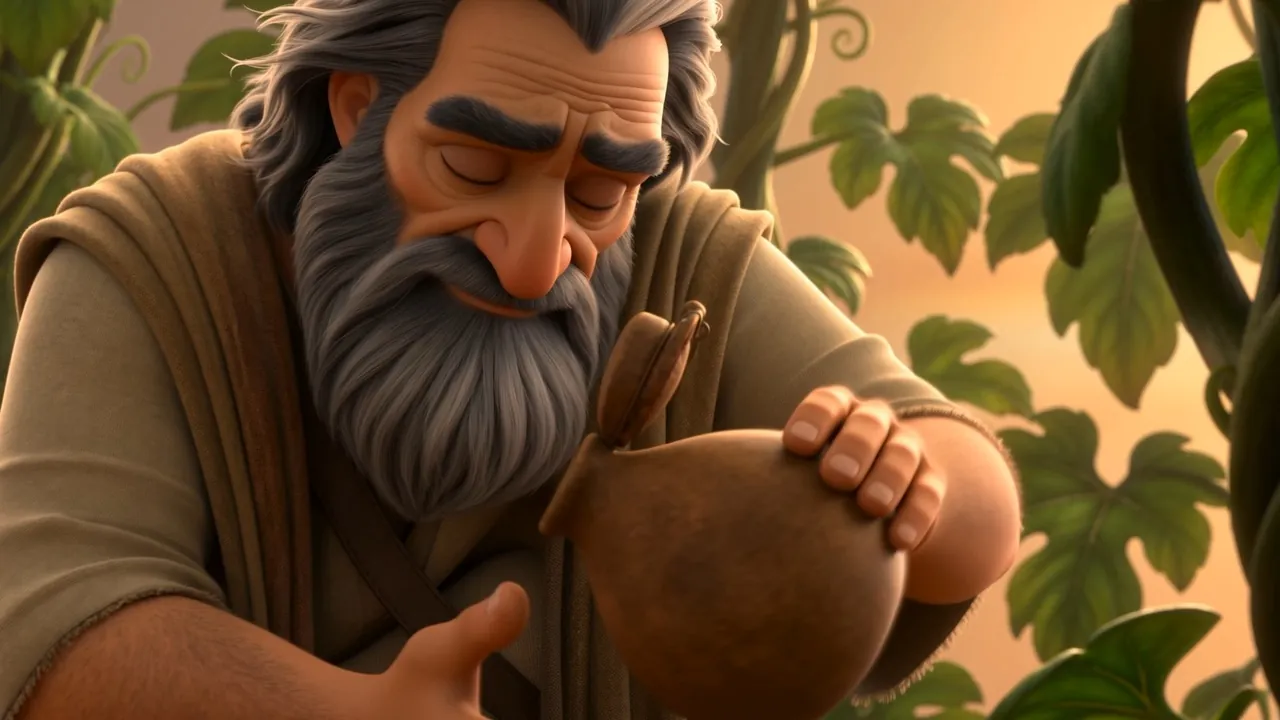
He settles in. Bread in his lap, waterskin at his side, back against a rock in deep green shade with the desert glaring away outside it. He did nothing to earn the vine, did not plant it, did not water it, and was not asked whether he deserved it. It simply arrived because somebody decided he should be comfortable. Jonah 4 : 6
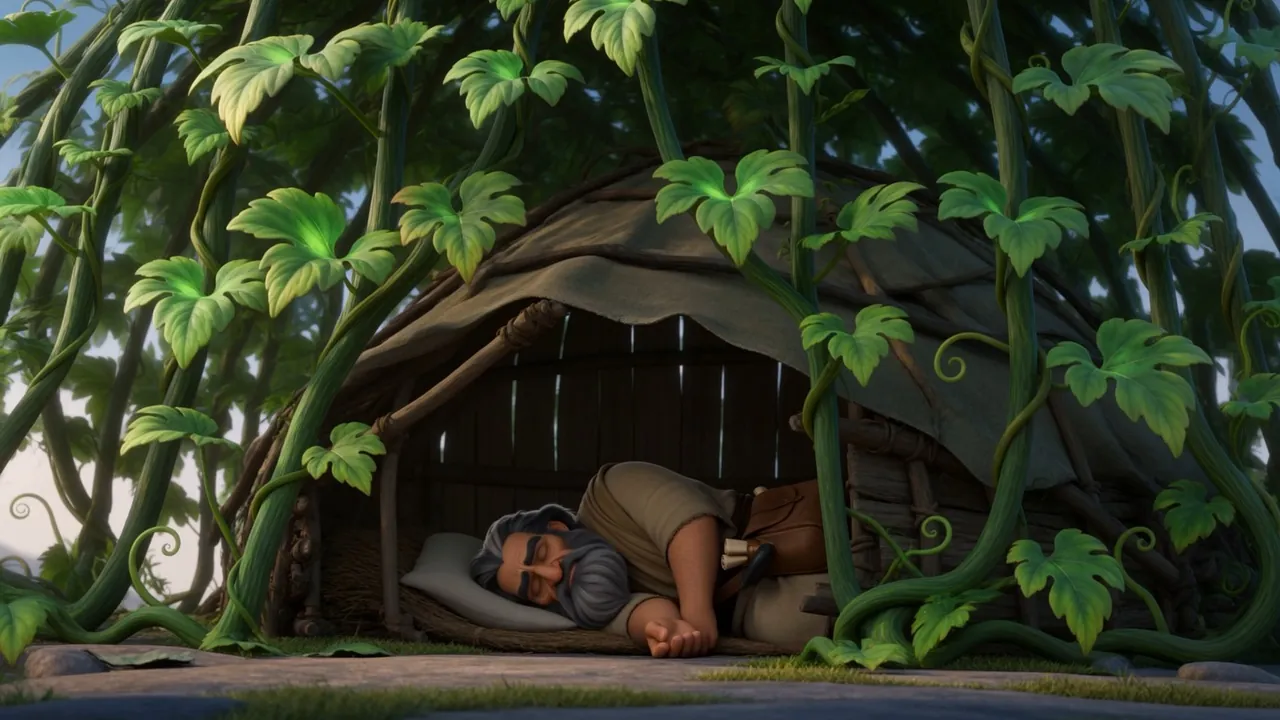
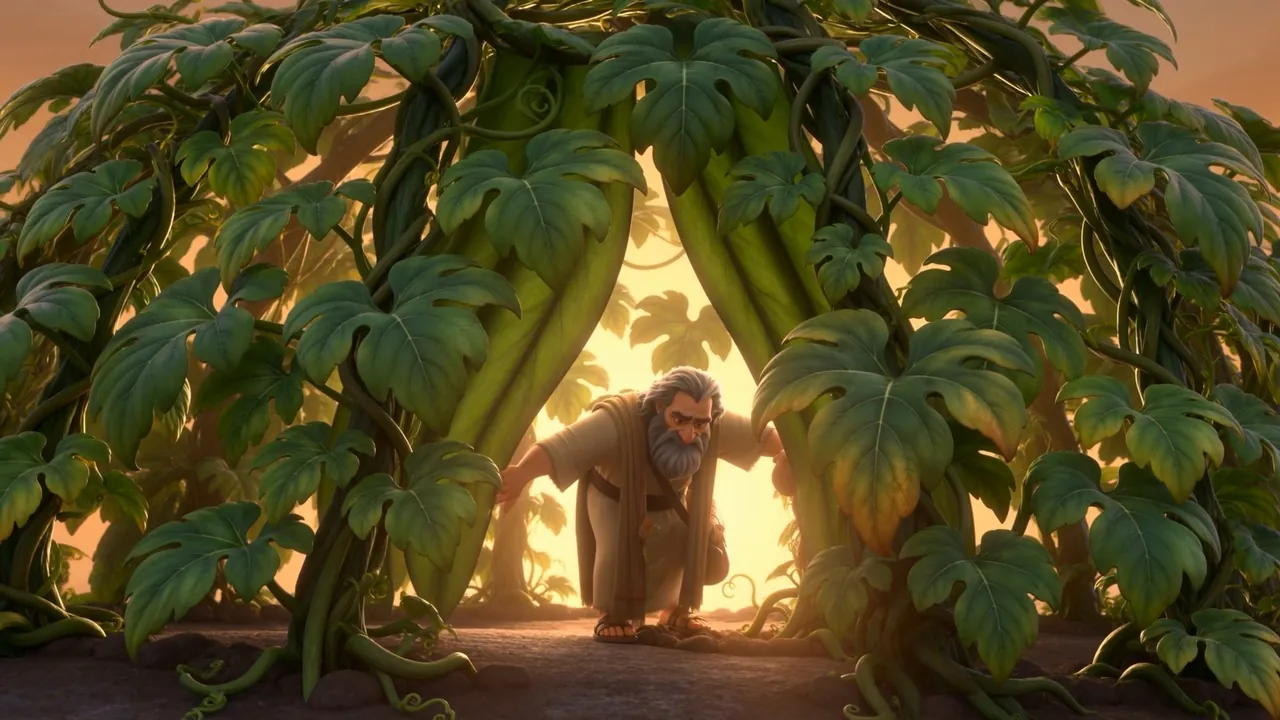
He had already built himself a little booth out there — sticks and cloth, the kind of thing you throw up for a few nights — and now the vine covers the whole of it. He sleeps under it with his hand tucked under his cheek. He is, remember, still waiting for a city of a hundred and twenty thousand people to be destroyed, and he is sleeping very comfortably. Jonah 4 : 5


And then, at dawn, the sentence this book will be remembered for: God prepared a worm. Not an army, not a storm, not a fish this time. One small pink worm arrives at the base of the stem, looks up at it for a second — and it has a face, and the face is not unkind — and then gets to work. Jonah 4 : 7
God prepared a worm at dawn the next day.


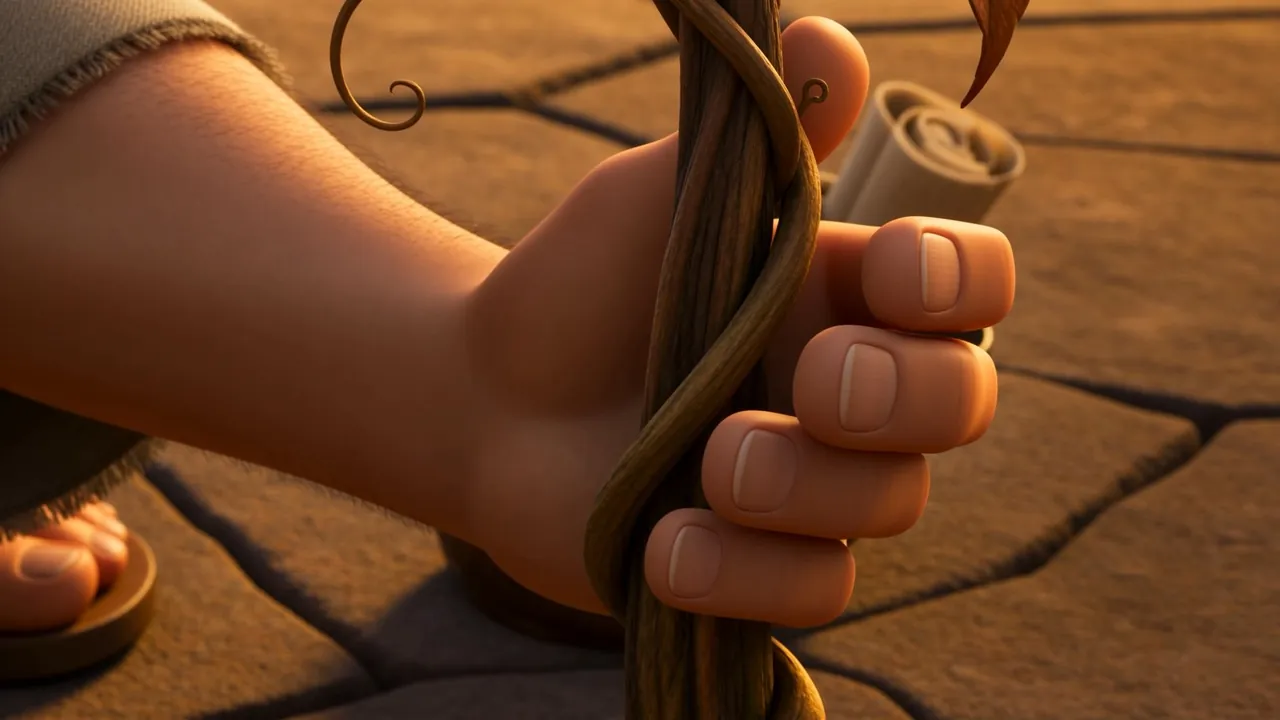
It does not take long. The tendril that had wound itself round his staff while he slept goes slack. The green drains out. And by the time the sun is properly up the whole enormous thing has gone the color of ash, leaf by leaf, over a man who is still asleep underneath it and has no idea. Jonah 4 : 7


He wakes into a gray cage. Dead leaves are falling on his shoulders and catching in his beard, and the whole shelter has turned to gray rope over his head. And the look on his face is real grief — the genuine article, for a plant that was not there two days ago and that he had nothing whatever to do with. Jonah 4 : 8
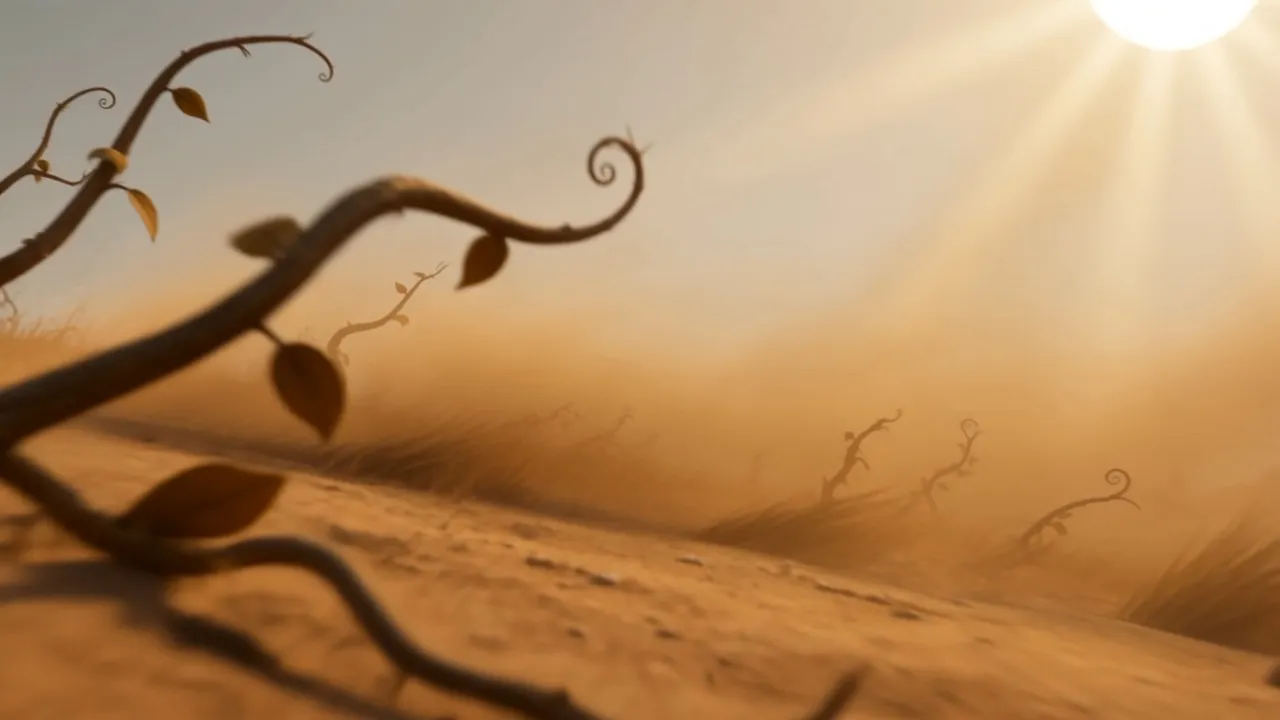

Then the wind. God prepared a sultry east wind — the scorching one that comes off the desert and takes the moisture out of everything, and it comes across the flat ground driving sand through the dead sticks of what used to be his shade. There is nowhere to go. He has built his whole position out here on a plant. Jonah 4 : 8


And the sun beats on his head until he faints, and he asks in himself to die, and says it is better for me to die than to live — which is the second time he has said it in one chapter. He would genuinely rather be dead than watch his enemies be forgiven. The book does not soften this and does not apologize for it. Jonah 4 : 8
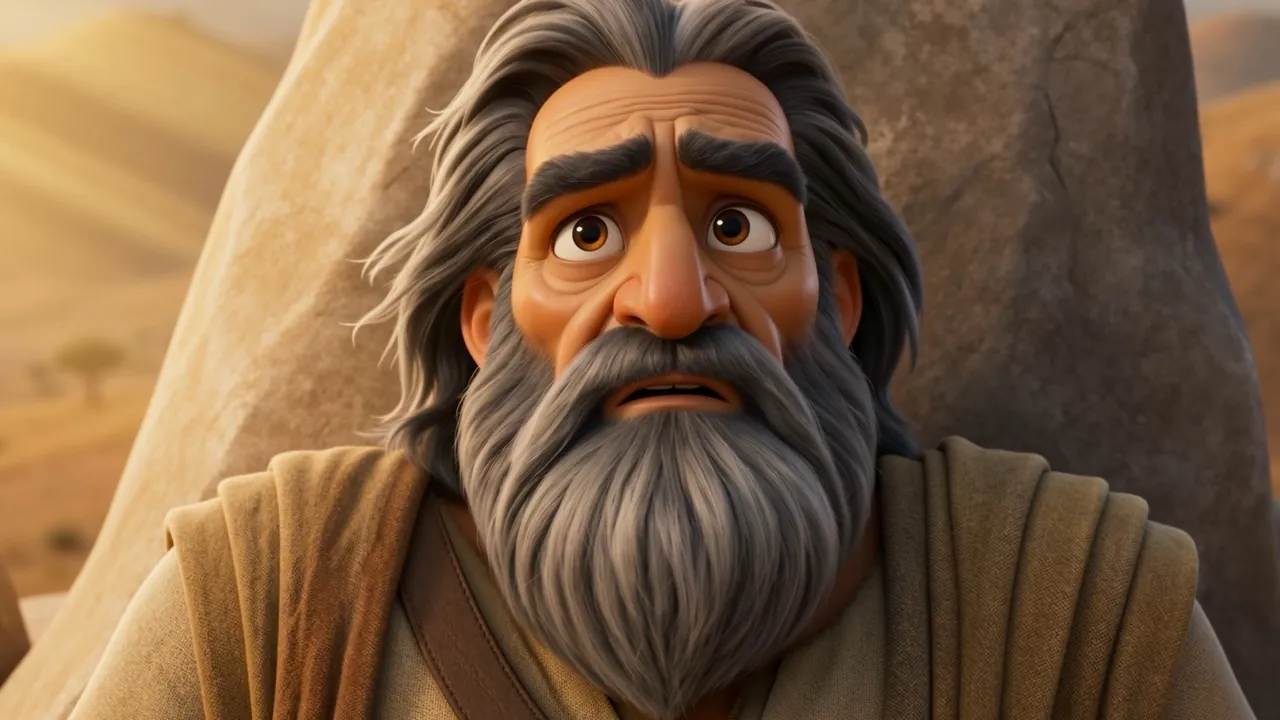
Is it right for you to be angry about the vine? And Jonah, sunburnt, wrecked and beyond caring what he sounds like, says: it is right for me to be angry, even to death. Over a plant. He has just been shown, in about thirty hours, exactly how it feels to lose something you did not make and did not deserve and had grown very attached to. Jonah 4 : 9
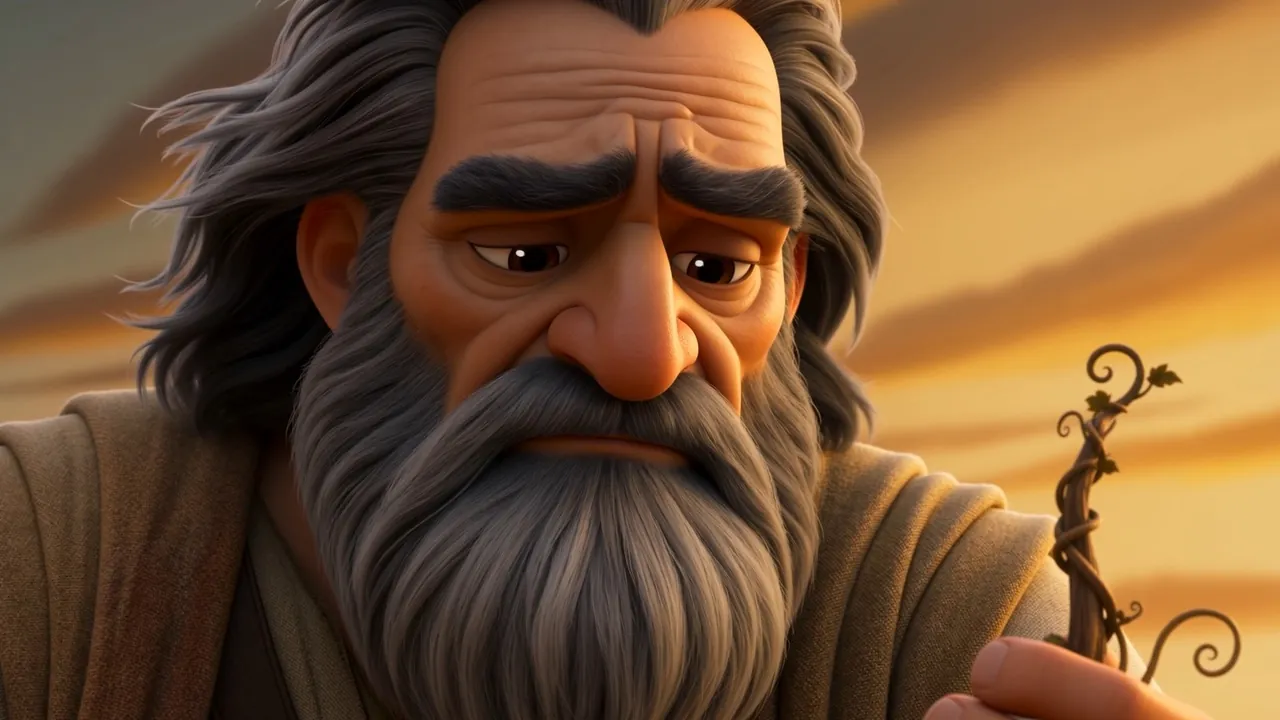
You have been concerned for the vine, which you didn't work for or make grow, which came up in a night and perished in a night. Shouldn't I be concerned for Nineveh — that great city, with more than a hundred and twenty thousand people in it who can't tell their right hand from their left — and also much livestock? And that is the end. Jonah never answers. Jonah 4 : 10–11
Interlude · Your turn
The book ends on a question. Jonah never answers it.
So it is still open — and it lands on whoever is reading.
After the story
And God prepared a worm.
Jonah is one of only two books in the Bible that end on a question — Nahum, also about Nineveh, is the other — and this one is aimed squarely at the reader. God does not win the argument in chapter four; he sets up a demonstration and then asks whether it landed. You cared about the vine — which you did not plant, did not water, did not deserve, and had for about a day and a half. Should I not care about a city of a hundred and twenty thousand people who cannot tell their right hand from their left? And then, with an almost audible shrug: and also much livestock. Jonah never replies. He is left sunburnt on a rock with a dead vine wrapped round his staff, and the last word in the book belongs to the question rather than to him — which means the person it is actually being asked of is whoever happens to be reading.
Voices of the desert · hover or tap to turn
Jonah
"I am right to be angry, even to death."
— Jonah 4:9
The Vine
"Yahweh God prepared a vine… that it might be a shade over his head."
— Jonah 4:6
The Worm
"God prepared a worm at dawn the next day, and it chewed on the vine, so that it withered."
— Jonah 4:7The Book of Jonah
How closely were you watching?
1. Why does Jonah say he ran in the first place?
Jonah 4:2 — he ran because he was afraid it would work, and it did.
2. What does God prepare to destroy the vine?
Jonah 4:7. One worm, at dawn. That is the whole plan.
3. How does Jonah answer “is it right for you to be angry about the vine?”
Jonah 4:9 — the second time in one chapter he says he would rather be dead.
4. How does the book of Jonah end?
Jonah 4:11. One of only two books in scripture that close on a question mark (Nahum is the other) — and Jonah never replies to it.
What this story teaches
He ran because he knew God was merciful.
Jonah 4:2 is the confession the whole book was hiding. He never doubted God would forgive Nineveh — that was precisely the problem.
"I knew that you are a gracious God, and merciful, slow to anger…" Jonah 4:2The lesson was a plant, not a lecture.
He is not argued with. He is given something to love for a day and a half, and then it is taken, so that he can feel the shape of the thing he has been refusing to feel.
"You have been concerned for the vine, for which you have not labored, neither made it grow…" Jonah 4:10The book ends on a question.
Jonah never answers, which means the question is not really being put to Jonah. Whoever is reading has to answer it instead.
"Shouldn’t I be concerned for Nineveh, that great city…?" Jonah 4:11Read the scripture itself. Jonah 4 · World English Bible
Jonah 4
1But it displeased Jonah exceedingly, and he was angry.
2He prayed to Yahweh, and said, “Please, Yahweh, wasn’t this what I said when I was still in my own country? Therefore I hurried to flee to Tarshish, for I knew that you are a gracious God, and merciful, slow to anger, and abundant in loving kindness, and you relent of doing harm.
3Therefore now, Yahweh, take, I beg you, my life from me; for it is better for me to die than to live.”
4Yahweh said, “Is it right for you to be angry?”
5Then Jonah went out of the city, and sat on the east side of the city, and there made himself a booth, and sat under it in the shade, until he might see what would become of the city.
6Yahweh God prepared a vine, and made it to come up over Jonah, that it might be a shade over his head, to deliver him from his discomfort. So Jonah was exceedingly glad because of the vine.
7But God prepared a worm at dawn the next day, and it chewed on the vine, so that it withered.
8When the sun arose, God prepared a sultry east wind; and the sun beat on Jonah’s head, so that he fainted, and requested for himself that he might die, and said, “It is better for me to die than to live.”
9God said to Jonah, “Is it right for you to be angry about the vine?” He said, “I am right to be angry, even to death.”
10Yahweh said, “You have been concerned for the vine, for which you have not labored, neither made it grow; which came up in a night, and perished in a night.
11Shouldn’t I be concerned for Nineveh, that great city, in which are more than one hundred twenty thousand persons who can’t discern between their right hand and their left hand; and also much livestock?”
World English Bible (WEB) — a public-domain modern English translation. Read it freely, share it freely.
The Book of Jonah — animated film 30% in production
These scenes are real frames from the film.
Help us finish it — and every story like it — free for the world.