The Book of Job · Part Three
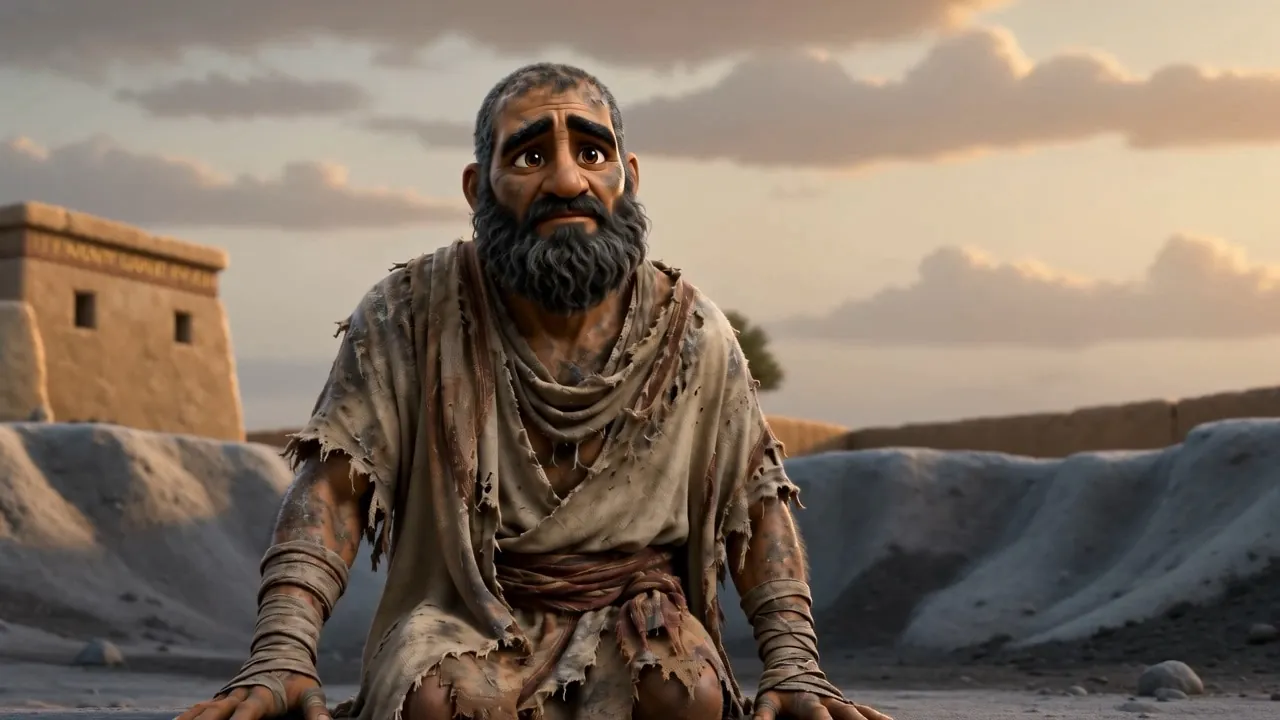
Now my eyesees you.
God turns up in a storm and answers thirty-seven chapters of questions with about seventy of his own — none of them about suffering. He talks about rain on empty ground, an ostrich outrunning a horse, and a sea monster. Every scene below is a real frame from our animated film.
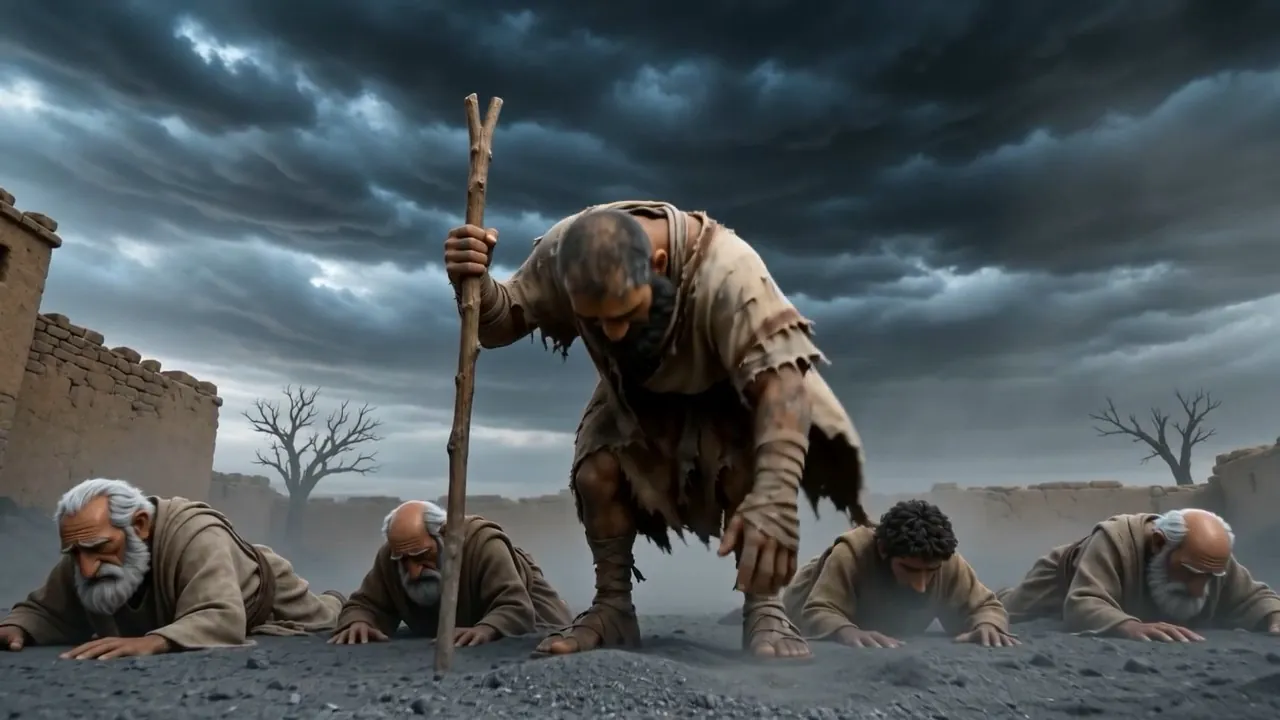


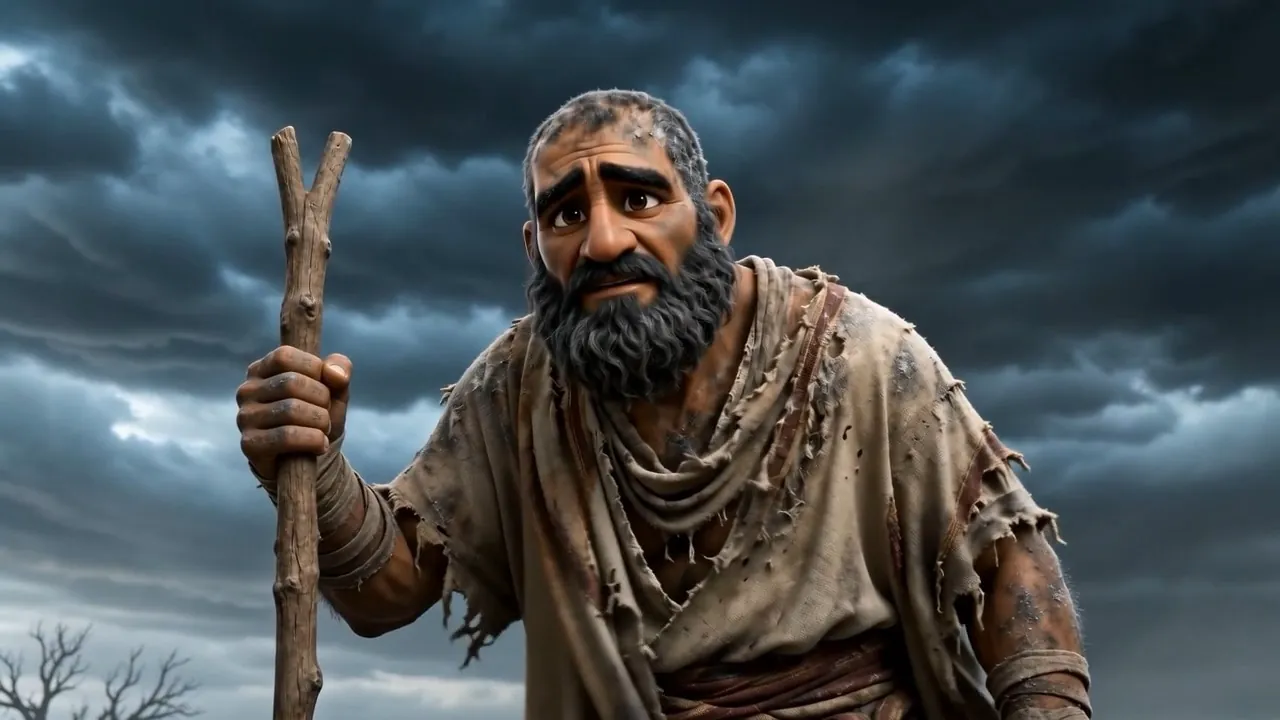




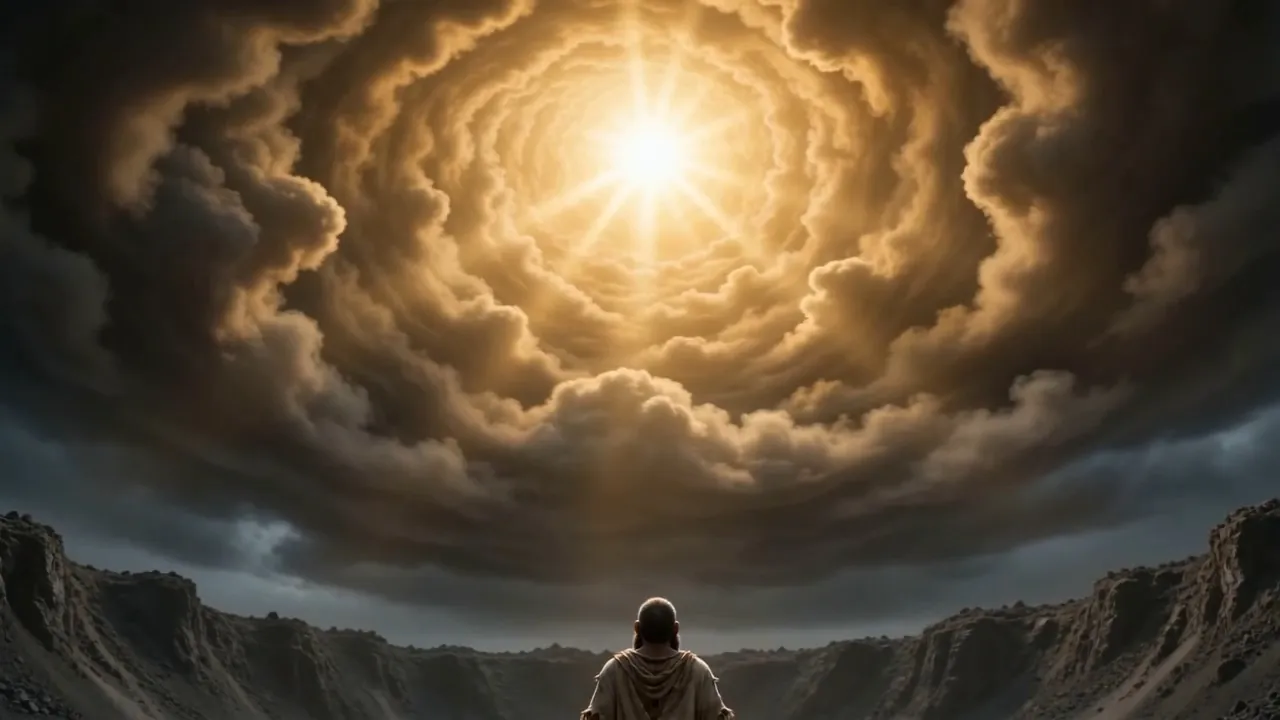
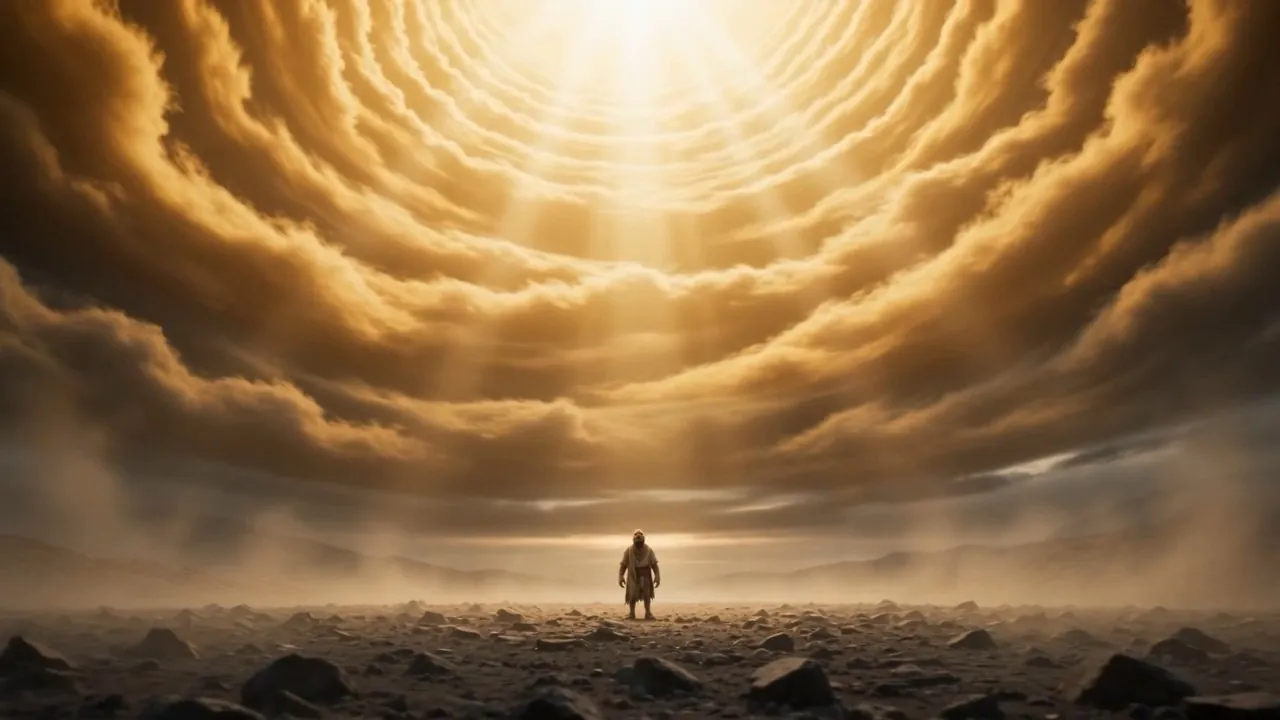
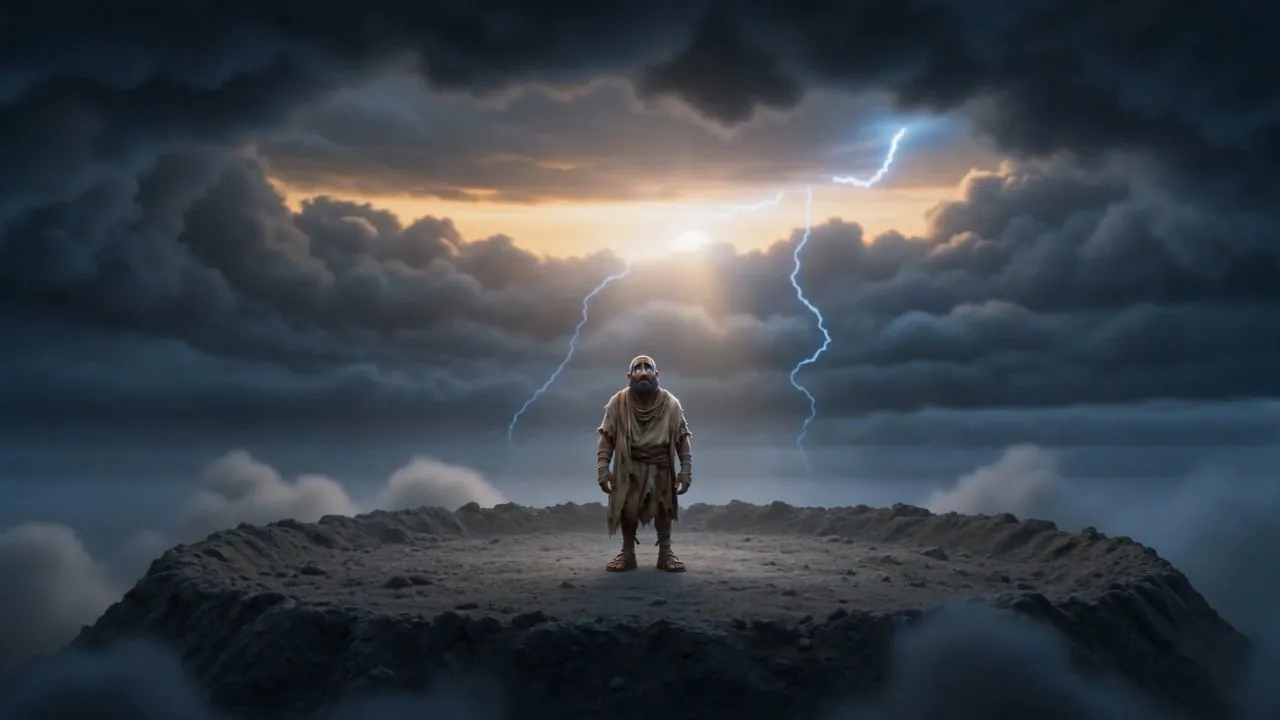
Thirty-seven chapters of argument, and God does not answer a single question in any of them. What arrives instead is weather. Then Yahweh answered Job out of the whirlwind, and said, “Who is this who darkens counsel by words without knowledge? Brace yourself like a man, for I will question you, then you answer me!” God turns up and starts asking the questions. Job 38 : 1–3
Then Yahweh answered Job out of the whirlwind.




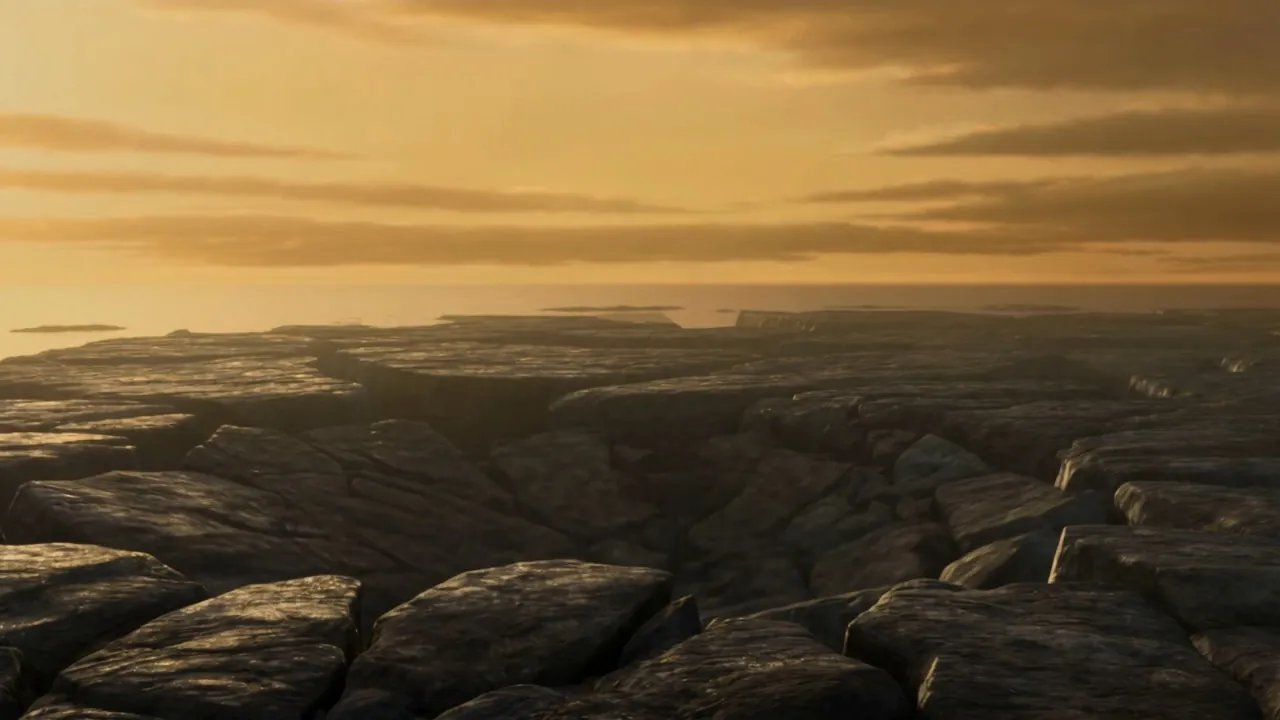
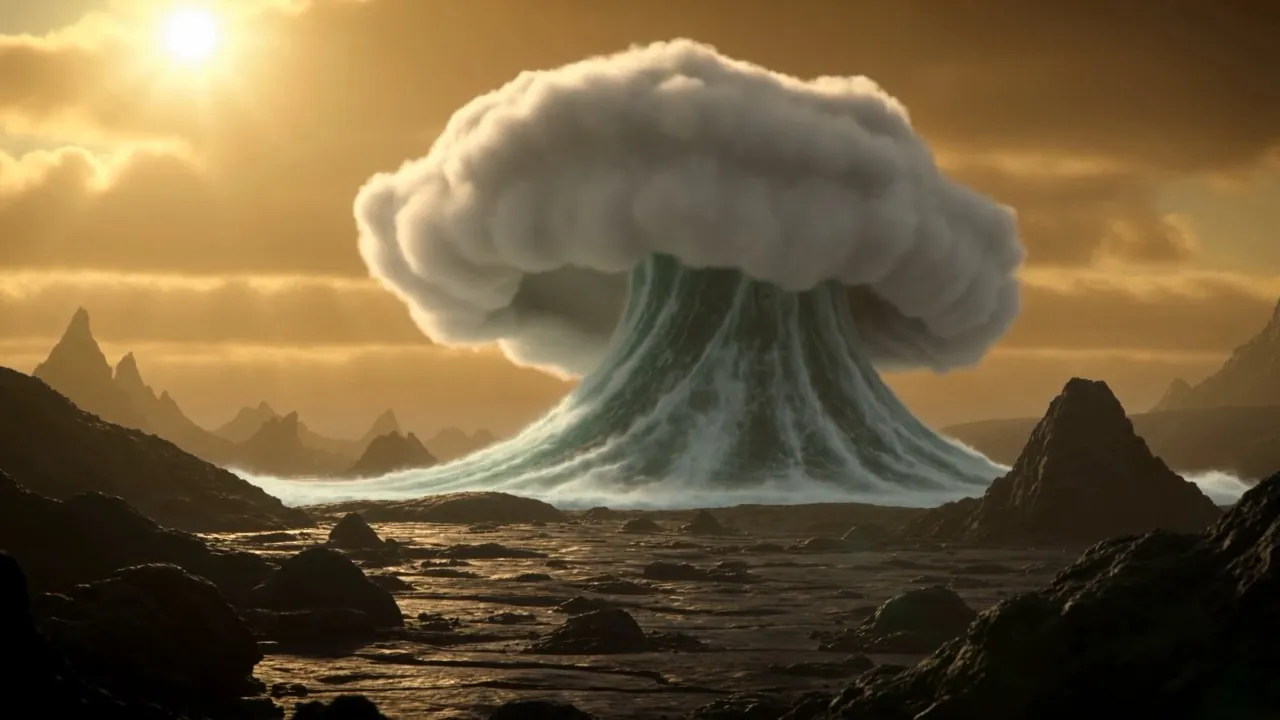


“Where were you when I laid the foundations of the earth? Declare, if you have understanding… when the morning stars sang together, and all the sons of God shouted for joy? Or who shut up the sea with doors, when it broke out of the womb… and said, ‘Here you may come, but no further. Here your proud waves shall be stayed?’” Job 38 : 4–11
Where were you when I laid the foundations?





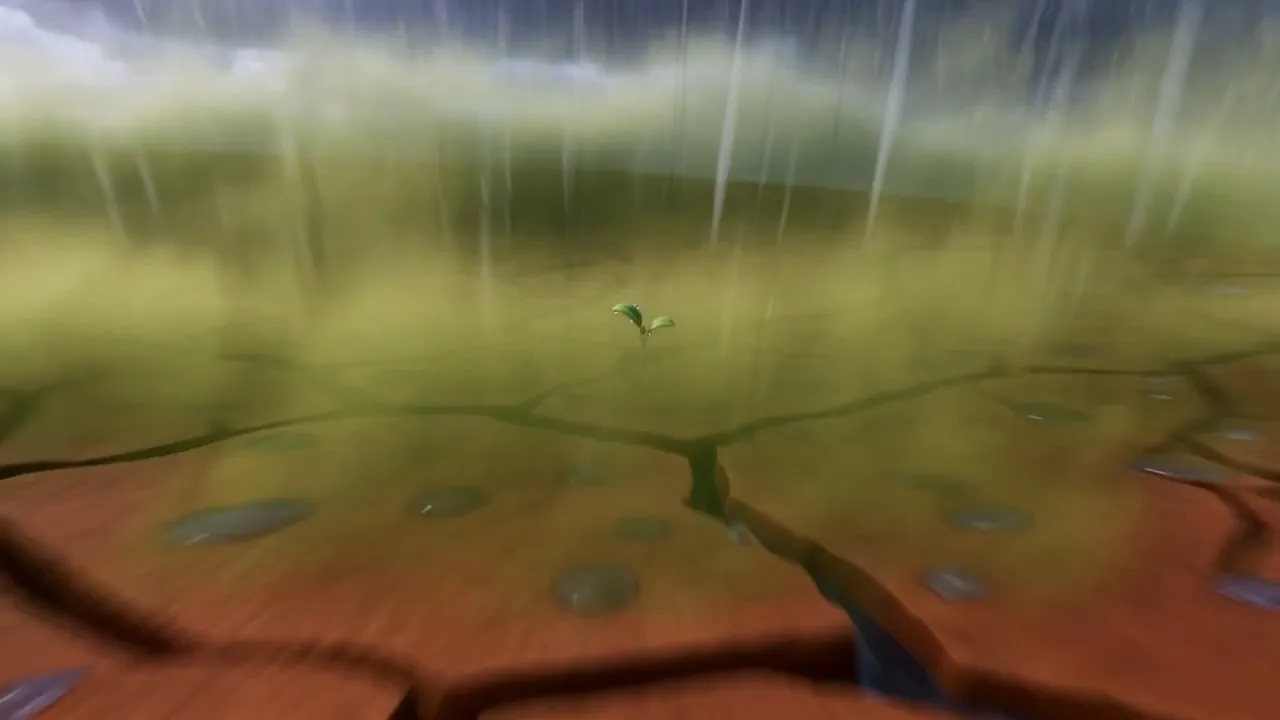

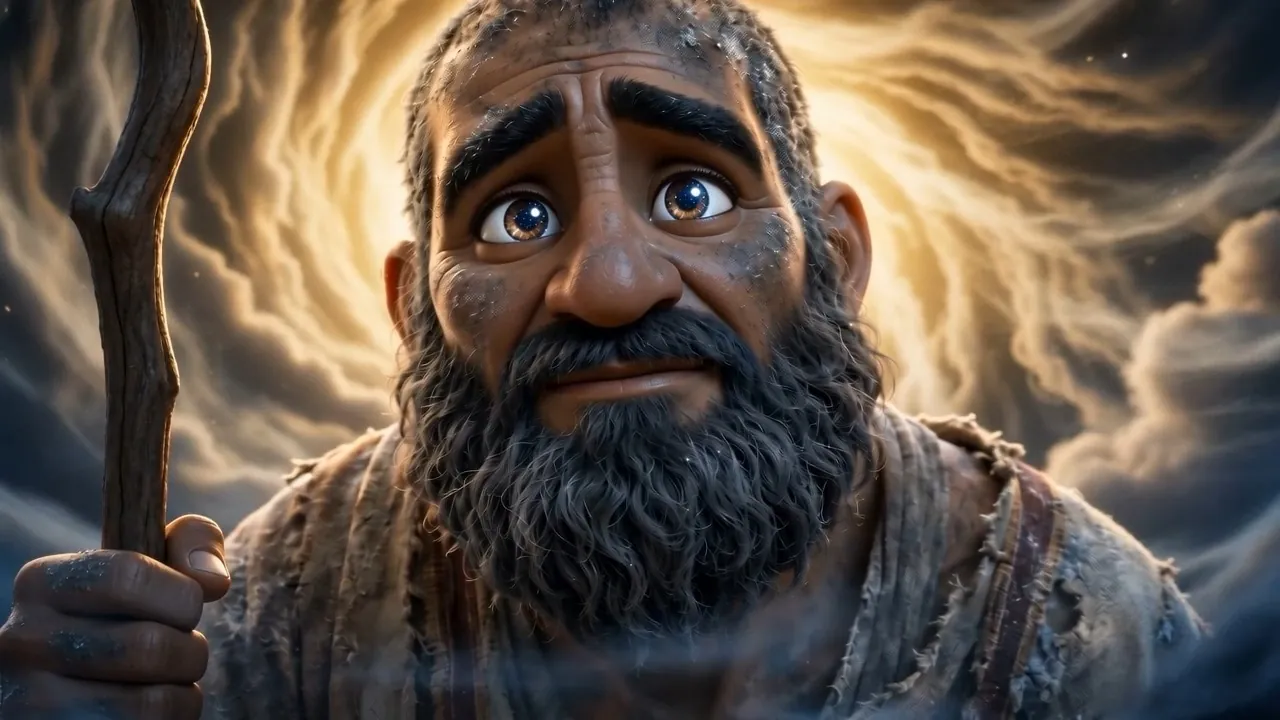
“Have you commanded the morning in your days, and caused the dawn to know its place… to cause it to rain on a land where no man is, on the wilderness, in which there is no man, to satisfy the waste and desolate ground, and to cause the tender grass to grow?” Rain that falls where nobody lives, on ground nobody owns, because it is good. Then: “Can you bind the cluster of the Pleiades, or loosen the cords of Orion?” Job 38 : 12–31


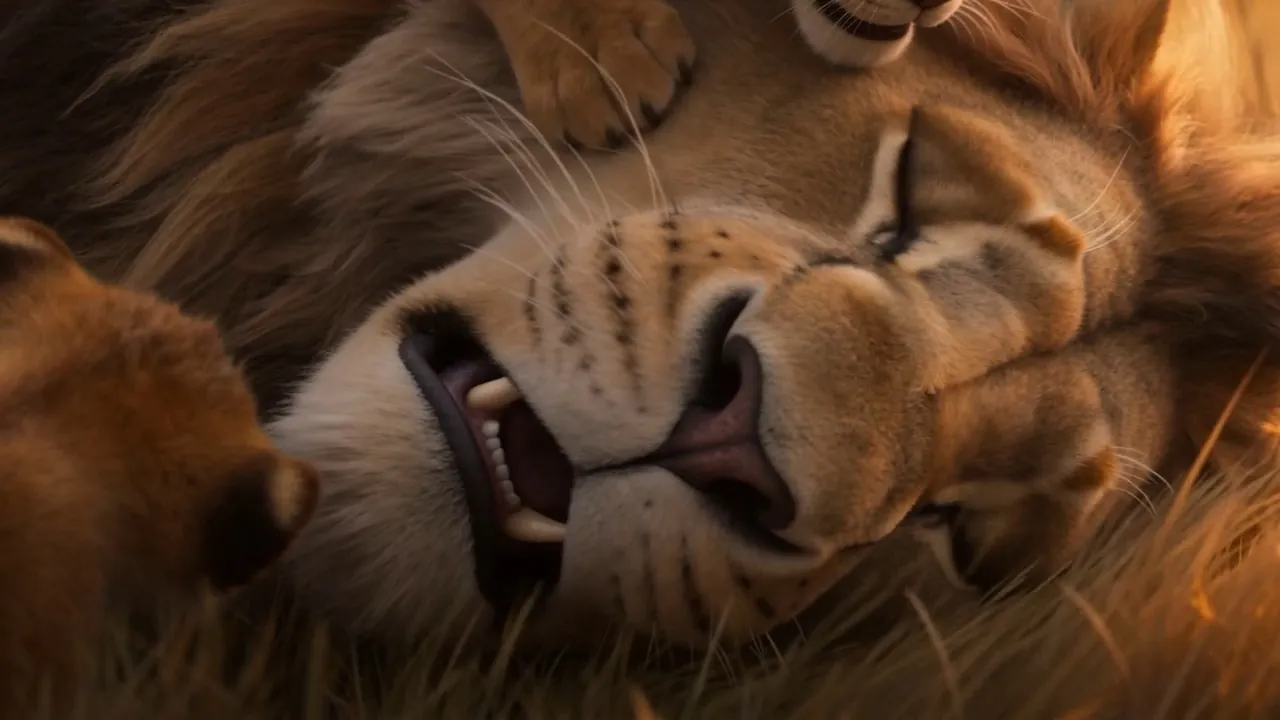


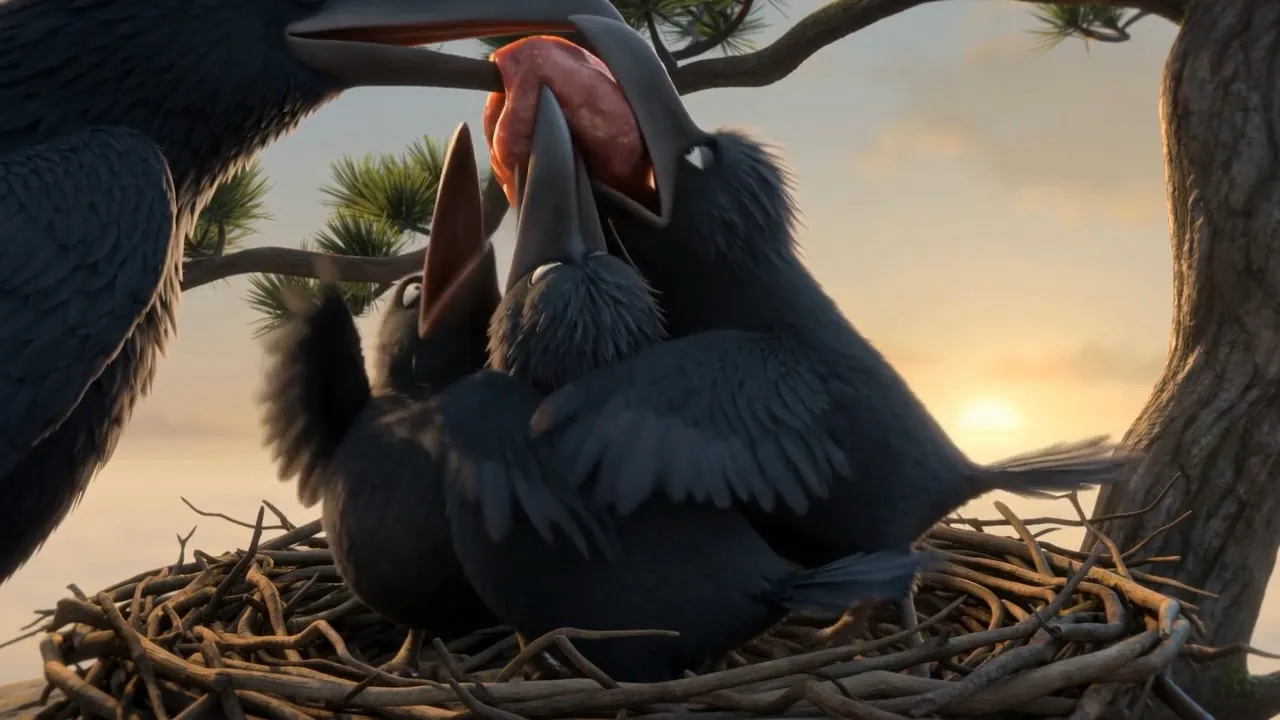
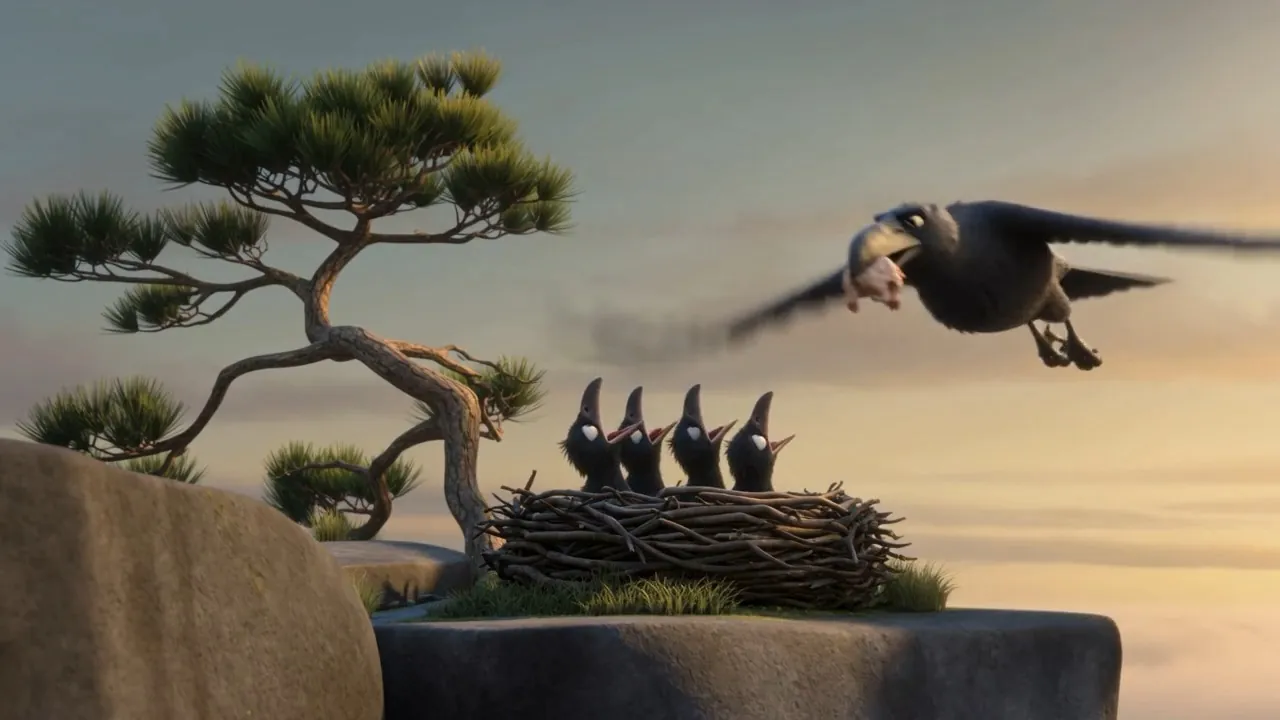
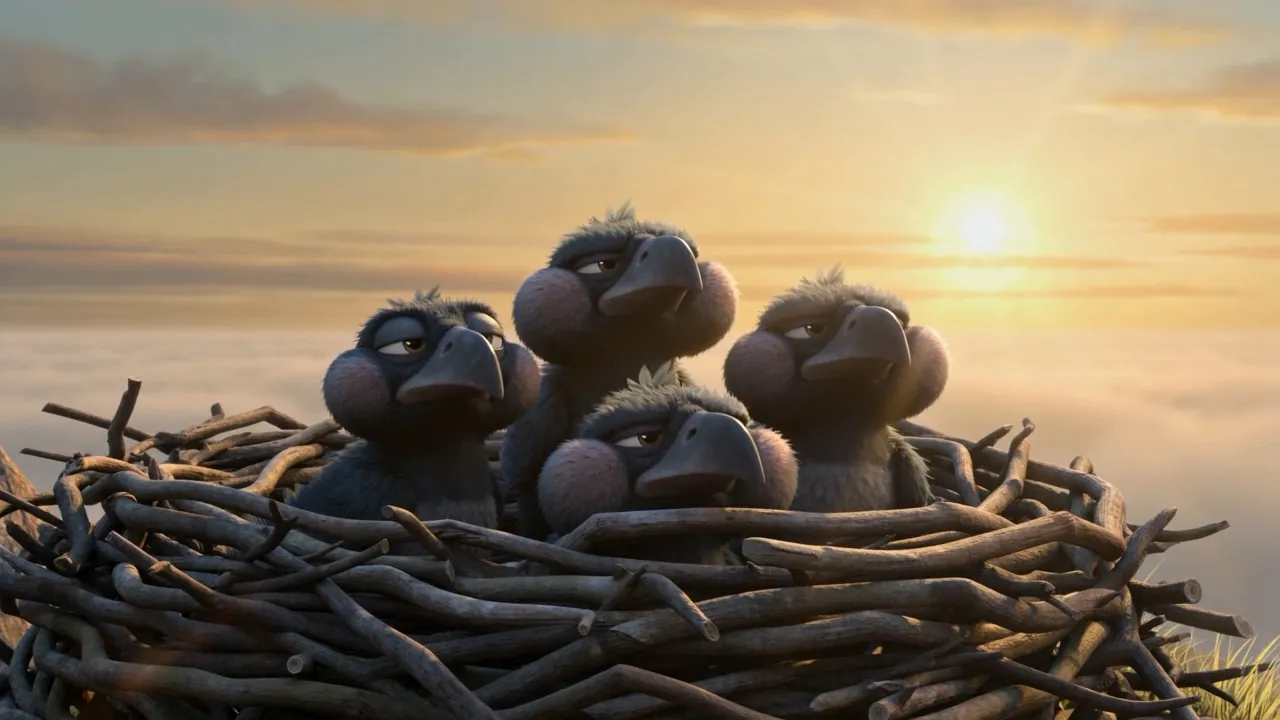
“Can you hunt the prey for the lioness, or satisfy the appetite of the young lions… Who provides for the raven his prey, when his young ones cry to God, and wander for lack of food?” Notice what this is not. It is not a lecture about power. It is a father showing somebody round a house he built, animal by animal, and most of the animals are being fed. Job 38 : 39–41
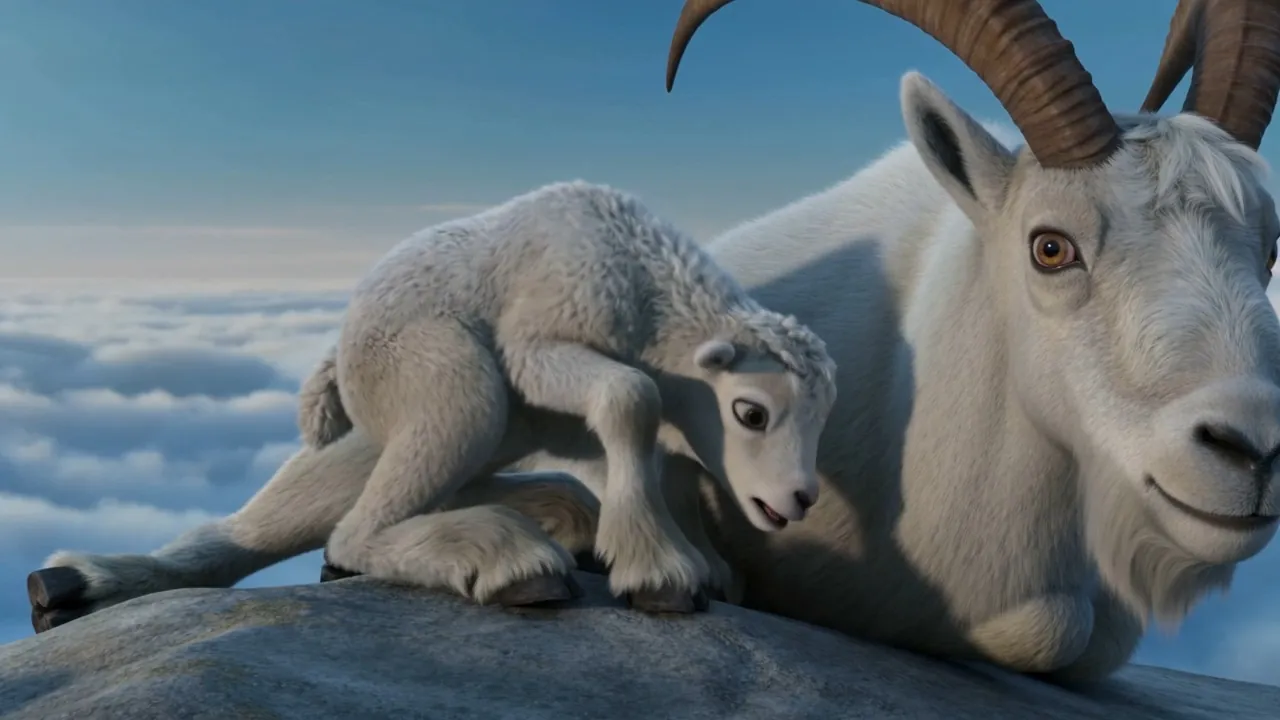
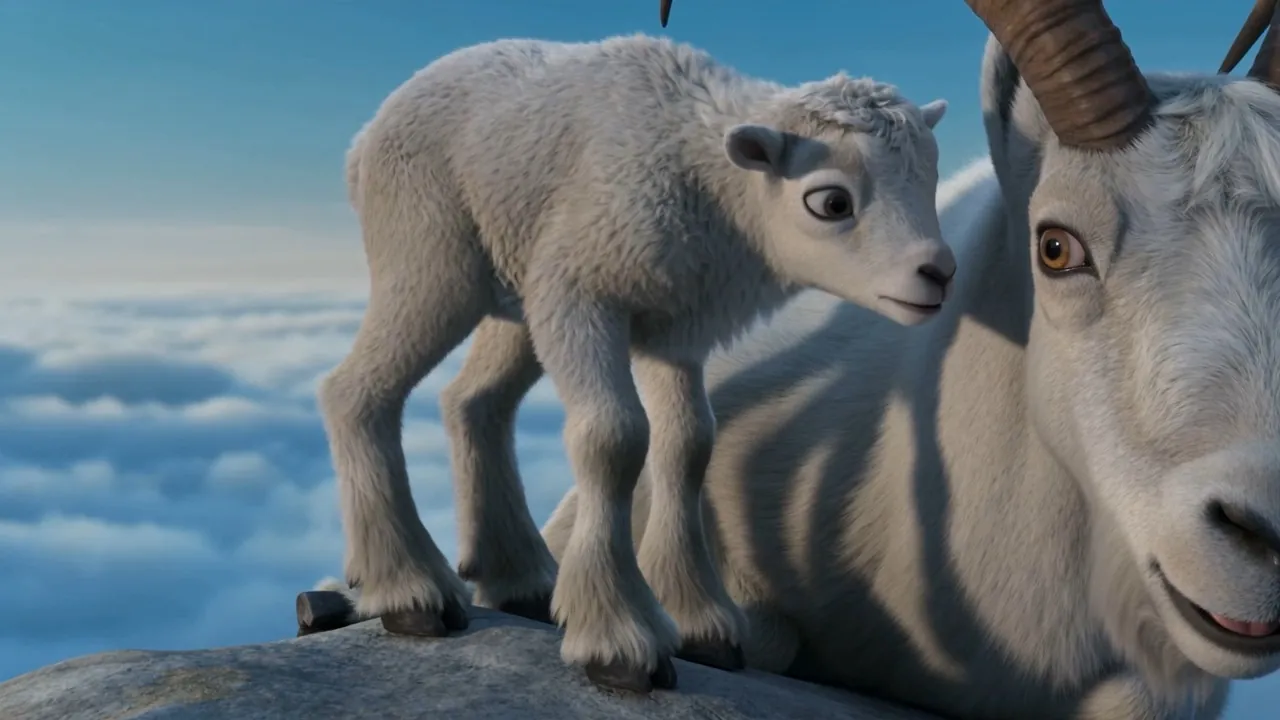
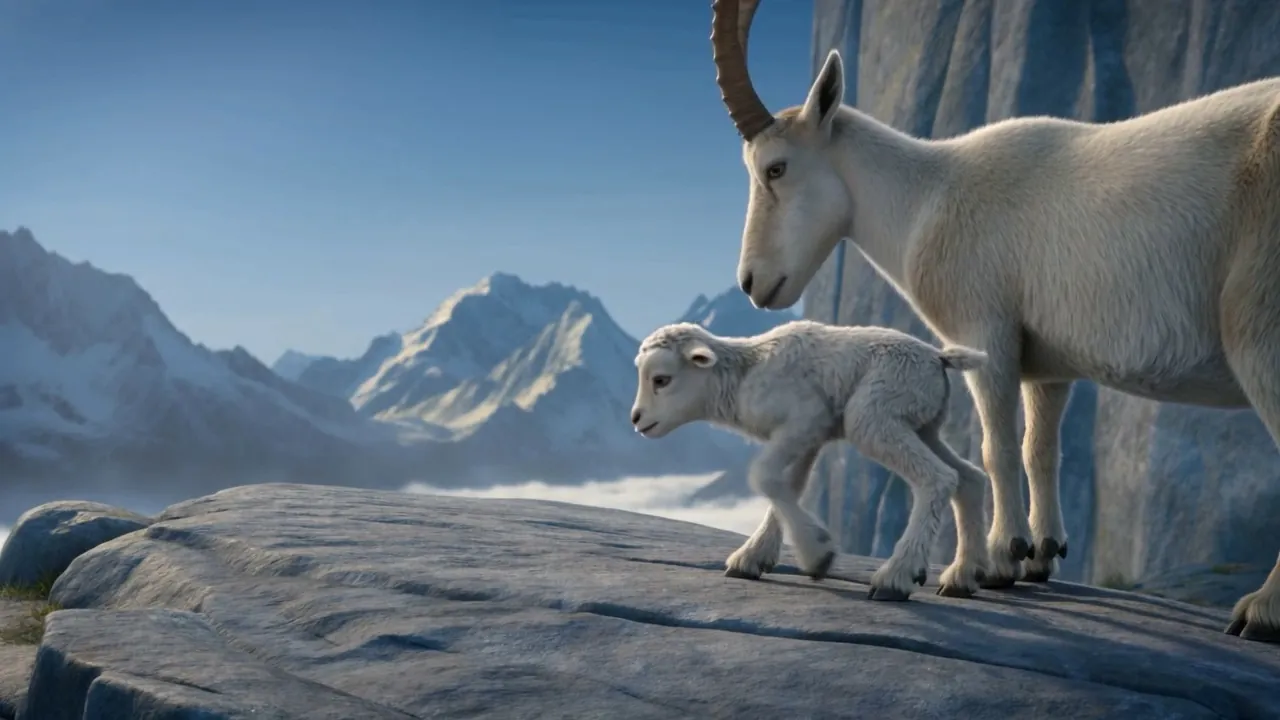



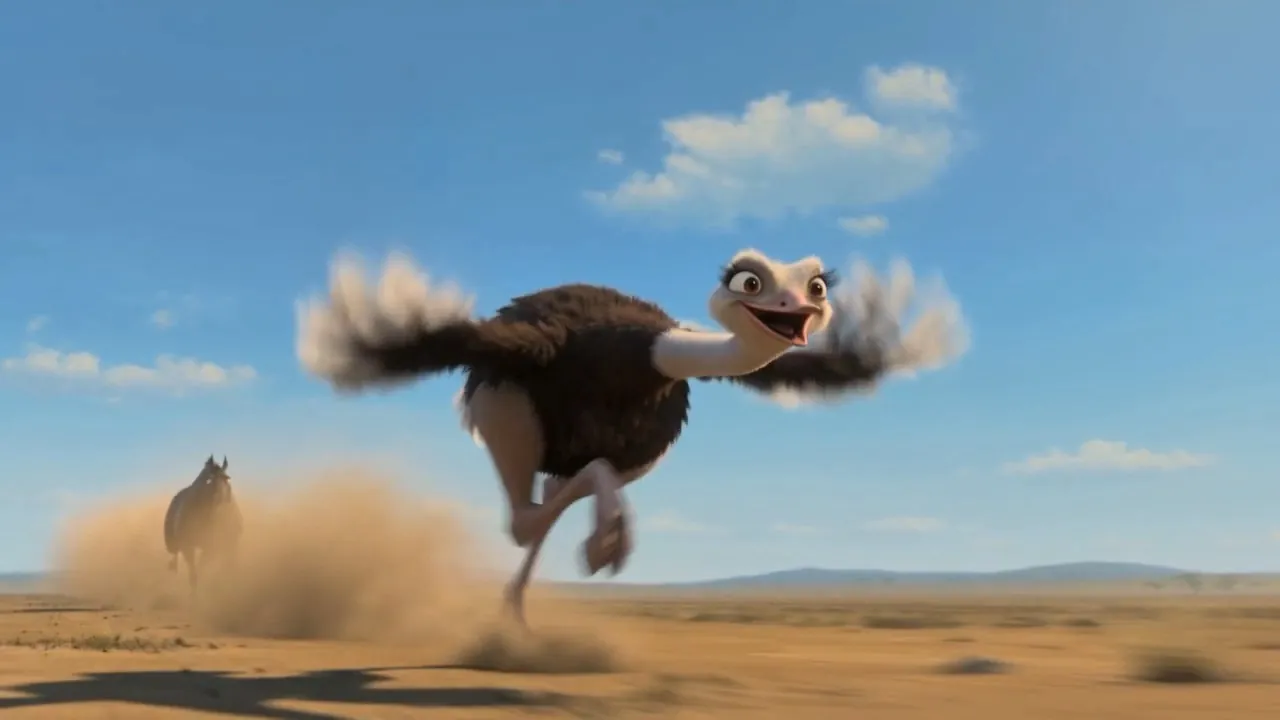


“Do you know the time when the mountain goats give birth?… Who has set the wild donkey free? Or who has loosened the bonds of the swift donkey?” And then the ostrich, whom God describes with open affection as not very bright and completely magnificent: “she deals harshly with her young ones… because God has deprived her of wisdom. When she lifts up herself on high, she scorns the horse and his rider.” Job 39 : 1–18





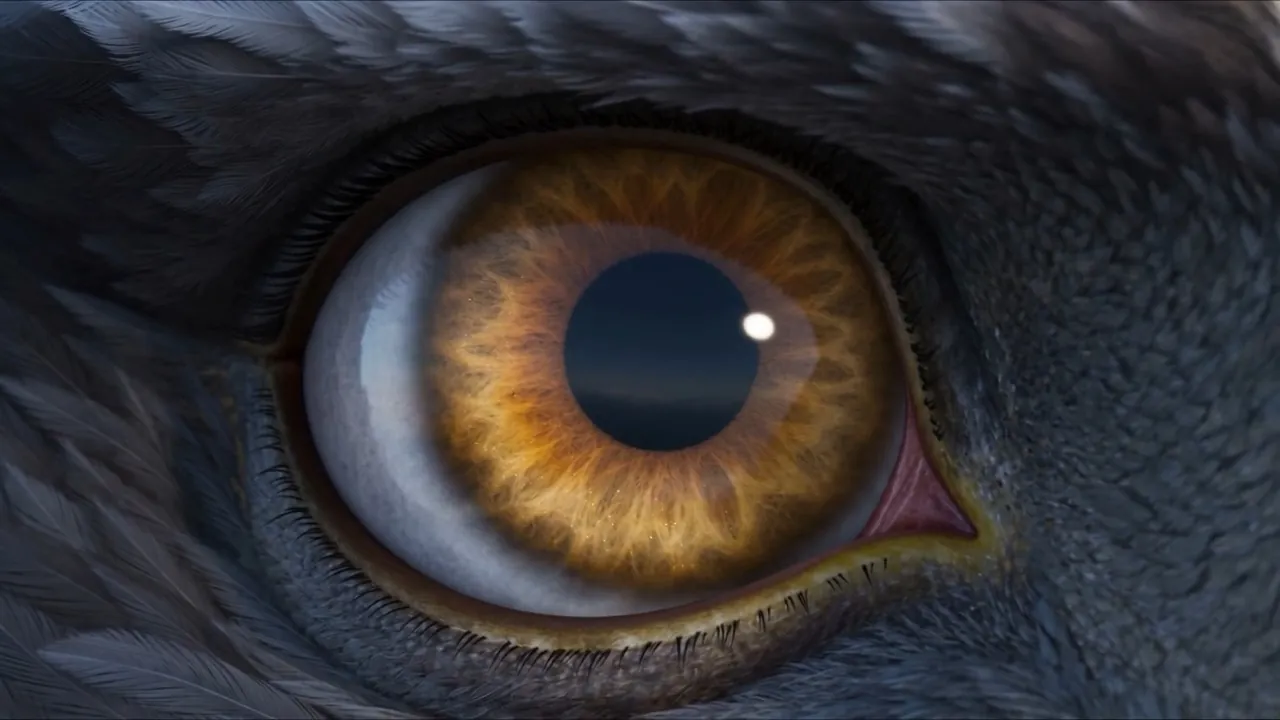


“Have you given the horse might? Have you clothed his neck with a quivering mane?… He paws in the valley, and rejoices in his strength… Is it by your wisdom that the hawk soars, and stretches her wings toward the south? Is it at your command that the eagle mounts up, and makes his nest on high?” Job 39 : 19–27
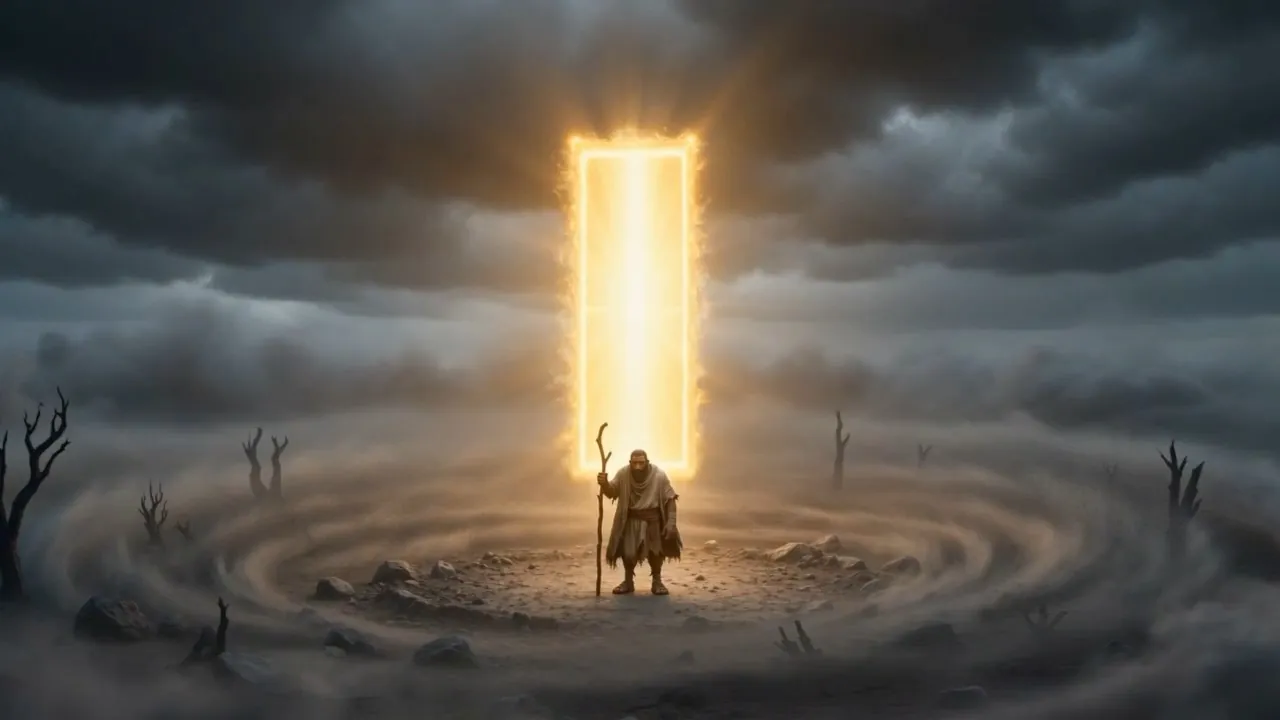
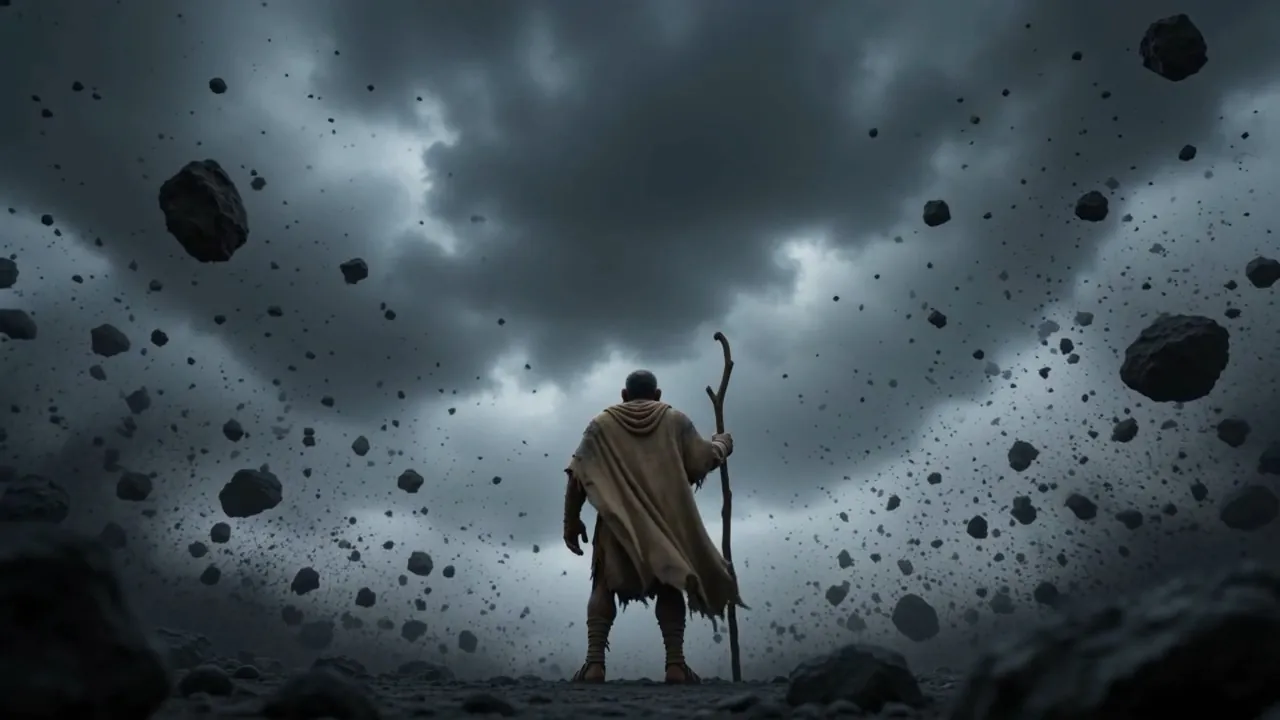
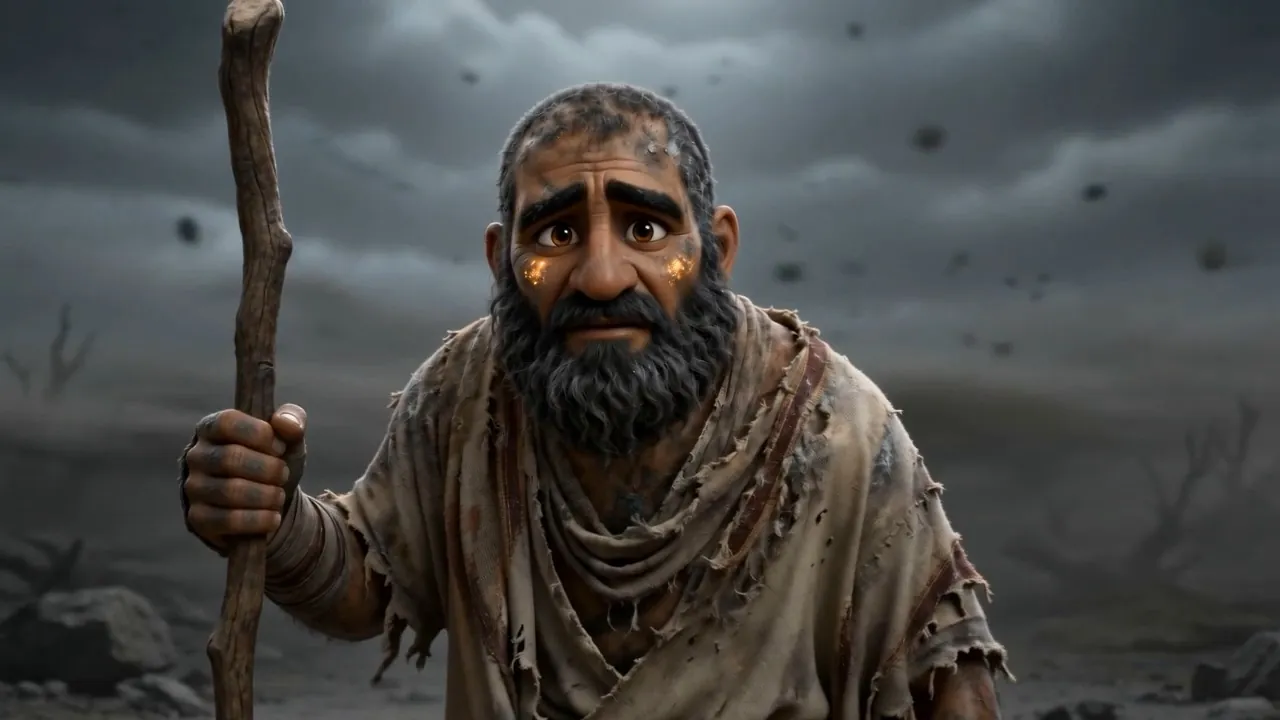
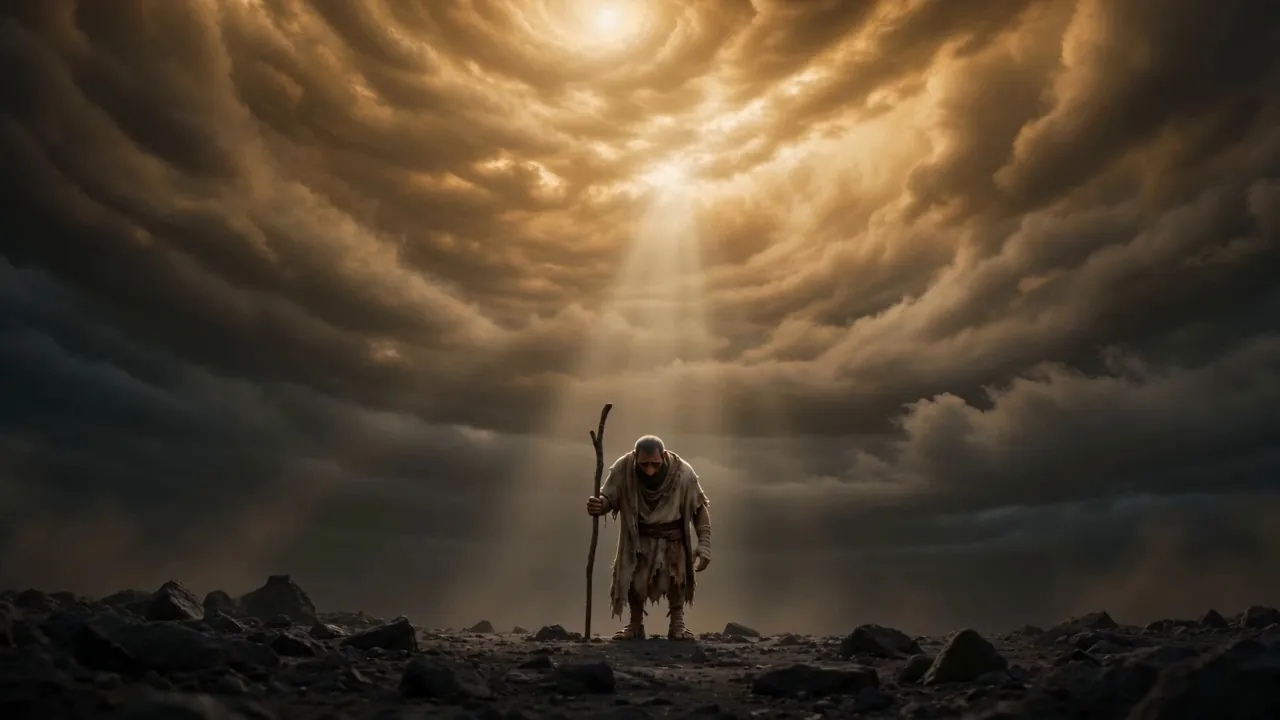
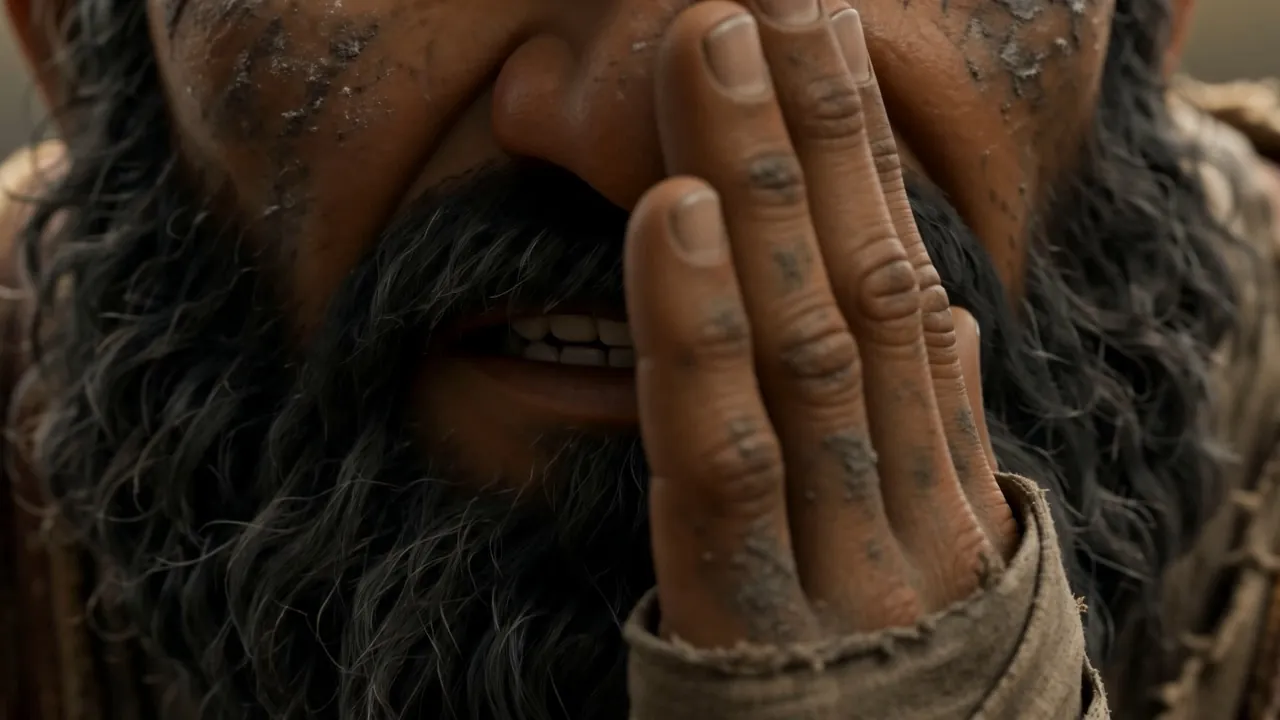
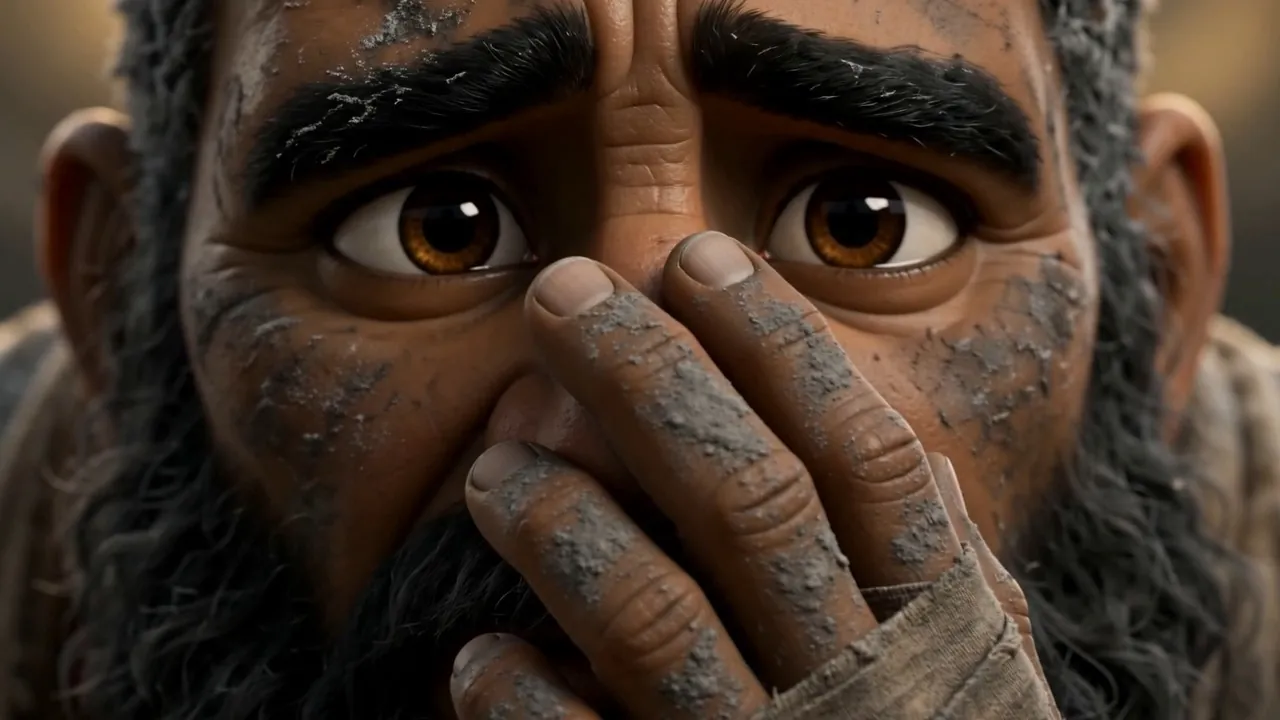

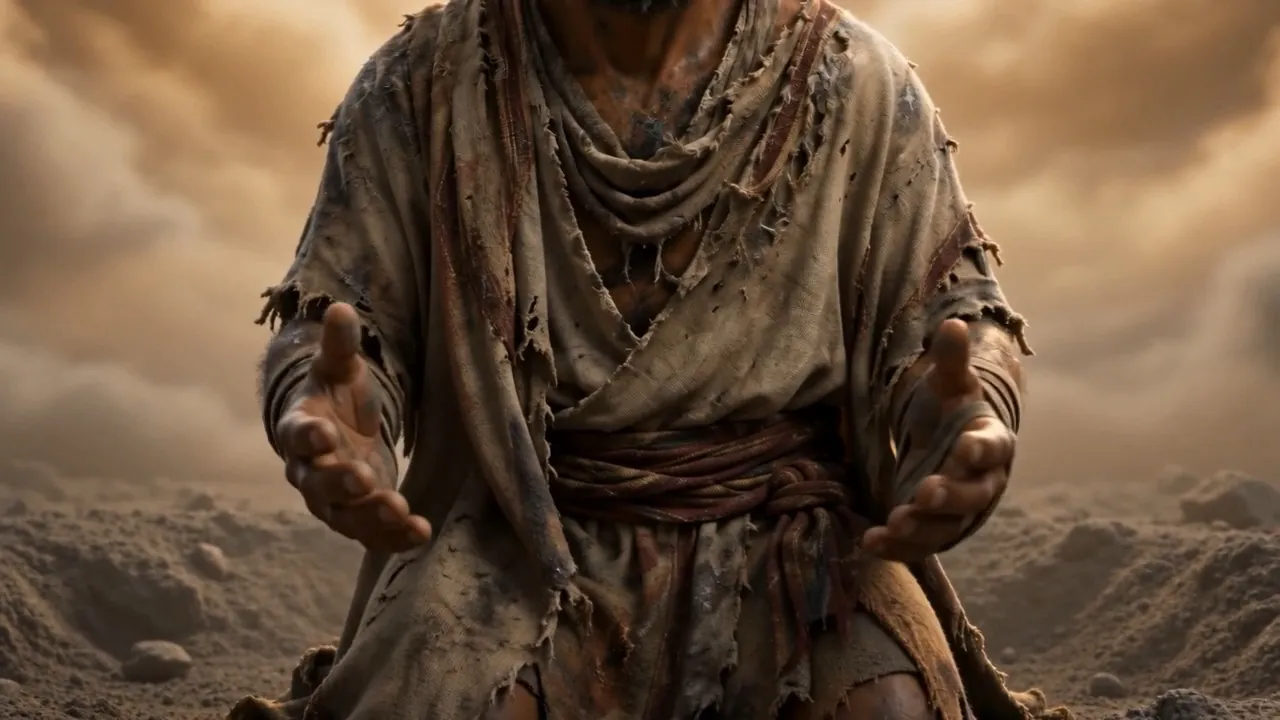
“Shall he who argues contend with the Almighty? He who argues with God, let him answer it.” And Job — who has demanded a hearing for thirty chapters and has every legal point on his side — gives the shortest speech in the book: “Behold, I am of small account. What shall I answer you? I lay my hand on my mouth. I have spoken once, and I will not answer; yes, twice, but I will proceed no further.” Job 40 : 1–5
I lay my hand on my mouth.
Interlude · Your turn
God is asking the questions now. How do you answer?
Job had every argument ready. This is what he did instead.
Press and hold — lay your hand over your mouth, and keep it there.

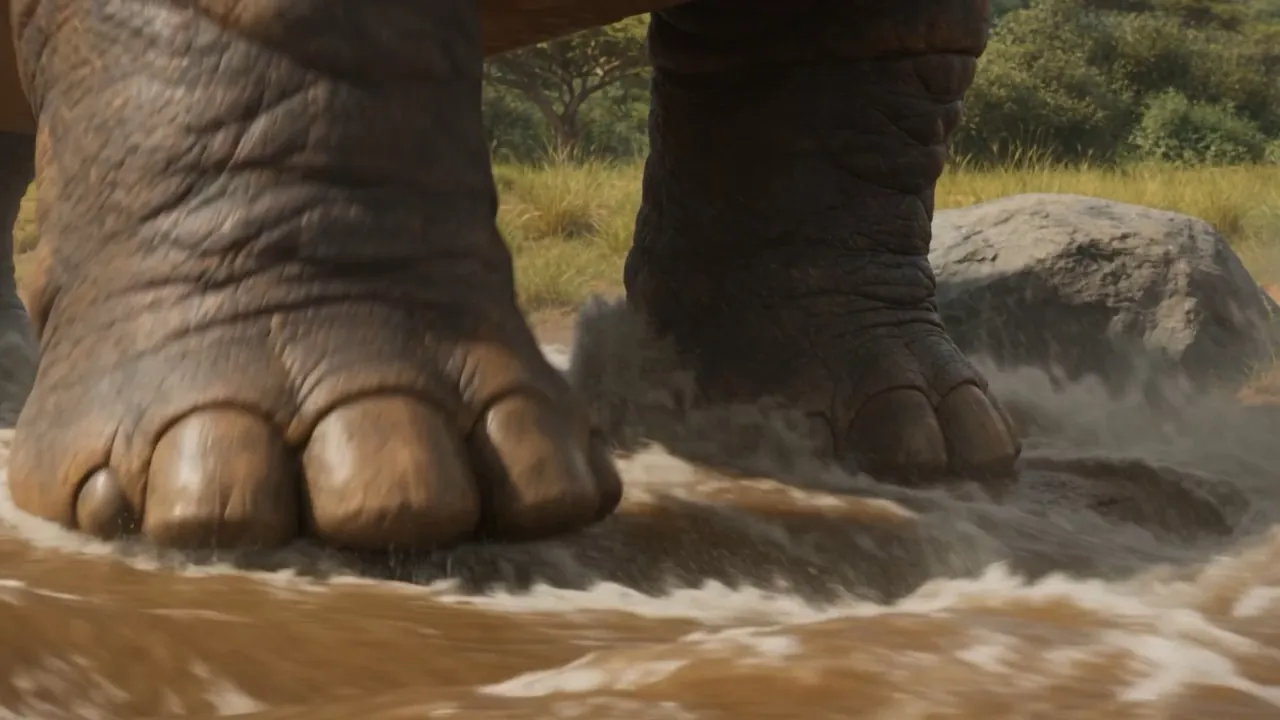


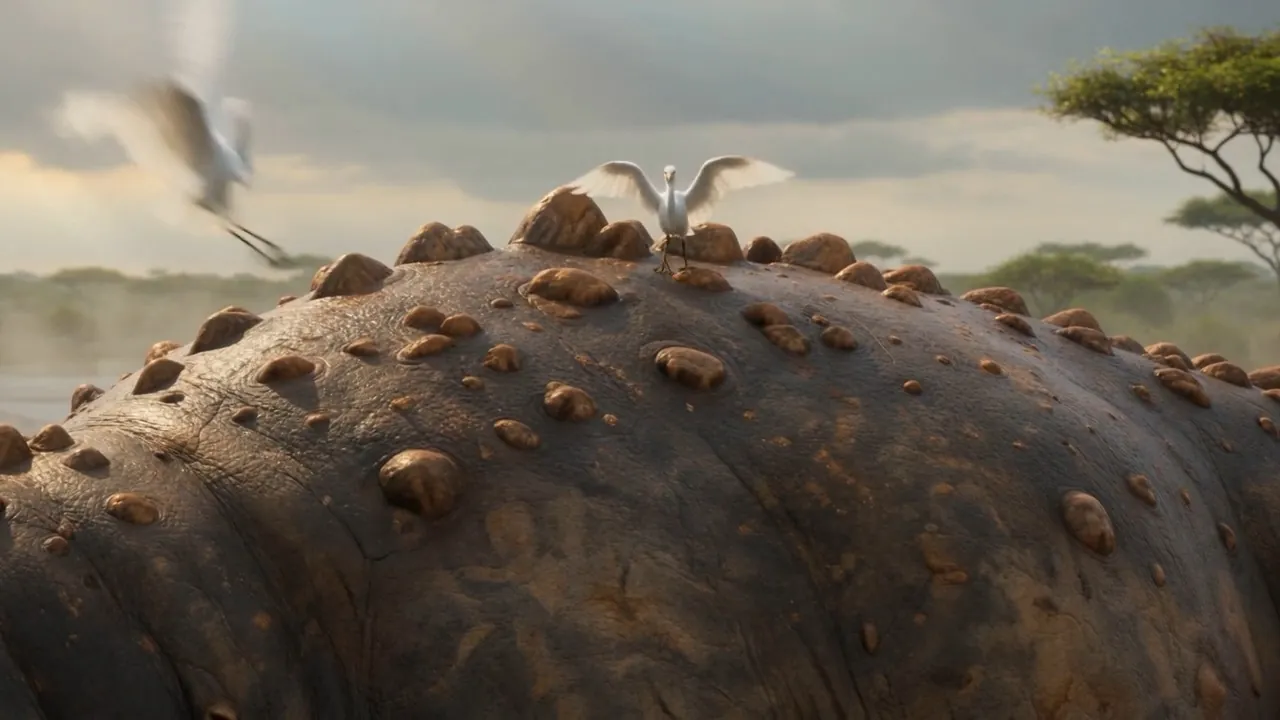
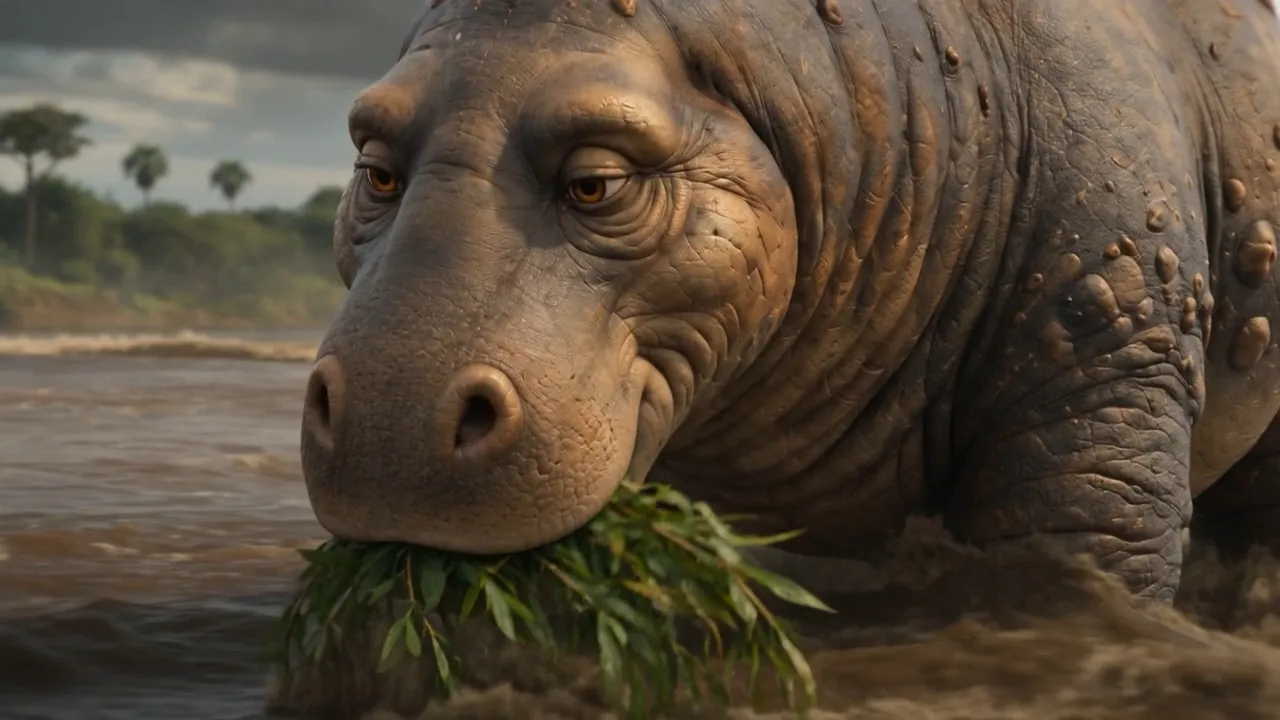
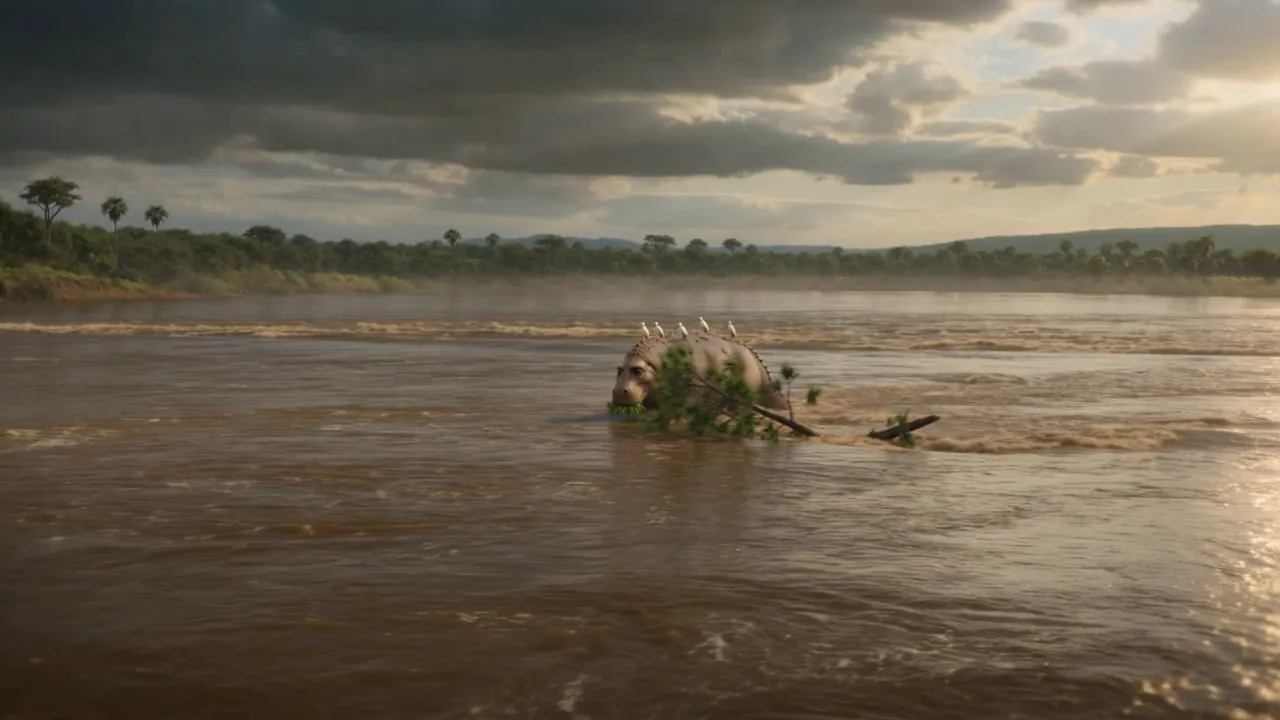
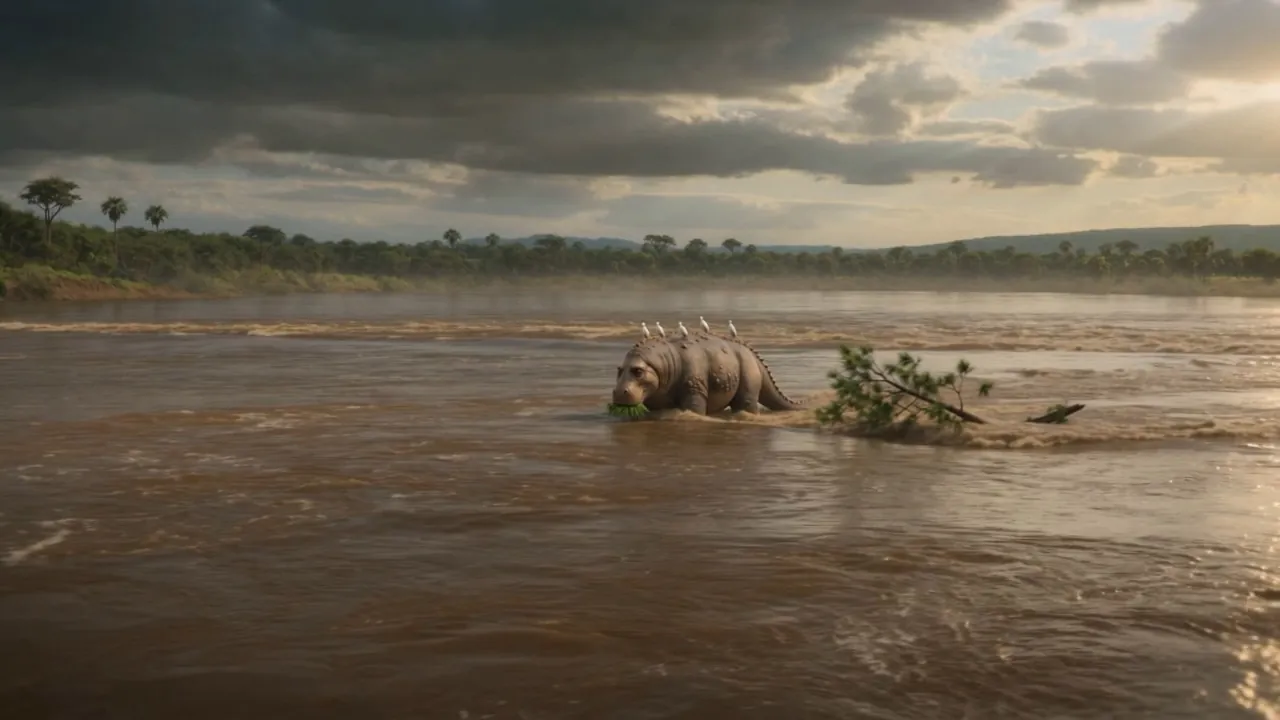
“See now, behemoth, which I made as well as you. He eats grass as an ox. Look now, his strength is in his thighs… He moves his tail like a cedar… Behold, if a river overflows, he doesn't tremble. He is confident, though the Jordan swells even to his mouth.” God's argument here is not that he is frightening. It is that he exists, he is enormous, he eats grass, and Job has never once thought about him. Job 40 : 15–23








“Can you draw out Leviathan with a fish hook?… Will you play with him as with a bird? Will you bind him for your girls?… Out of his mouth go burning torches. Sparks of fire leap out… Upon earth there is not his equal, that is made without fear.” Four chapters of questions, and this is the last one. God never explains the suffering. He shows Job the sea monster and asks whether he would like to try putting a lead on it. Job 41 : 1–33
Will you play with him as with a bird?

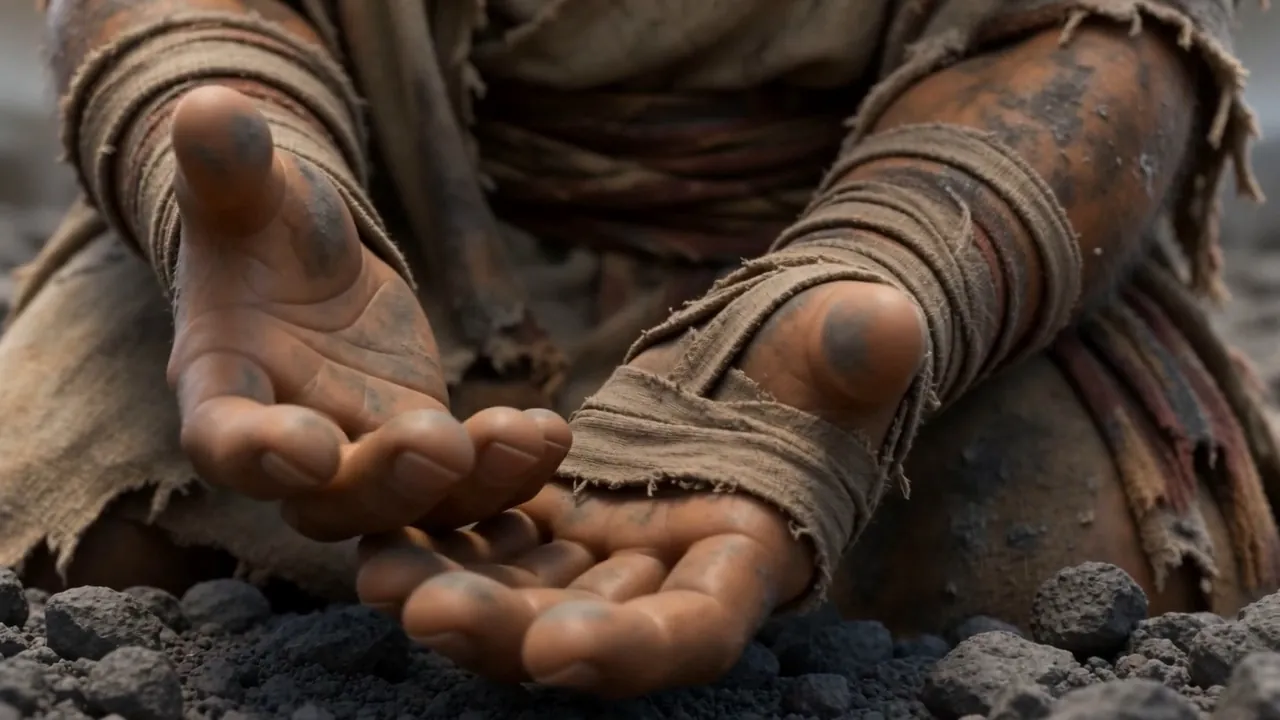
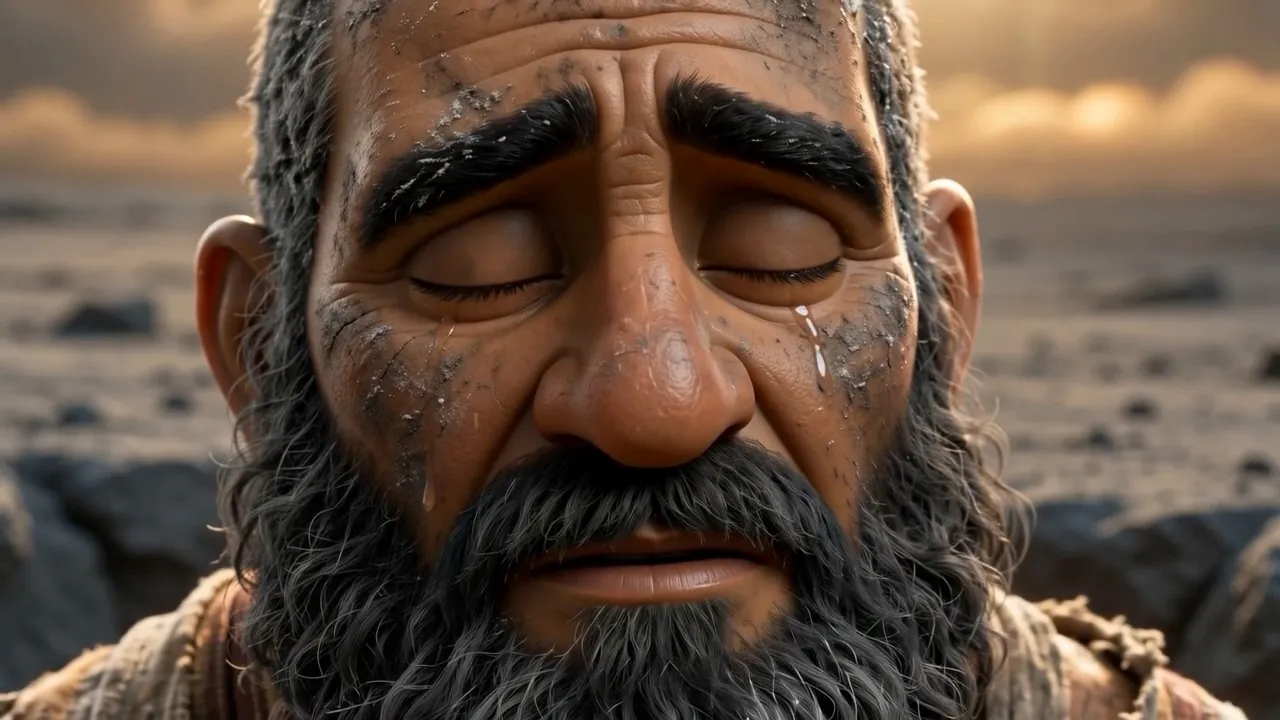
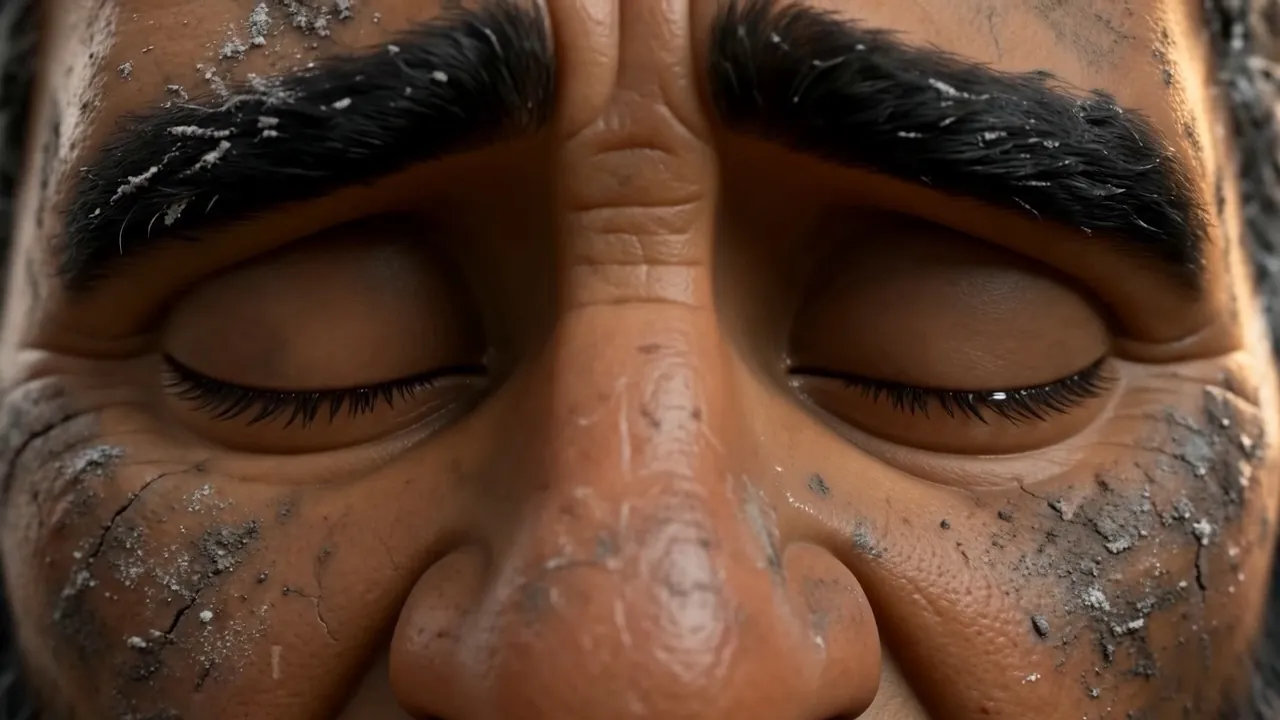
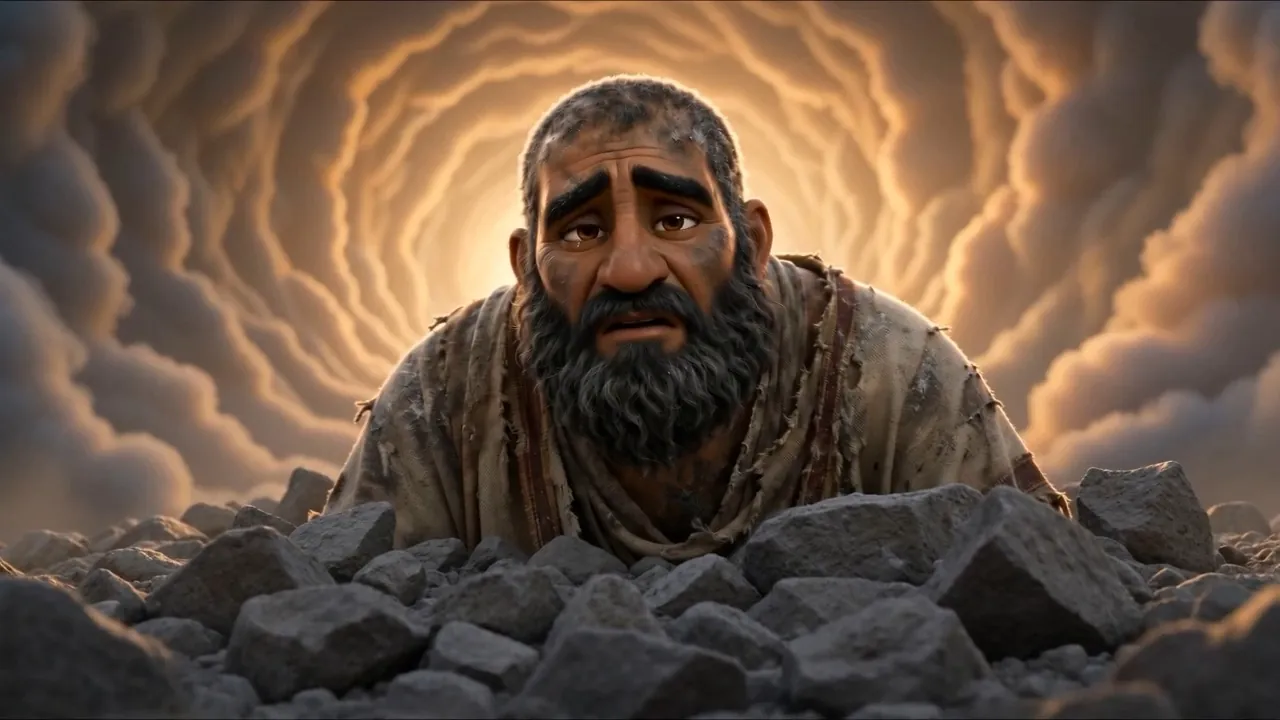
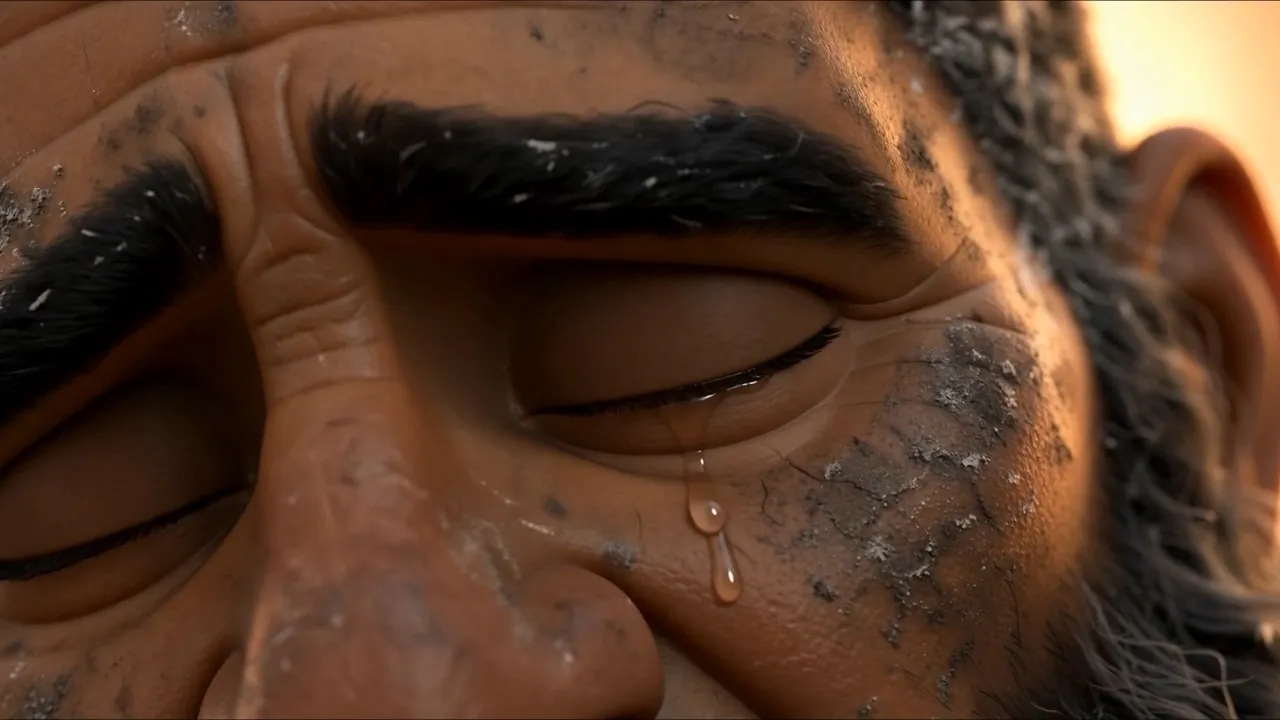
“I know that you can do all things, and that no purpose of yours can be restrained… I had heard of you by the hearing of the ear, but now my eye sees you. Therefore I abhor myself, and repent in dust and ashes.” He is not told why. He never finds out. What changes is not his information — it is that the God he had only been told about has now turned up in person, and answered him. Job 42 : 1–6
I had heard of you — now my eye sees you.
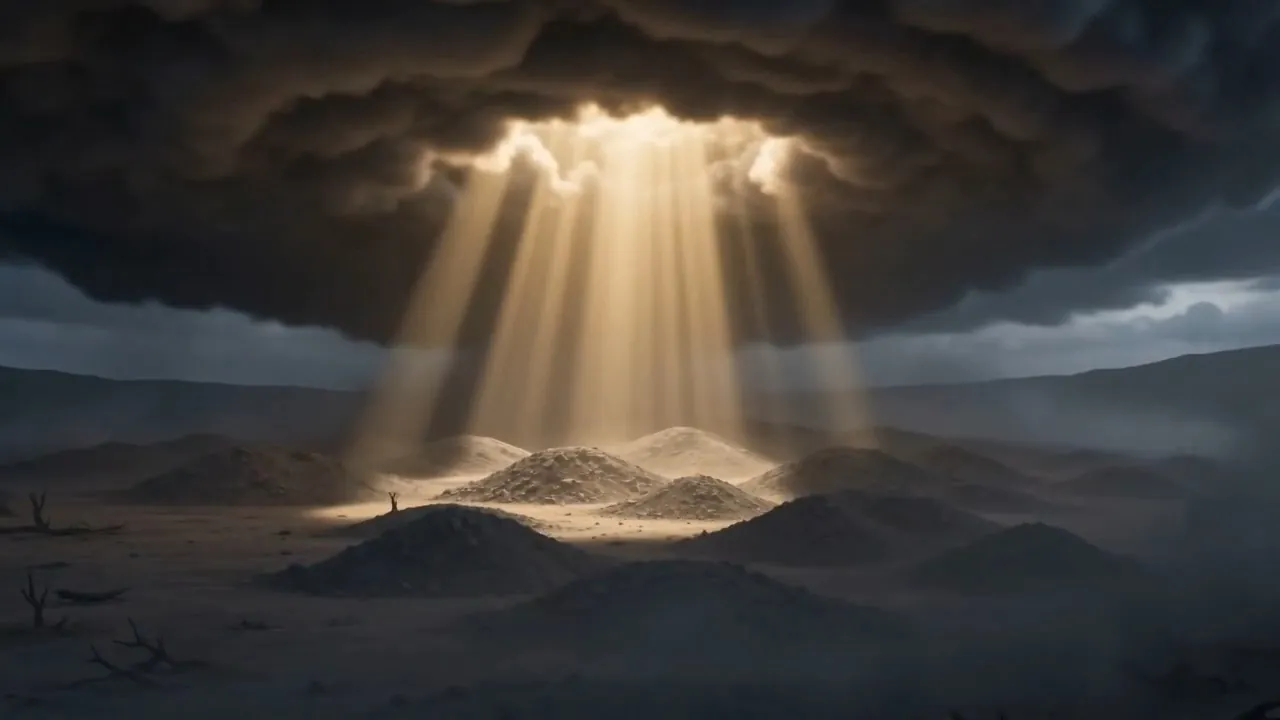
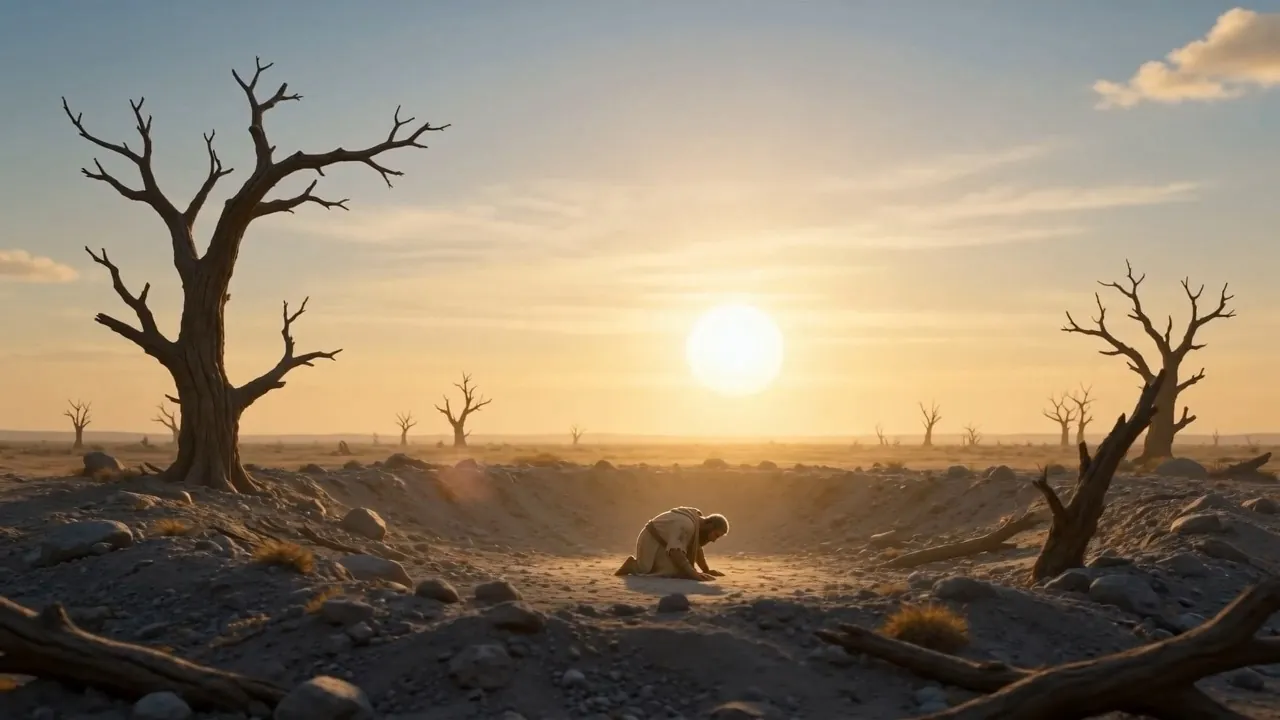
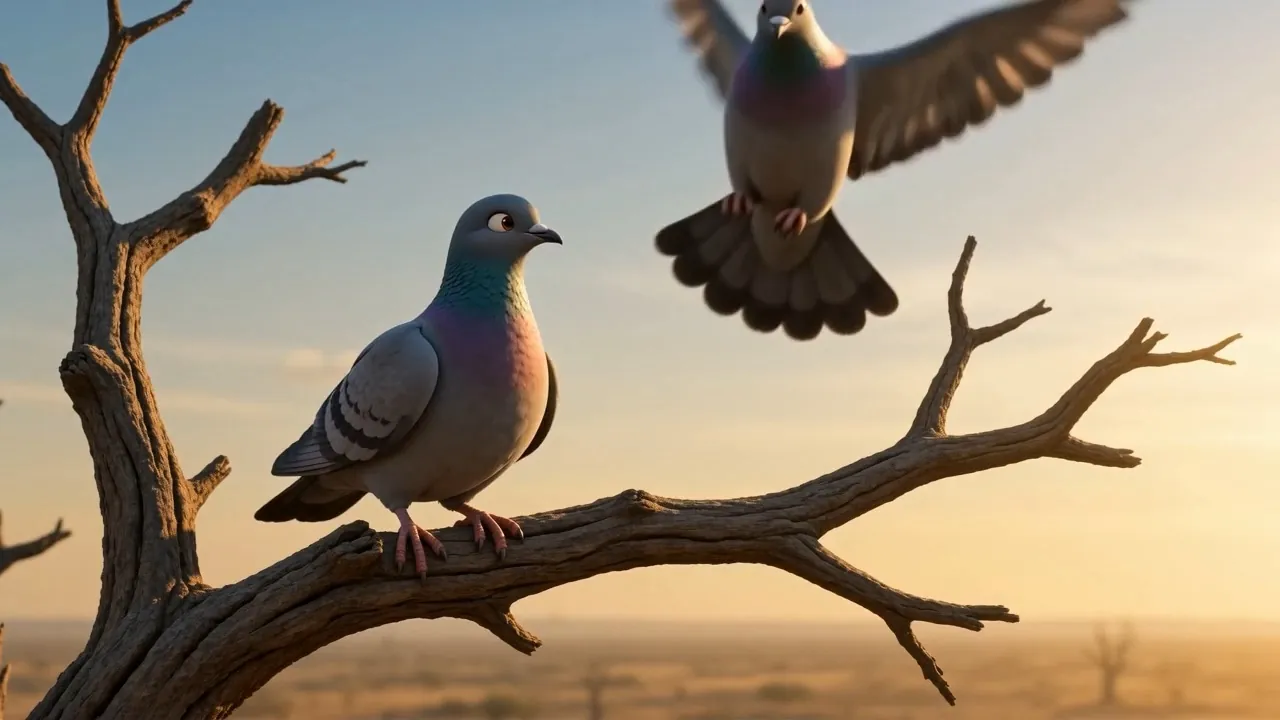
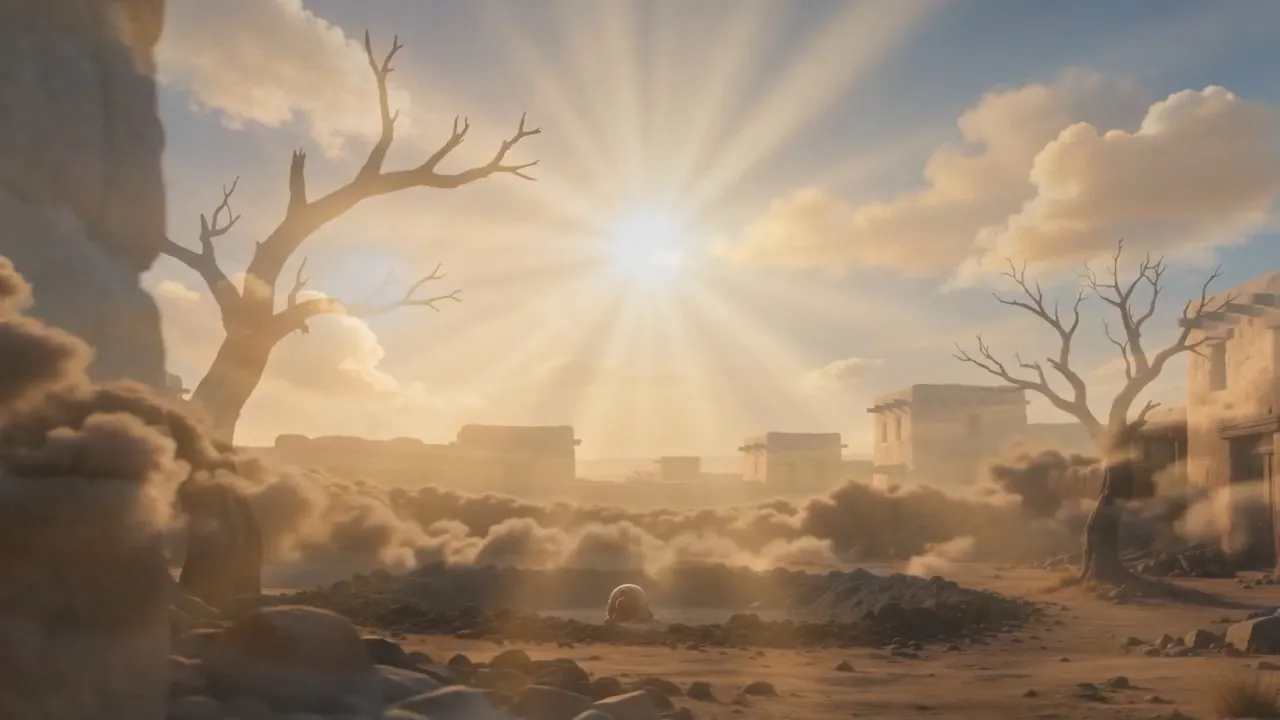
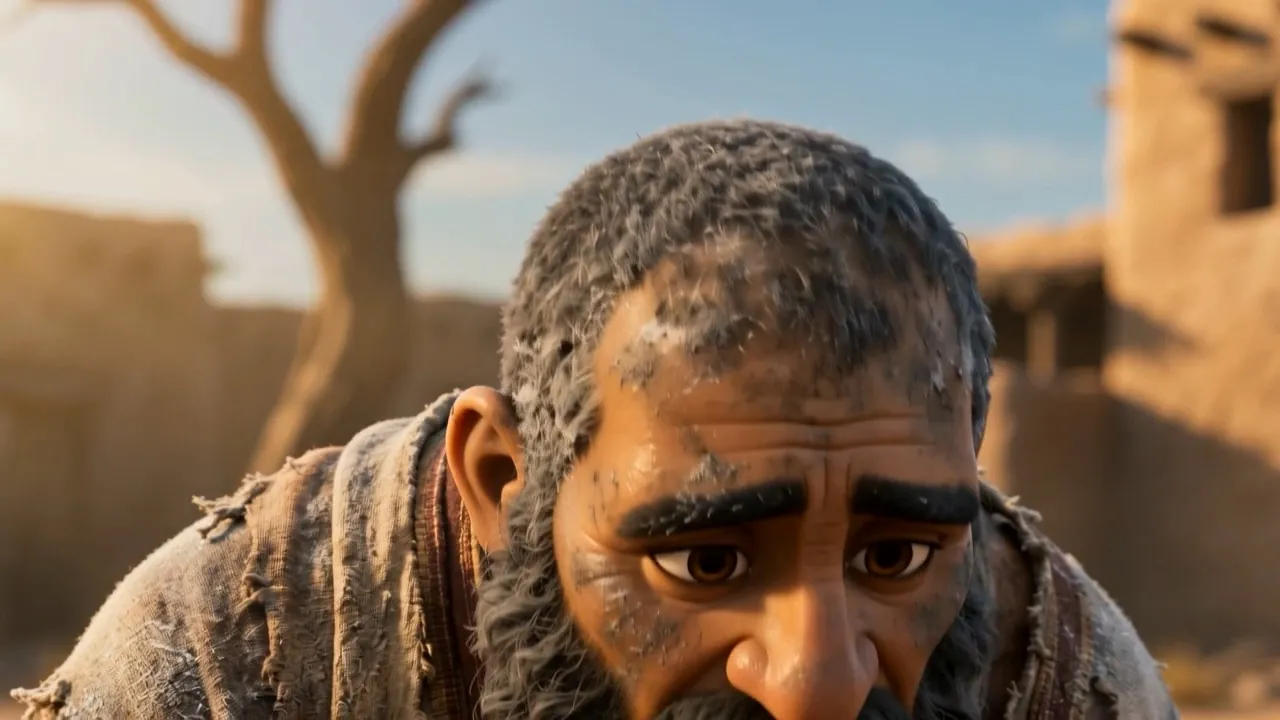
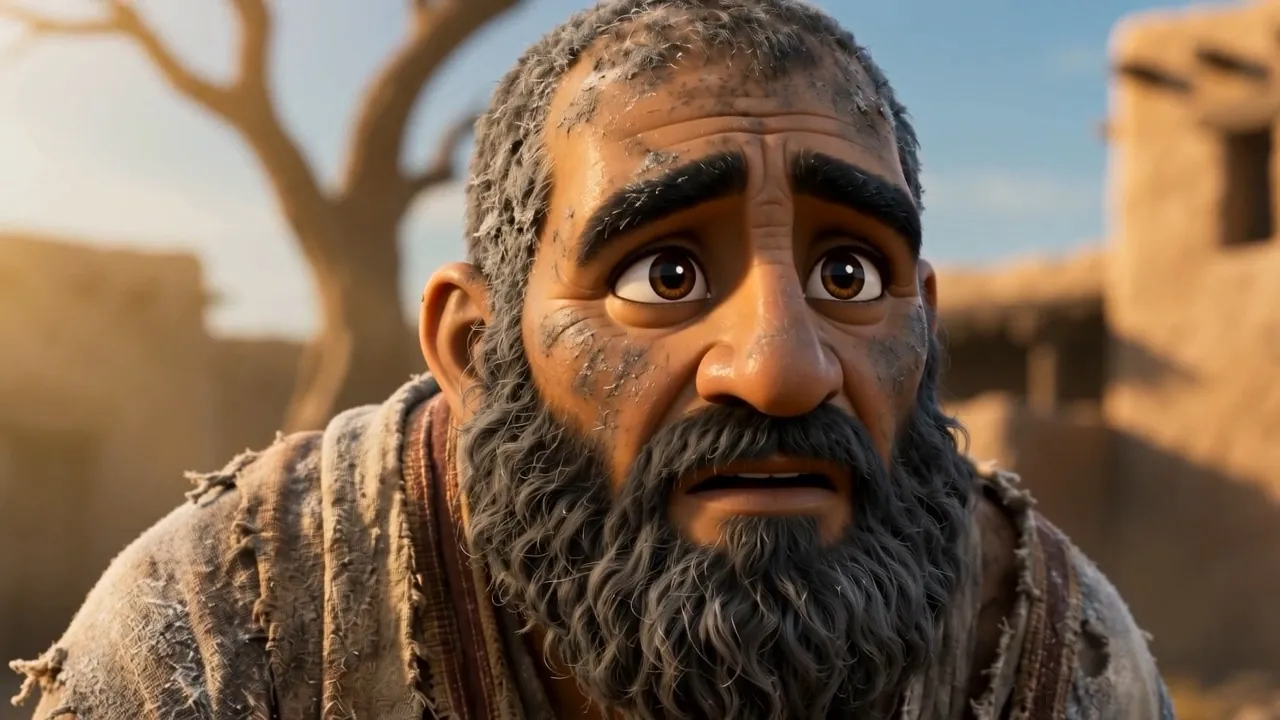
And then it is over, and it is a nice morning. There is no transition — the wind simply stops, the light comes back, and two doves land on the dead tree that has stood in the background for two episodes. Job 42 : 7
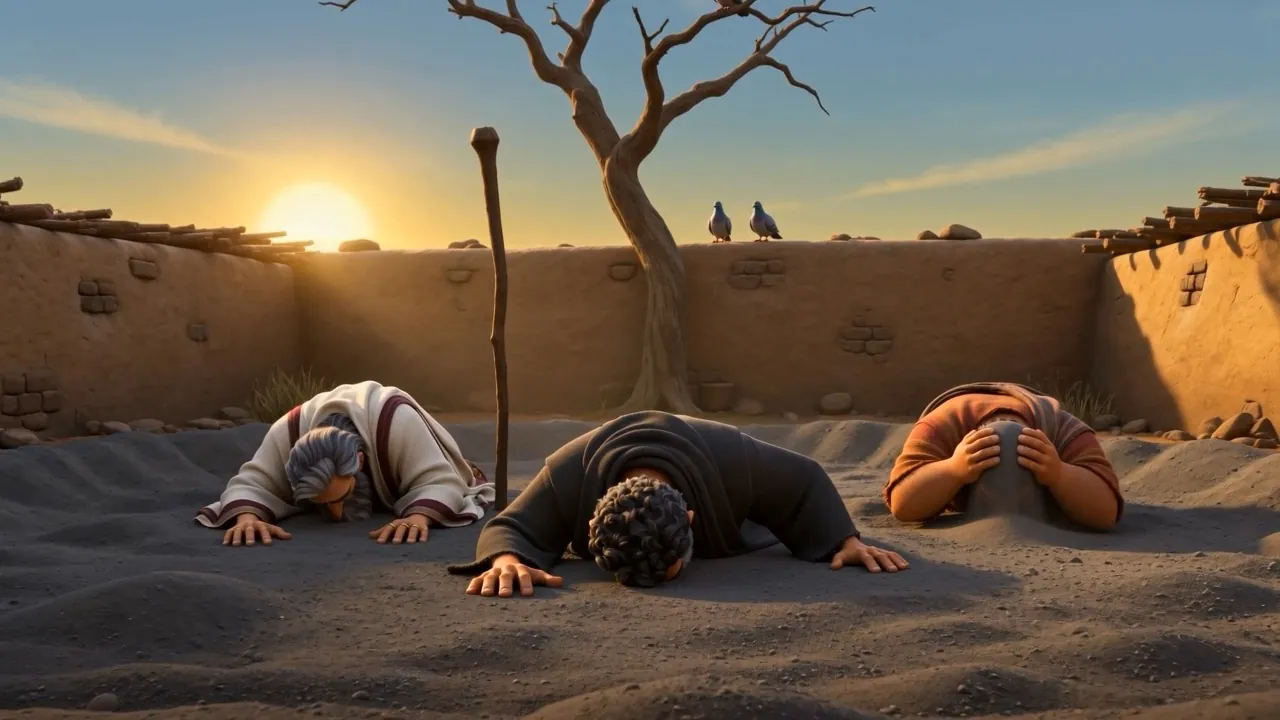
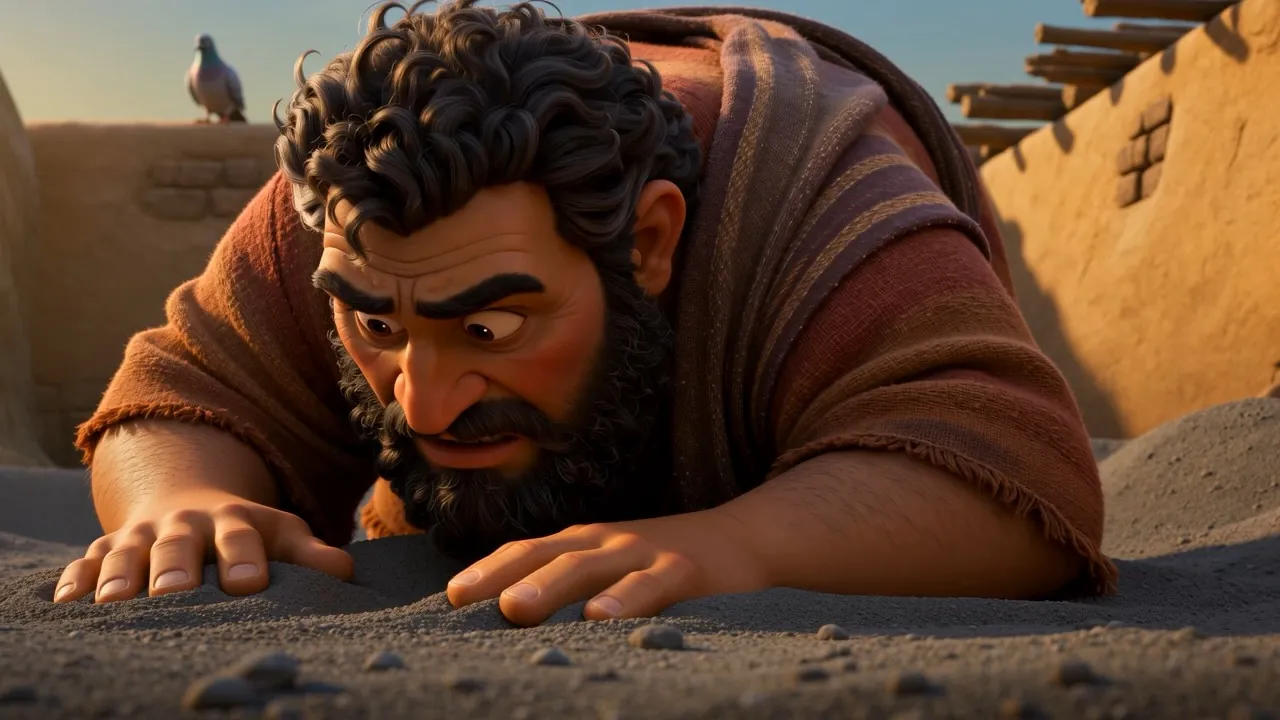
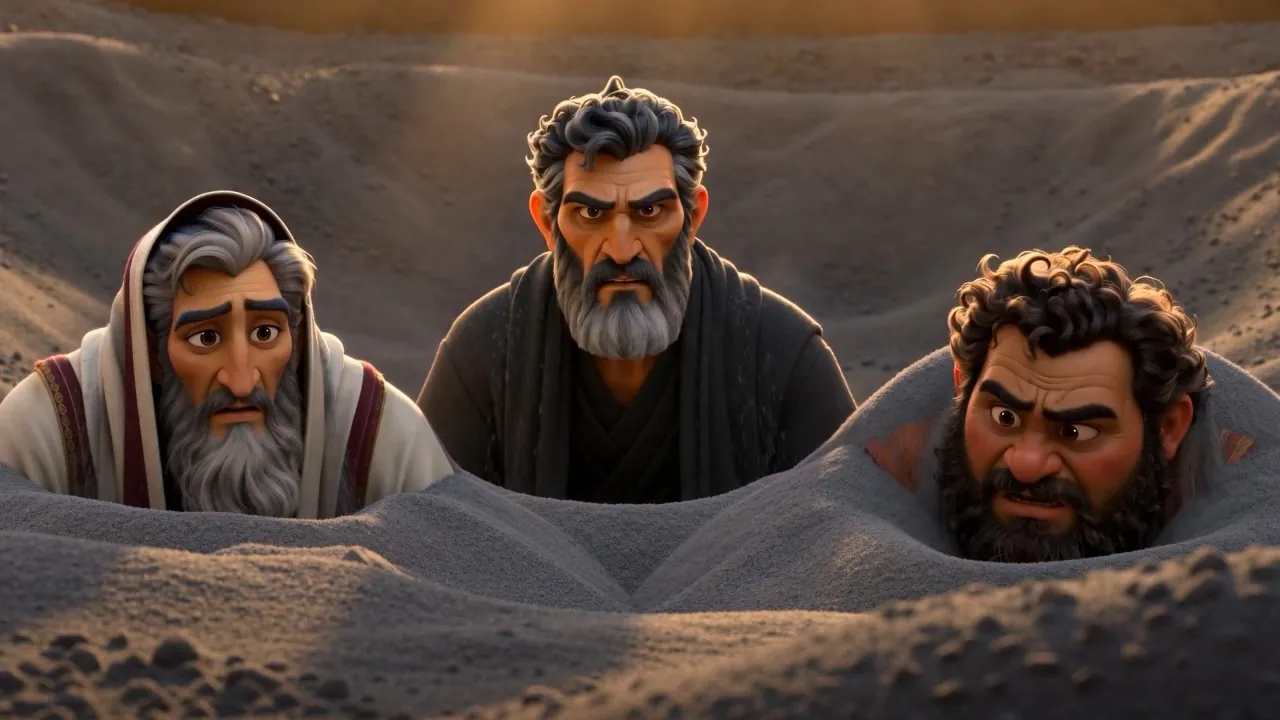
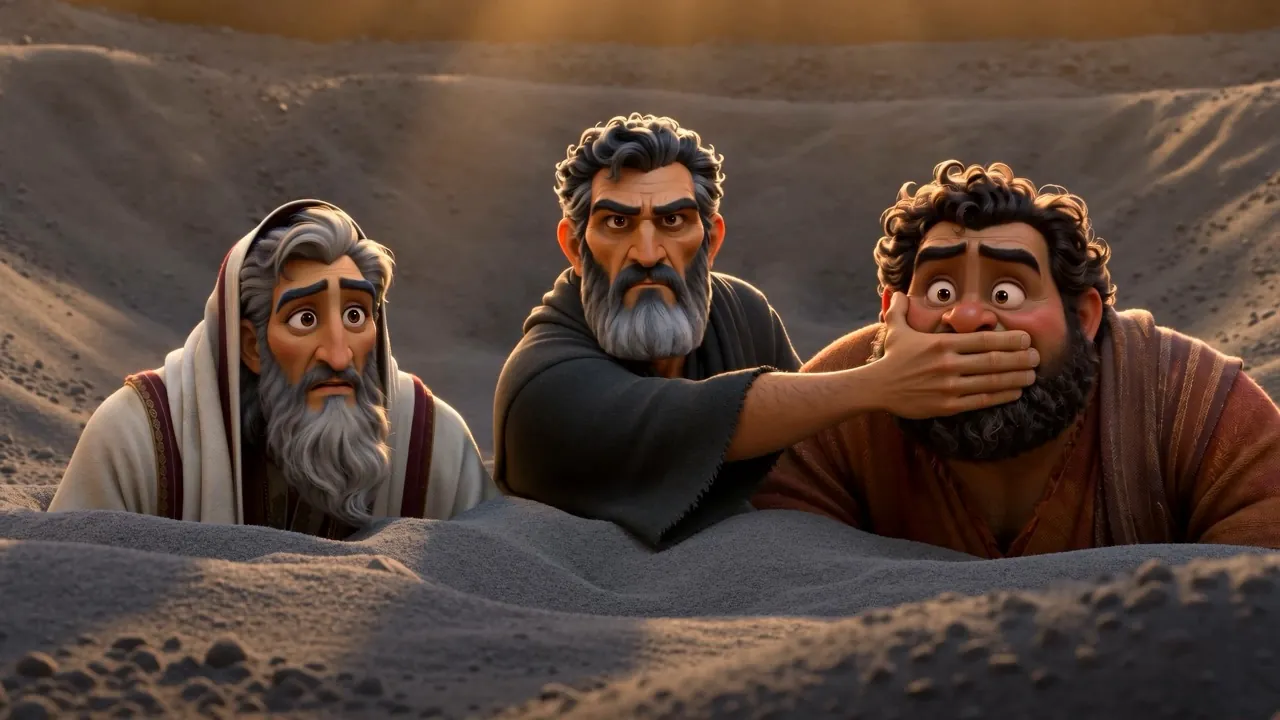
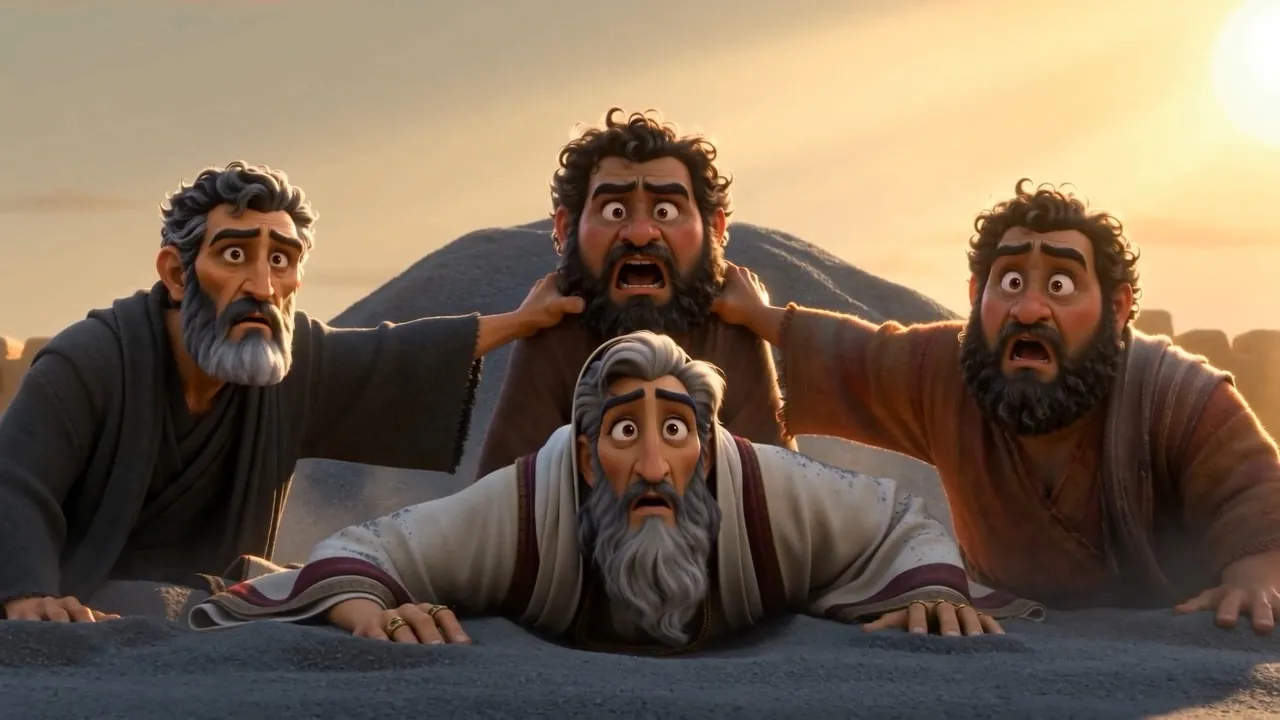
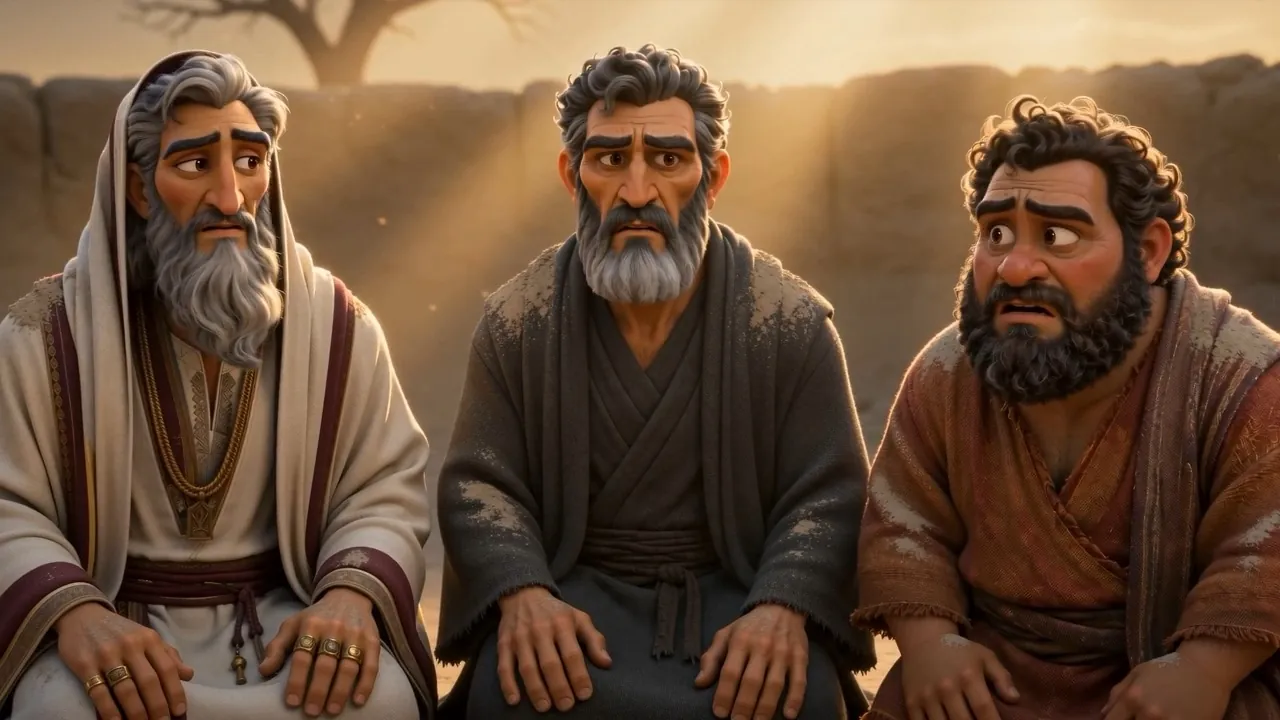
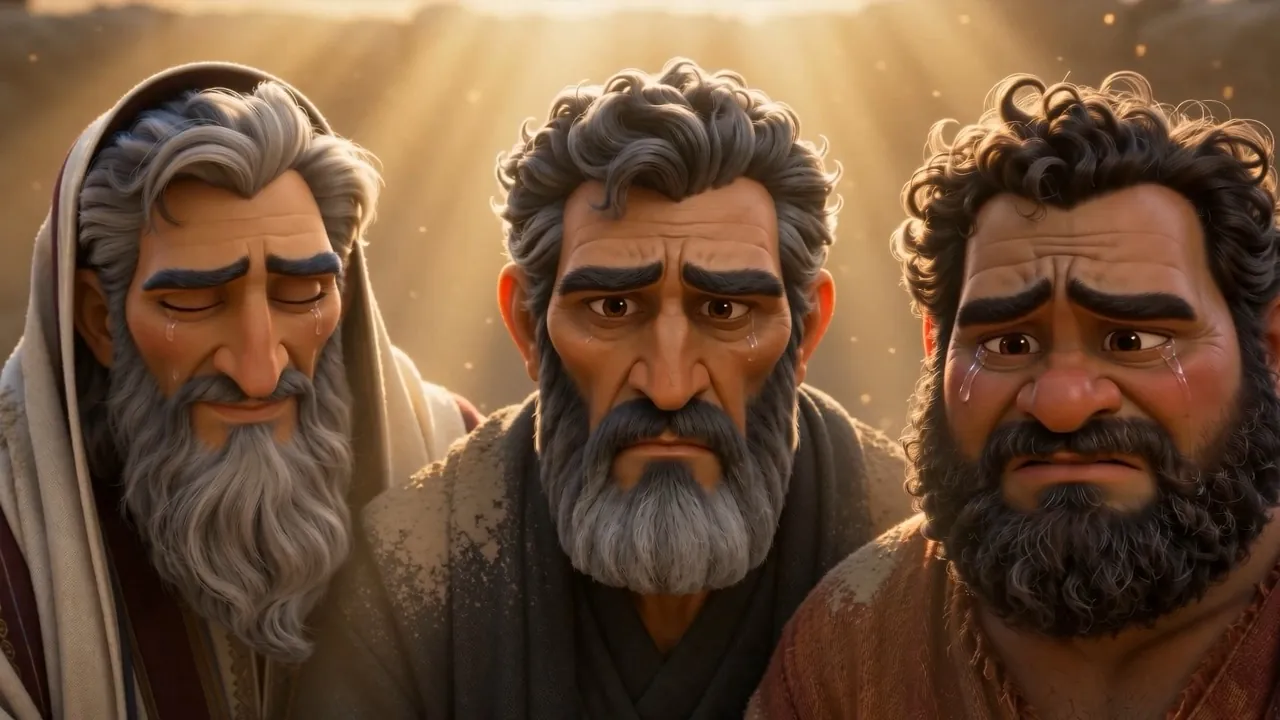
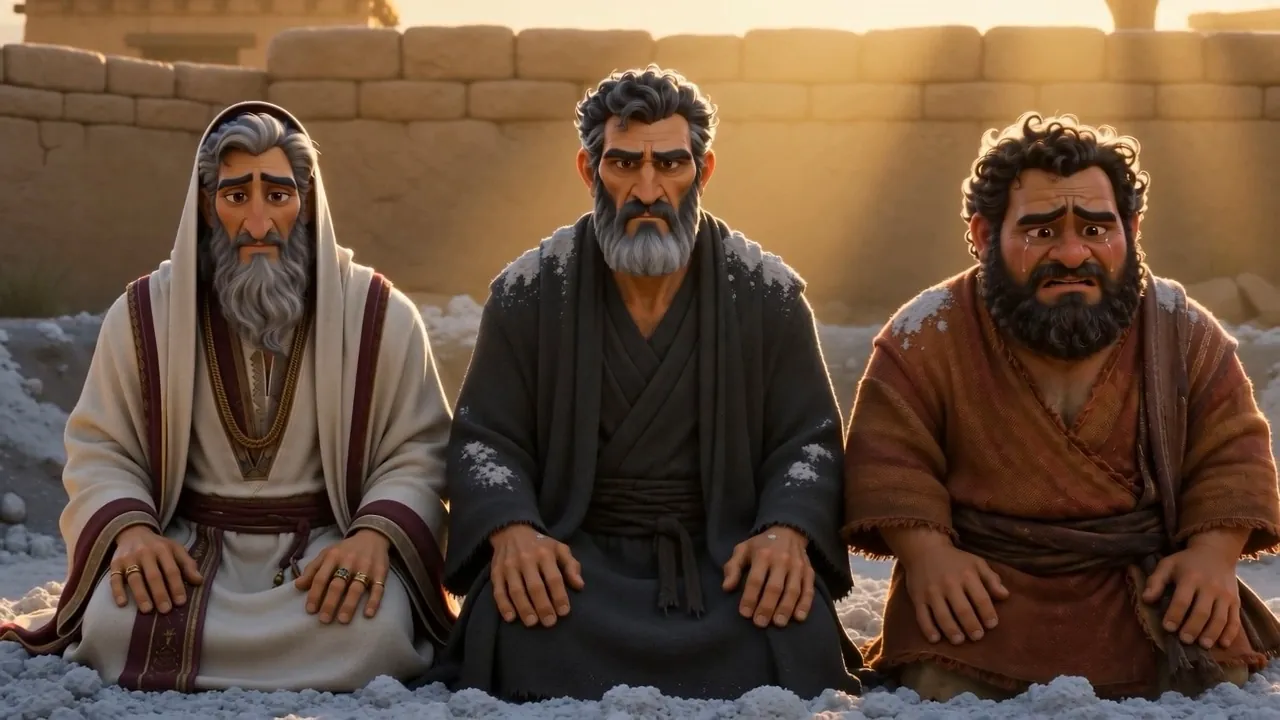
“My wrath is kindled against you, and against your two friends; for you have not spoken of me the thing that is right, as my servant Job has.” The three men who defended God for thirty chapters are told they got him wrong, and the man who shouted at the sky is told he got him right. The moment plays for comedy — one of them physically claps a hand over another's mouth. Job 42 : 7
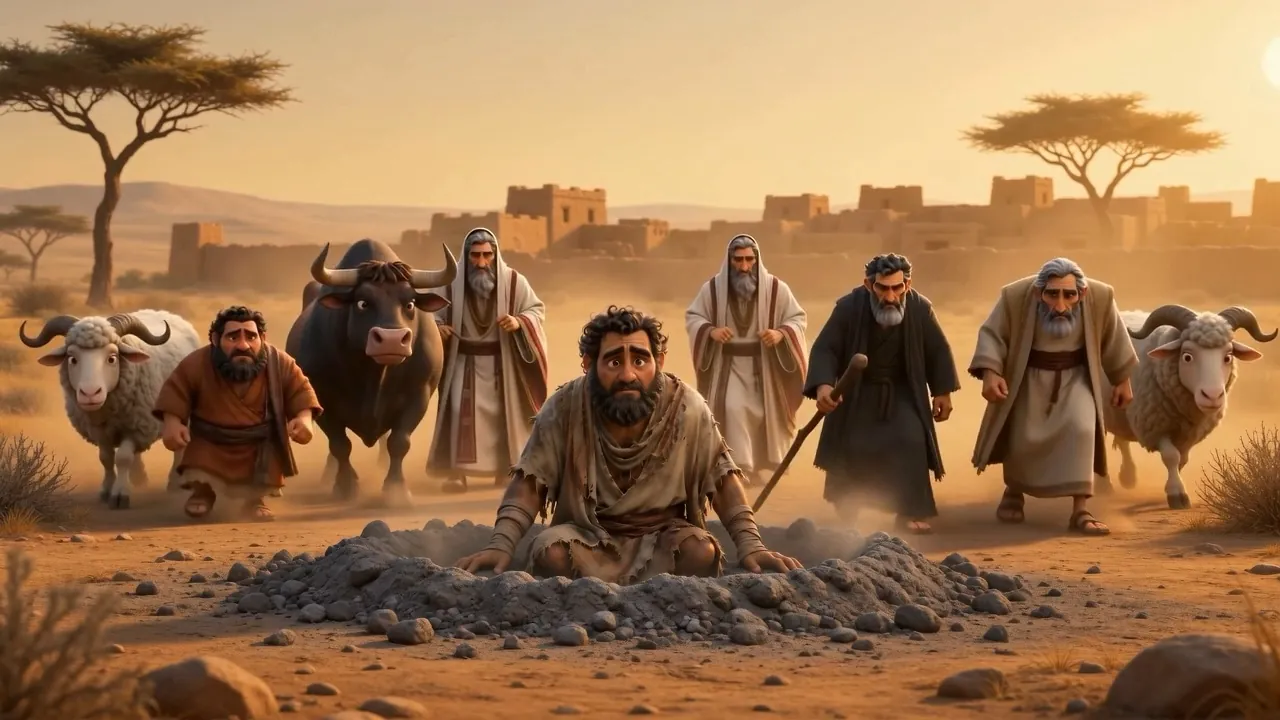
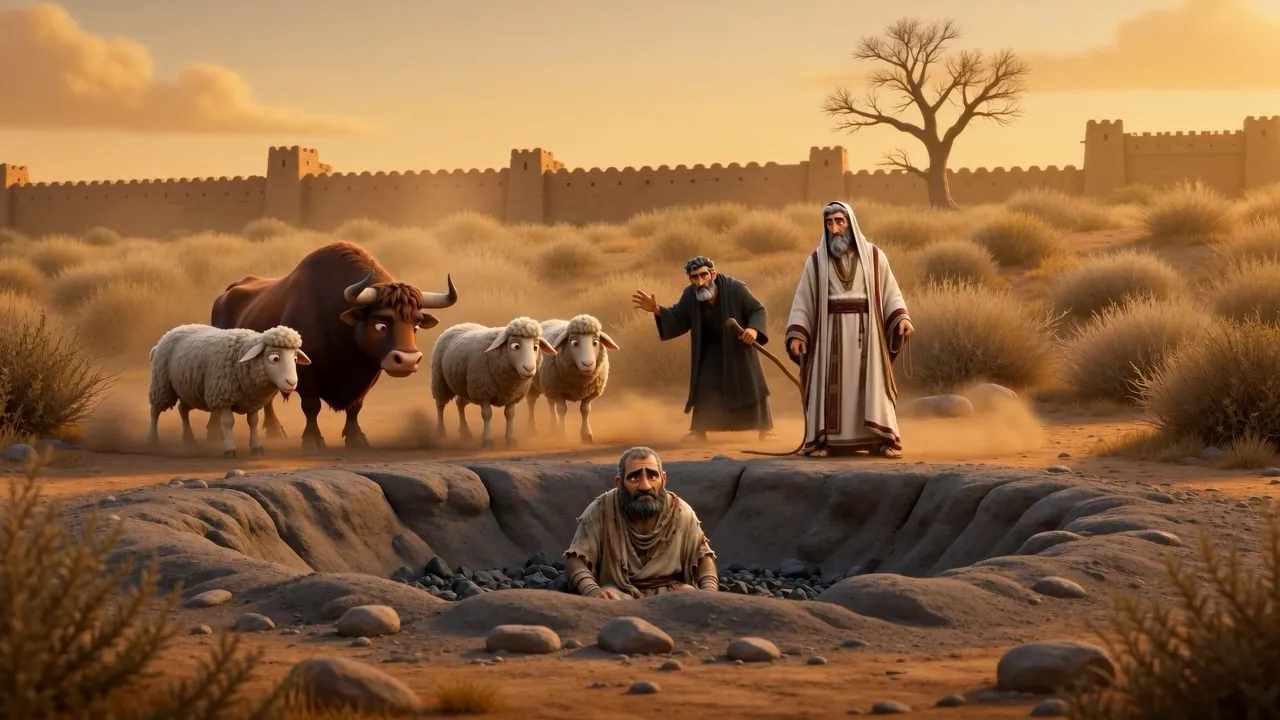
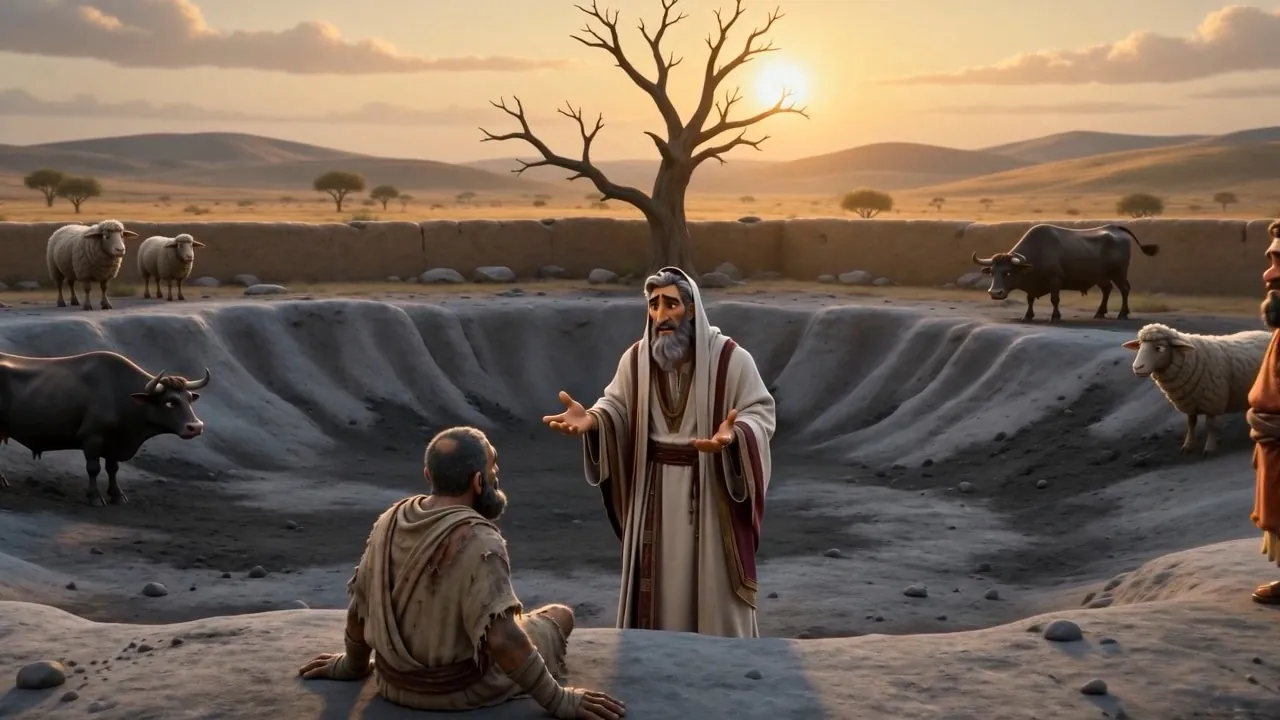
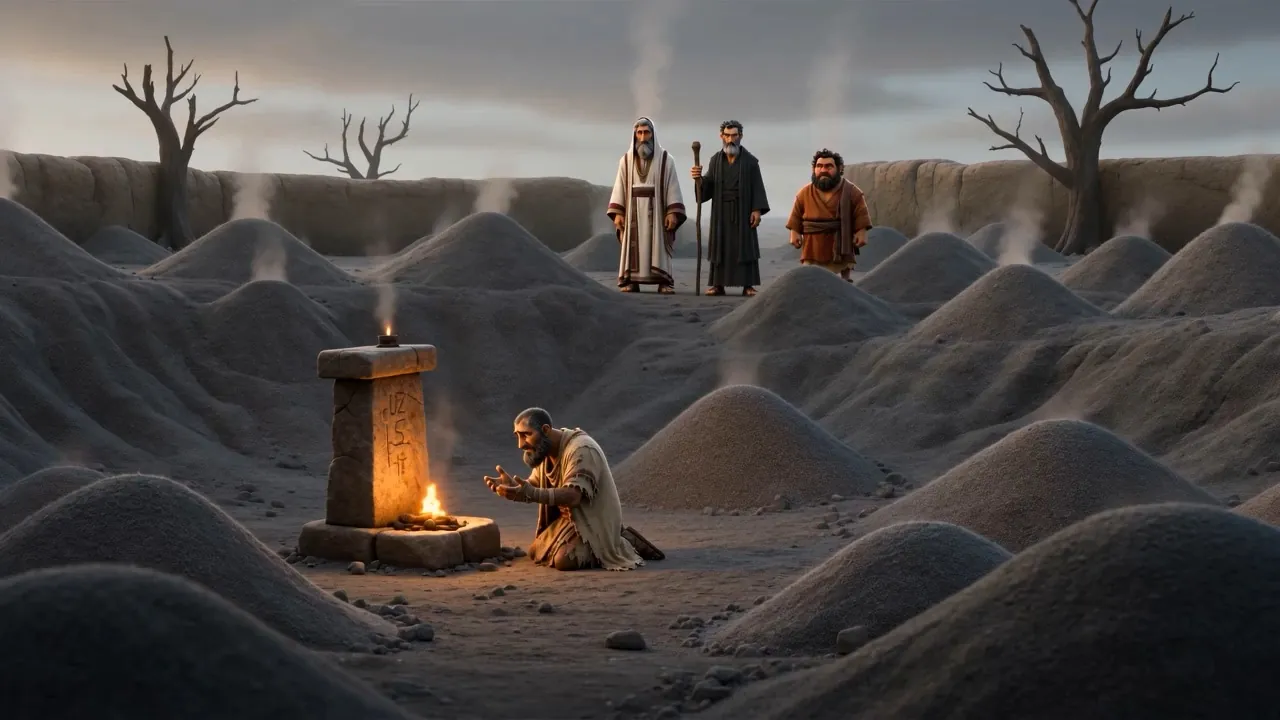
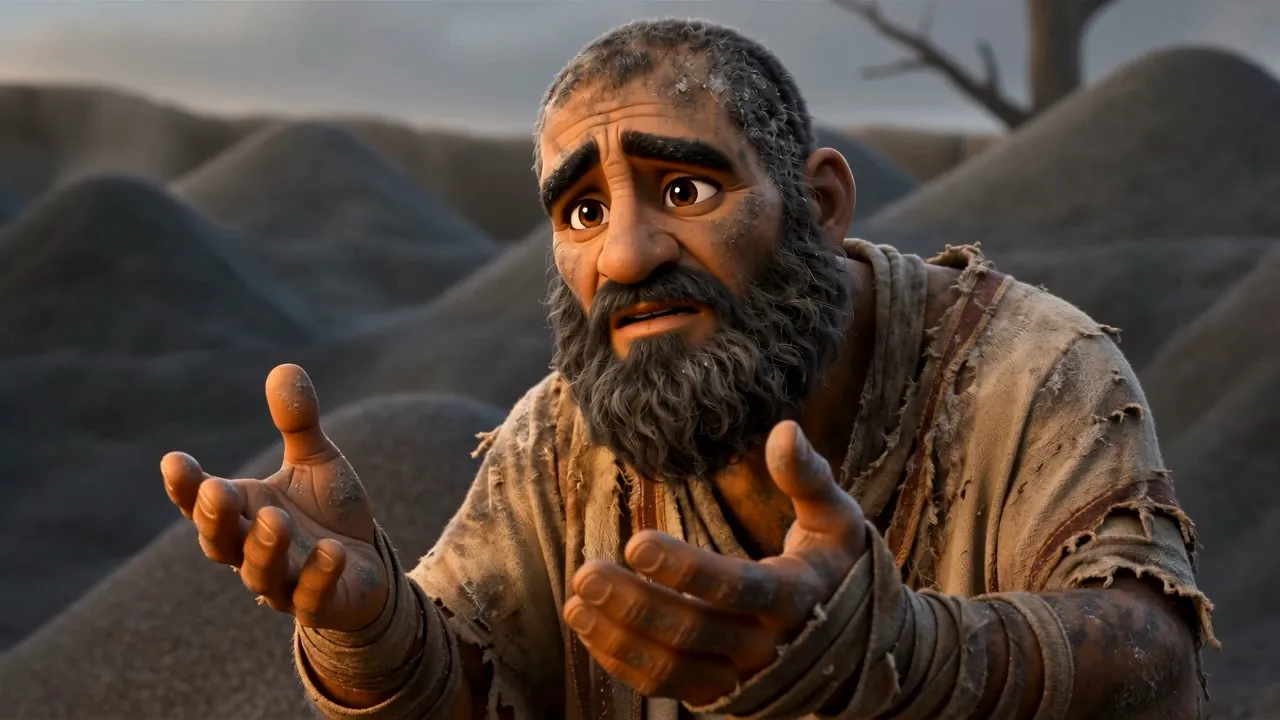
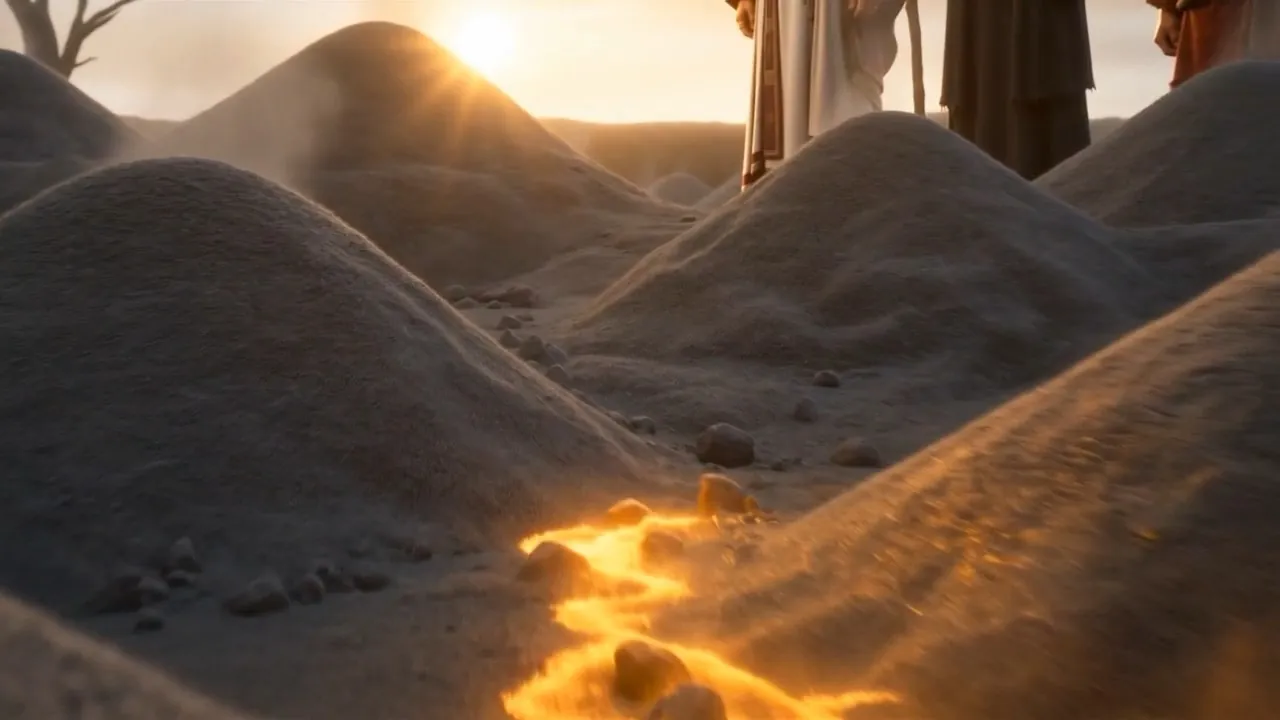
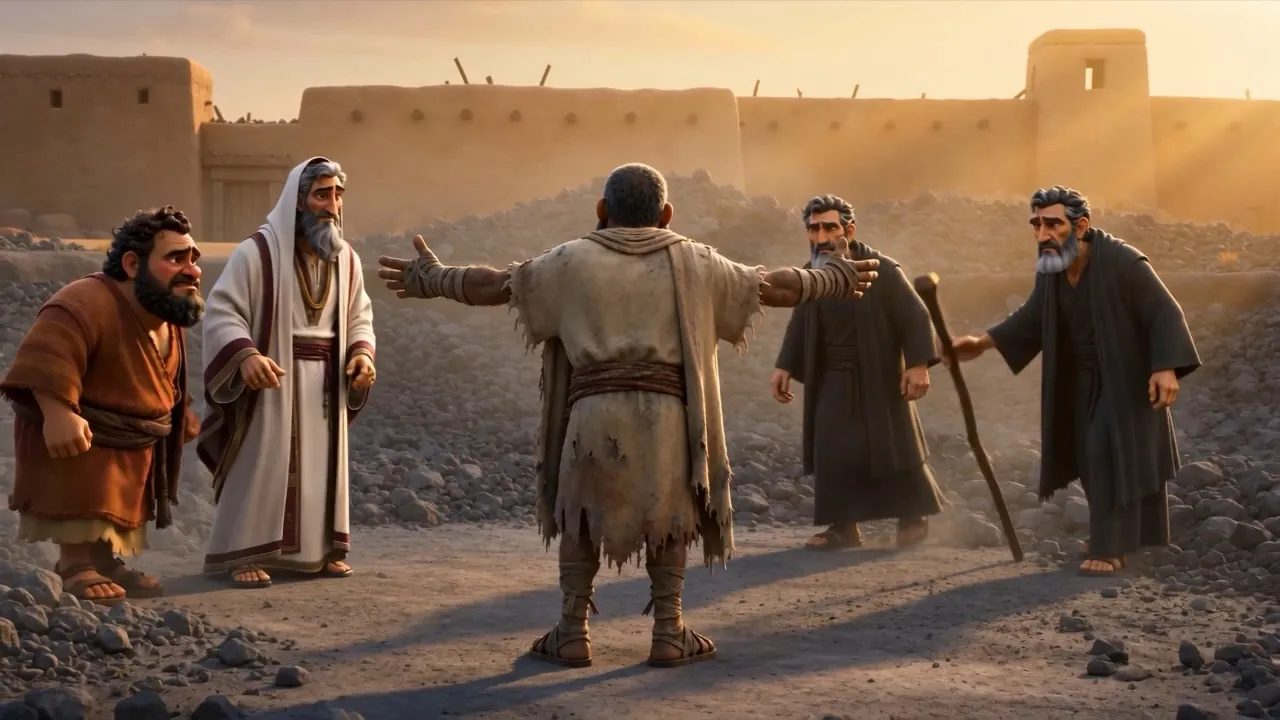
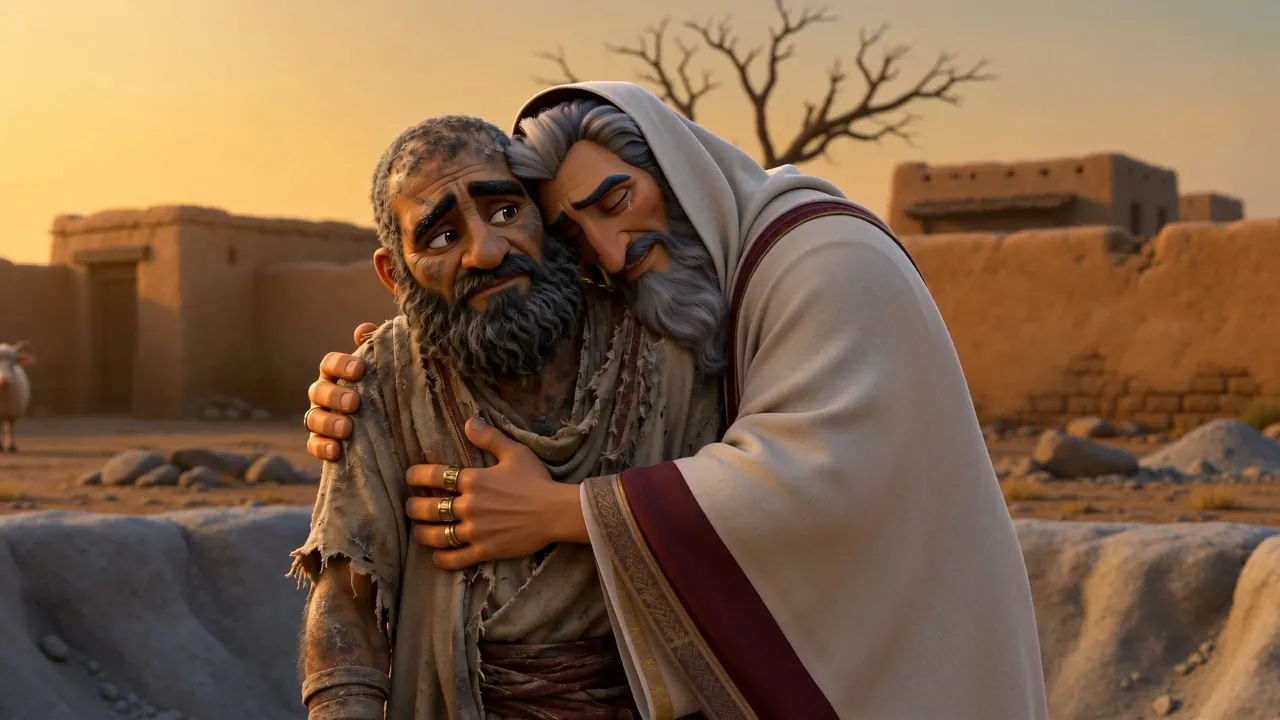
God's instruction to the friends is humiliating and exact: take seven bulls and seven rams, go to my servant Job, and he will pray for you; for I will accept him. The men who told him to repent have to go and ask him to intercede for them. And then the hinge of the whole ending: Yahweh turned the captivity of Job when he prayed for his friends. Not when he repented. When he forgave. Job 42 : 8–10
When he prayed for his friends.
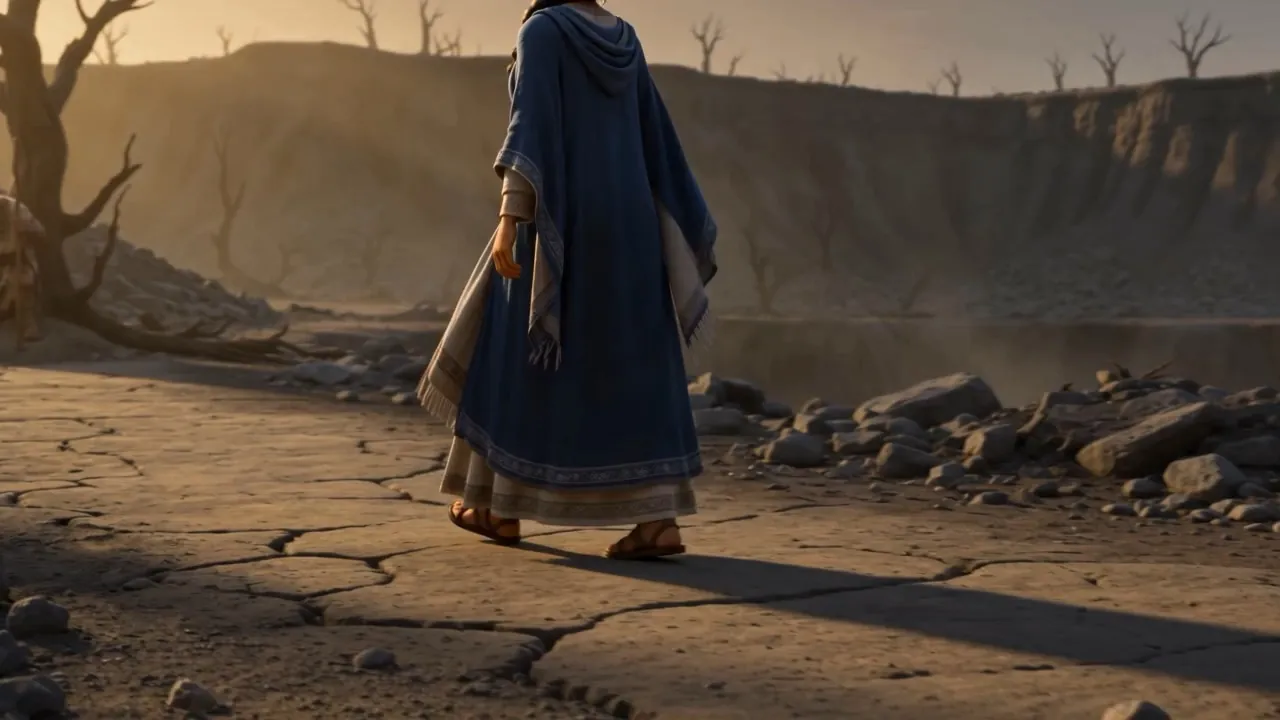
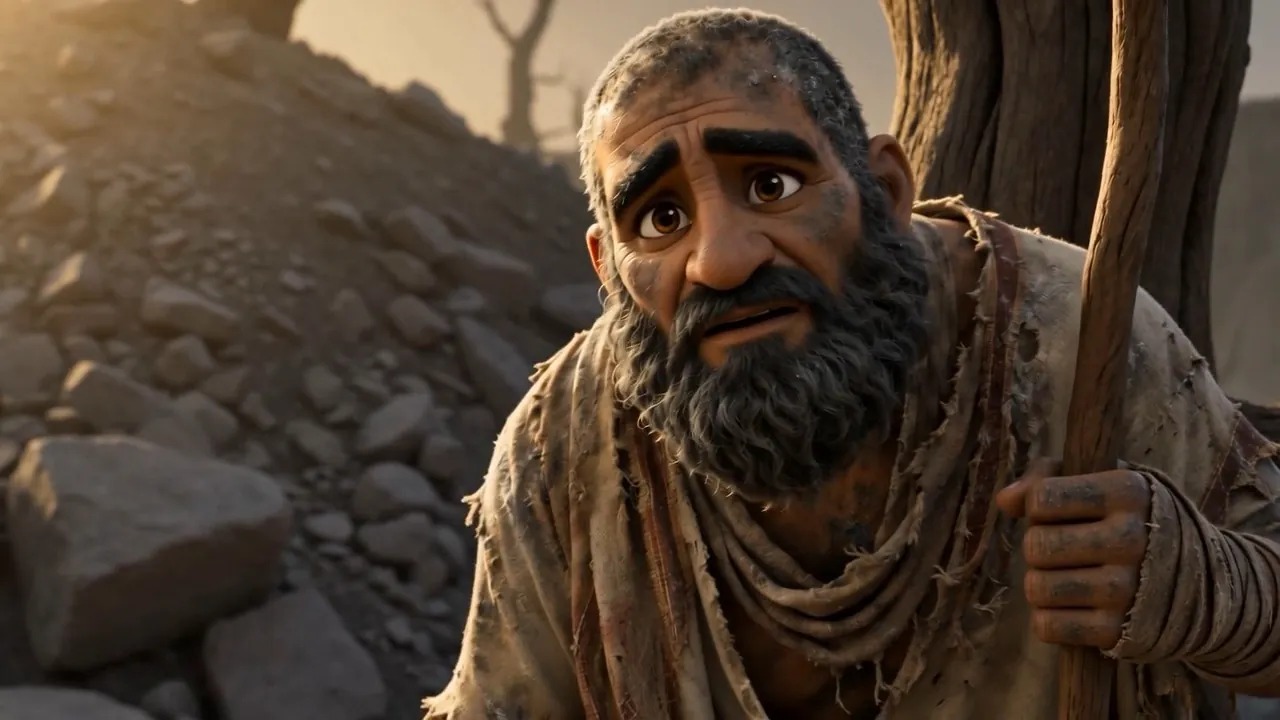
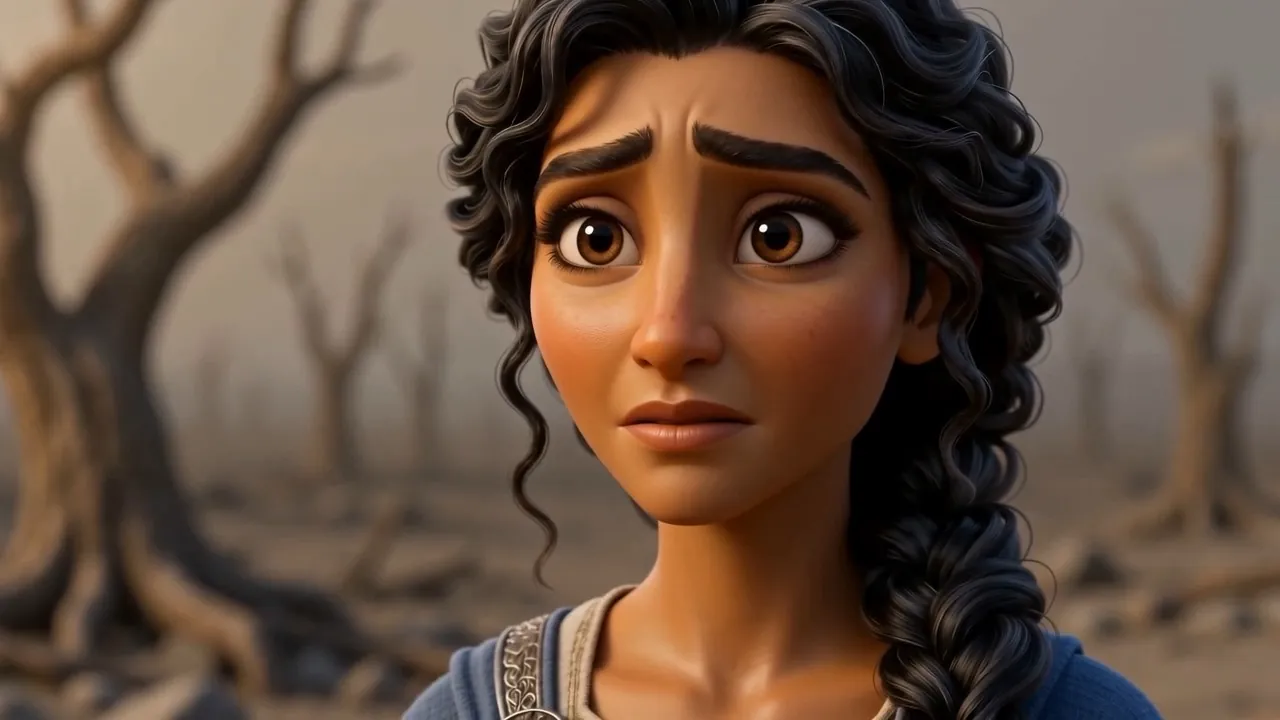
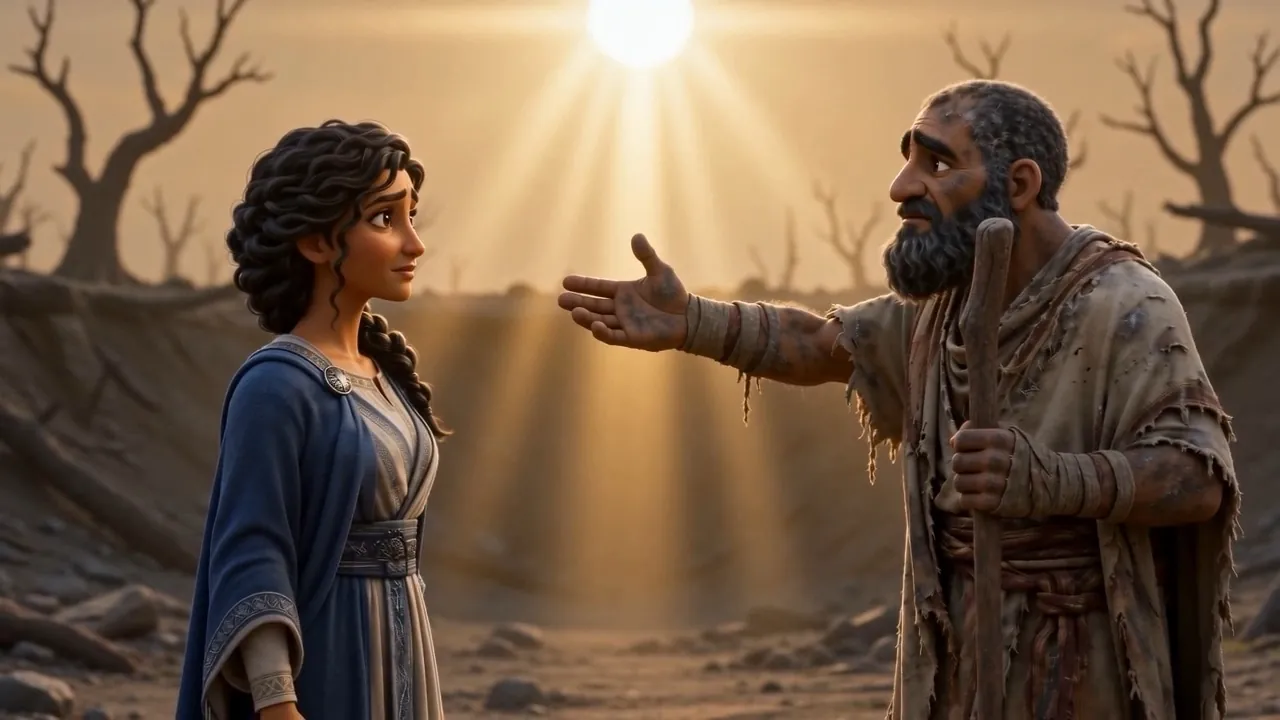
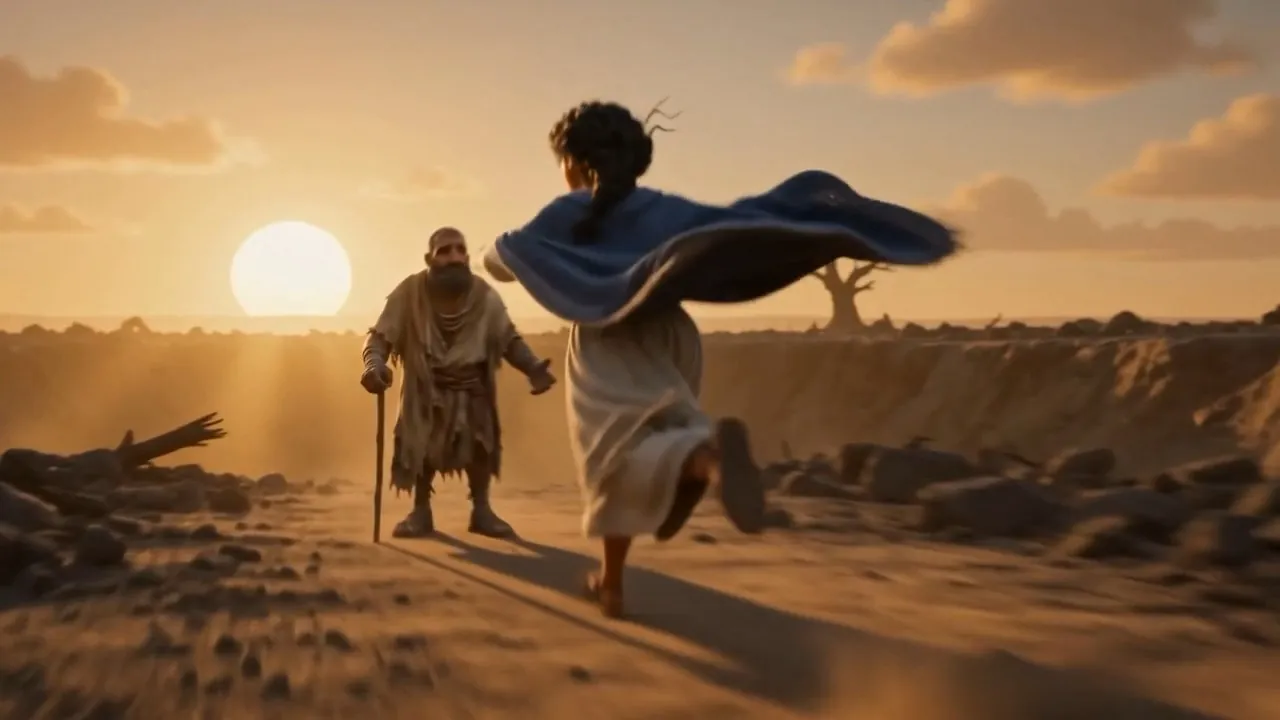
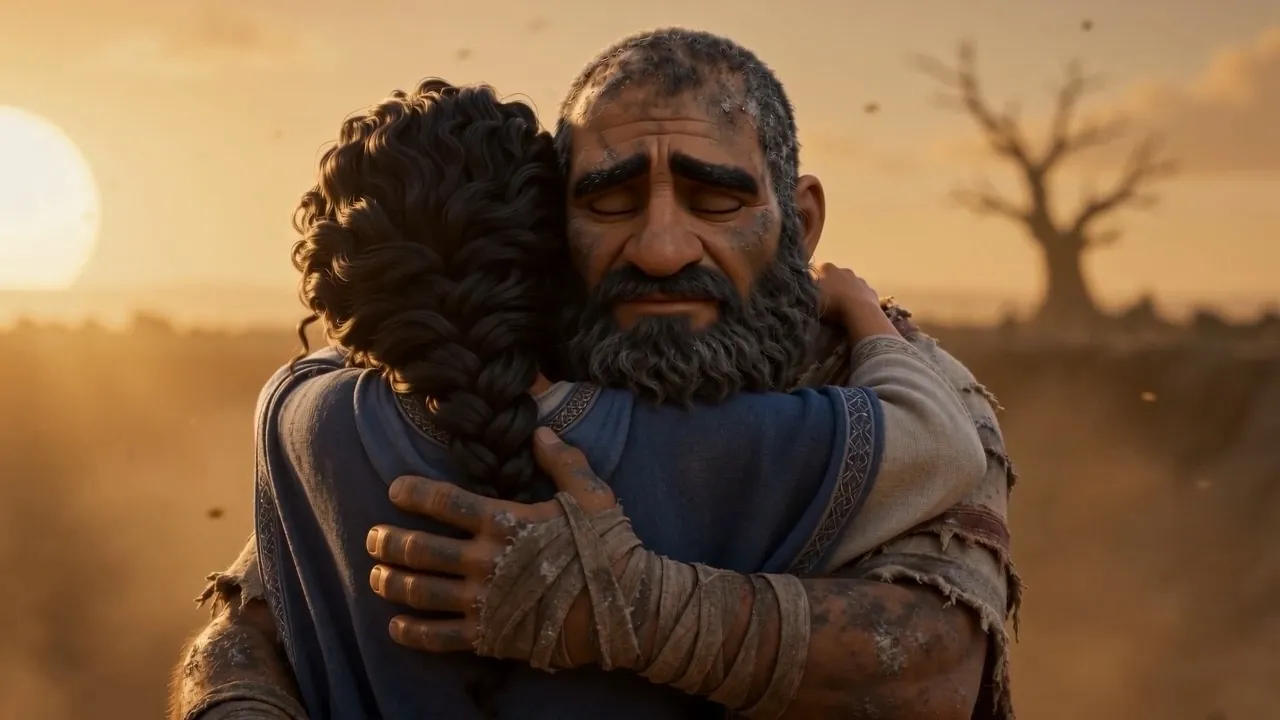
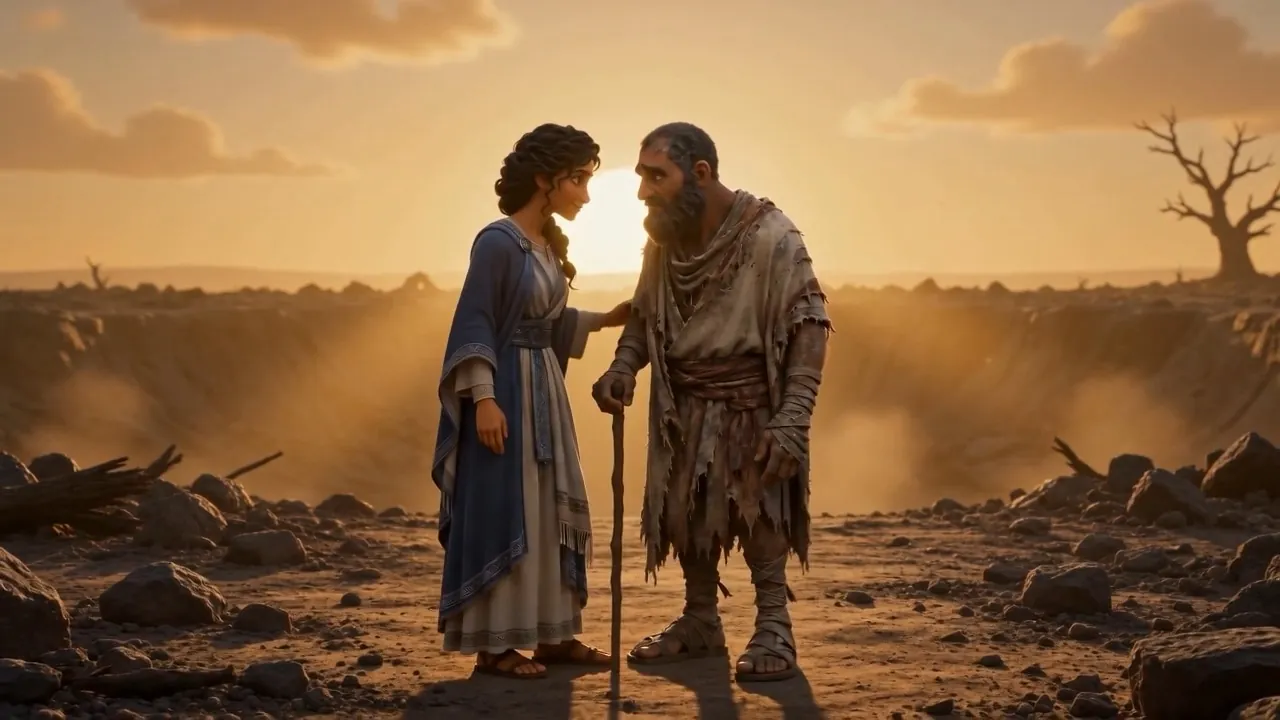
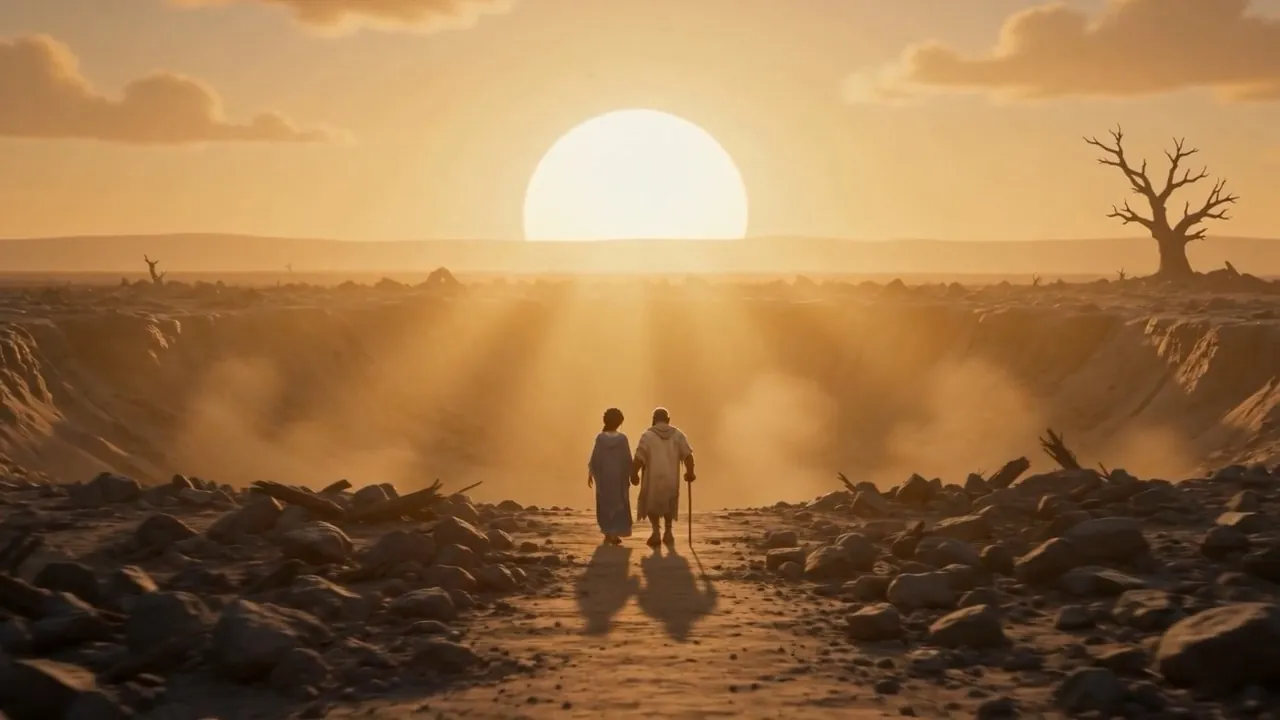
The Bible does not say a word about this, and here it gets a whole scene: the woman who told him to curse God and die comes back over the ruined ground, and he is already reaching for her before she gets there. They walk out of the ash heap holding hands. Job 42 : 10
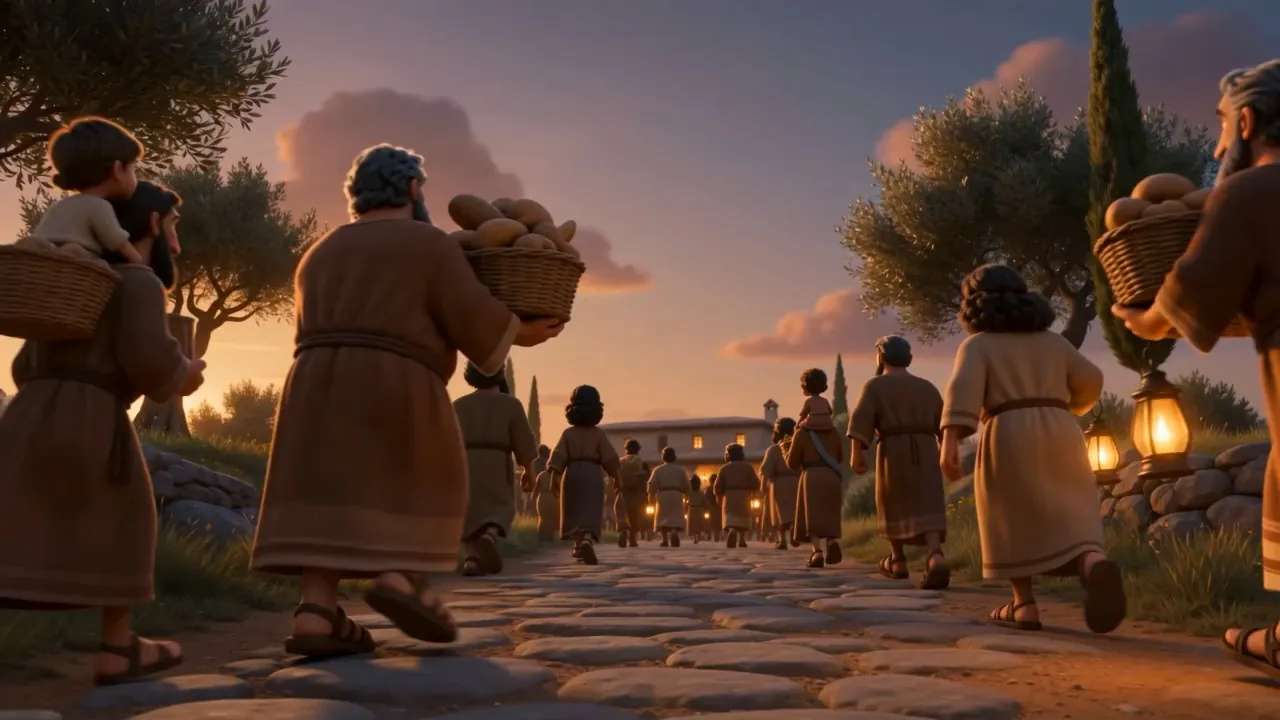
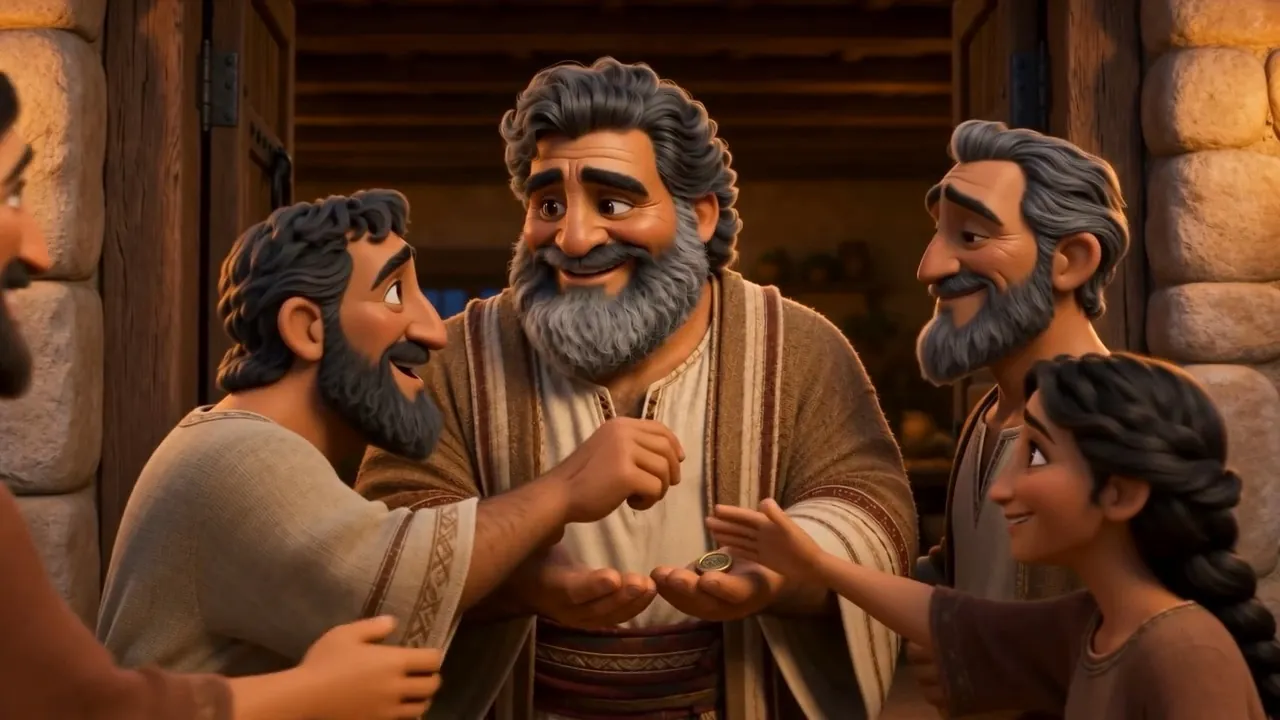
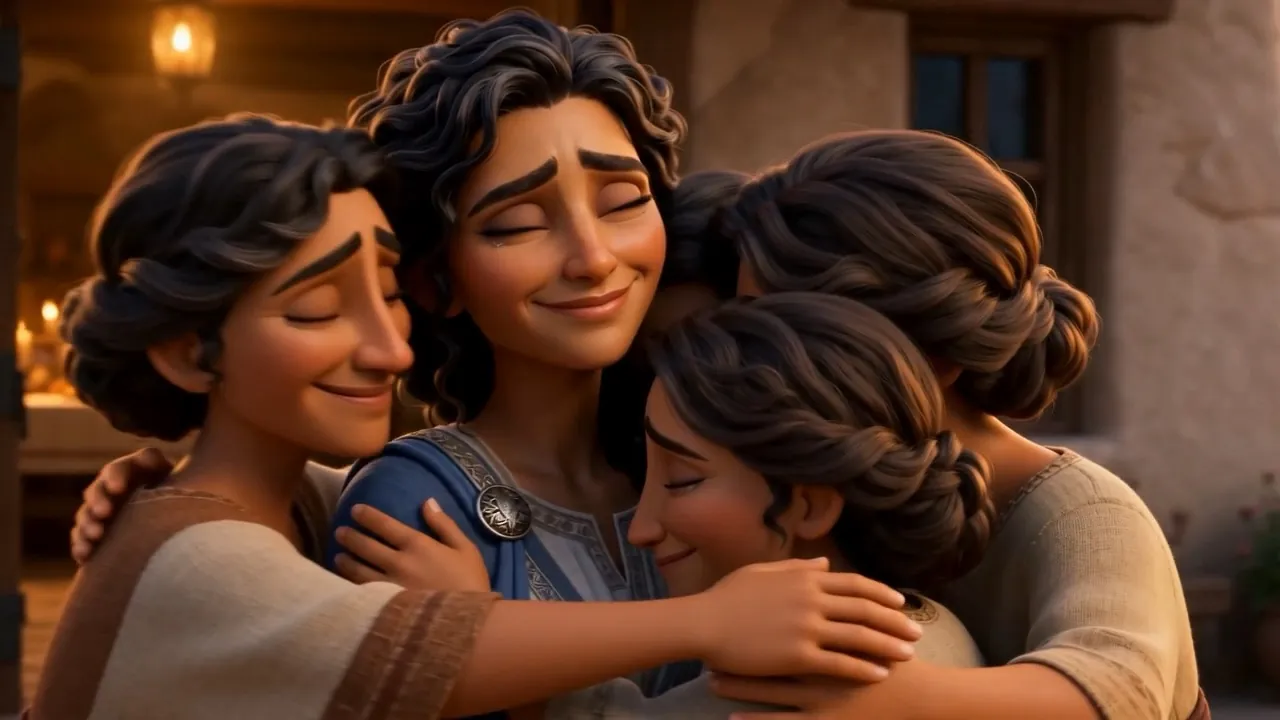
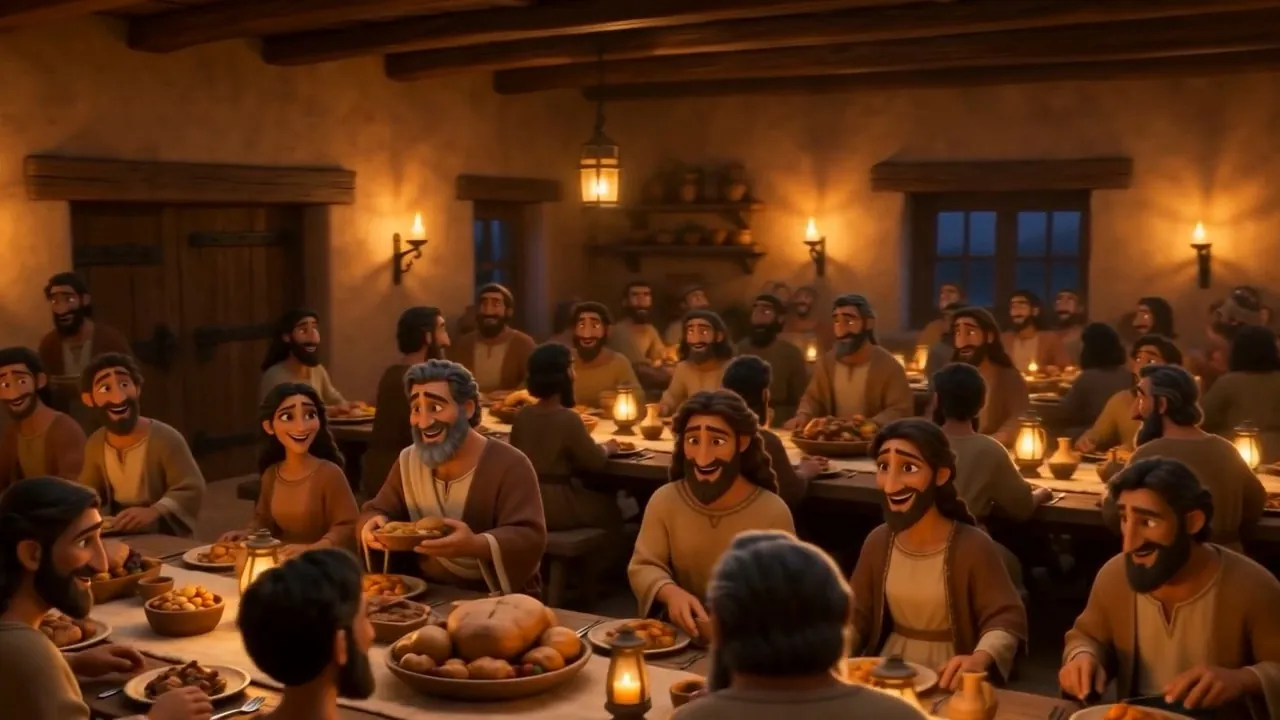
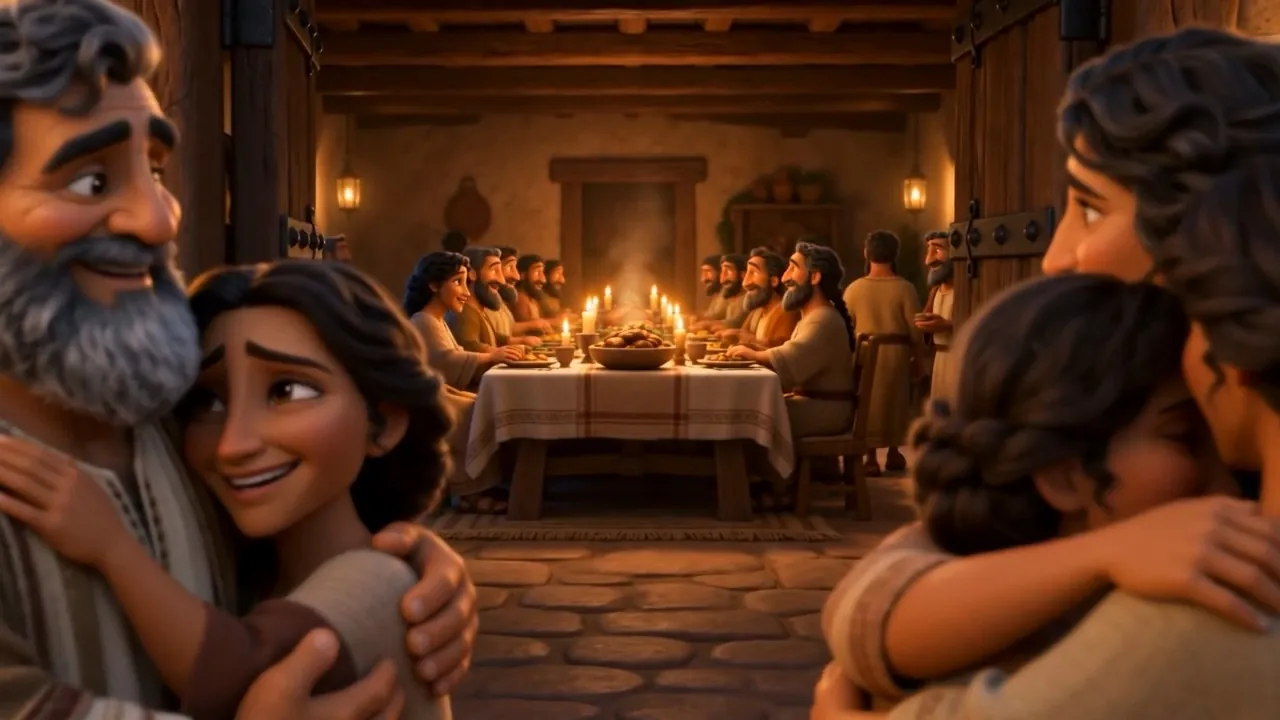
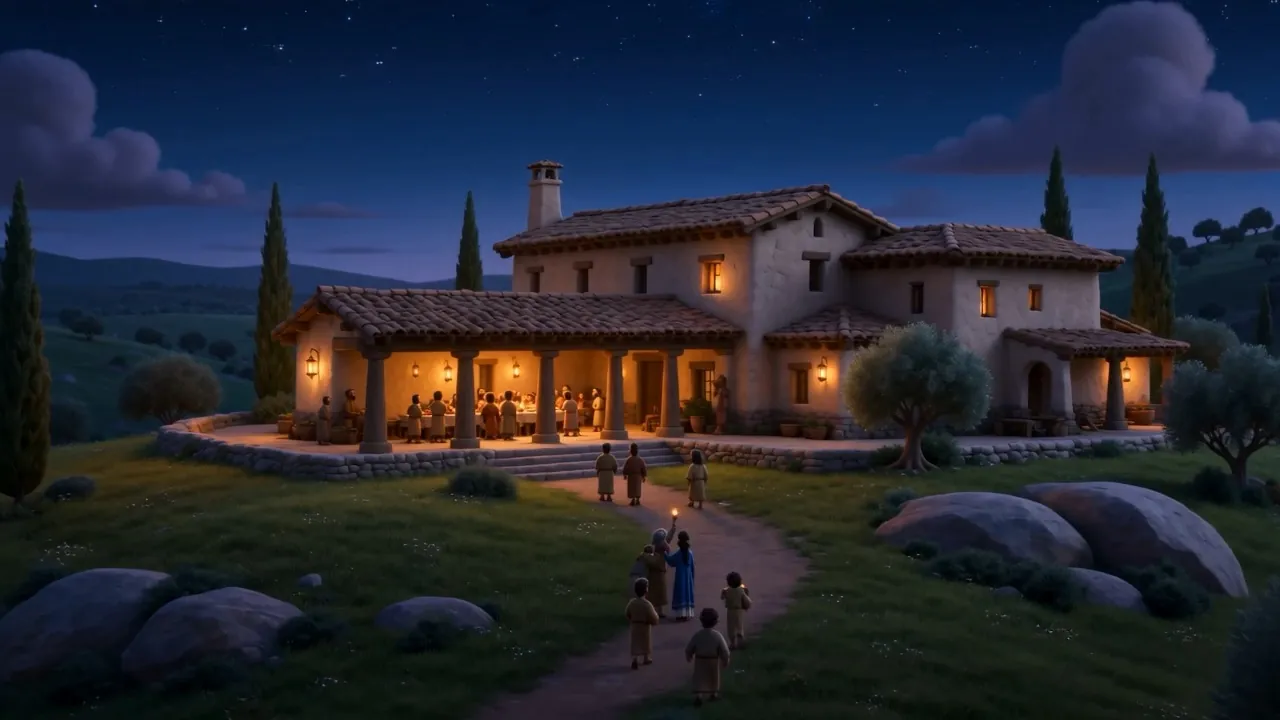
Then all his brothers, all his sisters, and all those who had been of his acquaintance before, came to him, and ate bread with him in his house. They comforted him, and each one gave him a piece of money and a gold ring. They arrive after the worst is over, which the book records without comment. They come, and they eat with him, and that counts. Job 42 : 11
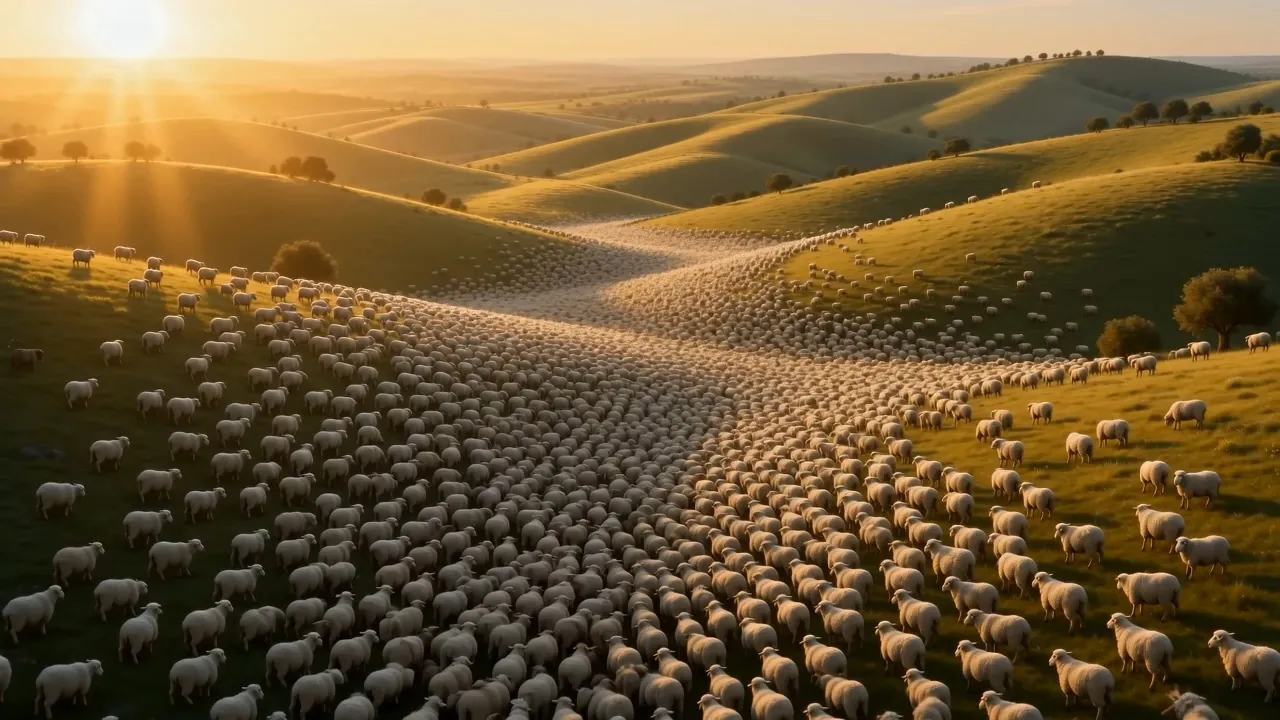
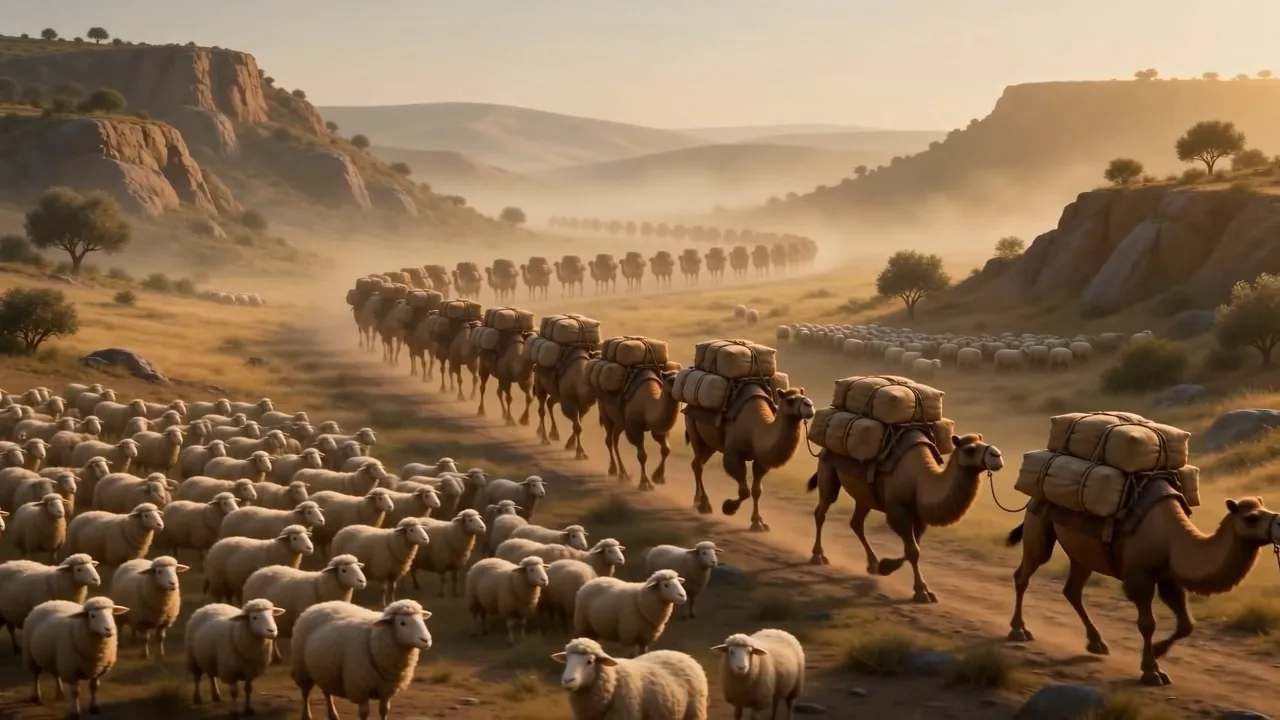
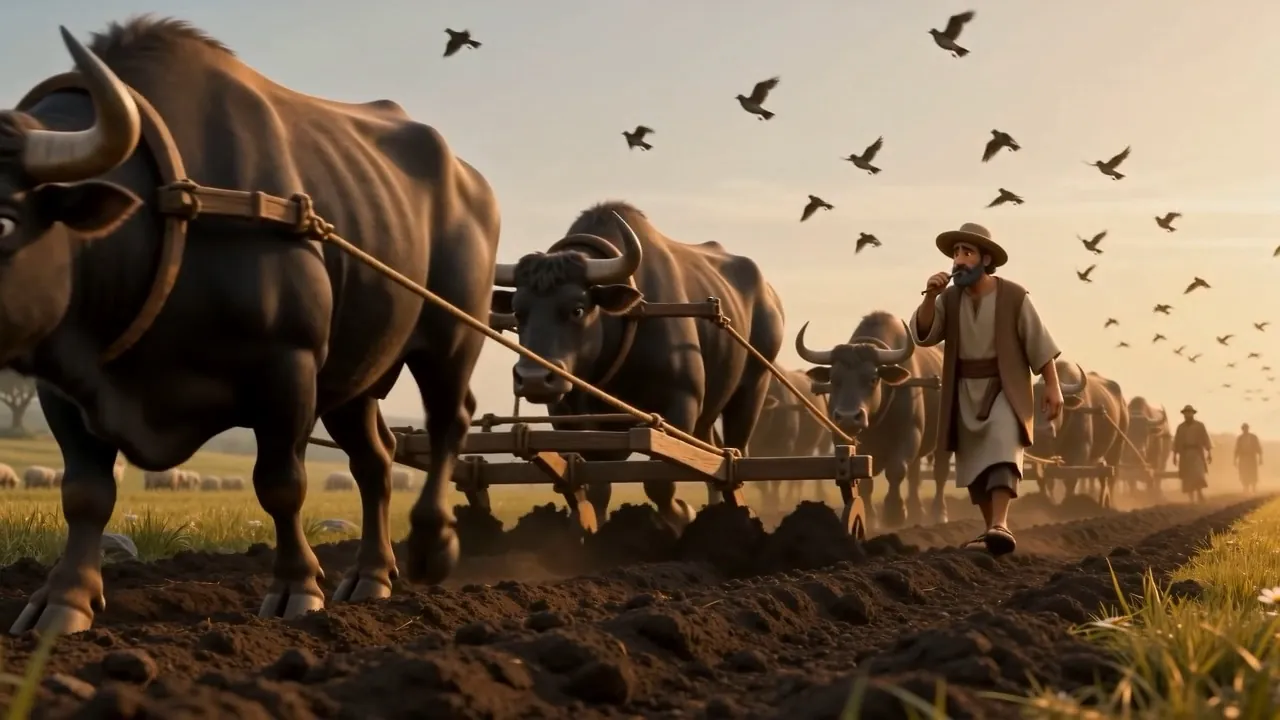
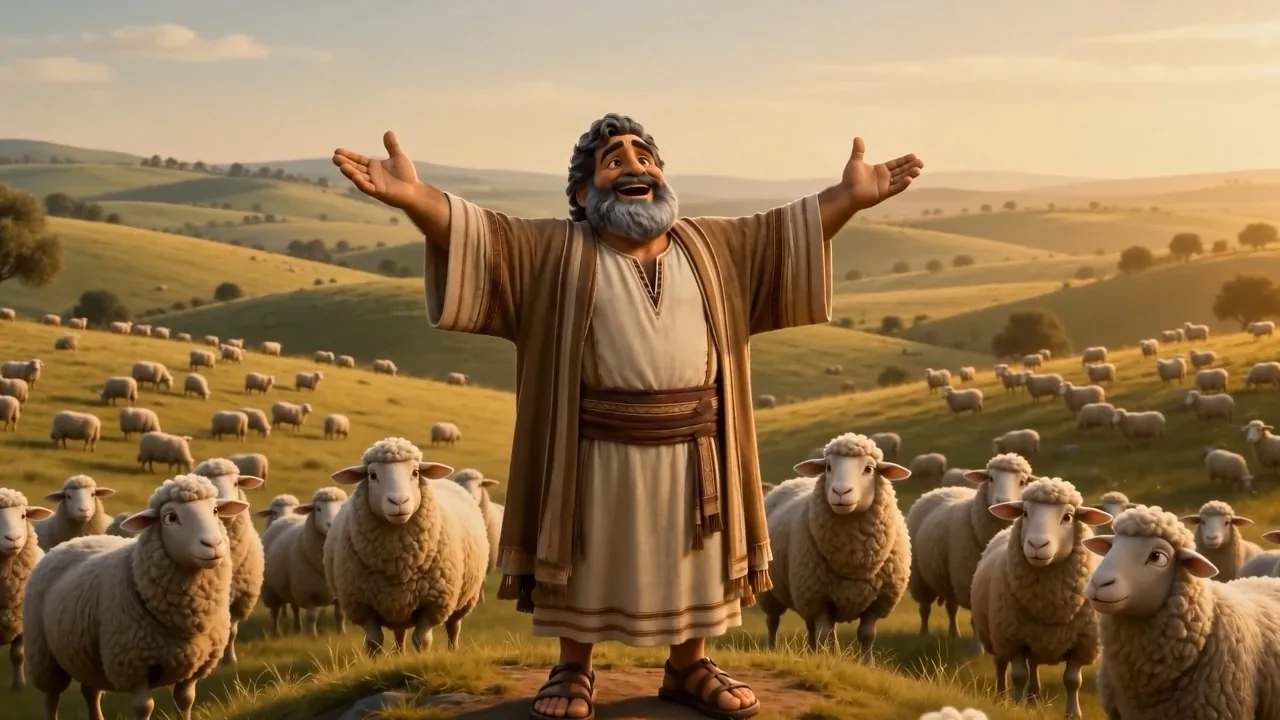
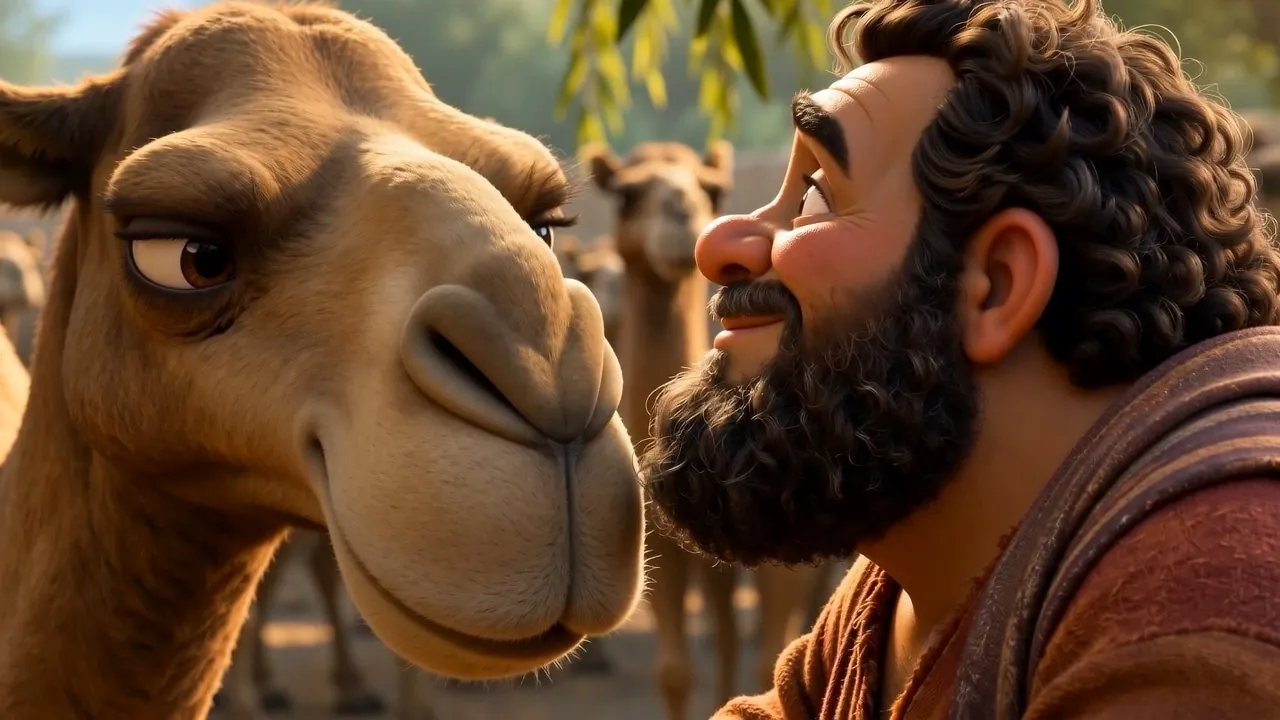
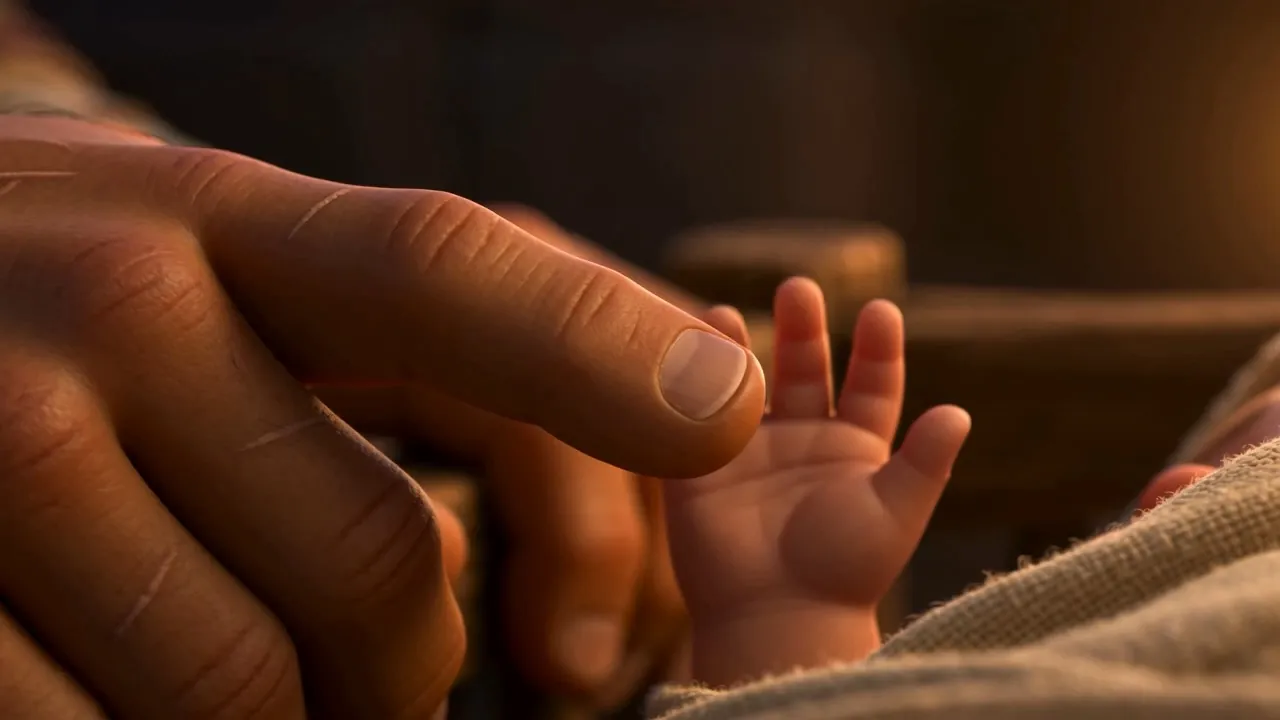
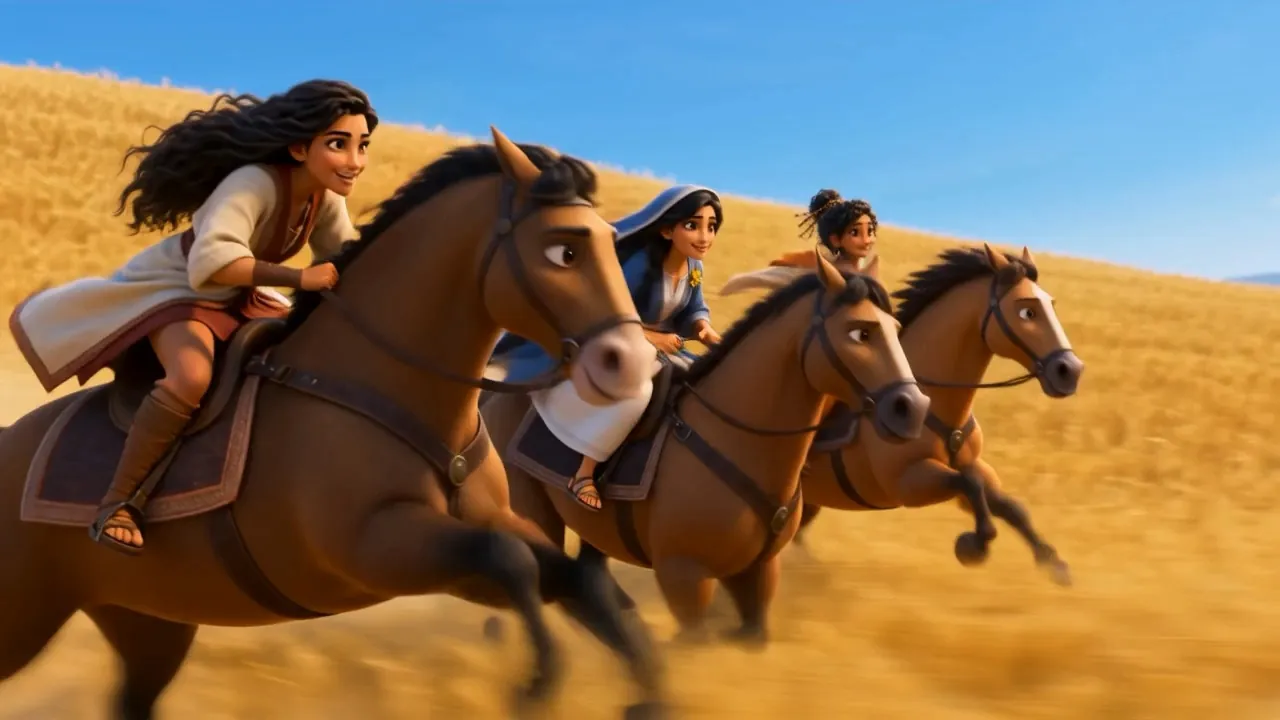
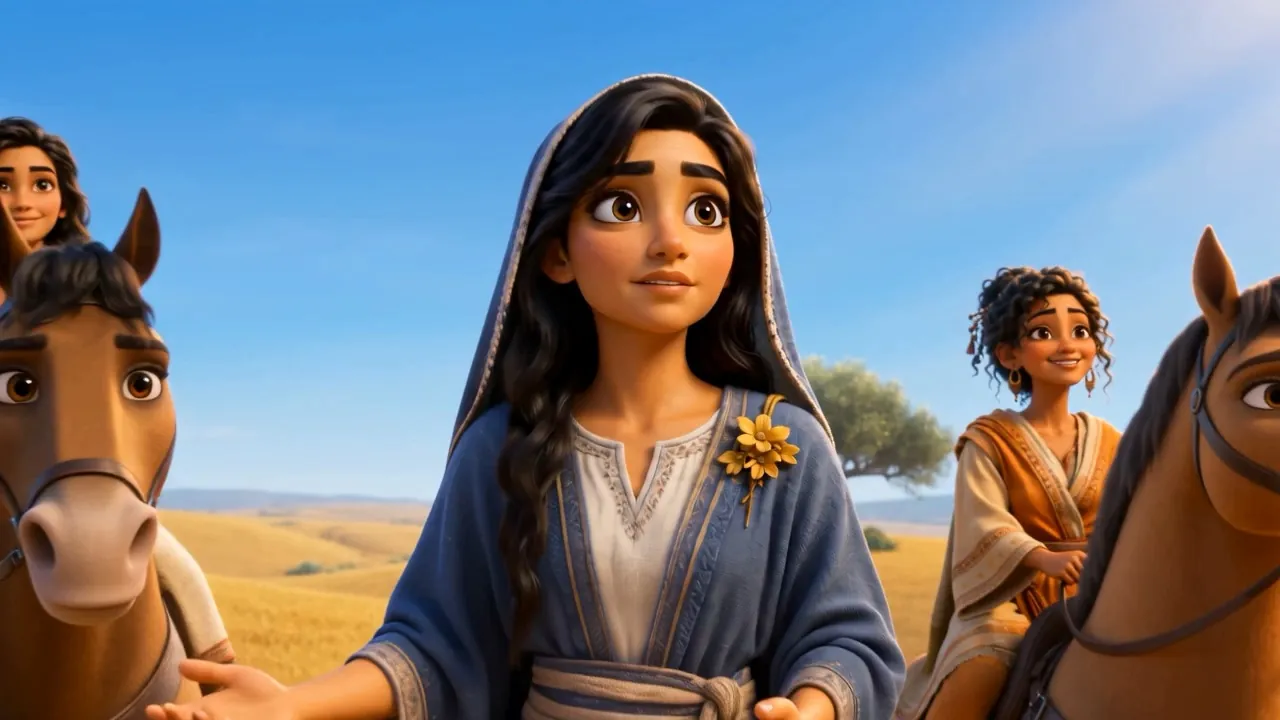
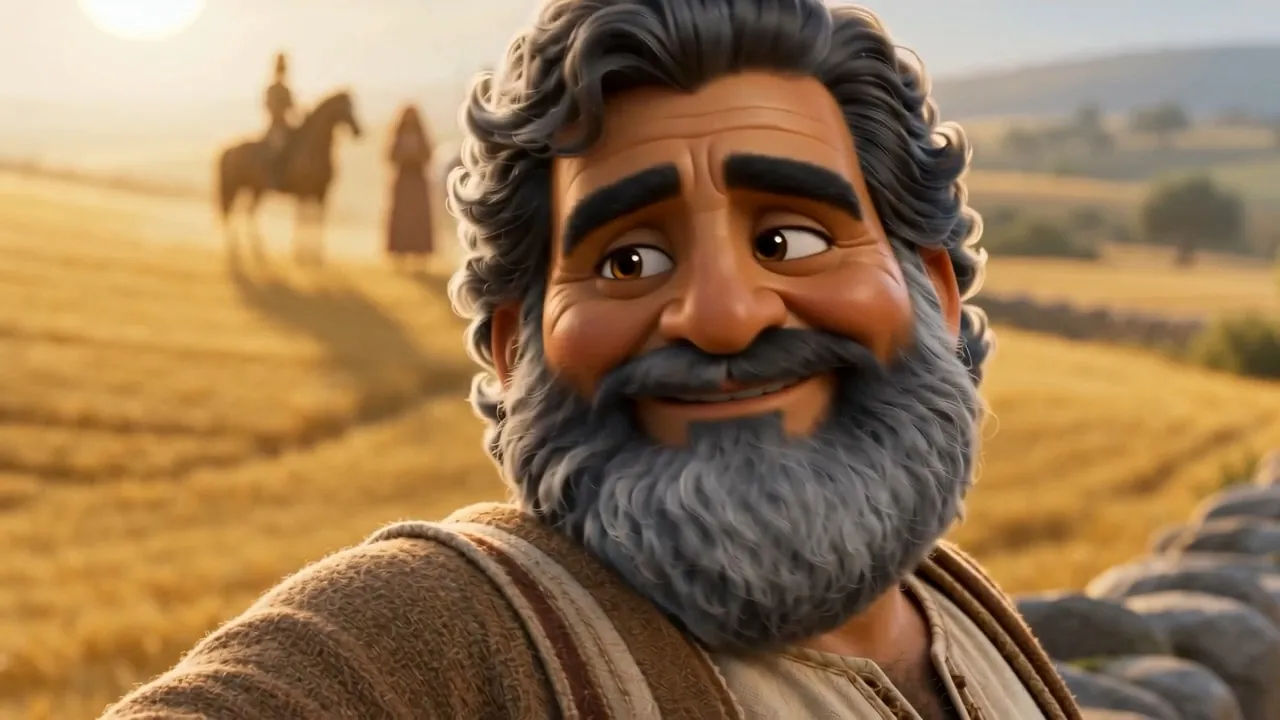
So Yahweh blessed the latter end of Job more than his beginning. Fourteen thousand sheep, six thousand camels, a thousand yoke of oxen. Seven sons and three daughters — and one strange, quiet sentence that would have raised eyebrows in every century since: their father gave them an inheritance among their brothers. Job 42 : 12–15
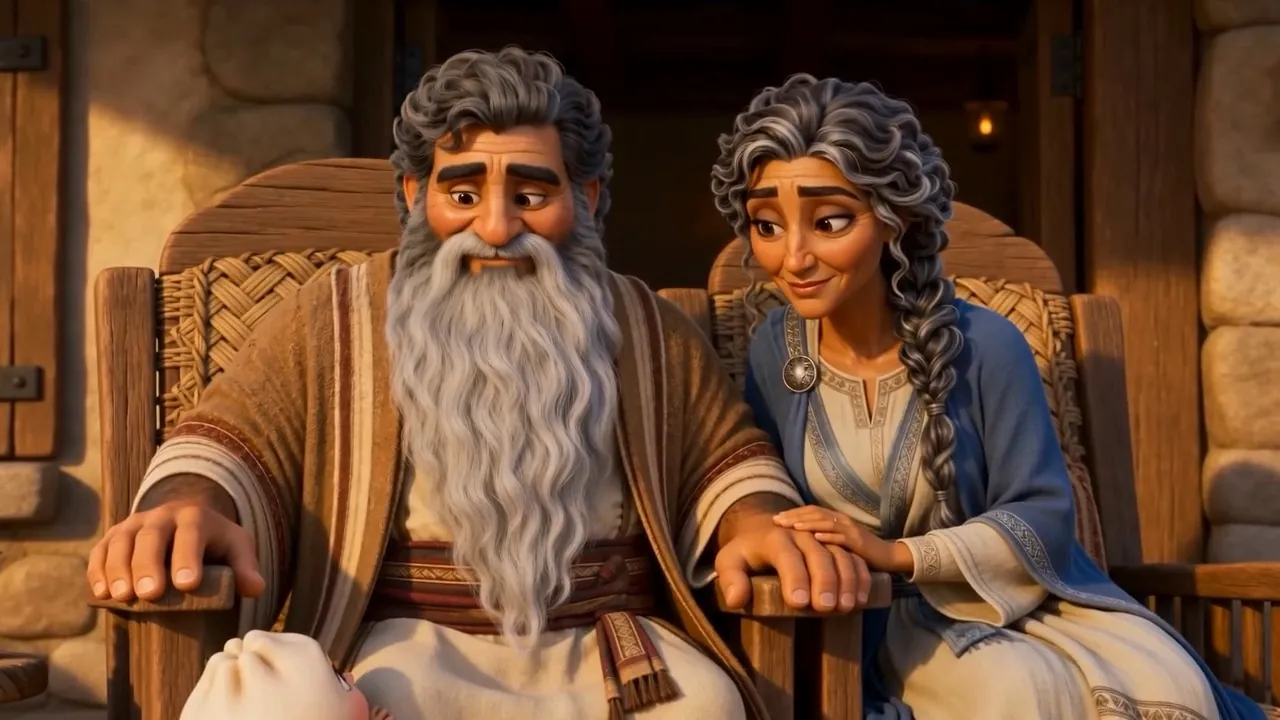
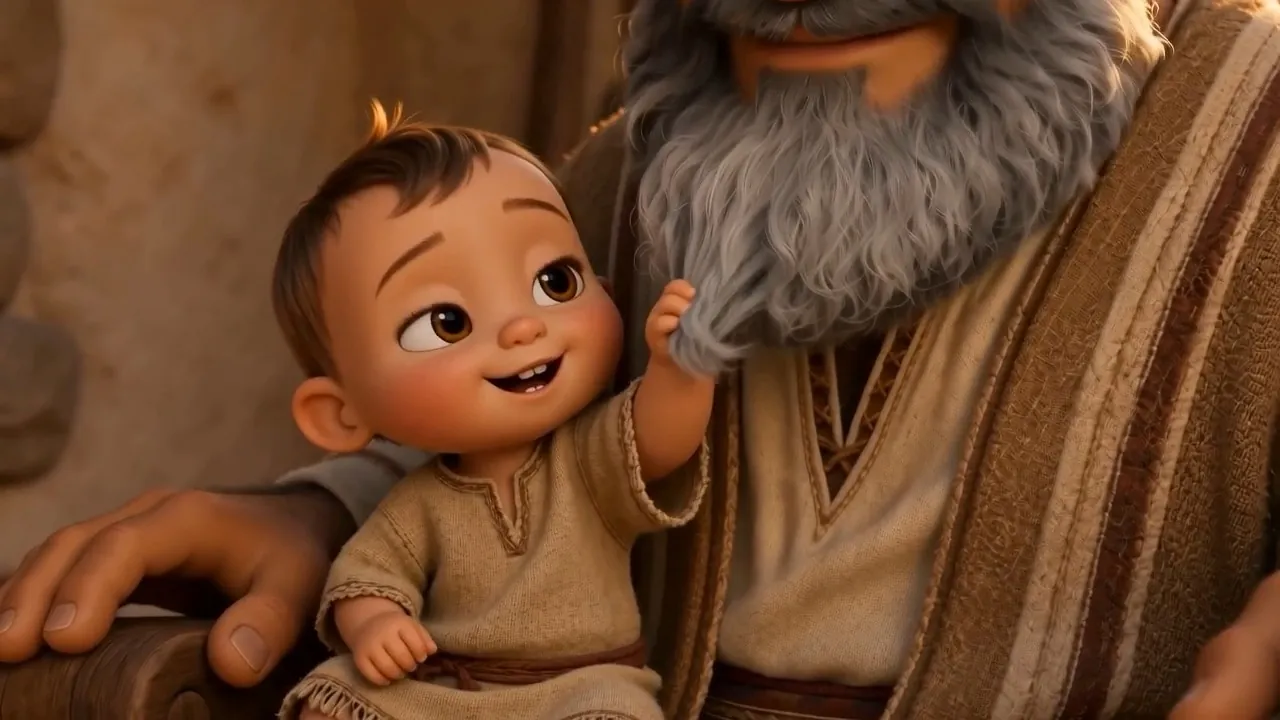
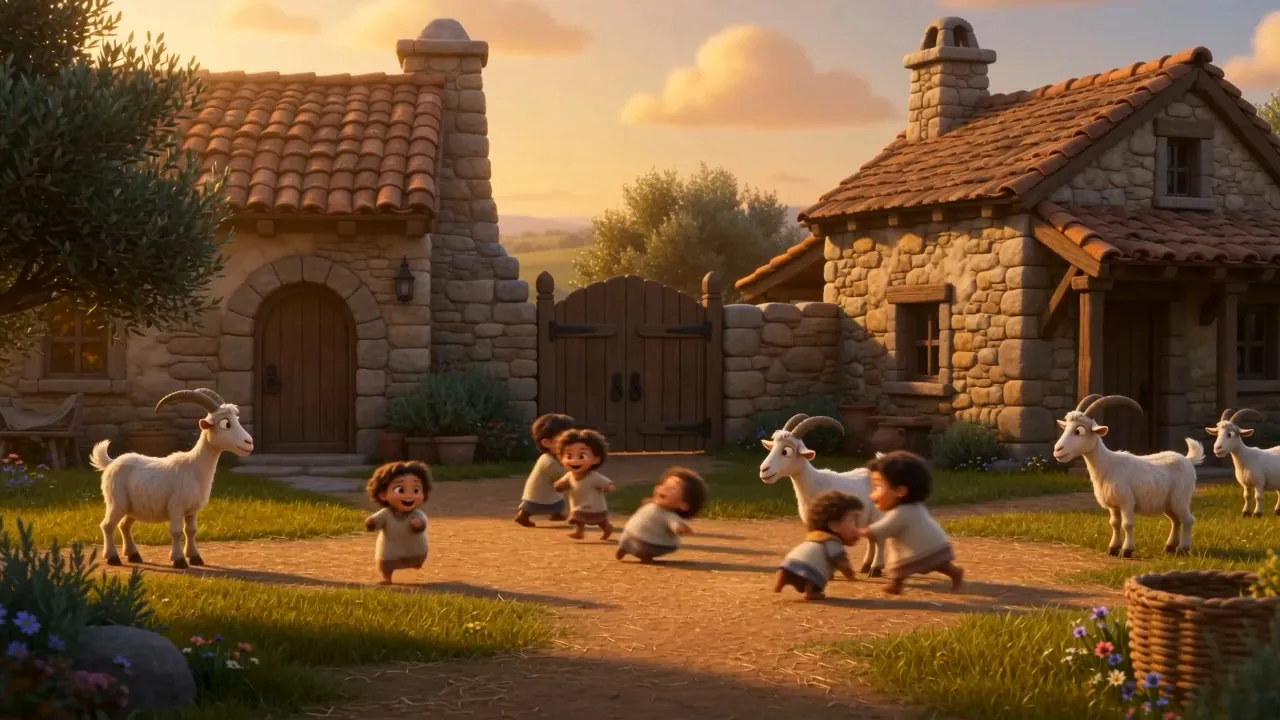
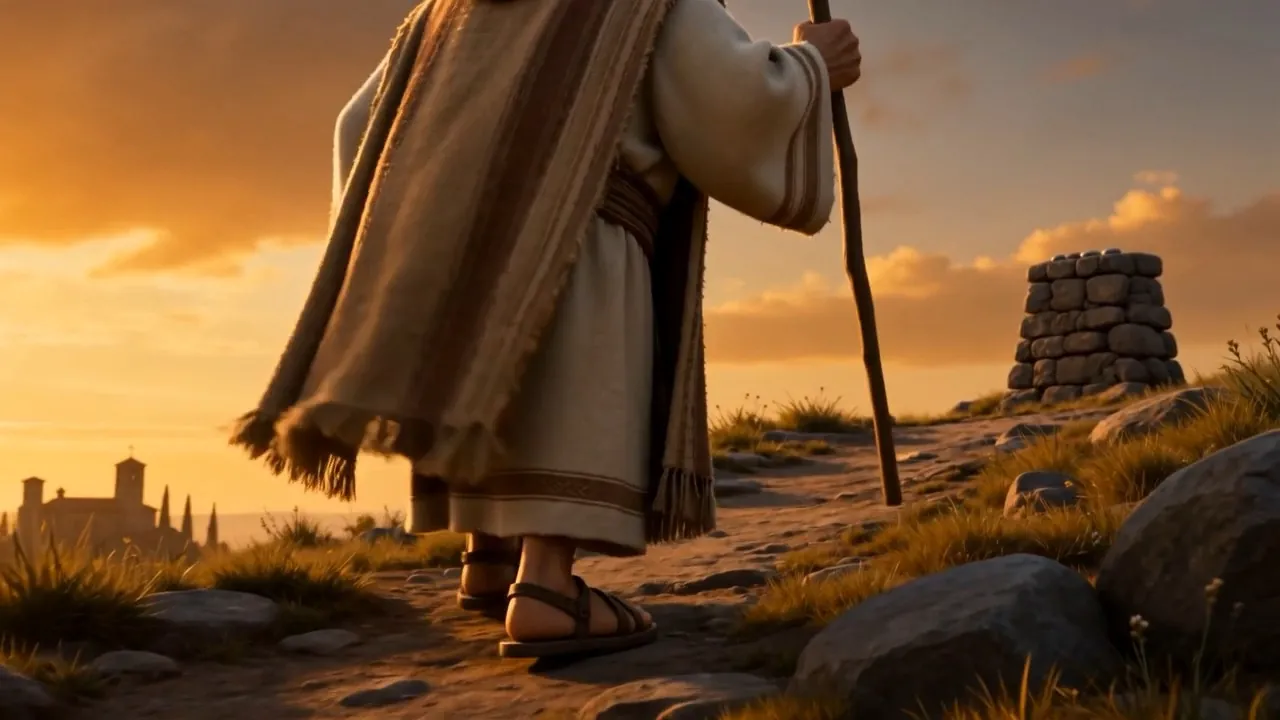

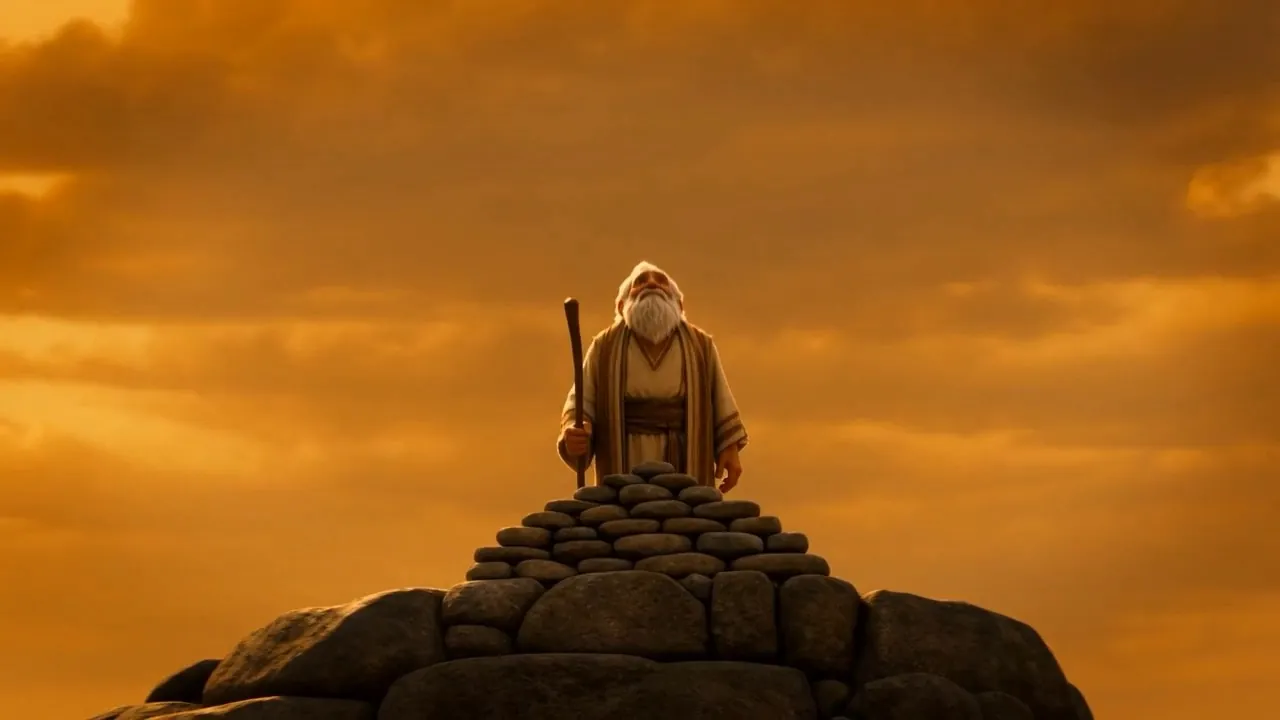
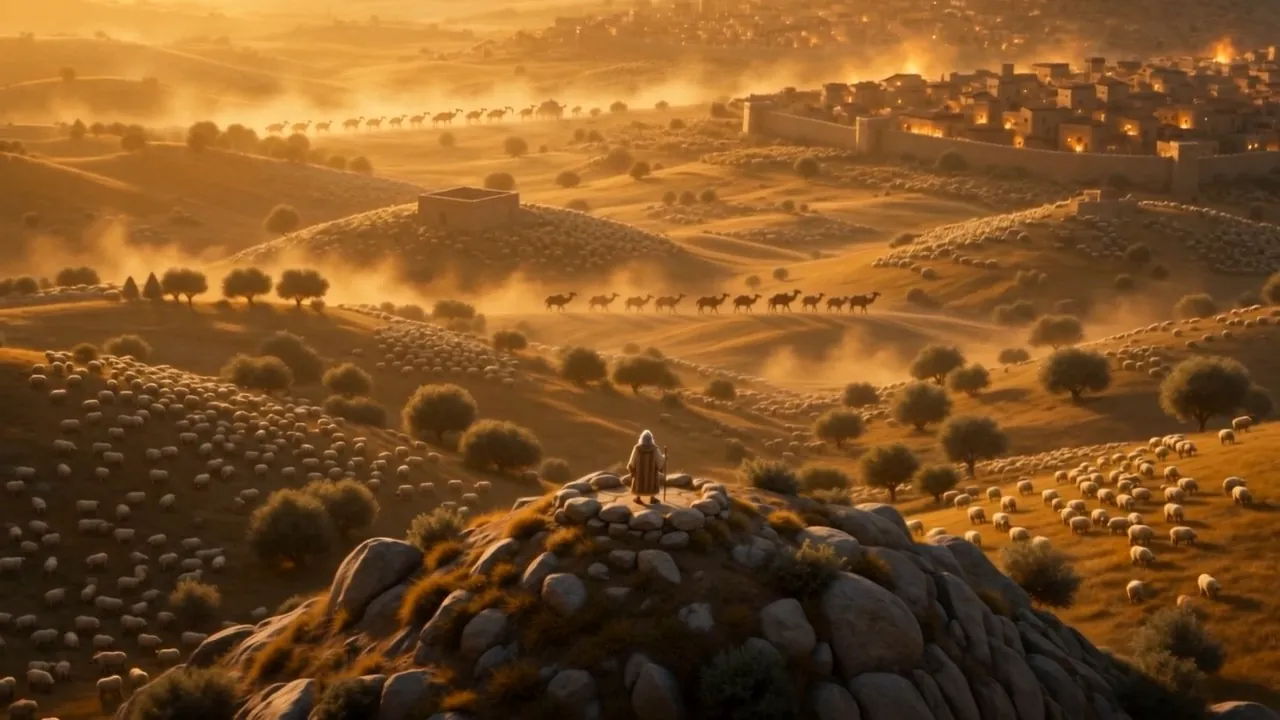
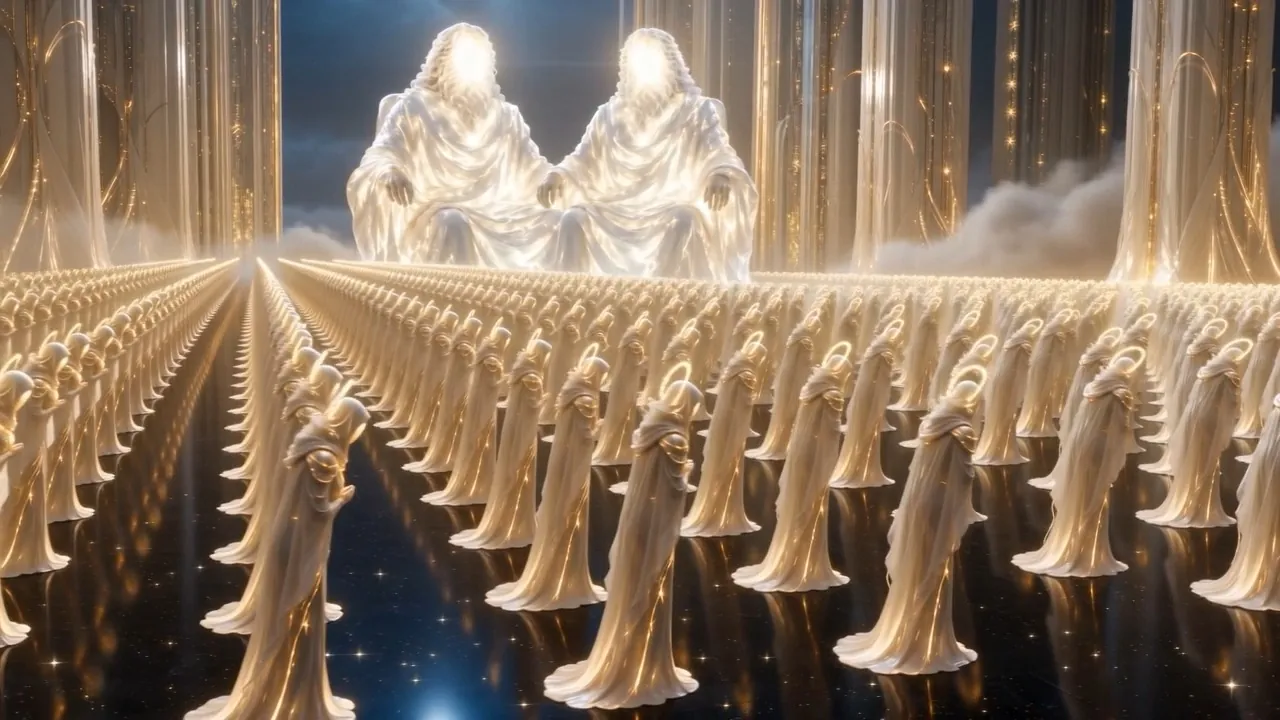

After this Job lived one hundred forty years, and saw his sons, and his sons' sons, to four generations. So Job died, being old and full of days. It climbs with him one last time to the little stone altar he was building before any of it happened — and then keeps climbing, back up through the cloud into the room where the whole thing started, and looks down. Nobody ever tells him. He never needed to be told. Job 42 : 16–17
Old, and full of days.
After the story
God never answers the question. He answers the man.
Read the speech again and notice what is missing: no wager, no accuser, no explanation, not one word about why. Job is never told, in this life or in this book. What he gets instead is a tour — the sea being told where to stop, rain falling on ground where nobody lives, a lioness being fed, an ostrich who cannot fly and does not care. And it is enough. "I had heard of you by the hearing of the ear, but now my eye sees you." The thing that healed him was not information. It was that God came, and spoke to him, by name.
Voices of the storm · hover or tap to turn
Job
"Behold, I am of small account. What shall I answer you? I lay my hand on my mouth."
— Job 40:4
The Whirlwind
"Where were you when I laid the foundations of the earth? Declare, if you have understanding."
— Job 38:4
Behemoth
"See now, behemoth, which I made as well as you. He eats grass as an ox."
— Job 40:15The whirlwind
How closely were you watching?
1. What does God's answer out of the whirlwind consist of?
Four chapters of them, and not one word about why Job suffered. "Where were you when I laid the foundations of the earth?" (Job 38:4).
2. What is Job's response?
The man who argued for thirty chapters gives the shortest speech in the book (Job 40:4; 42:5).
3. What does God say about the three friends?
They defended God for thirty chapters and got him wrong; Job shouted at the sky and got him right (Job 42:7).
4. When was Job restored?
"Yahweh turned the captivity of Job when he prayed for his friends" — the text is precise about the order (Job 42:10).
What this story teaches
The answer is a person, not an explanation.
God never tells Job why. He turns up, speaks to him directly, and takes him round the world he made. Job stops asking — not because he was satisfied with an argument, but because he was no longer talking to an absence.
"I had heard of you by the hearing of the ear, but now my eye sees you." Job 42:5He was restored when he prayed for them.
Not when he repented. The text is precise: "Yahweh turned the captivity of Job when he prayed for his friends" — the same men who had spent a month telling him he deserved it.
"Yahweh turned the captivity of Job, when he prayed for his friends." Job 42:10Nothing lost is replaced.
He gets twice the livestock and the same number of children, because children are not livestock. The book restores him without pretending the first ten did not exist.
"So Yahweh blessed the latter end of Job more than his beginning." Job 42:12Read the scripture itself. Job 38 · 40 · 42 — World English Bible
Job 38
1Then Yahweh answered Job out of the whirlwind,
2“Who is this who darkens counsel by words without knowledge?
3Brace yourself like a man, for I will question you, then you answer me!
4“Where were you when I laid the foundations of the earth? Declare, if you have understanding.
5Who determined its measures, if you know? Or who stretched the line on it?
6Whereupon were its foundations fastened? Or who laid its cornerstone,
7when the morning stars sang together, and all the sons of God shouted for joy?
8“Or who shut up the sea with doors, when it broke out of the womb,
9when I made clouds its garment, and wrapped it in thick darkness,
10marked out for it my bound, set bars and doors,
11and said, ‘Here you may come, but no further. Here your proud waves shall be stayed?’
12“Have you commanded the morning in your days, and caused the dawn to know its place;
13that it might take hold of the ends of the earth, and shake the wicked out of it?
14It is changed as clay under the seal, and presented as a garment.
15From the wicked, their light is withheld. The high arm is broken.
16“Have you entered into the springs of the sea? Or have you walked in the recesses of the deep?
17Have the gates of death been revealed to you? Or have you seen the gates of the shadow of death?
18Have you comprehended the earth in its width? Declare, if you know it all.
19“What is the way to the dwelling of light? As for darkness, where is its place,
20that you should take it to its bound, that you should discern the paths to its house?
21Surely you know, for you were born then, and the number of your days is great!
22Have you entered the treasuries of the snow, or have you seen the treasures of the hail,
23which I have reserved against the time of trouble, against the day of battle and war?
24By what way is the lightning distributed, or the east wind scattered on the earth?
25Who has cut a channel for the flood water, or the path for the thunderstorm;
26To cause it to rain on a land where no man is; on the wilderness, in which there is no man;
27to satisfy the waste and desolate ground, to cause the tender grass to grow?
28Does the rain have a father? Or who fathers the drops of dew?
29Out of whose womb came the ice? The gray frost of the sky, who has given birth to it?
30The waters become hard like stone, when the surface of the deep is frozen.
31“Can you bind the cluster of the Pleiades, or loosen the cords of Orion?
32Can you lead the constellations out in their season? Or can you guide the Bear with her cubs?
33Do you know the laws of the heavens? Can you establish its dominion over the earth?
34“Can you lift up your voice to the clouds, That abundance of waters may cover you?
35Can you send out lightnings, that they may go? Do they report to you, ‘Here we are?’
36Who has put wisdom in the inward parts? Or who has given understanding to the mind?
37Who can count the clouds by wisdom? Or who can pour out the bottles of the sky,
38when the dust runs into a mass, and the clods of earth stick together?
39“Can you hunt the prey for the lioness, or satisfy the appetite of the young lions,
40when they crouch in their dens, and lie in wait in the thicket?
41Who provides for the raven his prey, when his young ones cry to God, and wander for lack of food?
Job 40
1Moreover Yahweh answered Job,
2“Shall he who argues contend with the Almighty? He who argues with God, let him answer it.”
3Then Job answered Yahweh,
4“Behold, I am of small account. What shall I answer you? I lay my hand on my mouth.
5I have spoken once, and I will not answer; Yes, twice, but I will proceed no further.”
6Then Yahweh answered Job out of the whirlwind,
7“Now brace yourself like a man. I will question you, and you will answer me.
8Will you even annul my judgment? Will you condemn me, that you may be justified?
9Or do you have an arm like God? Can you thunder with a voice like him?
10“Now deck yourself with excellency and dignity. Array yourself with honor and majesty.
11Pour out the fury of your anger. Look at everyone who is proud, and bring him low.
12Look at everyone who is proud, and humble him. Crush the wicked in their place.
13Hide them in the dust together. Bind their faces in the hidden place.
14Then I will also admit to you that your own right hand can save you.
15“See now, behemoth, which I made as well as you. He eats grass as an ox.
16Look now, his strength is in his thighs. His force is in the muscles of his belly.
17He moves his tail like a cedar. The sinews of his thighs are knit together.
18His bones are like tubes of brass. His limbs are like bars of iron.
19He is the chief of the ways of God. He who made him gives him his sword.
20Surely the mountains produce food for him, where all the animals of the field play.
21He lies under the lotus trees, in the covert of the reed, and the marsh.
22The lotuses cover him with their shade. The willows of the brook surround him.
23Behold, if a river overflows, he doesn’t tremble. He is confident, though the Jordan swells even to his mouth.
24Shall any take him when he is on the watch, or pierce through his nose with a snare?
Job 42
1Then Job answered Yahweh,
2“I know that you can do all things, and that no purpose of yours can be restrained.
3You asked, ‘Who is this who hides counsel without knowledge?’ therefore I have uttered that which I did not understand, things too wonderful for me, which I didn’t know.
4You said, ‘Listen, now, and I will speak; I will question you, and you will answer me.’
5I had heard of you by the hearing of the ear, but now my eye sees you.
6Therefore I abhor myself, and repent in dust and ashes.”
7It was so, that after Yahweh had spoken these words to Job, Yahweh said to Eliphaz the Temanite, “My wrath is kindled against you, and against your two friends; for you have not spoken of me the thing that is right, as my servant Job has.
8Now therefore, take to yourselves seven bulls and seven rams, and go to my servant Job, and offer up for yourselves a burnt offering; and my servant Job shall pray for you, for I will accept him, that I not deal with you according to your folly. For you have not spoken of me the thing that is right, as my servant Job has.”
9So Eliphaz the Temanite and Bildad the Shuhite and Zophar the Naamathite went, and did what Yahweh commanded them, and Yahweh accepted Job.
10Yahweh turned the captivity of Job, when he prayed for his friends. Yahweh gave Job twice as much as he had before.
11Then came there to him all his brothers, and all his sisters, and all those who had been of his acquaintance before, and ate bread with him in his house. They comforted him, and consoled him concerning all the evil that Yahweh had brought on him. Everyone also gave him a piece of money, and everyone a ring of gold.
12So Yahweh blessed the latter end of Job more than his beginning. He had fourteen thousand sheep, six thousand camels, one thousand yoke of oxen, and a thousand female donkeys.
13He had also seven sons and three daughters.
14He called the name of the first, Jemimah; and the name of the second, Keziah; and the name of the third, Keren Happuch.
15In all the land were no women found so beautiful as the daughters of Job. Their father gave them an inheritance among their brothers.
16After this Job lived one hundred forty years, and saw his sons, and his sons’ sons, to four generations.
17So Job died, being old and full of days.
World English Bible (WEB) — a public-domain modern English translation. Read it freely, share it freely.
The Book of Job — animated film in production
These scenes are real frames from the film.
Help us finish it — and every story like it — free for the world.