The Book of Exodus · The Making of Moses
Drawn outof the water.
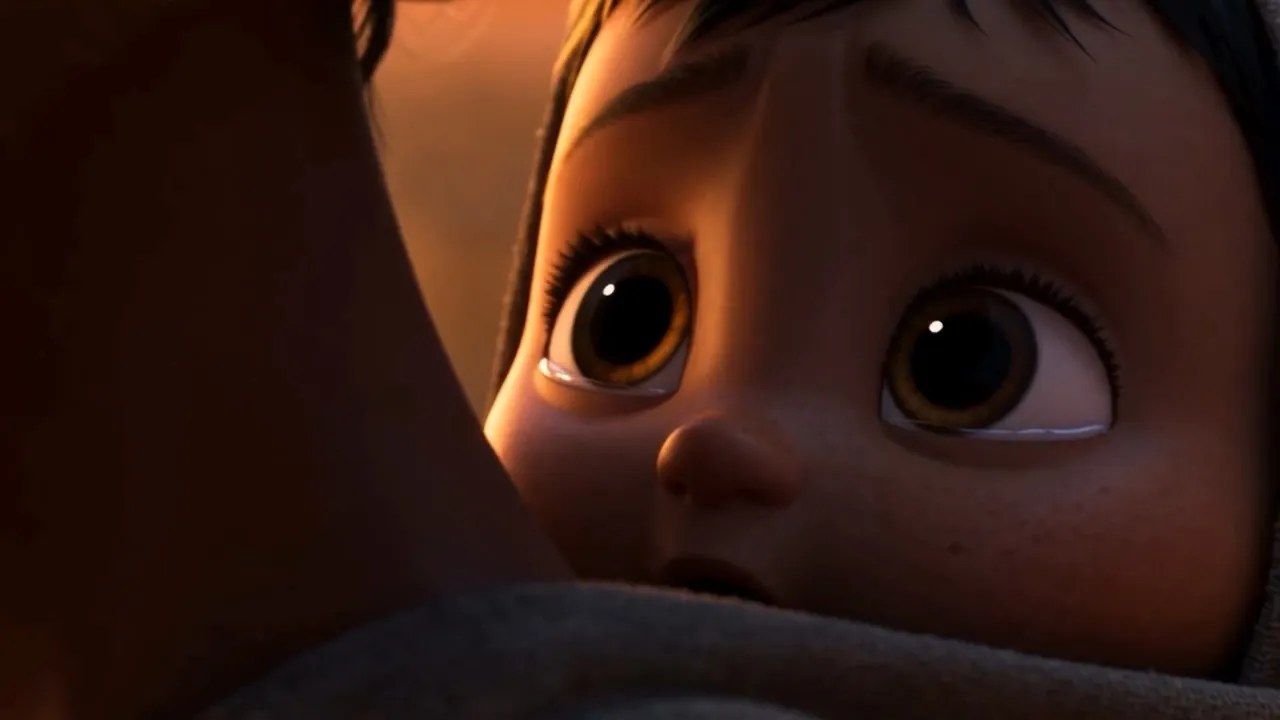
A mother's basket, a princess's mercy, a fugitive’s exile — and the long road to Midian. Every scene below is a real frame from our animated film.

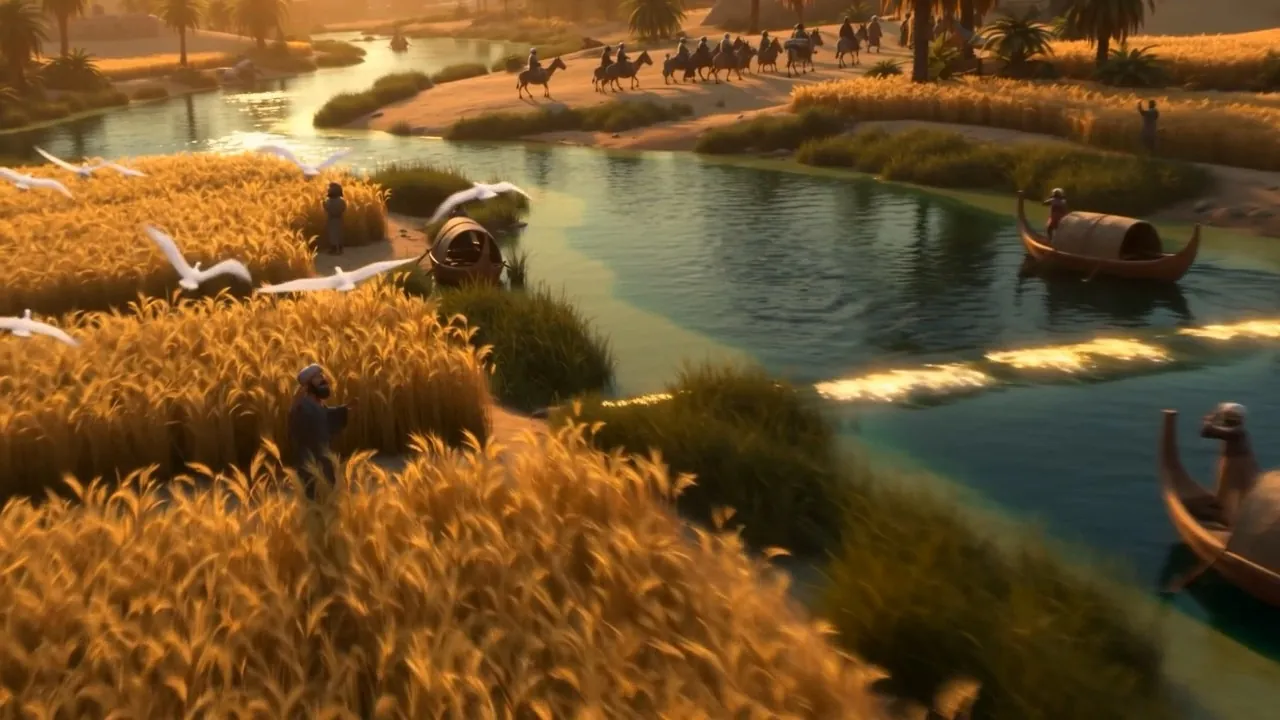
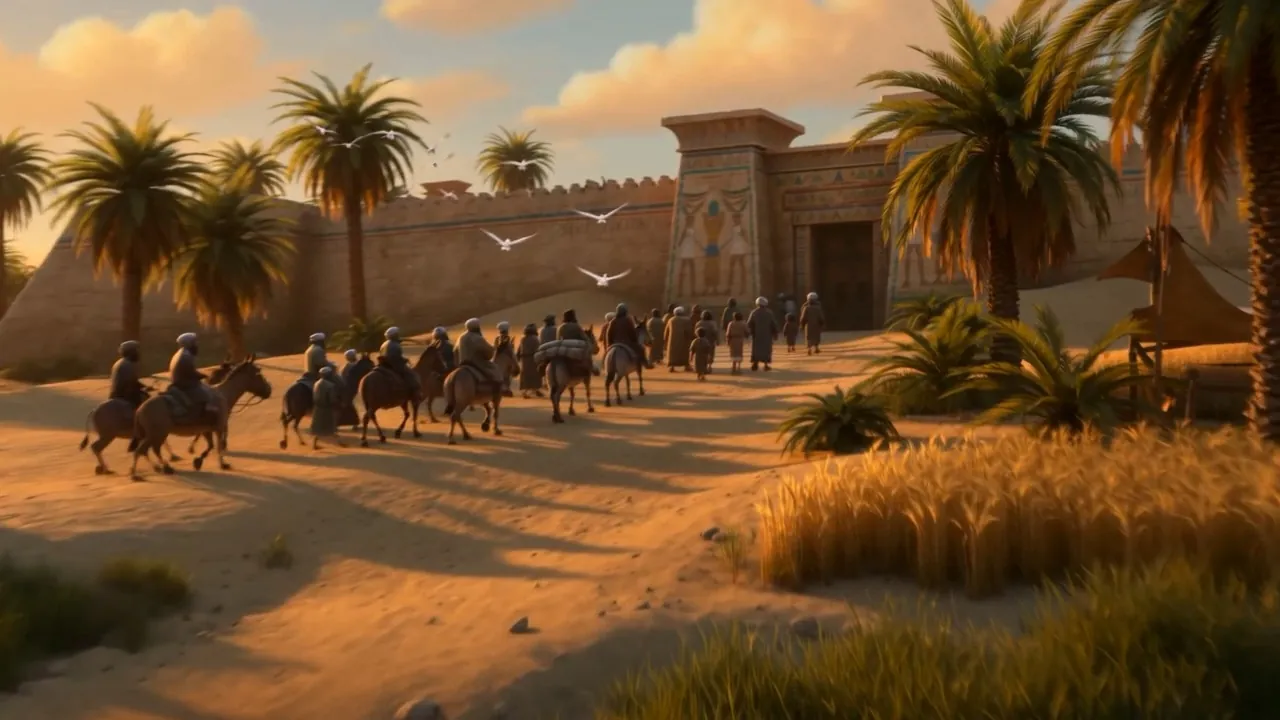
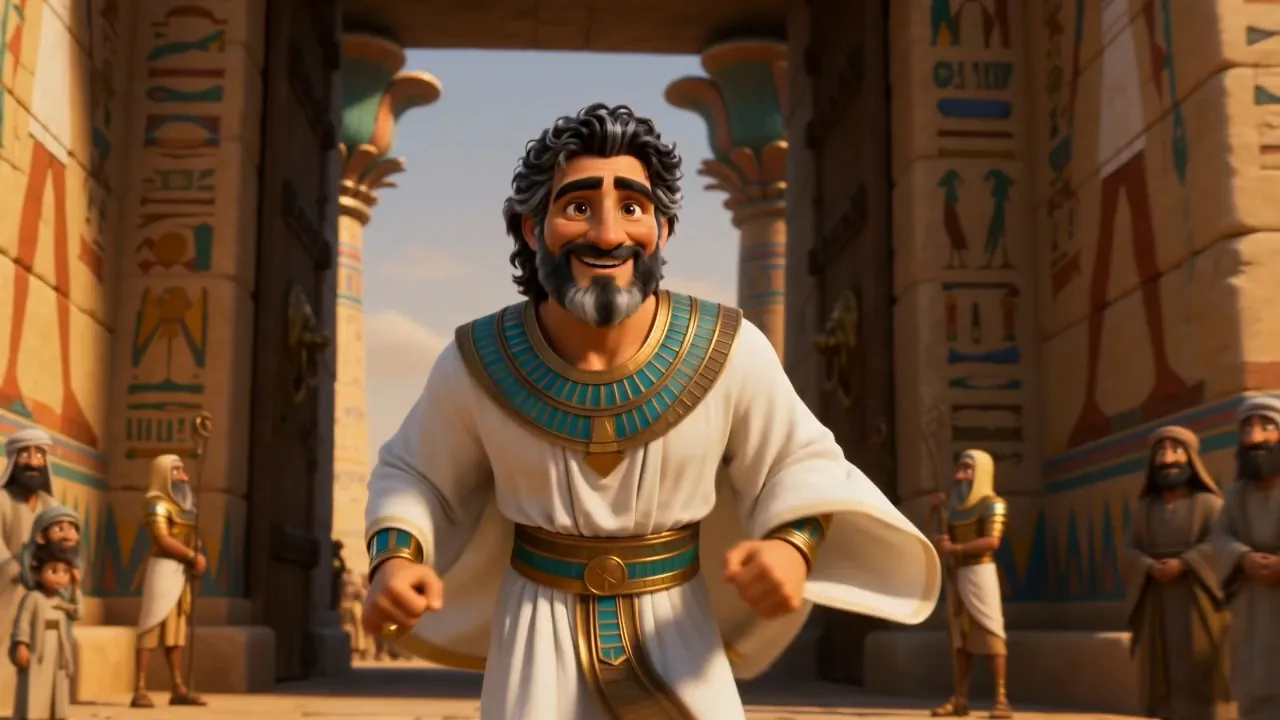
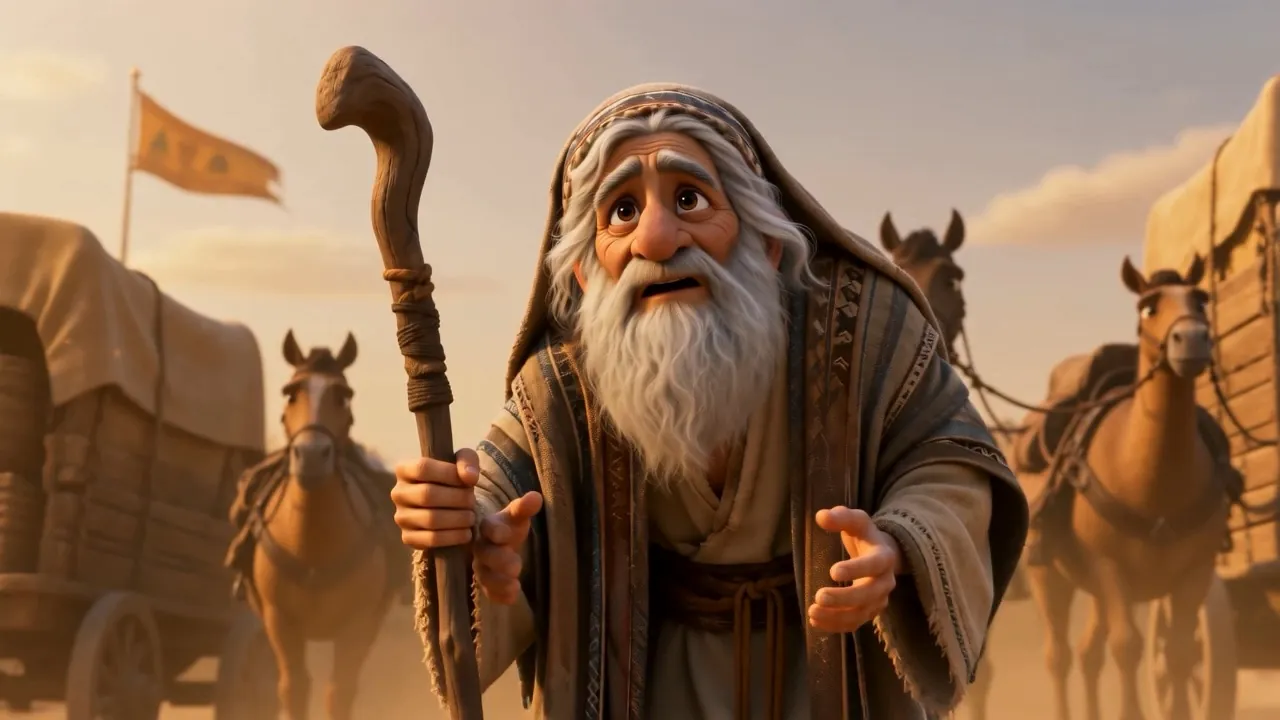
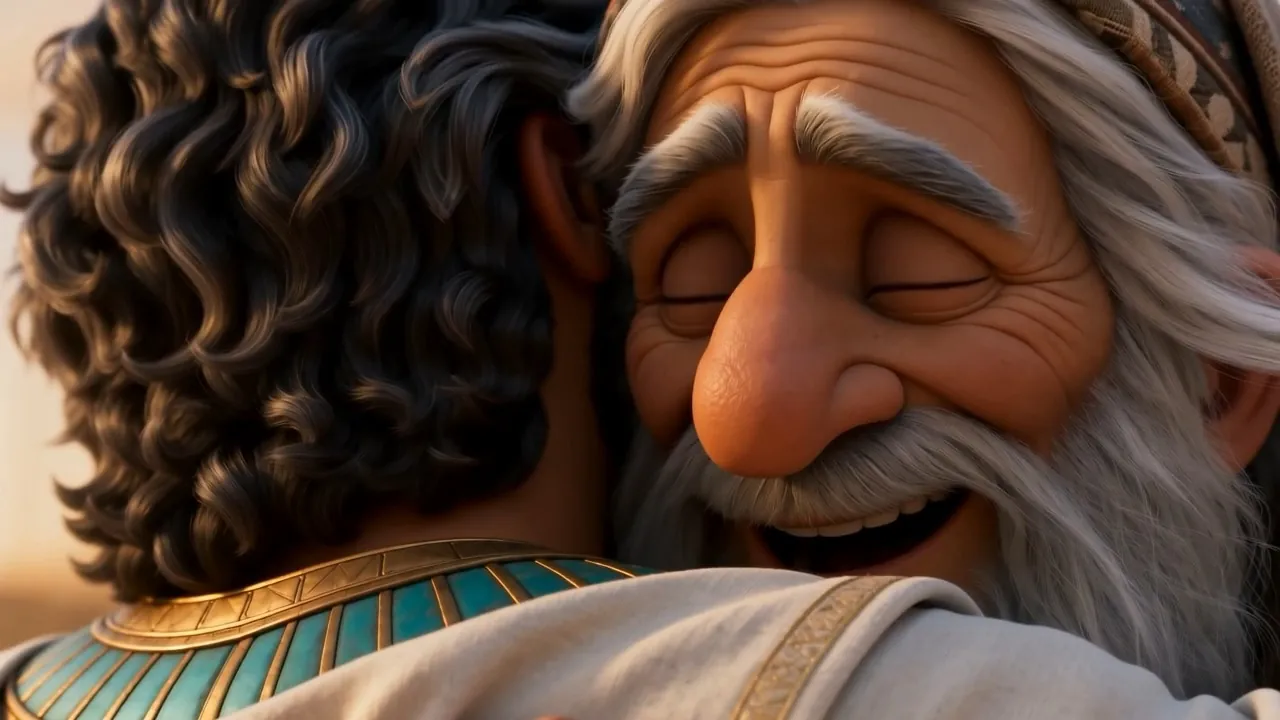
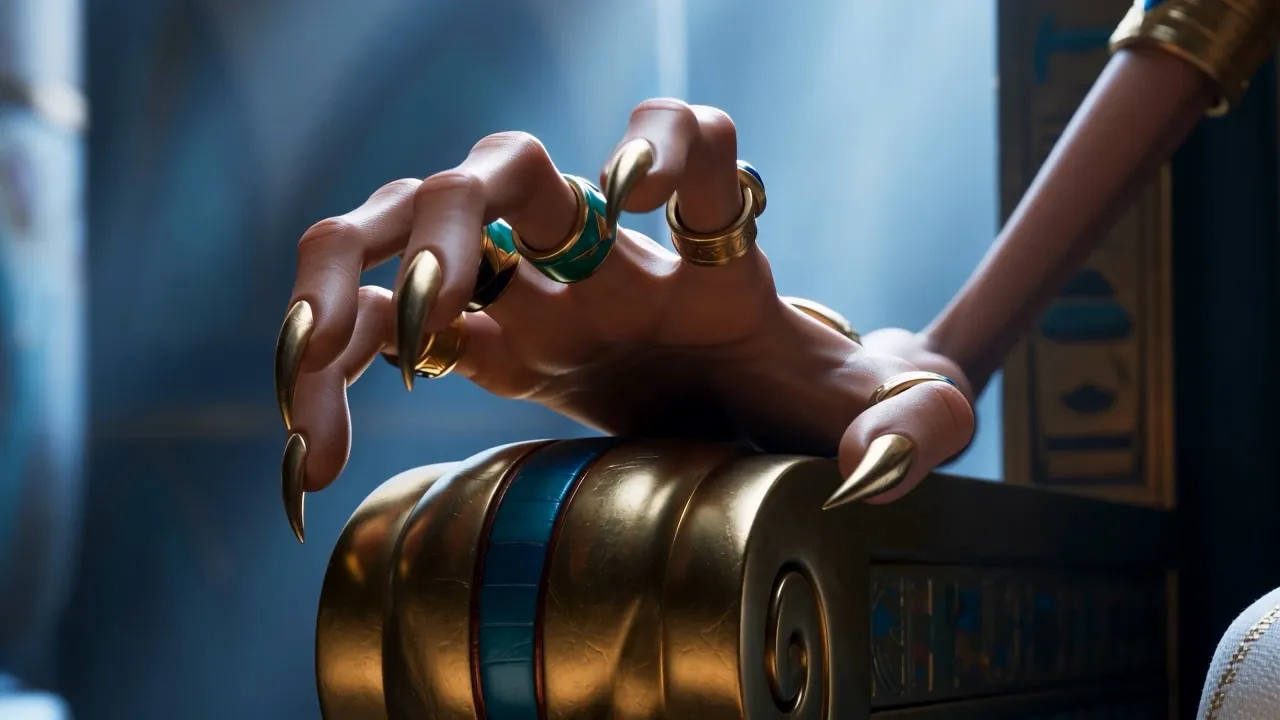
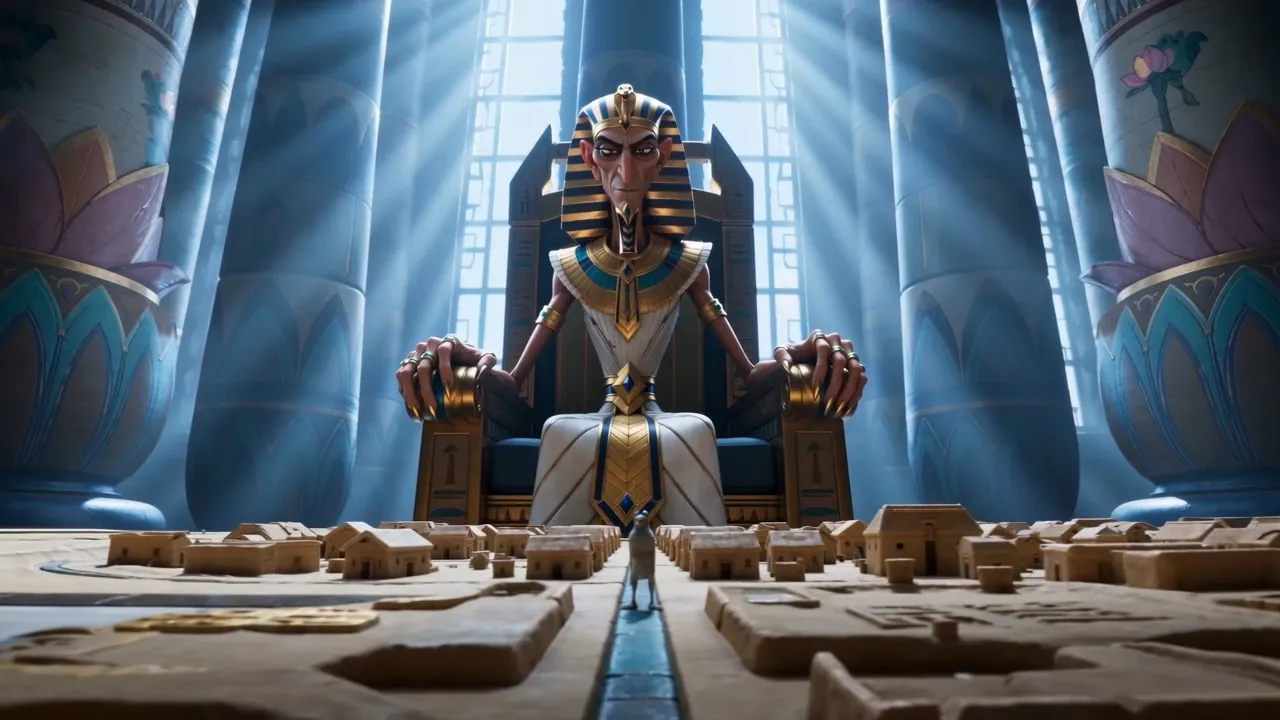
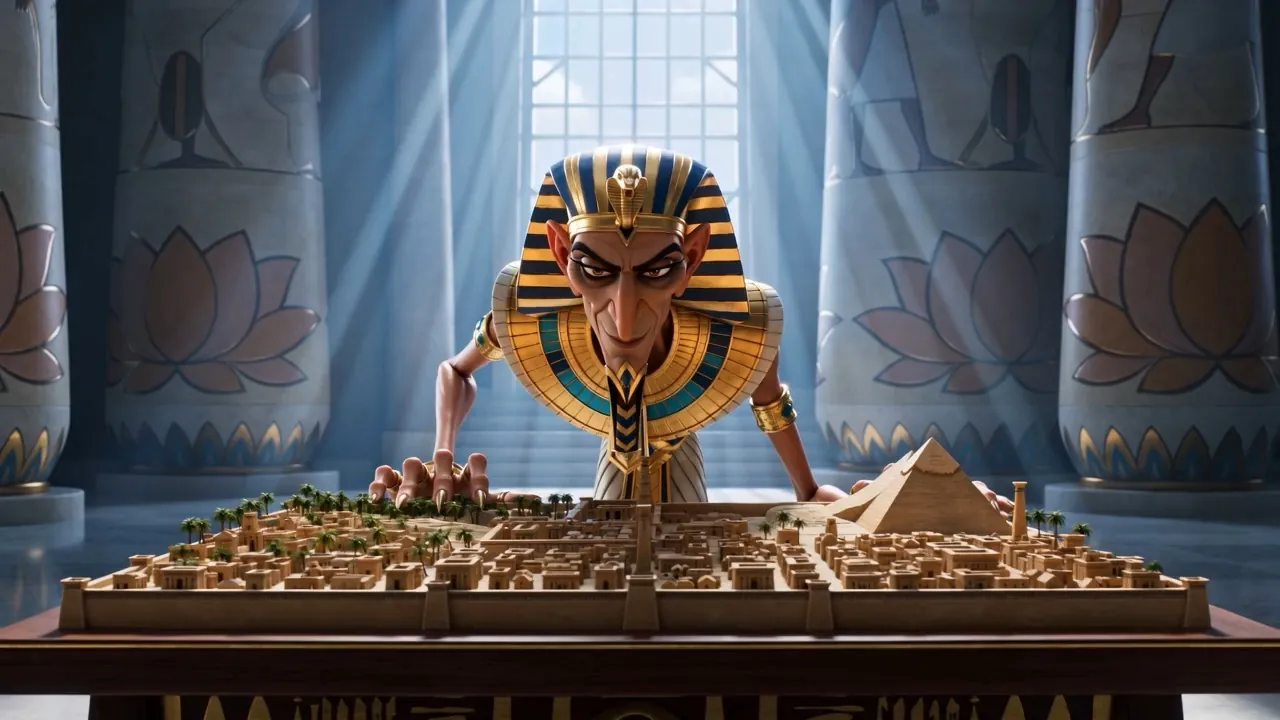
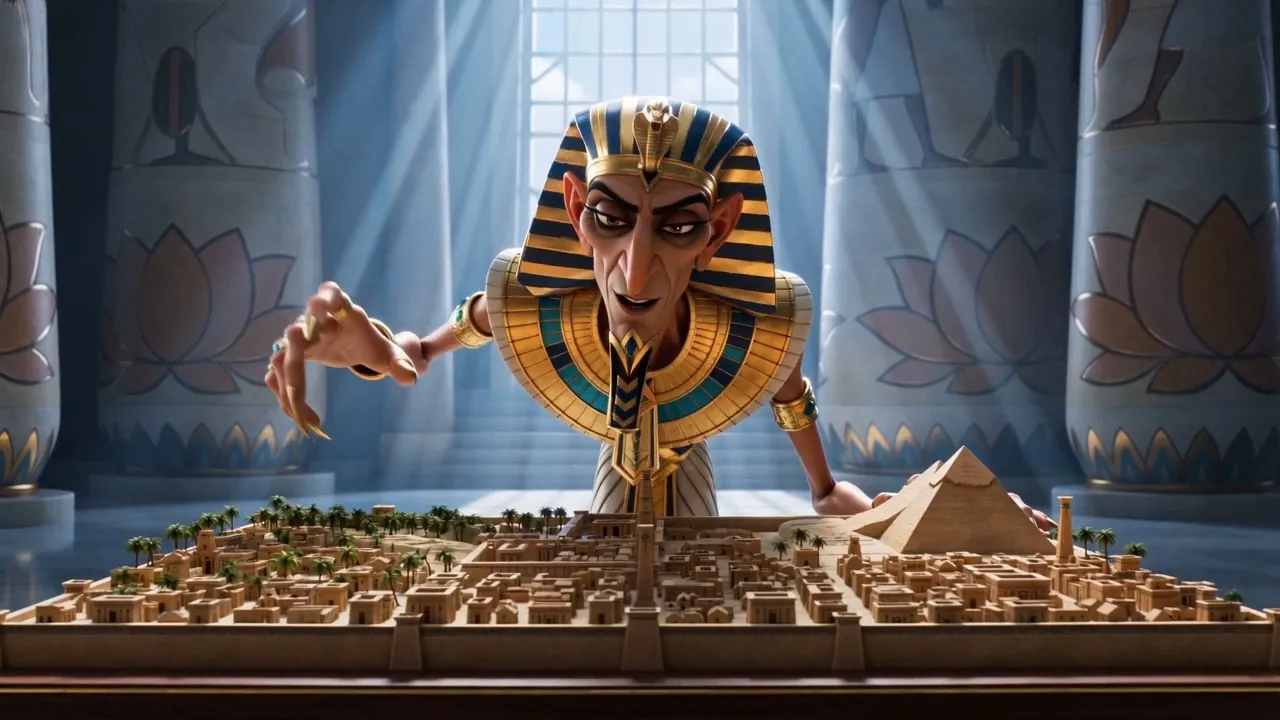
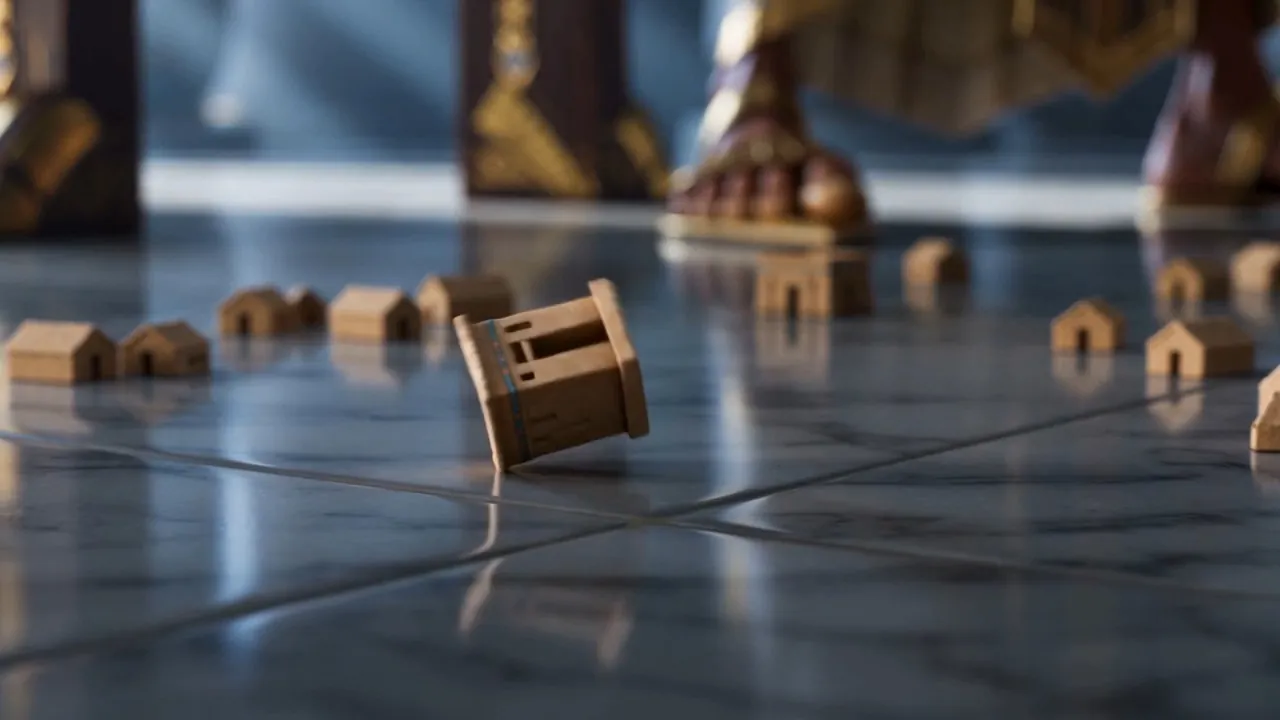
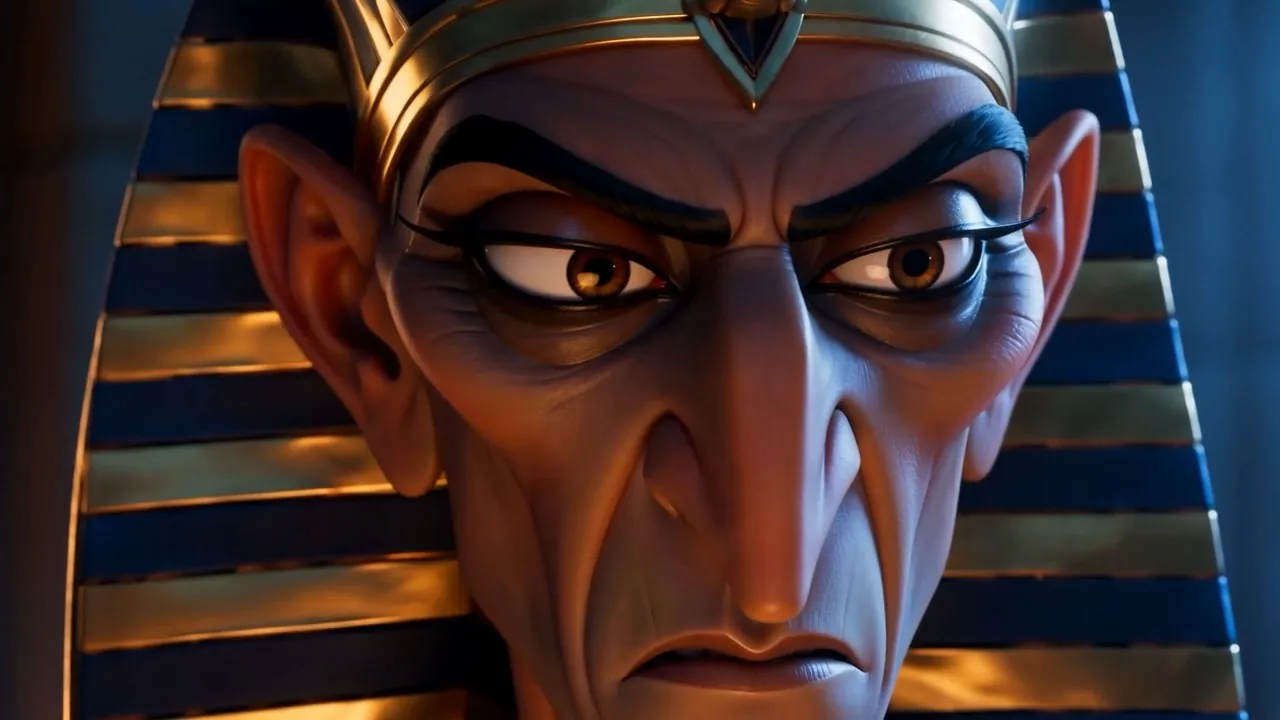
Joseph's family came to Egypt seventy strong, and grew into a nation. Then “there arose a new king over Egypt, who didn't know Joseph.” He looked at the Hebrews and saw only a number that kept getting bigger. So came the taskmasters, the bricks, the whips. Exodus 1 : 8–11
The more they were afflicted, the more they multiplied.
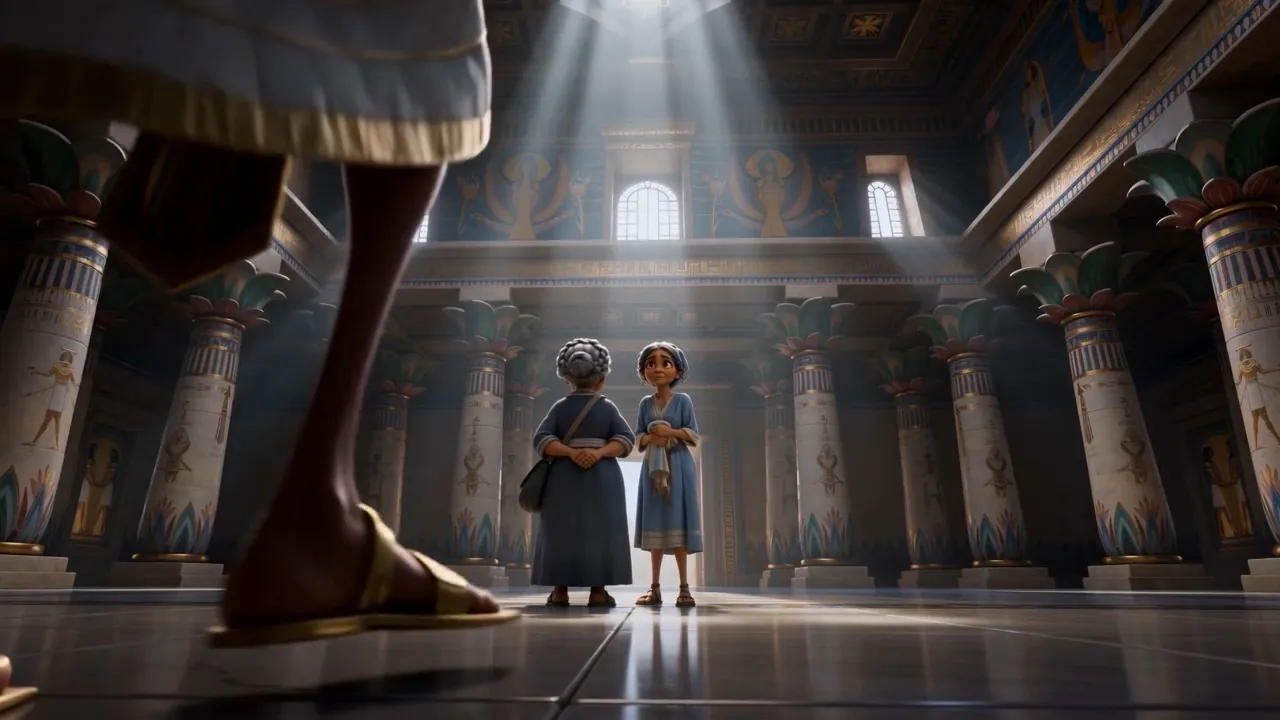
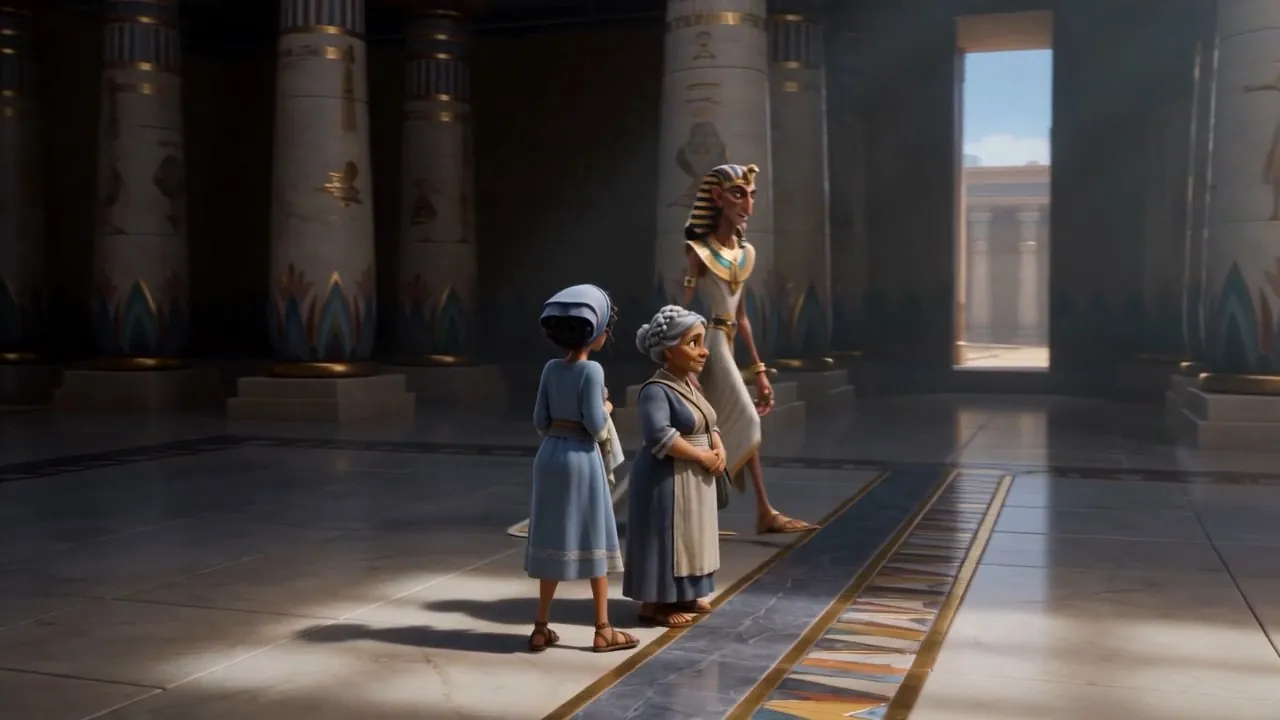
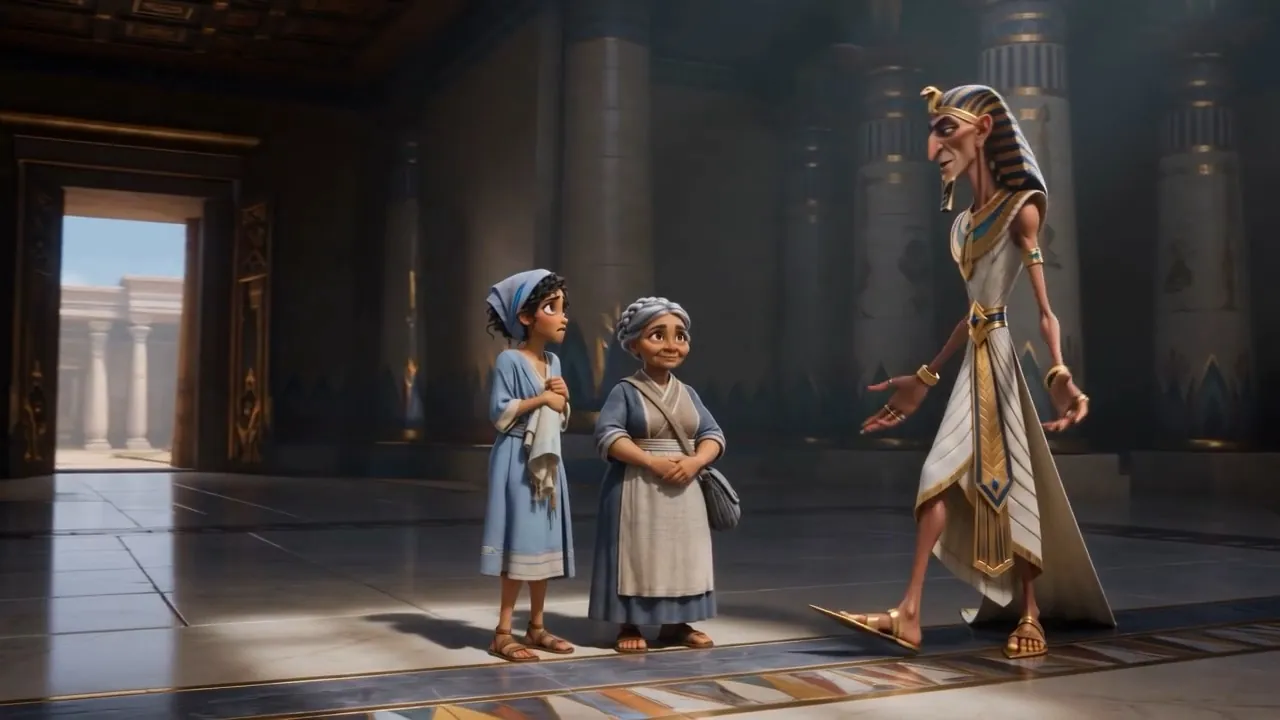
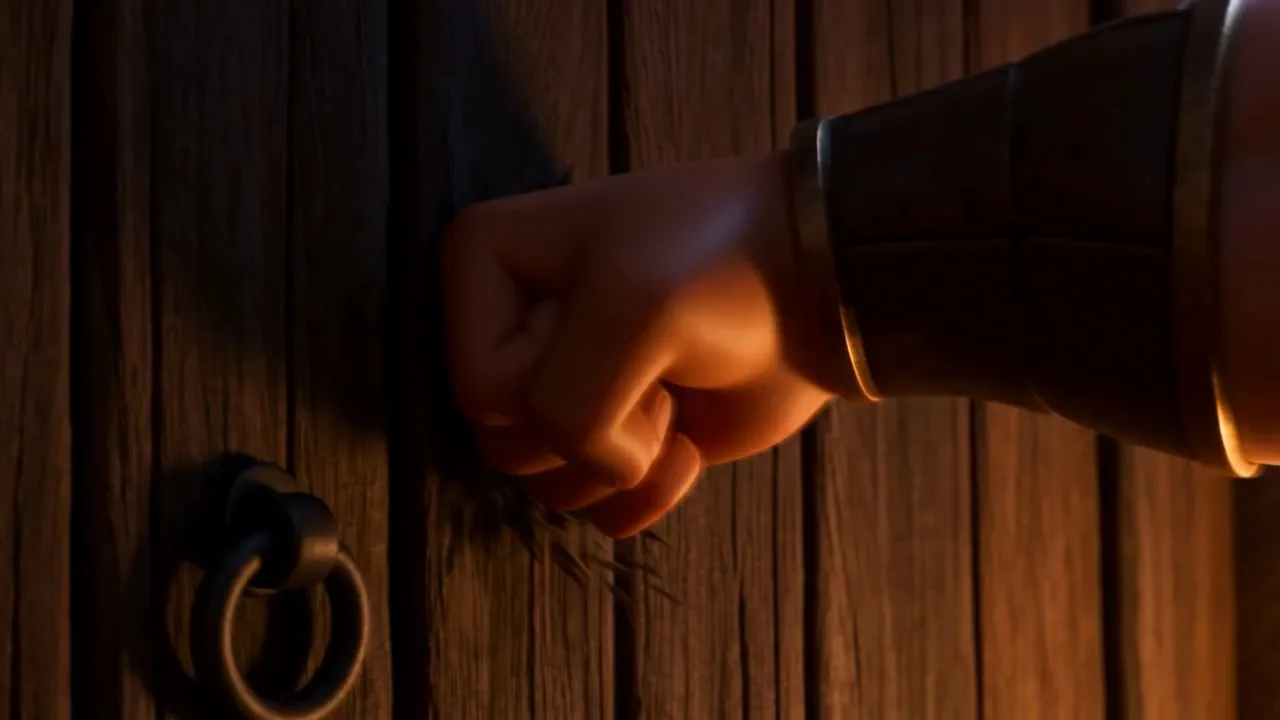
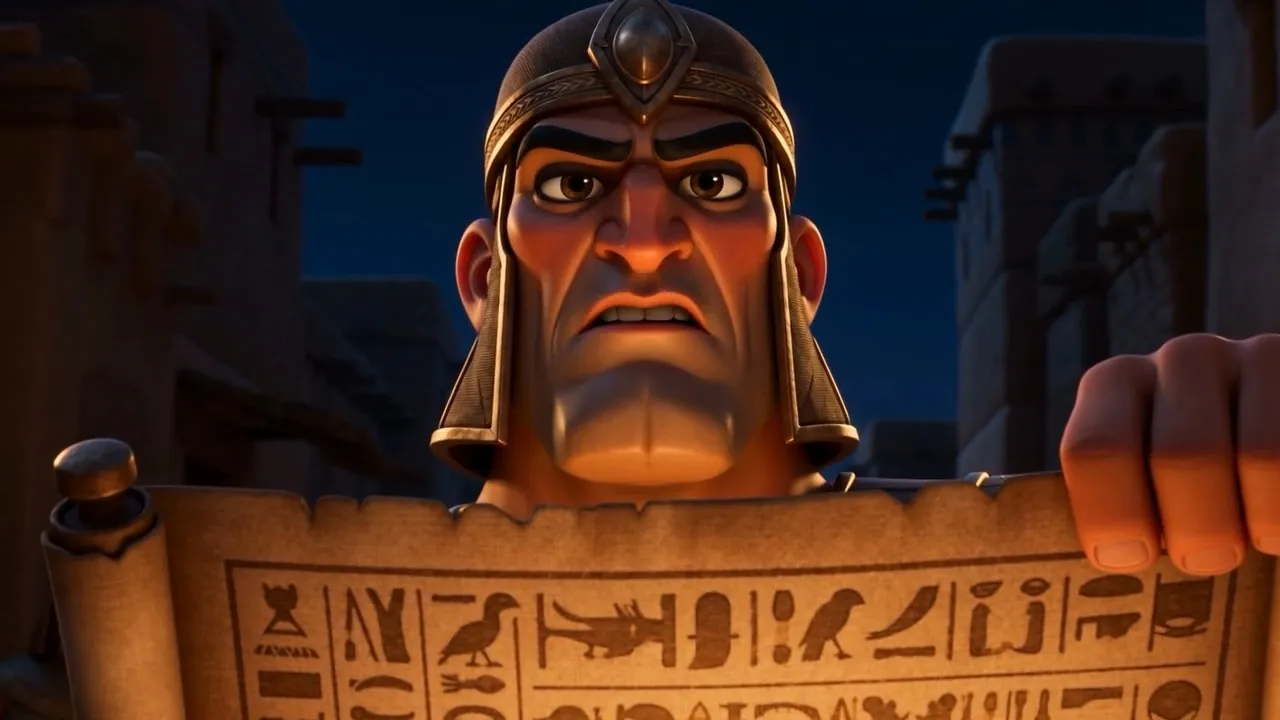
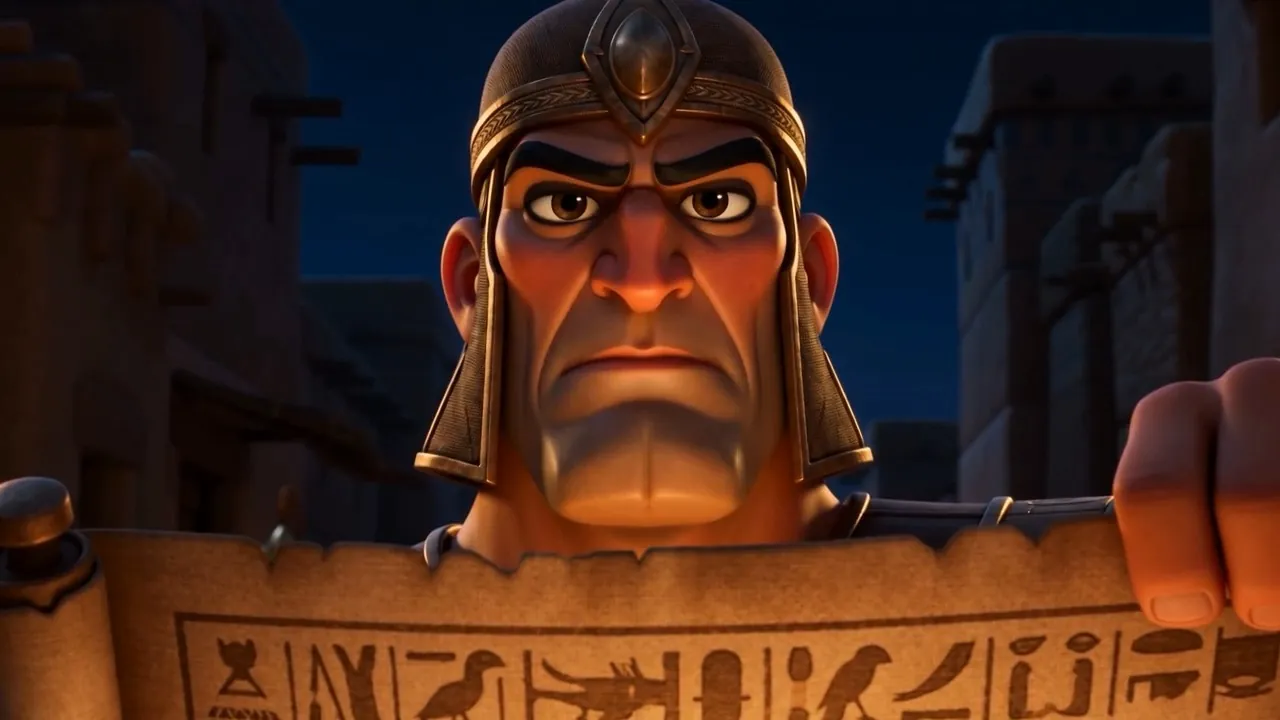
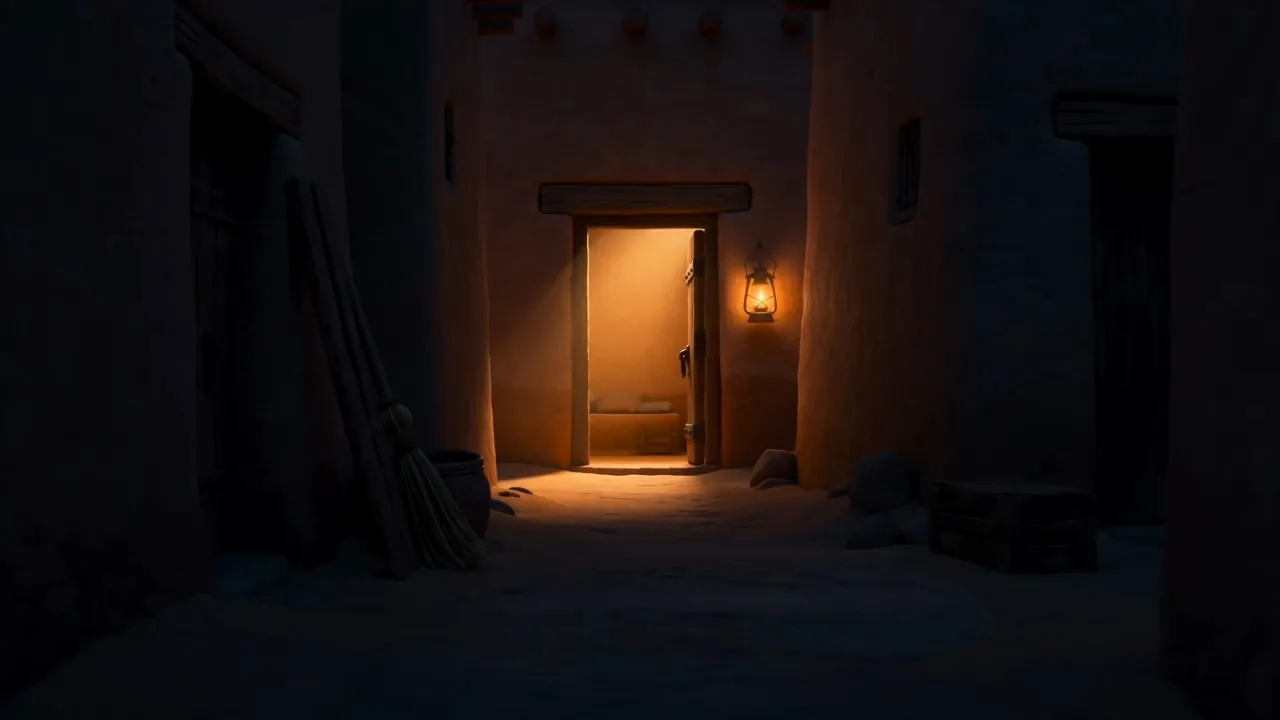
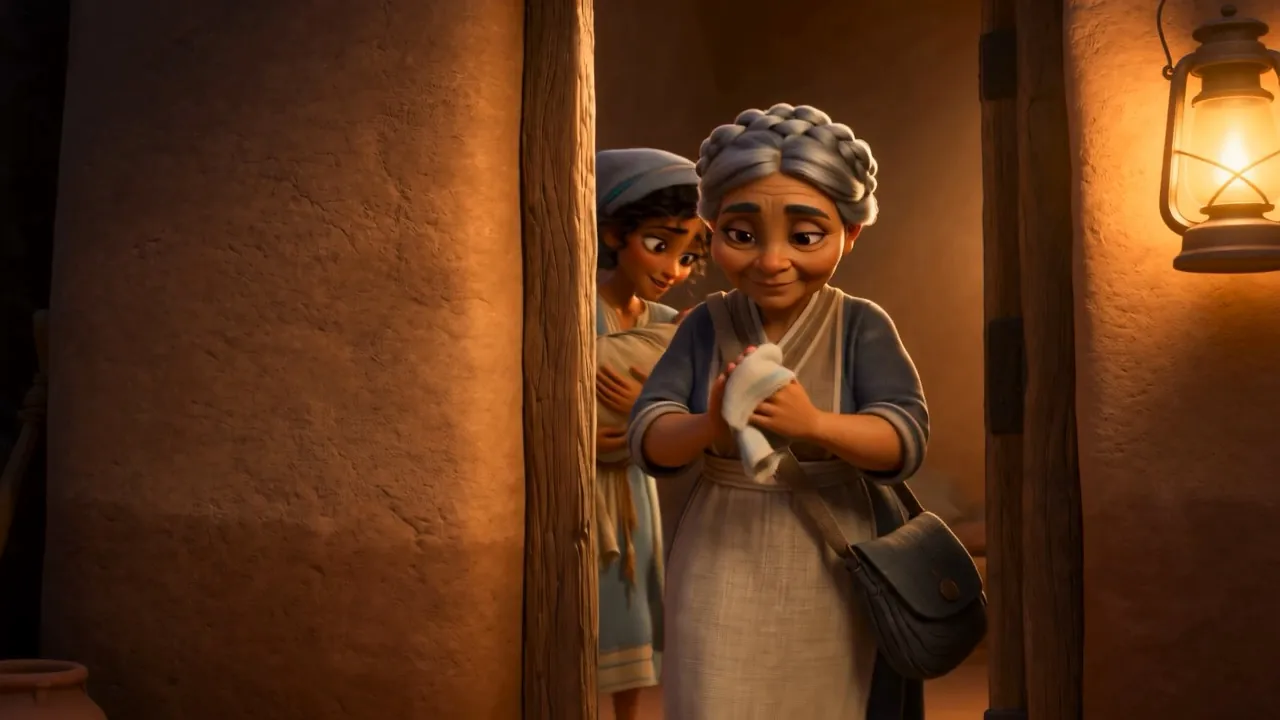
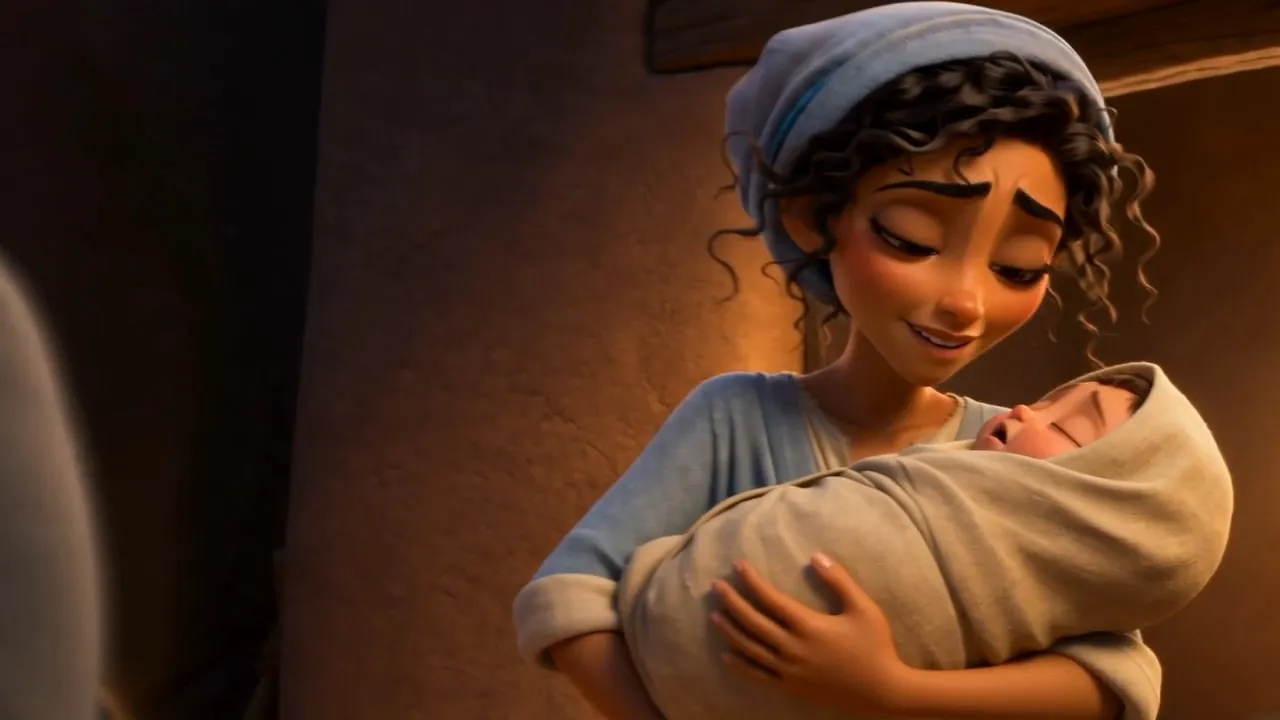
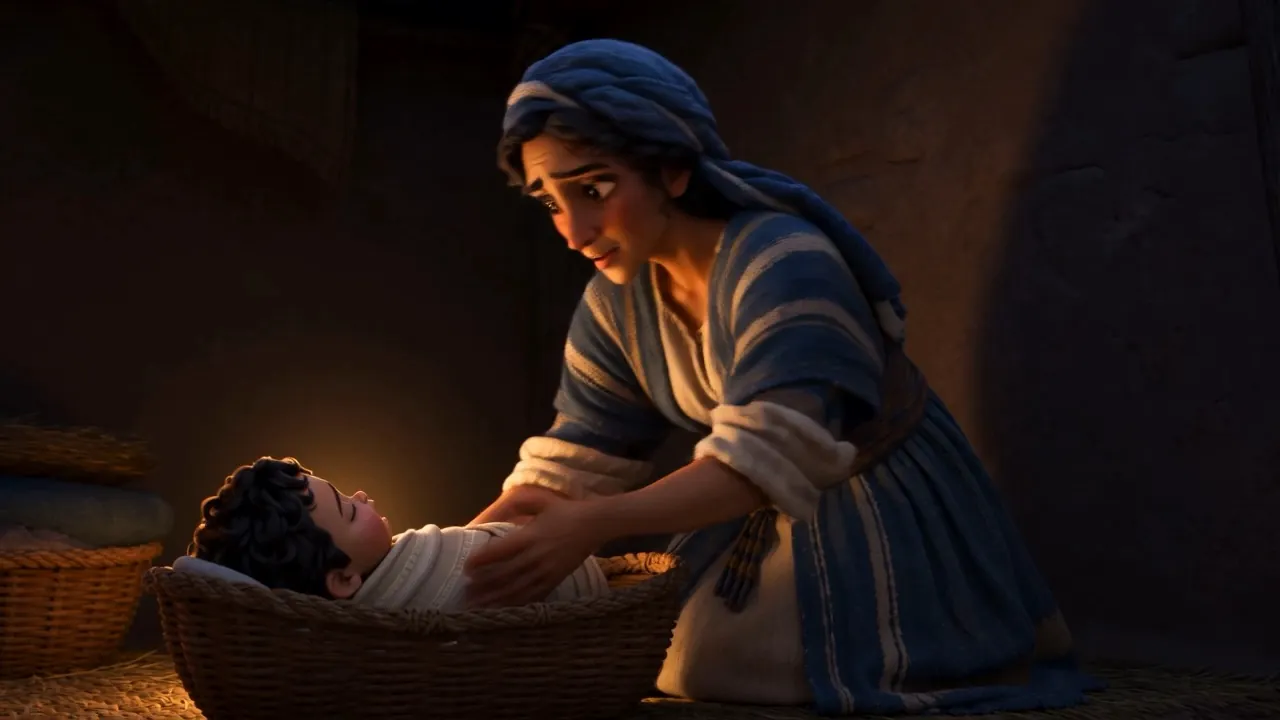
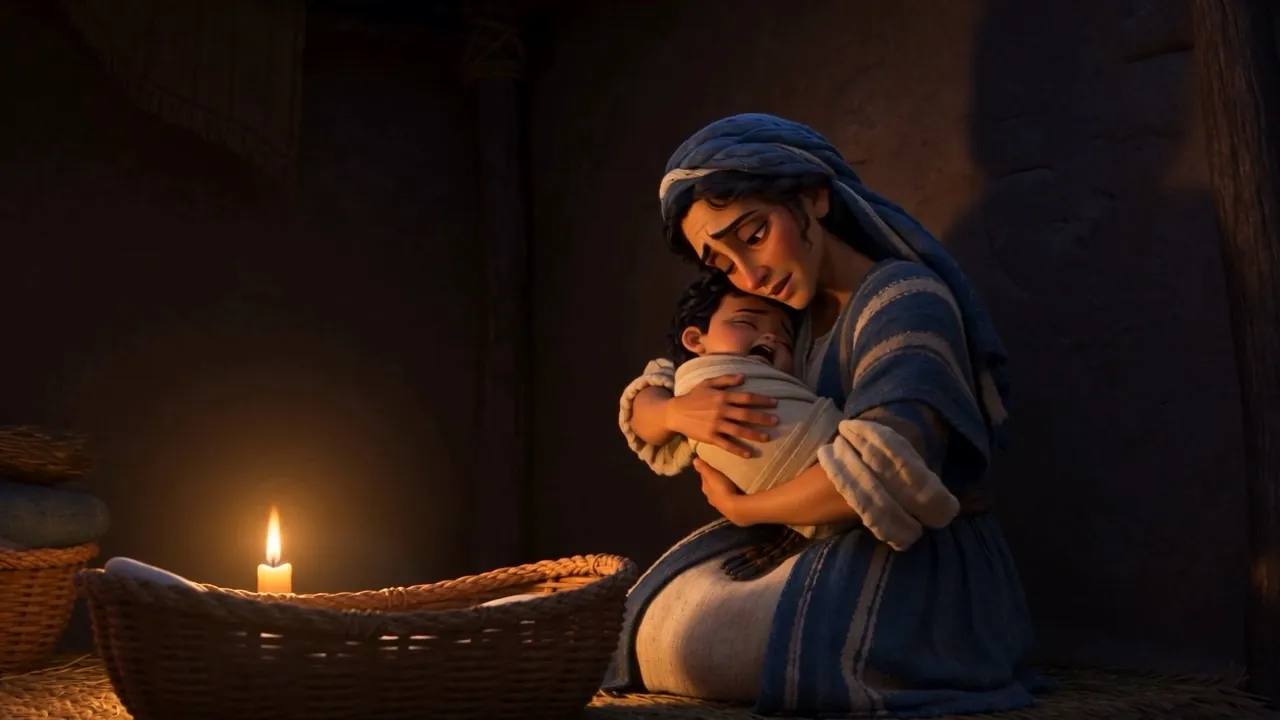
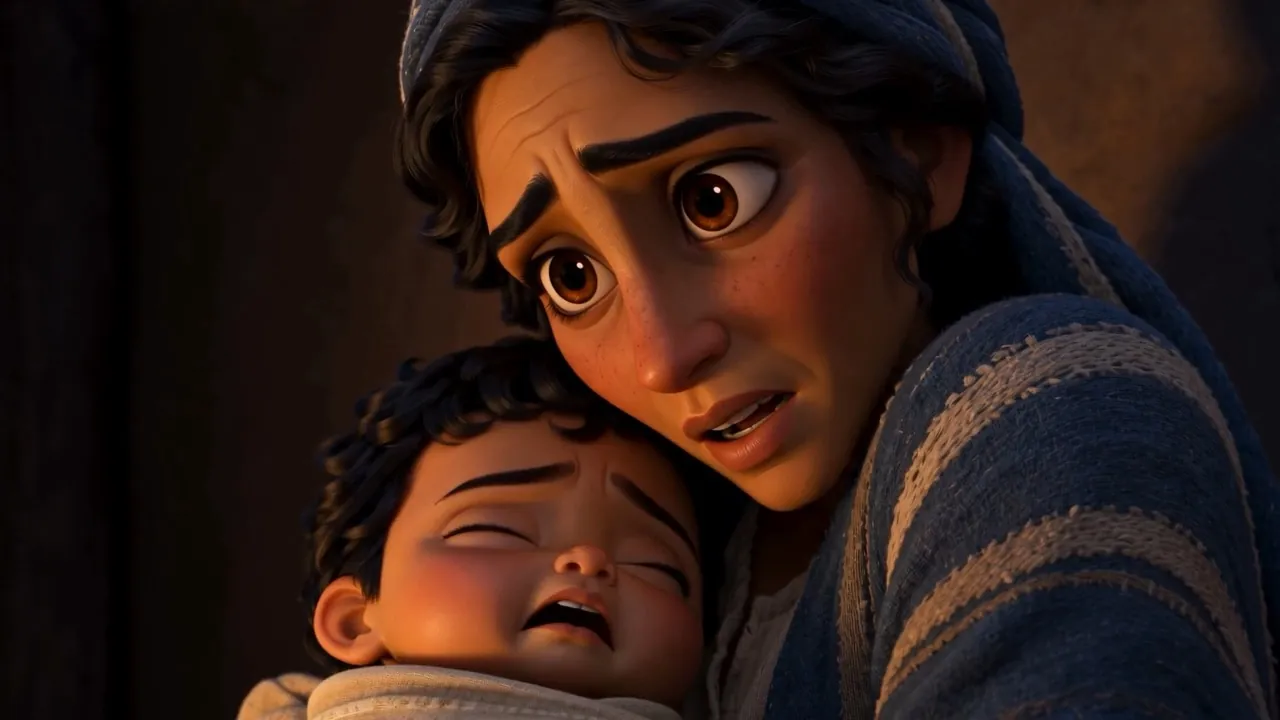
First the order came quietly, to two midwives — who “feared God, and didn't do what the king commanded.” So Pharaoh said it out loud: every Hebrew son goes into the river. Into that world a boy was born — and for three impossible months, his mother hid him. Exodus 1 : 17 – 2 : 2
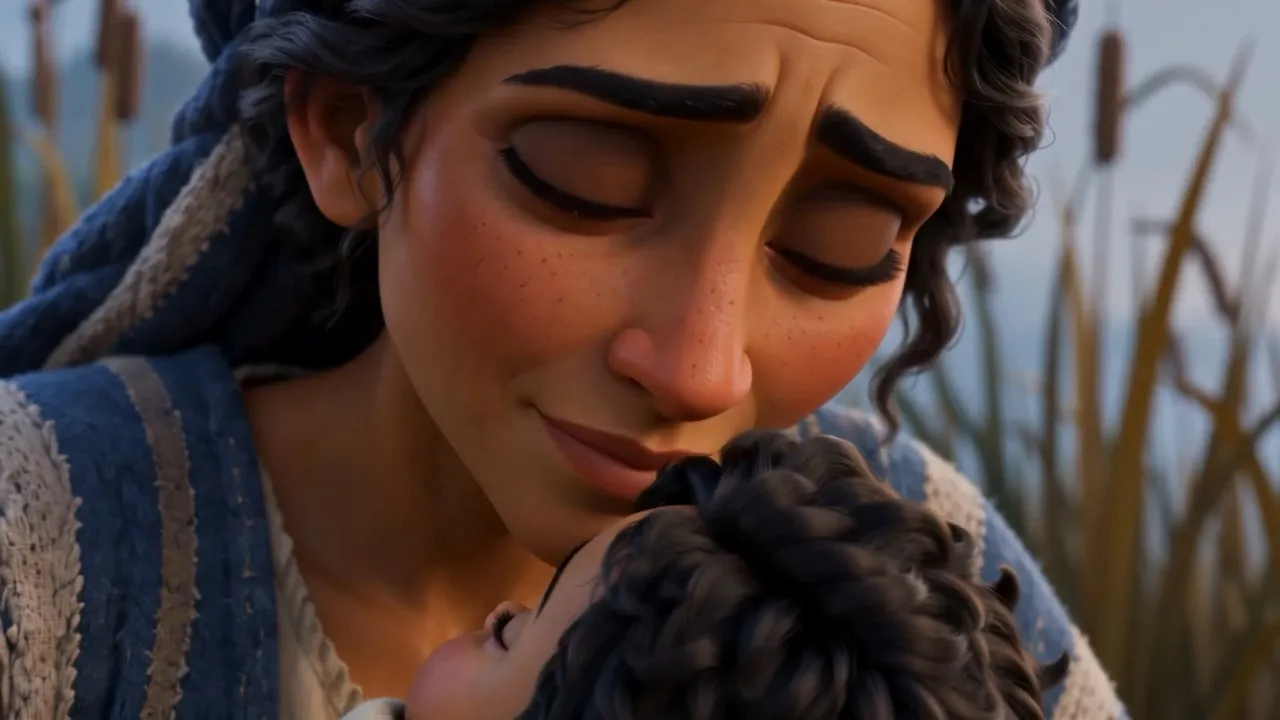
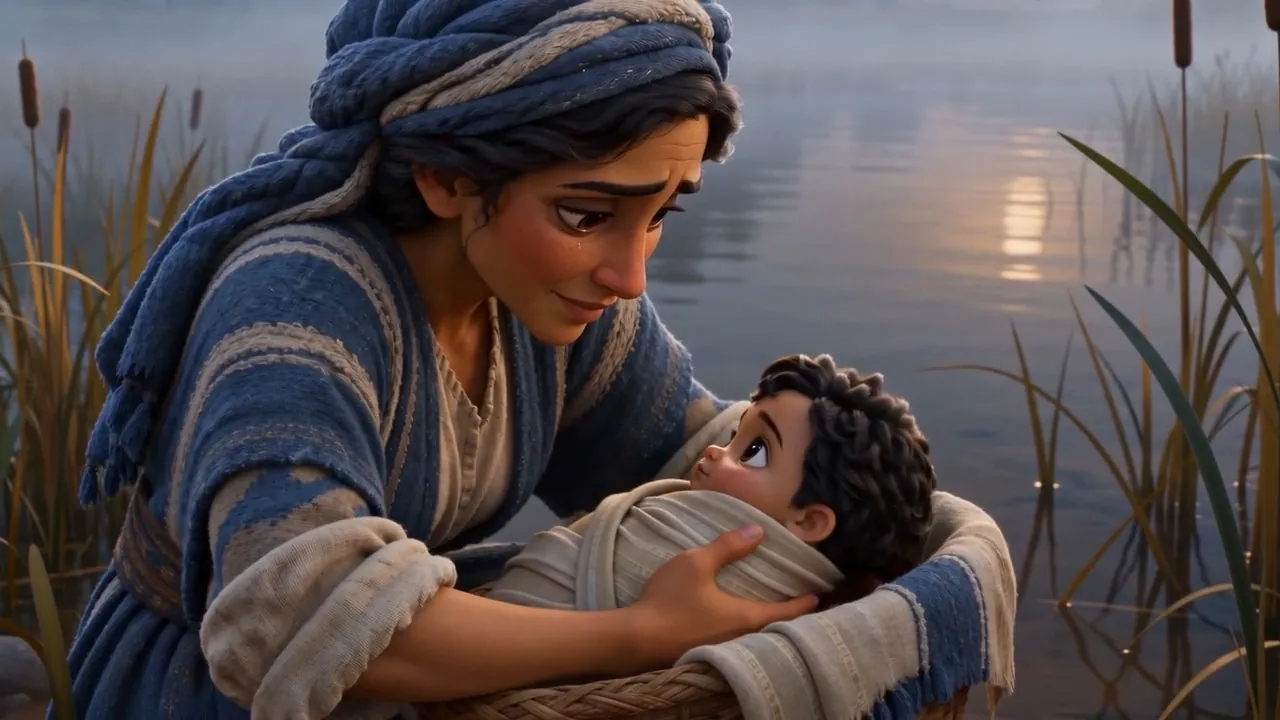
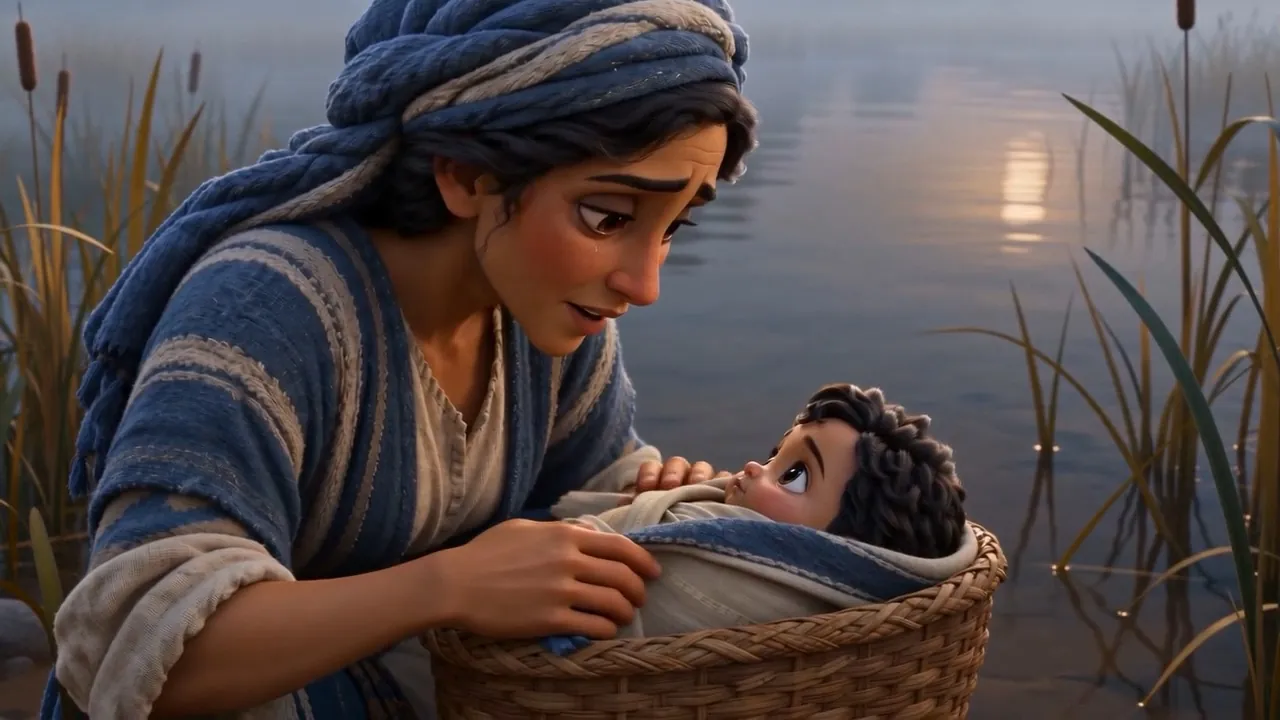
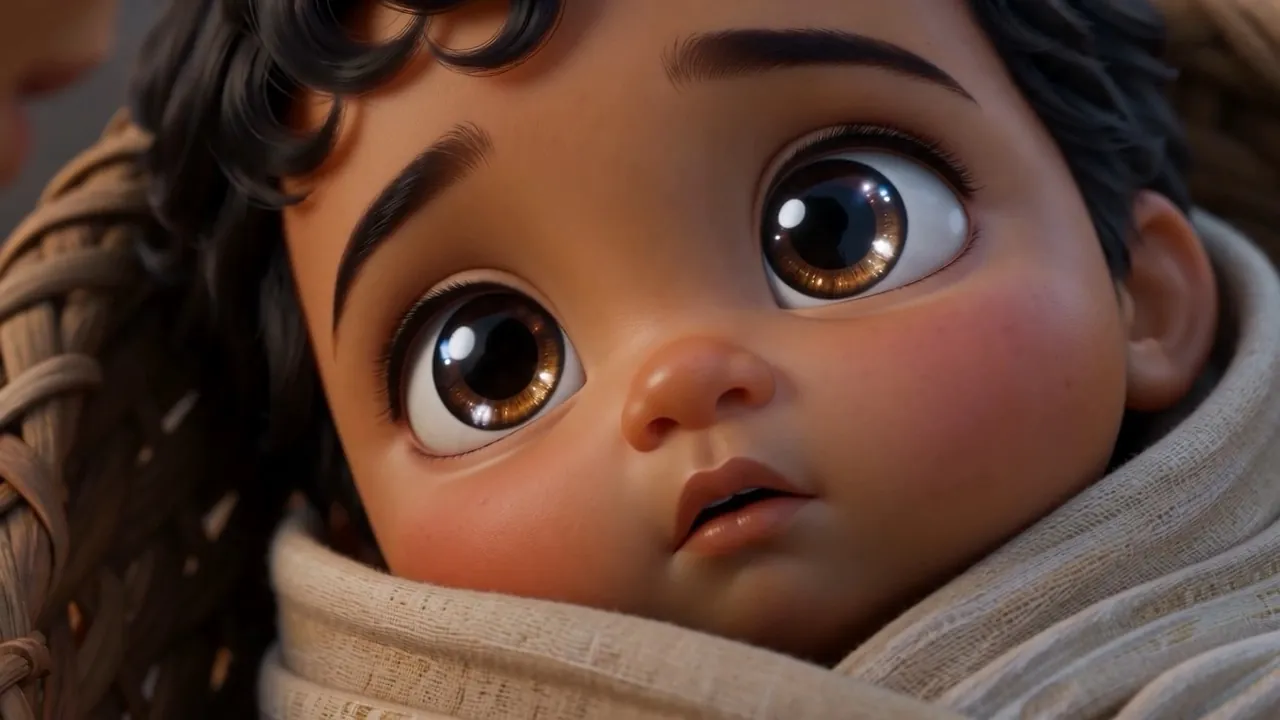



She took a papyrus basket and waterproofed it with tar and pitch. The Hebrew word is tebah — the Bible uses it for exactly one other vessel: Noah's ark. A tiny ark, laid in the very river that was supposed to swallow him. His sister watched from a distance. Exodus 2 : 3–4

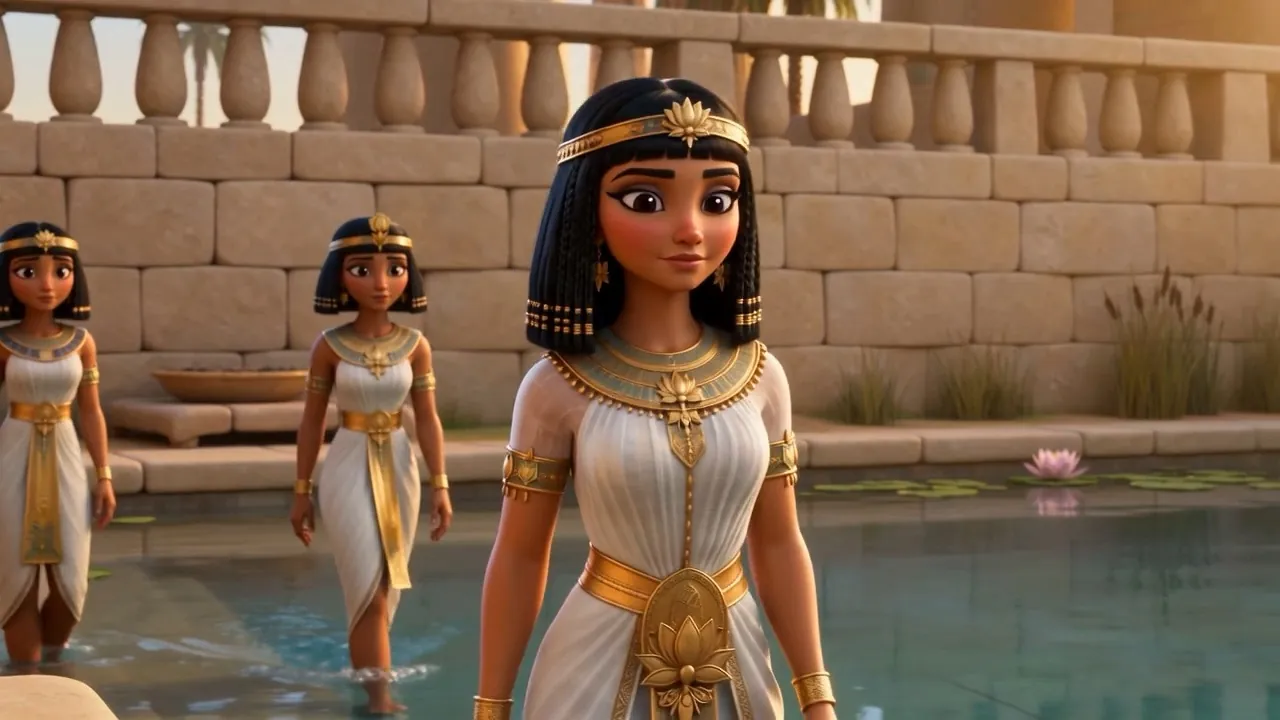
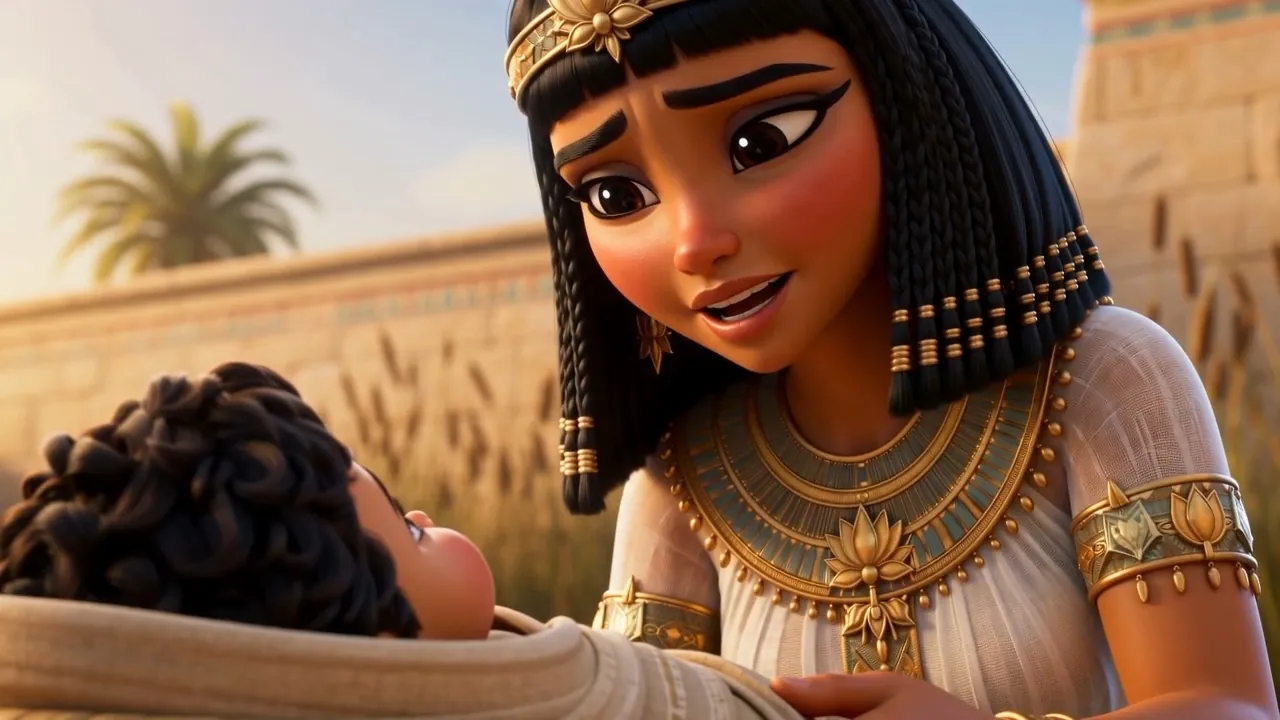
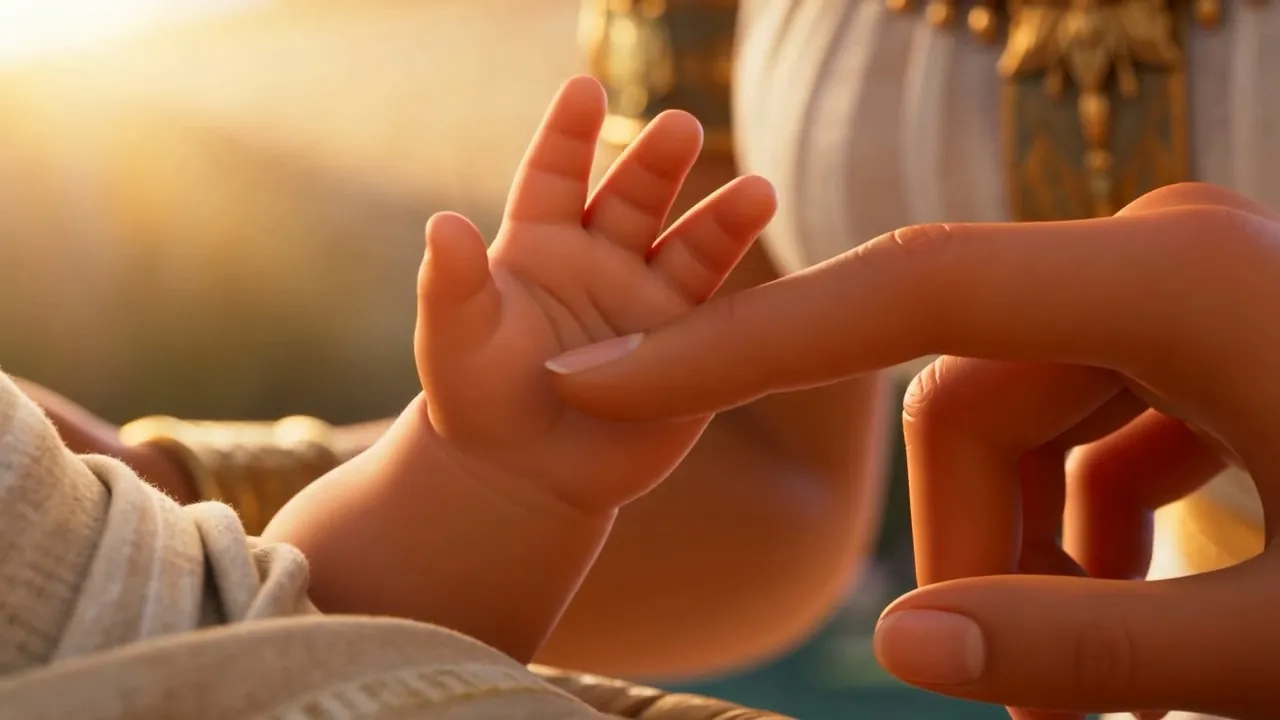

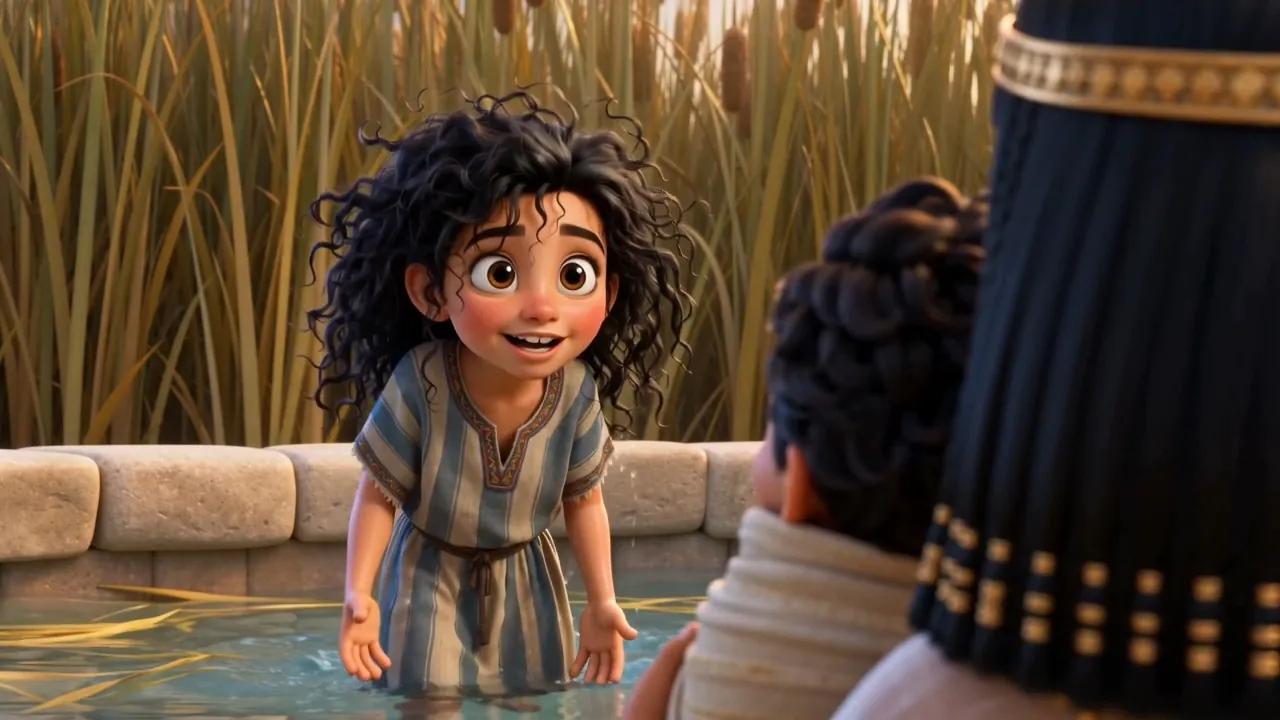
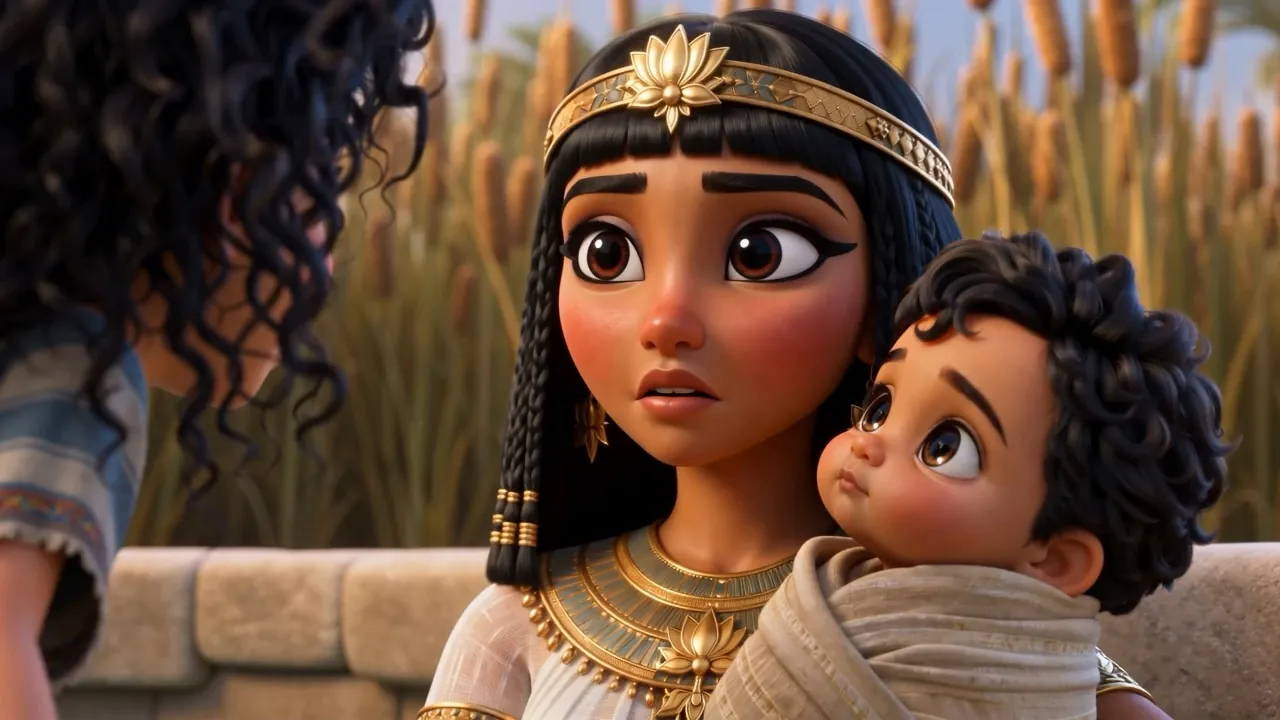
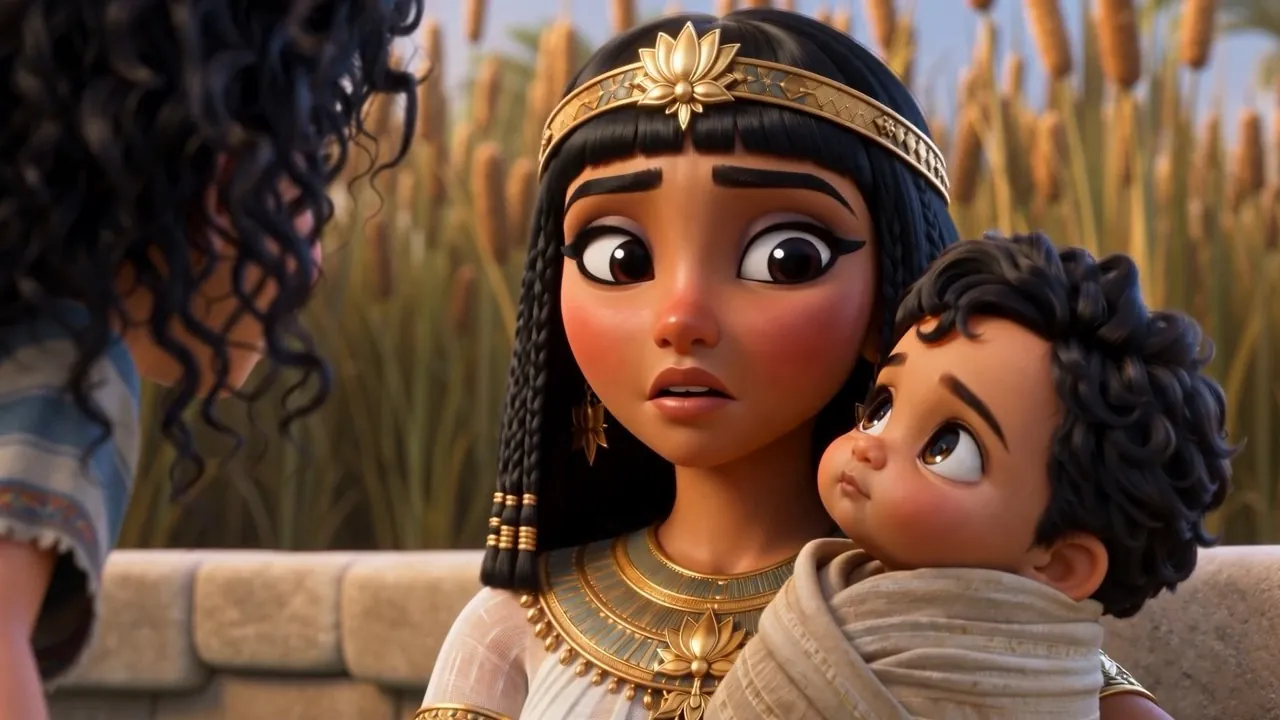
Pharaoh's own daughter drew him out. She knew exactly what he was — “This is one of the Hebrews' children” — and kept him anyway. Then his sister stepped out of the reeds with the boldest question in Egypt, and the baby's own mother was hired to nurse him. Exodus 2 : 5–9
She named him Moses: “I drew him out of the water.”
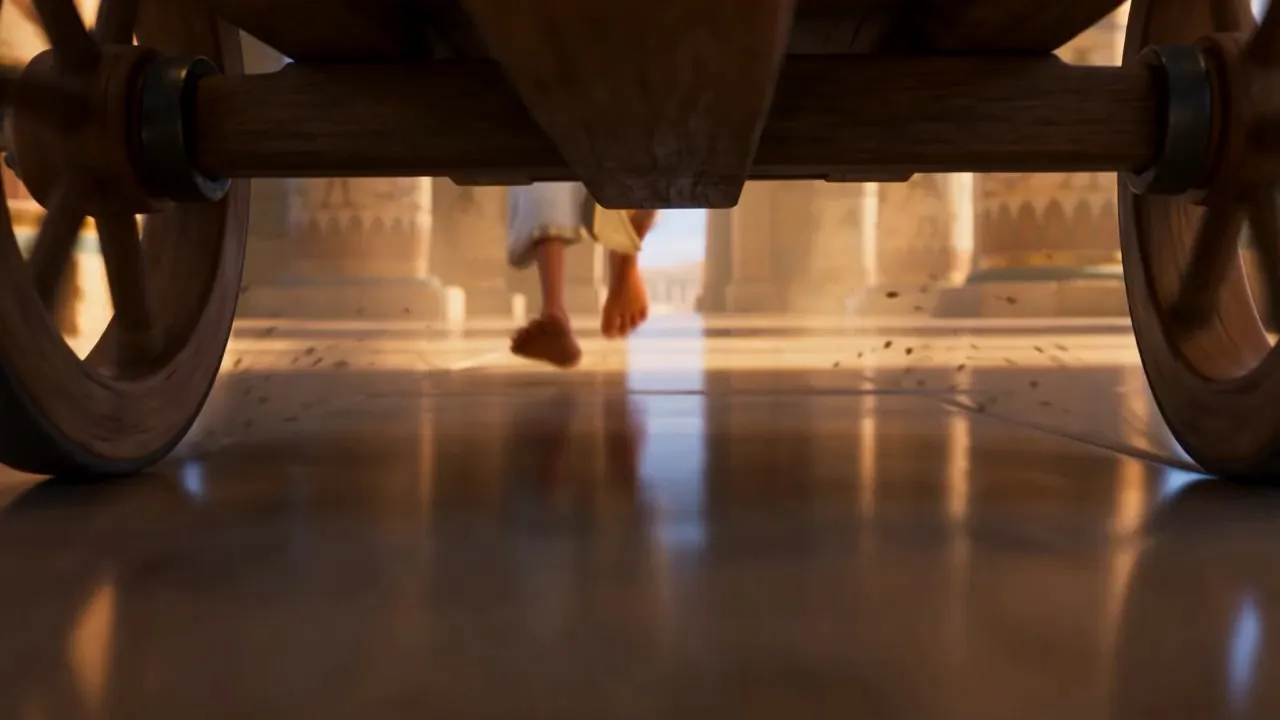
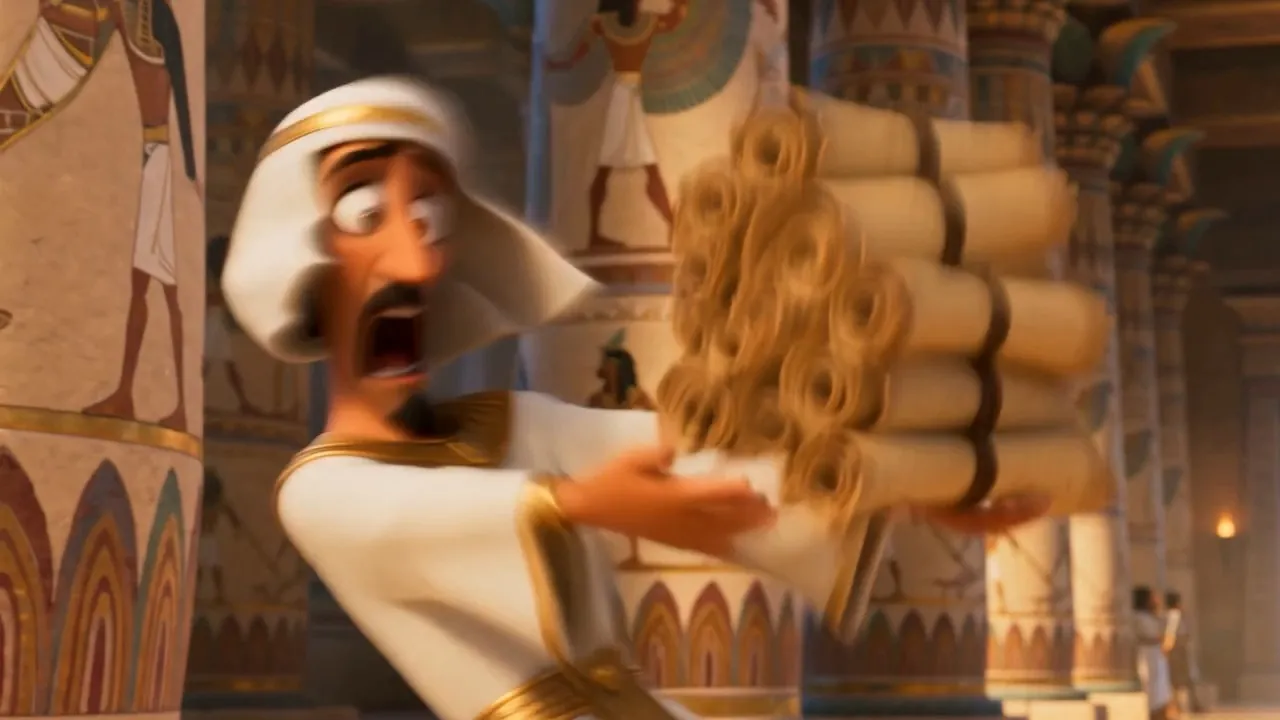
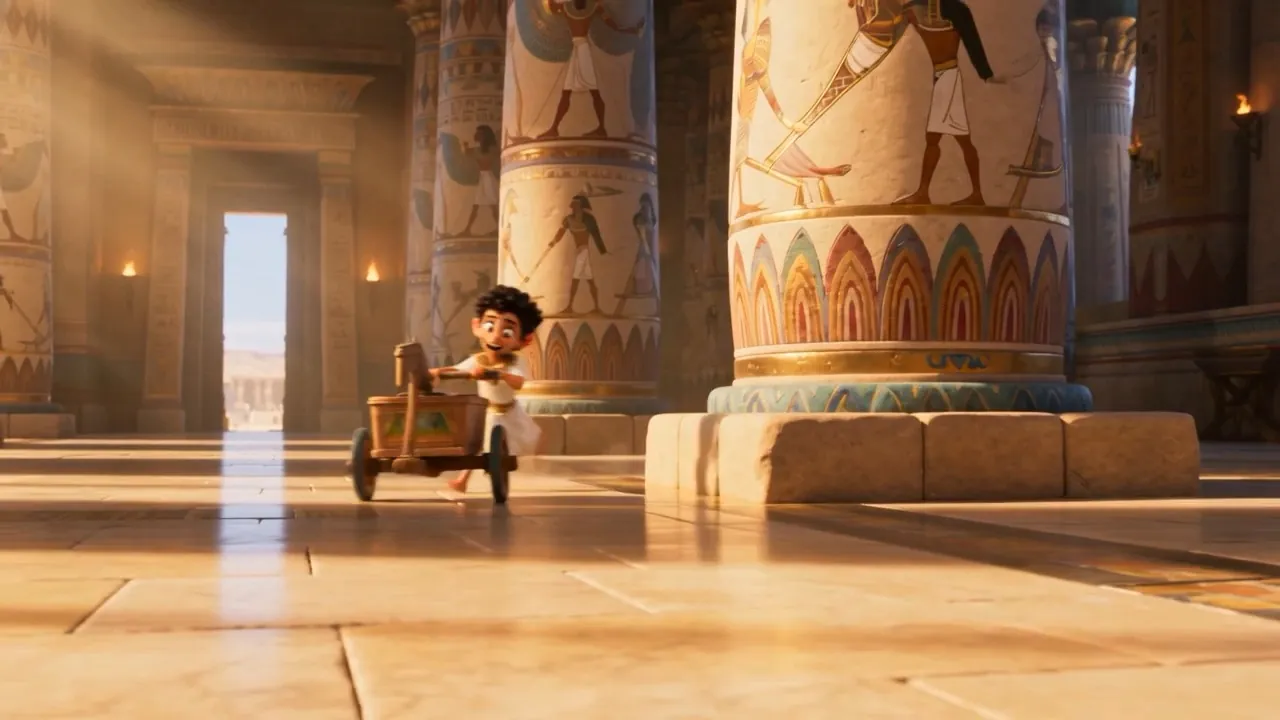
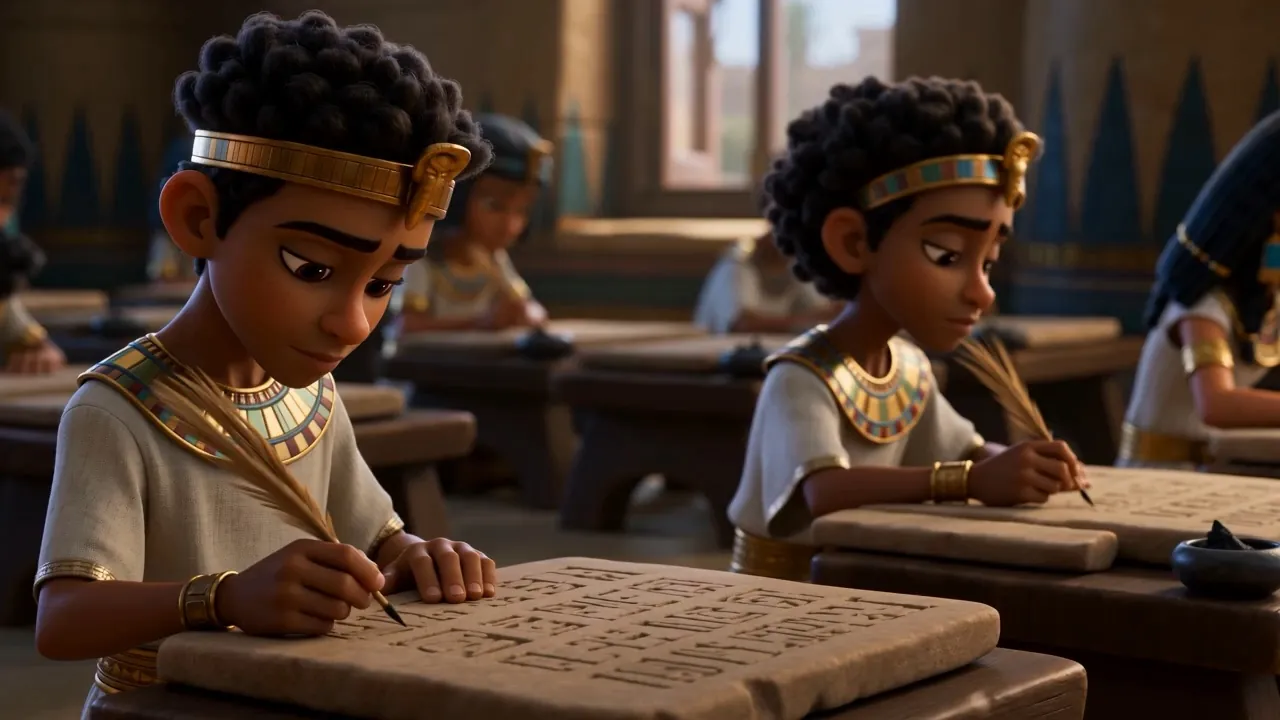
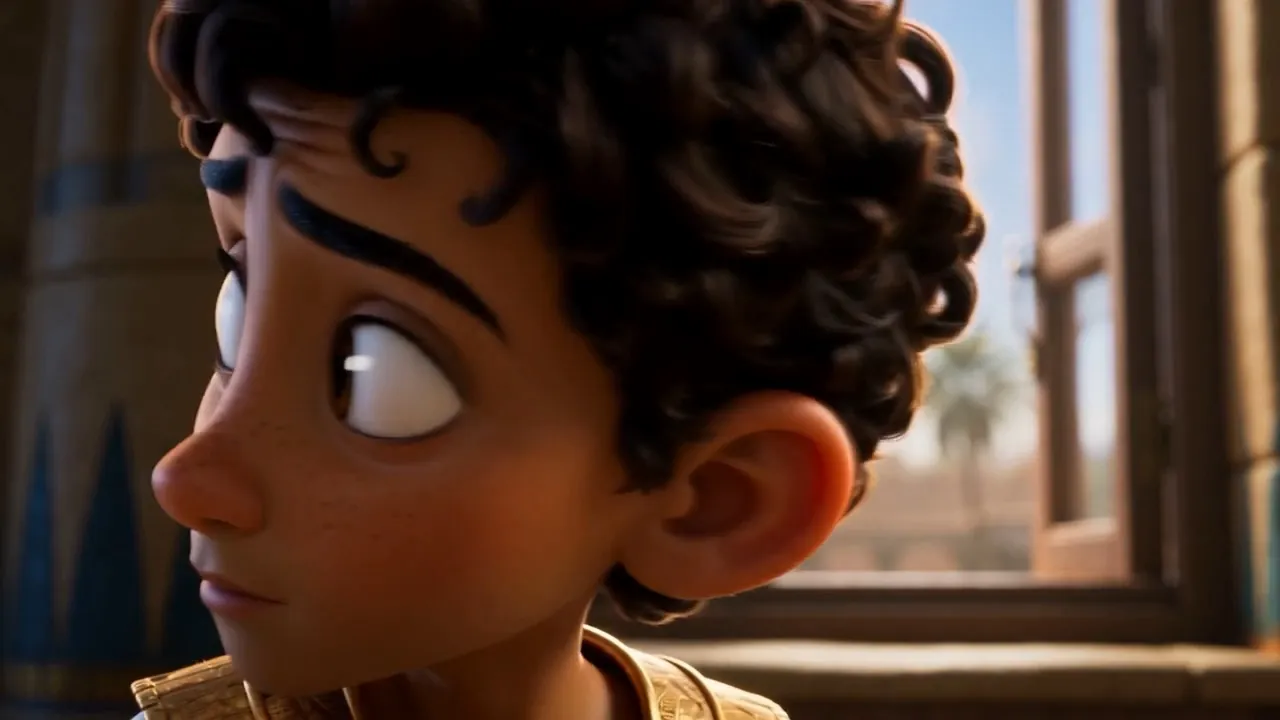
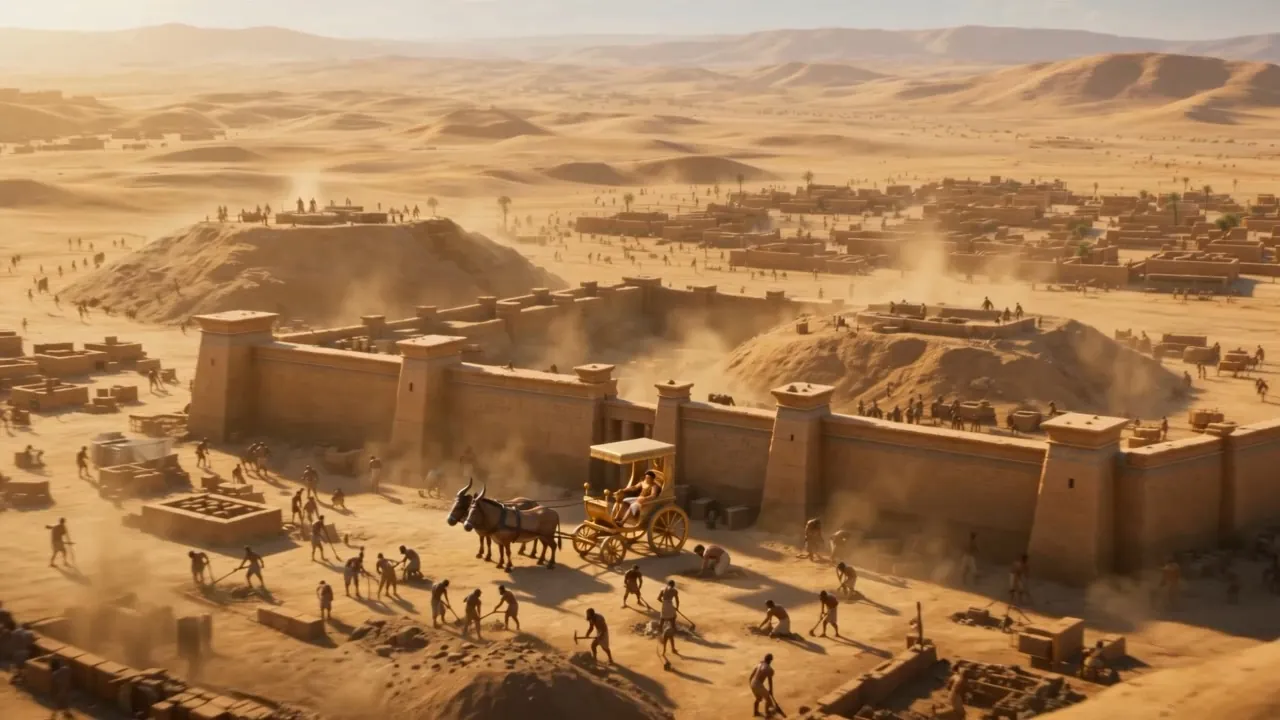
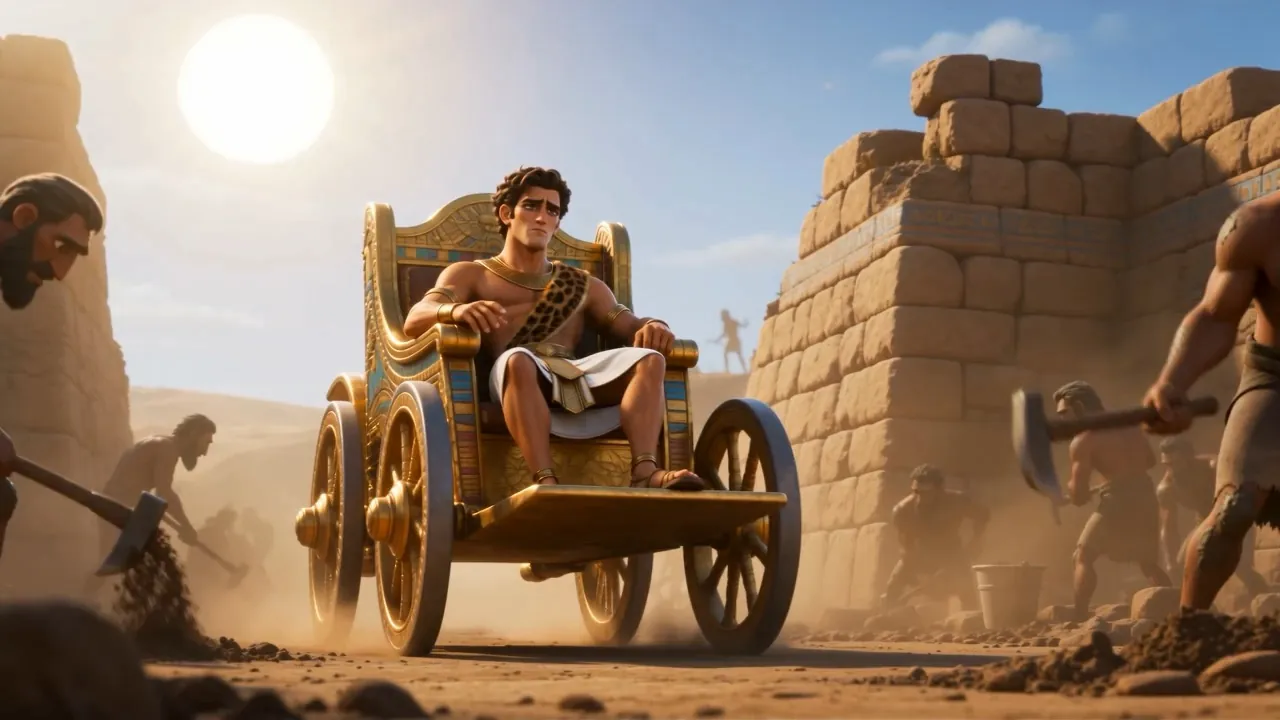
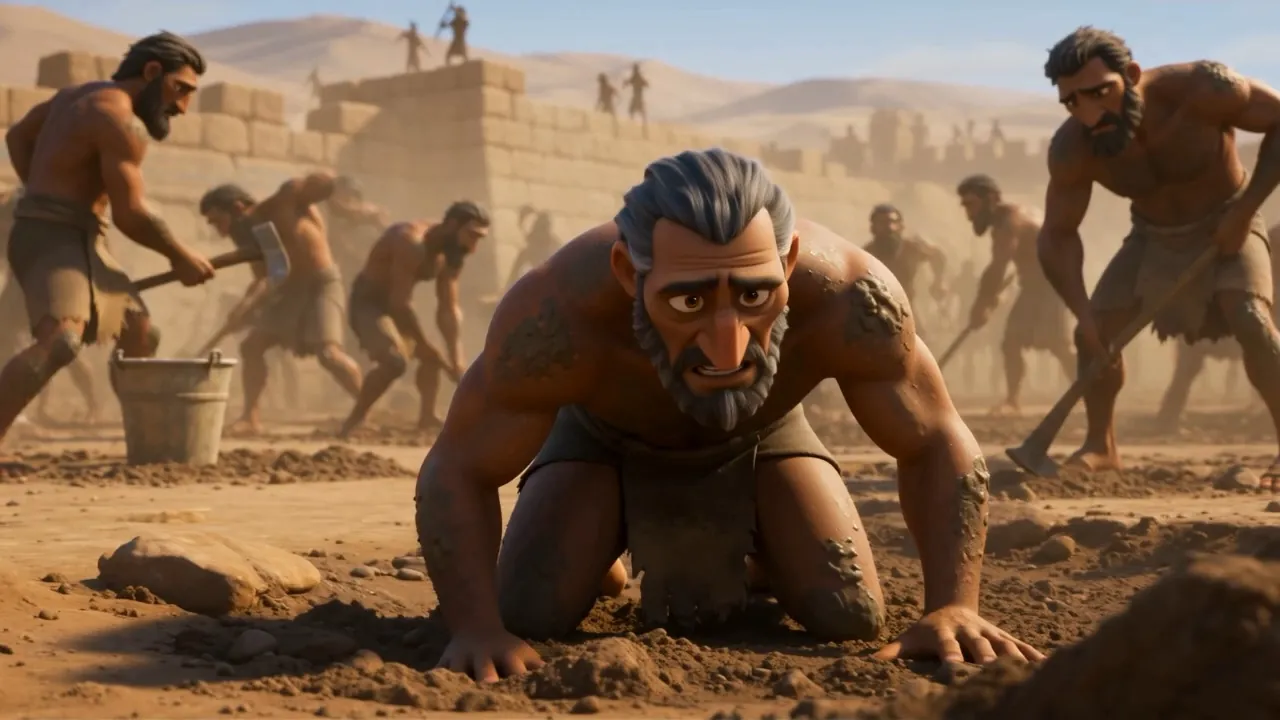
The boy from the river grew up in the palace — a prince with a Hebrew nurse and an Egyptian name. He rode past his own people every day. One day, he really looked. Exodus 2 : 10–11
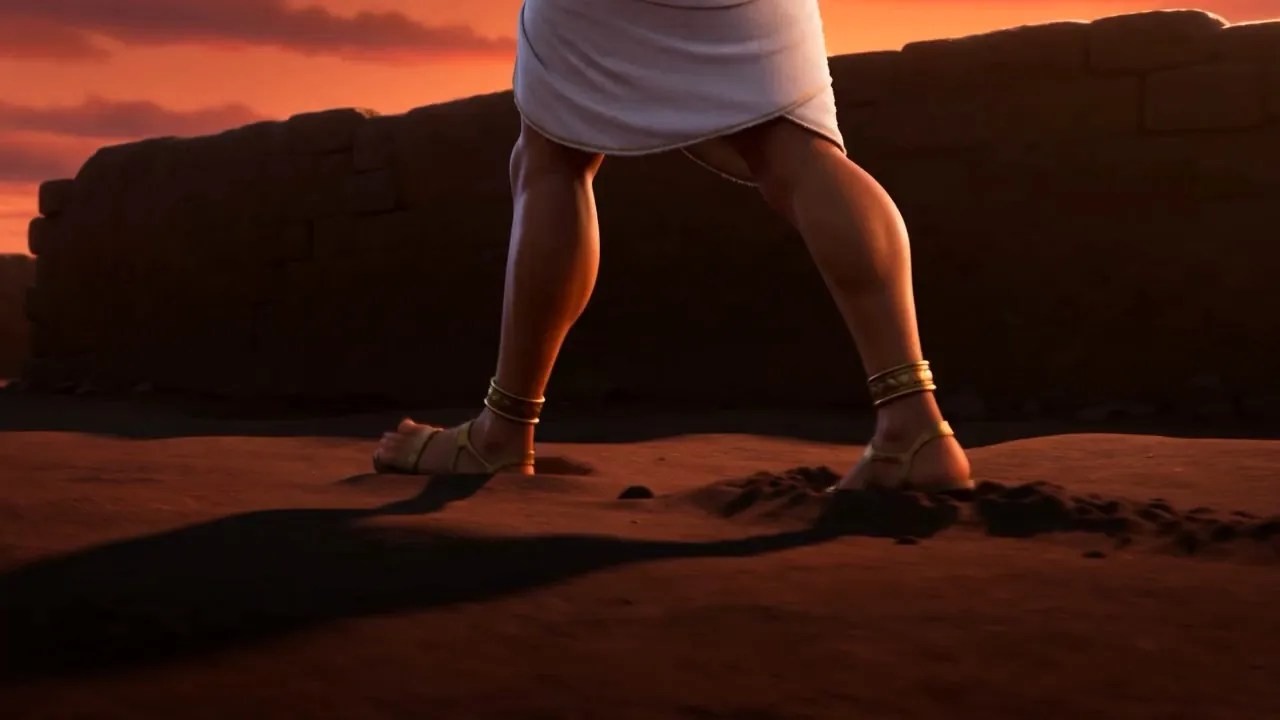
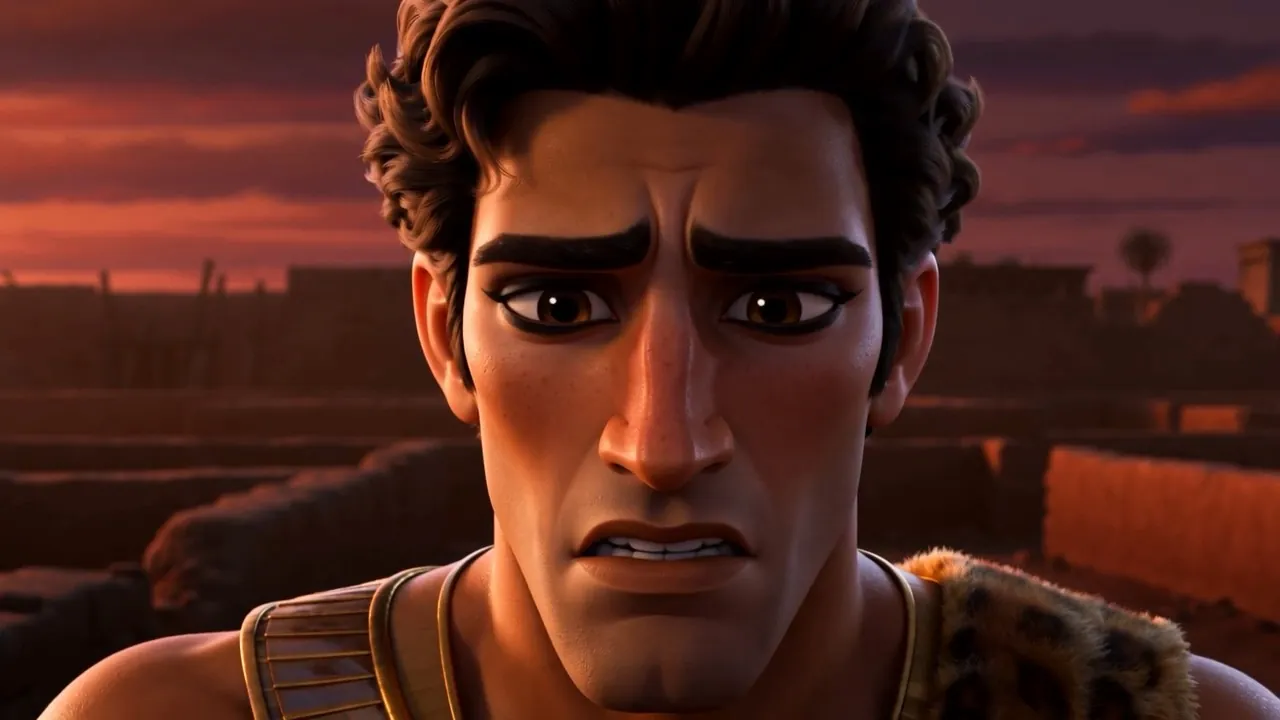
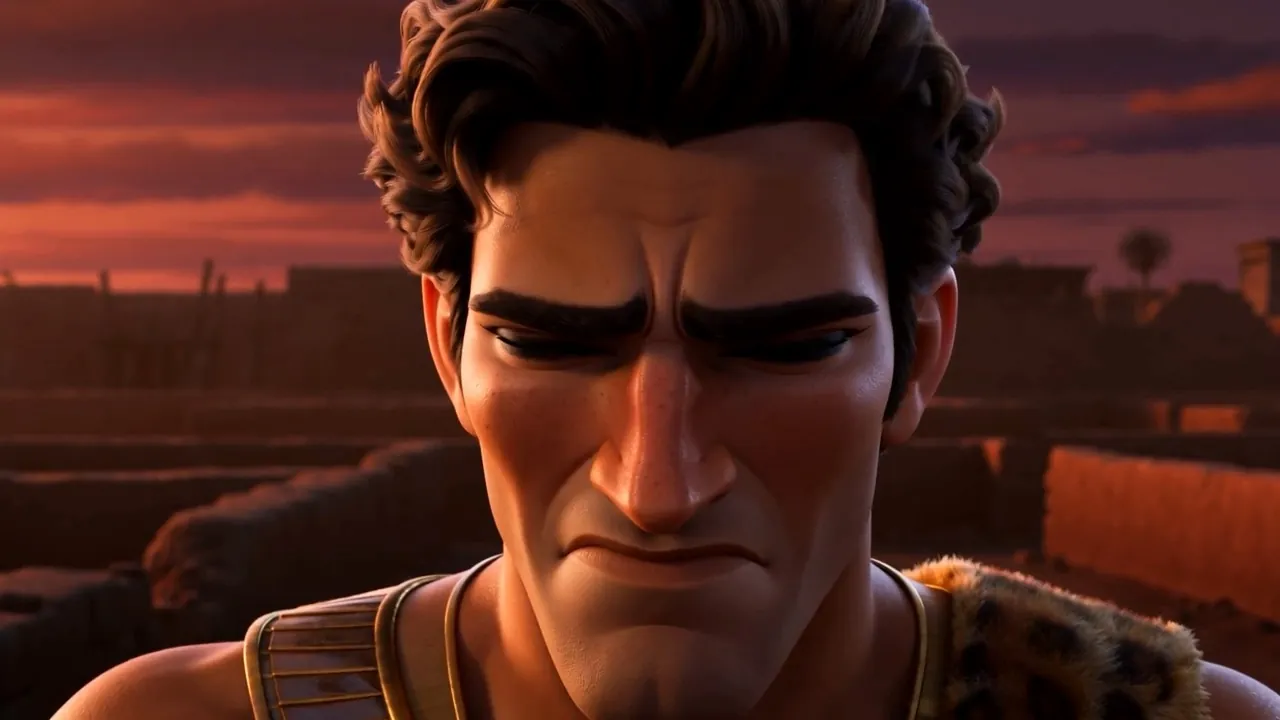

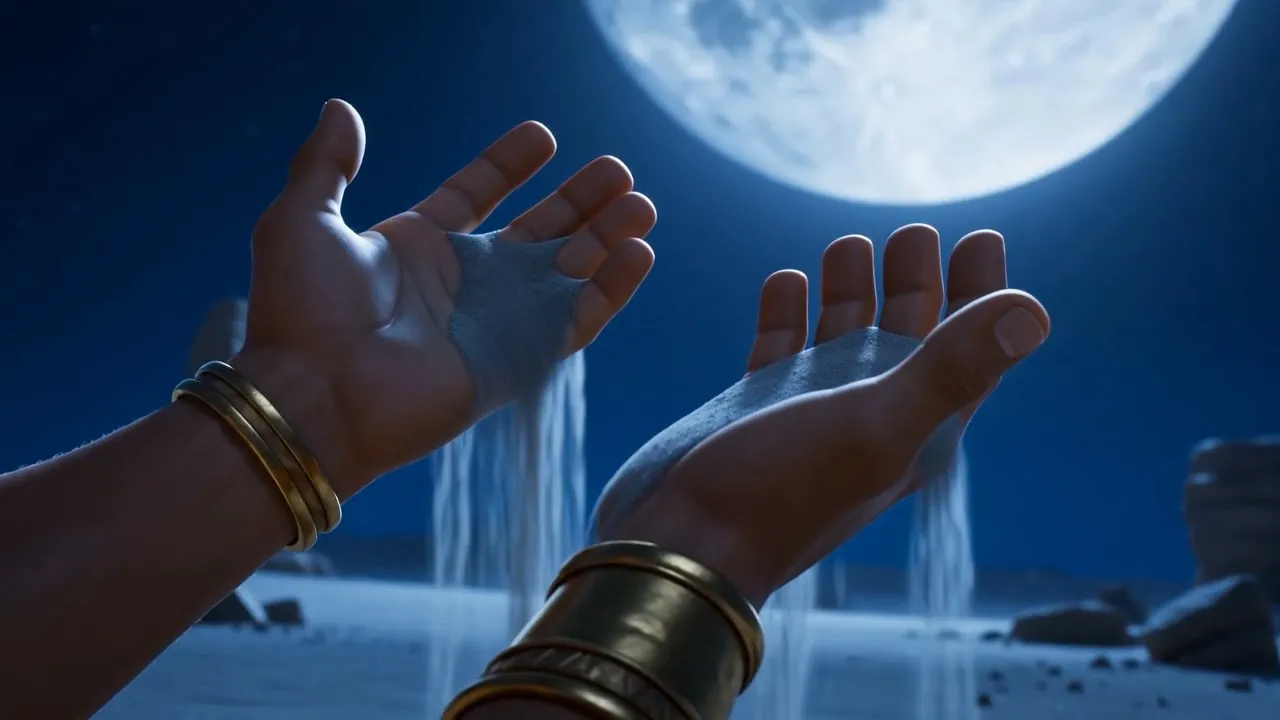
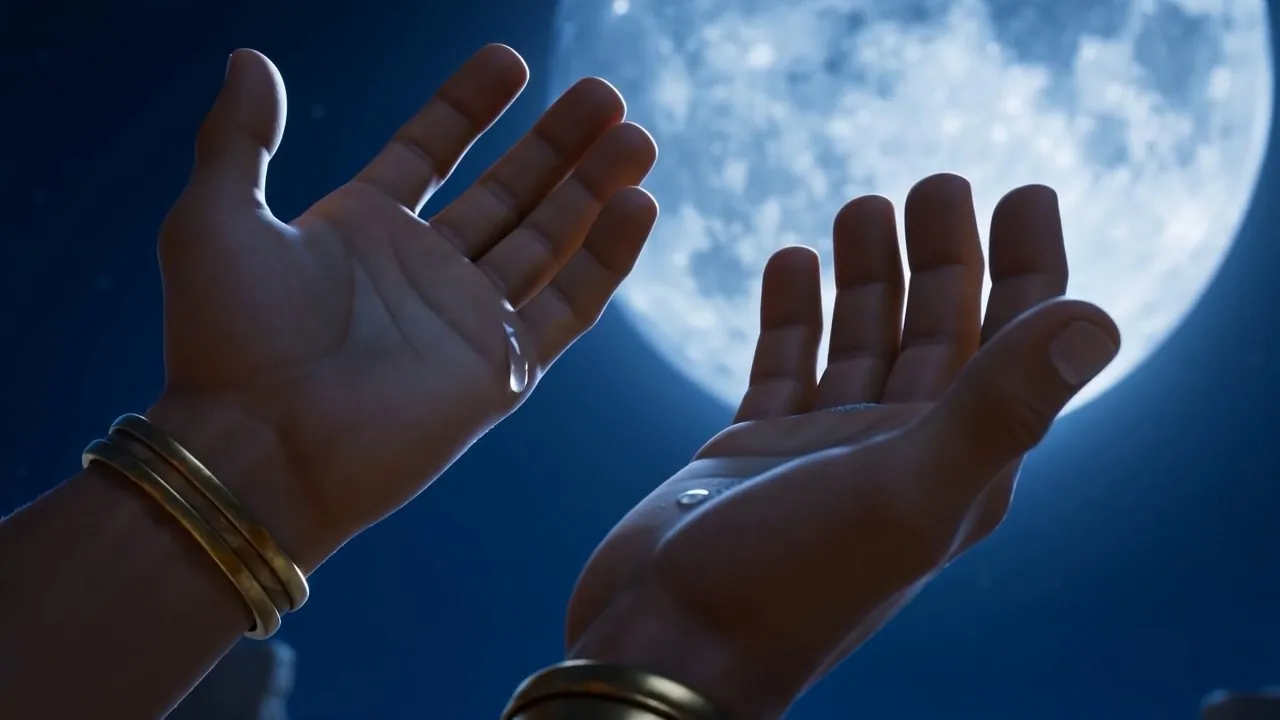
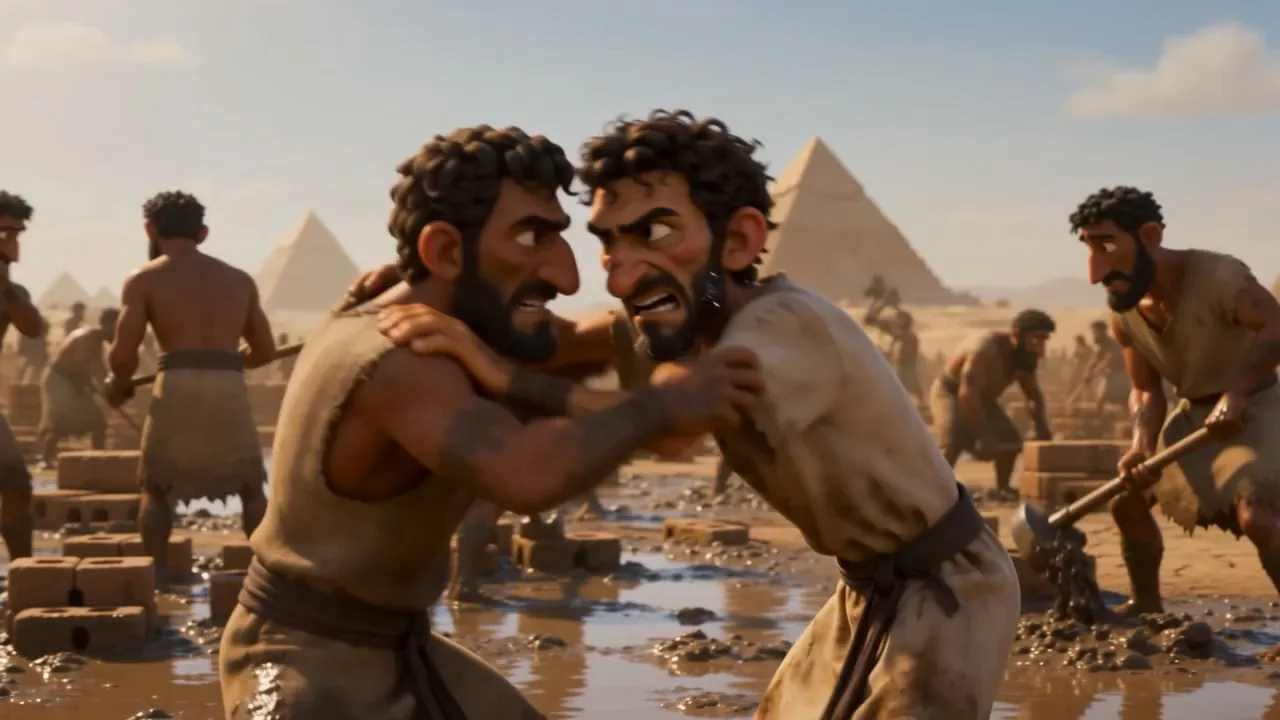
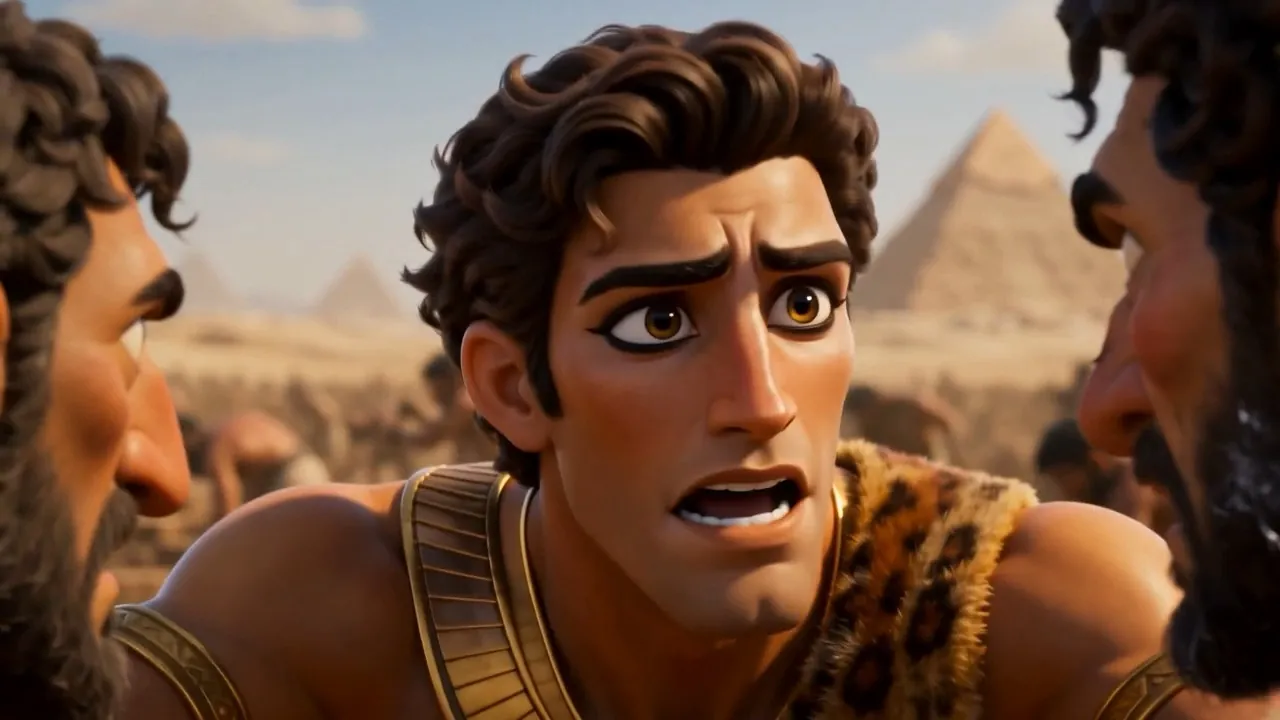
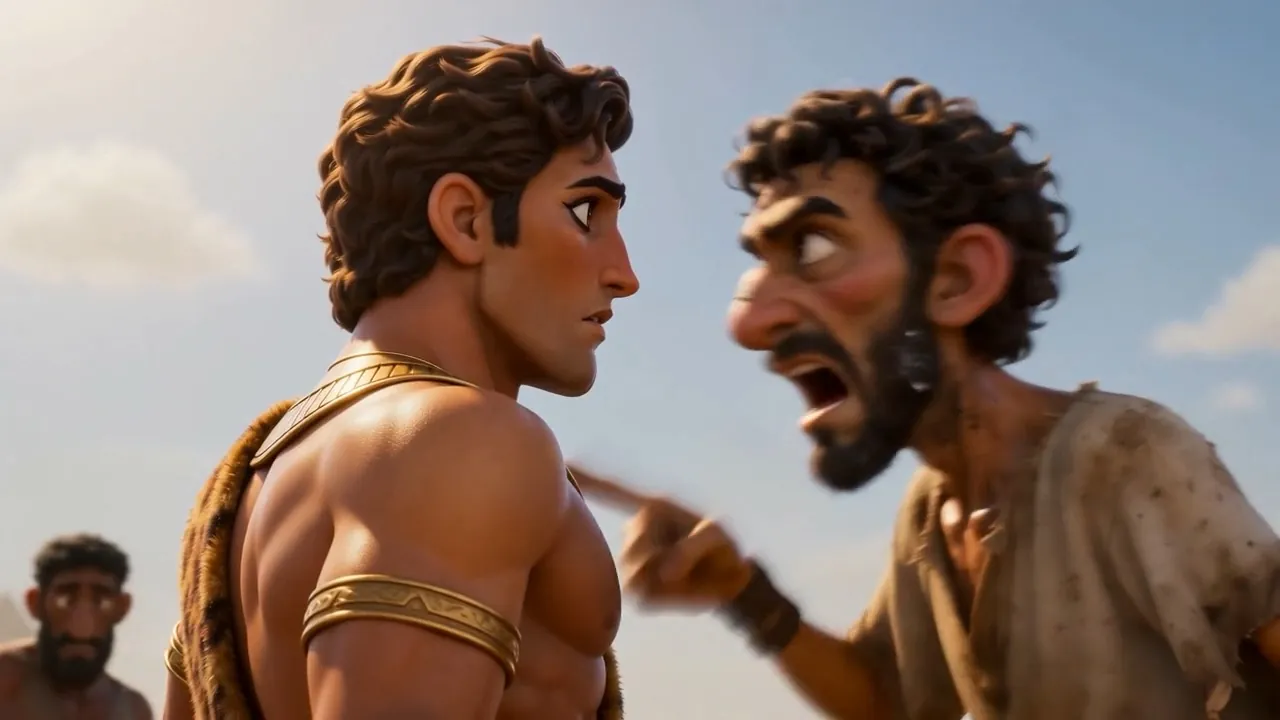
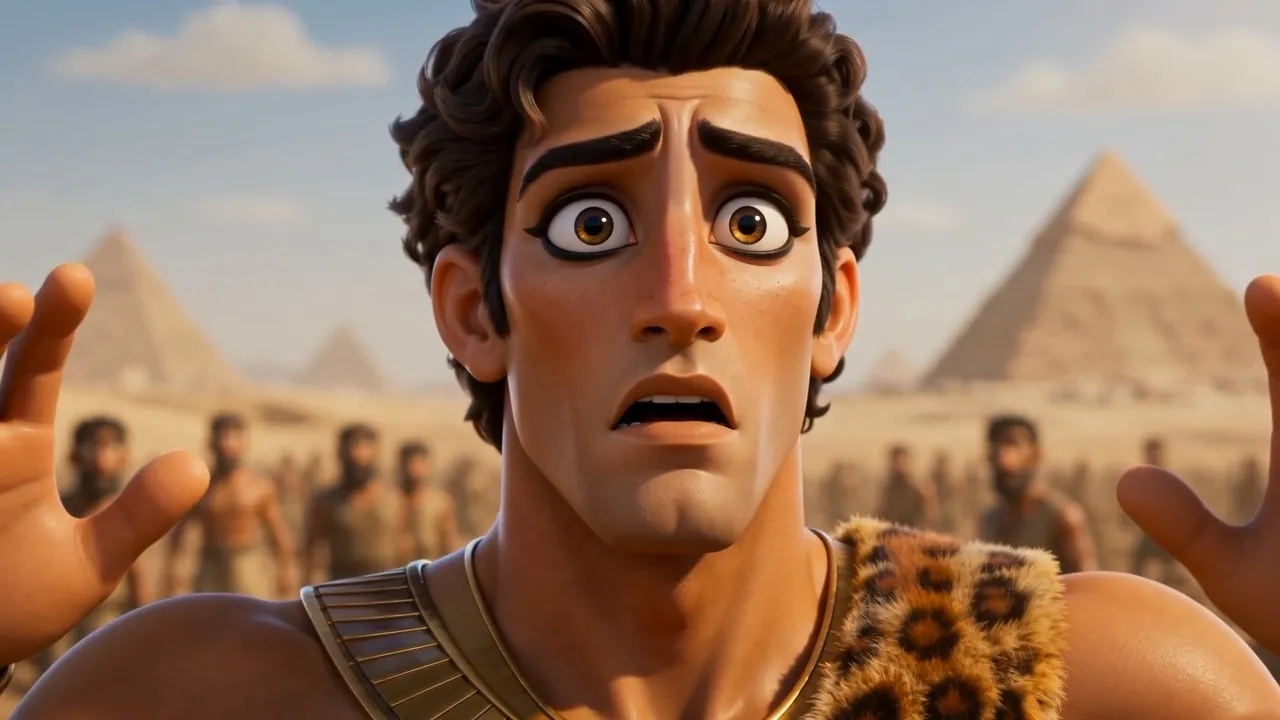
He saw an Egyptian beating a Hebrew — one of his people — and struck the man dead, and hid him in the sand. By the next day the secret was street gossip: “Do you plan to kill me, as you killed the Egyptian?” When Pharaoh heard, Moses ran. Exodus 2 : 11–15




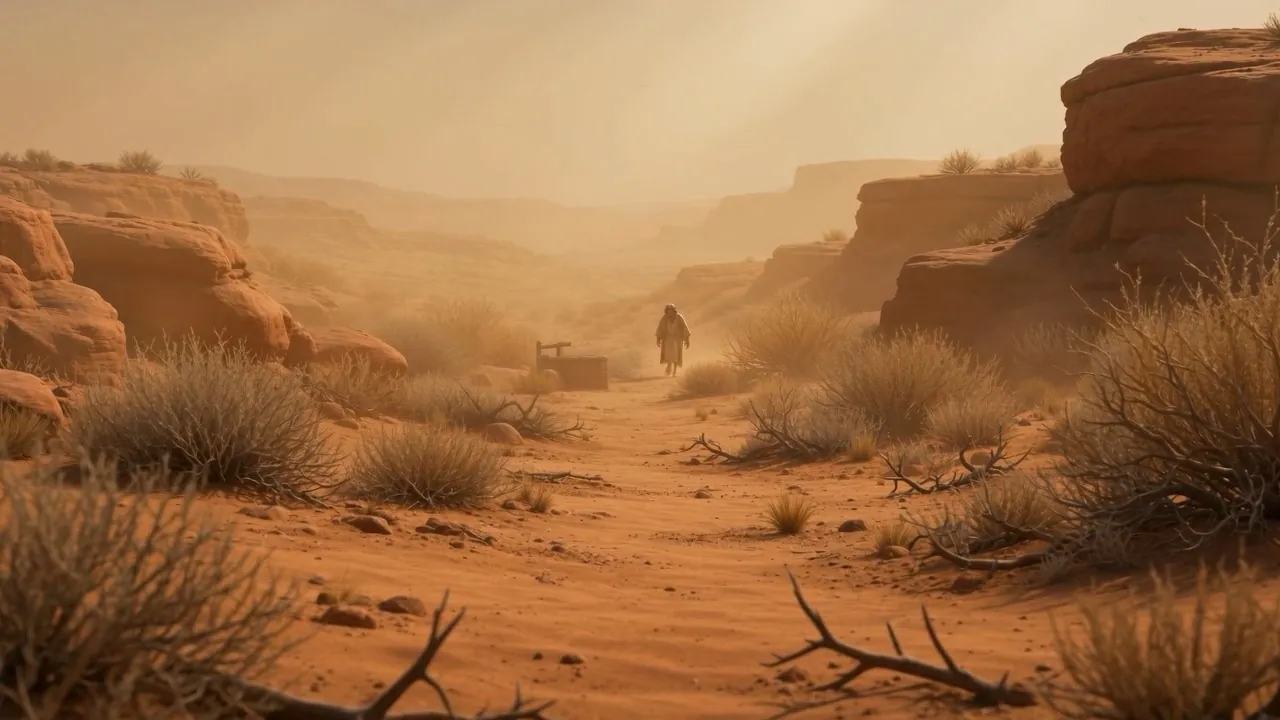
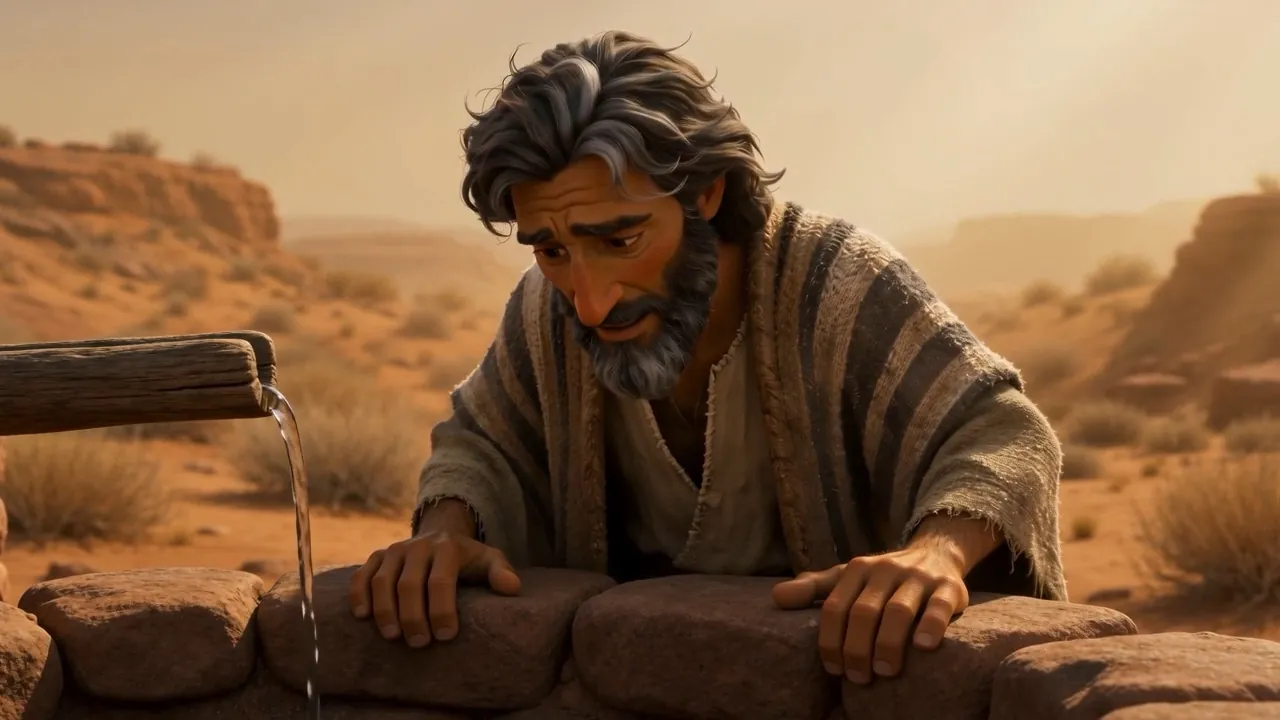
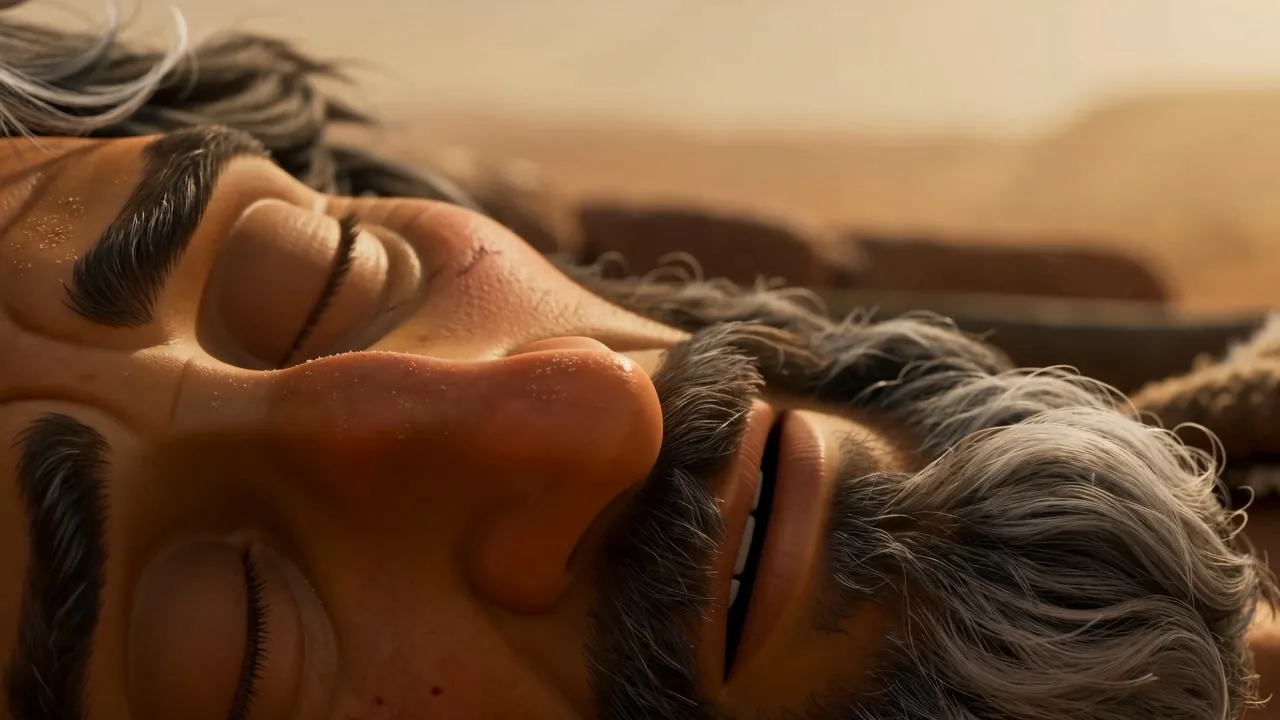
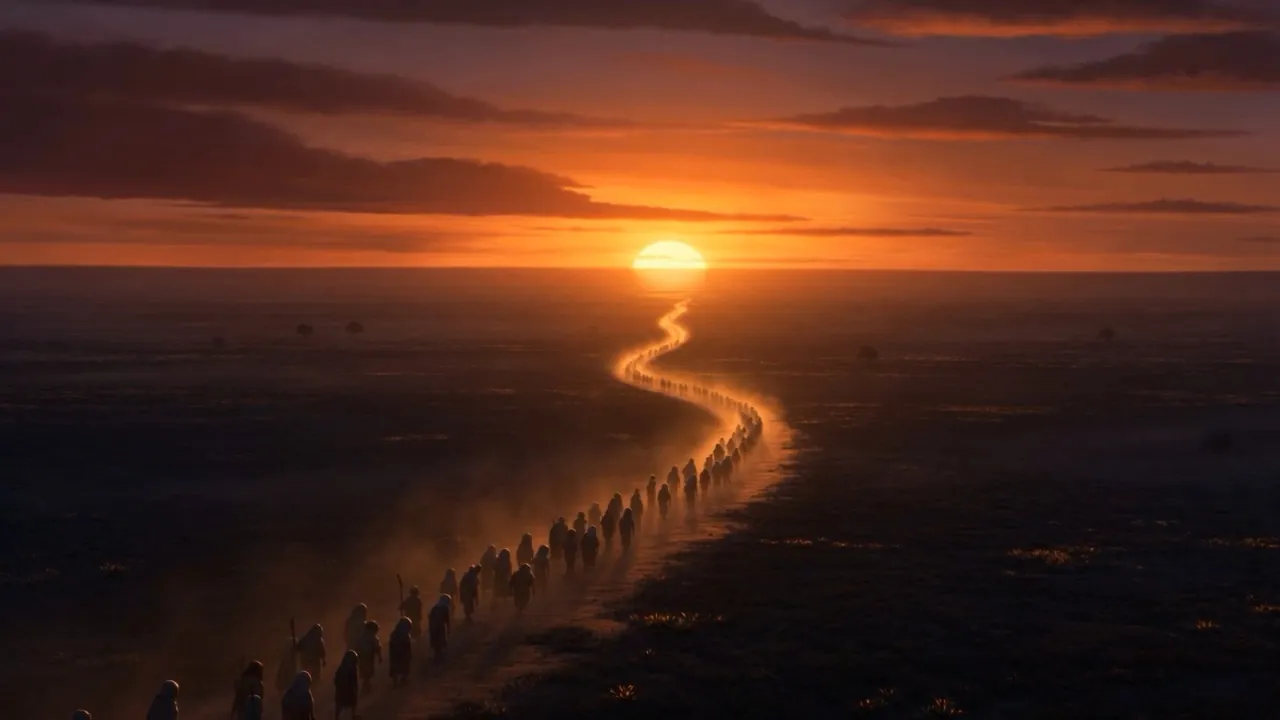
Forty years of palace, gone in a day. Moses fled from the face of Pharaoh and walked into the wilderness — a prince with a price on his head and sand in his sandals. Exodus 2 : 15
The prince of Egypt is gone — a fugitive walking into the desert with nothing but his sandals. It looks like the end of the story. It is the beginning of the making. The river that was meant to take him carried him instead — and the wilderness ahead will finish what the water started.
Voices of the river · hover or tap to turn
Miriam
"Should I go and call a nurse for you from the Hebrew women, that she may nurse the child for you?"
— Exodus 2:7
Pharaoh
"You shall cast every son who is born into the river, and every daughter you shall save alive."
— Exodus 1:22
Pharaoh's Daughter
"Because I drew him out of the water."
— Exodus 2:10Before you cross over
Did the river carry you?
1. What does the name Moses mean?
Pharaoh's daughter named him for the rescue itself: "Because I drew him out of the water." His name told the story before he could.
2. Who watched the basket from the reeds — and stepped out at the perfect moment?
Miriam trailed the basket downriver, then offered the princess a nurse — and got the baby's own mother hired for the job.
3. Why did Moses flee Egypt?
He struck down an Egyptian who was beating a Hebrew, hid him in the sand — and found out the next day that everybody knew.
4. Who drew the basket out of the river?
Pharaoh's daughter — the decree-maker's own house became the rescue. She knew he was a Hebrew child, and kept him anyway.
What this story teaches
God's rescues start small.
The empire had chariots; heaven answered with a basket, a big sister, and a mother's three months of nerve. The deliverance of a nation began as one family's quiet act of defiance.
"She saw that he was a fine child, and she hid him." Exodus 2 : 2Courage runs in quiet chains.
Two midwives, a mother, a big sister, a princess — five acts of quiet defiance, hand to hand, carried one baby past an empire's decree. None of them knew what they were saving.
"The midwives feared God, and didn't do what the king commanded." Exodus 1 : 17A failed start isn't the final word.
Moses' first attempt at rescue was a fist and a shallow grave — zeal without a sending. The story doesn't end in the sand; it goes quiet for forty years, and God is in the quiet too.
"Moses fled from the face of Pharaoh." Exodus 2 : 15Read the scripture itself. Exodus 1–2 · World English Bible
Exodus 1
1Now these are the names of the sons of Israel, who came into Egypt (every man and his household came with Jacob):
2Reuben, Simeon, Levi, and Judah,
3Issachar, Zebulun, and Benjamin,
4Dan and Naphtali, Gad and Asher.
5All the souls who came out of Jacob’s body were seventy souls, and Joseph was in Egypt already.
6Joseph died, as did all his brothers, and all that generation.
7The children of Israel were fruitful, and increased abundantly, and multiplied, and grew exceedingly mighty; and the land was filled with them.
8Now there arose a new king over Egypt, who didn’t know Joseph.
9He said to his people, “Behold, the people of the children of Israel are more and mightier than we.
10Come, let us deal wisely with them, lest they multiply, and it happen that when any war breaks out, they also join themselves to our enemies, and fight against us, and escape out of the land.”
11Therefore they set taskmasters over them to afflict them with their burdens. They built storage cities for Pharaoh: Pithom and Raamses.
12But the more they afflicted them, the more they multiplied and the more they spread out. They were grieved because of the children of Israel.
13The Egyptians ruthlessly made the children of Israel serve,
14and they made their lives bitter with hard service, in mortar and in brick, and in all kinds of service in the field, all their service, in which they ruthlessly made them serve.
15The king of Egypt spoke to the Hebrew midwives, of whom the name of the one was Shiphrah, and the name of the other Puah,
16and he said, “When you perform the duty of a midwife to the Hebrew women, and see them on the birth stool; if it is a son, then you shall kill him; but if it is a daughter, then she shall live.”
17But the midwives feared God, and didn’t do what the king of Egypt commanded them, but saved the baby boys alive.
18The king of Egypt called for the midwives, and said to them, “Why have you done this thing, and have saved the boys alive?”
19The midwives said to Pharaoh, “Because the Hebrew women aren’t like the Egyptian women; for they are vigorous, and give birth before the midwife comes to them.”
20God dealt well with the midwives, and the people multiplied, and grew very mighty.
21Because the midwives feared God, he gave them families.
22Pharaoh commanded all his people, saying, “You shall cast every son who is born into the river, and every daughter you shall save alive.”
Exodus 2
1A man of the house of Levi went and took a daughter of Levi as his wife.
2The woman conceived, and bore a son. When she saw that he was a fine child, she hid him three months.
3When she could no longer hide him, she took a papyrus basket for him, and coated it with tar and with pitch. She put the child in it, and laid it in the reeds by the river’s bank.
4His sister stood far off, to see what would be done to him.
5Pharaoh’s daughter came down to bathe at the river. Her maidens walked along by the riverside. She saw the basket among the reeds, and sent her servant to get it.
6She opened it, and saw the child, and behold, the baby cried. She had compassion on him, and said, “This is one of the Hebrews’ children.”
7Then his sister said to Pharaoh’s daughter, “Should I go and call a nurse for you from the Hebrew women, that she may nurse the child for you?”
8Pharaoh’s daughter said to her, “Go.” The young woman went and called the child’s mother.
9Pharaoh’s daughter said to her, “Take this child away, and nurse him for me, and I will give you your wages.” The woman took the child, and nursed it.
10The child grew, and she brought him to Pharaoh’s daughter, and he became her son. She named him Moses, and said, “Because I drew him out of the water.”
11In those days, when Moses had grown up, he went out to his brothers, and looked at their burdens. He saw an Egyptian striking a Hebrew, one of his brothers.
12He looked this way and that way, and when he saw that there was no one, he killed the Egyptian, and hid him in the sand.
13He went out the second day, and behold, two men of the Hebrews were fighting with each other. He said to him who did the wrong, “Why do you strike your fellow?”
14He said, “Who made you a prince and a judge over us? Do you plan to kill me, as you killed the Egyptian?” Moses was afraid, and said, “Surely this thing is known.”
15Now when Pharaoh heard this thing, he sought to kill Moses. But Moses fled from the face of Pharaoh, and lived in the land of Midian, and he sat down by a well.
16Now the priest of Midian had seven daughters. They came and drew water, and filled the troughs to water their father’s flock.
17The shepherds came and drove them away; but Moses stood up and helped them, and watered their flock.
18When they came to Reuel, their father, he said, “How is it that you have returned so early today?”
19They said, “An Egyptian delivered us out of the hand of the shepherds, and moreover he drew water for us, and watered the flock.”
20He said to his daughters, “Where is he? Why is it that you have left the man? Call him, that he may eat bread.”
21Moses was content to dwell with the man. He gave Moses Zipporah, his daughter.
22She bore a son, and he named him Gershom, for he said, “I have lived as a foreigner in a foreign land.”
23In the course of those many days, the king of Egypt died, and the children of Israel sighed because of the bondage, and they cried, and their cry came up to God because of the bondage.
24God heard their groaning, and God remembered his covenant with Abraham, with Isaac, and with Jacob.
25God saw the children of Israel, and God was concerned about them.
World English Bible (WEB) — a public-domain modern English translation. Read it freely, share it freely.
The bush that burned.
Forty years of desert, one stray goat, and a fire on the mountain that knows his name — Moses meets I AM.
Read the episodeThe Book of Exodus — animated film in production
These scenes are real frames from the film.
Help us finish it — and every story like it — free for the world.